Liquid Staking vs. Regular Staking: Why Even Bother?
Liquid staking promises yield without lock-up — but is it worth the smart contract risk, depeg danger, and Lido's fee cut?
Not a single person did stake their cryptocurrency for the first time simply for the sake of benevolence. That framing — playing a role in network security, supporting decentralization, providing collateral for the ecosystem’s growth — is printed on promotional material after-the-fact. The real reason, then and now, is far more straightforward — and much more disingenuous: free money or at least the closest thing to free money that modern finance can create. You drop your tokens in one place, the system pays you to park those tokens and return later with more than what you parked. What could possibly go wrong?
Quite a lot, it turns out. Of course, regular staking came with its own frustrations — your capital was effectively locked up; frozen in time while the rest of the market danced to its own beat. That specific annoyance led to the emergence of liquid staking. It needs to be looked at whether it really solved the problem or simply exchanged one complication for another, more complex one.
Staking — Basic Idea and Origin
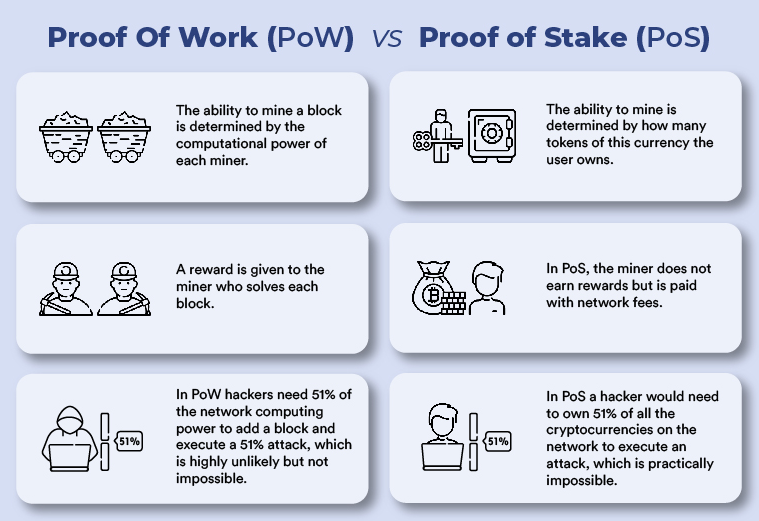
Staking originates from the rise of Proof of Stake (PoS), an alternative mechanism subjected to PoW that secured Bitcoin since its birth. After all, Proof of Work is fundamentally a competitive process. Miners compete against each other by trying to solve complicated cryptographic puzzles, the one who solves it first gets to add the next block — and receive 6.25 bitcoin as reward at current rates — and everyone else has wasted their electricity for nothing. This works — the past fifteen years have made that abundantly clear — but it is costly, energy-hungry and increasingly difficult to defend in a world of greater environmental awareness.
Instead of computational brute force, Proof of Stake built systems on financial commitment. Instead of expending energy to show that you are a serious network in the consensus, you simply stake — lock up — some cryptocurrency as collateral. Act faithfully, verify transactions appropriately and you receive compensation. Break the rules, attempt to double-spend blocks or otherwise wrongly uphold the protocol specifications, and some of your collateral gets eaten in an action called slashing. The incentives are clear: the system rewards honest with financial bonuses, while punishing dishonesty with costs. It is not so much an ethical framework as it is a well-designed trap for ne'er-do-wells.
In 2019, Cosmos released its own implementation to much initial fanfare and staking yields which at times were over fifteen percent per annum. Their own variations were built by Cardano, Polkadot and even Avalanche. These worked to show that the model really could work at scale — that validators would behave rationally, if given sufficient incentive; and fat cat ordinary holders would make a real interest rate out of not participating in markets. The passive income framing was correct enough to raise substantial capital long before any of this even had anything remotely approaching a footing on Ethereum.
Ethereum's transition from Proof of Work to Proof of Stake — which was finished in September 2022, after years of development — helped push staking into the mainstream discourse. A design decision that influenced everything that followed sat right at the heart of the initial implementation of our validator system: 32 ETH was required as a minimum deposit for running a solo validator. That number has meant everything from an appropriate stake to over $80,000 at different intervals of Ethereum price history. In many cases, solo validation was simply unreachable for most participants.
There was some workaround through exchange staking. Coinbase, Kraken, Binance etc. were all providing pooled staking services to take care of the validator infra for you. However, as an exchange replaced a custodial original validator with their own, they charged a fee of 15–25% on top of the rewards you were making, forced you to give up custody of your assets and left you exposed to counterparty risk. There is sufficient history of exchange failures and withdrawal freezing in crypto to make that risk anything but theoretical.
Although these shortcomings felt palpable, it was tough to argue the case against staking in practice. Staking yield for Ethereum has typically ranged between four and five percent annually. Yield on Cosmos based chains was considerably higher, often deep into double digits. More competitive than traditional savings accounts, which have offered close to zero returns in most countries for large portions of time, staking returns looked terrific. The pile of capital that has streamed into staking mechanisms echoed this magnetism, to the tune of hundreds of billions across dozens of networks all hunting for yield without market involvement.
Liquid Staking — Unsolicited Solution to a Problem Nobody Knew Existed
Liquid staking was invented to solve one specific and truly annoying problem. Tokens staked through classic mechanisms are useless for any other purpose while being staked. They reside somewhere in a validator set, incurring rewards, but they're not spendable, transferrable, acceptable as collateral to a lending protocol, or usable anywhere else in DeFi. Your capital has one job and is otherwise unavailable for any other purposes. In an environment where opportunities emerge and disappear in days or even hours, capital locked is a physical embodiment of opportunity cost.
Lido Finance came out in Dec 2020 with a fix that looked suspiciously simple. You deposit your ETH into Lido's smart contracts, and instead of earning nothing while your staking sits in the background quietly producing, you receive stETH — staked Ether: a token representing your staked position with the rewards that position continues to earn. This stETH can be sold on second-hand markets, used as collateral in various lending protocols such as Aave, entered into a liquidity pool for some added yield, or simply held while its balance appreciates with the underlying staking rewards. In theory, you're now free to use your capital. It was working two jobs at the same time.
The timing was fortunate. Highlighting the timing, Ethereum's staking mechanism had only just gone live, demand for yield was huge and not many people could afford the 32 ETH minimum anyone wishing to participate in it would need to stake. While they solved the liquidity problem, Lido also solved the access problem. It would allow you to deposit any amount — e.g. one ETH, half of one ETH — and in return receive a proportional portion of stETH. No minimum. No server to maintain. No technical expertise required.
Other protocols followed. Rocket Pool came in with a much more decentralized model: node operators had to stake their own ETH alongside user deposits, and it also used a permissionless network of operators. Its liquid token rETH works like stETH. Frax Finance built frxETH. Coinbase created cbETH. There was some commonality in recognising the problem to be solved, but also significant variation between protocols with regard to fee structures, governance mechanisms and validator selection processes. However, the basic offer was constant: stake your assets, get a liquid token, keep your capital working in whatever market you wanted.
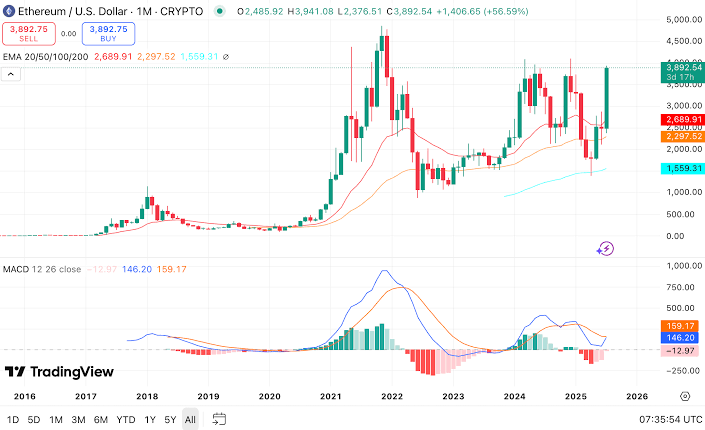
That followed growth, which completely redefined the DeFi. When it comes to total value locked, liquid staking protocols combined are the largest single category in decentralized finance as of 2026 with over 60 billion dollars held. Lido controls approximately sixty-one percent of the entire liquid staking market, managing about nine million ETH. These figures quote a compelling case that the market found exactly what it had asked for. But whether the product improves on its promises in ways that make a difference is a different, more interesting question.
Mechanics Underneath — What Is Actually Happening
The risks that liquid staking inherently comes with can easily be grasped by understanding what is, on a literal level, going on when you deposit ETH into a protocol like Lido.
Your deposit is added to a smart contract and bundled together with deposits from other users. These collected funds are distributed across a number of different node operators that actually run the validator software, host infrastructure and handle the operations of participating in Ethereum's consensus. They are screened through governance: Lido's own token holders vote on which operators get in, and how many ETH each runs. After exactly what their cut is and the amount of staking rewards are generated: the operators pass them back to the protocol.
The stETH token is a type of token that uses rebasing to perform updates. Instead of shooting anything off in a separate payment, the protocol increases your stETH balance each day by accounting for rewards earned minus the protocol fee — which is set at 10 percent of all staking rewards at present. You have some stETH today; tomorrow you have a little more. This is the most literal passive income.
Ethereum's Shanghai upgrade enabled validator withdrawals for the first time in April 2023 and afterwards, levels of complexity increased along with volumes of coins. This date was only in October 2023, and prior to that liquid staking positions were only exited by selling stETH on various secondary markets at whatever the prevailing market price was. After Shanghai, users can now withdraw through the protocol directly, but high demand can cause these withdrawals to queue. So instead of relying entirely on the market, we are now able to internalize the basic path from stETH back to ETH in the protocol.
This is accomplished through a series of smart contracts that govern the interaction of many moving parts. The following is a simplified explanation of what those parts are:
1. Deposit contracts that accepts user deposits and batch them for validator assignment
2. A node operator registry for approved operators to follow allocations and performance
3. An oracle system that writes back validator balances and rewards to the contracts (these are used for rebasing calculation)
4. Withdrawal credentials that connect the protocol with real validator balances on Ethereum's consensus layer
5. A governance module where tokenholders vote on protocol upgrades, fee changes and operator admissions
And every component of it can be a point of failure. Oracles are often manipulated or return stale data. It is possible for governance to be governed by an attacker, controlling a large assortment of tokens to vote with from the system. DeFi is mostly the history of protocols that looked secure until they weren't: smart contracts have been found containing bugs enabling attackers to drain funds even after numerous audits. Operating history helps a bit — you can feel better when the project has been around for some time, and both Lido and Rocket Pool also have that going for them.
Risks, Privacy and What Regulators Have to Say
Conducting traditional Proof of Stake staking comes with one major risk, which participants understand beforehand: slashing. If the validator you are running — or delegating to — double signs blocks, or breaches some other protocol rule, a bit of your staked balance is deleted. Not all infractions carry the same penalty: some isolated validator slashing in small amounts, while simultaneous failures of many validators could incur larger penalties due to infrastructure issues being correlated. Slashing events do not occur often with well managed validators. They do exist but so infrequently that most stakers will go for years without directly seeing one.
Liquid staking takes the slashing risk and layers additional risks on top. If a node operator is slashed in Lido's pool, the penalty is applied proportionally to all stETH holders. Your exposure is diversified — the Lido protocol explicitly shards ETH to many operators for this reason — but it is real, and you have no direct control over who operates your ETH or whether they do a good job of maintaining their infrastructure. That judgement has been outsourced to a governance process that is administered by token holders you have never met.
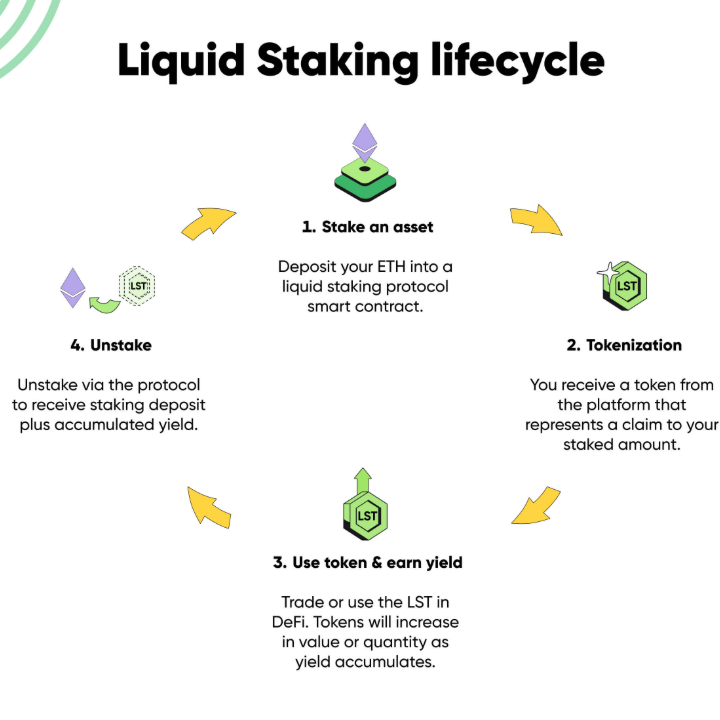
We should be taking a closer look at depeg risks during bull markets than we have in the past. In principle, stETH price on secondary markets should closely follow ETH in a normal market. The withdrawal mechanism from the protocol ensures that stETH is redeemable for nearly equivalent ETH. However, in the short term secondary market prices react against supply and demand rather than redemption mechanics. This price divergence can occur if large holders seek liquidity using stETH for rapid liquidation.
This happened in June 2022. The crash of the Terra ecosystem triggered a liquidation cascade throughout DeFi, and whales started rapidly selling stETH leading to thousands in sales flooding into Curve protocol's stETH/ETH pool. StETH was trading at approximately 0.94 ETH, a 6% discount to its presumed value: at the very worst point. By that timespan, users who had to get out when the money was there took on real and proximate losses. It took multiple months of market stabilization to resolve the depeg, but it clearly showed a fundamental truth: A liquid staking token is not the same as its underlying. It manifests as a smart contract-backed representation and as an ongoing functioning protocol. The price holds in normal conditions. The assurance cracks under stress
In terms of privacy, the truth is that neither normal staking nor liquid staking provide any real protection out of the box. Anyone with a block explorer can see what you do on-chain. Deposits, Rewards Accrued, your stETH balance – all on-chain and traceable. Solo staking has the same level of transparency due to the limited possibility for decentralized isolation. There are a small differences in exactly what data is revealed, but the overall privacy picture of both methods is essentially no different for all intents and purposes: your activity is public unless you take specific steps to hide it. Neither of the staking method tackles this inherently.
The regulatory landscape improved significantly in 2025, when the SEC's Division of Corporation Finance found that liquid staking activities — deposit an asset with a protocol and receive staking receipt tokens on a one-to-one basis — do not involve the offer or sale of securities under U.S. law. A parallel two-part statement said that traditional staking also received similar direction. The two formats are both free from the securities regime that had shadowed the industry for years. Tax treatment is relatively unforgiving: staking rewards are still taxable as ordinary income the moment they come into your possession, an existing framework that does not sit well with parts of the industry but has not changed. The lack of securities classification in the U.S. also does not allow for clean treatment elsewhere.
A distinct concern associated with Lido dominating the market is concentration risk, which has also been publicly raised or at least worried about repetitively by Ethereum's own core devs. The fact that one protocol controls approximately twenty-eight percent of all staked ETH is a systemic risk in a network designed to be secured by decentralization. It would not take a fork of Ethereum to suffer heavy slashing for the collapse of staking by Lido's infrastructure: an exploit in Lido's governance, a bug critical in its smart contracts, or many nodes staked with Lido getting slashed at once could do just as much damage to both Lido's users and all of the DeFi protocols built on top using stETH as collateral, perhaps even endangering Ethereum consensus stability itself. This isn't speculation, its base math of concentration.
Profitability — Who's Really in the Black?
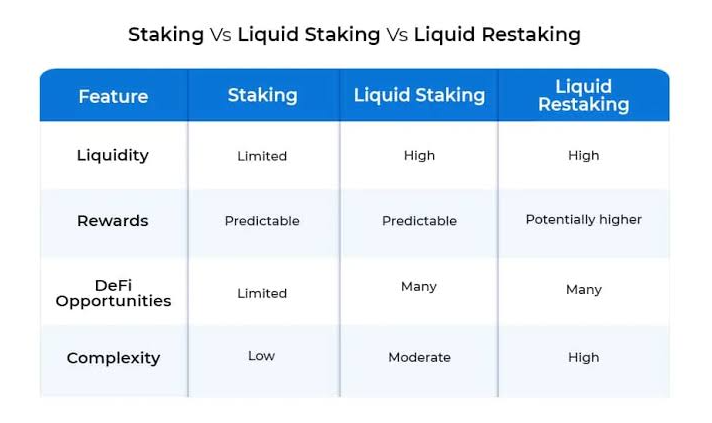
Constructing a theoretical argument for liquid staking being financially better than normal staking is easy to do. You get roughly the same base staking yield but your capital is un-collateralised — you could deploy your liquid staking tokens into lending markets, liquidity pools or yield aggregators for added delta potential on top of the base layer reward of staking. The same capital performing two functions ought to yield more than the land invested in one function. This is obviously better in theory.
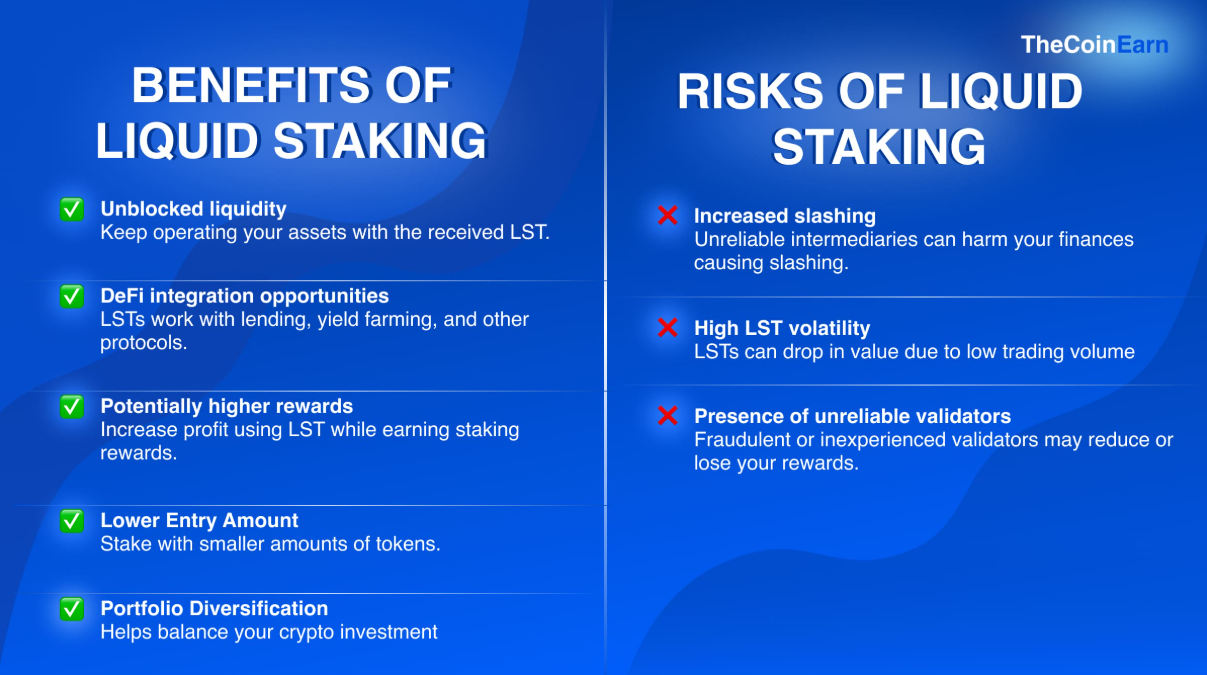
In reality the landscape is more complicated. Lido takes 10% of all staking rewards and needs to do so in a way that means your effective yield through Lido will always be less than the reward earned on the same ETH staked by a solo validator. It is not a large gap in absolute terms — a few basis points per year — but permanently. You pay through a continuous decrease in your reward rate for the convenience, the liquidity and the lack of technical barriers.
The incremental DeFi yield from deploying stETH can in principle make up that haircut, and produce more returns than ordinary staking. To earn that extra yield however requires taking the smart contract risks of whatever protocols you deploy into, the market risk of impermanent loss in liquidity pool positions, and now a systemic risk where you are running a more complex position that can blow up under stress. To be clear, this is the risk of layered yield strategies during a sudden downturn: users who used leveraged liquid staking strategies in the 2022 downturn (borrowing against stETH, buying more ETH with borrowed STETH, restaking, borrowing again) were blown up. In many instances, the losses were total.
In direct comparison: a single validator will earn the full consensus layer reward, plus all priority fees captured by their node, minus a small operational cost. Meanwhile, the Lido depositor receives the same consensus reward, minus a 10% protocol cut and can also deploy stETH somewhere else to earn yield on it. When stETH is just sitting there, it earns less than the solo validator. If deployed in a lending protocol, it earns even more — but adds the smart contract risk of two protocols at once, rather than one.
When you view historical performance, liquid staking via top protocols have proven to provide good results. stETH holders who early bought the dip and got diamond-handsed through 2022 depeg will be just fine. Real losses stemming from secondary market dynamics, which solo validators were largely insulated from, came to bear on those who needed to exit during the stressful period. Traditional validators still finished collecting rewards for their work though during the entire process. The straightforward method provided what it promised with far fewer surprises.
The truth on profitability is liquid staking works out more for most participants in that it enables rather than pays. Liquid staking is not just one of several savings options; it is, in effect, the only way to earn staking yield at all if you do not have 32 ETH to run a solo validator — which describes the vast majority of crypto participants. If you have a sufficient amount of capital, and the desire to run a validator, then there is actually a case here for staking that earns marginally higher yield but that has meaningfully lower complexity. Old Good staking does not lose in the profitability comparison unequivocally. It loses on accessibility, and that is a bigger deal for most people.
The trend across various blockchain ecosystems is clear: users will always be looking for opportunities to reduce resource costs as much as possible without locking up capital longer than they have to. Instead of staking their TRX for long periods, users willing to pay less in transaction costs on the TRON can purchase cheap TRON Energy from a market controlled by rental providers. Based on the cheap TRON Energy prices, the users do not need to get into a long-term contract. Made possible by a service which runs as an energy aggregator, this is where real-time offers from dozens of providers are collected together -- meaning you can compare rival rates and plug in available supply at will. It is a different mechanism, often for different reasons than staking, but embodies the same fundamental logic as to why liquid staking has found its market popularity: flexibility of capital, reduced cost and minimal idle time.
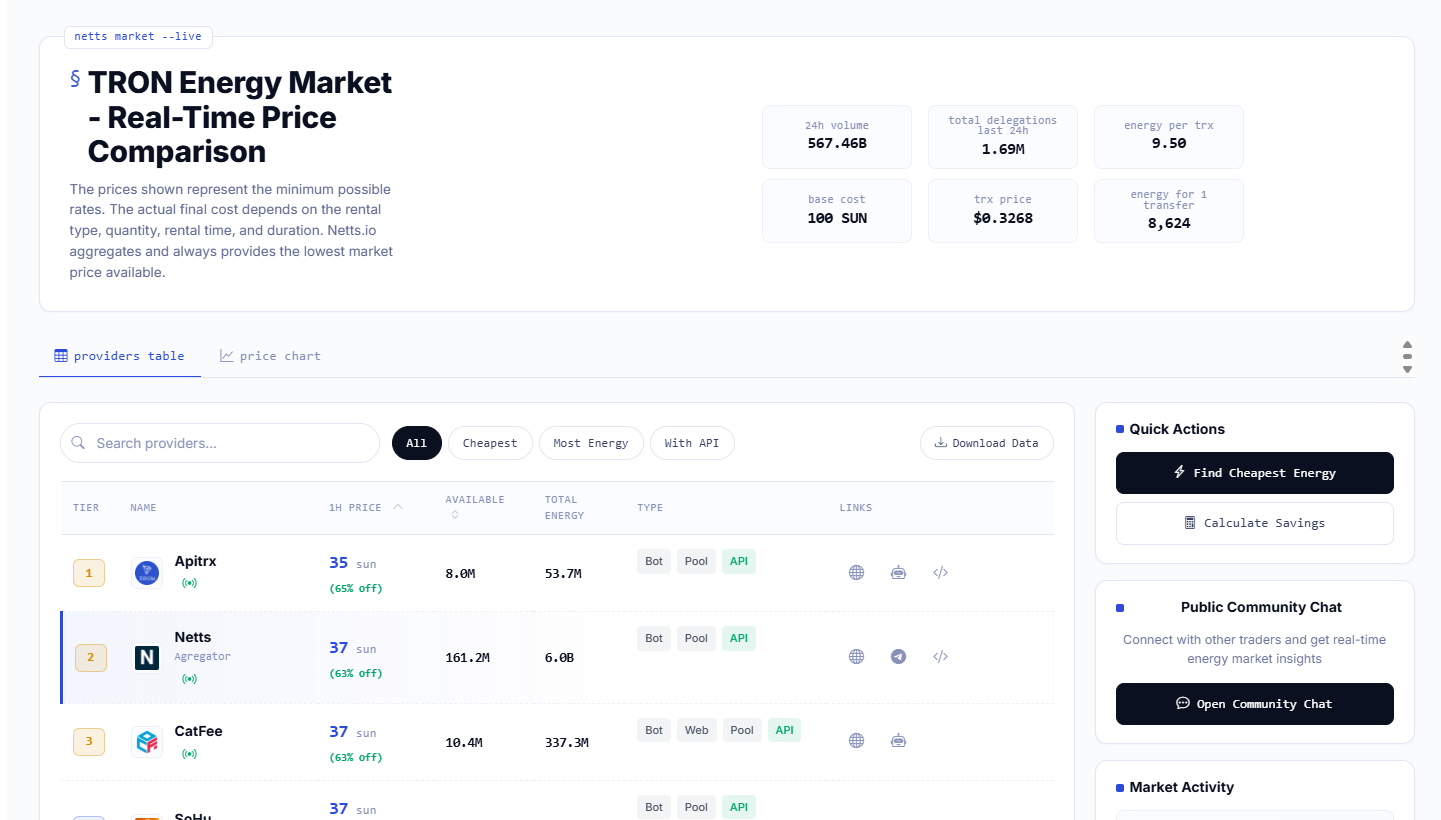
Netts.io is a real-time TRON Energy Market aggregating offers from over twenty providers — including Netts itself, consistently among the lowest at 25 sun per unit — giving users immediate access to the best available Energy rates without needing to stake TRX or burn it outright.