Crypto Refunds: Impossible or Solvable?
Crypto refunds are hard because finality gives freedom, but users still want PayPal-style safety when scams or hacks happen.
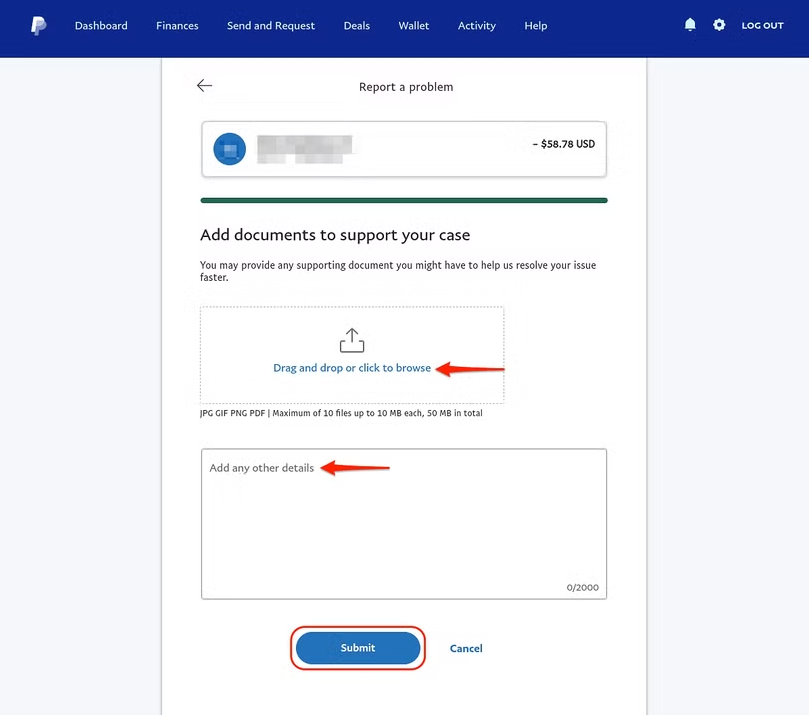
A bank customer is not a philosopher of payment finality. He buys shoes, the shoes do not come, and he calls the bank. He pays someone via PayPal, the someone disappears, and he opens a dispute. He sees an unrecognized charge, and he expects somebody, somewhere, to step in and stop bleeding. The entire modern consumer-payment ecosystem has been designed around this philosophy. People use cards, PayPal, and payment apps not only because of convenience but because they feel like they have a parent in the room. That parent may be irrational, biased, slow, and prone to mistakes, but the parent exists; a buyer can complain, a seller can provide tracking info, a processor can flag the transaction, a bank can reverse it, a card network can cut a cheater’s access - the machinery may be annoying, but it is alive.
PayPal, for all its flaws, was brilliant for creating this system of parents around unknowing strangers in a digital space. That is why it became popular. The online marketplace required a trusted third party, and the trust was engineered in - buyers had recourse and protection, sellers had payment assurance, and all sides had mechanisms to appeal and reverse decisions. That does not mean PayPal was fair to everyone; it only means that trust was engineered in, which created value, which created volume, which created power.
The criticism of this system is also old, and it is not wrong. The same force that engineered protections for buyers could be turned against sellers in the form of false positives, account freezes, cash-stripping rolling reserves, chargebacks, and risk-score based freezes. Funds could be trapped for months with no clear resolution. A seller could send goods and never get paid. A small business owner could discover that their bank account is their largest creditor. The user gets safety, but not freedom; the platform gets trust, but not transparency.
This is the same everywhere in traditional finance. The United States once officially banned private gold ownership with Executive Order 6102 - a direct transfer of wealth from citizens to the state. Capital controls have been imposed in various forms in countries around the world - from times of war to economic emergencies to currency devaluations. The Bank Secrecy Act, anti-money laundering regulations, suspicious transaction reports, sanctions lists, account freezes, wire seizures, know-your-customer protocols - all of these were engineered in the belief that money cannot be entirely free and entirely safe: it must always serve the state’s interests, or at least be exposed to the state’s control.
Modern payments are built upon this philosophy, which is why banks have been particularly aggressive in building barriers and checkpoints around every transaction. Counterfeiting checks, skimming cards, identity theft, mule accounts, invoice fraud, insider theft, correspondent bank manipulation, card-not-present fraud, refund abuse, account hijacking, synthetic identities, phishing, and social engineering all lead to one conclusion - that every point of friction reduces the potential damage to banks, card issuers, processors, and payment platforms. These companies have been particularly eager to impose their own internal freezes, chargebacks, and reversals as additional barriers. Naturally, this creates a system in which criminal activity has to be far more sophisticated to succeed, but that is the responsibility of the enforcers, not the victims.
Crypto was supposed to be a reaction to this design, one that lightened the control from central parties and distributed it to users. Instead, it created new ones. Crypto has its own version of chargebacks in the form of refund requests at exchanges, custodians, and payment processors. Its own version of freezing funds is account wipeouts, blacklisting, and smart contract reorganizations. Its own version of parental control is wallets that require multisig, social recovery, or delayed withdrawals. Freedom has its costs, and the space around crypto’s finality is where those costs are collected.
One Way Ticket Problem
Crypto transactions are one-way tickets. This is not a bug - it is a feature, one of the main reasons why crypto is programmable money and why developers love it. When a transaction is broadcast and settled, the money moves to a new address: it does not ask questions, does not seek permission, does not provide transparency. The sender’s wallet will have less money, and the recipient’s will have more - that is the entire point. If the transaction was malicious, fraudulent, or performed under duress, it is now settled - an irreversible fact on the blockchain.
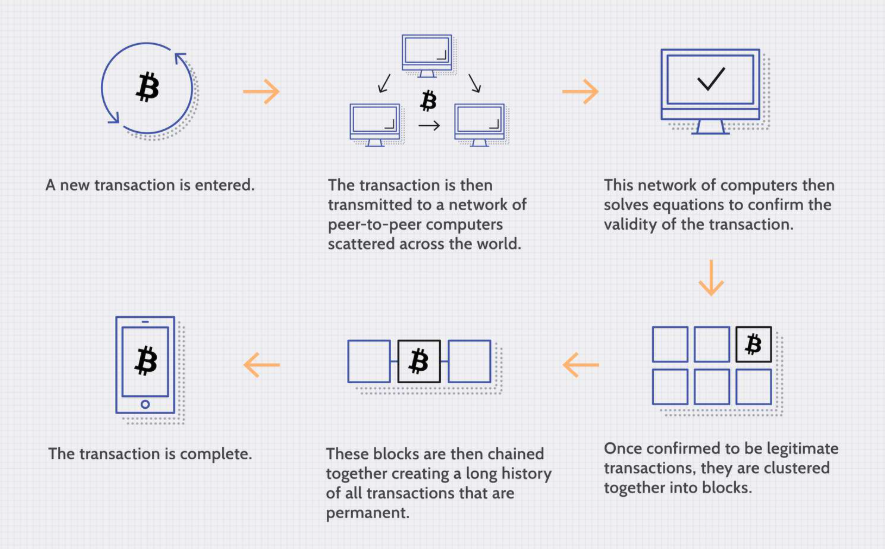
This is why merchants that accept crypto are so eager to receive on-chain payments: the danger of a dispute chargeback is eliminated, removed, gone. A crypto-native knows that his money is safe from the interference of PayPal risk departments.
The same reason becomes a problem when the rug pulls from underneath. One thousand successful transfers from a hot wallet to a receiving address teach the user one lesson. The one thousand and first transfer is different: it is the one where malware changed the address, or phishing stole the private key, or an employee signed off on a fraudulent transaction, or the attacker simply convinced the victim to change his mind. Suddenly, finality feels less like a guarantee and more like a death sentence.
The same problem occurs with KYC and AML. They are useful against money laundering in crypto, but they are not refund buttons for regular users. The KYC checks that work against illicit activity do not work against scams, and the AML lists that pressure centralized exchanges to freeze illicit funds do not pressure regular ones to restore stolen money. When a crypto user sends money to a scammer, it is often too late to reverse the transaction.
Those principles do not help against rug pulls, either. If bad actors steal funds from a DeFi protocol, there is not much the users can do except complain loudly to whichever entity is in charge of this particular smart contract: the development team, the auditor, the grant provider, the fork maintainer. Even then, the resolution is rarely fast or obvious.
Bybit, Bangladesh, and the Difference Between Rails
The difference between the Bangladesh heist and the one pulled off against Bybit is illustrative of the difference between rails and crypto rails with unusual properties. In the Bangladesh case, North Korean hackers were able to infiltrate the SWIFT system of the Bangladesh Bank and attempt to withdraw nearly a billion dollars in funds from the Federal Reserve. Most of those transactions were stopped due to various errors, including one of the transfer addresses being misspelled - this prevented nearly all of the funds from being withdrawn, and some of the funds that did escape were eventually returned. The Sri Lankan government returned its share, while the ones sent to the Philippine casinos had to be reclaimed through legal and investigative procedures. The outcome of this attack was arguably worse than the one attempted on Bybit, but it was also far more involved and far more limited in scope: the funds had to move through correspondent banks, while the banks and legal system of several countries were involved in the reclaiming process.

The situation with Bybit is the crypto equivalent of the Bangladesh heist. Its security team is reportedly under siege from Lazarus hackers, who have managed to steal nearly $1.5 billion from the exchange. Investigators, industry partners, bounty hunters, and crypto analytics companies are all working together to track down and recover assets - some of which are already being returned, while others remain tied up in crypto-specific laundering programs. The attack is illustrative of the ways in which on-chain money can be stolen and hidden in crypto’s nether realms. However, the involvement of traditional institutions highlights the ways in which some of these funds may be recovered using old tools, even in a new medium. Law enforcement has jurisdiction in certain jurisdictions over crypto funds, and some exchanges, stablecoin issuers, and analytics companies are more willing to cooperate in the legal or even accounting parts of the task. A bounty hunter’s reward can motivate others to help. The sheer number of participants in such an event highlights the opportunity for everyone to play a part in a recovery, as well as the need for it - even if it may take time for law enforcement to get the jurisdiction it needs to take meaningful action.
This is also why the theft of fiat deposits in Bangladesh turned out to be a relatively limited attack in the end. The funds had to go through several stages of the banking system, and even when they bypassed the direct oversight of the Bangladesh Bank, they were still in the system and subject to state intervention at any point. This highlights the critical importance of those rails and what they represent: the ability for banks to be custodians of deposits, the legal power to freeze and investigate transactions, and the overall ability for centralized institutions to hold, control, and move money on behalf of other people or entities. When the funds move on crypto rails, they are no longer as visible or accessible, which means that jurisdiction and control tend to shift toward the new central point - an exchange, a stablecoin issuer, an analytics company, or a wallet custodian. Even when law enforcement is involved, the recovery process is much slower and more difficult because there are fewer points of intervention and control.
People Trying to Build a Refund Layer
Given the problem, it is not surprising that people are trying to solve it. There are several potential refund layers in crypto that can be employed to help recover from rug pulls, scams, and other malicious activities. Escrow wallets are the most intuitive option, with dispute resolution as an added bonus: instead of sending the money to the recipient directly, the sender deposits it into a smart contract, which will ensure its delivery upon the completion of a certain event or after the dispute resolution period expires. Escrow wallets can be used in all manners similar to regular transactions but with added assurance, and they can be utilized with marketplaces, freelance services, OTC trading, NFT platforms, and regular stablecoin transfers. They do add extra steps to the process, but those steps are the reason why the other side of the transaction can be trusted to behave fairly.
Kleros and its competitors represent another layer of dispute resolution and are an alternative to escrow-style wallets. They utilize a decentralized jury that evaluates claims and provides the appropriate outcome, but the details are often as complicated as regular courts. This approach should be able to provide better security and flexibility, but it often fails to acknowledge the practical difficulties of evidence collection, the ability for jurors to be bribed, and the need for both parties to rely on the same system in the first place. Escrow wallets may be limited by the capabilities of smart contracts, but at least they are built right into the blockchain.
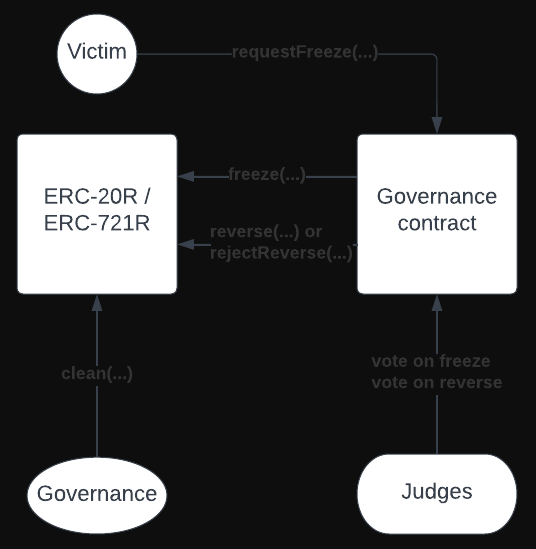
Reversible-token proposals such as ERC-20R and ERC-721R attempt to provide an alternative to rug pulls by allowing the tokens to be frozen and unlocked by a dispute resolution judge, smart contract, or decentralized jury during a short lock period that expires after a fixed period. Disputes are resolved in the same manner as escrow wallets, but reversible tokens attempt to limit the exposure by only freezing the transaction. This is an attractive proposition for most users, as it limits the damage and liability of rug pulls, but it has its flaws. In particular, it fails to account for fungibility: if one part of a divisible token is malicious, the rest of it can be used to pay others. Some users can be victims of scams, while others - merchants - are the ones who suffer the losses in the end. The ability to make large-volume payments in tokenized stablecoins is one of the advantages of crypto, but it can also create situations in which users are unable to distinguish between malicious and legitimate addresses. It does not take much to imagine a rug pull that only affects one part of a larger asset tranche or the sudden appearance of malicious stablecoin tokens. There is also the issue of whether a particular implementation of ERC-20R is trustworthy: users are expected to understand and differentiate between various smart contract wallets, which is part of the appeal of crypto in the first place.
Stablecoin freezes represent another option for a refund layer in crypto because they are the simplest way to reverse a transaction at the moment of transfer. Tether and Circle essentially hold blacklists over all USDT and USDC deposits and can stop any funds from leaving, and the legal aspects of such freezes can be used to permanently withhold or reclaim them. The same principles apply to other stablecoins, although not all of them have the resources to implement such measures. In essence, the entire system of stablecoin deposits represents a type of a refund layer, one built into the very security infrastructure of crypto’s most-used asset.
Users of stablecoins are the ones who benefit from this particular refund layer, but it comes at the cost of increased scrutiny. The state can freeze deposits at any moment, and the same can be done by traditional financial institutions. In general, the stability of stablecoins comes at the cost of centralization, which means that the benefits of a refund layer are offset by the costs. In particular, there is always a possibility that illicit funds will be frozen alongside legitimate ones, or that deposits will be frozen for political reasons. There is also the potential for user error, which is why many users prefer other mechanisms for protecting their assets.
Smart wallets and account abstraction represent an alternative to the refund layer model in which wallets provide built-in protection for their users: instead of asking for a refund, the user is not allowed to make a large-value or malicious transaction in the first place. Spending limits, allowlists, social recovery, delayed withdrawals, multisig approvals, and other features can protect funds in various ways. A company treasury, for instance, will have stricter requirements for any withdrawal, and regular users can protect themselves in similar ways. Smart wallets can also make transactions require approval from a decentralized judge, a jury of peers, or another wallet, which is essentially the same thing as an escrow transaction. In general, smart wallets provide users with better security, especially when it comes to institutional-grade funds, but it does not come without costs.
Exchanges and custodians solve the problem in the most straightforward manner: they hold on to funds and can reverse almost any transaction at any moment. This places the exchange in the position of a traditional bank: it has control over money on its books, which can be revoked for various reasons, including law enforcement investigations and customer disputes. This is arguably the most secure way to keep crypto assets protected, but it requires the user to trust the custodian, which is never ideal.

Circle, in particular, has plans to build a refund layer around its stablecoin, USDC, with certain applications built around pull-refunds, dispute-resolution windows, and escrow. It represents the ideal solution for users who want a crypto equivalent of traditional payment processors such as PayPal and Stripe. USDC, in particular, provides the flexibility of on-chain money with the protections afforded to traditional financial instruments. The base layer of crypto remains final, but regular users are able to take advantage of the dispute resolution features designed specifically for them.
Price of Safety
Crypto users will always demand refunds, and the demand will always be complicated. From the perspective of the payment startup CEO, refunds are fuel for adoption: normal users will not use the stablecoin rails for regular payments if one keystroke can empty their account. From the perspective of normal users, crypto is a wild west frontier: they want their transactions to be final but are happy to have chargebacks in case of fraud or dispute. From the perspective of the merchant, every refund represents lost profit, and from the perspective of investors, every refund represents a risk of fraud. From the perspective of law enforcement, refunds in crypto are always a matter of consumer protection, and from the perspective of crypto purists, refunds represent dangerous centralization from the very start.
Crypto refunds, then, are simultaneously impossible and solvable - depending on the context. Arbitrary refunds on base layer transactions are impossible without the introduction of transaction censorship and centralization. Refund layers, smart-wallet protection, stablecoin freezes, dispute-resolution wallets, and other mechanisms are all viable solutions to the problem, but they come at a price. The refund options will be limited for the users and institutions that want to move money quickly and securely without the ability to reverse malicious actions. The crypto industry will continue to evolve around the tension between speed and security, which is why the most responsible solutions will always be ones that prioritize the consumer - the ability to reverse large-value transactions, the use of dispute resolution for fraudulent activity, the use of stablecoins on rails, and the introduction of smart-wallet safety measures.
All of this is a natural part of the evolution of crypto as a financial system. It is a matter of time before layers of rules, checkpoints, and protections are added to make crypto wallets and transactions behave more like regulated financial instruments. New generations will then complain that crypto is too slow and too bureaucratic and promise to remove all of those restrictions, only for their wallets to be hacked and their funds to disappear in a rug pull. It is a matter of time before new protections are introduced, and it is a matter of time before new complaints emerge. Civilization is built on rules, and every technology that acquires value must acquire limitations, which means that users must educate themselves, and the industry must educate its users.
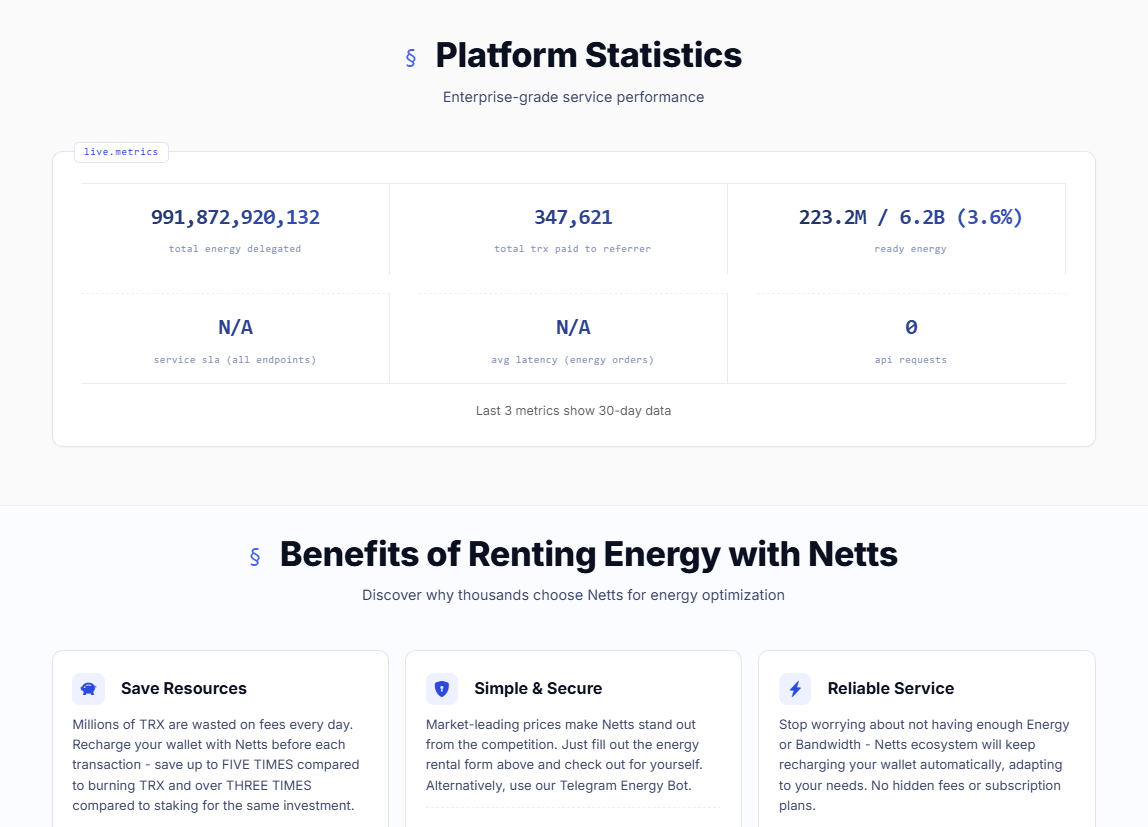
And on TRON, where users often just want to transfer USDT fast without wasting TRX, Netts.io handles a smaller but practical version of the same tradeoff: control costs before they become pain. The platform lets users buy TRON Energy, get TRON Energy for 65,000 or 131,000 Energy transfers, compare TRON Energy markets, and rent Energy for short windows instead of staking or burning more TRX than needed. It cannot refund a careless transfer, but it can make the ordinary act of moving USDT cheaper, faster, and less likely to become another avoidable crypto frustration.