Mentoring in Crypto - Double-Edged Sword
Crypto mentoring — signal versus grift, OPSEC boundaries, and the traits that separate operators who ship from personalities chasing clout.

Picture one of the earliest blockchain visionaries who first sketched out an entirely new architecture that was so beautiful, so complicated and so innovative that even its creators don't fully understand how it works. Through the bitterest of crypto winters, through the convoluted regulatory mazes of more than one jurisdiction, and well into the billions of compounding in his numerous wallets and heavily fortified cold storage vaults. And so there he is at the top of the game, where the air is thin and the temperature — cold.
Wealth is wealth, and it is worth noting that his pile is 100% generational and maybe enough digital gold to feed families for centuries to come. But his own children do not care at all about the underlying technology or the powerful philosophy of decentralization that made all this possible. They are simply dependents in his success, wholly concentrated on dissipating the riches and completely apathetic to the complex details of the cryptography, game theory, and economic incentives that created it. To them, the blockchain is merely a mystical, invisible ATM that makes withdrawal into their luxurious lives.
The rest of the world will leave the old lion of the crypto woods to a silence so deep and resonant it can be heard for miles. He has constructed an empire of code and capital, yet there are no potential heirs to his throne. No one in his inner circle really grasps how monumental what he has done is, or the vision he has for the future of DeFi.
Then, at some invitation-only sidebar event at a major global consensus conference, he encounters a game-changing kind of person almost randomly. An upstart developer — just out of university it seems — ranting with zealous, unbridled commitment about consensus algorithms, zk-snarks, and the absolute efficiency of network layers.
This young punk is hungry and very smart and you can see that unrefined flash of brilliance that so vividly takes the veteran back to his own youth. It allows the conversation to flow naturally, as if they were skipping the networking conversation. They discuss the idiosyncrasies of network scalability, the metaphysical ramifications of a trustless society, the era of the algorithmic stablecoins. The veteran has a little bit of real, actual buzz for the first time in years. And this realization weighs heavily: if he brought this young prodigy in as protégé, imparting the one-off, little-known information and strategic insight he had obtained over 10 years of brutal mercantile cycles, they could build projects together that would radicalize the world.
However, the dark, adversarial forest of the cryptocurrency industry that you have wandered into answers with a much more sinister question. Is this a trap?
Attraction of the Ideal Apprentice
This is a horrendous dilemma that goes to the heart of human nature vs company survival. The veteran could, in one seasoned, even-tempered approach, apply precisely the identical paranoid risk management precepts he has deployed over the years to ward off ticketless admittance to his funds by hyper-delicate hackers and social engineering practitioners.
He might see this fortuitous meeting like a meticulously crafted trap using a long-con. The fledgling coder can, after all, just be a well-rehearsed actor, pretending to be the brainy son the old-timer never had, purely to obtain protected math, inner circles, and then a slew of pre-seed millions. The crypto industry is a well-known hotbed of grifters, sycophants and a host of other opportunistic actors whose natural instinct is to reflect back the wants and weaknesses of people in positions of power.
The old lion opens his vault of knowledge, exposes his opsec, and basically gives a future ruthless competitor a loaded gun. Even worse, he may be allowing a parasite directly in to siphon his resources, steal intellectual property, and disappear back into the digital ether — leaving only a battered ego and empty wallets behind.
Conversely, to dismiss the young builder with a wave of the hand is to embrace a lonesome future in which there is no hope of escape from the current state of intellectual hermitude. It means missing out on the once-in-a-lifetime chance to finally taste the deep pleasure of co-creating with someone who understands.

Two strangers collaborating together on a project typically have a transactional approach to working together. No gratitude, no loyalty, the minute a better financial deal shows up on the horizon, the relationship gets dropped like a hot potato. But a real protege — one whose wings have been nurtured and whose advocacy and trust marks him or her as utterly unique to a titan who is driven like the rest of us by our broad-based sense of human nature — such a protege might feel a deeper bond of loyalty, a chain of attachment forged in exposure.
In an industry where trust is mathematically enforced by code for the very reason that human trust is rare and tenuous, it is like coming upon a new genesis block, freshly mined and free of corruption — a trusted oracle. The sheer capital, network, and maturity of the veteran, combined with the endless energy and new knowledge of modern programming paradigms, along with the youthful's burning desire to prove himself, would create wonder upon creation, right? They might conquer completely new markets, potentially even changing how we manage resources by automating Energy rentals on the most important networks, building invisible, frictionless experiences that the broader market needs, but does not have the insight to construct.
Character Judgement in an Ecosystem without Trust
To straddle this two-bladed sword comes the need for a masterclass in human psychology and behavioral analysis. More than the ability to audit a cryptographic smart contract line by line, more than being able to speculate the market top within a week, the veteran's judgment of character becomes his most important asset.
He needs to distinguish between the fully self-serving and the fiercely loyal. It's an exceptionally delicate balancing act. Needless to say, the crypto space is very hot and needs high levels of confidence. You cannot construct a decentralized protocol that sustains billions of dollars in real user value with self-doubt or indecision. However, there is a knife-edge, frequently indistinct distinction between needed, motivating confidence and toxic, blinding arrogance.
It is the same developer who dismisses a veteran warning him about esoteric edge-case vulnerabilities, because the developer thinks he can just write modern code that is perfectly flawless because the previous generation is totally out of touch — arrogance.
The mentor should also need to watch the protege struggle with being wrong. Is he quick to excuse himself by blaming outside forces, market circumstances or other developers? Or does he take this hard lesson and update his mental models, and come back next day with a better, stronger, evolved framework? In addition, the veteran has to also seek out the signs of entitlement, which are often sly.
When assessing the character of a potential protege, the veteran must also provide unique non-fakable signs of character:
1. The ability to listen to strict criticism on aspects of technology without a defensive reaction or retaliatory attack by ego.
2. Actually, a history of getting your hands dirty and completing the non-flashy tasks, rather than leaping to the next shiny object.
3. Adherence to OPSEC and diligent preservation of the privacy of the mentor's circle.
4. Proven ability to choose protocol sustainability over personal liquidity in the short run.
But if the emerging builder comes to expect immediate introductions to premier VCs, or asks for access to elite stacks of infra tools — such as a TRON Energy API — without having yet demonstrated operational prowess in the trenches, it is a bright red flag. The mentor needs to feel things out gently and methodically, giving dry, drawn out assignments — like auditing a legacy codebase, diagraming the complex tokenomics of a small competitor, or tuning database queries — for the hunger and commitment to check in when the light melts away and the task is completely, unprofitably unglamorous.
Burden of Proof Lies with the Proteges
The dynamic is likewise complicated and anxiety-inducing for the young builder — or whatever placeholder we use to speak about their group. If you are that protegee, landing in the huge gravitational orbit of a crypto heavy, you know that the power disparity is vast and that you will be viewed with suspicion (quite rightly) as a potential SES.
How do you assure a well-versed and bruised veteran no betrayal is in store? How do you demonstrate with absolute certainty that teaching you is a good, invaluable investment of time, energy, and reputation and not an existential exposed weak spot poised to destroy everything? The secret is radical transparency, fierce ownership, and continuous and relentless unsolicited value delivery.
In an industry literally based on cryptographic proof and verifiable actions, words are literally completely cheap. The level of loyalty the protege must show is by definition on the nose.
That involves safeguarding the mentor's time as if it were prime real estate, arriving at meetings with not only the open-ended questions but also the fully-detailed analysis of the potential solutions along with several contingency plans. This means an authentic desire to pit your back into the grunt work of building, steering through the black-tar, non-forthcoming, development trenches. So if a mentor drops an offhand comment during a late-night call about a crippling bottleneck in their operations, the protege has to do more than just nod sympathetically — they have to spend the entire weekend writing a working prototype script that resolves it.
Monday morning they will dig into how to better manage network resources by analyzing historical Bandwidth consumption patterns, and then come up with a full coded optimization tactic.
Importantly, also, the long-term incentives of the protege need to tie in to the overarching legacy of the mentor. They have to say — in the way that they conduct themselves every day and in the bounds of their never-ending patience — that they are not professing interest in a get-out clause, a shock sale or a usefully-stupid culmination of a vanity project. They are there to learn the blueprint of greatness.
Only when the mentor sees the young builder completely forego all opportunities for immediate gratification by passing up six-figure short-term offers to pursue secondary success in the context of the mentor's overall multi-year vision do the thick walls of paranoia start to diminish. It's proving day in and day out that the relationship is not a zero-sum game of extraction, but a strong synergistic loop where both parties rise to heights they could not reach on their own.
Harnessing the Power of Generations
And when this wonderfully fragile ballet of trust, verification and equally accessible respect is successfully accomplished, the rewards are frequently jaw-dropping and business-transforming. The cryptosphere is bloody fast and exhausting, and the mental demands of being at the very forefront can be heavy as hell — and we find so many founders get totally wiped out, even the hardiest. Look how much options there are for somebody who's looking to hire - can you outshine all these options with your value?
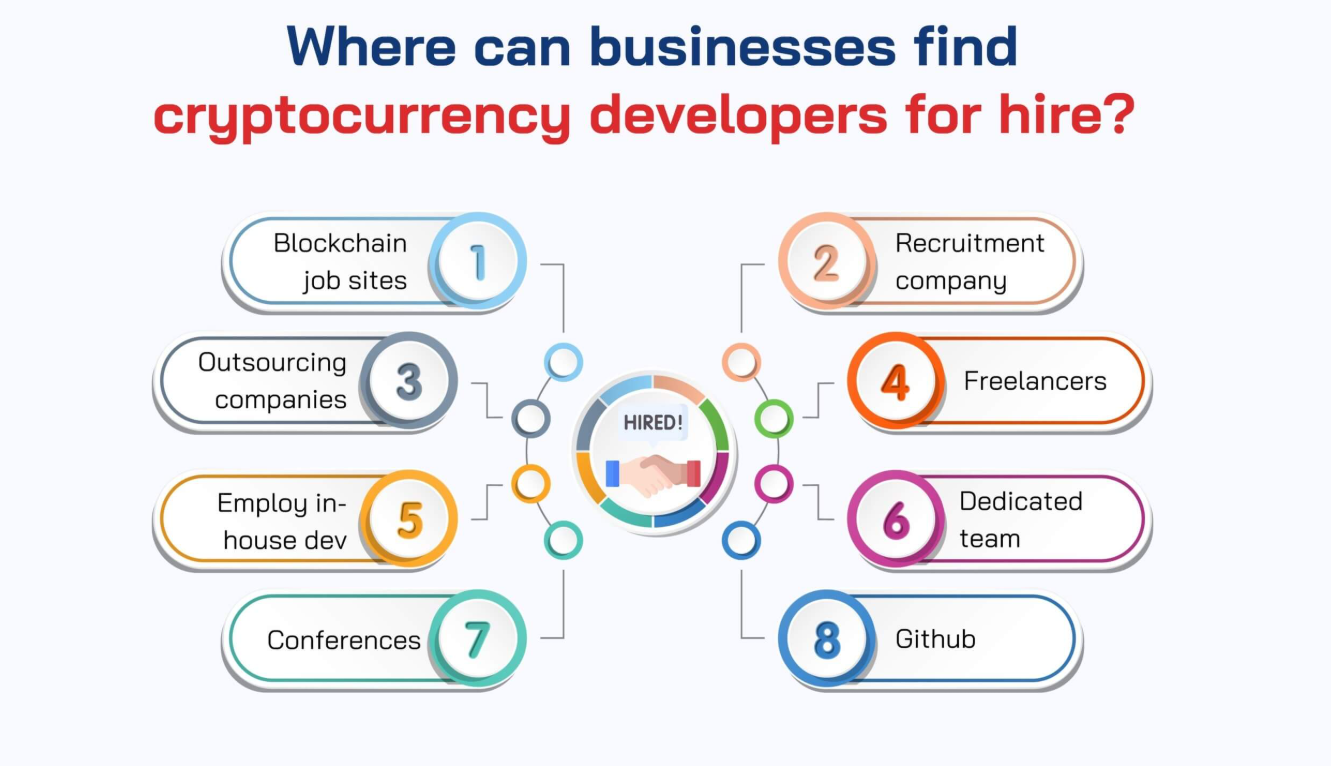
A more seasoned entrepreneur may have the killer strategic insight to discern precisely where the global market is moving in 3-5 years, however lack the granular intimate day-to-day knowledge of the newest Rust developing frameworks, cultural changes in decentralized autonomous organization culture or the latest zero-day vulnerabilities. Right here, to fill this essential blind spot, is the young protege. They behave like the exquisitely sensitive sensory organs of the mission, bringing back fresh raw data and new tech trends to the mentors, who then contextualize these noisy, novel signals within a larger tactical strategic arena.
Now think about the huge operational efficiencies that combine. The veteran can keep its eyes on the big picture institutional partnerships, complex regulatory frameworks, and treasury risk, while the protege can stay buried in the technical weeds, knowing nothing will distract it. They can lead bold programs in the relentless focus and rapid technical adaptability that is needed today.
For instance while some blockchain networks scale linearly at an exponential rate, the price of executing complex smart contracts represents a friction that can completely wipe out a protocol's ability to scale. When adequately mentored, such a well-connected, capable protege could begin waging an aggressive war on these costs, burrowing down into the esoterica of resource allocation and network state mechanics. Perhaps they realize that the project is spending millions in undesired transaction fees, and they roll out a full-blown automated solution with a TRON Energy API, where bandwidth is allocated in real-time based on network congestion.
By owning the kind of gut-level, quasi-mission critical infrastructure — that provides the project with whatever Energy and Bandwidth it needs to run efficiently at the moment, even in the face of massive traffic surges — the protege demonstrates their own aggregate value, dynamic nature. This isn't only about writing the most elegant code; it's about shouldering the massive operational nightmare so the newbie doesn't have too, so the vet can function at maximum strategic elevation.
The Legacy You Leave
This is true if even the most successful, tightly knit mentorships in crypto are oftentimes riddled with enormous friction. Eventually, as the mentee becomes more capable, more networked, and more technical, they'll start developing more robust opinions, and they may often put these opinions in direct, loud opposition to the way the mentor has always done things.
The wizened beast is going to need to fight every urge to stomp out those rebel thoughts with the force of 1,000 papal decrees simply to feed ego, stave off obsolescence or maintain pristine, tyrannical status quo. If the mentor expects unquestioning compliance and punishes creativity they are not cultivating a future leader, they are elevating the status of a master robot: a specialized, interchangeable handyman. That friction must be managed, and guided into productive, fiery debate that fortifies the protocol.
The protege, however, needs to also learn the subtle craft of respectfully disagreeing with evidence. They need to realize that the cautious advice given by their mentor, often illogical and unfounded in their mind, comes from having lived through catastrophic market collapses, brutal protocol hacks, and predatory bear markets that the younger generation typically reads about in Twitter threads of the past.
But when a big disagreement comes up — like whether to rush an eagerly awaited new feature out the door to capture a short-term swing in market momentum, versus taking three months to ensure the new feature passes through more stringent security audits — the protege has to deliver his arguments with cold hard facts, historic precedent and risk-adjusted models, not righteous indignation or user testimony. Even if a radical tactical approach to the problem is being proposed, the acolyte must demonstrate that they have very thoroughly internalized the core principles of capital preservation and security from the mentor.
This high stakes kind of mentorship isn't ultimately about making a pliable, perfect replica of the veteran, but about creating a different type of leader who makes the best possible parts of the mentor's legacy carry forward through all the equilibria of a changing technological landscape. In an era so often described, with hateful shorthand, as chilly and electronic — it is a deep, lovely kind of handoff.
The veteran gets to observe their foundational principles and body of work live, and breathe, evolve, and scale, with the comfort that their legacy will not simply gather dust in a GitHub cemetery. The protege goes from a zero to a hero, skipping over an entire journey filled with years of painful, expensive trial and error, leading to financial disaster, and a career ruining reputation. Combined, they form a powerful union that can tolerate any market cycle and make a firm statement about just how valuable trust is — the rarest commodity in crypto.
Building in crypto is an extremely hard technical, psychological, and resource management problem for every builder. And, as much as finding the right strategic partners who get your vision is the key to success, so is making sure you and your team have the right pro tools, whether you are a seasoned vet looking to scale the operations of your massive digital empire, or a rookie rising star looking to maximize your mentor's sprawling infrastructure.
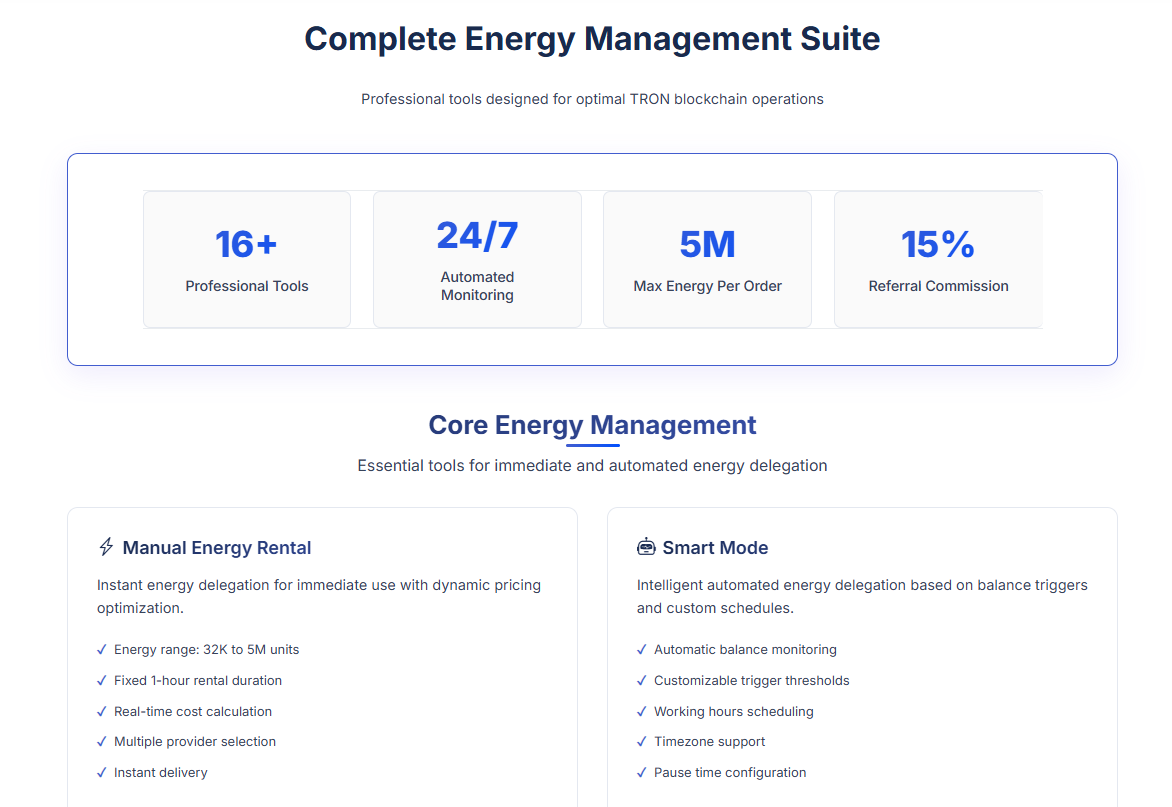
And it is here that you realize the true power of specialized platforms, quietly providing vital support for a smooth day-to-day operation. Netts Workspace is a professional TRON Energy management platform specifically aimed at such complex and high-stake demands. From automatic energy delegation to smart schedule management with pro API access, it makes sure that ambitious builders remain focused on innovation, instead of micromanaging endless gas fees. From running a manual rental for instant use to configuring an advance smart mode for persistent, timezone-aware monitoring, Netts Workspace never lets your ops run out of Energy, costing up to 80% less compared to the current rates and allowing you and your team to focus on building the decentralized future.