Interdisciplinary Projects on Blockchain
Interdisciplinary edge in blockchain — lateral thinking, reused tech, and teams that connect economics, code, design, and incentives better than silos.
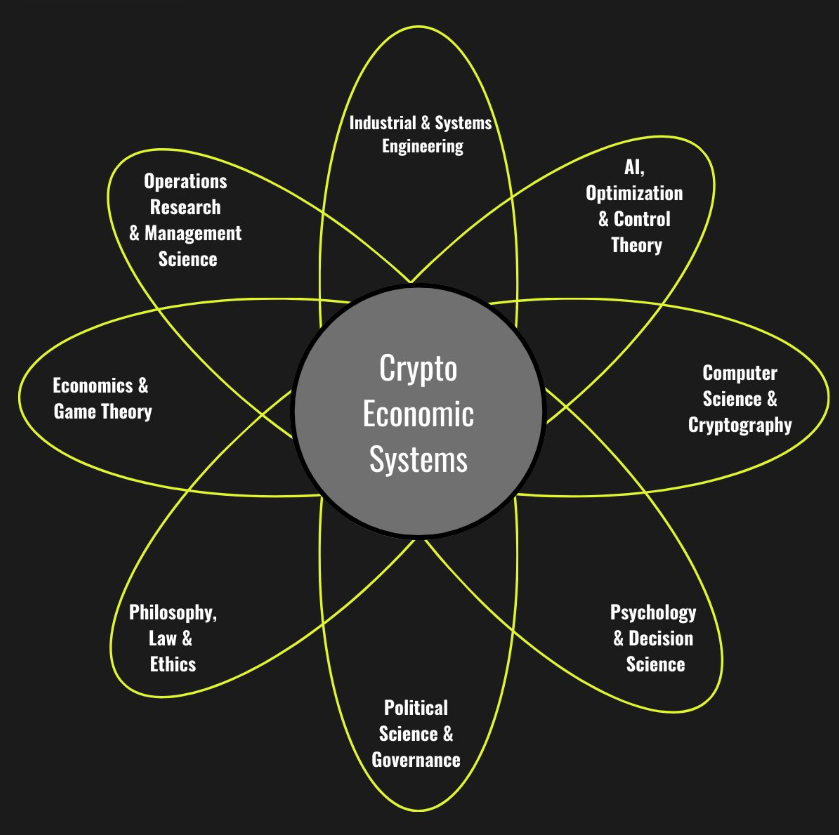
At other times, you have to connect the dots that other people simply cannot see. For at least the past 50 years, particularly in the world of computing, the accepted wisdom has been that the fastest path to the top is to find a single niche and mine it relentlessly, the idea being that, by becoming the domain expert, you will become, in essence, irreplaceable. Specialization is only worth it if specialists are scarce. These days, people with twenty years of experience are getting deep sixed — are you really going to be able to outdo them building out some specialized tech?
The stoic truth of the matter is that (for creative digital professionals) the modern job market is saturated with people that have spent decades honing their skills in insulated silos. In recession cycles or paradigm shifts, it is often these hyper-specialised roles that are automated or offshored first. This underscores a major limitation in the traditional career path: by only digging deep in one particular area, we end up missing the wider linkages that provide the foundation for innovation.
On the other side, the crypto space has another dynamic altogether. There are so many dots to connect — in crypto, the opportunities are a new wild west! The very nature of blockchain technology — decentralized — brings into the field a cocktail of disciplines including computer science, economics, game theory, sociology and even philosophy. An environment where synthesizing generalists inspired by works from unrelated disciplines advance past specialists who remain within their own lanes. Cross-disciplinary looking reveals inefficiencies and opportunities that are invisible to narrow band thinkers.
Lateral Thinking with Withered Technology
To really appreciate the transformative nature of this approach across disciplines, we need to look beyond digital assets and study great examples in other technological revolutions from the past. Perhaps the most persuasive examples are from consumer electronics and entertainment: Gunpei Yokoi, the Godfather of Nintendo; the man who talked up a philosophy he called Lateral Thinking with Withered Technology. Cutting-edge, narrow, specialized technology is both costly, complex, and unreliable. Rather than targeting the bleeding edge of hardware specs, he looked for cutting-edge uses for overripe, inexpensive, and well-known technologies. He figured this out way back when, stringing together calculator parts and repurposing them for highly successful Game & Watch portable consoles, and eventually the beloved Game Boy. Yokoi did not invent the LCD screen, or the microchip, both technologies were long gone and beholden to other mediums, but Yokoi to his credit, realized how they could be combined with interactive entertainment to create what could be an entirely new category in the market.
This sort of lateral thinking (the act of bringing one idea to bear on another) is exactly what the modern blockchain ecosystem will benefit from. Instead of attempting to out-engineer the most seasoned cryptographers, the builders that have achieved the greatest success take well known cryptographic primitives and apply them to yet-unanswered questions in finance, infrastructure and governance.
We are today witnessing a renaissance of lateral thinking in our industry, visionary founders are happily marrying different worlds together. And this is not just an academic exercise in cross-pollination, but materializes as transformative, paradigm-shifting platforms that defy our basic concepts of how we need to think about digital-physical interfaces. These projects are unlocking new levels of value by stepping outside of the echo chamber that is pure cryptography, and allowing decentralized ledgers to interface with the real world. They show that the real power of blockchain is not as an isolated new type of database architecture, but in its ability to act as an underlying layer for cross-disciplinary innovation.
Marrying Physical Infrastructure with Decentralization
A new class of innovation bridging specialists is showcasing the synergetic ways to create value through crypto, and a quite striking example is the Decentralized Physical Infrastructure Networks (DePIN). It is a fascinating crossroads between telecom, hardware engineering, and blockchain tokenomics. Until now, creating physical infrastructure — cellular networks, wireless internet coverage, or cloud computing data centers — was a massive capital play, operationally murky, and under the auspices of top-down corporate control. The barrier to entry was simply too high, resulting in monopoly investment by telecommunication giants.
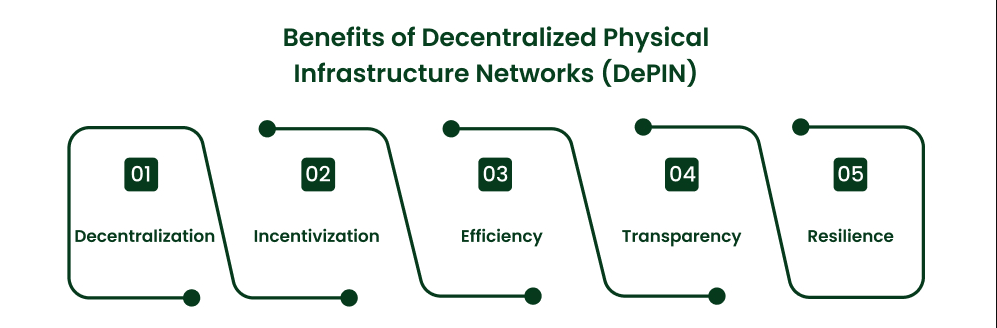
In the meantime, however, there were projects like Helium which arguably reinvented the model by making relationships between radio frequency tech and decentralized incentive structures apparent. The Helium network empowers everyday humans to buy and install small, specialized wireless routers to their home or place of business. This allows operators to receive cryptocurrency tokens in exchange for localized network coverage for IoT devices. It effectively creates a global wireless network by crowdsourcing the set up and maintenance without a company needing to run miles of cabling or erect gargantuan cell towers.
DePIN projects exist in the context of a growing discontent with centralized infrastructure providers that are prone to single points of failure, opacity, and monopoly pricing power. They seek to build more robust, fair and low-cost networks by spreading the hardware ownership to thousands of independent actors.
There are major advantages to this type of interdisciplinary approach. It gives the right to revenue streams of infrastructure to anyone, opening up economies of scale to those who normally must pay to play into corporate monopoly games. Thank God for the counter-economics of tokens. Finally, the fact that the network itself is decentralized means that local outages or censorships will hardly disable the whole system. Capital expenditure is socialized, i.e., the network can grow quickly without a single entity needing to source billions of USD of capital. Still, the downsides, though, are considerable, too. A decentralized network of physical hardware involves thorny logistical issues such as bottlenecks in supply chain, hardware quality control and challenges to realize a stable quality of coverage in less dense populated areas.
The one common takeaway to be learned from these new ideas, which are collectively called DePIN, is that blockchain could possibly coordinate human behavior in the real world, this only if incentive structures are properly crafted. Here it shows that tokenomics is one of the essential methods for capital intensive projects to bootstrap without destroying or misaligning the incentives of hardware manufacturers, network operators and end-users. At the same time, it underscores the need for real hardware engineering and supply chain management — fields that have nothing to do with software development and cryptography. A project must not only have impeccable smart contracts, but also trustworthy physical devices that are easy for non-technical participants to use if it is to succeed in this space. This will call for a multidisciplinary task force that understands both digital infrastructure as well as the tangibles of supply chain.
Artificial Intelligence Meets Immutable Ledgers
A second very deep intersection is the rapidly accelerating overlap between Artificial Intelligence and blockchain technology. Both fields worked in parallel tracks for years, AI on one hand focused on the trends of centralized data processing and pattern recognition, while blockchain concentrated on its features of decentralized consensus and data immutability. But now, enlightened developers are realizing that these two tech offer strengths and weaknesses that are essentially made for each other.
The training of AI models demands an enormous amount of data and computing power, resources that are ever more being monopolized by a few huge tech conglomerates. Such a centralization of AI development presents a major problem with bias, censorship and power. On the other hand, blockchain networks provide a decentralized, transparent, and censorship-resistant infrastructure, but they usually lack the advanced tooling necessary for complex unstructured data analytics. By merging these two spheres, projects are trying to spawn decentralized AI ecosystems that are open, and collaborative but also immune to monopolistic control.
This phenomenon is aptly illustrated by projects such as Bittensor that build a decentralized market for machine learning intelligence.
Rather than depending on one corporation to train and serve a giant AI model, Bittensor is a peer-to-peer network that allows any individual developer to run their own custom ML models. Such networks of models are constantly evaluated and ranked and their contributors are compensated through tokens on the basis of how much value their models bring to the network.
This context is important, though, as it marks a sea-change in how AI is developed and commercialized. It is the departure from the siloed, proprietary way of doing things with traditional tech companies whilst moving into an open-source, collaborative model empowered by blockchain economics. There are many advantages to this method. This will open the field of AI to people globally, enabling researchers and engineers from around the world to work with each other, possibly releasing their models as open source or commercializing them, without needing to work for a megacorp.
While the potential is huge, the convergence of AI and blockchain comes with huge challenges and disadvantages. One of the biggest challenges is the high computational demand of machine learning. Moreover, blockchain networks are very inefficient for data processing, and the technology needed to incorporate complex AI models directly into a decentralized ledger does not yet exist. As a result, off-chain computation is indeed a necessity for most projects, but it brings difficulties of verification and trust.
How does a decentralized network provide irrefutable evidence of a certain output from a specific AI model without having to repeat the complete process? Moreover, the quality and accuracy of the data utilized to train these decentralized models will always be an issue, considering that an adversary can try to poison the training data to negatively bias the outputs of the network.
The theoretical synergies between AI and blockchain are enticing, but practical synergies exist only after massive technical paradigms have been overcome. It requires advanced cryptography and machine learning algorithms, an interdisciplinary knowledge that is extremely rare.
Gaming Economies and Decentralized Finance
The introduction of video gaming to decentralized finance, also known as GameFi or Web3 gaming, is yet another powerful illustration of discipline innovation. Traditional gaming has utilized a closed-loop economy system for decades where players pay for in-game assets — character skins, weapons, virtual real estate — without guaranteed ownership or capability to extract value from those assets from the game economy. Developers run the digital economy with an iron fist and decide the laws of supply and demand.
This paradigm is upended by blockchain technology, which allows for the creation of verifiably owned digital assets (in the form of non-fungible tokens) and incorporates decentralized financial mechanics right into the core gameplay loop. This opens up a new world where the players can ostensibly be compensated financially for their experience and effort, thus erasing the boundary between game and work.
The initial examples of this idea, like Axie Infinity, illustrated the explosiveness of combining gaming with crypto economics. Innovating on blockchain technology, the project facilitated the breeding, battling and trading of digital creatures (cryptographic tokens on the blockchain), creating a dynamic player-driven economy that generated billions of dollars in trading volume.
The background context here is that gamers across all sectors are increasingly wanting true ownership where they can earn money from their own achievements free from censorship of their trade. This cross-disciplinary method has its major advantages — new income streams for players, especially from the developing economies and a hyper-engaged community-first surrounding. When players have real money within the success of a game, they are more committed to seeing it thrive in the long-term — becoming evangelists, and contributors, instead of mere consumers. Moreover, the use of decentralized finance protocols opens up new possibilities for intricate economic activities in the gaming universe, including lending, borrowing, and staking of virtual economies.
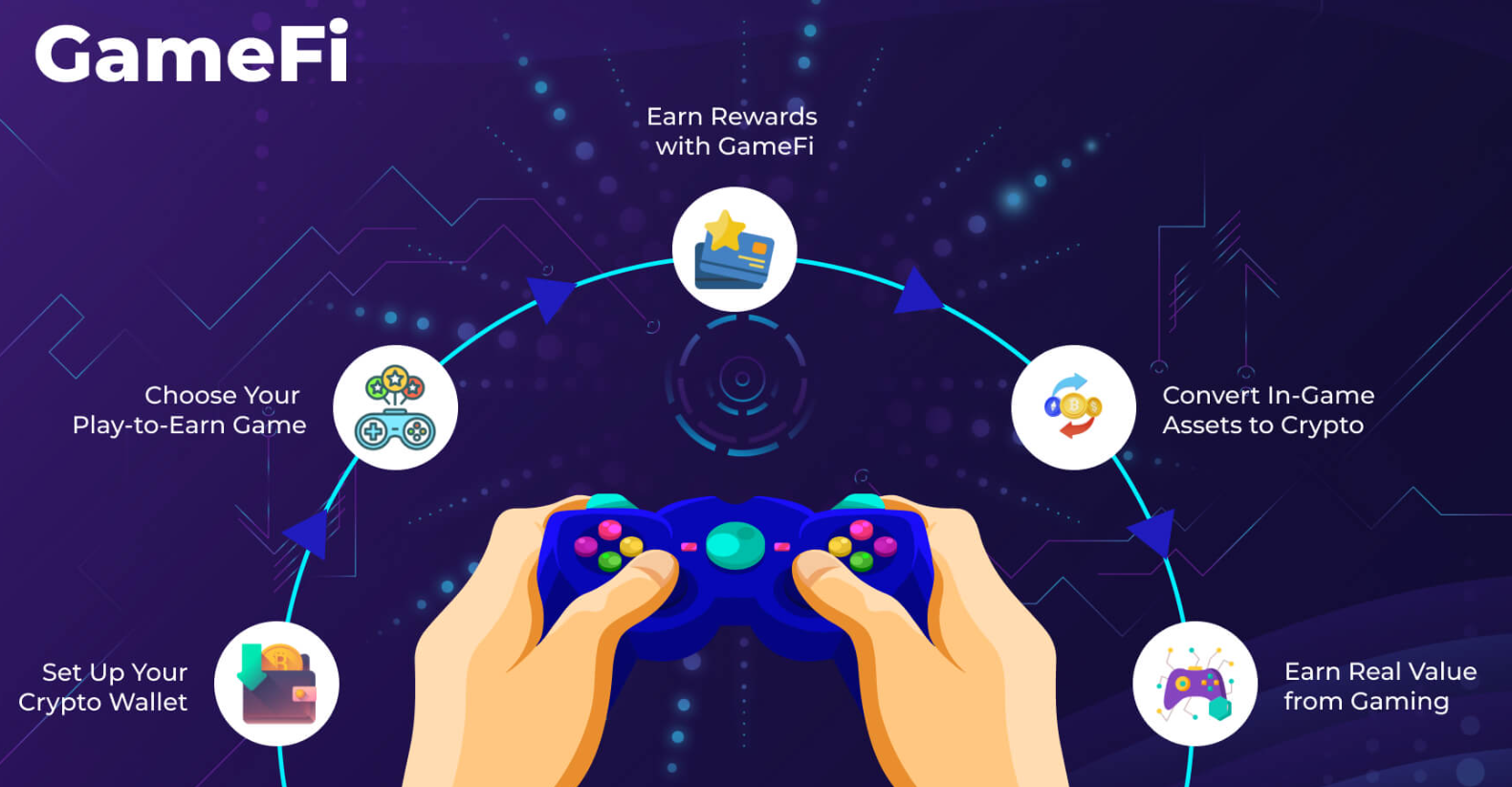
At the same time, the GameFi sector has also shown us some critical drawbacks and cautionary tales. In the early days of Web3 gaming, a huge number of projects ended up with unsustainable economic models that could only survive if new players kept entering into the game and buying the in-game tokens offered by existing players. These economies collapsed on users, as a result of which late adopters were left with worthless digital assets when user growth inevitably flat-lined.
The hyper-focus on financialization, however, sometimes was at the cost of actual gameplay quality. Most of the initial wave of Web3 games were really just DeFi protocols in disguise with basic graphical layer slapped on top, which meant they were a poor fit for traditional gamers looking for fun gameplay while approaching fundamentals investment through a speculative lens. And the most essential takeaway from the rise and fall of GameFi is that no amount of financial inducement can exceptionally overcome a lack of enjoyable experience value. From now on, the best projects will be those with high-quality game design, gripping narratives, and engaging mechanics, using blockchain as a backend infrastructure to support the player experience without being the center of it.
Real-World Utility and the Vital Future of Blockchain Integration
When looking across the spectrum of interdisciplinary blockchain projects, a trend emerges: the most sustainable, impactful innovations address a real problem through knowledge of multiple domains. Be it physical infrastructure deployment, unleashing AI via decentralization or catalytic gaming economies: the golden thread is actually being able to think out of the box and outside the narrow framework of esoteric cryptography and think holistically and perpendicularly. The days of creating isolated, niche blockchain protocols that have zero real world use case are over. Generalists, dot-connectors, and lateral-thinkers who can identify friction points in existing industries and use decentralized technologies to alleviate them are the future.
What these innovators know is that blockchain is not the end itself, but it is a powerful tool that needs to be supplemented with expertise from other fields, changing the very fabric of how we engage with the digital and physical world. The takeaways from these different industries underscore that even with the most rock-solid technology, a project can only be successful if its UX is second to none, if it has sustainable economic principles, and if it can thrive amidst the difficult realities of regulation and human behavior.
In the end, the most successful cross-disciplinary projects will disguise the complicated underpinnings behind simple, familiar use cases, just as contemporary solutions hide familiar network expenses. Take the TRON network as an example — when users are short on Bandwidth or some other resources, the costs to perform a transaction sometimes are high, and the simplest way to solve this is by bridging the smart contracts automation and resource delegation together.
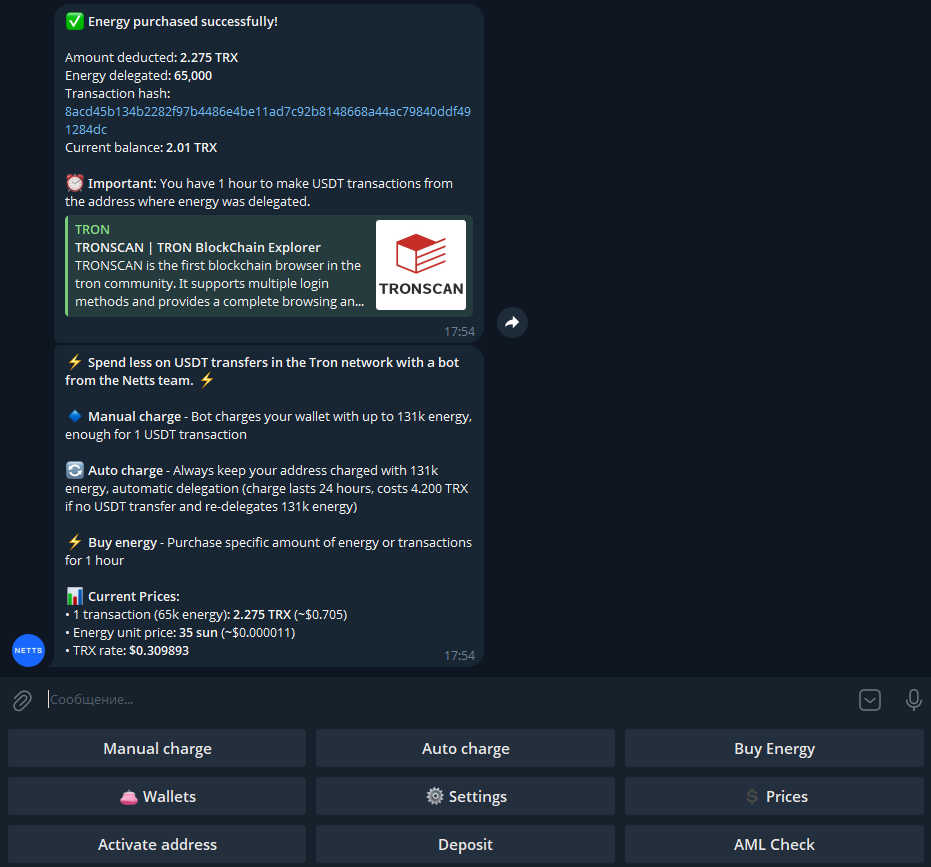
Another example is from our Netts Energy Charge Bot where users can refill Energy and recharge Energy for their wallets all without overpaying. The bot fills resources for 1 hour (the time required to perform a classic USDT transfer) automatically, by simply choosing a wallet and charging it, while the user only pays the TRX spent. It gives you a steady stream of low-cost TRON Energy, so the resources are only deducted if you actually consume them, which is the ideal automation paired with low-cost blockchain experience.