Influence of Crypto on the Auction Houses
From Banksy's shredder stunt to Christie's $69M NFT sale — how crypto has already touched the auction industry, where it's stuck, and why adoption is coming

When Banksy's shredder kicked in just as the gavel fell at Sotheby's and "Girl with Balloon" was acquired back in October 2018, the audience gasped, the auctioneer paused, and a large share of global art fanatics applauded. For those that cheered, the sight of a multi-million-pound work of art committing suicide in front of the people who had just purchased it was exactly the suitable mockery to high-end auctioneering. In this game, auction houses were the palaces of blatant overindulgence, where billionaires bid ridiculous amounts for artworks many of them hated in public displays of wealth that were designed to be attended only by those who already had. The shredding was justice. The shredding was performance art. The shredding was for a second the biggest story in the art world.
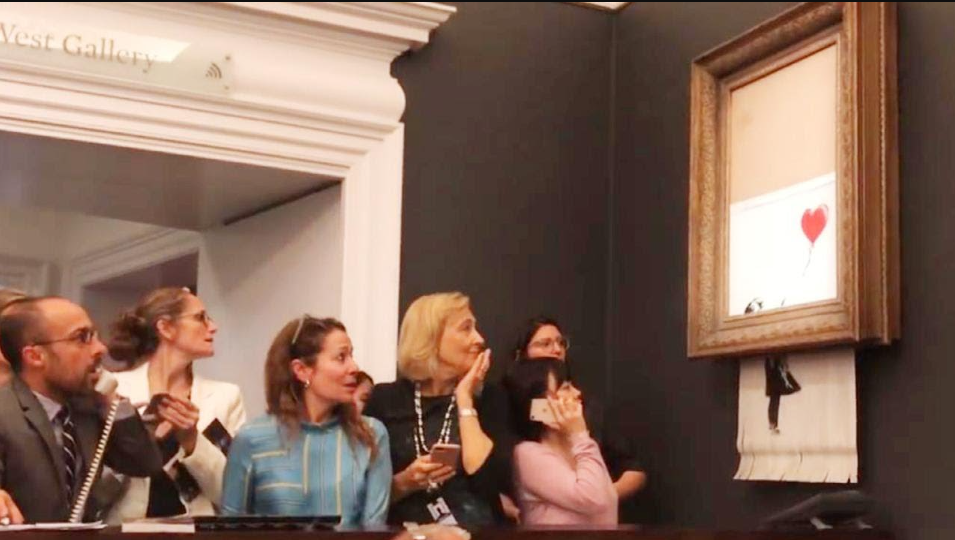
The framing was satisfying, but unfulfilled. Auction houses are not and never were some vast psychic monolith of rich-people's excess. They are a multi-faceted, nuanced industry; they organize everything from estate sales through small towns to specialty auctions of collectibles to the over-the-top fine-art sales that make headlines at Christie's and Sotheby's. The same mechanism that sells a Picasso for ninety million dollars sells your grandmothers silverware for sixty-three. The industry is older than most modern institutions and has centuries of collective experience transferring value in expensive things between owners, one of the slower-hanging fruits to absorb the vast digital transformations that have swept nearly all other categories. Crypto is early in the process of changing that — and, more interestingly than there being NFT auctions, crypto is changing it.
Many Faces of an Auction House
Much of the public's focus is on a few of the fine-art houses — Christie's, Sotheby's, Phillips, Bonhams and some regional specialists. These are the ones who give us those photographs of raised paddles in marble-floored rooms, the ones whose sales make headlines when a Rothko or a Basquiat changes hands, the ones whose press releases are quoted in stories about global wealth inequality. In reality, they have a tiny portion of the overall auction market share. The biggest auctions, by lot volume and transaction volume, are very far from these names — in estate liquidations, in regional houses that touch furniture and decorative arts; on specialist platforms moving rare books or vintage watches or industrial equipment.
We also have an entire category of online auction platforms that have burgeoned in the last two decades. Although eBay has moved most of its volume to fixed-price listings, they based their core business around the auction model. Heritage Auctions has become a leader in collector auction events worldwide.

Bring a Trailer becomes the go-to market for collector cars. LiveAuctioneers and Invaluable collect auctions from thousands of local auction houses around the world. These platforms each deal with a different customer segment, a different seller segment, and a different user flow — and thus all have experienced their own more gradual adaptation to innovations in crypto.
The fine-art houses are interesting because of the price, but the volume happens on a much larger scale elsewhere. A typical estate sale in a small town might handle hundreds of individual lots in a Saturday morning, none worth much more than a few hundred dollars. When you total the number of these auctions from every country and across every category, their volume is multiple orders of magnitude greater than that seen in headline events. A change that affects the mechanics of auctions and can be scaled out to the rest of the category is an order of magnitude larger economically than a change at the very top end (though admittedly all press interest will end up there).
The workers at these different auction houses also vary greatly. But the cataloguer at Sotheby's staging a Renaissance painting for auction is doing something entirely different than the operator of a regional estate-sale house with three hundred lots to clear before lunch. The upper echelon is all about relationships, knowledge and reputation that require decades of cultivation. The lower end is about volume, throughput and operational efficiency. There are two ends of the market and crypto-native innovations have been approaching these very differently, with some parts that have worked at one end not necessarily translating to the other.
The Effect Crypto Has Already Had on Auctions
The most notorious incident was in March 2021 when Christie sold Beeple's "Everydays: The First 5000 Days" for sixty-nine million dollars (in Ethereum). The sale did multiple things at once: demonstrated that an old guard auction house was willing to handle a purely digital, blockchain native artwork, proven that institutional bidders were prepared to pay institutional dollars for such a work and shown that crypto-denominated settlement at the top end of the market was operationally possible.

The Beeple sale was the moment when the auction industry stopped being able to pretend that crypto was a fringe curiosity. Shortly after, Sotheby's caught on too with its own NFT auctions and a limited use of crypto payment for traditional lots; in 2021 starting with the Banksy "Love is in the Air" piece selling well over twelve million dollars but settlement to be paid by crypto if required.
That was followed by the messy NFT boom and deflate we currently still sit on a fraction of, but the infrastructure that the big houses built to surround it remains. It can continue to use Christie's 3.0, its crypto-native auction platform. Sotheby's Metaverse keeps curating digital auctions. This is by no means the first time Phillips has built crypto payments into broader work flows. Such houses that built this infrastructure during the boom did not take it down when the boom passed, but let it run for a reduced (but more strident) trickle of gamers who actually inhabit the thing. The next NFT-type category will find a more robust institutional environment than the first found.
The next wave of crypto has started to ripple through more traditional auction houses in less noticeable ways, as seen with NFTs. Cross-border bidder onboarding, long the most painful part of selling expensive goods internationally has been made slicker by settlement methods with stablecoins that mitigate the slowest parts of legacy banking. In the past, a bidder in Shanghai buying a painting in London would have to wait days for a wire to clear before receiving their purchase — now, it can be minutes through USDT immediately after the sale goes on-chain.
The houses have not crowed as loudly about this, because their traditional clientele would likely eschew the optics, but the operational improvement is indeed real, and volume of crypto-settled transactions at major houses has continued to increase in the years since initial experiments.
We have also seen silent trials for chain provenance on high-value lots. Just like the blockchain provenance systems that have proliferated through jewelry and luxury goods, these systems are setting up in auction catalogues of serious art and collectibles. Artworks sold through a major house can now be accompanied by an immutable, permanent on-chain record of all its sales, its authentications and restorations — solving one of the oldest challenges in the industry: that as objects change hands over generations their documentation often gets lost. Someone who buys a piece sold today receives an unlosable record that will not be lost if the house's archive is reorganized or when their documenting expert retires. Considering that the central tension of the market is forgery, a structural enhancement like this means something.
Bidding Psychology and New Incentives
Of all the commercial mechanisms ever invented, the auction format is perhaps the most psychological and thus one of the most tyrannical. The room. The countdown. The visible competition. The subtle society force that needs the participant to make snap decisions to then rationalize themselves as well as onlookers. People pay more in auctions than they would after private negotiation, an entire genre of literature has been written by behavioral economists on that topic, but the same human foibles you are familiar with come up over and over — the desire to win, the fear of regret, who knows what else in terms of social signaling from public bidding, the loss aversion kicks in once you have a bet on likely serving to push typical people around; when making auctions decisions it becomes very hard not to choose with your id. However, even these tendencies did not come out of nowhere and were not going to simply fade away.
Crypto is not changing the underlying psychology, it is changing the surface that the psychology operates on. Placing a bid from the crypto-backed wallet that holds your savings is cognitively different than placing a bid with a credit card or wire-transfer. The mental accounting is different. The friction is different. But the visibility of your own commitment is another matter. Many auction houses that have tried running crypto-native bids report that behaviour can differ in a few subtle ways from traditional bidding — bidders are more aggressive at the beginning and more disciplined towards the end, and the cool-down after losing a lot is quicker, more likely to bid on multiple lots in one sitting. None of this is fully understood, but the differences are pronounced enough that houses building crypto-native platforms are watching behavior closely.
Then there is that whole audience thing. The small, geographically limited group of buyers at traditional fine-art auctions was almost exclusive and skewed heavily toward older buyers with established wealth. Its audience is wider, international and skew younger because the wealth was made by technically endowed people instead of family money. These two audiences want different things. The buyer of old wants the certified authenticity, the reputation of the house, the social validation of owning something particular. You care less about the crypto native buyer who often wants that unique digital object, and not just the on-chain history: they want the bragging rights of provenance verifiable to all with a wallet. These motivations, while varied, are not anathema to one another and the houses that learn to appease both will be those critical mass players if they do settle into cycles.
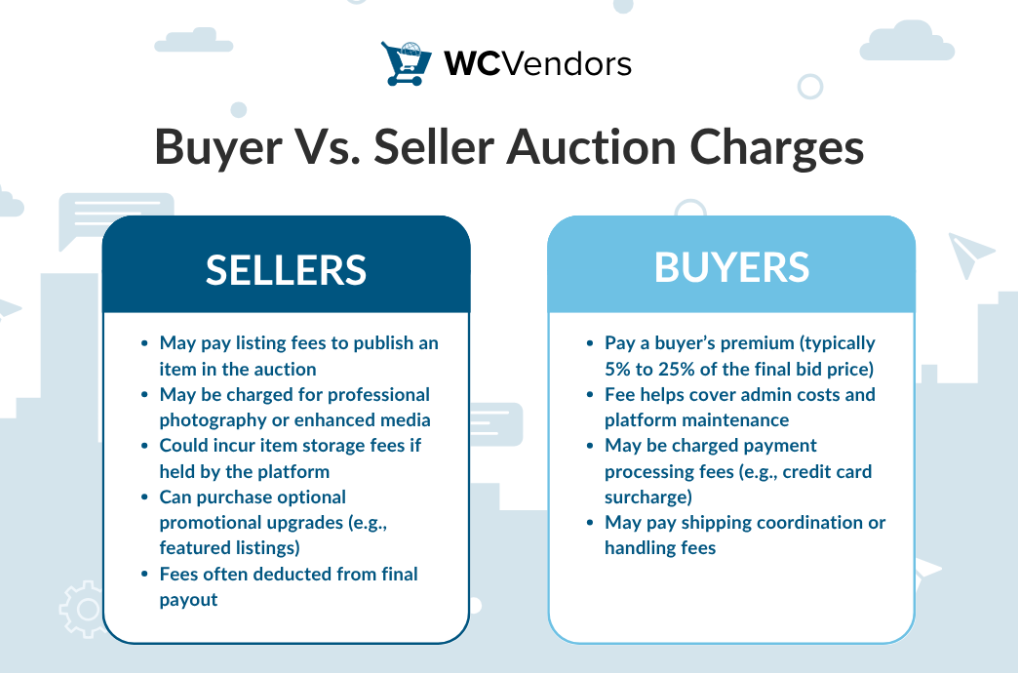
There is also an interesting incentive structure for the auction houses themselves. Standard commissions on a large sale can add up to as much as twenty to thirty percent of the hammer price itself, divided between buyer's premium and seller's commission, with some variation depending on both sides of the transaction. While crypto settlement does not de facto alter these commissions, it changes the operating cost of running the auction. Less costly payment processors, faster settlement, lower chargeback risk and simplified participation with cross-border access all improve a house's margin on the same sales volume. In houses where crypto settlement has been integrated to the demands of margin management, we see material improvements in margins even where public-facing pricing may not have yet changed.
How Traditional Houses Are Slow to Move
In all of the above, the major auction houses have only cautiously dipped their toes into crypto — beyond headline-grabbing NFT sales and operational settlement infrastructure. There are reasons for the slowness, some of which can probably be explained away.
The first is the clientele. Those high-end buyers have been in the game longer, are older and far more conservative, and far less enamored of traditions going away than any digital-native audience the houses might want to grow. Over-marketing the house as a crypto paradise could endanger the core customers that actually bring in most of the revenue. The challenges result in house having to strike a balance between relevance and not alienating the people who help fund their being.
The second is regulatory complexity. Auction houses function in a plethora of different jurisdictions, most with their own idiosyncratic rules around anti-money-laundering compliance, sanctions screening, and the treatment of high-value items in cultural property and taxation. Integrating crypto payments further multiplies these compliance burdens in ways that conservative legal departments cannot reconcile. The penalties, for business and reputation, of getting any of this wrong are an order of magnitude greater than the marginal revenue from the extra crypto-revenue opportunities.
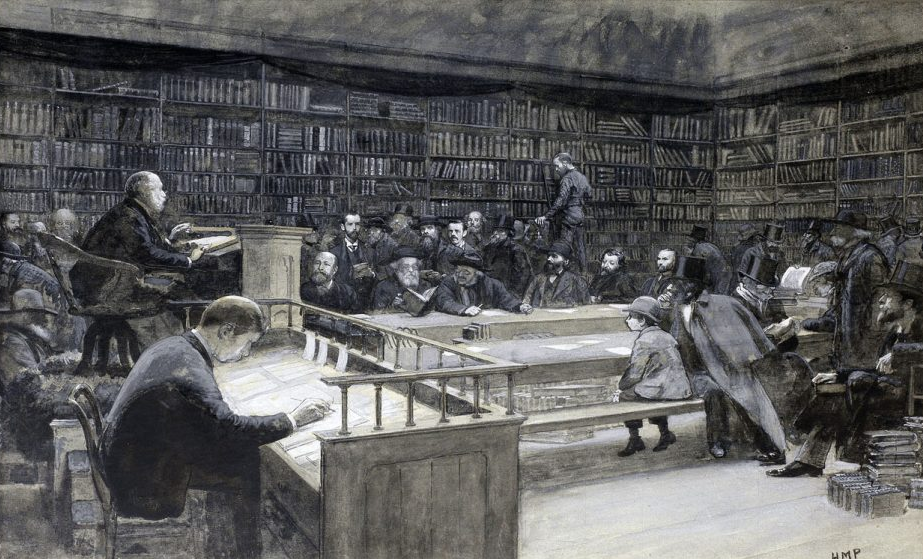
The third is institutional culture. It's worth mentioning that auction houses are themselves a curiously ancient sort of business — Sotheby's dates back to 1744 and Christie's founded in 1766 — and they've only endured centuries of slow, methodical inertia. The speed of their changes is matched with the speed of the long-term relationship they will build with their clients. Most internal proposals for radical innovation tend to circulate within committees over the course of years, pilot programs, and painfully gradual adoption. This is painful to unpick when viewed from the outside, but it is the same mechanism that has seen these institutions survive through multiple industrial revolutions, two world wars and several periods of escalating economic crisis. The slowness is not stupidity, but another step in the operating mode of an institution that wants still to be here in a century.
Fourth is the trust that comes with prior reputation. Collectors of expensive art place a significant amount of faith in the house's credentials and guarantee about what it is selling. And replacing any of that with on-chain mechanisms would, for many of the highest-value transactions, make the service less valuable not more so. While theoretically, the blockchain record could be more verifiably permanent, again it is the bona fides of an auction house that will get a billionaire to wire ninety million dollars without seeing the painting in person. The houses know this. They defend the locus of their real value: they are not peddlers of static change.
What It Really Means (and What It Doesn't)
That may seem an impenetrable barrier to you, the conservatism of the big houses but from a longer perspective it does not matter much. As in every traditional industry, adoption in the auction sector is to be watched on a time scale of decades rather than quarters. The NFT moment and operational settlement layer were the synthesis of the first decade of integration. The on-chain provenance systems and the slow normalization of crypto payment for traditional lots is what this second decade should hold. Fractional ownership of high-value art will increasingly become routine during the third decade, with much of the needed technical infrastructure already largely built out. By the fourth decade, the practices that seem new today will be as dull a baseline as digital credit card payments have become for auction-house staff, and there will be an entirely new generation who use them like their forebears used wire transfers.
This kind of patient absorption is not unprecedented. It took decades for online bidding to be adopted by the auction industry. The big houses fought it at first, then made it an optional add-on, then made it standard on the vast majority of lots. By now, the transition has essentially taken shape although it was slow enough that the institutions swallowed it with little trauma. The scenario with innovations around crypto could also be played out in similar way. The early starters in the auction game — Christie's, Sotheby's, Phillips and a handful of jewelry and watch specialists — are setting trends that the rest will follow. Those who hold out will keep holding out so long as holding out is cheaper than adapting, but once the cost of holding out exceeds the cost of adapting they will adapt quietly.
Meanwhile, the smaller and online auction platforms are able to speed up. eBay at various points has accepted certain crypto-related payments. The site has heavily pursued crypto acceptance, accepting it as payment and auctioning off items. Heritage Auctions conducted several record-breaking auctions of crypto memorabilia over the past year. The estate houses in the region are also mostly still not interested either, as they tend to be the slowest adopters of any new technology and will follow once fully consumer-ready infrastructure is put into place. The direction is clear, though the timeline may be some way into the future.
The pragmatic advice for sellers and buyers who are currently active in this market is simple: take note of which houses have built real crypto infrastructure and which ones have only conducted one public relations stunt NFT auction. Do not treat crypto as the only future: it is one tool among many. So build the operating habits — the wallet management, security practices, and baseline knowledge of on-chain settlement that will be useful no matter what platforms win. Sure the speed of that movement is more comfortable than it is sudden, but the market is moving in this direction. Those who grab these hooks now will be poised for the inflection point when it comes, and the inflection point will come; it always does.
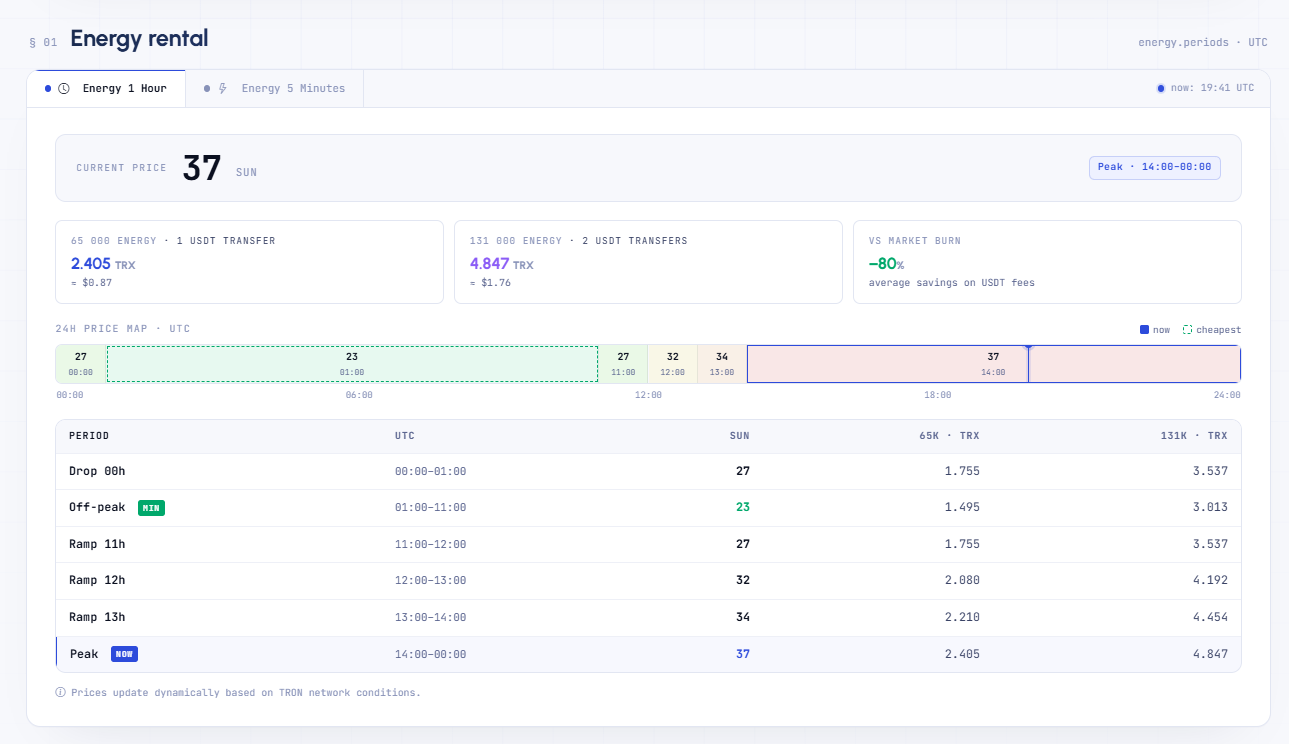
The operational cost of every transaction matters more than the marketing copy ever lets on for auction platforms, dealers and high-volume settlement operations that process stablecoin payments at scale on TRON. More importantly, Netts Pricing exposes all-day transparent, dynamic pricing for Energy — off-peak as low as 23 sun Energy and peak-hour market prices of 37 sun allowing users to take advantage of energy's arbitration opportunities during lower-demand windows and scale their high-volume operations around them. According to the 24-hour price map published by the platform, they list the lowest prices available on each hour along with the total TRX accrued for 1-2 USDT transfers worth of Energy and how much can be saved vs burning TRX (often upwards of eighty percent). That pricing transparency is the difference between a margin that allows an operationally viable business for anyone whose enterprise relies on the cheap prices TRON Energy makes available during certain windows each day, and a margin that bleeds out in network fees.