Crypto and Live Performance: Ticketing, Royalties and More
From Ticketmaster's grip to per-stream royalty math — how crypto is rewiring tickets, payouts, and the artist-fan relationship.

Anyone who has attempted to nab tickets for a hot show in the last two decades understands this feeling. The morning presale with your cracked website which buckles under the load in thirty seconds flat. The (optimized) waiting room which opens to a loading position of 7,841 and goes up. The pricing that dynamically triples face value while you are still selecting your section. The service fee, the facility fee, the processing fee, that delivery charge for tickets that exist as a PDF email — until you pay forty percent extra on top of what the listing first claimed it cost. Bots that gobble up entire blocks of tickets in seconds, then jacks them to three times the price on secondary markets. The artist who sees their fans being gouged and can do nothing to prevent it. The whole thing is designed to siphon the most value at each corner, and those doing the siphoning are not — mostly — the people who created the music.
In countries with concentrated ticketing markets, purchasing a concert ticket is today one of the more certain methods to experience being ripped off as a paying customer in the legal economy. It was not true in every period of history, and it does not have to be true going forward. The pain points are a product of historical choices around the industry structure, and the structural issues conveniently line up almost perfectly with the kinds of problems crypto-native infrastructure was designed to solve. And while the question of whether the integration actually creates real change or only marginally different friction will be answered over the course of the next couple years of experimentation, early evidence has been encouraging enough that it seems like a question worth taking seriously.
Why Tickets Hurt: A Brief History of the Friction
Modern ticketing, as it looks today, emerged from a series of mergers that created almost-sole control over ticket distribution. Ticketmaster was established in 1976 and progressively consolidated local ticketing businesses from the 1980s onwards, through the 1990s.
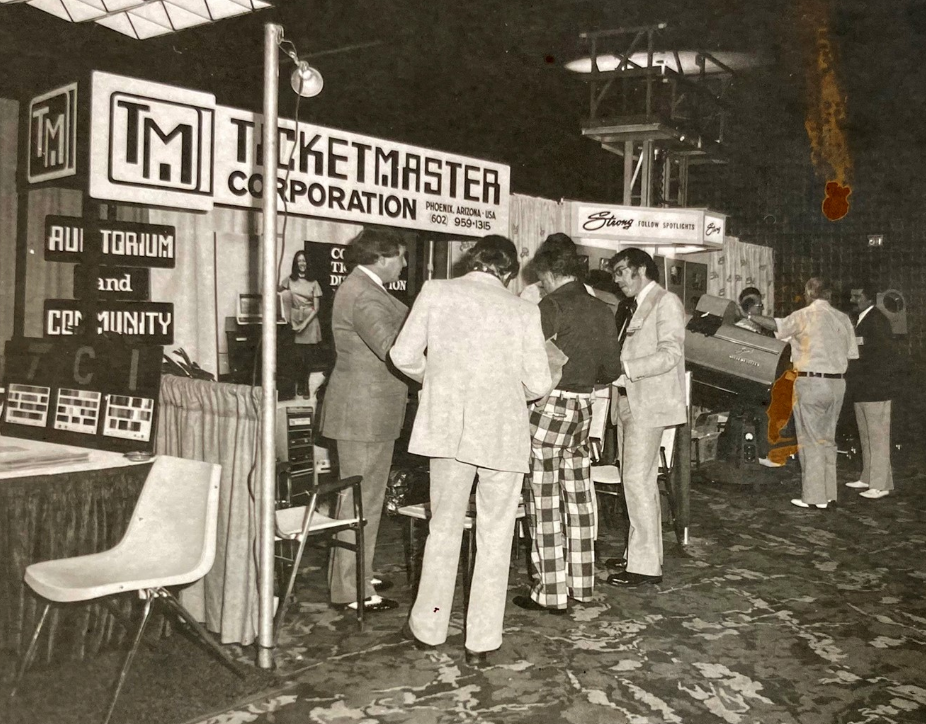
The 2010 merger with Live Nation, the largest concert promoter in the world, created a vertically integrated company: it owned the venues and booked the tours and sold the tickets and ran the secondary market all at once — critics said that constituted something of a textbook conflict of interest in what was already a low-competition circumstance. The result has been an incremental rise in fees, dynamic pricing that changes in real time based on demand becoming the norm and a landscape where the artist receives but a small fraction of what the fan pays.
The scalper problem is older than the modern industry itself. Even Roman gladiator games had tickets and ticket scalpers. You saw it on the early twentieth-century vaudeville circuit. It was one of the defining characteristics of Beatles tours in the 1960s. What changed in the digital era is the scale and the automation. In 1965 a scalper had to actually go outside the venue. As yet another example, an automated scalper in 2025 fires thousands of bots on hundreds of accounts to make access to the ticketing site at the time of release and capture almost all inventory before a human could even finish the transaction. For twenty years now, ticketing platforms and scalpers have been locked in an asymmetrical tech arms race — scalpers mainly winning.
In this system the artist seems to be in a strange position. Without them, the tickets would not exist, there would be no full venue and the whole commercial apparatus has nothing to market. Instead, they get paid through a chain of middle men — the promoter, the ticketing platform, the venue, even the merch operator — all of whom take a portion for themselves and many of whom answer to financial interests that care little about an artist's career. If the artist wants their fans to pay fair prices for tickets then in all but a handful of cases they have very little power to make that happen, because the structural decisions are made above them and they effectively sign contracts that limit what they can unilaterally do to get around it.
Now this is not a uniform picture across the world. You have less concentrated ticketing, more aggressive consumer protection, and heavier scalper enforcement in some markets. The European Union has been tougher on bot legislation than the United States. Many Asian markets have their own ticketing systems and things work quite differently from Live Nation. But the general template — fans overpay, scalpers take a cut, artists get maybe half of what they deserve — is familiar in countries with something like the concert business.
Role of Crypto in Live Music: What Has Actually Been Effective
Among the most direct uses of crypto in live performance has been blockchain ticketing. At its most basic level, each ticket is simply a token on the blockchain with an associated smart contract dictating transfer restrictions that traditional ticket types cannot (not transferable until …, transfer only via validated secondary market channels, price cap for resale where any excess automatically goes back to artist). One of the older players in this space, GET Protocol has handled millions of tickets for events across Europe, Asia and the Americas, with its on-chain mechanics designed to keep tickets out of scalpers' hands and in the hands of real fans. YellowHeart, Tixblock and others have tried models like these with mixed results in terms of artist uptake.
This was one of those first high-profile moments where the more general idea of music NFTs intersected with blockchain ticketing, and also another creative use case: Kings of Leon releasing their 2021 album as an NFT. When the album was released, a tier of NFTs was offered as part of it, bundled with lifetime concert tickets — front-row seats for any Kings of Leon tour, transferable but trackable, and with an on-chain record proving the ownership in a way no conventional ticketing system could come close to matching. The release brought in millions of dollars in primary sales and created a model that other big acts have since tried their hand at.
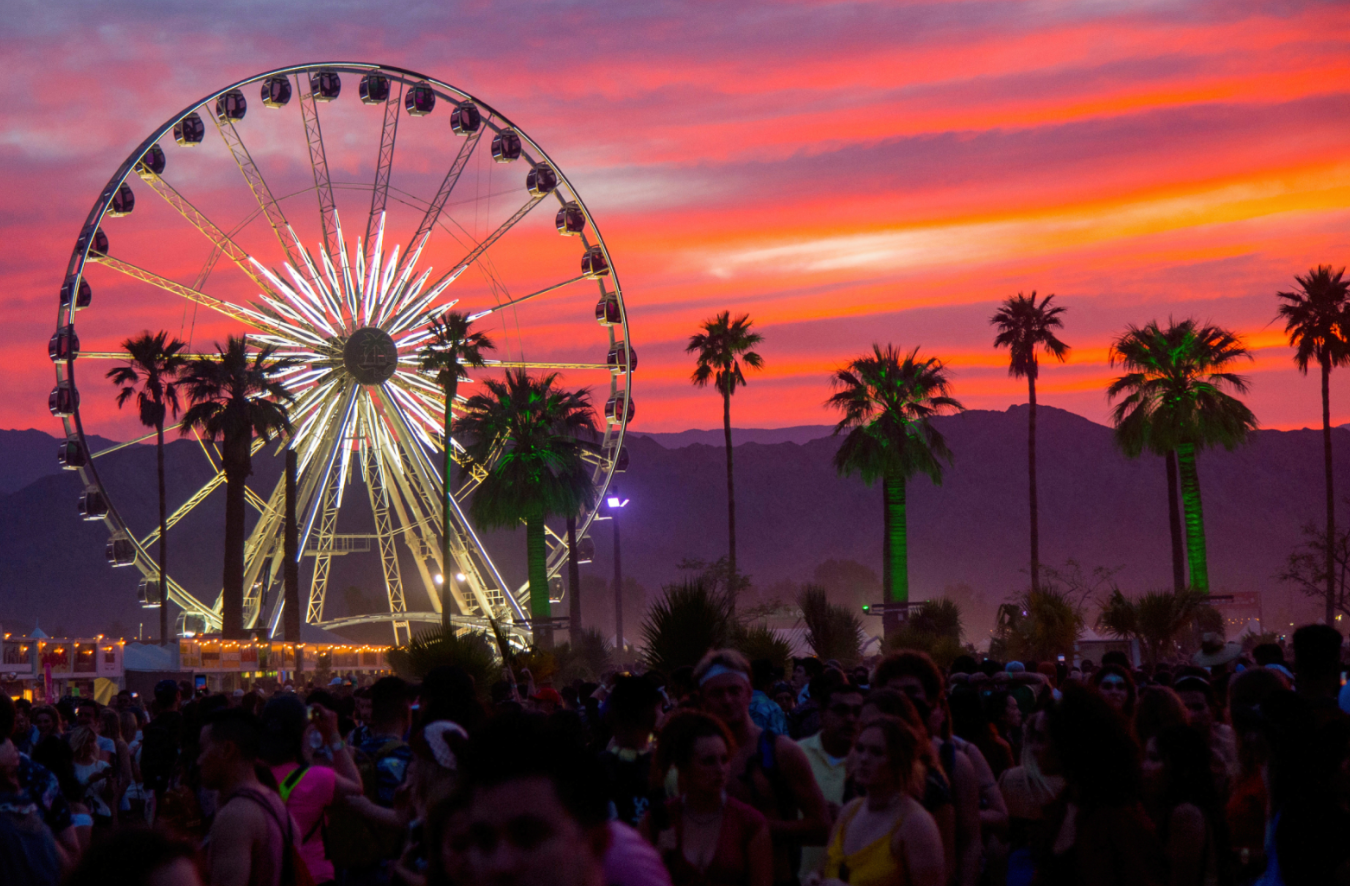
Coachella offered NFT-based lifetime passes in 2022 and 2023 guaranteeing entry to Coachella events for the owner's life. Within hours of the release, the passes had sold out, with an active secondary market for the passes and renewed NFT product releases taking place every subsequent festival year. The model showed that those in the high-end concert-going audience would respond positively to on-chain ticketing, with the key being an artist and a venue treating it as a real product, not just as some marketing gimmick.
There has also been experimentation with virtual concerts in metaverse platforms. Travis Scott's Fortnite concert in 2020, while not a crypto event per se, proved that hundreds of millions would watch if it's really good. Snoop Dogg, Steve Aoki, and numerous other artists have hosted concerts that feature live performance, virtual avatars combined with on-chain ticketing formats for which there is no direct analogue in traditional touring.
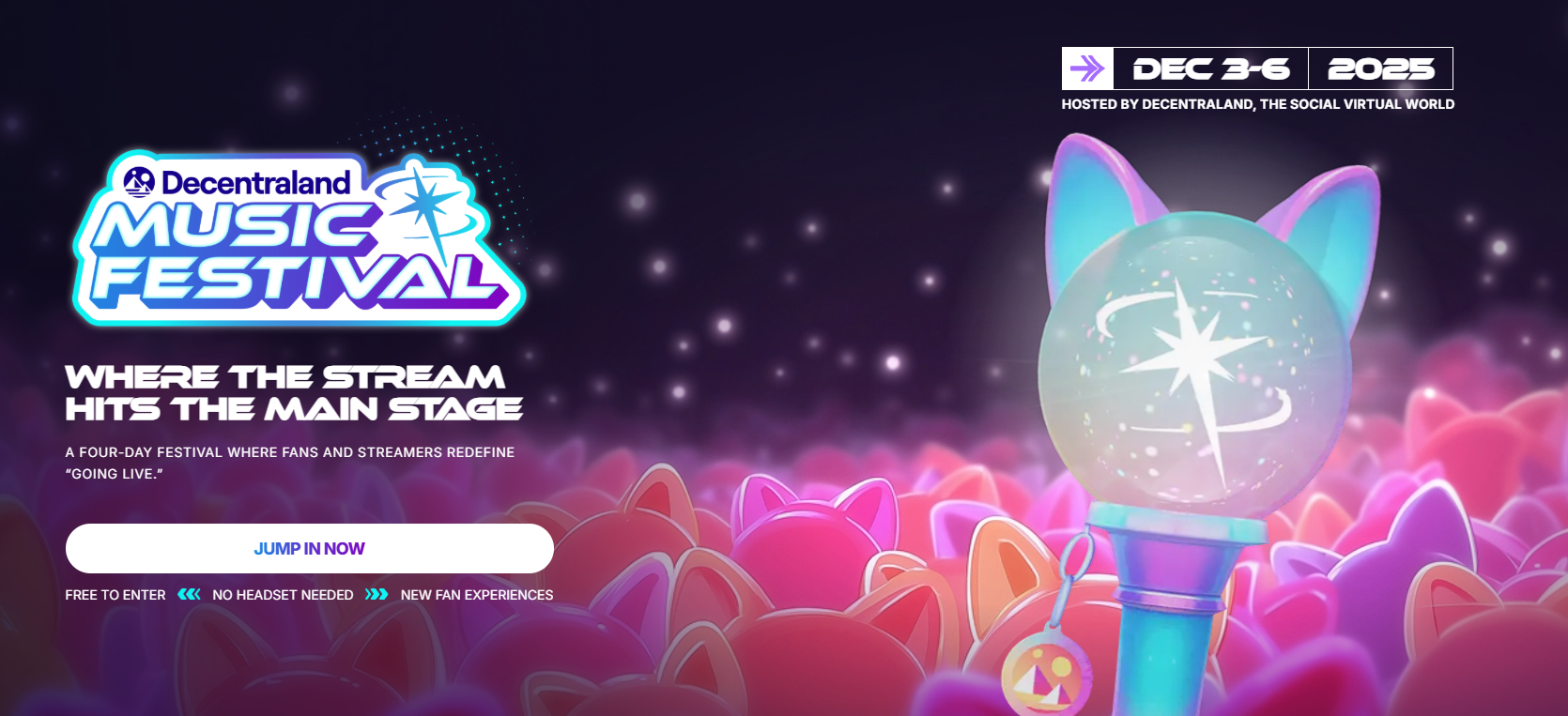
Subsequent events have built on this model in Decentraland, The Sandbox and myriad crypto-native virtual worlds. Revenue from these events has been modest, relative to physical tours, but the reach of audiences has been much greater and marginal cost for producing more shows stands well below that for a physical venue.
Old Splits and the Decline of Royalty Math
The other half of the live performance economy is what goes on with the music itself — Records are how artists get paid for the recordings that create a need for people to feel they need to go out and see these live shows in the first place. A baroque legacy of the analog recording era, the traditional royalty structure works like this. A record label gives an artist a chunk of money to make a record. When it comes to the deal between the label and artists, labels recoup advance against royalties at a rate that has historically varied in the 10-20% range of net receipts. The producer takes their cut. The publisher takes their cut. There is a different set of payments for songwriters (who are often not the same person as the artist) through performing-rights organizations such as ASCAP, BMI or PRS. The accounting between these parties is opaque, slow and often contested.
Streaming only exacerbated the problem instead of correcting it. The amount Spotify pays artists ranges from approximately one-third to one-half of a cent per stream and depends on the subscription tier and geographic location of the listener in question, among several dozen other factors. Now, the portion of that small number (already tiny) owned by the artist is shared again with label, publisher then any other carved-up shareholder. An artist operating independently with a lower-performing track could expect to earn hundreds of dollars per million streams. It makes economic sense for the major labels, with catalogues that stretch into the millions of tracks over thousands of artists. They do not work for single creators who are just trying to survive.
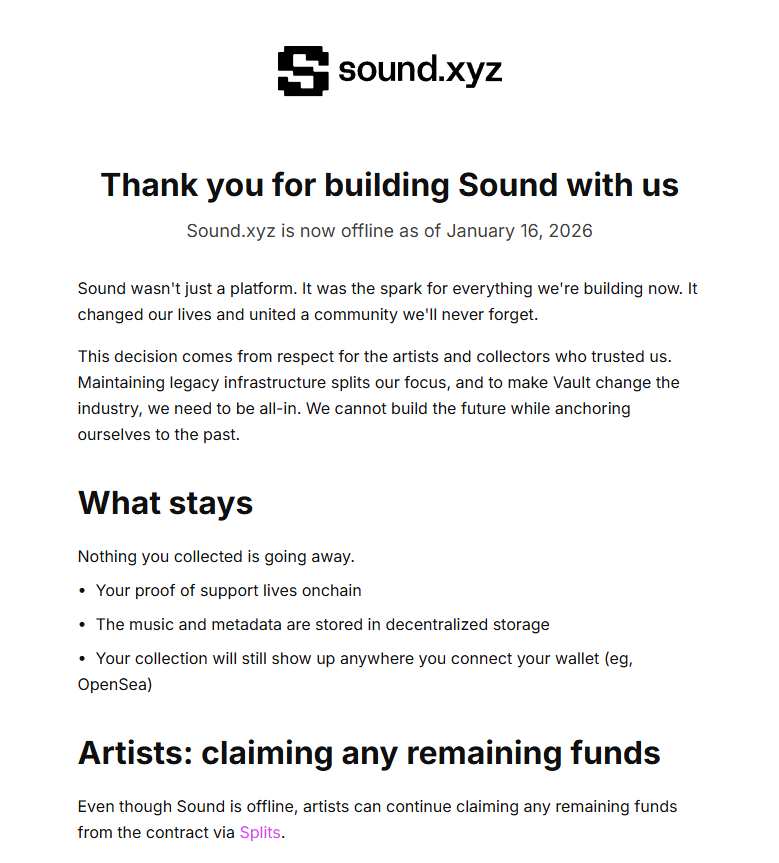
There have been direct efforts from several crypto-native platforms. Audius has created a decentralized music streaming platform that pays artists many times more than its competitors, and the on-chain mechanics handle splitting payment automatically. Sound.xyz created an ecosystem in which artists drop tracks for fairly niche audiences of fans who want to pay something close to market rate for early access but is now gone.
Royal.io has created an infrastructure platform where fans purchase fractional rights to the royalty stream of a song; the smart contract handles splits on payouts as revenue from streaming builds. All of these platforms had real growth, real challenges and real lessons the next generation of platforms need to learn.
But the question is whether the economics of recorded music are behind a new distribution model. If no new money flows into the system, and most of this money ends in the hands of the platforms rather than those of artists, no amount of on-chain reorganization will change this. If this new top of the funnel increases the total flow of capital to artists by drawing in audiences and use cases that streaming is currently ill-equipped for (fan-funded album releases; direct money from fans who want a closer relationship with the artist; royalty-sharing with the audience itself), then it matters structurally. While we cannot know how quickly it will scale, early data show promise for the second possibility.
Anti-Establishment Music and Money
Crypto is not only an operational win for a certain class of artist: for this group, it is also a values statement. Punk, hip-hop, electronic music, certain strains of metal — the genres that have often prided themselves on their anti-establishment credentials in opposition to the mainstream of the music industry — are a natural fit with crypto's anti-establishment framing which is ubiquitous in much of its self-presentation. Paying your band in stablecoins, premiering tracks as NFTs, inviting crypto tips from fans, selling tour tickets on a blockchain platform; this artist is making a statement about how she sees the artist/audience/industry relationship. Those fans who engage in that same ecosystem are sending the same message from their end.

There are lots of cases from music's past where this kind of values-based uptake has occurred. The independent record labels came up in protest of the power imbalance of the major labels. The underground touring circuits evolved, because for these artists it could no longer be booked in the mainstream venues. The indie radio stations and college radio built audiences for music the commercial, corporate stations would not play. In each of these cases, the alternatives were at times inferior to their mainstream counterpart from a technology and infrastructure perspective, but for the artists & audiences using them, it was worth the pain because everyone had an alignment on values. For the moment crypto is a perfect fit in this pattern as an extension of it.
This size is not huge, but it doesn't need to be. If the economics are right all it takes is a few hundred thousand engaged fans to sustain a touring artist. In a crypto-native infrastructure, the economics can be significantly superior to mainstream alternatives: the artist getting to take home a greater share of what fans pay for and the fans enjoying a more direct relationship with the artist in return. This is never going to get adopted by the mainstream music industry as a whole though — those structures are simply too established, and no matter how corrupt and cynical they could be there will always be people willing to roll up their sleeves for whatever paycheck they have. However, as the mainstream grows, so too can a parallel ecosystem that allows such artists working within it to thrive even if they never ascend into the major-label model.
Also notable is the deeper level of cultural alignment. True to the title, music has always been with identity. Just as the genres a person listens to, the artists they support, merchandise they wear and concerts they attend are signals of who they are and what matters to them. For audiences for whom crypto has become identity, crypto also became signaling. So when an artist identifies as part of that audience by doubling down on crypto-native infrastructure, this is not simply a layer of operational efficiency; they are opting into the particular cultural conversation their fans care about. The artists that do this correctly, in my opinion, establish relationships with audiences that mainstream marketing will never be able to touch; and those relationships are what sustain them through the rollercoasters of a career in music.
Challenges, Resistance and Why it is Important Regardless
The real answer to that is: crypto-native infrastructure has not yet managed to take a meaningful share of the market for live performance. Big tours still run on the old ticketing platforms. For the major festivals, revenue continues to be shared with conventional streams. Spotify and all the others that dominate how we listen to music are simply dressed up on traditional payment rails. So crypto has been adopted, but more so on the edges — in some genres and with some demographics but not centrally.

The pace is slow, and there are reasons for it. User experience for crypto-native ticketing is still not as smooth as the biggest platforms. The friction introduced by wallet management, gas fees, and on-chain transaction confirmation is something that the run-of-the-mill concert-goer is not prepared for. The platforms that helped solve this via custodial wallets and fiat onramps are alright for some, but end up recreating parts of the intermediation issues that crypto-native was meant to resolve. The hard tech work to deliver blockchain ticketing nearly like Ticketmaster isn't finished.
Another ongoing issue is regulatory uncertainty surrounding the tokens that back them. Depending on the jurisdiction, an NFT concert ticket can raise securities, consumer protection, or sales tax obligations that traditional tickets do not. The platforms have been dealing with this issue on a per-country basis, so within the same continent one artist may choose to sell NFT tickets in some countries but normal paper tickets in others. This fragmentation has reduced the propensity of those artists who want a consistent global life.
Additionally, the incumbent ticketing platforms will also be doing what they can to defend their market share. Ticketmaster and other similar platforms have lobbied against ongoing bot legislation affecting their secondary-market business. Essentially, they've created their own pseudo-blockchain ticketing products that superficially appear modern from a marketing perspective but in practice do not utilize public blockchains. They have brokered exclusive deals with venues that literally lock out other platforms. The marketing copy of all the competing crypto-native platforms plays down the fact that the landscape is more hostile.
That is no reason for the artists, organizers and invested fans to throw in the towel on anything alternative. The mainstream industry will keep catering for the mainstream audience. The parallel ramp up will provide for the audience that is looking for something different. To the extent that they can coexist I think they will be together for some time to come, with the parallel systems slowly winning over a bit more of the high-engagement audience and mass-scale continuing to capture the casual concert-goer whose primary interest is attending a show without giving a thought to whose system it might actually be. These two audiences are equally valid; both ought to be well serviced. The question that arises is which platforms they utilize and to answer it probably 5 years down the road it looks different than today.
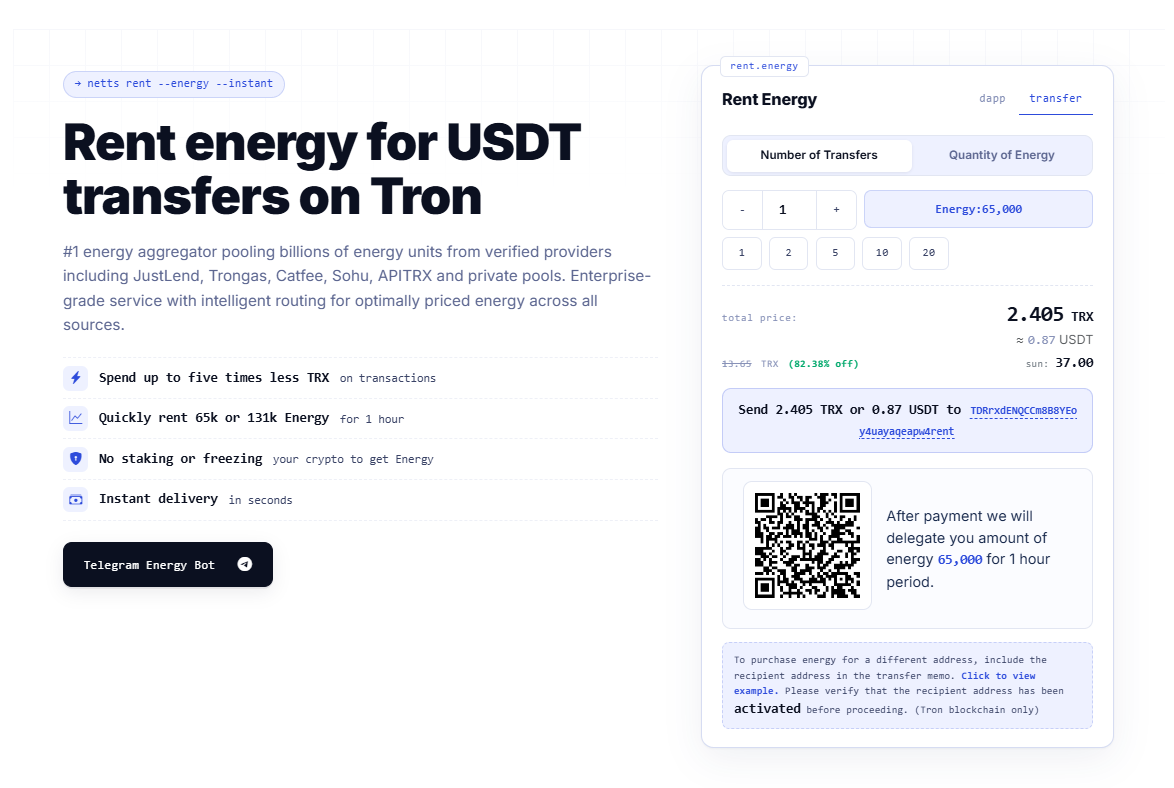
If you're one of the platforms and organizers running stablecoin payment workflows at scale on TRON — tour merch sales, royalty distributions, contractor settlements, fan tips — then the cost of every transaction is more important than headlines about how cheap and magical these new protocols are. Netts.io is a global TRON Energy aggregator pooling billions of Energy from trusted providers including JustLend, Trongas, Catfee, Sohu and APITRX with smart routing to the lowest cost TRON Energy provider across all sources. With no staking or freezing in TRX necessary, the platform allows users to obtain TRON Energy within seconds, with a mere 65k Energy rental costing less than two USDT — or approximately 2.405 TRX using a single transfer — around five times cheaper than would burning TRX cost. As the difference between TRON Energy cheap delivery and full-burn settlement compounds across potentially thousands of monthly transactions for high-volume operations, that little aggregation makes the difference between a viable touring business and one whose margins vanish into network fees.