How Crypto Affects Online Education
Online education's biggest unsolved problems — payments, credentials, incentives, fraud — and how crypto is quietly redrawing each of them.

Online courses were mocked in a similar way as the first generation of them. Real universities were brick buildings and graduation ceremonies. Actual degrees have a gown, a shake, and the parent in row three. The notion that anybody would learn statistics or programming or business management from some video they saw on the internet and any employer would take this learning seriously, well, in mainstream education circles through the 2000s and early 2010s was an obvious failure of imagination. The initial reaction to the Coursera and edX platforms was curiosity, but it remained largely unexplored as hewed towards polite dismission. Whatever this online thing was, it was treated as an afterthought at best and a denial of the lessons from the past at worst.
The dismissal has aged badly. As it progressed through the 2020s, online education had become one of those categories measured in hundreds of billions of dollars a year, with many major employers recruiting from non-traditional credential programs and entire professional categories — software engineering, data analysis, digital marketing, UX design — where having the formal degree really became opt-in. Now today, some of the most successful people in those areas do not even have a university degree. Coursera itself has more than 100 million learners registered. Unlike many other online learning platforms, Udemy built a marketplace where individual instructors can earn good livings selling courses to a worldwide audience. The reason is that MasterClass has created a category around celebrity teaching (loosely defined). The severity of the format is out of question. Now the question becomes what form that takes next, and this is where crypto has been sneaking its way into things.
What Makes Someone Click Enroll?
To see how or why crypto has a role to play here, it helps first to understand what are the actual reasons for people enrolling in online courses in the first place. They say marketing language about lifelong learning and personal development, which are real things but not as prominent correlative contributors to most enrollments. The key motivators are pragmatic: a person enrolls because they want to learn how to do something specific, they want to earn the role, they need to upskill after having been made redundant, they're looking for a change in career direction, they're starting their own business and there's no way out without that particular tool they're missing. The incentives are tangible, the schedule is tight and the willingness to invest in courses is broadly proportional to the perceived return on investment.
Consistent results have been found across both cultures and income levels. Why a software engineer in Brazil doing a machine learning course has more or less the same reason for taking it as a marketing manager in Indonesia who takes on a digital analytics course, just like the recent graduate in Egypt who decided to do a front-end development course. They have defined a career outcome they want, picked an appropriate course and spent money on that basis and also invested time. The online education industry has itself been constructed as an answer to just this need, with course listings all geared toward employment prospect rather than abstract intellectual scope.
The rub here is where the systemic friction of traditional payments infrastructure starts to enter the picture. Now, taking an online course from anywhere in the world is a de-facto cross-border transaction. An Argentinian learner sends a payment for a Californian-produced course and money is traversing through an infrastructure designed for very different use cases. Secondly, credit card processing fees take away from the course price. Currency conversion at poor rates increases the price on the student side, and makes settlement complicated from a platform perspective. International wire transfers for larger programs cost both money and time. Despite the high-margin, low-friction business model which online education was meant to enable, the payment layer has been surprisingly costly.
Crypto, specifically stablecoins, directly solves this friction. Within seconds, a USDT transfer for pennies in network fees moves from the learner in Argentina to the course platform in California. The currency is stable enough that neither side has to bear the risk of an unfavourable exchange rate. There is no chargeback friction, so the settlement finalizes before any chargeback overhead incurred by credit card payments. It is a significant structural improvement, even if all but the most confident platforms are very hesitant to advertise it as such — for any platform whose payment processor used to be their biggest single cost line, this really changes the rules of engagement.
What is interesting though is that adoption is happening on both ends. Finally, some platforms have begun to adopt USDT as a payment option along with cash and a bank transfer in places where local banking infrastructure is not established successfully. And some learners — especially those with exposure to crypto for other reasons already — have begun actively choosing platforms that accept it, because the alternative is the brutal inefficiency of transacting through their bank's international transfer system (for each course they want to buy). While not yet mainstream, it's a developing trend that has come to the attention of platforms focused on international growth.
The Cross-Border Tuition Problem
The friction above is not some lofty theory. Buying an online course made overseas has, in countries with tight capital controls, long been a logistical nightmare of varying difficulty to virtually impossible. Argentinian students have faced parallel exchange rates and banks forbidding the purchase of USD. This is because Nigerian learners have had to battle monthly limits placed on their international card transactions. In lira terms, Turkish learners have witnessed the price of a course double from when they decided to sign up to when they completed their payment. Venezuelan learners have completely abandoned traditional payment channels and have reconstructed educational consumption around alternative rails. Little of this would have been known to the platforms themselves; from their side, the transaction failed or simply never occurred.
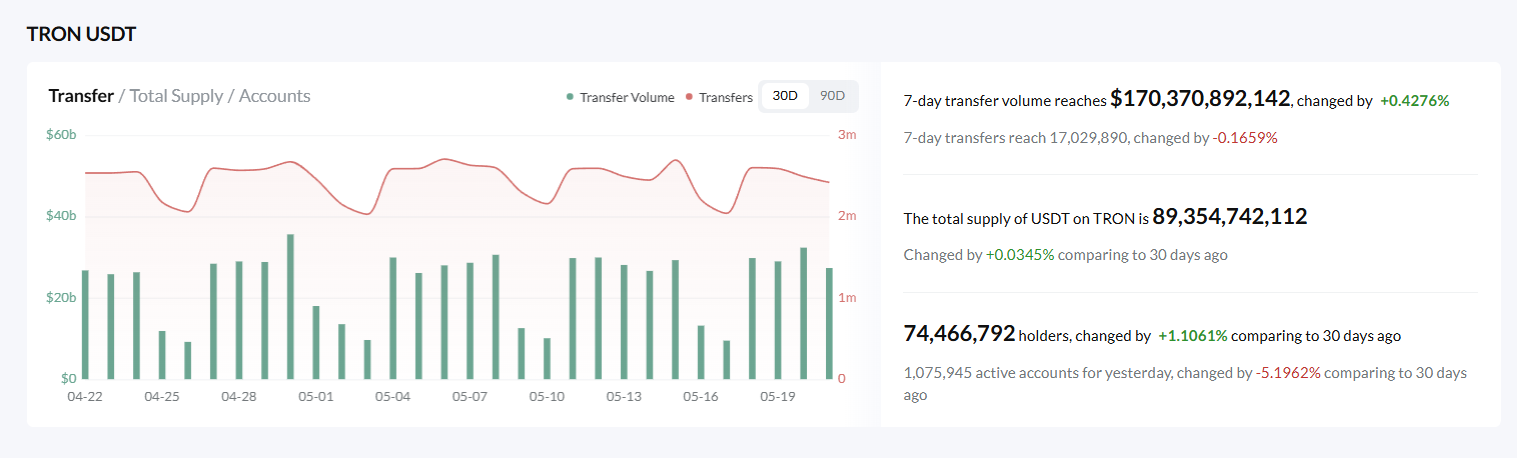
Among these markets stablecoins on TRON have, textbook style without press or fanfare, become one of the dominant payment rails for online education. A learner transfers USDT to the wallet of a platform, within seconds the USDT transfer is received and course access granted, with neither side dealing with local banking infrastructure at all. When Energy is rented correctly, the cost of a single USDT gas fee on TRON for one transfer is measured in cents — low enough to be absorbed by platforms as a marketing expense or passed back to the learner with a price discount. In the case of high-volume, low-ticket courses, this economics is a night-and-day better deal than what credit card processors provide. The savings on one payment makes a difference even for higher-ticket bootcamps and certification programs, and risk-free cash flow spikes when you eliminate chargeback risk.
Coding bootcamps and skills-based course platforms focusing on global reach have led the charge here. There are even a number of large bootcamps that now accept stablecoins directly, and some have referral programs where the entire payout is in USDT. The rationale is pretty simple: the students they want to recruit are located in countries where traditional payment infrastructure does not meet their needs, and by accepting crypto as a form of payment, you remove one of the biggest friction points in your recruitment funnel. The platforms — that are not ready to accept crypto — are not making a principled stand — they leave money on the table and the more competitive sectors of the market have worked this out.
For instructors, the reverse is true. Historically, a course creator living outside the major Western economies, creating for a global audience, would be held hostage by PayPal limitations and Stripe restrictions with international payouts that often took days to clear. Stablecoin instructor payouts enables the creator to simply send USDT where they need it, at whatever local market rate they choose, with no two-week wait for a wire to clear. Even just on cash velocity, this shift is enough to change which platforms creators choose to build their stuff on. Some of the more established course marketplaces have begun losing creators to crypto-friendly competitors and even started adding their own stablecoin payout options, even when public-facing pricing on the buyer side remains conventional.
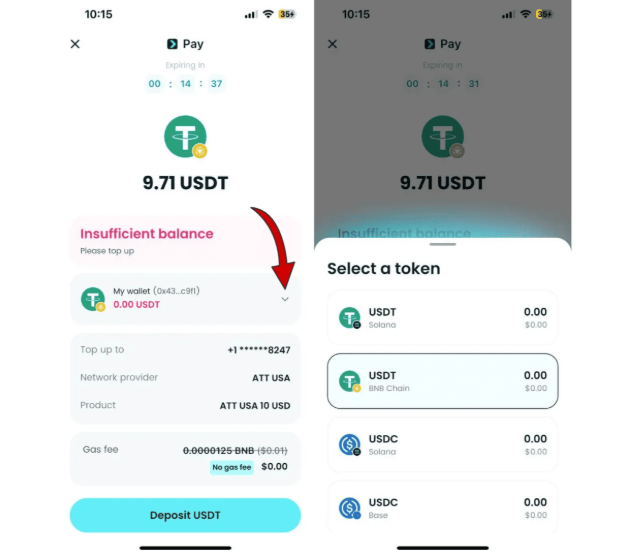
A brand new breed of course marketplaces — where both sides of every transaction is in stablecoins, contracts that automatically take payment splits between platform and instructor, and where all the administrative overhead to run a cross-geographical learning marketplace shrinks dramatically. The UX on these platforms is still bumpier than their traditional counterparts, but the economics for both learners and instructors simply look better for the audiences they are serving today.
The Learn-to-Earn Experiment
Outside of payment, a more ambitious use of crypto in education has been the learn-to-earn — programs that reward users with tokens or stablecoins for completing educational content. And this originated as some form of marketing exploitable by crypto projects who aimed to onboard users to their protocols, but now is its own category. Educational content has been constructed through platforms such as Bankless Academy, Layer3, RabbitHole and many more with learners being rewarded for completing courses or exams and showing that they have actually used the protocols being educated on. Recent expansions of the model have worked well beyond crypto-native topics; some experimental programs have peddled rewards for completing financial literacy, language learning and even basic computer skills courses.
The model has some real merits. It aligns the incentives for both the learner and the platform — an engaged user is the platform's dream, a learner wants to be paid to learn, and if users absorb material together, it's win-win for both. The rewards are small on a per-learner basis but will be significant to users in lower income regions, where earning some dollars of stablecoins via course completion translates into real value for the user. On-chain completion records have a data trail that allows verification in a way traditional certifications simply cannot — of whether a learner actually did what the course was teaching, not just clicked through the videos. This is structurally interesting for employers who care about demonstrated ability over self-reported qualifications.
Like any model, however, it also has its critics (with good reason). Many of the learn-to-earn programs in their early days were essentially airdrop disguised as education — barely there content, easily passable quizzes, and reward economics that made clear that it was buying engagement metrics not actual learning. Many of these programs fell apart once the token rewards devalued, since the communities that formed around them were speculator-driven rather than interest-driven. The difficult problem of actually trying to create educational content that is real and valuable, while at the same time finding ways to reward learners for engaging with that educational work in a way that does not corrupt their intrinsic motivations, is an open design challenge still being addressed by the serious projects.
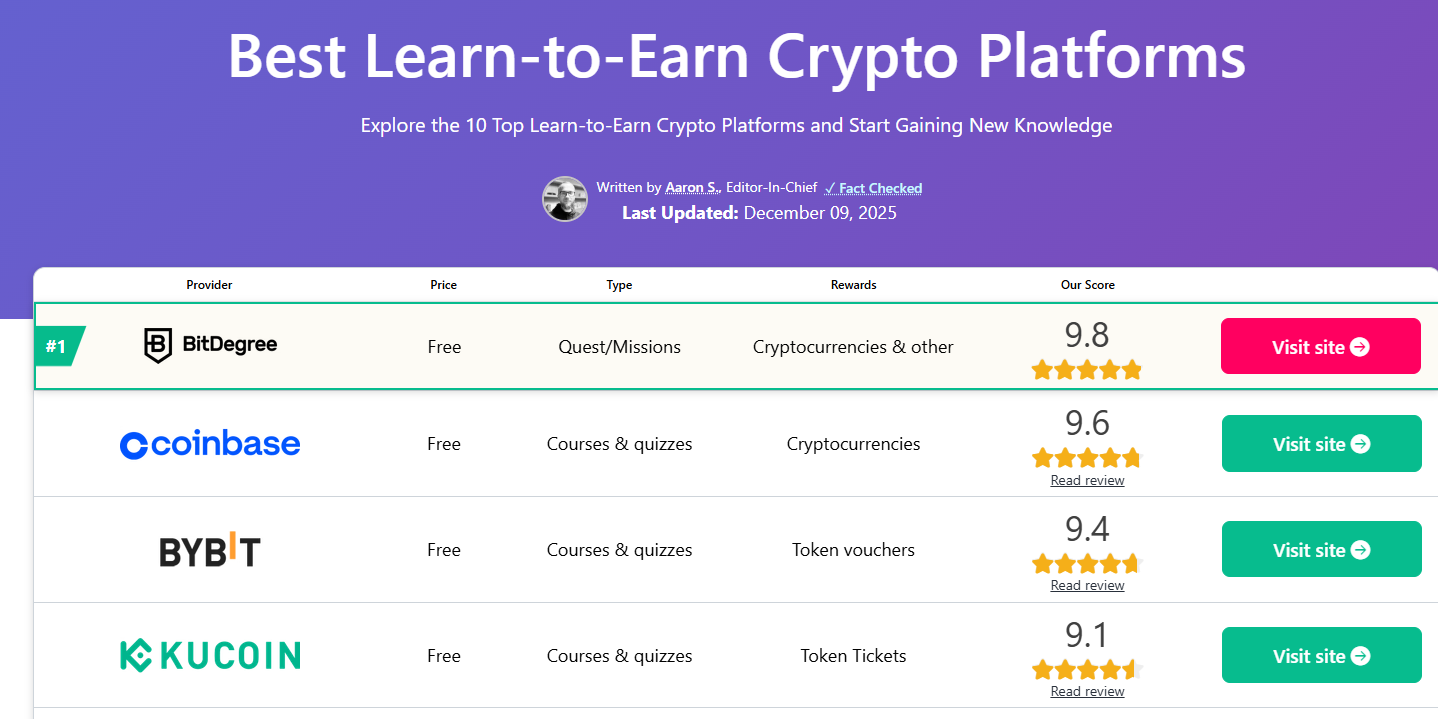
Teams that have taken the model seriously are moving towards more rigorous evaluation, smaller but more consistent forms of compensation, and content that requires genuine demonstration of skill rather than passively clicking through. The result is something that resembles a long-existing force in traditional industries — employer-sponsored continuing education organized as paid apprenticeships that map to genuine progress on the tangible skills involved in various crypto-native workflows. Testing the question of whether it scales to further topics beyond crypto (to broad professional education) is an open experiment, with early results mixed and several platforms quietly shifting back towards less broadly appealing subject areas where monetization can be sustained.
Around the same time, there is a complimentary development where corporate learning departments have begun to experiment with token based incentives designed for their own workforce. The idea — compensate workers with small amounts of token rewards if they complete mandatory training programs, and the tokens can then be redeemed for different benefits — resembles learn-to-earn in structure but exists within an employer-controlled bubble rather than out in the open market. A number of large companies have run pilots on these programs, and seen significant improvements in completion rates for training modules that employees regarded as low-level compliance theater. The experiment is still in its infancy, but early data suggests that the underlying mechanism translates from consumer to enterprise contexts surprisingly effectively.
Credentials That Cannot Be Forged
A third significant manner in which crypto interplays with online education is credentialing. The standard method for online certifications has been a PDF attachment sent to the learner (often with check delegation to an issuance platform database via a verification link). The PDF is easily faked. The only reason this verification link works is because the platform runs forever. What you get is a credential that is more or less reliable whilst the platform works, and instantly meaningless when the platform goes down — which also, for a startup-flavored sphere like online education, isn't a rare scenario at all. But for learners who complete courses on platforms that go bankrupt, there are often no opportunities to prove they actually did the work.
This is when the credentials that a blockchain makes possible come into play. Finally, a certificate issued at a point in time notes the existence of something at that point — when you find an NFT or soulbound token or whatever it is we call this ball of wax on a public blockchain, its authenticity can be verified without even caring whether the issuer still exists. On-chain and off-chain credentials persist beyond the issuer. The issuer's signature is borne in a permanent record. This allows anyone to verify the credential without having to trust it will resolve on an issuer's website. Thanks to the long running public blockchain-anchored credentials initiative pioneered by MIT along with a number of other top institutes since 2018, connected campuses across bootcamps, language training schools, and professional certification bodies are now able to issue verifiable blockchain-based diplomas. Open Badges and a number of other similar specifications have thus far provided interoperability across issuers, enabling learners to build up portfolios of credentials from different sources into a single verifiable record.
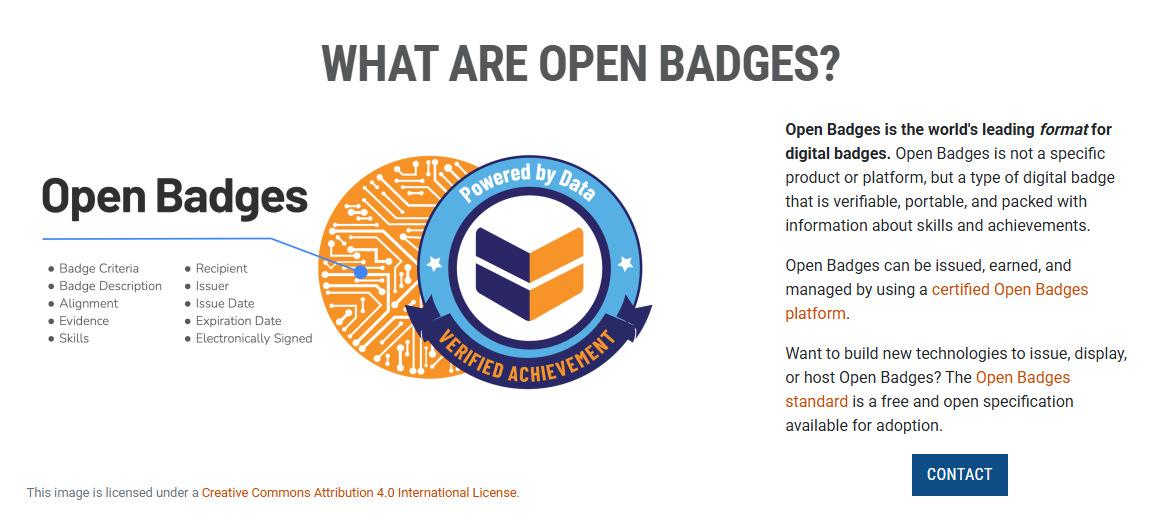
The complication is this: Your underlying credential is only as good as the reputation of the issuer. This is the part a blockchain certificate from a serious institution brings with it, the weight of that institution. If you have a blockchain certificate for an unknown course platform, that certificate weighs whatever the weight of that platform is (maybe 0). The technology eliminates the forgery problem and removes the issuer-disappearance problem, but it leaves in place the tougher problem of which credentials really carry meaning for employers. That component is still a matter of reputation over time — built slowly, destroyed quickly, whether or not blockchain is involved.
The additional value provided by these blockchain credentials is not just verification but also portability. A learner who has a collection of credentials from a dozen different platforms can present that credential as an aggregate of evidence, with or without the consent (and continued goodwill) of any one platform. This becomes especially valuable to learners in places where the past may be disappeared; for displaced learners in conflict zones, refugees trying to build a career anew within an entirely different nation, and even people whose previous institution no longer exists or records have been damaged. The on-chain credential is the credential that survives the institution.
Also related is the emergence of hiring platforms which base their matching algorithms on blockchain credentials directly fed into their system from a growing portfolio of skills-based assessments. An employer looking for a skill finds true talent with a hireable, verified course and the learner gets visible without an intermediating recruiter or the friction of an old-school resume. The matching is not perfect, the verification is not complete, but these early versions of how such systems will work are already starting to change the way some employers source their technical talent. In this environment, the blockchain credential is more than a record of past achievement; it sends active signals that unlock particular doors.
Obstacles That Have Not Gone Away
The picture above sounds tidy. The reality is messier. There are a few real issues that remain impediments to the incorporation of crypto into online education, and they deserve to be called out directly.
The first is quality control. Then, online education already has a long tail of low-quality courses, and the incentive combination built around token incentives only exacerbated the issue in many cases. The learn-to-earn approach has its dark side: some of the learn-to-earn programs are nothing but information laundering where learners get paid to consume materially reinforced propaganda disguised as education. It takes the same judgment which has always had to happen in evaluating educational content to have some confidence in identifying which programs are serious and which are extractive but with how quickly crypto-native platforms emerge it becomes much more difficult to develop the reputation signals learners have depended upon. The nascent community-driven rating systems that have started to take root are useful, but they will not be a panacea, and the same incentives that helped original extractive programs grow can also influence the ratings themselves.
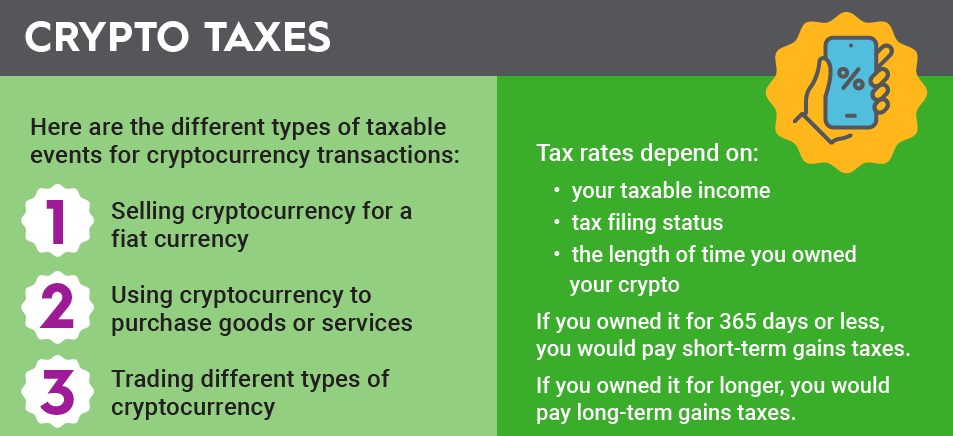
Second, the tax treatment. Most jurisdictions will consider a learner who earns tokens or stablecoins from completing courses to be receiving taxable income. The tax authorities have not been very specific about the treatment of small, frequent payments in crypto to individual learners, but it is up to the learner to report them. This may matter not at all for learners in poorer areas, as the amounts are so small as to fly under the radar. The tax reporting overhead can be bigger than the rewards earned by learners in higher-income countries, ruling learn-to-earn out with audiences who could otherwise verify it most easily. While this has been partially filled by specialized tax software, the regulatory clarity itself is still inconsistent across jurisdictions.
The third is regulatory uncertainty surrounding the credentials themselves. In a number of jurisdictions, the act of issuing something that resembles a professional credential is itself regulated; doing so through an unfamiliar form of technology raises questions as to whether that which is being issued is valid for licensing, immigration, or employer-verification purposes. The efforts to weave blockchain credentials into existing regulatory frameworks are lagging behind their issuance, and the outcome is a mismatch between what these credentials appear to prove at inception and what they're accepted as proving. This has resulted in some unusual events where a learner can prove competency in a skill but then cannot use that proof towards meeting a regulatory requirement written against traditional credentials.
The fourth — more consequential than most conversations even notice — is the lingering cultural distrust many traditional educational gatekeepers have. Admissions officers at universities, HR departments at large organizations, and most licensing boards simply have been too slow to formally acknowledge blockchain credentials even when the actual skill/knowledge is real. This is starting to change but the rate of about a generation turnover in these institutions means we still have another ten or twenty years at least before the friction completely evaporates. The credentials work. That did not stop the recipients of the credentials from having to sometimes explain what they are.
A more subdued issue of pseudonymity also exists. Many crypto-native learning platforms let learners use wallet addresses instead of verified identities to participate. This works well enough for the learning process itself, and has tangible privacy benefits over sensing real-world data for learners in jurisdictions in which the authorities may be interested in their particular educational choices. However, this creates an apparent complication on the credentialing layer — a credential awarded to a pseudonymous wallet is less suitable for use cases that require identity verification (e.g., employment screening or immigration). Many platforms are testing these selective-disclosure mechanisms that would allow learners to prove only facts that they want to reveal about their credentials but the standards are still in development.
All of these challenges are being addressed. Quality control will get better too as the more serious platforms build up reputational moats, and community-driven rating systems mature. We have begun to see tax software handle micro-payment reporting at scale. A number of regulatory frameworks around the world are heading in this direction — professional licensing in Estonia, some displacement verification for immigration purposes in Singapore, and internal training certifications within various corporations. As the skill-based professionals go from newcomer to mid-career, cultural acceptance is taking root as demonstrated by their performance in the workplace. The trend is positive, if not as quick a turn around as some early adopters had hoped.
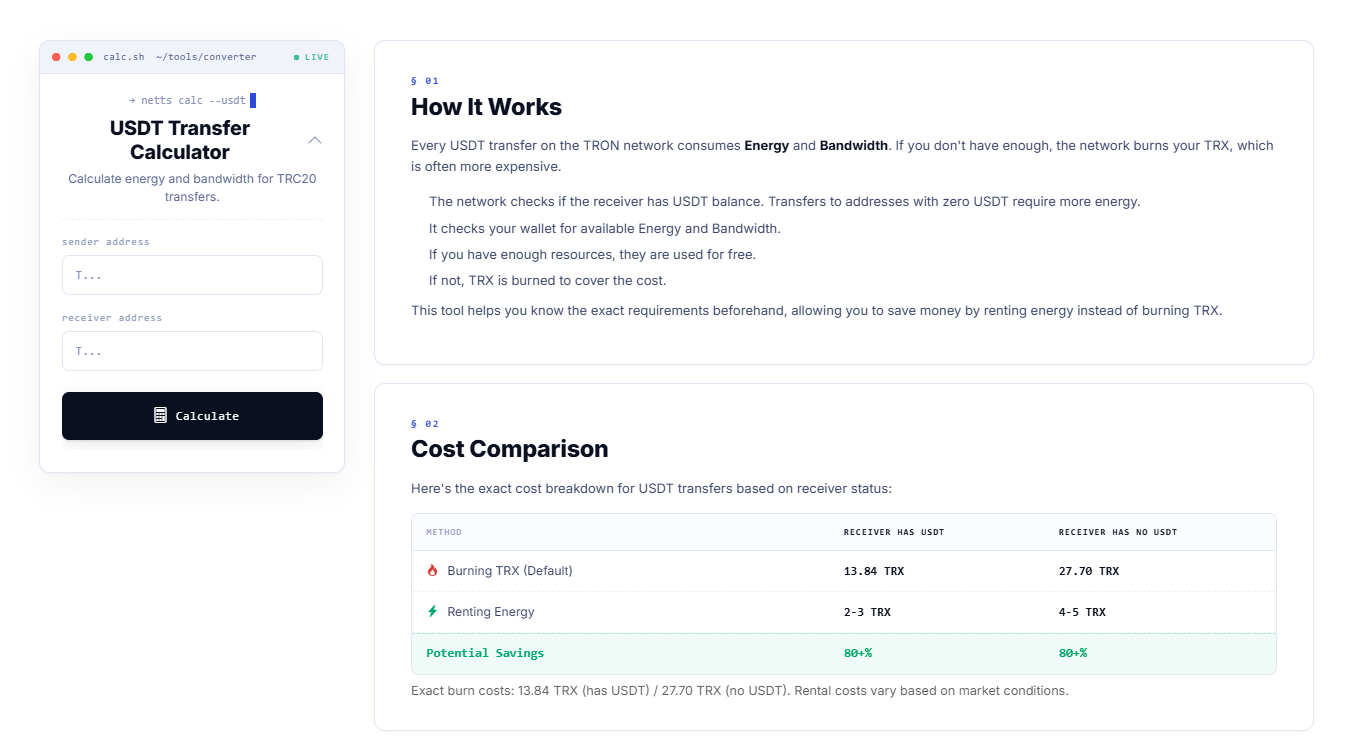
For platforms and learners moving USDT for course payments, instructor payouts and reward distributions, the Netts.io USDT Transfer Calculator calculates the actual Energy and Bandwidth needed for an arbitrary TRON USDT transfer, compares burning TRX to renting Energy, and gives a sender advance warning of what their transaction will cost. Default burn for a USDT send to an address which already has USDT is 13.84 TRX, vs 2-3 TRX rented Energy; transfers to new addresses with no USDT balance: 27.70 TRX burnt vs 4-5 TRX rented. For an online education platform that settles thousands of small payments every day, the difference in these fees really adds up to operating margin burning vs renting — and for learners in specific courses receiving micro-rewards knowing exactly what the USDT gas fee will be before transacting is literally the line between a viable model or a horrible experience.