Public Transit and Crypto: Tickets, Tokens, and Daily Commutes
Why public transit feels broken, what fare boxes actually cost to run, and where crypto is quietly rewiring the system.

Almost no one has a smile on the bus. The seats are uncomfortable. The schedules are imprecise. The other passengers are too near or too loud. The path does not lead where you actually need to go. You somehow need to charge too much and not enough in order that the system remains funded. And the whole public transit experience — especially in America, where the system has been chronically underfunded for most of a century — is imbued with a kind of baseline irritation that riders bring along as they move from station to seat to destination. None of this has to be true. Transit in many cities globally is already clean, reliable, regular and voluntarily used by people who could otherwise afford to drive. However, in many of the areas where it is potentially most important — such as in areas with few other options they have been allowed to languish into a service of last resort, used by people who have no alternative and tolerated by everyone else.
Why they are is a question that is systemic — and it is precisely the systemic part that makes them interesting. Public transit is not bungled by someone who forgot to get it right. It is broken because those connected financial structures, political arrangements and operational systems have been designed for outcomes not focused on serving riders. The first stage of making sense of why, of all things crypto, has a foothold here — not because the tech is magic but because the problems underneath are around payment systems and identity and verifiable access — and those just happen to be exactly what crypto-native infrastructure was built to solve.
A Brief History of Why Nobody Likes It
Scattered across America in the early twentieth century, streetcars covered nearly every city. They were privately owned, profitable, and integrated into the very fiber of cities — moving millions of riders every day and shaping urban development. Then came the car, then came the freeway lobby, then came (to build all those highways) suburban sprawl, and over a span of some forty years streetcars were pried up one line at a time after one fight after another. The story is more complex than the conspiracy-theory version of it suggests, but the result was uncomplicated: by the 1960s, most American cities had transit systems deliberately deprived of capital and intentionally redesigned on the basis that everyone who could buy a car would drive; those left were serviced with inferior responses to citizens.

The patterns established in this period proved extraordinarily hardy. Farebox revenues could no longer cover costs and government subsidies became the way of funding transit systems. The lumpy funding mechanisms were aligned to political cycles that did not correspond with the long planning horizons of infrastructure. Because institutional capacity to build capital projects efficiently had withered, they became expensive and slow. Transit riders who kept riding became — in the political imagination of many cities — people whose preferences could be safely put aside. A feedback loop began, and the feedback loop is still looping decades later.
Not all cities in Europe and Asia went this way. Rail networks found in Tokyo continued to be dense and properly funded. London's Underground continued to expand. Overall, the S-Bahn and U-Bahn in Berlin formed the backbone of the city. Part of the difference was political — some countries made better transportation investment choices than others — and part cultural, with a continued public demand that transit be a serious alternative for normal residents. That means riding public transit is wildly different depending on where you live, and riders in cities poorly served by public transit are not facing an immutable fact of the universe, but rather a consequence of appropriately fewer decisions.

This context matters because the debate about how to improve transit tends to smooth over it. Technology pitches are framed around modernization, but in reality the problem is structural. Decades of disinvestment cannot be remedied by a new payment system or a tokenized fare card, but some specific layers of the experience that have developed friction over many years and that contribute to the grind of using the system can. The layers that some of those happen to be in are also where crypto actually can give you something useful, and the narrower version is a claim I think deserves to be taken seriously.
Fare Box Is Where the Friction Lives
Fare collection is in fact the single most underrated cost in a transit system. Research of major transit agencies has repeatedly found that fare collection, depending on whose accounting you believe, eats up between five and fifteen percent of the money it brings in. The hardware to read cards. The software to manage accounts. The team for dealing with disputes and refunds. The enforcement guys that check whether riders have paid. The labor contracts on these aging fare gates. The infrastructure for producing and distributing cards. All of it necessary under the existing model, none of it cheap. The MTA in New York City, BART in San Francisco, Metro in Washington — every big system has suffered one or more painful, costly fare system revamps over the last two-or-so decades, with every new system working only a little better than its predecessors.
It is at this point that the rider surely suffers worst. Fare card needs to be topped up, balanced out and replaced if lost. The machine at the station that sells a single-ride ticket sometimes works; sometimes does not. The transfer between systems — bus to train, train to a different operator's train — is a question of which fare media work where and how the prices interact. Day one of tourists in a new city — getting to grips with the local transport system, instead of seeing the sights. Frequent users build muscle memory for the idiosyncrasies of their local system and become helpless when they cross into a neighboring jurisdiction.
The contactless payment revolution of the 2010s played a big part in that. For a lot of riders, tap-to-pay credit and debit cards have made it easier to pay, while several cities implemented account-based ticketing systems that managed the payment side without needing riders to carry dedicated fare media at all. London: contactless on the Underground was the world design template.
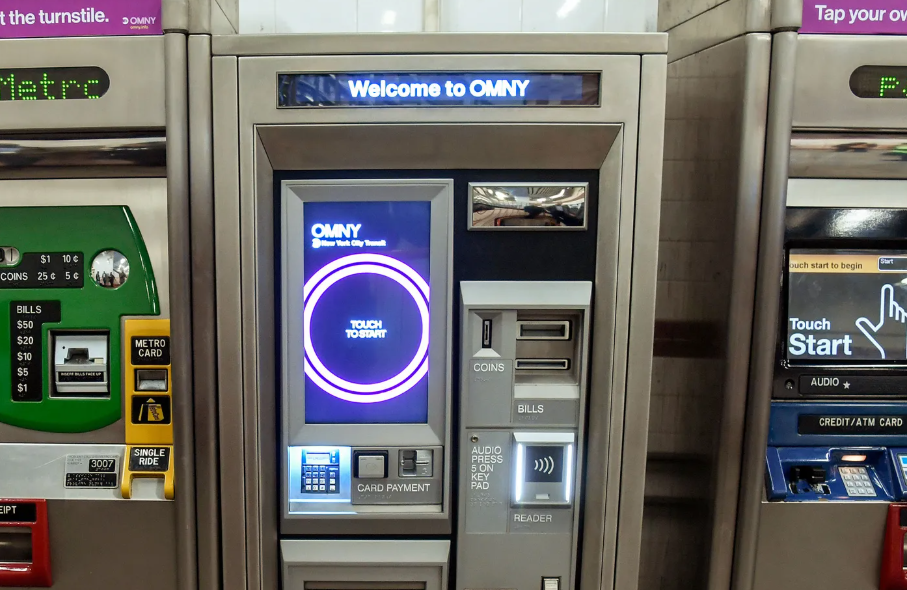
OMNY launched in New York in a staggered manner. SimplyGo was launched to replace the EZ-Link card by Singapore. However these systems are still based on the traditional financial infrastructure and subsequently all the cross-border friction, processing fees and costs for identity-verification required with it. They serve most users decently enough in the city they touch and create frustration at the borders of every system they engage with.
This is where crypto starts to get interesting, not as a replacement for the contactless card but a standard that acts as a layer dealing with cases conventional payment infrastructure handles badly. A tourist visiting a city for two days just wants to avoid the hassle of setting up an account for local fare systems. You cannot use the contactless integration without a bank account if you are a migrant worker. Someone who is a regular cross-border commuter — and there are millions of those across the world — wants one single payment instrument valid on both sides of the border without conversion costs. Thus, crypto-native fare systems have started popping up between the cracks, where this user segment already finds their struggles.
What Crypto Has Quietly Tried
The early trials have been tamer than the marketing suggested. BVG has run a blockchain ticketing pilot in Berlin. Other small size cities have experimented with NFT-enabled season tickets, but with limited results. Several European transport agencies have now worked stablecoin payment options into their existing ticketing apps, aimed mainly at tourists or visitors to the area for a short time, who would otherwise have struggled with the local payment infrastructure. There has been limited coverage of the pilots actually launched, and their numbers modest; this served a purpose since successful projects tend to grow steadily — often protected from sudden scale by moderation in demand — while failed ones can leave nebulous wreckage without killing off an entire approach.
The most interesting work is on the operations side. We have seen a few transit agencies deploy back-office (operator-to-operator) blockchain-based systems when riders travel across jurisdictional lines. The old way — where operators clear the fare for a rider with paperwork over several weeks as is done today — is an obvious candidate for replacement with smart contracts that settle immediately. A rider boards a train in one operator's territory and disembarks in the territory of another, fare share is automatically allocated to each operator based on the journey taken, and settlement occurs without either operator maintaining their own complex bilateral reconciliation process. Riders will never see it, nor the rest of anyone outside of the financial departments in the involved agencies, but those institutions win big enough to find a technical investment worthwhile.
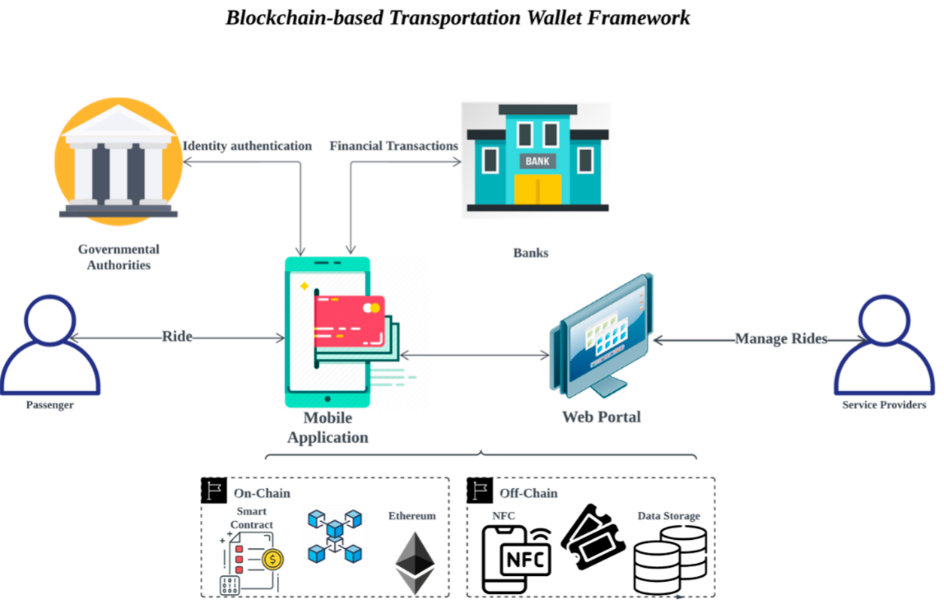
Quiet experiments in tokenized infrastructure financing have also occurred. Transit requires capital projects — new tracks, new stations, new rolling stock — that are expensive to construct and have generally been funded by municipal bonds that bind up capital for several decades. There are various pilot projects that have tested tokenizing portions of these capital programs for smaller investors who want to provide the financing and so they can give the agencies better cost-of-capital alternatives in a flexible way. Regulatory frameworks for this are likely still in flux, but the long-duration infrastructure asset and on-chain ownership structural fit is good enough that the experiments will probably persist.
By contrast, the rider-facing side has seen a few small mobility-purposed crypto applications like wallets tailored to transit payment or NFT-based monthly passes that can be transferred from person to person, as well as reward tokens for off-peak travel used by operators to load-balance among routes. In other words, these are prototype and very much not on the platforms of the real transit systems. They are pointing at where the category could be going, not necessarily where it actually is right now. The systems that are in production tend toward the quietly competent over splashy, and that pace is likely right for growing the category.
And then we also have DePIN to briefly talk about. Decentralized physical infrastructure projects that commence constructing rider supplied data networks — sensors on commuters phones reporting level of crowding for lines, info on delays or quality of service, with pay in tokens for what is provided. In some cities, the data has become accurate enough to aid in dispatch decisions, and the economic model behind it is fundamentally different from any traditional transit data collection mechanism. The ultimate test is still to be seen whether this will scale to mainstream operational use, but early pilot programs have generated data that is better quality than some internal sensors at various corridor networks for the agencies.
Incentive Layer Nobody Designed Yet
The coolest thing that crypto could bring to transit is not payments. It is about incentives. Essentially, all public transit systems are a coordination problem — any number of millions of riders making millions upon millions of decisions about when and how to travel, while the operator price is essentially determined by peak demands, rather than what average loads would be. Rush hour capacity of a bus is financially viable. If that same bus runs half empty at noon? That's a waste. The system sizes up for the peaks even though almost all of the cost of providing service over a day is absorbed during the troughs which results in an inherently inefficient way to provide service.
The crude solution has been peak-versus-off-peak pricing. While some riders who can change their travel times do so, price signals are weak, savings are ambiguous and the vast majority of commuters ride at their preferred time rather than the time that operators prefer. An improved scheme might allow rewards for off-peak using to be adjusted in real time according to the operator's capacity activity. The transaction costs of issuing and redeeming micro-incentives have dropped enough to make this kind of per-trip incentive economically viable in a way that past payment infrastructure did not, and crypto-native token systems are what make this daily micro-incentive an option.
These are the types of things that some agencies have started to pilot, with riders being rewarded small tokens for traveling at off-peak times, on less-utilized routes or transferring between modes in ways that alleviate overloaded systems across the board. These rewards are usually redeemable for future rides, but sometimes these rewards can be withdrawn from cash rewards, or used to get deals with local merchants. The early data from these pilots is quite positive — riders actually do respond to micro-incentives, and the response — even marginal per rider — aggregates out to meaningful peak-shaving across the system.
The ultimate human motivation is rather simple. Nobody is in love with their commute. They make trade-offs between their time and different rewards: they will gladly incur small inconveniences to see that rewards can be made unambiguously without throwing a tantrum, but take bigger or unexpected losses of time and they will bristle against it. A system that tells them to wait five extra minutes and compensates them fifty cents for the trouble works if the math is above-board. A system that tells them to wait another fifteen minutes and gives them nothing in return is never going to work. The incentive layer exposes the math in a way that traditional fare structures never could, and it is this visibility that allows the behavior change.
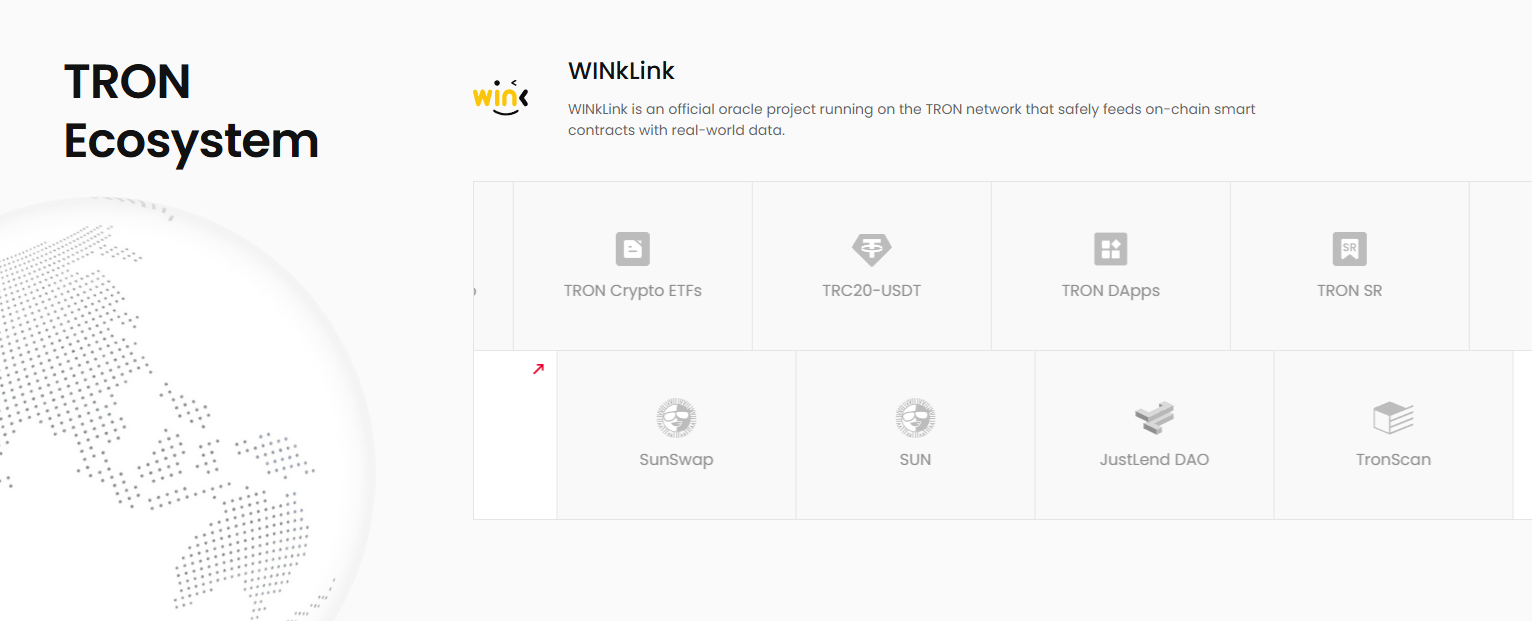
Transit workers themselves can also be a parallel use case. Legacy payroll and reimbursement infrastructure that has its own friction persists to bind together drivers, conductors, maintenance staff, and contractors all interfacing with the agency's financial systems. And these payments are being settled based on stablecoins and the kind of low-cost automation TRON Energy infrastructure provides, pilot programs have started appearing to handle contractor settlements at numerous agencies. The workers the money is sent to don't necessarily know or care that the rails themselves are crypto — they notice that their payments arrive on time, in full, with none of the deductions and delays they had been led to expect.
Hurdles That Will Slow This Down
This is not all going to happen overnight. Public transit agencies are perhaps the most risk-averse institutional buyers in any setting — they have to be, because a missed upgrade for these systems means failure that will leave millions of riders out in the cold. Procurement cycles are long. Pilots take years. The atmosphere of political skepticism surrounding innovation at any public agency — especially innovations that could fail after one term in office and be used as fodder against an incumbent by their successors four, two or even one year later.
Privacy — real privacy — is also ridiculously complicated. Even so, there are real concerns among riders about being tracked in their travel patterns — particularly in jurisdictions where the tracking can be instrumented by an authority that people already distrust. Wallet-based fare payment systems that use pseudonyms fundamentally afford more privacy for riders than the account-based contactless systems, which link every trip to a known individual, but the agencies often demand exactly those sorts of ID checks that the pseudonymous systems make harder. Rider privacy versus operational transparency is an open question and different jurisdictions will land in vastly different places.
Another is regulatory uncertainty surrounding the underlying tokens. To certain regulators, what would otherwise look like a simple transit reward token that can be traded or cashed out starts to resemble a financial instrument that is subject to a number of licensing requirements. The agencies running the pilots have mostly designed the tokens to avoid this classification but legal frameworks are still developing and fresh attempts in most exciting tests could be delayed by new tighter regulation within any major jurisdiction. The ongoing effort to keep these systems going while remaining within compliance is largely invisible from the outside.
There are practical obstacles, too. The fare gates and validators, which are an integral part of most major transit systems were not implemented for crypto-native payment and retrofitting them is costly. Others have opted to delay implementing crypto compatibility until more well established capital cycles are regular players in the game, amounting to a half-decade to whole decade delay depending on the agency. Others have integrated a strictly smartphone-based QR system that completely circumvents the physical infrastructure, which works for many riders (but not all — those with an older phone model or dead battery miss out). The journey from the current state of these systems to their potential is a long one.
Work is being done on each of these barriers. The more circumspect procurement is being done through smaller pilots demonstrating the technology without signing up to a whole system. Zero-knowledge proof systems, which can confirm or deny fares without unveiling identity for privacy concerns are in place to accomplish this. Direct engagement with the relevant agencies in each jurisdiction is how the operators are tackling regulatory uncertainty. Hybrid mechanisms that allow both legacy and crypto payments through the same gate are addressing infrastructure retrofitting. That's progress in the nominal sense — comparable to the pace of public infrastructure more broadly — slow, sometimes but not always steady and definitively backward, yet moving in the right direction.

Because of this type of high-volume use case, the Netts Workspace can become a pro TRON Energy management platform for transit agencies, fintech integrators and the stablecoin-based settlement infrastructure increasingly underpinning these operations. It manages manual rentals from 32K to 5M Energy units, a smart mode that monitors balance triggers and pauses per off hours, host mode delivering 131K Energy plus 400 Bandwidth per 24-hour cycle, and an API for Tron Energy with IP-whitelisted access for automated functionalities. Additional features are cashflow management and accounting for deposits and withdrawals, CSV export of historical transactions, an affiliate program (with 15 percent commissions), and a dashboard which measures cost savings against a burn-TRX baseline: essentially operational tooling that transforms large-scale crypto-rail operations from experimental / background-level to business-unit level.