Crypto and Architecture: Buildings Funded by Tokens
Why architecture's slow payment cycles, supply chains and patronage models are gettin changed by crypto — fractional ownership, milestone payouts and more.
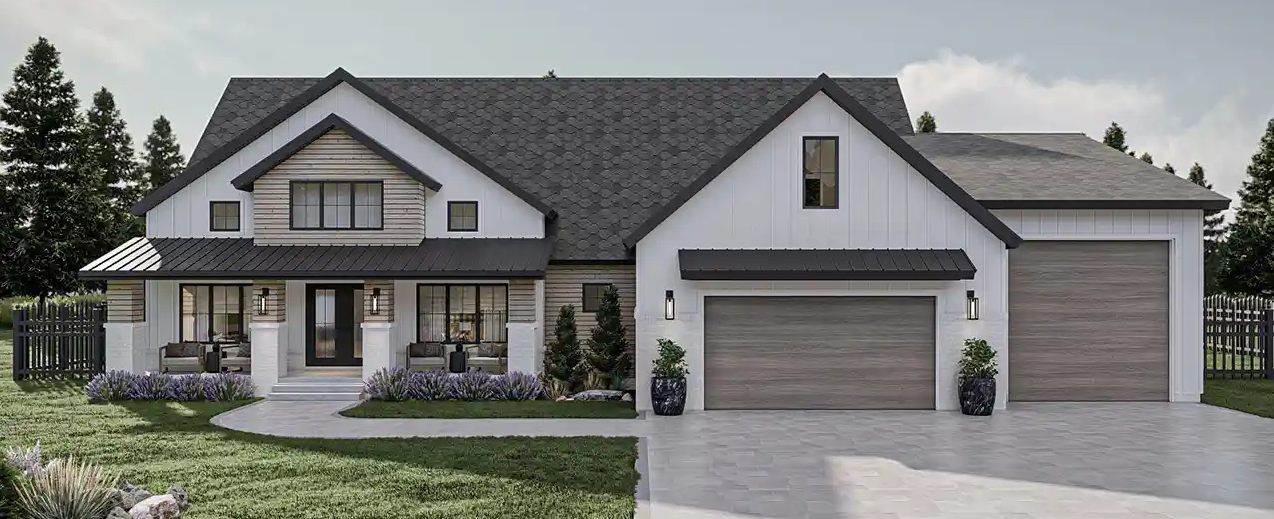
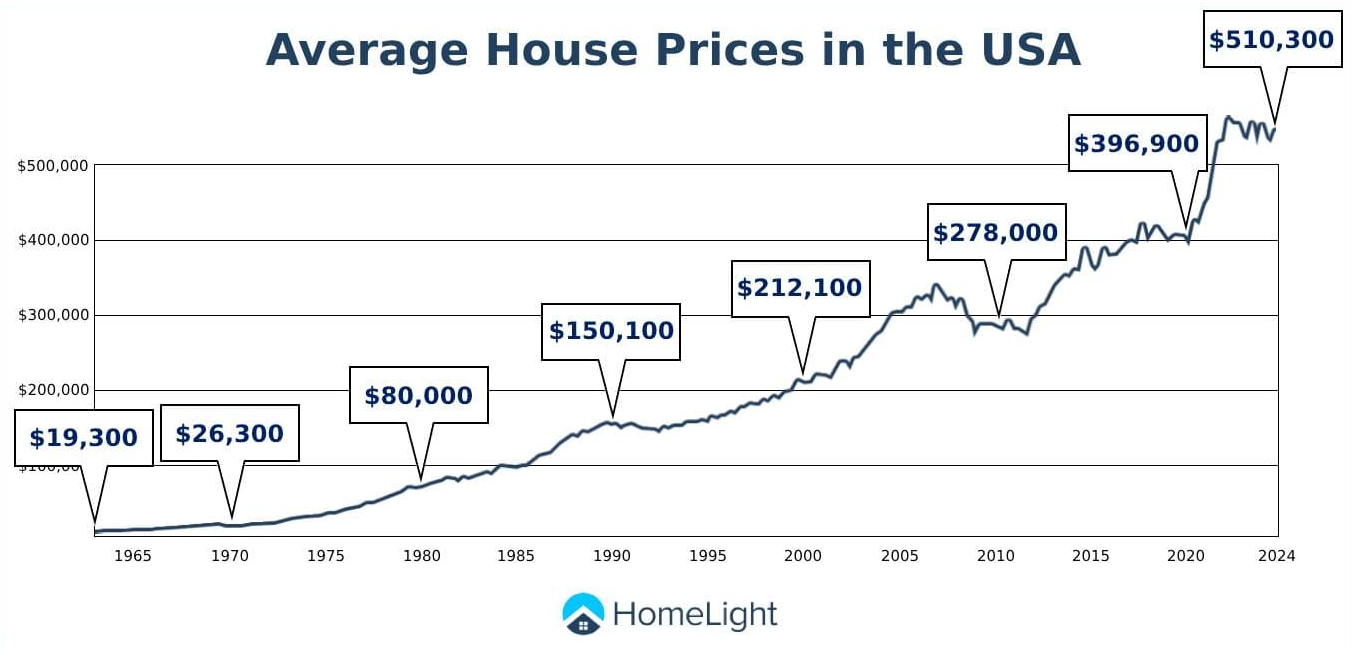
The median price of a home in the U.S. is now approximately seven times the median household income. It was three times as much 40 years ago. House-buying mathematics was slowly rendered unrecognisable by an entire generation now, and the eroded arithmetic brings out certain hungry responses which anyone in their twenties and thirties know all too well. The young couple does the math, realizes it is impossible and decides to wait. The wait stretches into years. The years stretch into decades. They come to terms with the fact that they will never own where they live, and that the landlord will be able to raise rent even faster than inflation can, as long as the local market allows it, and that whatever savings they've been able to squeeze out in their budgets go into things other than having acquired an asset they could leave to children after them. This is the housing story of an entire generation in much of the developed world and, in most cases, the people behind it will no longer apologise for it.
The causes are political, economic and human in that order of significance. Architecture belongs to a rarer breed that exists in the middle of all three spheres. All buildings that exist exist by virtue of someone paying for them, and they were only approved because somebody decided their presence was worthwhile based on considerations that mostly had nothing to do with what happens inside — wherever they are sited and whatever price tag attached without any serious input from the people who actually live there. The people who tend to think most carefully about why buildings are the way they are usually do not own one. Crypto, however, has already started to remedy this problem; albeit in a very small and quiet way. People are beginning to have not quite the same options available. This change is not revolutionary — yet. It is real enough to deserve discussion, but without all the usual overselling.
Median Madness
Much of the reason why American housing got expensive is unrelated to building. Raw materials have gotten more expensive, but not seven times more expensive. The cost of labor has risen, but not seven-fold. The price of the land itself, the price of getting permission to build on that land, the cost of insurance against weather events that were once rare and the cost of capital to pay for all this under financial conditions that could not have existed previously has gone up by something approaching that factor. In most cases, the actual physical facility is the least expensive part of the entire apparatus.
Throw in a couple of decades worth of zoning legislation which have effectively made it illegal to build the sort of housing that people could actually afford. Single-family-only zoning which is a product of the USA and one that America has exported to its suburbs, renders apartments illegal over much of the residential land mass of the country. This is not an accident. Those who already owned the single-family houses voted, again and again, against any change in the zoning that would enable a nearby denser development. This made them financially incentivised to keep the supply muted. They pursued that interest through any political avenue they could. The constraint persists.
That cycle is echoed in other nations with different particulars but the same basic rhythm. London has just willed its planning system back: the pace of building becomes glacial. It sent prices into the stratosphere for a generation thanks to a foreign-buyer market in Vancouver. Sydney's negative-gearing tax incentive turned housing into a leveraged retirement product. The opposite occurs in Tokyo, whose zoning and regulatory framework is surprisingly liberal but produces more housing, lower prices and less drama — much of which is studied by urban planners who wish they knew "why" these conditions are the exception. Every market was arranged by political choices taken a very long time prior, and each market has its own gathering of beneficiaries who will battle any change that risk their situation. This constraint is what building architects work within. They do not set it. They do not vote on it. The buildings they design are at least what those buildings managed to navigate the political gauntlet — not necessarily what they would have used to build.
Who Decides What Gets Built
Like every big building, it emerges from the gaudy shell of public process but finished by the gritty work of negotiated rent extraction. The developer applies for permits. The planning commission holds hearings. The neighbors object. Local authority members savage concessions as price of support. The architect adjusts the design. The community board wants the developer to pay for a park, a school upgrade, an affordable-housing set-aside, public-art commission or some combination. Individually, each of these may be perfectly reasonable. Together they stretch out the timeline and take millions right onto the bill, which a buyer or renter of whatever actually ends up built will pay directly.
The politicians held a likewise motivation in this regard. In most (but not all!) American cities, the construction industry and allies — real-estate interests and the unions that labor on their behalf — contribute heavily to campaigns of local elected officials. If a council member blocks too many projects, they lose the support of contributors. Vote too many councilmembers out of office. The correct strategy is to win as many concessions as possible while approving fewer projects than constituents would like — the situation that more or less prevails in large American cities decade after decade. Some of the costliest cities within the continent have specific case histories wherein council individuals had been charged for taking immediate payouts in exchange for permit approvals. The cases that result in the filing of indictments are simply the most visible part of a much larger pattern.
Renters — who are the ones most impacted by housing supply — don't vote in local elections anywhere near as much as homeowners do. They move more often. They care less about local elections. And, they don't show up to the planning hearings where decisions are made. This leads to a dynamic where the people who would best benefit from new housing are systematically underrepresented and the people who benefit from obstructing new housing are overrepresented in the political process. This is not a conspiracy. It's the obvious result of who has the time and incentive to show up. Anyone who has endured a community board meeting in any major American city for the better part of 20 years has seen this dynamic play out in slow motion: a dozen retired homeowners speaking against a proposed building while the thousand future renters who would have lived there were at work, at school, or on this or another continent entirely.

This system, in turn produces the architect: something like a credentialed contractor. They simply design what they need to design. They tweak their designs to please different stakeholders. They put their name on the result. The romanticized image of the architect as a singular visionary, like that of the chef as singular auteur heroicized by fame and the proliferation of individual expression, is mostly fiction except for a small class of celebrity practitioners. The sad fact is that many architects spend their lives practicing within the constraints of the political and financial structures offered up to them by their cities, and those structures rarely allow anything interesting. The brilliant young architecture graduate who had envisioned themselves designing the next great civic landmark learns, within just a handful of years, that they are mostly drafting alterations on the same rectangular mid-rise that their firm has been contracted to repeat across half-a-dozen different locations.
People Who Already Own and Vote
Someone who already owns a home has a strange stake in housing policy. The home is their biggest asset, and much of its value rests on local housing supply remaining constrained. In their profit-and-loss spreadsheet, every new apartment building around is a small credit in depreciation of their asset. Even if voters were charitably inclined, the cognitive overload of voting against their own financial interests for the benefit of complete strangers who will never be able to afford to live in their neighborhood is not a burden that most are willing to bear. So they vote against it. They show up at the meeting. They tell the council they back affordable housing in general, but not here, not there and not at this density. They are not lying. These things are both in their belief system. And the system rewards them for it.
The projection become even more intense as housing values increase. A home that appreciated at 100% over the course of twenty years is likely the largest amount of so-called "income" most middle-class American families will ever receive without having to work for it. They are not going to vote to reverse it. Their children, should they grow up in the area nearby, likely cannot even afford to nicely live in their parents' neighborhood but can go elsewhere at a cheaper price or commute. The neighborhood association will not disband for them. The cycle replays itself, generation after generation, with the beneficiaries of the constraint having more political power than those who pay for it.
Foreign investors complicate the picture. The Vancouver housing market turned into a mess, with sources of Chinese capital buying up homes not to live in but rather much like parking outside of China where authorities can't get to it. Toronto and Sydney had the same story. Overseas LLCs whose actual beneficial owners are all too often buried under chains of shell companies that lead to more shell companies in no-man's-land jurisdictions uncooperative with international tax authorities soon came to own a significant share of the central London neighborhoods. Similar flows have been absorbed by New York and Miami. The houses are not occupied. The lights are off. Political response, when it comes, is usually too little, too late — because those politicians who would have to fix it received campaign money from the same brokers managing the flows in the first place.
The Airbnb question alone merits a short paragraph. Over the last decade, cities around the world have lost meaningful percentages of their long-term rental stock to short-term-rental platforms like AirBnB. The math of the situation is simple for a property owner: Airbnb pays more for that night than a long-term tenant pays in a 30-day period — but the aggregate impact on communities has been an ongoing strangulation of the sort of stable residential culture that used to be present in those neighborhoods. The platforms have lobbied furiously against all regulation. The cities that have fought back, and imposed heavy fines for violations, have seen some return of the long-term rental stock. The cities that have resisted, simply lost it.
What Crypto Has Quietly Shifted
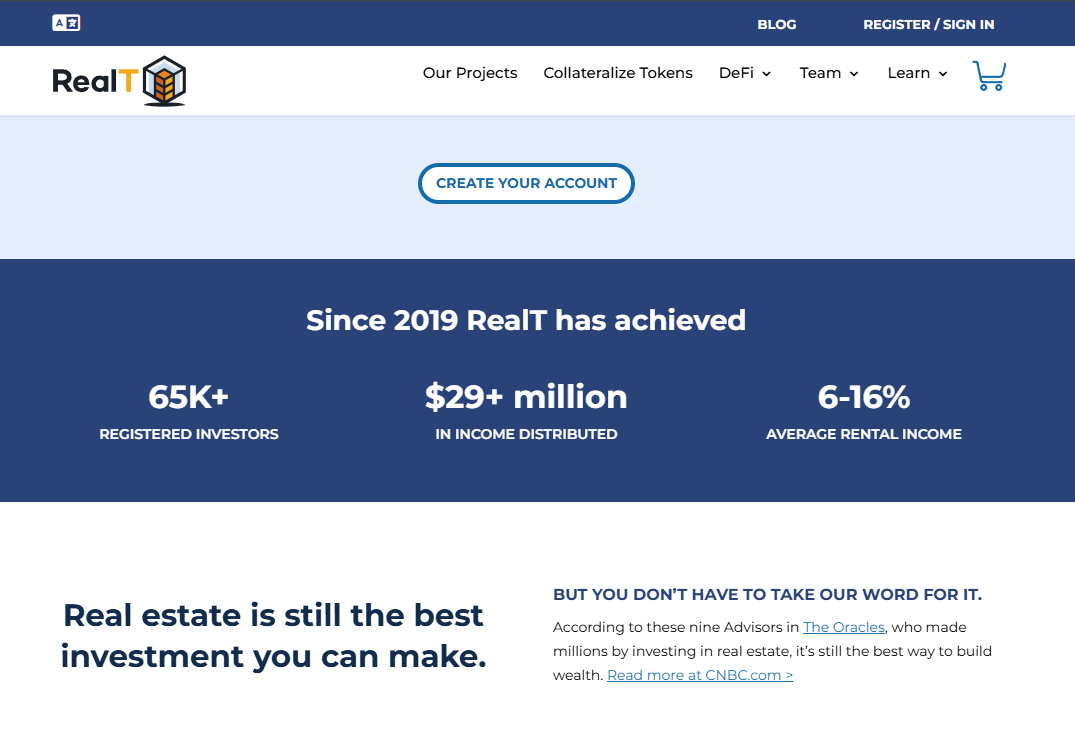
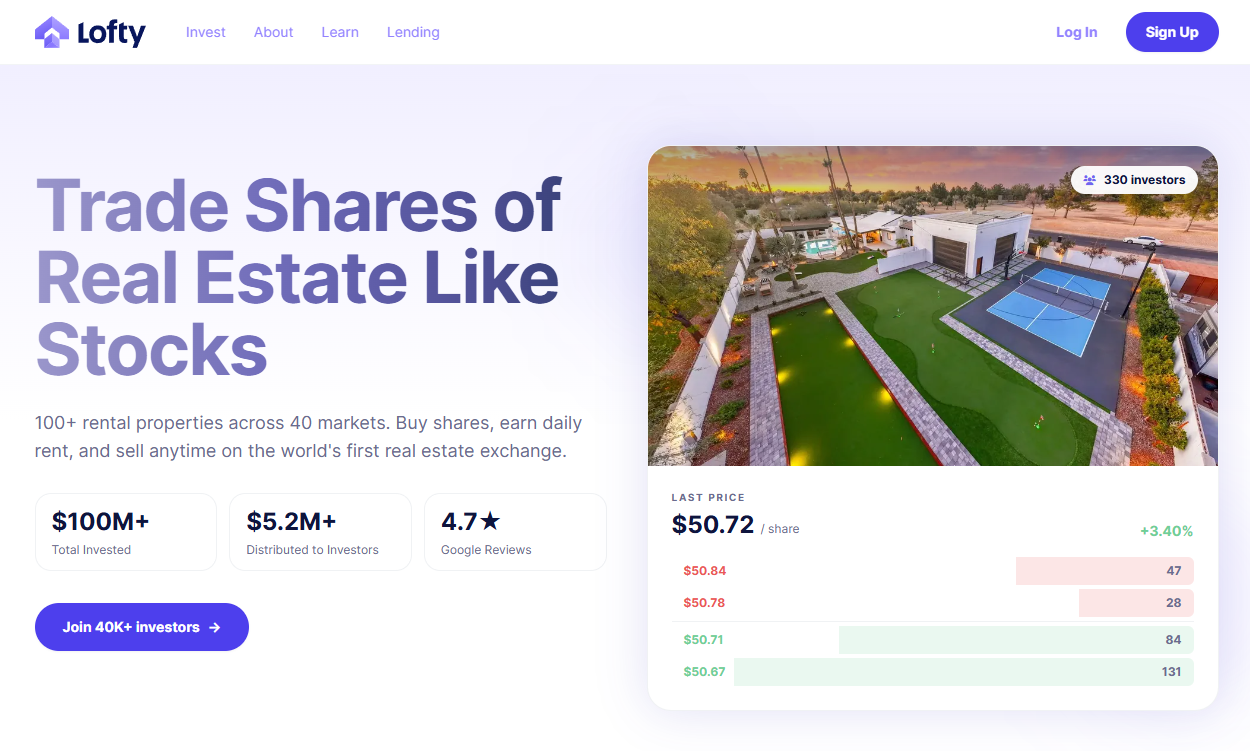
Amid this imperfect market, crypto has done several things that attract attention. First are the tokenization of individual rental properties via platforms like RealT, Lofty and a handful of others. These platforms buy up single-family rentals, create an SPV to own each one, and put out tokens that represent fractional ownership in each individual home. You can get the tokens for as low as $50. The buyers get a share of the monthly rent according to their stake. The model was not world changing, it was offering a category of people — small savers, international investors, people who keep getting priced out of buying directly — a modest stake in the residential real estate asset class that would otherwise have been unattainable.
By the mid-2020s, these and similar platforms have put several billion dollars of residential and commercial real estate on-chain. An early example of institutional-grade properties that were tokenized under the existing securities framework was St. Regis Aspen Resort and its tokenization in 2018. Later transactions have added office buildings, hotel portfolios, and unique landmark properties to the list of on-chain assets across a broader range of jurisdictions from Switzerland to Singapore — along with several emerging markets where the regulatory landscape evolved faster than that in the U.S. or E.U. The trades so far still represent a negligible portion of the world market for real estate. They are big enough that the bigger institutional players have started putting real headcount into trying to work out what happens next.
The operational layer is the deeper shift. Can construction payments — which flowed through a slow chain of intermediaries often characterized by dispute — move directly from one party to another as stablecoin transfers, sometimes automatically via smart contracts when certain milestones are met? The architect is less patient to wait for their invoice to be cleared. That gives the subcontractor a paycheck when work is validated. The migrant worker on a Gulf-state mega-project — who was previously dependent on one employer's control over their pay and travel documents — can now, in some pilot programs, receive automatic payment to a wallet of his or her own. However, the enhancements do not apply everywhere, the pilots are small and underlying labor abuses remain in many projects. However, the structural progress where it is constructed has been genuine and it is precisely that small institutional gap which advancement ultimately benefits.
On-chain provenance for building materials has started to tackle a new class of long unsolved issue. Counterfeited steel, low-grade concrete concealed as structural-grade, electrical components that are below stamped specification — these are not conspiratorial apocalypse scenarios: These are systemic failure modes that result in real building collapses and decades of liability exposure. By tracking materials from the manufacturer through every intermediary to the construction project, each transfer recorded on a public blockchain, this verification problem can be solved in ways paper documentation never could. This has not escaped the notice of insurance companies, who are beginning to offer discounted premiums for projects utilizing blockchain-verified supply chains, which in turn has further accelerated adoption amongst larger contractors who have little interest in the ideology behind the technology but much more about their insurance bills.
These contracts are ruled by smart contracts that also limit the discretionary powers which have historically been one of the main vectors for corruption in construction. They will get far fewer opportunities to extract a bribe from companies because the payment releases automatically on independent verification of a milestone. However, this is not a full reassurance due to the inspectors themselves being human and therefore corruptible. It just makes another cut in the surface area for the corruption, which is one of the reasons that construction costs so much more than it needs to where it is endemic.
Tokenized Buildings and the Stake Renters Never Had
The most radical form of tokenized real estate is the building-DAO model — a group of token holders purchasing an underlying property, managing it with on-chain votes, and distributing its income. The community in CityDAO is famously using Wyoming land with the sole purpose to build a city on it. Many small DAOs have purchased old buildings in depressed urban areas with aims to restore those spaces into community places owned by the people. The results have been mixed. Some of their projects imploded in governance disputes that would ring true to anyone who has ever been on the board of a homeowners' association, where every disagreement is really just a proxy for long-held animosities and every personal feud becomes an existential threat to the village. Others are tediously working their way toward real occupancy.
What is interesting about these experiments is not whether they work in given cases. It is that they exist at all. Real estate ownership has, until now, mostly been the province of people who could write big checks. This was a model that thousands of people collectively putting together small amounts of capital to buy a building would never have existed outside the regular securities world because the amount of paperwork involved would have dissuaded all but one person from entering it. The new on-chain version cuts that paper down enough to render collective ownership feasible at smaller scales, thereby creating a participatory category of activity that did not exist before. A renter with no prior ownership experience can own 1/25 of the building they rent in or similar somewhere else — without the need to qualify on a mortgage and without needing a six-figure down payment.
The question is whether this matters — at the scale of the overall housing crisis. People do not really find your place any safer by tokenization. It does not change zoning. It does not dislodge the homeowner interest group that runs municipal government. It does not prevent the influx of foreign capital and does nothing to help calm inflated cities prices. It grants a few renters a nominal stake in some buildings, which is an improvement over the status quo but nowhere near enough to remedy what is broken. The ones claiming that crypto will solve the housing crisis are overselling. Those people are never seeing the concrete, small progress we have already made because they all pretend it doesn't come to life and do anything.
The longer-term question is whether those operational improvements — direct payments, on-chain provenance, smart-contract project management, fractional ownership — stack up to an overall shift in how buildings are funded and managed. The history of technology in the construction industry would imply this occurs slowly, piecemeal, with each incremental advantage quietly assimilated part of the norm over decades. Buildings that are being commissioned and managed differently today will serve as prototypes for the next generation of buildings. That shift may not be apparent from the outside until the effect of it has added up and becomes obvious in hindsight.
And there's what crypto-native owners want from the buildings they pay for. This is not the same as a crypto entrepreneur acquiring a heritage building to headquarter their business in Singapore — any more than a real-estate developer putting up speculative condos in a city where most residents cannot afford them. Certain of the early buildings funded by crypto have been very overtly luxurious in manners that the industry-at-large finds shameful. Others have been purposeful interventions in neighborhoods that had escaped notice from traditional capital. What gets built reflects who is doing the building, and the people doing it now are establishing reputations that will shape what their successors are allowed to do. In another twenty years the skyline of a major city will likely feature several buildings that were only possible because financial mechanisms did not exist when their architects were trained, and the politics will be in some way subtly different than its neighbors.
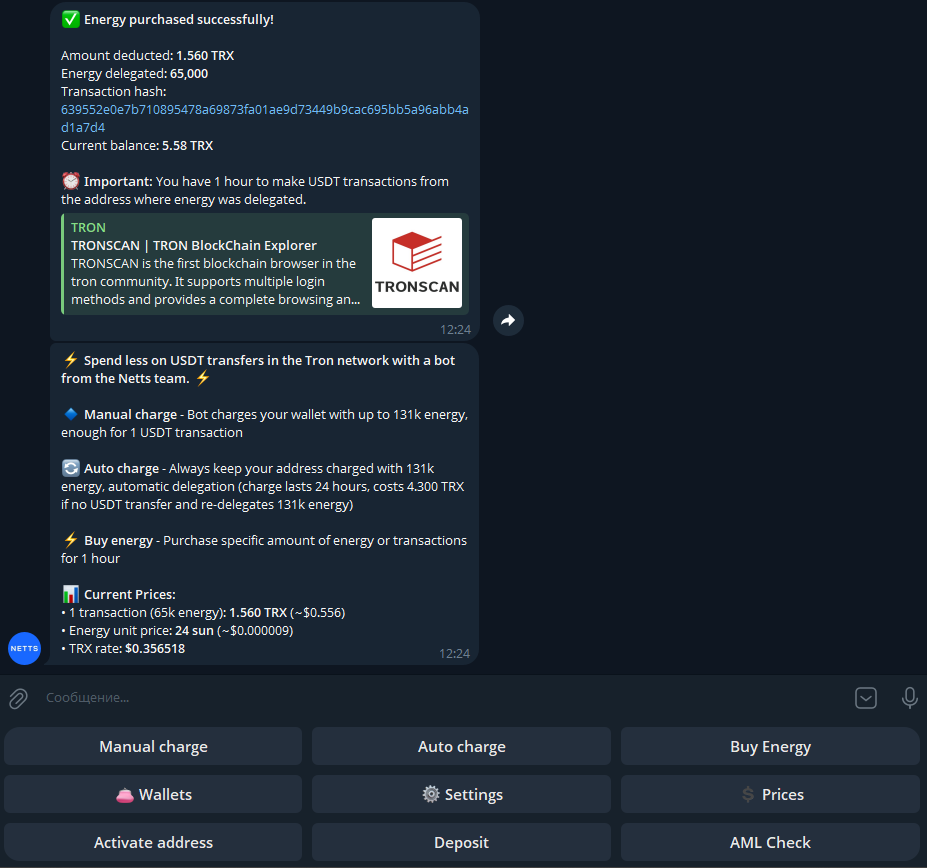
For other types of businesses like construction companies, contractors and property platforms that have to process hundreds or thousands of stablecoin transfers for payroll, vendor payments, distributions to token holders etc. the per transaction operational cost counts much more than what any marketing paper is willing to admit. And this is where a TRON Energy bot turns essential infrastructure instead of an optional luxury. Inside Telegram, the Netts Energy Charge Bot manages wallet top-ups through a manual charge that provides on-demand Energy up to 131k per call while also offering an auto-charge mode that allows the user to have a persistently funded address. Off-peak pricing averages 25 sun per package of Energy, with the average worth of a transaction's Energy at roughly 1.625 TRX, and competitive purchase options for buying TRON Energy without having to stake/freeze any amount of your TRX. That pricing is the difference between an operationally viable workflow and one that erodes its own margin for a firm processing hundreds of stablecoin transfers per day across a holding portfolio or a tokenized development project.