Crypto and Insurance: Biggest Problems and Obstacles
Why crypto insurance is harder than it looks — regulatory limbo, oracle risk, missing actuarial data, capital fragility and the recourse gap.

The previous article on the topic, Crypto and Insurance: New Wave, laid out the optimistic vision: smart contracts replacing claims adjusters, parametric payouts arriving in seconds, peer-to-peer pools removing the corporate middleman, and a generally more transparent and accessible market. That article is worth a read for anyone curious about why these ideas attract serious capital and serious talent. This one is for the part of the conversation that comes after — when the enthusiasm meets the obstacles, and the question becomes not whether crypto insurance is possible but whether it can survive the gauntlet that every novel financial product eventually runs.
The optimism is not wrong. The mechanics work. The problem is that insurance, as an industry, is one of the most carefully constructed pieces of financial infrastructure humanity has ever built — full of conservative reasoning, accumulated regulation, and hard-won lessons that crypto-native projects often discover only when they trip over them. The obstacles are not theoretical. They are the actual experience of dozens of projects that have launched with confidence, hit real-world friction, and either pivoted, retrenched, or quietly shut down. Understanding what those obstacles are matters more than understanding the upside, because the upside is only available to the projects that survive the obstacles.
The Regulatory Maze Nobody Has Mapped
Insurance regulation is fragmented in ways that even people inside the industry find frustrating. In the United States alone, every state has its own insurance commissioner, its own licensing rules, its own capital requirements, and its own consumer protection statutes. A traditional insurer offering coverage nationwide spends years and tens of millions of dollars getting licensed in all fifty states. A crypto-native insurance project, by contrast, typically launches in a single jurisdiction with a much lighter footprint, then attracts users from anywhere on the internet without giving much thought to where those users actually live.
This works until it doesn't. The regulators of the user's home jurisdiction may, at some point, decide that the project is selling unlicensed insurance to their citizens. The penalties can be substantial. The remedies can include forced wind-down. The reputational damage can be enough to kill a project even if the underlying technology was sound. Several decentralized insurance initiatives through the early 2020s found themselves quietly geo-blocking users from particular states or countries after compliance reviews revealed exposure they had not anticipated. The geo-blocking solves part of the problem but undermines part of the value proposition — the original pitch was global permissionless access, and the practical reality is that global permissionless access can become a regulatory time bomb.
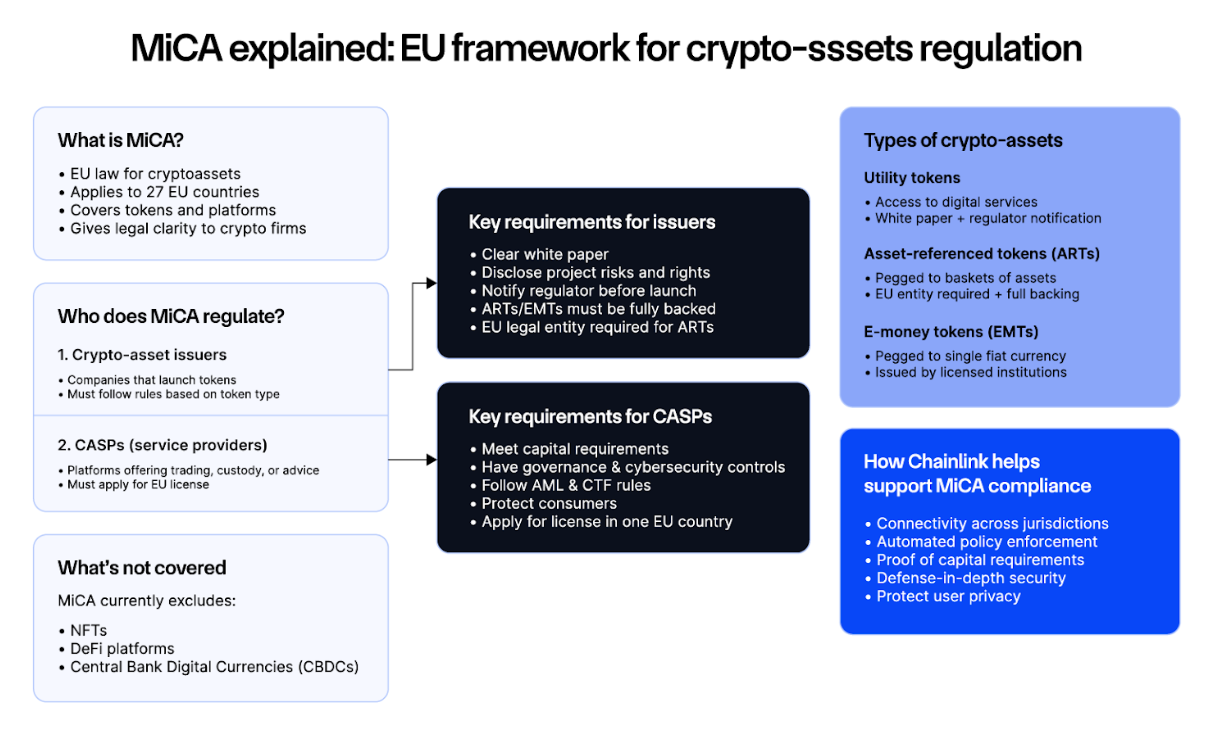
The European Union's MiCA framework, finalized earlier in the decade and now enforced, has added another layer of complexity. MiCA does not directly regulate insurance, but it touches every adjacent activity — token issuance, stablecoin operations, custody — in ways that constrain how a crypto insurance project can structure itself. Projects operating in Europe now need to consider whether their token is a financial instrument under MiCA, whether their pool capital qualifies as e-money, and whether their cross-border activities trigger licensing requirements they had not budgeted for. The compliance overhead can easily exceed the engineering overhead of building the protocol itself.
Asian regulators have taken varied approaches. Singapore and Hong Kong have moved toward formal sandbox programs that allow crypto insurance experimentation under supervision, with the understanding that successful projects will eventually need to migrate to full licensing. China has effectively closed the door entirely. Japan has its own intricate framework that combines elements of both approaches. Any project trying to operate across regions ends up with a patchwork of compliance arrangements that consumes engineering attention better spent on the actual product.
The Oracle Problem and the Single Point of Trust
Parametric insurance — the model most often celebrated as crypto insurance's killer application — depends entirely on oracles, the bridges that feed real-world data into smart contracts. When a flight delay policy pays out based on aviation data, an oracle is the source of that data. When a crop insurance contract pays farmers because rainfall fell below a threshold, an oracle is the source of that rainfall measurement. The smart contract is only as trustworthy as the oracle that feeds it.
This is, in technical terms, the single biggest unresolved problem in crypto insurance. The blockchain itself can be verified by anyone, the smart contract can be audited and made immutable, but the oracle remains an external system that can be corrupted, manipulated, or simply wrong. Several oracle failures through the 2020s drained DeFi protocols of hundreds of millions of dollars not because the smart contracts were broken but because the price feeds they relied on were manipulated. The insurance versions of these attacks are even more sensitive — a manipulated weather oracle could trigger a mass automated payout that drains a pool overnight, with no traditional fraud investigator able to recover the funds.
The industry's response has been to build oracle networks — Chainlink, Pyth, RedStone, and others — that aggregate data from multiple sources to reduce the risk of any single point of failure. These systems are genuinely better than relying on a single source. They are not bulletproof. A coordinated attack on multiple oracle providers, while expensive, is not impossible. A flaw in the aggregation logic can produce wrong outputs even when individual data sources are honest. And the oracle networks themselves charge fees, which eat into the cost structure of the insurance product they enable.
There is also the problem of disputed events. A flight is delayed by 119 minutes — does that count as a two-hour delay or not? A rainfall measurement falls right at the threshold — should the payout trigger? Smart contracts handle these edge cases according to whatever logic was written into them at deployment. Traditional insurers handle them through adjudication, which is slower but capable of handling ambiguity. The pure parametric model trades flexibility for speed and finds itself unable to accommodate the messiness of real claims, while any attempt to add human judgment back into the loop reintroduces exactly the inefficiencies that the model was supposed to eliminate.
Where the Actuarial Tables Just Don't Exist
Insurance pricing is a quantitative discipline. Actuaries spend their careers building models of how often particular events occur, how severe the losses are when they do, and how to price coverage so that premiums cover expected payouts plus operational costs plus a reasonable profit margin. The data underlying these models, in traditional insurance, often spans decades or even centuries. Mortality tables for life insurance, accident statistics for auto coverage, weather data for property — all of it has been collected, refined, and validated over generations.
Crypto-native risks have none of this history. How often does a smart contract get exploited? How often is a particular stablecoin de-pegged? How often is a major exchange hacked? The honest answer, for many of these questions, is that we simply do not know because the dataset is too short and too thin to support meaningful actuarial modeling.
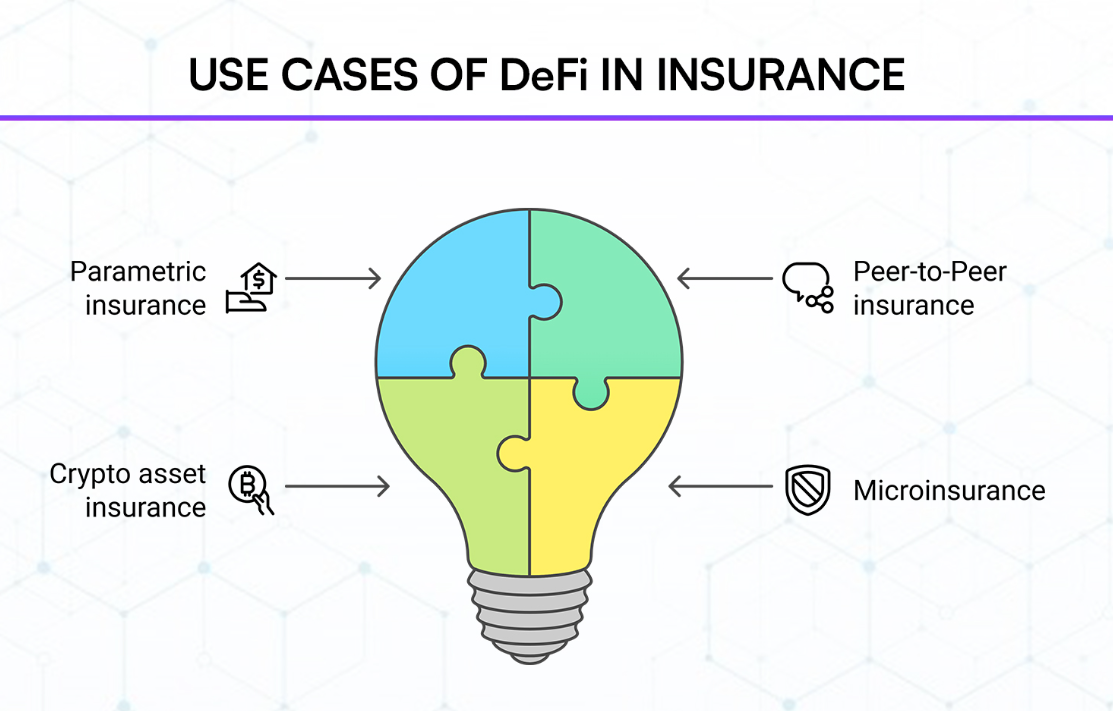
The DeFi insurance protocols that cover smart contract risk are essentially making educated guesses about probabilities, calibrating those guesses against the small number of actual incidents that have occurred, and adjusting as new data arrives. This is not the same as actuarial science.
The pricing distortions show up in predictable ways. Coverage for well-known, well-audited protocols tends to be underpriced because the visible track record looks safe, while in reality the protocols may have latent vulnerabilities that have not yet been discovered. Coverage for newer protocols tends to be overpriced because the lack of history is treated as elevated risk, even when the actual risk may be lower than the older protocols that just happen to have more historical surface area. The market does not have the information density to price these distinctions accurately, and the providers do not have the capital depth to absorb being wrong in either direction.
Add to this the problem of correlated risk. Traditional insurance works because risks are mostly uncorrelated — your car accident is unrelated to my house fire, and a flood in one region does not cause earthquakes in another. Crypto risks are deeply correlated. When the market crashes, every protocol's collateral ratios deteriorate simultaneously. When a major bridge gets hacked, multiple insurance pools that covered different aspects of that bridge all pay out at once. When a stablecoin de-pegs, every pool denominated in that stablecoin loses value at the moment payouts are most likely to be required. This correlation undermines the basic math of insurance pooling and is the reason traditional insurers are extremely cautious about underwriting crypto risks even when offered substantial premiums.
The Capital Question Nobody Wants to Answer
A traditional insurance company is required to hold capital reserves substantially in excess of expected payouts. The math of this is conservative, the regulation enforces it, and the result is that even when a major event triggers large losses, the insurer can pay. Decentralized insurance pools operate on a different model: pool participants commit capital in exchange for premium income, and the pool pays claims as they arise. When the pool runs out, the pool runs out.
This is, in practical terms, a much more fragile structure than traditional insurance. Several decentralized pools through the 2020s found themselves in the awkward position of having issued more coverage than their capital could plausibly support, then experiencing a cluster of correlated claims that drained the pool. The policyholders received partial payouts at best. The pool participants saw their capital evaporate. The reputational damage propagated to the broader category and depressed participation across multiple unrelated projects.
The reinsurance question is the most underdeveloped piece of this puzzle. In traditional insurance, reinsurers — companies whose entire business is insuring insurers against catastrophic losses — provide the final backstop.

Munich Re, Swiss Re, and a handful of others handle this globally. In crypto insurance, decentralized reinsurance pools have been proposed and experimented with, but the scale required to genuinely backstop major events is not yet present in the ecosystem. The capital is fragmented, the underwriting standards are inconsistent, and the largest pools are still small enough that a single catastrophic event could exhaust them entirely.
This creates an awkward equilibrium where decentralized insurance can serve well for moderate, frequent claims but struggles to credibly offer coverage for the rare, severe events that are exactly what insurance is most needed for. The customer who buys a smart contract coverage policy from a decentralized pool may receive prompt payment if a minor incident occurs, but if a major exploit drains multiple protocols simultaneously, the pool's capacity to pay collapses precisely when the demand is highest.
The Recourse Gap When Code Goes Wrong
Traditional insurance carries an implicit promise that goes beyond the policy document. If the insurer wrongs you, you can sue. If the insurer goes bankrupt, state guarantee funds protect a portion of your claim. If the insurer engages in bad-faith practices, regulators have teeth. The whole apparatus of consumer protection has been built over a century of legislation, case law, and institutional development.
Decentralized insurance has very little of this. If a smart contract executes wrongly, there is no one to sue — the protocol is the entity, and the entity is code. If the pool drains because of a bug, the policyholders have no government guarantee fund to fall back on. If the DAO that governs claims acts in bad faith, the dispute resolution mechanisms are whatever the protocol's governance allows, which may be slow, opaque, or biased toward the largest token holders. The lack of recourse is sometimes framed as a feature — the system is trustless, after all — but for ordinary users buying insurance, the absence of a fallback is precisely what makes the product unattractive when something goes wrong.
This problem is structural and difficult to solve without abandoning some of the principles that make decentralized insurance distinct. Adding traditional dispute resolution reintroduces the lawyers, courts, and delays that the model was supposed to eliminate. Adding government guarantee programs requires the projects to subject themselves to the regulatory frameworks they were trying to escape. Adding insurance on top of the insurance creates an infinite regress that no one is willing to fund. The result is a market where the products work brilliantly when nothing goes wrong and become deeply unsatisfying the moment anything does.
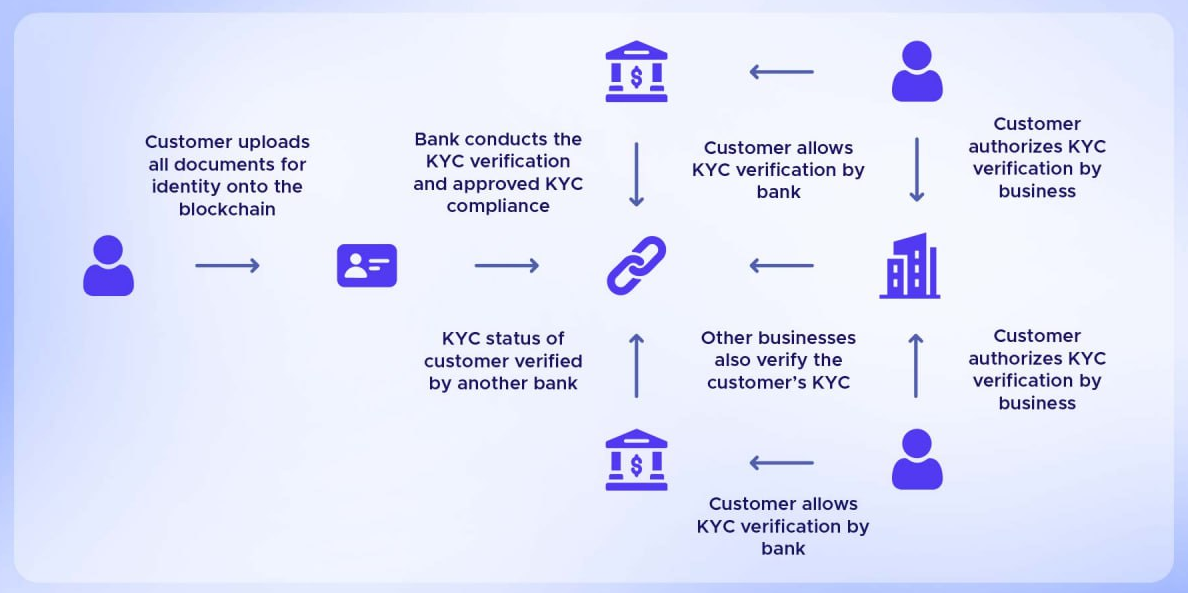
KYC and identity present a related challenge. Many decentralized insurance projects allow pseudonymous participation, which is part of their appeal — privacy, lower friction, faster onboarding. But anti-money-laundering rules in most jurisdictions require insurers to identify their customers, and tax authorities want to know who is collecting payouts. The tension between pseudonymous participation and regulatory compliance is unresolved, and the projects that try to thread the needle by adding KYC at certain thresholds end up offering a product that is neither fully decentralized nor fully compliant. Fraud detection becomes particularly difficult — when the same wallet can be created in seconds and discarded just as fast, the traditional underwriting question of who is buying the policy loses much of its meaning.
None of these obstacles is fatal. Each of them is being worked on by serious teams. Better oracle networks are reducing the single-point-of-trust problem. Specialized actuarial firms are building crypto-native risk models that can support more accurate pricing. Reinsurance experiments are growing in capital depth. Regulators in several jurisdictions are developing frameworks that recognize decentralized insurance as a category worth accommodating rather than suppressing. The trajectory is positive, even if the timeline is longer than most enthusiasts initially hoped. What this means in practice is that the next several years of crypto insurance will be characterized less by dramatic breakthroughs and more by accumulated incremental improvements. The projects that survive will be the ones that take the obstacles seriously, build conservatively, integrate with traditional frameworks where useful, and resist the temptation to oversell what the technology can currently deliver.
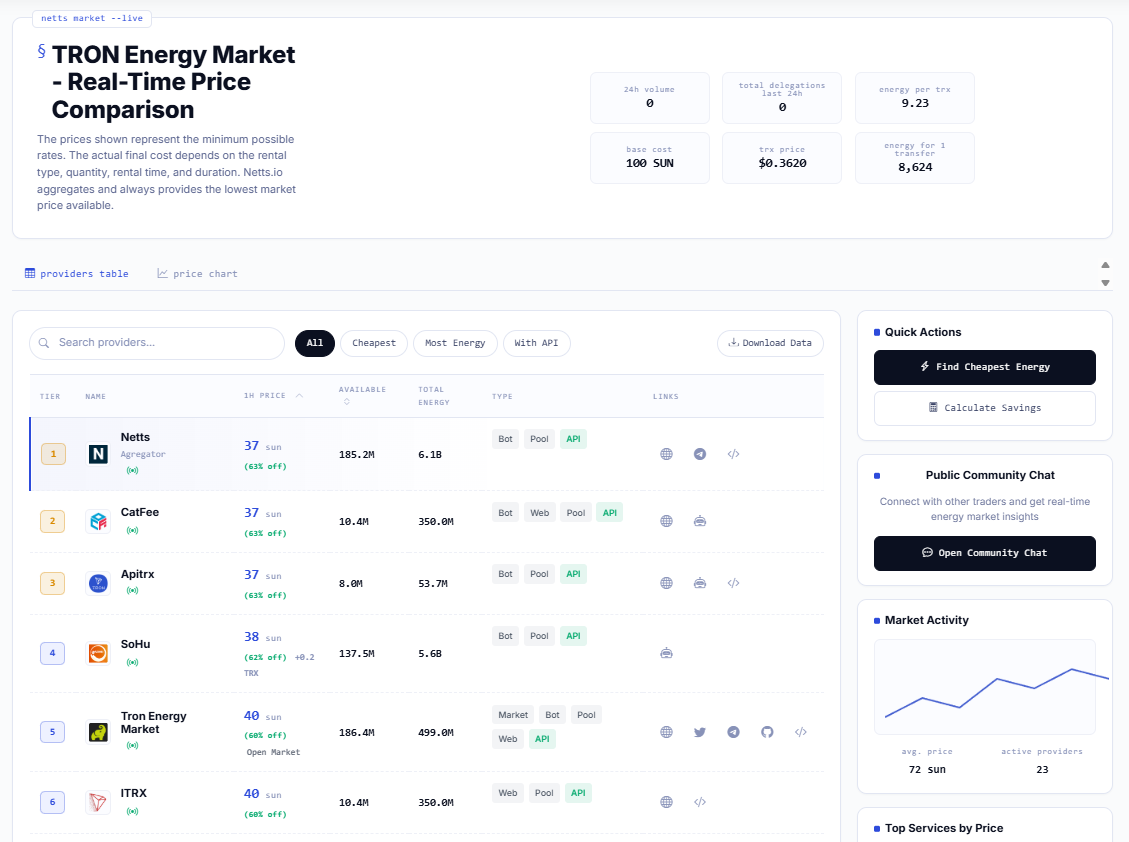
Underlying all of this is the unglamorous infrastructure question of cost. An insurance protocol that processes thousands of small policies, premium payments, and claim settlements per day cannot afford to burn through TRX or other network resources on every transaction. The operational margin on micro-insurance is too thin. This is why TRON Energy prices and resource management matter as much to a decentralized insurance platform as actuarial pricing matters to a traditional one. Projects that get this right can offer affordable coverage at scale. Projects that get it wrong find themselves priced out of the very market they were supposed to serve. For platforms that want to get TRON Energy at the best available rate without staking or freezing TRX, the Netts.io TRON Energy Market acts as an Energy aggregator across a long list of verified providers — Netts itself at 25 sun per Energy unit, SoHu at 26 sun, CatFee at 27 sun, and many others — letting users route each transaction to the cheapest verified source in real time, pooling billions of Energy units across providers including JustLend, Trongas and APITRX, with delivery in seconds and savings of up to 75 percent versus burning TRX.