How Crypto Makes Travelling More Convenient
Stablecoins, fewer bank blocks, and direct settlement for hotels, tours, and emergencies — when crypto actually helps travelers move money.
For today’s global nomad, the simple joy of entering a new border is too often undercut by the first-world irritation of money transfers. Physical borders may have opened up with electronic visas and automated gates, but financial ones remain stubbornly erected behind the labyrinths of rules rooted in the previous century. The second you step off a plane or cross a land border, your money works differently. It devalues via exchange rate, it's increasingly more difficult to withdraw money due to banking security algorithms and at times unless the local infrastructure supports your particular card issuer, it is totally useless.
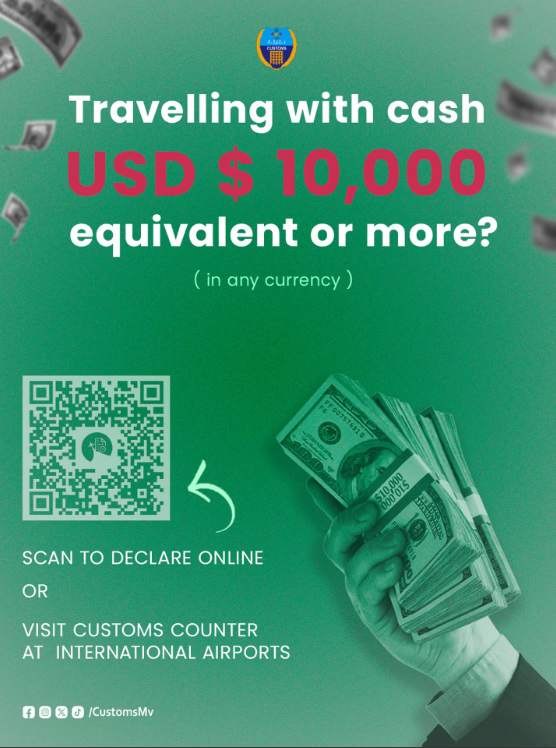
The regulation of moving money across borders is sprawling and often draconian. Foreign governments have imposed strict controls on the flow of capital to combat money laundering and shore up their currencies. This is a mountain of headaches for a traveler. Take the “10,000 Rule” level that applies in many places – i.e. 10,000 (for example in US, EU and UK). If you have cash — in dollars or other currencies exceeding ten thousand dollars, you are presumed to be a criminal until proven innocent.
You have to fill in copious declaration forms detailing the money and what you’re going to do with it. One error on those forms, or simply not bothering to declare because you were too lazy to calculate the exchange rate of three different currencies currently bouncing around in your pocket, can result in confiscation of the funds and huge fines.
But the issues here are more than simply carrying cash. It’s a minefield of hidden fees and sudden denials. Banks frequently treat new-country transactions as “suspicious activity” and freeze accounts immediately. And now you could end up at a restaurant in Tokyo or at a train station in Mumbai unable to pay for something because your bank back home deemed that transaction to look like fraud. You have to spend this day making international calls and going through automated menus, all the time burning through expensive roaming minutes or finding Wi-Fi.
What’s more, some other countries have specific (and often bizarre) restrictions. In countries with heavy capital controls, like Argentina or Nigeria, the official exchange rate can be dramatically out of whack compared to the "blue" rate on the street — so using a credit card could literally cost you double what it would to use cash changed at that "blue" rate for whatever you're buying. Elsewhere, including Egypt and Lebanon, banking systems have been put under severe strain with heavy limits on withdrawals, leaving travelers who rely on ATMs in the lurch. You may wait in line for an hour or more to discover that the machine is empty, or the withdrawal limit has been set so low it won’t cover a taxi ride.
A headache is also a requirement for receiving money. If you’re running out of dollars or are in an emergency, getting money sent from family via traditional wire transfers is a slow and expensive affair. SWIFT transfers can process in three to five business days — a lifetime when you are stranded without a hotel room in some foreign city. Overseas exchange services charge usurious fees, and may take as much as ten to fifteen percent of the principal just to cash in at a counter. The whole traditional financial ecosystem is based on a patchwork of localised trust and slow validation that is completely inimical to fast, globalised travel.
Universal Language of Value
Cryptocurrency inverts all of that. It is the first planetary value to be indifferent not just to national borders but also to bank hours and foreign exchange holidays. When you travel with crypto, you are not carrying money that will have to be converted or declared in the same way — you’re carrying access via a key to a global ledger. And whether you're chilling in a Paris café or lounging in a Thai beach hut, your ability to get at your funds is no different. The API does not change, the rules do not change, and the function is always available.
The biggest change is that there is no longer physical paperwork, nor reliance on trying to find the right card among multiple cards. Your money is not “on you” in the way that a customs officer can seize or pickpockets can lift. These assets live on the blockchain and can be accessed through a private wallet, such as TronLink. You could be naked when you crossed a border, but you’d have access to your whole net worth on the other side as long as you had memorized your seed phrase or secured your private key digitally. That’s a level of monetary independence the world hasn’t seen. You don’t have to show your bank statements, proffer evidence of solvency to a border agent; how much money you can access tomorrow is a concrete measure that doesn’t rely on someone else’s letterhead.
For the traveler, that means no more “Sunday Panic” — you know how it is when suddenly on Saturday night, you calculate your funds and count the days until you can get to a bank — or are in a rush to get currency from an airport kiosk charging criminal rates. Crypto is always "open." It never sleeps. You can use it to send USDT to a hotel owner at 3:00 AM on that same Saturday, and they’ll have minutes – seconds even (depending on the network) for the transaction to clear. There is noone to command the transaction be frozen because it was done from new IP address. There's no manager to sign off on the deal. You and the code are alone now, conducting a transaction that is contractual in the mathematical sense.
It is this consistency that is the killer feature. When travel is wild and flight gets canceled and plans change, one constant in an uncertain world — your money — offers enormous comfort. You know exactly that 100 USDT in your wallet is equivalent to 100 USDT whether you are in London or Laos. The rate is not subject to the whims of a local money changer or fees from a predatory ATM network.
Applications of the Modern Voyager
How much sense does crypto actually make while traveling? That depends, really — on the type of traveler you are — but speed and independence as benefits are certainly universal. From the frequent world traveler with a smile on his face and backpack over his shoulder, to once-a-decade vacationers visiting family, the blockchain is solving problems that traditional finance can’t ever hope to address.
Take the Digital Nomad, a growing group of professionals who work remotely from all corners as they travel. For them, the biggest obstacle is often getting paid. Clients in different countries also means different currencies, high wire fees and delays. Taking payment in USDT allows a nomad in Bali to get paid by a company in New York, without delay. Then, they can convert only what they need to Indonesian Rupiah on a local peer-to-peer exchange or a crypto-friendly ATM and keep the rest in stablecoins. This enables them to bank in dollars while living in a local economy, thereby partially insulating themselves from local inflation and banking collapse.
As the “adventure traveler” exploring far off or politically unstable areas you can be safe in the knowledge of non-custodial wallets. And in places where it’s risky to carry big bundles of bills, crypto provides a stealthier way to move money. A traveler journeying through pockets of South America could rightly fret over getting robbed and being left with only cash dollars. But if they have a cheap smartphone with a secure wallet, or even just paper with a QR code, their core funds remain untouched. And if they need cash, they can locate local traders — a surprisingly common species in places where currencies fluctuate violently — who will help to convert modest amounts of USDT into the local currency as required.
Imagine booking a private villa or a charter flight, and that can exceed the spending limits on standard credit cards — prompting fraud alerts and declined transactions. A direct crypto transfer pays the bill immediately, without a middleman skimming a 3% fee. Many high-end travel concierges are also beginning to accept crypto payments for the opposite reason — that they're irreversible and settle immediately, making it impossible to do a chargeback or have funds stuck in limbo.
The TRON network really excels in these types of travel situations because it’s fast and cheaper. When you’re buying a coffee or divvying up a dinner bill with other travelers, you don’t want to be paying network fees of $5 apiece. TRON supports the sending of USDT with zero transfer fees, where the recipient will pay the minuscule network fees needed to transfer their USDT to other traders or for trading in P2P.
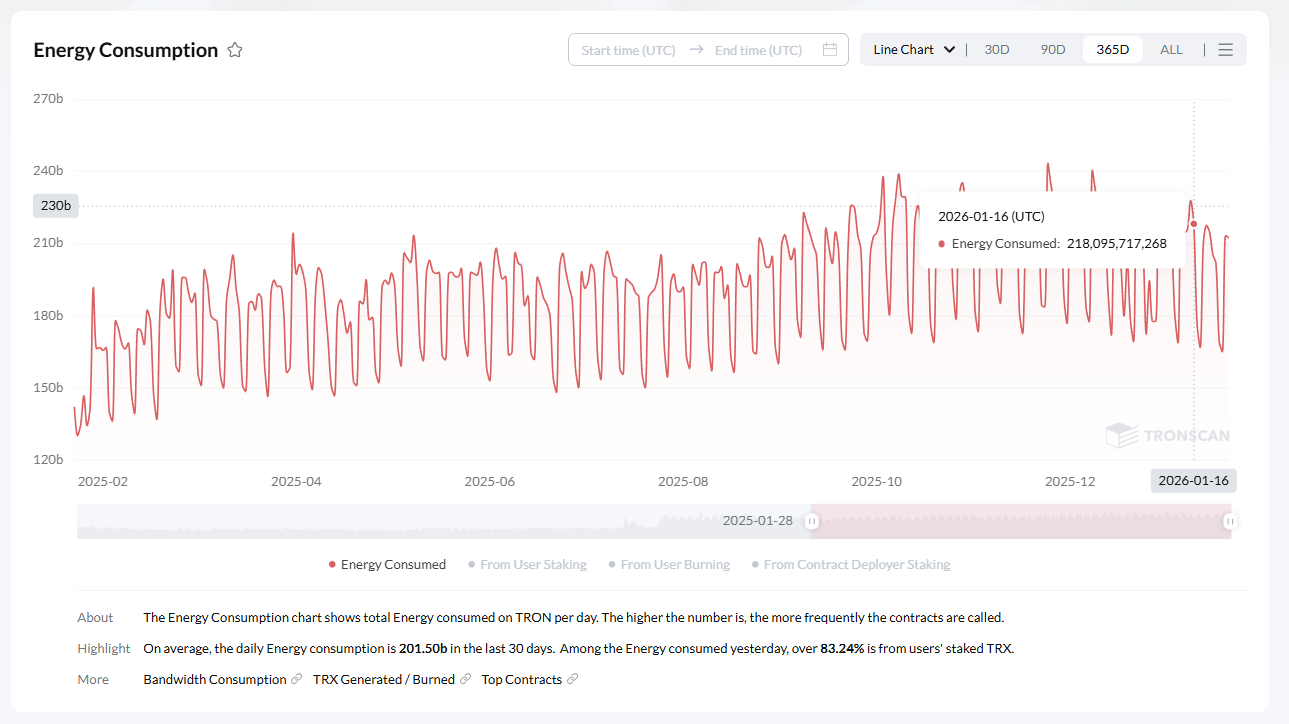
This is gamified in the form of the Network’s Energy and Bandwidth system. Energy is what it costs to run a smart contract (such as transferring USDT or executing messages on TRON) and Bandwidth is consumed in terms of transaction bytes. This backend mechanic is invisible to the regular user and for them just adds up to a fast, convenient experience that feels closer to sending an SMS than making a bank wire.
It adds a link in the chain of resilience even for the "Occasional Tourist." We all know the tales we’ve heard about travelers missing their wallets or having ATM swallow their cards. In the Old World, this is an embassy-wrecking emergency wire. In the crypto world, if you drop your phone in the loo, you can just buy a crappy replacement, restore your wallet via its seed phrase and it’s business as usual within a few seconds. You can then tap services that let you pay for hotels and flights directly with crypto, and save your vacation from doom.
Navigating the Regulatory Patchwork
But we must always stay in touch with the reality. Crypto technology may be universal, but the laws that apply aren’t. The trope that “crypto is the same all over” holds for its technology, though not necessarily (yet) for the legality of spending it in any storefront.
In El Salvador, Bitcoin is legal tender: You can buy a burger at McDonald’s with it. In Switzerland, you can even use it to pay your taxes. But in some other countries, while owning cryptocurrency is legal, making payments with it may be a gray area or limited to private peer-to-peer transactions. Banning crypto Yes, there are places where crypto is outlawed, but those have been dwindling as the world economy has expanded to include digital assets.
Travelers must perform due diligence. And using crypto in a country is usually much less regulated than traditional finance — you often don’t need to register with a central bank to open a wallet — but you do need to be attuned to local stances. On the other hand, in some states selling crypto for cash on the grey market is very common and equates to it being relatively acceptable, whereas in others it may be highly discouraged. But compared to the strictures of traditional banking, under which you might not even be allowed to open an account because you are a non-resident, entering the world of crypto still represents a radical increase in accessibility. You're not requesting access to the network, you're just seeing if the local shop will take your transfer.
The regulatory burden falls mostly on the “off-ramp” — when you convert your crypto to fiat. Paying for goods and services in crypto, or sending a friend USDT often slips through the cracks of the cumbersome banking compliance nets that ensnare innocent travelers. You would still have to see if a particular country has draconian rules against possessing it, but for almost the entire world, that traveler with a crypto wallet is just another tourist whipping out an app; no one can tell you’re doing anything more subversive than checking your email.
Solutions to Common Travel Hurdles
IN PRACTICE, there are a few key problems that travellers face and an explanation of how crypto helps solve them:
The Weekend Liquidity Trap
It is Friday afternoon, and you are out of local currency. Banks are closed until Monday. Exchange bureaus are closed, or charging “weekend rates.” Solution: You get a local business/upcoming traveler who can take your USDT transfer. You transmit the money instantly, regardless of the date or hour, and get cash or merchandise. The blockchain doesn’t know it’s the weekend.
The Nightmare of the Lost Card
You get robbed and your wallet is stolen with all your cards. They are easy to cancel, but ordering a replacement, delivered to a hostel in Vietnam takes two weeks. Solution: You log on to your backup crypto wallet from the laptop or a friend’s phone. You pay for accommodations there and your return home on a travel-booking platform that accepts crypto. You are not stranded.
The “Unbanked” Destination
You are staying on an isolated island without a functioning ATM (or any ATMs at all), and credit cards don’t exist. Solution: Strangely, among many regions where banking is hard to do, mobile data is out there. Local shopkeepers who are used to circumventing oppressive banks may be happy to take a stablecoin transfer because it’s safer for them than store cash en masse.
The Split Bill Struggle
You are on a trip with friends from three countries. And I think who settles what, it’s a lot of math and international bank transfers that cost you more than the damn dinner. Solution: Everyone downloads a wallet. You message USDT to pay debts right now. No exchange rates to calculate, no wire fees.
Last Mile: Improving the Bandwidth of TRON
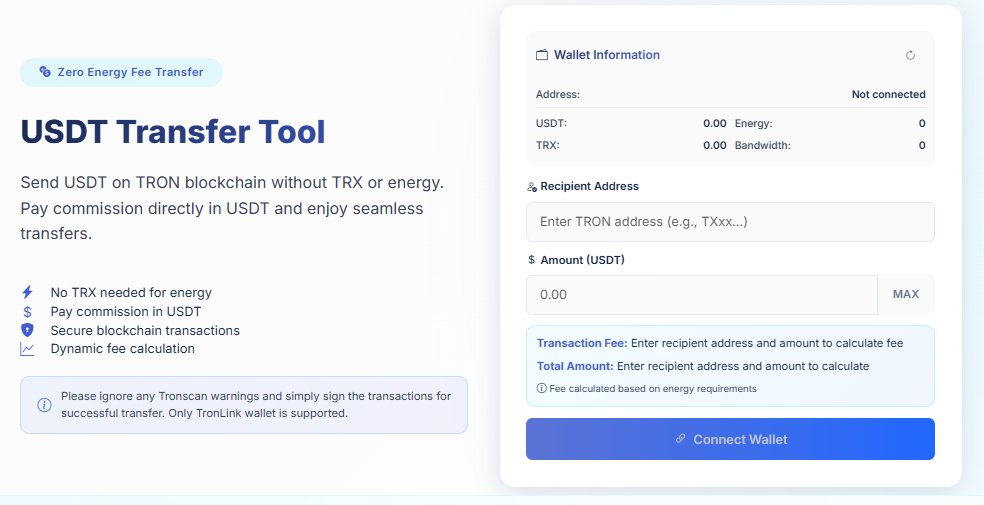
The TRON rhetoric may sound fantastic — fast and low-cost transactions. But regular users often bump into one little technological nuance: the requirement for TRX. If you want to send USDT within the TRON network, your wallet must have some amount of TRX for paying Energy and Bandwidth (these are resources used by every transaction). If you are left holding only USDT and another balance of zero in TRX, you’re basically stuck — you have money but nowhere to take it. This “gas” mechanic is a pain point for travelers wanting to use stablecoins purely as currency, not have to think about feeding a portfolio of utility tokens. There are few things more annoying than being prepared to purchase a service, and then finding that you don’t have enough energy so now must go find the nearest exchange where we can pick ourselves up five bucks worth of TRX just so we can send our own dollars.
This has always been the friction when it comes to using an otherwise perfect network for payments made while traveling. What travelers are demanding is “pay and go,” not quirky resource management.
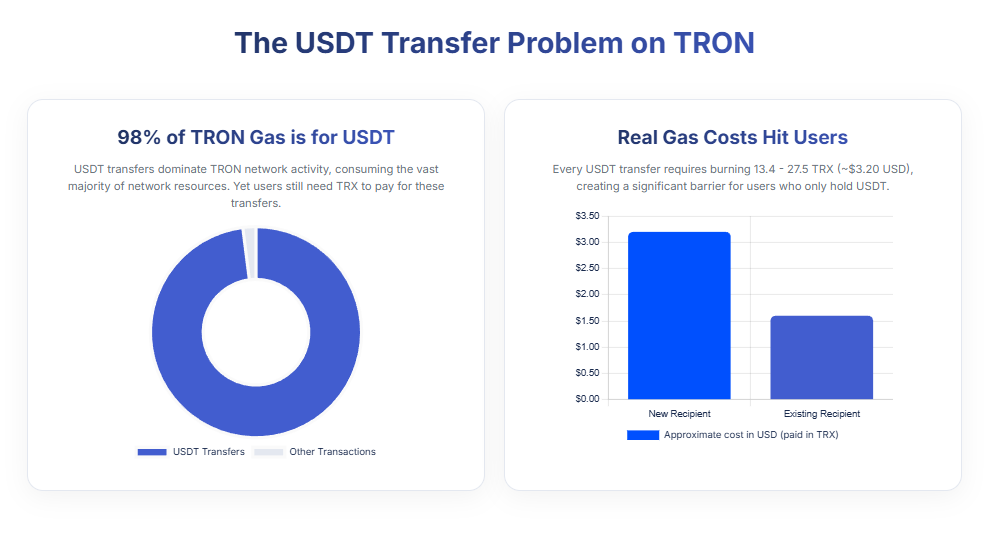
It is here that specialized tools have grown up to fill the void. For travelers frustrated with managing TRX balances, tools like the Netts Transfer Tool are a no-brainer. Netts does not require its users to hold any TRX or think about Energy for a USDT transfer on the TRON blockchain. So instead of paying fees in the base token you are able directly pay commission in USDT. All you need to do is plug in your wallet, sign the transaction and the service takes care of resource delegation behind the scenes. It removes the last obstacle to carefree crypto travel: now your digital dollars will always be liquid, however else you may be invested.