How Can Projects in Crypto Attract Best Developers
Open source culture, meaningful missions, fair pay, remote flexibility, good docs, and technical credibility — what pulls top engineers to crypto teams.
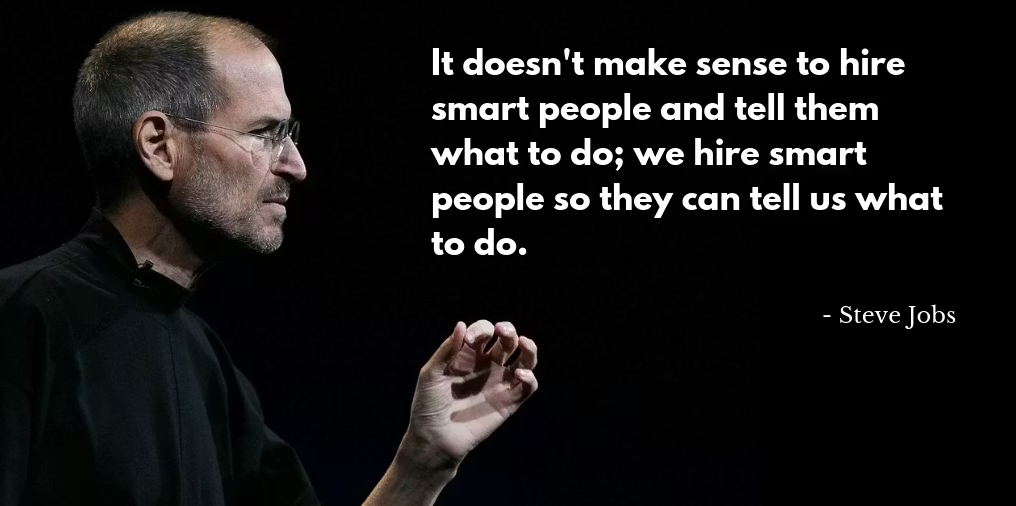
In the high-stakes world of cryptocurrency and blockchain, the very simple truth is: Your team is … everything; other than some discount on tokens via partnerships with big companies or VCs, having a shit team is the strongest predictor of failure. Steve Jobs was a vociferous proponent of this idea, often talking about the "dynamic range" of ability in software.
There may be a 30% or 40% gap between the mediocre practitioner and the best in most fields. Software engineering, especially in our specialized world of cryptography and distributed systems, the gap between a mere competent engineer and an outstandingly good one is not just quantitative – it is exponential. According to Jobs, a small team of “A-players” can run circles around a company with a bloated bureaucracy of “B” and “C” players, and this rule applies more so over the decentralized web than it did at the dawn of personal computing.
And when you are creating a protocol that could one day value billions of dollars or a dApp designed to operate without the need for any human governance, nothing but brilliance is acceptable. You might have a game-changing concept for how the world should work, your whitepaper that describes that vision of finance reform or future social networks and a strong belief in what’s possible. But without the best brains to turn that abstract dream into solid, incorruptible code, your project will forever underwhelm. It's an industry where a few flaws can be lethal and a single optimization may be the lift that propels your project into the limelight. Projects that are willing to compromise with talent often also tend to lose momentum against the ones who realised early on, that code is your most valuable asset, and for this asset it stands true that you get what you pay for.
The truth for founders in 2025 is that the best developers are not sitting around, hoping for a job offer. The most in demand people in tech can get half-a-dozen queries a week from headhunters, venture capitalists and rival protocols. These are people who have a lot of choices. They can work for established behemoths, join the ranks of budding start-ups or go out on their own. You have to know them if you want that they should come in.” It’s seldom as simple as a paycheck. While fair compensation is table stakes, the real “10x” engineers are driven by more profound realities: they want a challenge that uses their brain; a certain amount of control over their own environment; and to feel like they’ve made something which will have an impact on how the future internet looks.
Psychology of Top Developer
To get these guys to play, you have to first understand their playing mindset. Top-tier developers are craftsmen. Their code is something they find to be so elegant and efficient. They have a taste for what others would turn away from. Within the crypto world, this typically results in very few people being deeply interested in unscalable scaling solutions, new zero-knowledge proofs and interoperability protocols. They wanted to feel that their work was making a difference, that they were helping build the bedrock of a new digital economy. If you can position your project as not just a business but as a technical crusade to resolve some key bottleneck that the industry really needs, then they’re all yours.
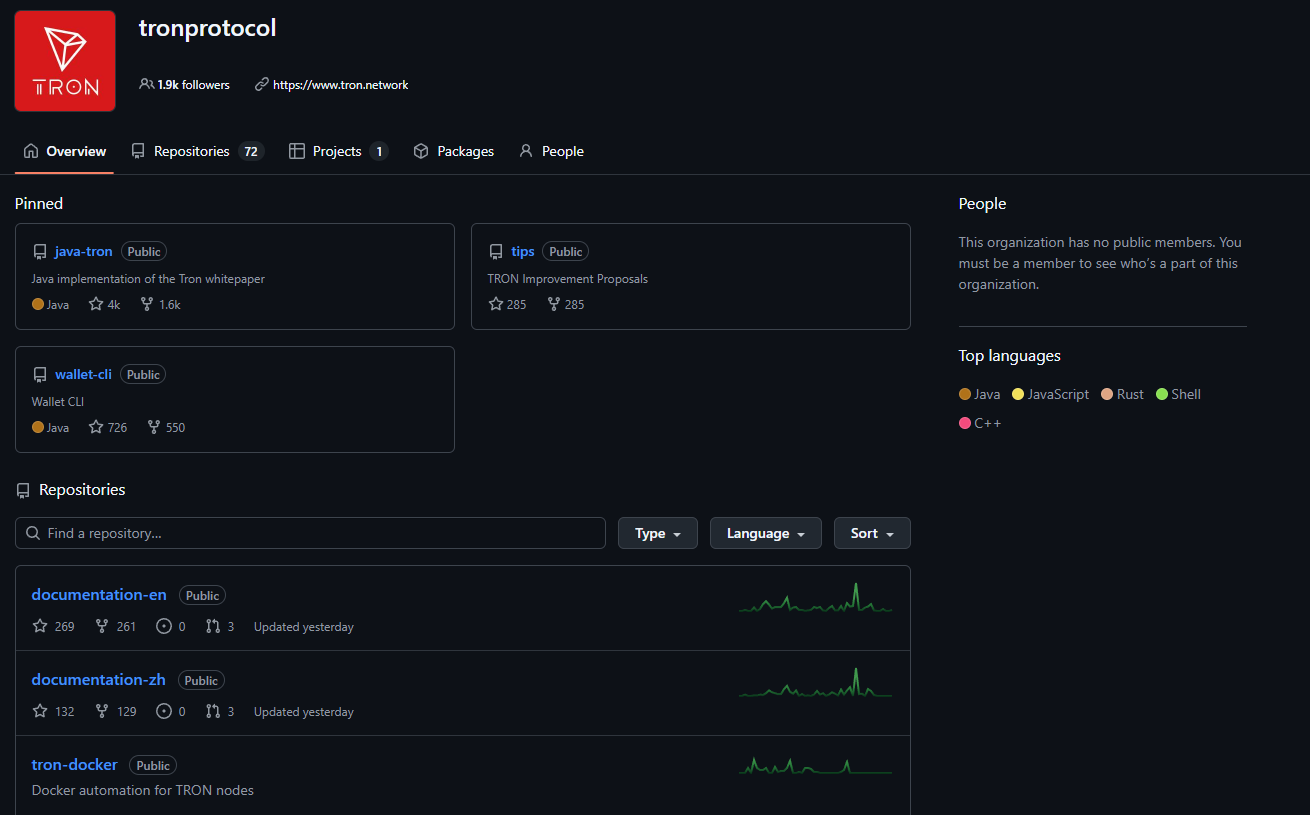
Talent needs to be hunted proactively from this domain. Job boards never do the job of locating the top one percent. You have to go where the work is really taking place, and not be satisfied, relying on secondary sources of information. One of the most effective methods is scouting for people who are already working on projects similar to yours. If you are working on a decentralized exchange that will run on the TRON network, you should be searching for git repositories of open source projects related to the same ecosystem. Seek out the contributors who continue to submit well-considered code, discuss nuances of TRON security in open issues or suggest optimizations to minimize execution costs.
If you want to find that developer with green sparkly code all over their contribution graph and incredible depth of understanding of the business area which you’re in then reach out direct. This is significantly better than the spam approach, because it’s personal and demonstrates appreciation for their craft. You can even cite commits they authored or problems they solved, to demonstrate that you not only did your homework but also have the technical chops to understand their talent. If you can demonstrate to them that you are developing something that builds on the work they already deeply care about, then we stop talking transactions and start talking collaborations. If they get enthusiastic about what you do, you’re much more likely to win them over.
A lot of these developers are motivated by a philosophy of decentralization and a belief that technology can make the world better. They want to create systems that are permissionless, censorship resistant and open for all. You need to assure them that your project is in line with these values. Demonstrate how your platform enables users, how it minimizes friction in financial transactions or how it illuminates opaque industries. If they feel that your project can “fly” — meaning, achieve widespread adoption and change the way things are done in a fundamental way — then they will often take an enormous risk to become part of it. This is where the framing of your offer is important.
Incentivizing Commitment Through Ownership
For the true believers and star performers, standard salaries often aren’t as appealing as potential ownership. They know what they are worth and they know that if things go well to help build a unicorn, a salary will be nothing compared with the equity or token you could hold. One very strong signal is to offer a substantial amount of stock options or points with an extended vesting period. It communicates that you see them as partners instead of workers. It makes their incentives parallel to the efficient future of your project. When it’s the success and security of the contracts you are writing that your financial future is predicated on, it makes you think twice as hard at every stage.
Yeah, and this alignment is critical when we're talking about something as important as infrastructure where crypto security matters. A developer who has actual 'skin in the game' is a lot more likely to spend another 5 or 15 hours with eyes bloodshot testing edge cases, re-writing their code and gas-optimising every little function. They’re not just running out a ticket; they’re looking after their own investment. And of course, being open to non-traditional comp structures also signals you “get” the culture of crypto. It proves that you believe in the future value of your project.
But closing the deal is just half the battle; once they’re on board, you have to create a culture in which they can excel also. A-players don’t want to play with C-players. But if you've already landed a strong technical lead or an advisor who is fairly well-known in the industry, make sure to use that during recruiting. And the prospect of learning from or working with other genius minds is a huge draw. (Of course, you also need to have a culture of open conversation and radical transparency. Meritocracy is king in the realm of open source. The best idea wins, no matter whose it is. Try to slap corporate hierarchies or bureaucratic obstacles on them and you will drive your best people away.
Creating a Culture of Technical Innovation and Freedom
Another crucial part of winning over the best developers are the resources and tools you give them. Great developers hate inefficiency. They want to focus on solving hard problems, not doing battle with rusty infrastructure or theater around operational friction. That is, you have to provide a solid developer experience (DevEx). From CI/CD (continuous integration/deployment) pipelines to testing suites, the processes around what you write should be just as smooth as the code.
And that also applies to the way your project deals with the nitty-grittiness of blockchain. For example, resource management on a network such as TRON would demand knowledge of Energy and Bandwidth provision. A savvy developer is going to appreciate a project that sensibly address these considerations. Whether it is optimizing smart transactions to burn as little TRON as possible, or finding the safest ways to buy TRON Energy at user transactions these show an incredible (technical) maturity. It proves that you’re thinking of the network’s sustainability and your application’s cost-effectiveness. You've thought about those operational challenges — how delegation will be managed efficiently, how throughput can be high without a crazy requirement to pay fees or whatever gobbledygook that people prize in large funds.

Furthermore, the best developers never stop learning. The crypto terrain is fast changing and almost every month we see a new consensus mechanism, new privacy technology or virtual machine upgrade. Your undertaking should be an environment where learning is fostered and nurtured. Funding their attendance to large conferences such as ETHDenver, Solana Breakpoint, or TRON events and motivating them to share their research or contribute to open-source libraries will make your company an innovation epicenter. And not only does this help maintain your team’s edge, it sends a message to the broader ecosystem that your project is technically competitive.
Another lever is the remote and asynchronous nature of crypto. The vast majority of top-tier crypto developers treasure their independence and flexibility. They could be sleep-defying night owls who produce their best code at 2 a.m., or digital nomads working from a different country each month. By being completely remote, async-first, you can access talent from around the world without geographic limits. The objective has to focus on output and impact, not hours logged or time in a physical seat. You need to be able to get this level of trust so you can build these same types of relationships with self-motivated senior engineers.
Harnessing Community and Network Effects
Another aspect in drawing talent is how much your project is respected within the ecosystem as a whole. Developers talk. A good reputation in terms of clean code, architectural innovation, ethical behavior will follow you if your project is known for that. By being intimately involved with the community — be it by hosting hackathons, putting out bounties for people to report bugs, or just being helpful in developer forums — you create a gravitational pull around your brand. When a developer is deciding what to do next, they will frequently look at who else is building on your platform or who you’re partnering with.
This is where the word "scouting" implies more than staring at code. It’s about being part of the digital town squares in crypto. Join the conversation over at Twitter (X) and Farcaster. Read the technical deep dives on Mirror.xyz. Uncover whose voices are moving the conversation. It’s a cliche, but there might be some truth in that the best developers are usually the ones who will complain about existing infrastructure the most. If you watch someone pick apart the issues of a current DeFi protocol or suggest a new solution to a scalability bottleneck, they are exactly the type of person you want to talk with. Invite them for a sincere conversation about what they think. Even if they don’t transition into doing full-time work with you, establishing a rapport could lead to advisory arrangements, audits or future work together.
Also think in terms of the “missionary vs. mercenary” dichotomy. Mercenaries are helpful when you need them for a particular, short-term thing, but you want missionaries to be core team members. They’re the people who will stick around when the inevitable bear markets and other technical difficulties come. To make this discovery, you need a clear and compelling “Why.” Why does your project exist? What available challenge are you solving that no one else is? If you can articulate a vision that is both technically credible and philosophically inspiring, you will find the talent out there that is in it for more than just a paycheck.
Last Thoughts for a Smooth Hiring Process
The logistics of the offer should not be anything but seamless as you work to close a top candidate. Which brings us back to the wacky world that is crypto. One of the key benefits when hiring within this space is that developers who are excited about crypto tend to want to “eat their own dog food.” They feel at home — indeed, they’re often more comfortable getting paid in cryptocurrency. This greatly simplifies cross-border hiring by eliminating the friction and delays of a traditional banking system.
The developers who are really into crypto likely have no problem with being paid in cryptopayments for their work. It’s no mere convenience: It is a renewed statement of their faith in the technology they are building. From a signing bonus in stablecoins to receive monthly salary that is partially paid as a mix of fiat and tokens, the capability to manage these payments easily will be ultimately proof point for your project that you are really operationally ready. But the orchestration of those transactions - especially on resource model networks like TRON - needs its own tools to do so in a more efficient and cost-effective way.
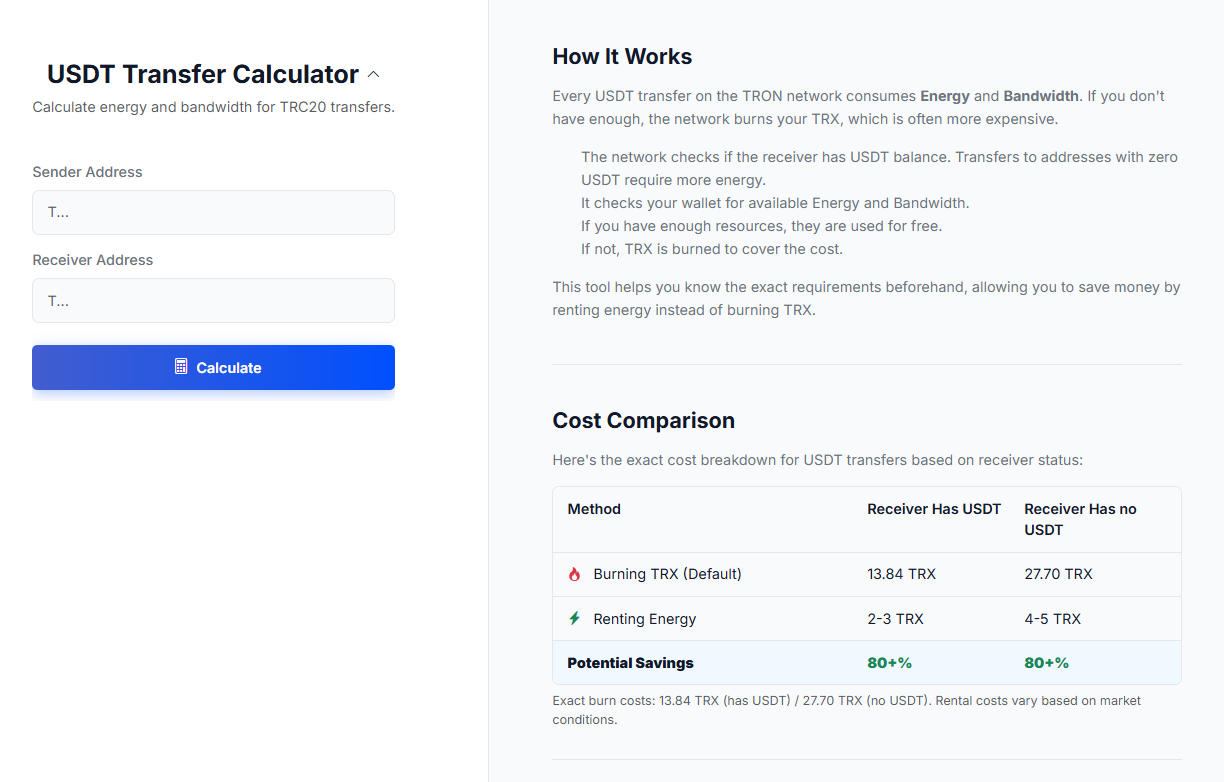
Netts USDT Transfer Calculator is a must have tool for anybody in charge of recurring TRX payouts within the crypto space. It gives you the ability to compute actual needed Energy and Bandwidth for TRC20 transfers, so you won't burn TRX by renting energy instead. You can enter the sender and receiver/input addresses, the tool immediately checks if the receiving party has an existing balance of USDT which - as we will see shortly - is an important influence on energy costs, and presents a simple comparison between burning TRX (which could be as high as 27.70 TRX for an unfunded address) against renting energy (cheaper at often around 4-5 TRX). Such resourceful use of resources can reduce a project’s transaction fees by more than 80%, making managing an international team’s payroll much easier.