How to Create Your Own Crypto Token
Launch checklist: define utility, pick a chain, design tokenomics, verify contracts, seed liquidity, market honestly, and manage Energy on TRON economically.
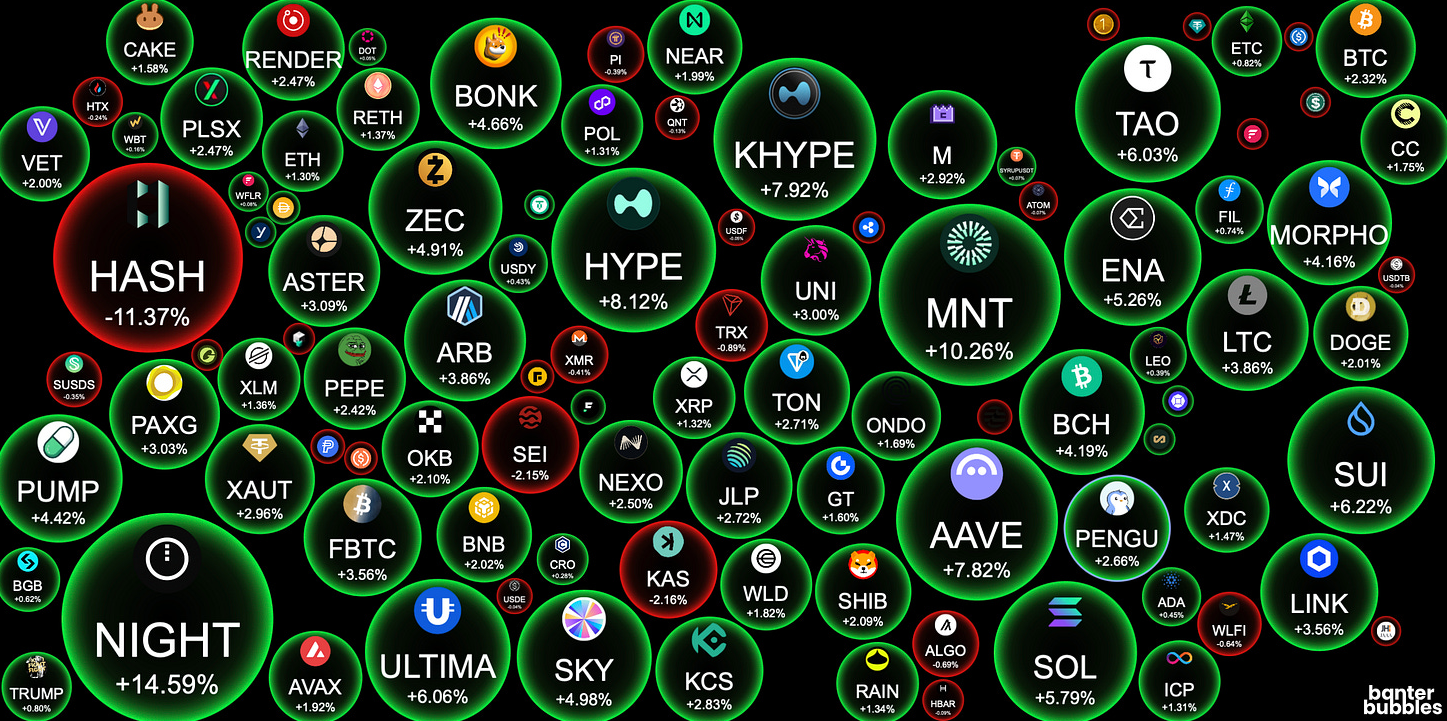
There are so many tokens already! But not enough. What if you want your own? I mean — Trump has one, why not you? We have now reached a point where digital assets are as ubiquitous as personal websites were in the 2000s, and the cost of ownership has never been lower. Whether it’s propelled by a revolutionary tech idea, community-oriented meme, or just a desire to better understand the blockchain space first-hand — building your own token is the ultimate crash course. It is a path that involves a multidisciplinary field of economics, computer science, game theory and marketing all wrapped into the one wild but potentially lucrative ride.
Before you jump straight into the code or the pools of liquidity, you should know that getting a token out there is simple, but creating a project that lives more than a week in internet years is very difficult. This guide will tell you everything you need to know to do it: how can you possibly not just launch, but lead? You must be ready for sleepless nights, erratic charts and a community that requires your attention all day long. But if you pull it off, the rewards can be life altering.
From Idea to Code: Building the Ideal Token
This first step is not to boot up a code editor but to open your mind in readiness for the strategic requirements of an asset you plan to launch. You have to be accurate in what your token does. Is it a token that lets you access a certain service within an app? Is it a governance token that gives holders of the token votes in how a protocol is governed in the future? Or is it a meme token controlled by social sentiment and market action? The "why" determines the "how."
If you are developing a meme coin, your concerns will center around branding and ticker symbols as well as potential virality. If you are constructing a Utility token, then the underlying technology and economic loop that drives demand needs to be the one consuming your attention. And once you’ve established what the purpose is, then you can decide on your name and ticker. These may seem like small details, but in the hyperactive universe of cryptocurrency trading a snappy ticker like DOGE or PEPE can make all the difference between relative obscurity and billions in volume.
You might want to write a whitepaper as well. In the early days of crypto, whitepapers were dry academic documents stuffed full of mathematical formulas. These days, for meme coins and basic utility tokens, a “litepaper” will do. This document should be the roadmap — in order and timed sequence of what you plan to accomplish. A normal roadmap breaks these down into sections: Phase 1 could be “Launch and Community Building,” Phase 2 might be “CEX Listings and Partnerships,” and Phase 3 would contain “dApp Development.” A clear roadmap also allows potential investors to visualize the future you have charted out for your project, and gives more confidence that there is a plan in place after the first pump. It is a trust and accountability contract between you and your fellow community members as it sets benchmarks which you are accountable for.
Then there’s the tokenomics, which is industry-speak for the economic design of your token. You have to determine the whole supply. Will there be one million tokens or a quadrillion? High-supply tokens with low prices tend to attract retail investors who prefer owning “millions” of something, while the lower supply offered by tokens can imply scarcity and exclusivity. You also need to decide on decimal precision — typically eighteen for generic tokens, but potentially lower depending on the use case.
Then, consider the distribution. How much goes to the team? How much goes to marketing? What portion will go into the initial liquidity pool? These percentages are crucial: If the team holds too much, investors will suspect a “rug pull” whereby the developers sell all and tank the price. If the liquidity pool is very small, price will not be stable and it will fluctuate tremendously. You may also consider tax mechanics, such as taking a % of all transactions and redistributing it to holders or transferring to a marketing wallet. This necessitates hardcoding some logic into the smart contract. Some tokens are deflationary, i.e. a minuscule amount of the token supply is burnt (burnt = destroyed) every time someone makes a transaction, reducing the supply further and theoretically increasing the value of remaining tokens over time.
Choosing the Proper Infrastructure and Technical Implementation
Selecting the blockchain is likely to be your most significant technical decision. The king of smart contracts is Ethereum; it has the deepest liquidity and the greatest prestige, but its gas fees can be astronomical, so much so that smaller investors are priced out. Binance Smart Chain (BSC) – Similar to Ethereum but with lower fees and quicker transactions, BSC is the fraudosphere’s meme and retail coin darling. Solana boasts extreme speed and drastically lower costs, yet the development environment (Rust) is a steeper learning curve compared with Solidity in Ethereum and BSC. TRON network, which has really made a huge name for itself in stablecoin transfers and high speed transaction pools. TRON employs a novel resources model of “Bandwidth” and “Energy”, that can be tuned for very low cost operations.
If you're not a programmer, not to worry. Today there are dozens of “no-code” token generators in the crypto space. Platforms such as CoinTool or even dedicated launchpads where you fill out a form with your name, ticker and supply and they execute the contract for you for a small cost. But the use of these tools sometimes leaves behind a “created by” signature in the code, which might be scorned by some more sophisticated buyers. If you would rather be a pro, you can go ahead and test that contract of yours on Remix IDE, a web-based development environment. From reputed libraries, no one better than OpenZeppelin for ERC-20 (Ethereum/BSC) or TRC-20 (TRON). You just copy the code, adjust parameters to fit your tokenomics and compile it. To deploy the contract you must have a crypto-wallet such as MetaMask or TronLink installed and some native coin (ETH, BNB or TRX) to pay for deployment gas.
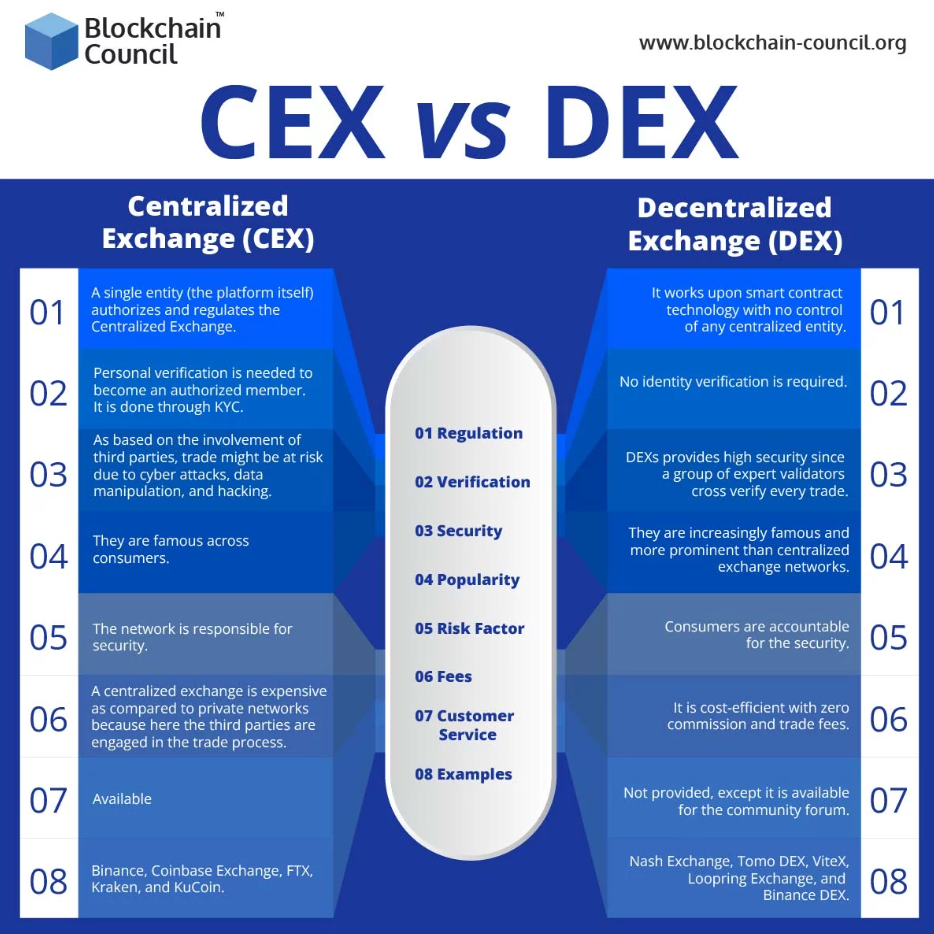
In your contract, you would have to make a choice: Have a rigid unchangeable contract or an upgradeable “proxy” contract. A contract that is immutable cannot be modified once it’s deployed — this instills a great deal of trust as investors are aware that “they can’t change the rules! But if there is a bug, it exists forever. A proxy contract enables you to upgrade the logic down the road (helpful if there are bugs to be fixed or features to be added), but introduces a “centralization risk” that some purists don’t like. For the majority of easy tokens, a non-mutable contract is the safest and although simple to do too. You end up with a token once it’s deployed, but the value is worth nothing because it has no market. You'll need to set up a liquidity pool on the DEX.
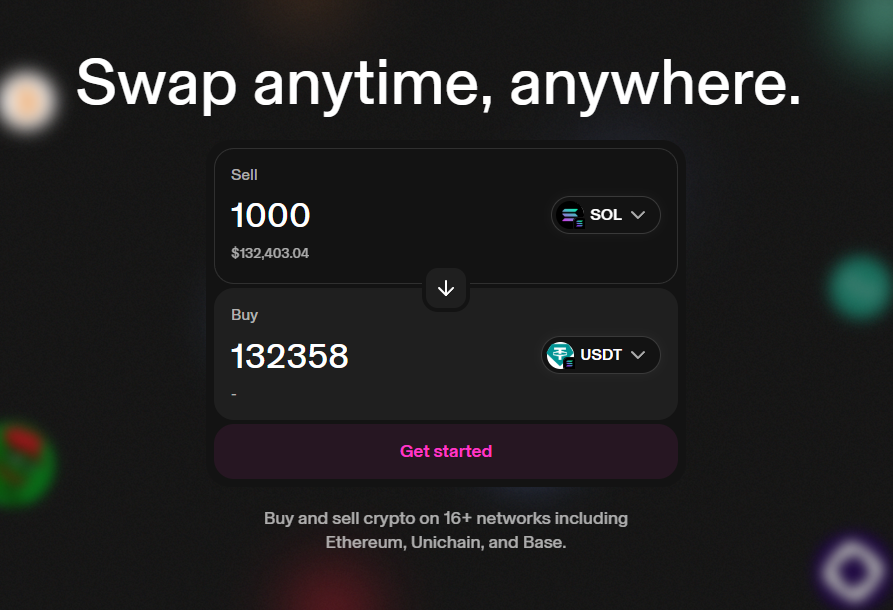
For Ethereum, it's Uniswap; for BSC is PancakeSwap; for Solana — Raydium. You will be creating your new tokens alongside a base asset such as USDT or the native chain coin. For instance, you could stake $10,000 worth of your token and $10,000 worth of USDT. This establishes the initial price. Once liquidity is introduced, you get “LP tokens” in exchange for your share of the pool. There is a way to show investors that you have no incentive to steal the funds — locking those LP tokens in a third-party locker for some pre-determined duration, perhaps 1-year or more. This is what’s known as “locking liquidity” and can be a large trust signal.
Experienced developers of tokens are aware that launching is only the start. Keeping an eye on your token's health is a full time job. You also have to understand how the blockchain resources work because your gas prices become a fixed cost, especially if you’re doing a lot of transactions yourself — for airdrops, marketing payouts, or automated market making. On networks such as TRON in particular, you've got to put up with the double resource model. Transactions use Bandwidth and Energy. If you don’t have enough TRX staked to make all these resources, it’s really a blowtorch of TRX that just burns off as fees. That’s where rational use of resources comes in. You can rent TRON Energy from a selection of markets to pay for your transaction costs at a much cheaper rate than burning TRX. Beginners usually miss using this tactic, but professional project managers use it heavily, saving $1000′s in fees over the life of a project.
1. Before you ever write the first line of code or create a contract, determine your token’s function and ideal user.
2. Pick a blockchain that is compatible with your user base’s financial means and your project’s technical requirements.
3. Create your tokenomics to incentivize holders, support marketing funds, and long-term liquidity health.
4. Publish your contract by using verified code and verify the source code on the blockchain explorer.
5. Create a liquidity pool on a leading DEX & lock the LP tokens to gain trust immediately.
6. Create a marketing plan that uses social media, influencers and rallying the community to build volume.
7. Keep an eye on-chain metrics and manage resources such as Energy & Bandwidth economically to avoid unnecessary operations costs.
8. Secure your project with audits and clear communication to elicit a loyal and long term community.
Also check your token with the block explorer (such as Etherscan, BscScan, TronScan). It requires your source code to be submitted so the explorer can associate it with the compiled bytecode which is on the blockchain. Verified contract and a green checkmark are essential for investor confidence. One more thing, you can update the social media info of your token on these explorers with links to your website, twitter and telegram. This makes your token appear real. For added exposure, you’ll also want to apply for listings on tracking sites such as CoinGecko and CoinMarketCap. The platforms have specific volume and liquidity requirements, so you often need to have a little momentum before submitting. The first thing a new project strives for is mostly to be listed on these aggregators.
Creating the Hype: Effective Marketing Strategies
Now that you have a tradable token, you need to sell it to the world. A token with no volume is dead. Crypto marketing is a different animal. It depends a lot on “shilling” — promoting it by using software that produces comments, or by going to platforms like X (formerly known as Twitter) and Telegram.
You want to create a community group, where people can come together and talk about the project and hype each other up. The spirit in this gang frequently matches the tenor of the trading. You may even choose that the way to get new eyes on your token is to hire “callers,” social media influencers who maintain channels hawking fresh gems they’ve found — and pay them a commission for everyone they bring in.
Proceed with caution because this is a mafia, and for every honest influencer out there, there are plenty of scams — always vet influencers by looking up engagement on past posts. There are levels of influencers, with “micro-influencers” charging a few hundred dollars for a shoutout and massive ones charging tens of thousands. Beginning small and growing hype organically is usually more sustainable than paying for one big expensive post only to get pumped and then dumped.
Airdrops are another powerful tool. So you pass out tiny slivers of your token to thousands of wallets that contain similar tokens, hopefully getting the word out in front of potential investors. This can prove costly in transaction fees if it isn’t handled carefully. “Running mass airdrops on chains like TRON can be Energy-draining.” If you do the same fees and just burn TRX, you are losing money. Clever developers will find TRON Energy rentals to rent the service for short-term use. You will be able to do a gigantic promotional campaign or airdrop for as little as 5-10% of the standard cost, so you can triple your advertising budget while actually spending it on advertising instead of network fees if you catch those cycles where everything is cheap.
An even more advanced technique is “market making.” It was achieved by employing bots or paid services to produce buy and sell orders at all times so the volume is always there and there's a narrow spread between buy and sell prices. That stops the chart from appearing “illiquid” or “glitchy,” which will scare off any professional trader. Natural volume is, of course, optimal but some market making can help to get the engine running early on. Just be sure you’re not unduly boosting the price in a manner that could be considered manipulation, as regulations are tightening around the world. You want to produce a healthy chart that draws actual investment.
Optimizing Costs and Ensuring Sustainability
After a while, sustainability is what matters. You have to be responsible with the treasury — which really are your marketing and development funds. (Your token has a tax that applies on sell or buy) Those will fill the marketing wallet. You should not be dumping all your tokens on the market in one go to pay for stuff (this tends to crash the price!). Instead, sell gradually or seek over-the-counter (OTC) deals where possible. Security is also paramount. You might want to have a smart contract audit by a reputable company such as CertiK or Paladin. An audit looks through your code seeking vulnerabilities that hackers might leverage. An audit badge is also expensive, but it’s a badge that draws serious capital. It says to the world that you are not a fly-by-night project, but rather a legitimate effort who cares about its users’ funds.
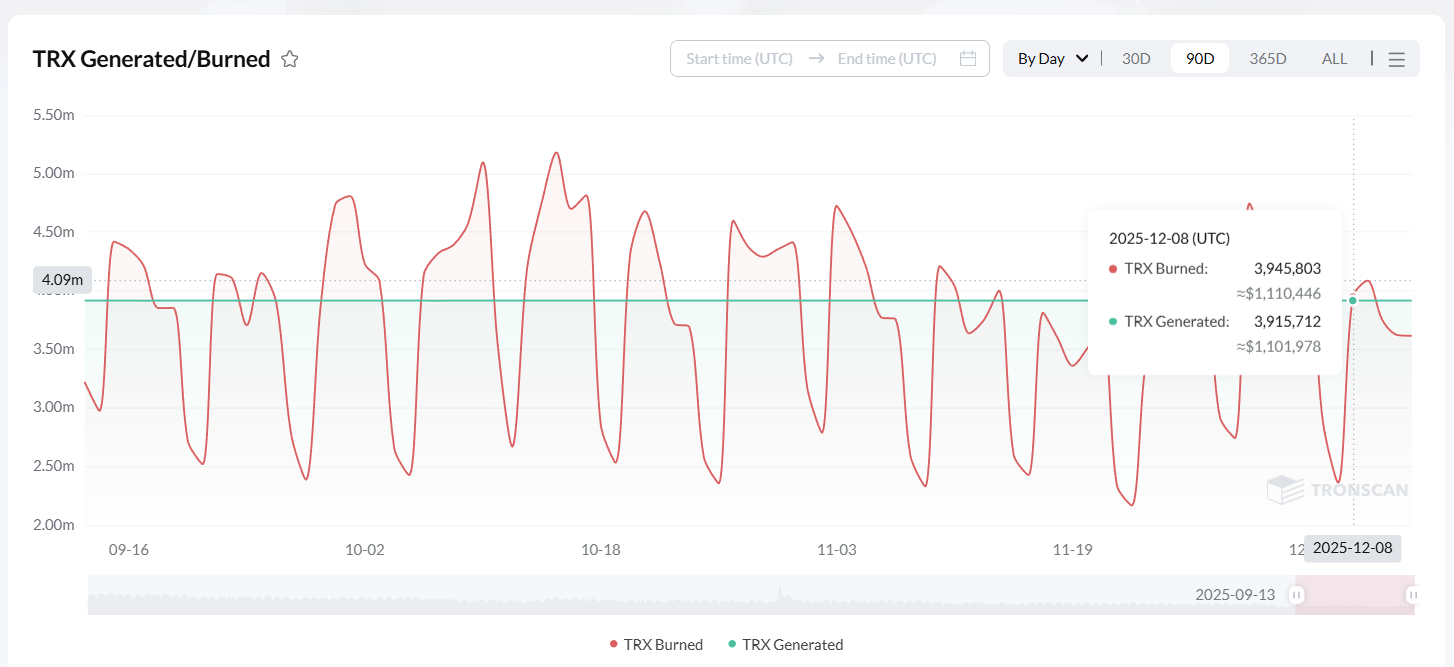
Above, we mentioned the operating costs in particular for these high throughput chains which are all the rage for new tokens because they are quick. For developers who consider building on TRON, from the get go, understanding of the resource model is not optional – it’s a must for monetary success. Energy is used up as your users use your contract, or when you send them rewards. The more complex your smart contract, the more Energy it eats up. Staking TRX is the natural path to obtain Energy, but it requires holding huge investments. Liquidity is king for a startup token, you can't be staking $50k of TRX in the bank just so your contract has Energy for the day. This is why the secondary resource market is so important. You could rent resources through the cloud markets.
There are caveats, of course. Regulatory scrutiny is increasing. You need to be careful not to promise profits or market your token as an investment contract, which could make it a security under American law. Always think utility, community or governance. If you want to raise large amounts of money consider taking advice from a legal adviser. And, of course, be mindful of the technical risks.
If you lost the private keys to the deployer wallet or liquidity locker, the project is effectively dead or is ever stuck. We will never use our community’s data for any types of evil marketing. Operational security — the necessity to use hardware wallets, multi-signature wallets for team funds and to keep backups — is the boring but very necessary part of being a crypto founder. Never send anyone your seed phrase; also be suspicious of “support admins” who message you first — they are almost always scammers hoping to drain your wallet.
Finally, monetization. What’s your actual path to profit? Now besides the potential appreciation of the tokens you’re holding, the most consistent revenue comes from transaction taxes (if applicable) or fees generated by the utility your token is offering. If you create a dApp and people pay for it with the token, you can levy a small fee on each transaction. If you have a meme coin based on a 3% marketing tax, that 3% flows into your control to be reinvested or pay the team. However, transparency is crucial. If the community notices that the marketing wallet is not being put to growth of the project but for personal luxuries it will lose trust and sell, then your project will be over. Creating a token is not a get-rich-quick project, it’s a business, and every business needs revenue models, cost controls and customer satisfaction.
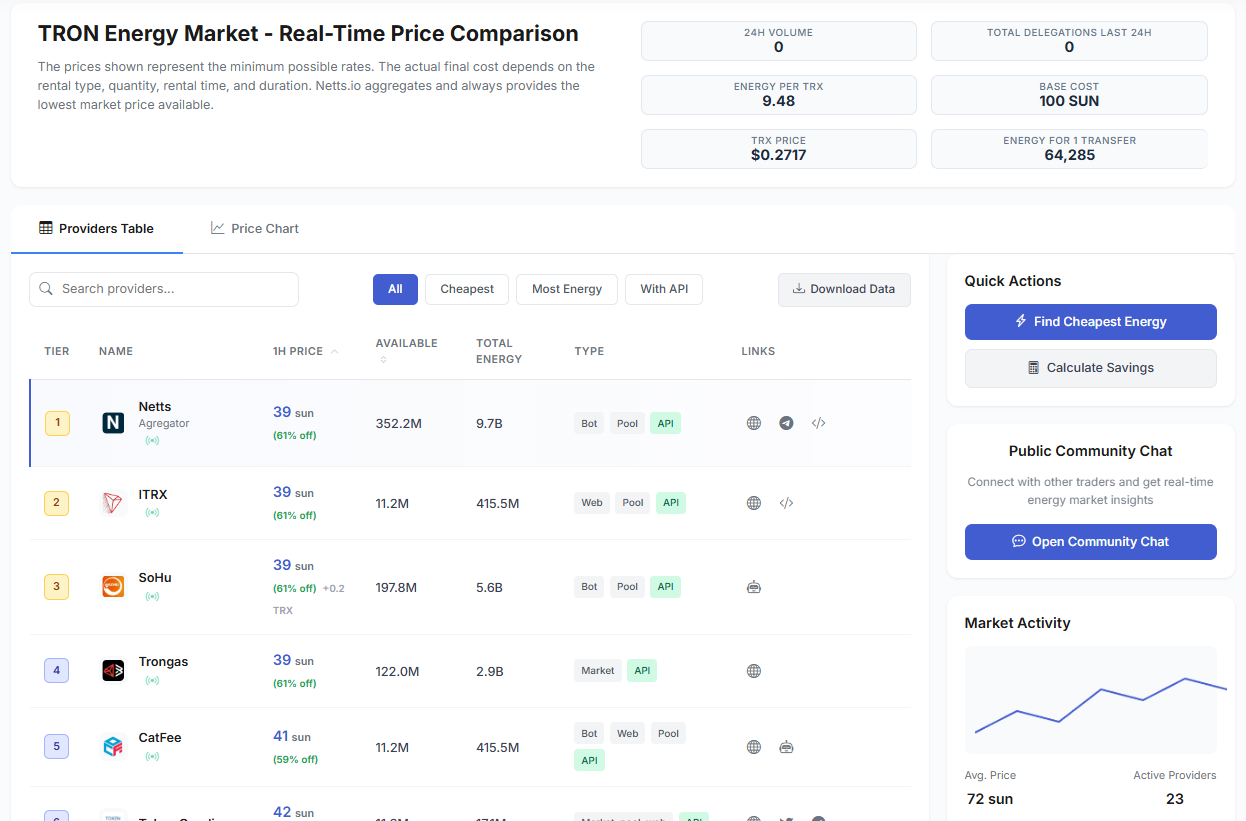
In the speed-of-light environment of the TRON blockchain and token creation, platforms have to deliver efficiency. Regardless of if you're conducting a massive airdrop, operating a popular dApp, or simply looking to minimize your own trading fees, there’s no reason to pay full fare for network fees. Enter Netts with their TRON Energy Market. Netts pulls details from more than 20 providers to make sure you always find the lowest price for Energy rentals, savings around 50-80% compared to what burning TRX costs normally. It has real-time price comparison, a very solid API for you developers and delegating resources is snappy and fun with their intuitive command interface. If you plan on operating on a budget in TRON, hopping onto the Netts market to find the most decent rates is imperative for what you’re doing.