Crypto Trading - Is It Just Gambling?
Luck vs. edge: framing crypto trading next to casinos — leverage, discipline, information asymmetry, and why outcomes look similar until you count house rules.
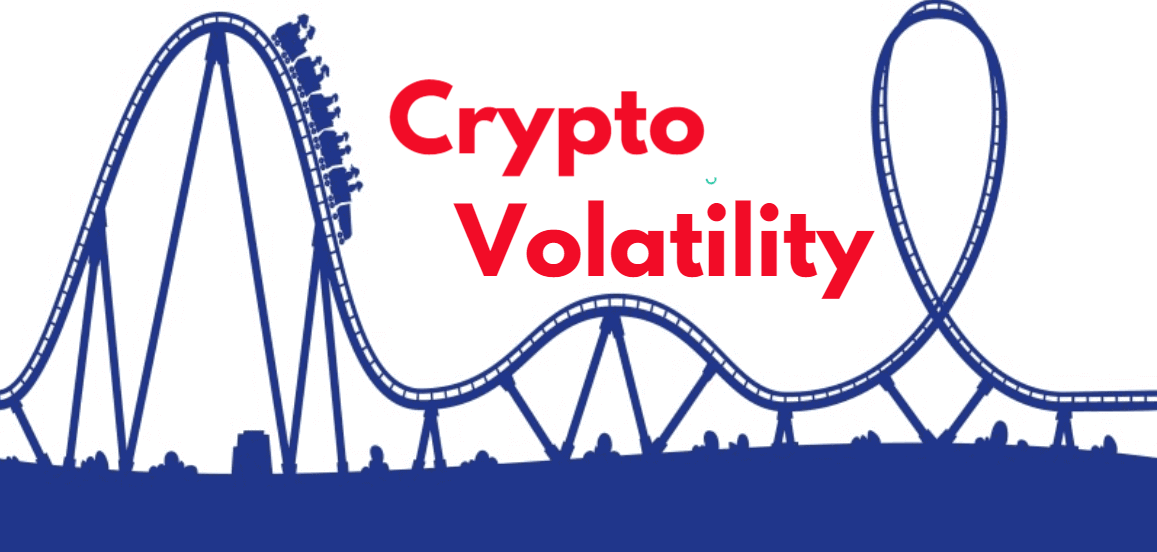
Begin with a typical person, we will call him Mark. Mark, a conscientious worker — an engineer, maybe, or a mid-level manager — has been grinding it out for the past several years. He’d been prudent, pacing his spending and managing to save a respectable sum of coins — call it fifty large. He gazes at his bank account with a combination of pride and trepidation. He can see the numbers, but he also feels the invisible force of inflation eroding his purchasing power year after year. His bank’s conventional rates of interest on savings are a joke, and won’t even compensate for the air miles at a fraction of inflation.
Mark is a smart guy, he knows that his money needs to work for him. He considers his options. He knows that the moment you walk into a casino, you’ve already lost. He gets the math behind roulette and blackjack; he knows the house always has a mathematical edge, typically 1 to 5 percent or more, and that over time, if you keep playing, you will lose. He is not after thrill or adrenaline, but rather a more calibrated return. So, he looks to the financial markets and in particular the high-growth, high volatility and oh so sexy cryptocurrency. He tells himself this is not like gambling, because here he can analyze the market, read the charts, study the projects and make informed decisions. He’s hoping to buy low and sell high — a tactic as old as commerce. It seems logical. It seems fair. But, as he opens his first crypto exchange account, uploads his ID to get verified and deposits his hard-won money — well, he is strolling right into a universe that’s far more rapacious and confusing than any Las Vegas floor in which he has ever dodged the quarter-slots.
Illusion of a Fair Game
It’s like in life: the casino just changes location, and the lights are there, they throw different signs for different rules, but then it’s lying to you. When you enter a land-based casino, the dynamic is clear — you know who the house is. The corporation that owns the building where the casino is rents space to dealers, technicians who are stationed on the floor keeping the slot machines in working order and, of course, bartenders who will serve you free drinks as long as you keep coming back to play. You take them because they are on the wall.
It’s one thing when, in the traditional world of investing, you face off against the house (in this case not just the exchange but also counterparty and clearinghouse risk) — they take a piece from trading fees and withdrawal charges and so on — but it’s another thing altogether to play at a game where other players at the table have such big structural advantages that the flow of game is effectively theirs to control. Mark may imagine he is competing against another guy like him, perhaps a dentist in Ohio or a college student in Seoul, all trying to second-guess where Bitcoin or Ethereum will go next based on the same news headlines. But the truth is starkly, brutally different.
Late 2025’s everpresent crypto market is not the wild west of its predecessor space, when a few geeks mining on laptops could make things happen. It is now ruled by giant investment houses, international hedge funds and so-called institutional investors who have harnessed the full power of Wall Street moxie to this digital asset. These aren’t gamblers wishing for good fortune; they are industrial-scale extraction machines engineered to siphon off liquidity from the retail public.
They hire staffs of PhDs in mathematics, physics and computer science — quants whose job it is to work all day concocting supercomplex proprietary models that can predict market moves at an accuracy Mark can’t remotely fathom. They have advanced AI trading bots and high-frequency trading algorithms that make thousands of trades in the time it takes Mark to click his mouse. These bots don’t sleep, they have no fear or greed, and they never second-guess themselves. They just run the code that is written, designed to capitalise on every inefficiency, every micro-arbitrage opportunity and every emotional mistake of retail traders.
Moreover, these larger players usually have facts the common man is not privy to until it's too late. In the conventional equity market, insider trading is heavily regulated and closely supervised - even if it does still occur. The playing field remains notoriously uneven and opaque in the crypto sphere, despite years of ramped up regulation. Big holders, whose presence is known in the community as “whales,” have enough skin in the game to change the fortunes of a market with a single well-timed trade.
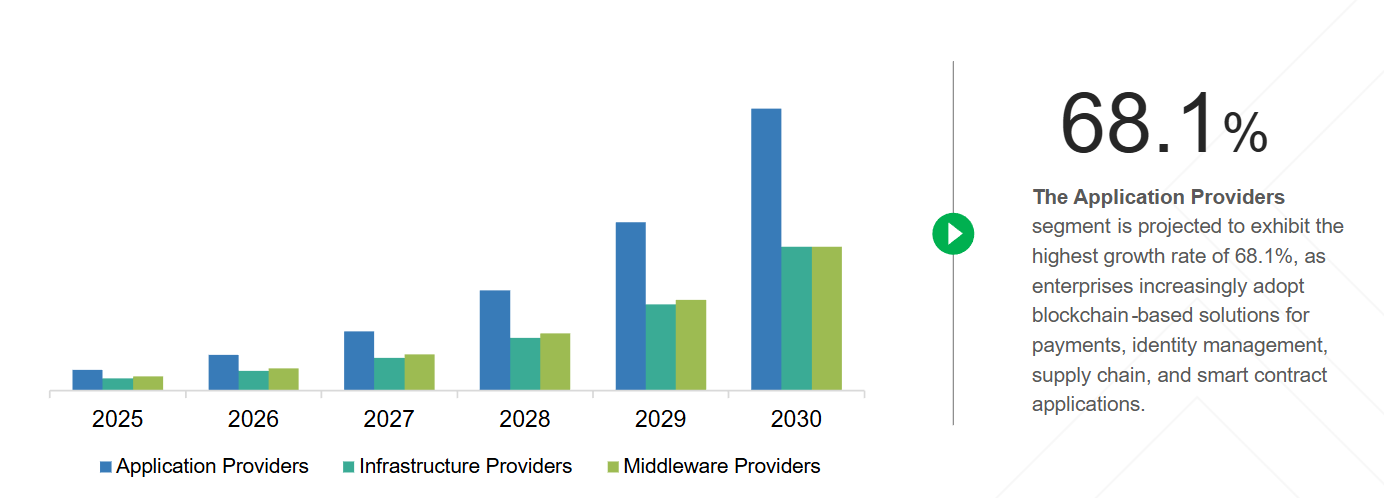
They maintain the hot lines to project developers, they’re briefed on updates and new partnerships before the news goes public, and they have funds that would allow them to lobby politicians — and sometimes write the very laws that govern this market. They “get in early” on the investment — or they take part in a private sale, where they buy tokens at below market cost (below what Mark will pay when the token eventually lists for trade on a public exchange). When Mark gets the news on his favorite crypto portal, he’s typically reacting to what the big players priced in days or weeks past. He is purchasing when they sell their bags, and sells in fear as they buy the dip.
David Versus Goliath in the Digital Era
The difficulty of “punching up” in such a case is not to be underestimated. When Mark makes a trade, he is entering the ring with the heavyweight champion who also doubles as referee and judge. The institutional players have armies of very highly paid professionals working 24/7 to make sure that they win. They all want to draw from the same pool of liquidity, and on many occasions they will silently or not so quietly collude to squeeze as much juice out of the smaller fish as they can. We have witnessed throughout history the market makers manipulating prices in order to induce liquidation cascades, where thousands of retail traders get liquidated and their assets are swept up for pennies on the dollar all within seconds. It’s the “meat grinder” of the market, and it operates 24/7.
Amongst the dirtiest tricks up their sleeve is this large-scale price manipulation combined with dark-pool/OTC trading channels. If a retail trader needs to sell a big chunk of an asset, they have to sell on the open market, pushing the price down. When an institution wants to purchase or sell hundreds of millions of dollars’ worth of crypto, they often do so directly with another institution at an over-the-counter desk. This is because their gigantic transactions are not reflected on the chart Mark is using. They can amass a huge position without moving the price, and once they are fully invested, they can commence buying on the public market to send prices higher and cause a frenzy. Mark looks at the green candle and thinks “momentum is building,” not realising he is being used as a long position exit liquidity for a trade that had begun weeks prior behind closed doors.
Reading stories around what the (retail) investor in crypto thoughts of are often misleading. These stories regularly help sustain the myth of the overnight millionaire, the one-in-a-million break, the moonshot. They paint the picture of that one guy who made a million bucks with a meme coin and turned $1,000 into $1 million but they don’t ask about the 10,000 others who lost everything chasing after the same coin. They don’t often recount the intricately connected plumbing of high-frequency trading rigs parked next to exchange servers for faster execution of trades by milliseconds.
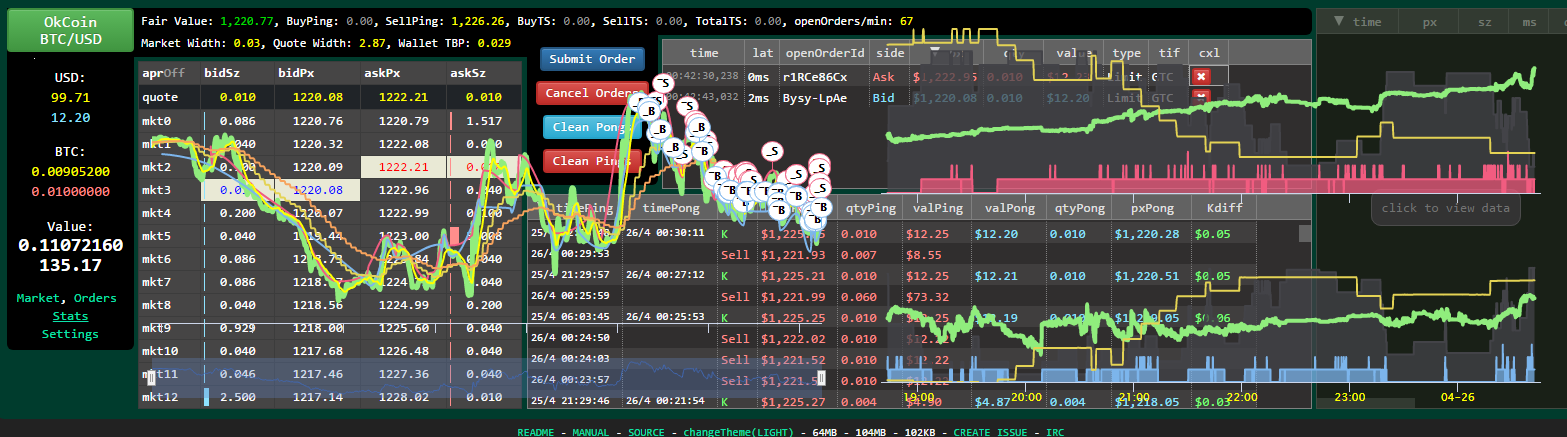
They’re not discussed in the context of order flow payments, under which exchanges sell data on retail trades to big firms so they can front-run them. So in such a world, trying to ‘buy low and sell high’ becomes nonsensical if you're waiting for the exact signals that everyone else is seeing. Technical pattern detectable on a normal chart, then the AI bots have already seen it and left before the pattern has finished.
Marathon - Not a Sprint
It’s easy to survey this landscape and decide that crypto trading is really gambling after all, maybe even worse than gambling because the odds are being skewed on the fly. The point of the casino is that its odds are unchanging and transparent. The odds in the market change all the time, and they generally do so against those who are uninformed. But, in stopping here we fail to see the nuance that makes it possible for a small percentage of people to actually make it. There are no easy wins. It isn’t that the dark power of institutional hegemony makes winning impossible; it’s that all the easy battles have now been lost. The days of picking a token at random and parlaying that decision into riches are all but gone. But the game isn’t rigged 100% — more like 90%. And that ten percent is the opening for a determined (read stubborn) guy.
Mark will have to change paradigms in order to survive and hopefully prosper in this new environment. He needs to realize that this is a marathon, not a sprint. The greed to get rich quick is the chief weapon that the institutions use against retail traders. It’s not that they think that average people are dumb, it’s just that people under financial pressure aren’t as effective thinkers; we’re all emotional and undisciplined. But by adding more time to the equation, Mark has a chance to nibble away at some of the giants’ advantages. Big companies are under the gun of quarterlies and their investors. This means they must demonstrate regular, short-term profits to justify their fees. They cannot typically hold on for years, waiting for a thesis to play out if the immediate price action looks bad. Mark, trading his own money, is accountable for one man only — himself. He can afford to be more patient than a hedge fund manager, who often cannot. He can stick it out in a bear market for two years without getting canned.
This is where the idea of “self education” becomes the single most important piece in an investor’s portfolio. Watching a few YouTube videos and following influencers on social media isn’t sufficient. Real edge is from a long, continued research. It requires getting into the technology at a base level, reading white papers, analyzing on-chain data and knowing something about the broader macroeconomic forces that push capital flows. It is about years of trial and error, of losing money and realizing why, of refining a strategy until it aligns with the individual’s psychology and risk tolerance. It is about learning to code just in order to read a smart contract and verify it’s not a scam. It’s understanding the tokenomics (the supply demand schedule of a coin) to know if price is being inflated artificially.
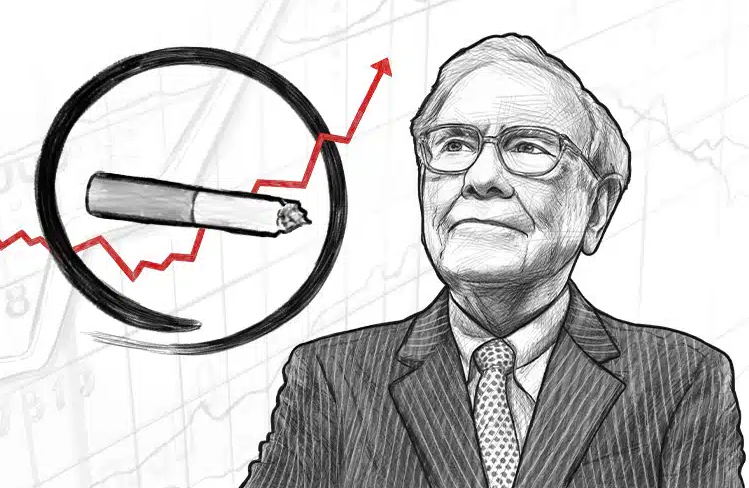
For the individual investor, one of the best strategies is to look where the giants are not looking. Warren Buffett was a famous proponent of “cigar butt” investing — finding companies that the market had discarded, that no one seemed to love anymore but that had a few puffs of value left in them. In the world of crypto, this means identifying niches that are too small for multi-billion dollar funds to care about. A thousand times over at least. There's so much professional and institutional money in the space. A ten billion dollar hedge fund can't go dump fifty million into a low cap project with no liquidity without moving the price to the moon and fucking their own entry. They are forced to transact the most liquid high-market-cap assets, like Bitcoin and Ethereum. This leaves a universe of thousands smaller projects, decentralized finance protocols and emerging industries where one with fifty thousand dollars can operate freely and profitably.
Discovering these niches is no mean feat. It’s like having to sift through heaps of garbage in order to uncover buried treasure. One has to look at on-chain activity and find where smart money is slowly aggregating before the herd come trooping. That means knowing about governance proposals, being part of communities and actually using the protocols other than just speculating on their tokens. These are not the things that will meet the casual eye. They only eventually come into view after years of research and blind wandering around in the tricksy chambers of visual space. It’s a form of pattern recognition that grows slowly, like the calluses on the fingers of a guitarist. It’s a matter of one weird point, an inconsistency between price and value, that the algorithms could not see because they were checking for another condition.
Lesson of the Medallion Fund
To understand what it really takes to outplay the market, you would need to look at the story of Jim Simons and his creation, Renaissance Technologies’ Medallion Fund. Simons wasn’t a gambler; he was a genius mathematician, an enigma who helped break codes working for the government at the height of the Cold War. He didn’t play by gut, intuition or tips from friends. He constructed the Medallion Fund with a foundation of legions of data and research. When he first started, in the old days, he hired scientists and astronomers and physicists — people who knew how to distinguish signals from noise — not typical Wall Street traders. They spent years cleaning up the data, seeking not just any old non-random patterns but ones that repeated over time across different markets. Not every trade they made was a winner, but more often than not they were able to win — how often isn’t clear; maybe fifty-one percent of the time — and when they won, it took virtually all of their opponent’s money with each transaction, trading a lot and meticulously managing downside risk.
The lesson for Mark is not that he needs to build the supercomputer in his basement, but rather that he should be thinking like a researcher and not a gambler. The big companies are not casinos in the way they bring us surprises — as if we’re all playing roulette; they’re casinos in the real sense, where mathematics and chance give you your odds. To beat them, or at least survive a squabbling existence beside them, you have to honor the game.
These big companies can be outplayed, because they are inflexible. They have rigid risk parameters, compliance departments and size limitations. They are unable to rush into fresh, strange or complicated corners of the crypto market. They are like battleships — and if they can be powerfully turned, it’s slowly. The retail trader is a speedboat — nimble, able to trade in and out without moving the market, the shallows in which the battleships run aground.
That won't be until a whole lot later. It could be 5 — it might be 7 or maybe even 10 years of study before you are consistently profitable. It means mastering technical analysis not as a crystal ball, but as a tool for risk management. It requires mastering fundamental analysis to know what the true value of a purchase really is. And perhaps most crucially, it’s the study of one’s own psychology and how to act differently from the crowd, to buy when there is blood in the streets and fear there may be no end to that, and sell when everyone else believes exuberantly that the price will only continue upwards. This contrarian attitude is the opposite of gambling. The gambler punch follows the rush; the pro punch follows the plan. To the gambler, novelty is exciting; to the professional, boredom and predictability are.
Key Points for the Aspiring Trader:
— Punching up directly at these giants is a doomed effort, where real success lies in shifting the timeframe and thinking in terms of a long game; — Small, underappreciated niches (the “cigar butts”) are where retail traders can play, when institutions cannot; — Success comes from treating trading as a research-led profession, not reinvesting the casino; — Operations excellence like allowing companies to leverage technology to pay transaction costs is the sign of professionalism.
At the end of the day, successful trading is a business. It needs to be about managing overhead and costs and squeezing every part of the process. Just as a trucking company worries about fuel costs, so too must a crypto trader worry about transaction fees and network resources. This is where devices that improve productivity come in. On TRON network, Energy and Bandwidth management is crucial for anyone who frequently moves USDT or interacts with contracts (like you would if taking out a CDP).
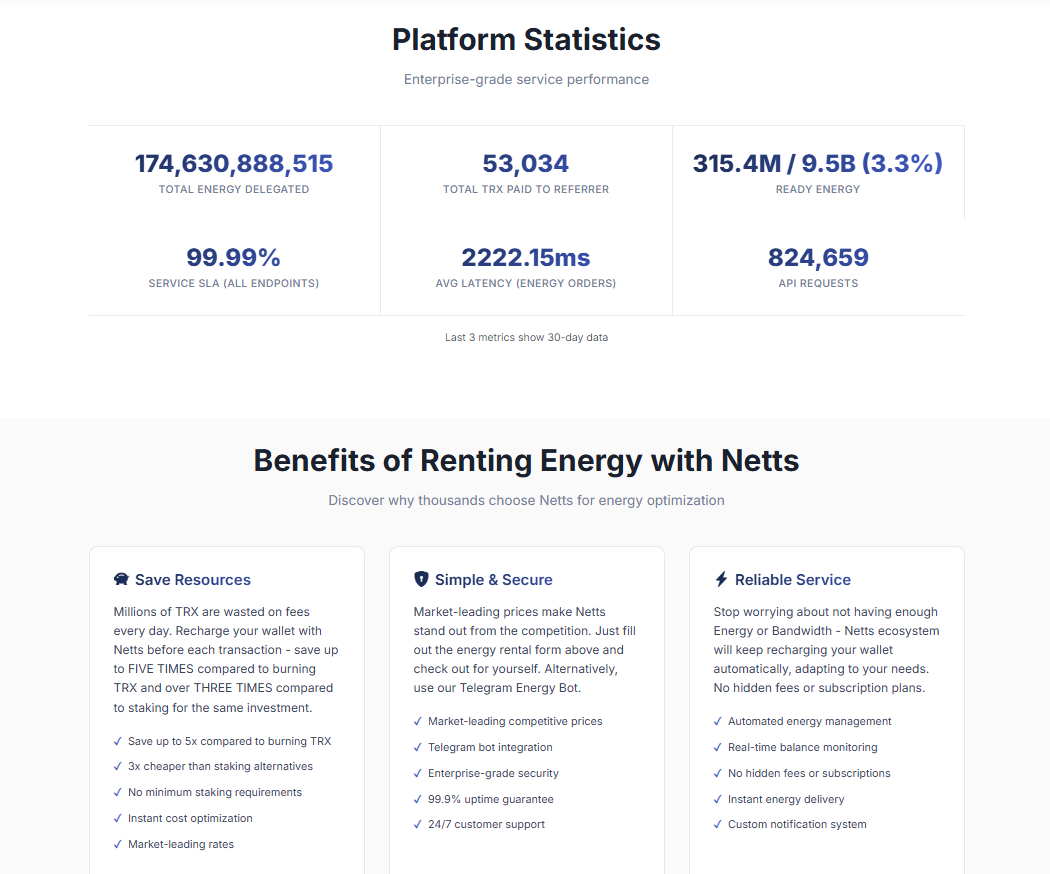
There are platforms like the Netts Platform that have been developed to address this particular problem. Such a platform is an energy aggregator specifically because it enables its users to rent Energy so that they can transfer USDT which goes on to minimize burn of TRX. Pool billions of energy units from providers like JustLend & others, add in, for example, a Telegram bot for on-the-spot 65k/131k Energy rentals and you have a set up that lets traders spend as much as five times less on a trade; proving that in the margin-thin world of pro trading there is nothing more important than gaining an edge.