History of TRON Network - In Detail
From Justin Sun’s 2017 vision to mainnet, BitTorrent, USDT on TRON, DeFi, and Energy markets — how TRON became a high-throughput settlement and content layer.
A user presses a button, rents TRON Energy and almost instantly makes the transaction. The price is practically zero, and your intuition guides you. In the fast moving digital asset space, this is perhaps all a little too easy and a pure blip obfuscating an incredibly complex and revolutionary past.
If there is time to give more than a thought, we can reminisce upon the decades of strategic evolution, technological innovation and incredible foresight that made possible such little gesture. That's truly what the story of the TRON network is - not about code, not even consensus protocols, but a struggle to uncover an anomaly in the structure of our digital universe and design a cure for it.
It is a path that started as a bold declaration to decentralize the architecture of the internet and has transformed into a global settlement layer that is now redefining how value moves across this planet. To truly comprehend the earth shattering implications of that one, simple click – we must take you away from the world where TRON is a familiar household name; and back to year zero A.T (After TRON), at the dawn of its magnificent quest.
Birth of a Decentralized Content Economy
The TRON project formally saw the light of day in 2017, a year that has since gone down in history as the boom period for Initial Coin Offerings (ICOs). It was an era of hectic invention and speculation, when new blockchain projects popped up every day, all promising to upend some world of middlemen. Of the din and the noise, however, TRON’s vision of a decentralized internet has shone with such clarity that early adopters have connected to it on an intellectual level.
Sun was already a big and somewhat polarizing name in tech; as a protegé of Jack Ma (he graduated from Ma’s exclusive Hupan University), former Chief Representative of Ripple in Greater China, and founder of Peiwo, the unofficial social app for crypto-heads. His position was unique, in that he stood between the traditional internet economy and the possibilities of embryonic distributed ledgers.
Sun’s ambition was both expansive and specific: to fix the internet. He beheld a digital environment that had deviated wildly from its decentralized origins, one now ruled by a few tech giants. Giants like Google, Facebook, Amazon and Apple had morphed into powerful antidemocratic intermediaries that dictated the very terms on which their users engaged with information, data and entertainment.
The content creators, the very lifeblood of this digital universe, were left to contend with a maze of inscrutable algorithms and corporate policies (forfeiting hefty portions of their profits and creative autonomy in order just to speak to an audience). The internet, which had once been hailed as a great equalizer, was now just one more walled garden where the many created value for the few.
This was the vacuum TRON had been designed to fill. The cornerstone of the project designed to utilize blockchain technology's transparency and immutability to construct a global “entertainment content” platform accessible for free by users from around the world. The vision was to build a global platform for creators of every digital stripe — writers, artists, musicians and developers among them — to publish, store and own their data without intermediaries. With this mechanism in place for creators, they would be properly rewarded through digital assets earned, while at the same time enabling consumers to enjoy cheaper and direct access to content.
The first white paper was extremely ambitious, featuring a complex, multi-stage plan of action across ten years that almost sounded like something out of science fiction. Instead, this roadmap consisted of six steps - Exodus (P2P sharing), Odyssey (content dissemination and economic incentives), Great Voyage (private ICOs), Apollo (open trading tokens), Star Trek (decentralized games platform) and Eternity (financing and monetization).
That clear vision with the user in mind is exactly what caught investor’s interest during this ICO craze, helping the Singaporean TRON Foundation to raise around $70 million. Originally, as was the case with many projects at that time, TRX token was running on Ethereum blockchain (with ERC-20 standard). It was a practical move, that saw the project use token sales to quickly fund-raise and distribute tokens, as well as grow their community during the development of its own dedicated infrastructure in the background. But the team also understood that being dependent on Ethereum was a ticking time bomb; you could only push the high-throughput, zero-fee vision so far on top of another network without creating something new.
From the Shadow of Ethereum - Aimed to Outperform It
TRON’s first year If 2017 was the year when TRON was born, mid to late 2018 was a marathon of development and partnership formation. Although being built based on Ethereum was a good start, the TRON team realized that if they were going to come close to providing what they set out to create in the way of scalability, speed and efficiency, they would have to be completely independent.
The backend limitations of early Ethereum were already posing a significant bottleneck for the entire industry. High gas fees and major congestions during peak hours ran counter to TRON’s objective of promoting a high-volume micro-transaction and content distribution environment. A gaming or social media platform wouldn’t work if every “like” or action cost a dollar and took minutes to validate. The mission was clear: TRON needed to be able to stand on its own.
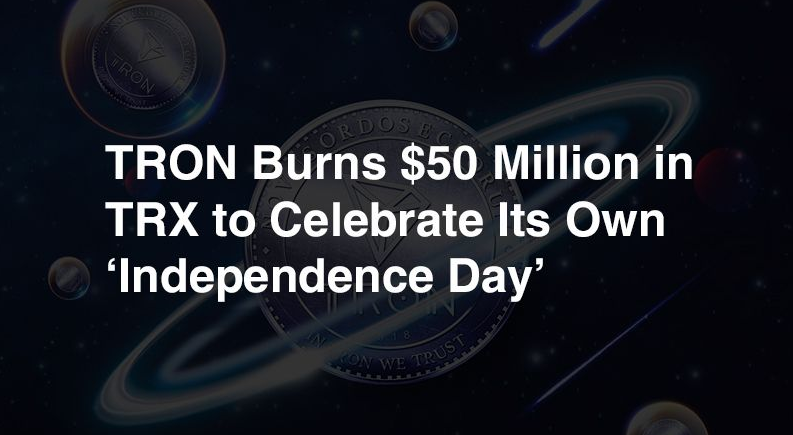
In June 2018, the goal became an audacious reality with the introduction of the TRON mainnet which members of the community referred to as "Independence Day". It was a historic move that required the seamless movement of TRX from an ERC-20 token to the native currency of a brand new, independent blockchain.
The New Blockchain This new blockchain was designed with a complex 3-layer architecture – where its Storage Layer stored data records, the Core Layer processed transactions and smart contracts related operations while it also housed consensus module, account management, and the Application Layer allowed developers to create various dApps or wallets.
At the heart of this new platform was its consensus mechanism, which goes by the name Delegated Proof-of-Stake (DPoS). Unlike Bitcoin and Ethereum’s Energy-heavy Proof-of-Work consensus mechanism based on thousands of miners solving billions-of-times complex puzzles, TRON wanted to run its network with 27 “Super Representatives (SRs)” validating the transactions.
These SRs are voted into power by all TRX token holders, who vote for the candidate whom they believe will help their network. This voting process is ongoing and dynamic, the SRs ranks are updated every 6 hours to make sure the SR’s are accountable to their community. Below the top 27 are over a hundred Super Representative Partners that secure the network and receive rewards, achieving further redundancy.
This architecture was an intentional, weighted compromise. Although it was decried by some purists in the blockchain world as introducing too much centralization compared to Bitcoin, it seemed like exactly what the market (and end-users) were crying out for: lightning-fast and massively scalable.
It was the DPoS system, that with its three-second block times, permitted TRON to achieve a throughput of TPS in the thousands — an incredible capacity when you have Ethereum having problems just handling a couple dozen. This raw technical advantage was decisive. It meant that things like industrial-scale usages could be supported on TRON whereas other chains just couldn’t handle them.
One month after the mainnet was launched, TRON achieved one of its biggest strategic successes: purchasing BitTorrent for an estimated $140 million. BitTorrent was an early pioneer of peer-to-peer file sharing, with more than 100 million active users. The synergy was undeniable. TRON was the strong blockchain infrastructure while BitTorrent was a giant decentralized user base.
This merger, later named Project Atlas, sought to combine TRX with the BitTorrent network and introduce a tokenized layer of incentives (the BitTorrent Token, BTT) for its users to share content and bandwidth. That masterstroke was a perfect match for TRON’s original "Exodus" vision of decentralized content distribution, and it brought immediate unprecedented global access. It resulted in the formation of the BitTorrent File System (BTFS) – a storage protocol that underpinned the network’s utility.
First Global-Clearance Settlement Network
With its high throughput mainnet and giant user base TRON inherited from BitTorrent, it was the ideal portal to host its next-phase explosive growth: Decentralized Application (dApps) powerhouse and eventually, a gateway for decentralized finance (DeFi), as well.
This evolution was made possible by the introduction of the TRON Virtual Machine (TVM). Since it was fully compatible with the Ethereum Virtual Machine (EVM), developers could easily migrate their existing dApps from Ethereum to TRON. It was an irresistible value proposition: developers could easily bring applications to the network with just a few lines of code and instantly provide their users faster, cheaper, more responsive sharing.
The early dApp ecosystem on TRON was lively and saw fast growth, even if it got an early reputation for being overrun with gaming and gambling dApps. These specific use cases, which benefited from high transaction volume and low fees, were a perfect match for the network’s capabilities and an important stress test for infrastructure proving that millions of daily transactions could flow through it without breaking.
But the real boom in daily TRON usage and significance across the globe was with the surge of stablecoins. In 2019, the issuer of the largest stablecoin by market cap, Tether (USDT), announced it had launched USDT on the TRON blockchain. It was a watershed moment, one that would redefine what TRON would stand for.
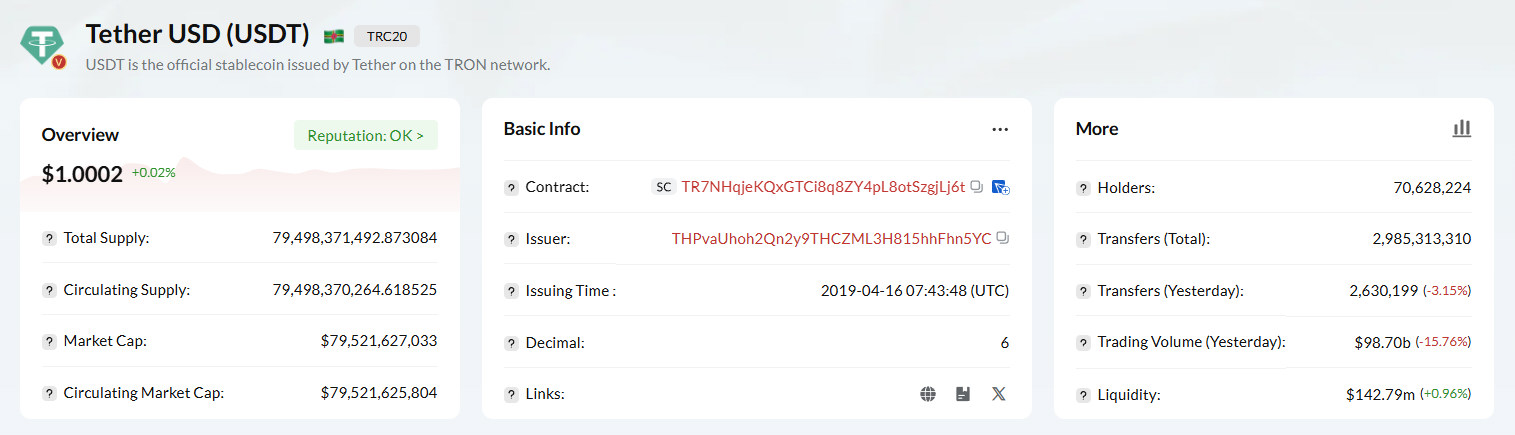
At the time, moving USDT on its other host chains (like Bitcoin using the Omni Layer or Ethereum) was frequently slow and cost-prohibitive — sometimes up to several dollars for a single transaction. This was not suitable for daily payments or the transfer of small values. USDT on TRON, though, was an entirely different beast. The transactions were confirmed in seconds, not minutes or days, and cost a tiny fraction of one cent, and would sometimes be free if the user had enough Energy staked.
This single feature solved an enormous pain point for users all over the world, but particularly in emerging economies in Asia, Africa and Latin America where access to more stable digital dollars was a financial lifeline. Once available, people began using TRC-20 USDT for everything — whether it was freelancers looking to get paid internationally, or families sending remittances or merchant trading cross-border.
This network effect was massive and self-reinforcing. As the demand for USDT on TRON grew due to its efficiency, more exchanges and wallets had no choice but to integrate it. The situation led to more volume, making them mainstream in turn. As of early 2020, TRON had more total stablecoin transactions than any other cryptocurrency by far, handling billions of dollars in volume on a daily basis and even exceeding the daily transaction volume of traditional payment giants like Visa based upon certain metrics. This solidified it not only as a content platform but also a crucial part of the world’s financial infrastructure — fast, cheap and reliable settlement for all.
TRON also benefited from Justin Sun’s aggressive marketing. A case in point: his historic $4.5 million winning charity auction bid to have lunch with legendary investor Warren Buffett. The lunch was pushed but finally took place in early 2020. Sun took the chance to evangelize blockchain technology to one of traditional finance’s staunchest skeptics. Although the immediate price result was volatile, the long-term effect was to establish TRON as a project that wasn’t afraid to mix with traditional finance - serving to narrow even further the chasm between crypto and mainstream.
Maturation, Crisis and a New Map of Finance
The governance and economic model of the TRON network grew mature as well as expanded in value and use. The project has certainly weathered its fair share of criticism along the way, from early criticism for plagiarizing in their white paper (which the foundation addressed as issues with translation and sourcing) to continued concerns from skeptics over centralization around the 27 Super Representatives.
In March 2023 the SEC brought a lawsuit against Justin Sun and TRON Foundation for the unauthorized sale of securities [TRX & BTT] and market manipulation. This ongoing regulatory headache loomed large over the project, but TRON DAO claimed it's a decentralized outfit and that the SEC has limited jurisdiction and that they intend on fighting tooth-and-nail to defend its good name.
Faced with these challenges and as part of its target roadmap, the ecosystem transitioned away from centralisation. In 2021 Justin Sun revealed that he stepped back from day to day direct leadership and transitioned into an ambassador role for the network, being a Permanent Representative of Grenada to the WTO.
The network’s governance was later handed entirely to that of the TRON DAO (Decentralized Autonomous Organization), with the goal of empowering a global community of TRX holders to come together, and collectively help shape how a protocol evolves across time, through transparent on-chain voting. This change heralded an age where the community would lead development, fund it and oversee its execution.
This brave new world was also the stage for TRON’s most aggressive move yet into DeFi: launching its very own decentralized over-collateralized stablecoin, USDD, in May 2022. Pegging to the U.S. dollar, USDD was initially pegged with arbitrage mechanisms and backed by a reserve pool valuated by other digital assets, operated by the TRON DAO Reserve. The development was also a direct step towards creating a native, decentralized dollar for the TRON network - less dependence on central issuers such as Tether and Circle.
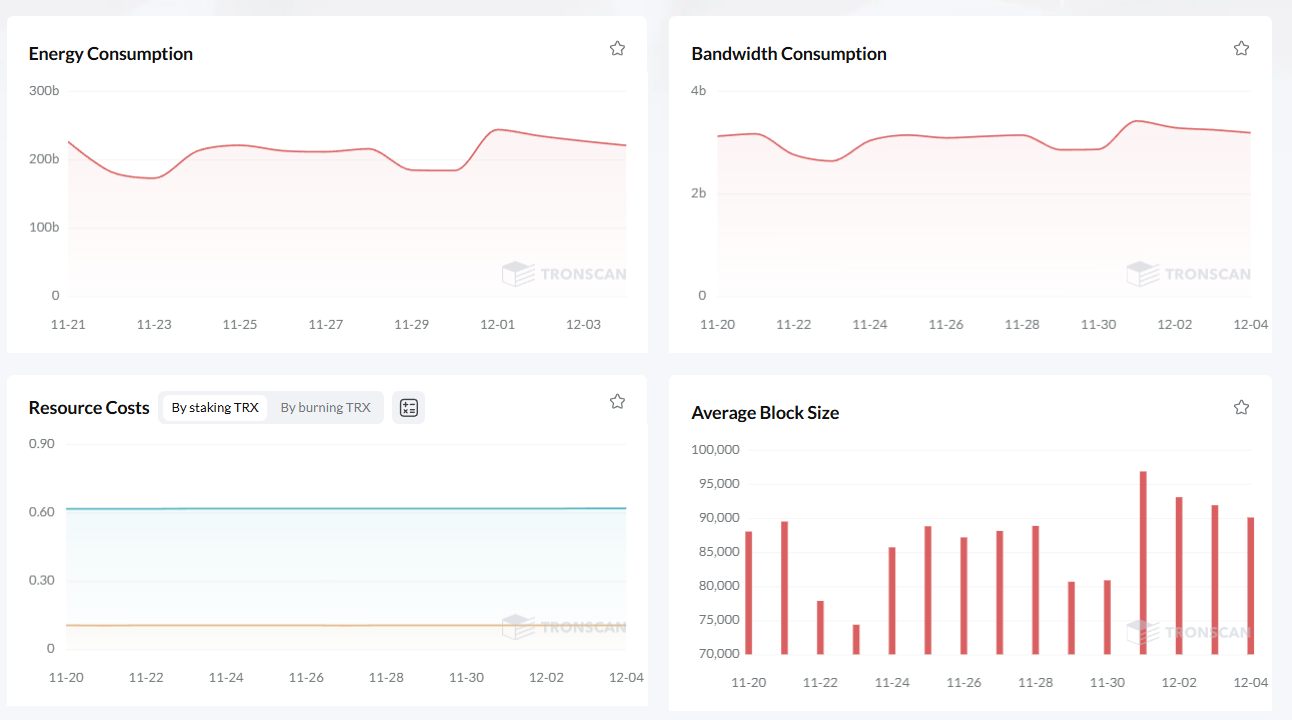
At the same time, the network’s intrinsic resource model - around Energy and Bandwidth - takes a life of its own as a complex economy. One of the most clever concepts in TRON is this system. It's not like burning a volatile native token to spend it in every transaction, making the cost unpredictable for the user. TRON allows TRX frozen instead.
Freezing TRX gives them voting power for SRs, as well as a daily amount of Energy (required to execute smart contracts), and Bandwidth (which enables basic transactions such as transfers). This was designed to be cost predictable and sustainable. With the growth of DeFi and dApp ecology on TRON, the resources were highly prized, particularly Energy used for interaction with smart contracts.
This organic need led to the generation of a well-functioning and performing TRX secondary market where users who had excess frozen TRX could delegate their Energy for a fee. This is it — the technology behind the affordable, modern user experience.
The high demand of cheap TRON Energy for daily transactions led to the development of platforms which are based on renting TRON Energy: this is why now you can rent it, and use it until reaching a certain time limit on services that offer this for much lower price than burning 1 TRX directly. This dramatically reduces the cost of interacting with dApps and keeps the network within reach of the average users.
This amazing journey has resulted in the super efficient, easy to use and powerful platform we have today. The path from a white paper to a workhorse global settlement layer processing billions of dollars has been consistently and unrelentingly focused on addressing the real-world issues of speed, cost and access that those early blockchains suffered.
The TRON of today is proof that that vision was not just rhetoric, as it survived the crypto waters and emerged as one of its biggest survivor and a leader. And with the ecosystem growing with new financial protocols and applications, specific services are popping up to take the user experience a step further.
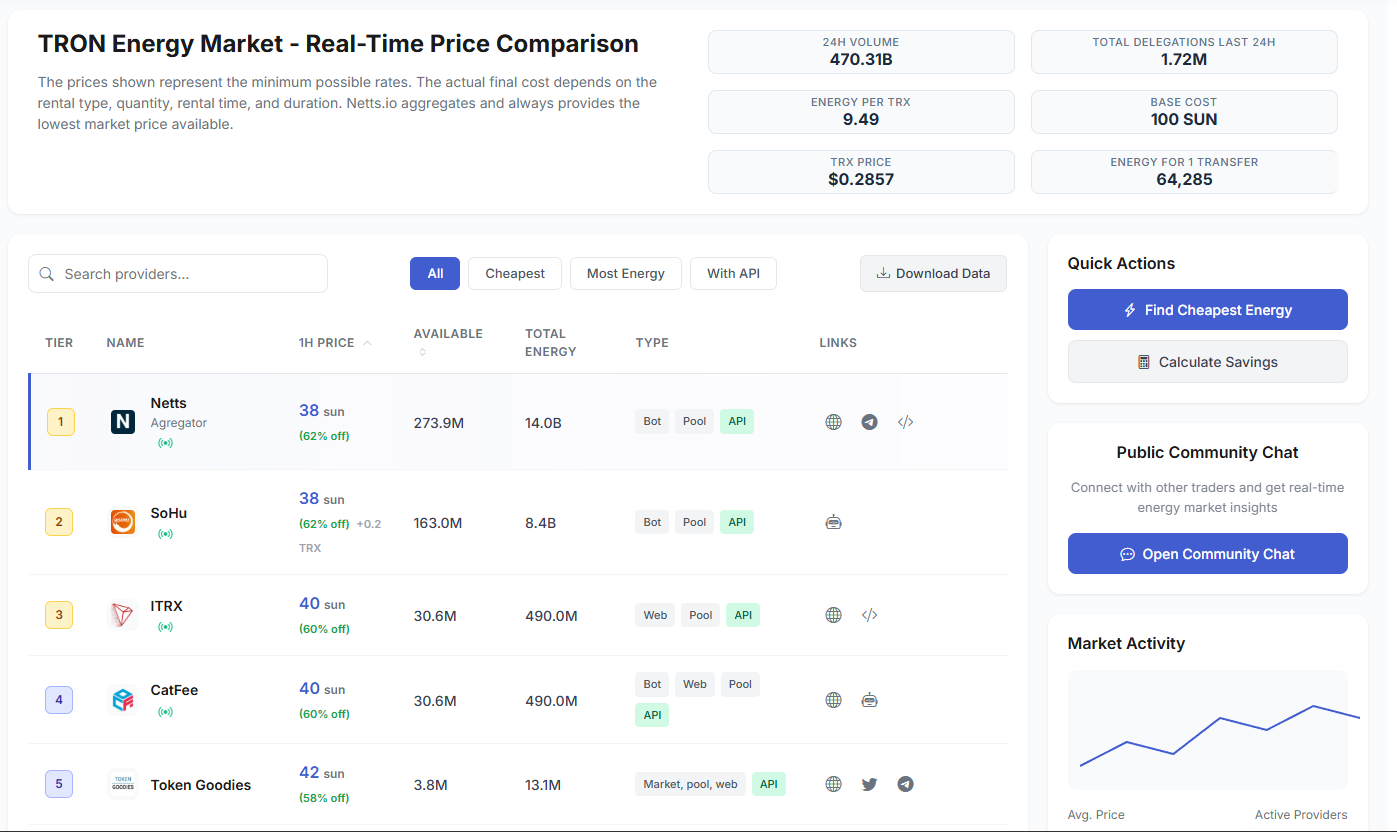
Netts.io provides a complete TRON Energy Market, bringing all suppliers offers to meet all users’ Energy needs at the best price and highest quality. It is an interface to an underlying system that can be complex, simplifying its complexity and enabling users to effectively manage their transaction costs without needing to know the detail of what’s happening under the hood (delegate resources etc), making the network more accessible and powerful than ever.