High Frequency Trading and Crypto: Benefits and Dangers
Microsecond markets never sleep — how HFT adds liquidity and tightens spreads in crypto, and why retail traders mostly see ghosts on the tape.
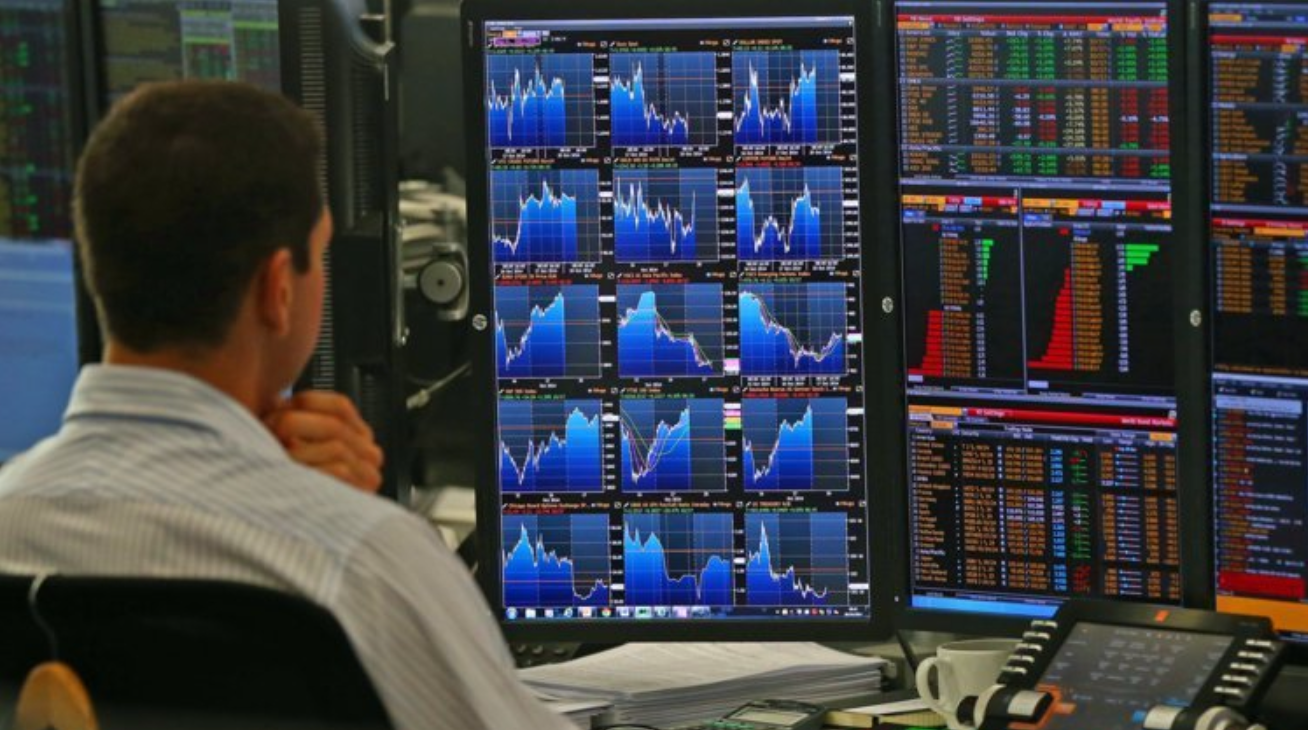
The idea that speed is value in financial markets isn’t a new concept, though the tools we use to meet this reality have since changed from feathers to fiber optics. Yet although high frequency trading is often seen as a development of the server rooms of the 21st century, it has its spiritual ancestors far, far back in time before that. You might think of the early 19th century, when (legend has it) members of the Rothschild banking family used carrier pigeons or fast boats to learn the outcome of the Battle of Waterloo before their competitors. True or not, the principle was a good one: information was money, and whoever got to it first wins. The phenomenon of prices being transmitted across vast distances was revolutionized further by the telegraph, which enabled financial information to travel faster than even the fastest ship or horse, thereby shrinking the world and giving rise to the first “wired” markets.
But the most crucial turning point — the very birth of what we know today as high frequency trading — came in the late 20th century. The precise turning point is the period immediately following the Wall Street crash of 1987. In the wake of the crash, NASDAQ implemented a mandatory system called SOES that required orders to be executed exactly as they were received by participating market makers. The idea was to make certain that mom-and-pop investors would still be able to execute trades even when the market became chaotic, and market makers might have otherwise stopped answering their phones.
However, this very system had a weakness which spawned the "SOES Bandits." They were individual traders who discovered that the electronic system was matching orders faster than the market makers could update their prices. By hanging in front of terminals and responding instantaneously to news or price changes, these bandits could "pick off" market makers who were tardy in updating their quotes. This was the first time in history that the important edge wasn’t insider information or deep fundamental analysis or long-term economic forecasting, it was speed. It was where the game changed forever. And ever since, the race has been on. It has gone from manual entry to algorithmic scripts, from ordinary internet connections to dedicated fiber optic lines and ultimately to microwave towers and laser networks that shave microseconds off transmission times. The logic of the SOES bandits, that faster is better than smarter, has embedded itself as one of the core tenets of modern market microstructure.
When Over What
Back in the traditional world of investing, there was an old-age rule: buy low, sell high. It was all "what," no "how." Which company has the best earnings? What asset is undervalued? What is the scarce commodity? The timing — the “when” — mattered, of course, but it was generally counted in days or weeks or months. One stock purchased a few days early or late was immaterial given my holding periods of at least ten years. The arrival of high frequency trading turned this logic upside down. In the computerized world of modern trading, it is often more important when you buy than what you buy.
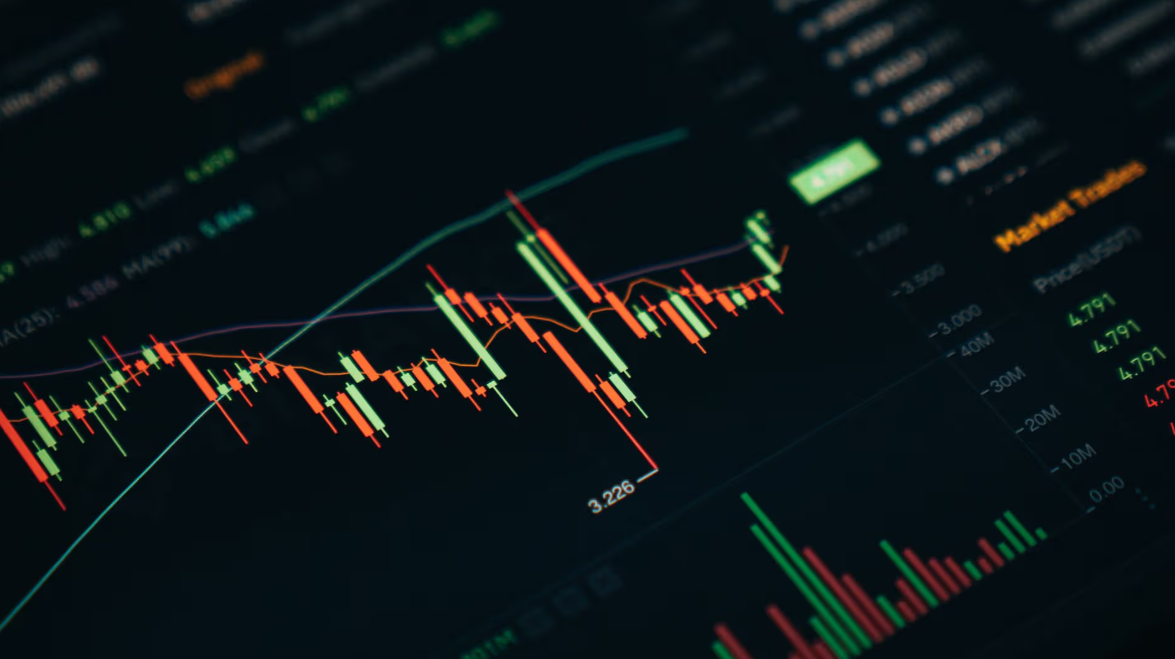
This shift is profound. If you find a price mismatch in the market, an asset that is briefly cheaper at one exchange than another, it does not matter whether or not you know about it. It doesn’t matter whether you can afford it. Doesn’t matter if you’re “right.” If you are not able to pull off the trade in that microsecond that the gap is created, it’s like you don’t even have the opportunity. The “what” is directed by the “when,” because that asset is a purchase opportunity for even the very thinnest slice of time. If you’re a second late, the price corrects and the asset isn’t such a good buy anymore. Which means the only thing you’re deciding to buy here is entirely filtered through what time you can buy it. This has led to a bifurcation of the market: a world for humans working on human time scales and an invisible layer at near light speed where robots are fighting over scraps of profit that disappear in the blink of a human eye.
This is even more extreme when it comes to the cryptocurrency space. Unlike the traditional stock market, which operates on set hours and days of the week, the crypto market is an animal that never sleeps, not even weekends. It never closes, and it’s fragmented across hundreds of exchanges and thousands of assets. This fragmentation gives rise to infinite arbitrage opportunities — where Bitcoin may be fifty dollars cheaper on one exchange than on another. In such a world, the most powerful multinationals on Wall Street are high frequency trading algorithms. They race through thousands of order books at once, making trades across different venues in the time it takes a human to click a mouse. This, to the ordinary trader, means that by the time you see a price flash across your screen, it is often already outdated — a flavor of ghost — a historical account of where prices once were rather than where they are now. This fact alone, makes merely the act of attempting to send USDT or move between exchanges a strategic action; if your transaction speed is slower than the time it takes for "the market" (i.e., us humans) to decide on something about an asset, then you just lost the strategy.
The Upside of High Frequency Trading: Order in Chaos
For all the bad rap that high frequency trading gets handed — as a game for rigged robots stealing from small-time investors — there’s no denying some pretty compelling advantages when it’s structurally sound. One upside is obviously liquidity. In the early days of any market, selling to a buyer (or vice versa) is hard. Spreads — the difference between what you pay to buy a currency and what you get when you sell it back to your broker — can be wide, in which case you’re already in the hole just for opening a trade. Many of the high frequency traders function as market makers. By always stacking limit orders on both sides of the book, they create the liquid ocean in which retail flow swims. But when you are trying to buy Ethereum or Solana instantly, you are typically buying it off a high frequency bot that is pretty happy to sell it to you for a small bit of markup.
These algorithms also make robust contributions to price formation. In a fragmented market such as crypto, in fact healthy or unhealthy isn’t exactly the right framing to use to talk about an asset that literally has such drastically different prices from exchange to exchange for a reason. It creates confusion and inefficiencies. By following this pattern, HFTs play the role of market's immune system, punishing inefficiencies immediately. If an exchange in Asia is quoting a higher price than an exchange in Europe, then bots will automatically sell on the expensive exchange and buy off the cheap one, bringing them into sync across the world. This occurs so rapidly that to the casual observer it appears as if the world price is moving in lockstep. At the same time, it makes trading cheaper for everyone. It is that when you go to make a USDT transfer or perform a trade, the price you see is probably the “fair” global market price, not an artifact of your local exchange.
Another less covered advantage have been the softer volatility in normal markets. Flash crashes are a byproduct of HFT, however there tends to be huge liquidity on the book during normal trading hours as a buffer. Those large sell orders that otherwise may crash a thin market are covered by the thousands of tiny buy orders from HFT algorithms. They smooth out the ride, transforming charts from something that looks like a jagged cardiogram of a heart attack victim into more coherent lines. This is critical for the institutional investor. If you could not enter and exit positions without moving the price by ten percent, big funds would not come into crypto. HFT brings the requisite liquidity that allows the “big money” to play, and drives growth for everyone involved.
The Hazards: A Battlefield on Which Humans Are Superfluous
But one shouldn’t see this as a rose-colored landscape. The dangers of high frequency trading are very real and for the average individual; quite discouraging. The main threat is the complete impossibility to compete. If, in the modern world at least, you’re not stone-cold certain that a coin will win the long game of adoption — and unless you have some non-public information about it — battling it out on a battleground where your opponents’ reaction time is substantially below human even when considering literal (and legal) bots just looks like conceding defeat. They aren’t just fast computers but machines placed in the same data centers as the exchange servers to reduce latency — or the time it takes for a signal to travel over a copper wire. They rely on microwave towers because radio waves move faster through the air than light does through glass fiber.
This gives you a two tier system where the “retail” class is always going to be acting on yesterday’s news. By the time a headline crosses your Twitter feed, or an alert buzzes on your phone about some price spike in soybean futures, HFT algorithms have read the data, processed the sentiment it contains, executed thousands of trades and closed positions. You’re basically paying for their rubbish. This truth can drive people from the process entirely. Why day trade when you know that at the poker table, you’re playing an opponent who can see your cards and move his chips before you can even pick up a card? The psychological toll of perpetually being “front-run” (where bots sense your order coming and get in front of it) can push real participants out of the market.
And the costs of doing this trading are insane. We’re talking millions of dollars worth of hardware, software and real estate costs to place a server. This funnels profits to a small number of huge companies, undermining the democratizing potential of cryptocurrency. And then there is the systemic risk. If HFT may tamp down volatility in quiet markets, it can also amplify it during storms. Algorithms are designed to protect themselves. If they sense a glitch, a sudden downswing, they may fire off all of their guns at the same time by pulling their liquidity — or “liquidity simply evaporates.”
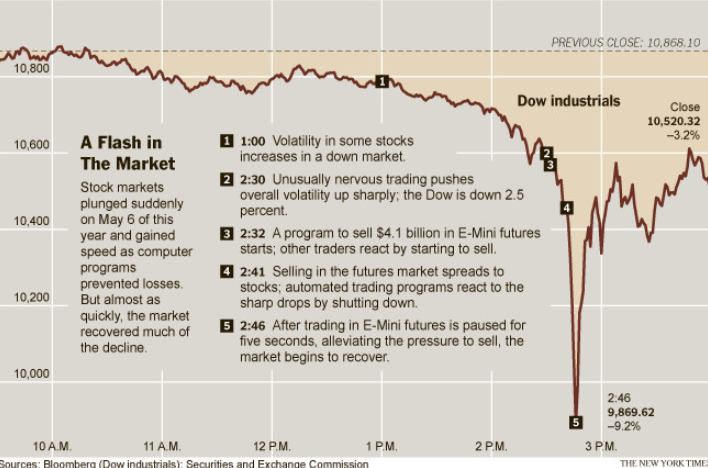
A frightening example of this risk is the notorious “Flash Crash” that took place on May 6, 2010 in the traditional stock market — a dire warning for crypto. In just minutes, the Dow Jones Industrial Average fell almost 1,000 points, erasing vastly more value than many small countries produce in a year — only to have most of it reappear soon after. It wasn't from fundamental economic changes; it was a chain reaction of high frequency algorithm bots trading on each other in a 'chaotic' feedback. In crypto, no stranger to less regulation and circuit breakers that are few and far between, the risk of this kind of event is even greater. So powerful is the leverage that a single bug or predators’ algorithm can start a chain of liquidations erasing billions in seconds — with human traders left looking at their screens in horror as their portfolios are wiped out before they can even locate the “sell” button.
A Human Touch Still Needed
And yet, the machines have not yet conquered it all. Fortunately, high frequency trading does have its downsides, issues and niche restrictions. An F-35 is not a magic wand that creates money always. For one, HFT is ridiculously fragile when it comes to "black swan" (or once-in-a-lifetime) events. Algorithms are based on historical data and probability. They believe that the past will rhyme with the future. When something genuinely unprecedented occurs — a global pandemic, a major war, an entirely novel flavor of regulatory ban — the robots frequently run amok. And they don’t have “common sense.” They can lose tens of millions of dollars in seconds by misunderstanding a scenario that a human would immediately register as anomalous.
Additionally, HFT is quite niche. It needs to be high volume and highly liquid to work. It’s not particularly good at functioning in the world of micro-cap coins or unknown decentralized finance tokens where the trade volume comes and goes at random. In these “illiquid jungles,” it is still the human trader who is the king of the jungle. You can't maneuver around that grid in a market where one trade adjusts the price by fifty percent. Nor can it sense the texture of a community, the fire in a team of developers, or how memeable an obscure coin could be. Those are human aspects that you can only understand as a human.
And then there’s the “crowding” matter. With more companies in the HFT game, margins shrink. They start bickering among themselves for increasingly smaller shares of the pie, and then things implode. This saturation ensures that the “easy money” days of HFT are largely past and only the most advanced players remain. This allows lots of room for other strategies. It’s not just a question of speed; it is also about duration. A robot can be quickest to the millisecond, but the slowest to the decade.
Conclusion: Boundaries Between the Emotionless Machines
At the end of the day, the market is nothing but a series of human mental states. It is fear and greed, hope and despair that drive such markets. So long as the market runs on feelings, emotionless robots will never be able to make fully informed decisions — no matter how quick those decisions may be. A robot can do the math and compute a moving average, but it lacks the ability to feel panic in the air or sense euphoria during a bull run. It doesn’t know why a particular storyline has appealed to the public psyche. It traffics in data, not narrative. And at its heart, money is a story we all agree to believe.
The human trader is not out of date. It’s just that now humans are doing the work. We’re not the sprinters anymore; we are the navigators. We also must look past the noise of the microsecond charts and focus on the horizon. As the bots scrabble for breadcrumbs of rebalancing, humans can focus on the meal: fundamental value and the long-term adoption cycle of technological changes to the world. In this way, we live with the machines, using our liquidity to get in and out of pain and worry about our long-term convictions.
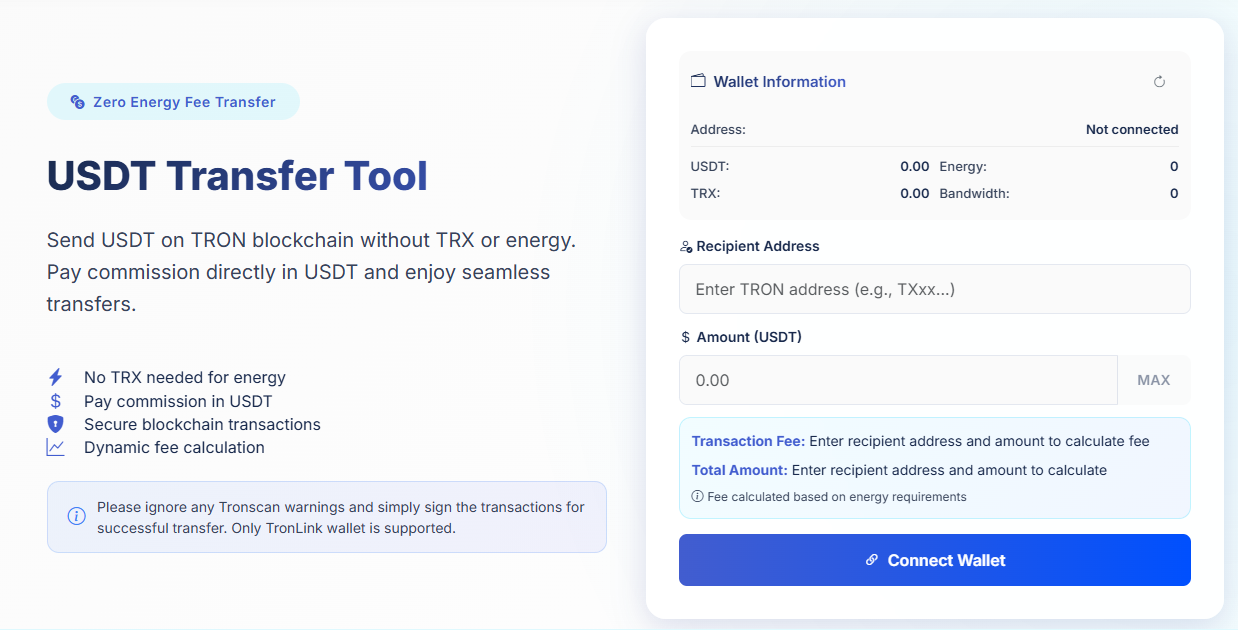
Speaking of getting in and getting out, the bread-and-butter tools we use to engage with this fast-paced world are as important, if not more so than any tactical plays themselves. At the point of a fund transfer, speed and efficiency are critical. Here’s where something like the Netts Transfer Tool comes in. This tool provides for a Zero Energy Fee Transfer and will help users get around a common pain point on the TRON network, the “Energy Wall”. When I send USDT on TRON, if I do not have enough TRX to pay for Energy, my transaction will fail or burn tons of fees. That is a “Catch-22,” in which you have money but can’t flow it. Netts abstracts this complication away and allows for you to simply pay the commission in USDT, without worrying about TRX or energy. It does the best it can to make both the “how” of moving money as smooth as its “when,” and that your sending USDT experience isn’t riddled with technical friction.