Fear of Missing Out in Crypto: Reasons and Consequences
Feeds, phantom losses, and hype cycles wire FOMO deep — a calmer read on why urgency burns portfolios and how process beats reflex.
It’s not as if fear of being left behind, or that someone else is benefiting at our expense, is a new thing in human history. It is something so deeply embedded in the human experience that it spans across cultures, generations and economies. But in finance and investment this feeling has solidified into a mildly terrifying, sometimes self-immolating psychological concept called Fear of Missing Out, or FOMO. The acronym is a creation of the digital age, forged in the social media-connectivity fire that increasingly dictates market cycles these days, but its core sentiment has been around for centuries.
In the world of cryptocurrencies, which are as unpredictable and as fast moving a commodity as there has ever been, this fear is now far greater than ever before. The crypto market also never sleeps, and with information available at a few seconds notice through X (Twitter) to Telegram, you have the perfect recipe where making rational choices is almost always somehow conflicted by some primeval urge to join in. To get a real sense of FOMO in the context of modern crypto investing, you’d have to explore its historical roots and antecedents; delve into the evolutionary biology that creates triggers for FOMO-like behavior; describe the real-world fallout etched onto portfolios and lives.
Origins of Mania: A Historical Perspective
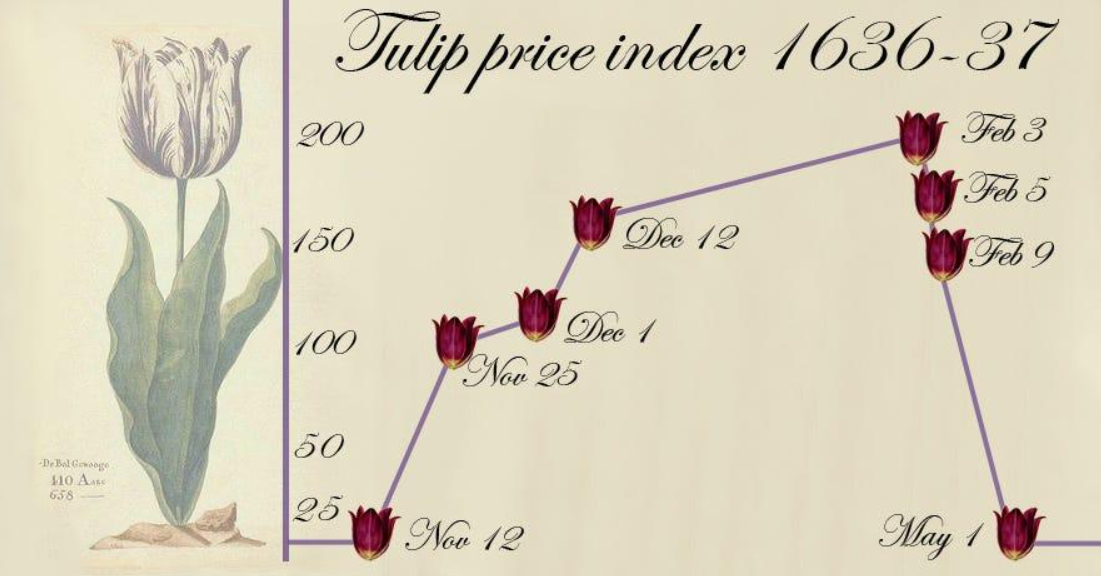
The story of markets through time is in many ways a history of human emotion — and the shifting balance between greed and fear. Long before anyone had even conceived of Bitcoin or Ethereum, there were tulip bulbs. The 1630 Tulip Mania in the Netherlands is frequently referred to as the first recorded speculation mania and is a classic case of primeval FOMO. In this time, the prices of fashionable tulip and other bulbs reached extraordinary heights before collapsing in February 1637.
During the height of the mania, a single bulb of one of these sought-after types, like the Semper Augustus or Viceroy, cost as much as an entire grand house on the most fashionable canal in Amsterdam. It was not the utility of the flower that drove this inflation, but fear among the Dutch people that they were surrounded on all sides by insecure kingdoms, ensuring they would miss out on a golden age of effortless riches. And as tales spread in taverns and marketplaces of the profits made on successful trades, everyone from nobles to chimney sweeps converted their assets into cash and threw themselves into the action — all convinced that prices could only go up. There would eventually be an inevitable crash, which destroyed many a fortune, and imparted one of those durable life lessons with which humanity has invariably been pretty quick to take issue.
Jump ahead to the early 18th century and we have the South Sea Bubble in Britain, and its cousin across the channel, the Mississippi Company bubble in France. In London, the South Sea Company’s stock skyrocketed on tall tales of what trade in the New World might be worth. The fever became so rife that it duped even the extraordinary intellect of Sir Isaac Newton. In titling the article, "The Defeat of Isaac Newton," history says that Newton, having first left with a handsome profit, then observed as the stock soared even higher. Blinded by the sight of his friends getting richer than he was — a classic FOMO cue — he got back into the market near its peak, and lost a fortune when the bubble collapsed. The history of this incident highlights an important reality about FOMO: It’s not a matter of intellect, but instead psychology. The strongest of logical minds are not immune to the incredible social proof derived from a runaway bull market. The fear of being left waiting in the wings while everyone else appears to get rich easy can be a powerful narcotic that clouds years of clear thinking.
The late 20th century also saw the Dot-com bubble, an antecedent of today’s crypto cycles. In the late 1990s, a stampede of internet companies with no profit and often no business model clogged the market. And yet investors poured billions of dollars into them, propelled by the story of a “new economy.” The fear was that the internet train was leaving and anyone not on board would be choked in the dust of the old world. Companies like Pets.com or Webvan, shone as bulging examples of this excess, riffling up in value and promptly going bankrupt. Investors made those valuations appear justified by focusing on new measurements — “eyeballs” or “clicks,” for instance — at the expense of more traditional fundamental analysis. The psychological machinery was the same as that of the traders in tulips several hundred years earlier: fear of being left out trumped common sense about value. This historical persistence suggests that while the asset classes differ — from blooms to stocks to digital tokens — the human software behind each trade is more enduring.
The Stone Age, the Iron Age, the Industrial Revolution and the incredible explosion of technology in the last 200 years have delivered us to where we are, but these epochs do not explain who “we” are.
To understand why FOMO is so powerful, we have to turn to evolutionary psychology. The human brain developed over millions of years in an environment that was vastly different from the contemporary financial world. For our ancestors dwelling in small tribal societies on the savannah, striving to fit in wasn’t a matter of choice; it was a determinant of whether or not you would live. Membership in the group represented safety, pooled resources and an increased chance to reproduce. In the opposite scenario, being excluded or not getting access to something everyone in the tribe had could be fatal. If the tribe went to a different hunting ground and you didn’t go with them, you’d starve.
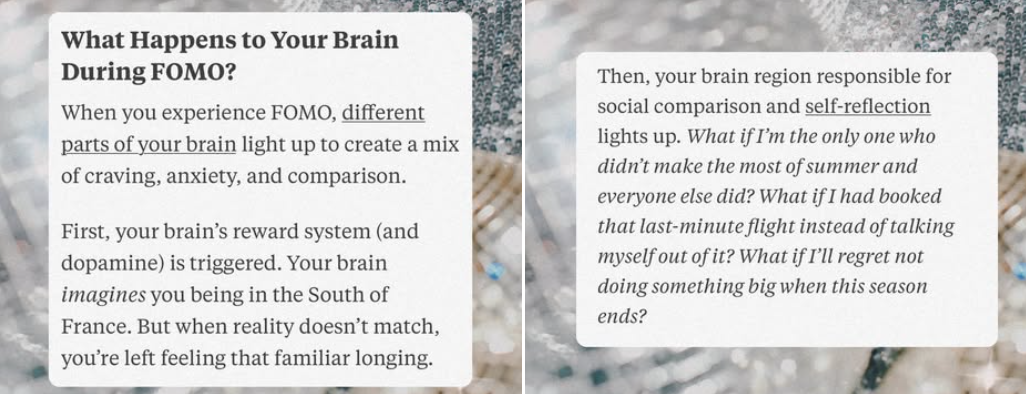
The brain responded by evolving highly sensitive alarm systems to detect threats to social acceptance. The pain of exclusion within our brain registers in the same areas as physical pain. When the typical investor today sees other people getting rich from a hot cryptocurrency and feels a twinge of anxiety, what he or she is experiencing may be an ancient brain reacting to that minority’s financial non-participation as though their survival and status in the tribe were under attack.
Moreover, the brain's reward system (and especially dopamine) is specifically set up to promote risk-taking when potential resources are at stake. When we expect a reward, dopamine rises and motivates us to act. This mechanism in the ancestral environment ensured that we would chase the gazelle and/or climb the tree for fruit. In the world of cryptos, that same chemical reaction gets set off by green candles on a price chart or a viral tweet about a new token. The brain senses a potential for high rewards and dampens activity in the prefrontal cortex, an area involved in logic, planning and risk assessment. That’s why FOMO can sometimes seem like a physical compulsion; it is a neurochemical hijack. The amygdala, the emotional center of the brain, screams “move now,” while the cautionary whispers of rational thought are drowned out.
The idea of “loss aversion” — popularized by the psychologists Daniel Kahneman and Amos Tversky — should also inform our thinking. The pain of losing hits us twice as hard as the pleasure of gaining an equivalent amount. And what is fascinating is that FOMO seems to co-opt this mechanism by transforming having missed something into a loss. When the token does go up 100% and you didn’t buy it, this isn’t stored as a neutral “non-event” in your brain — it’s interpreted as losing money that you “could have” made. This phantom loss leads people to be late into trades, purely in an effort to stop the mental anguish of watching price move higher without them. This evolutionary disconnect is extremely dangerous, especially when the modern world (and especially the crypto market) are built to prey on these instincts. We are taking in information 24/7. In the old days, you might hear about a single successful neighbor once a month. Now, you can’t even scroll through social media without a new wave of superstars proclaiming to have become millionaires overnight. With these realities viewed on a daily basis, the picture that is painted suggests that everyone else is winning at life, and you are losing.
How the Machine of Modern Hype Spins Out of Control
Today, between the crypto rush of 2017 and the NFT madness of 2021, right into late 2025 and early-2026 tortured market dynamics, FOMO has gone nuclear as a weaponized part of market physics. Capital is flowing faster, and barriers to entry are falling. The world of crypto in 2026 is more fractured and frenetic than ever. New Layer 1 blockchains, AI-based tokens and DeFi protocols pop up every week claiming to be the “next big thing.” FOMO is a tool that teams and influencers use on purpose with language like feels exclusive or running out of time. Terms like “last chance to buy,” “going to the moon” and "don't miss the train" are engineered for a response from that exact amygdala nuclei we were discussing previously.
The fallout of submitting to this fear is potentially catastrophic; both as individuals, and for the good name of the industry. On a personal level, you know buying into an asset driven completely by FOMO typically means your buy low/sell high ratio is out of whack. The “smart money”— institutional investors and early adopters — take positions when the market is relatively quiet. When the buzz finally makes it to the masses and leads to a rush of FOMO, the price is already well inflated. All this “exit liquidity” is soaked up by the latecomers, leaving room for the early investors. When the understandable correction takes hold, those who bought in fear are often the first to take fright and sell at a loss. The pattern of buying high and selling low annihilates capital and erodes confidence.
Despite the financial cost, FOMO takes a heavy toll mentally. The relentless feeling of needing to be “plugged in” contributes to sleep deprivation, anxiety, and burnout. Investors frequently feel they cannot take their eyes off of their computer screens for fear of missing a pivotal move. This hyper-vigilance is not a viable state of being and will result in poor choices in other circumstances. We can read a thousand stories of the family man who lost his job and health to chase the dopamine hit of the next pump only to end up broke with broken relationships. The crypto world’s “attention economy” has been designed to capture every waking moment, and FOMO is the key to reining in users.
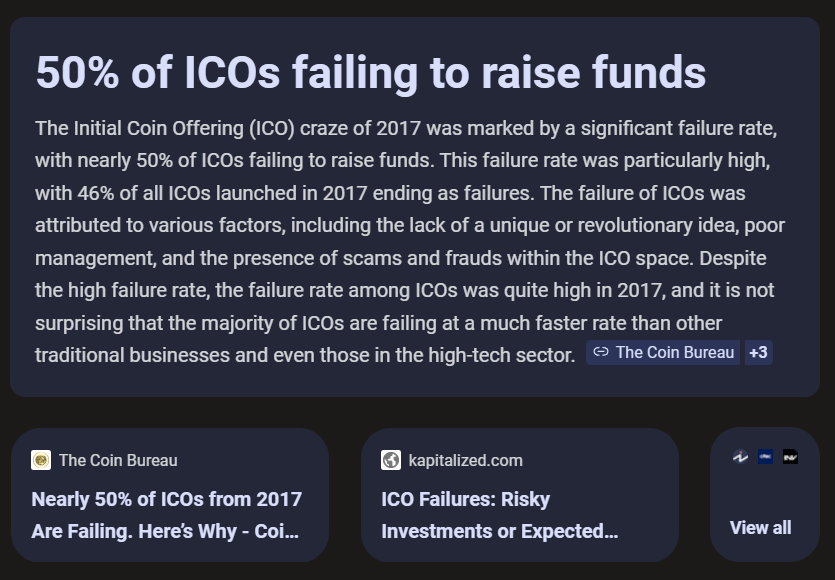
Negative examples abound. Think of the I.C.O. (Initial Coin Offering) craze of 2017. Thousands of projects with little more than a whitepaper and a fancy website. Investors, worried they would miss out on the next Ethereum, threw money at anything with “blockchain” in the name. A large number of these projects are either dormant or scams, and as it usually happens in such cases the impatient investors were left with worthless tokens. More recently, the destruction of ecosystems such as Terra (LUNA) in 2022 or the frenzy for celebrity tokens in 2024 and 2025 underscored the risks of herd behavior. In many of these cases, there were warning signs — unsustainable yields, centralized control, empty technical content — but the crowd noise drowned out those warnings. The fear of missing out on 20% annual returns or 100x returns was simply too overwhelming that nobody cared to do their due diligence.
The corporate world hasn’t escaped unscathed either. A number of public companies had moved in recent years to incorporate crypto strategies or buy up digital assets not out of a well-thought-out long-term thesis but rather out of fear they would be left behind by their competition, pressed with the pressure to appear innovative. But not all of them managed to make it work, with some experiencing steep write-downs and shareholder ire when the market pivoted. This corporate FOMO, in turn, wastes resources and takes companies’ eyes off the ball as they try to rent some trend relevance. The crypto-adoption “supercycle” has also included a supercycle of hacks and scams, several of which prey directly on the urgency inspired by the FOMO. Phishing attacks frequently take the form of a "limited time airdrop" or "surprise mint," making users sign malicious transactions because they think they have literally seconds to act before some opportunity expires.
Strategies for Rational Decision Making
Avoiding FOMO is basically turning off these primordial biological impulses with structured thought and rational judgment. And you do that by developing a personal system around your life to protect yourself from the swings of the market. Here are some best practices that can help maintain discipline:
1. Establish a sound investment thesis before jumping into any trade. You should be able to write it down in terms of exactly why you’re buying, what the risks are and where you want to get out. This moves the decision to the rational brain, not the emotional brain. Instead of asking, “Will this go up?”, ask whether this project’s utility is sustainable and whether the valuation makes sense.
2. Implement a "cooling-off" rule. Whenever you feel a sudden, strong desire to invest in some new asset that you just heard about, try to force yourself to wait 24 to 72 hours. If the investment thesis is solid, it would still be tomorrow. If the sense of urgency was purely emotional, driven by hype or a sudden price surge, it probably passed — an opportunity to avoid experiencing a loss.
3. Emphasize “process over outcome.” A good decision can have a regrettable outcome (losing money on a well-reasoned bet), and a bad decision can have an excellent outcome (making money on a lucky gamble). But in the long run, only good decisions compound. Pumping and dumping works until it doesn’t. Just hewing to a disciplined strategy of dollar-cost averaging, diversification and risk management keeps you alive.
4. Carefully curate your information diet. If your feed is packed with “moon boys,” Venice Beach alarmist influencers and people posting screenshots of 10,000% gains, then that’s what’s occupying your brain space. Unfollow these accounts. Instead, follow builders, developers, and analysts who think in terms of technology and macroeconomics and fundamental value rather than price targets or hype.
5. Let automation and professionals take your head out of the game. By establishing mechanisms that make trades or allocate resources using predefined logic rather than how one feels at any given instant, investors can impose discipline upon themselves. This is especially true with the operational side of crypto like resource management on the TRON network.
This brings us to the mechanics of how we can move so nimbly within blockchains, with specific examples. If you are in a network like TRON where resource management is critical to maximizing efficiency, and therefore cost-effectiveness, this can be daunting. When humans are put in charge of resources, the system can go bad and become inefficient or miss out on better opportunities — a kind of FOMO for optimization. This is where the professional solutions work. For example, needing to contend with the management of bandwidth and energy costing etc., many elect to rent power automation such as TRON Energy. Instead of watching for the right timing for so-called “Rent your Energy” and managing expiration dates manually, users can trust systems that automate Energy rentals. These instruments mean that an account is never paying more than they need to for transactions, nor running out of funds at a crucial time. By automating this technical stuff, an investor’s mind is liberated to think about high-level strategy rather than spending precious time caught up in the weeds of day-to-day management.
Navigating the Future with Precision
The crypto market is growing up as we head further into 2026. The wild west of days past is gradually being supplanted by a landscape typified by utility, regulation and professionalization. Life-changing wealth is still possible, but it is less likely to come in the form of chaos and stampedes and more from institutions developing their versions so value accrues to them. It is human nature to want to be there for any breakthrough, it is in our oldest instincts, and yes, the fear of missing out will always be a part of us all hiding just behind every bull run and every discovery. But because we can understand the form that it takes — how and why it came about, how and when it operates — we can train ourselves to see it for what it is: a ghost of our evolutionary past, rather than a signal for our financial future. The successful investor of the future is going to be the one who refuses to follow, not the one who runs fastest after everyone else.
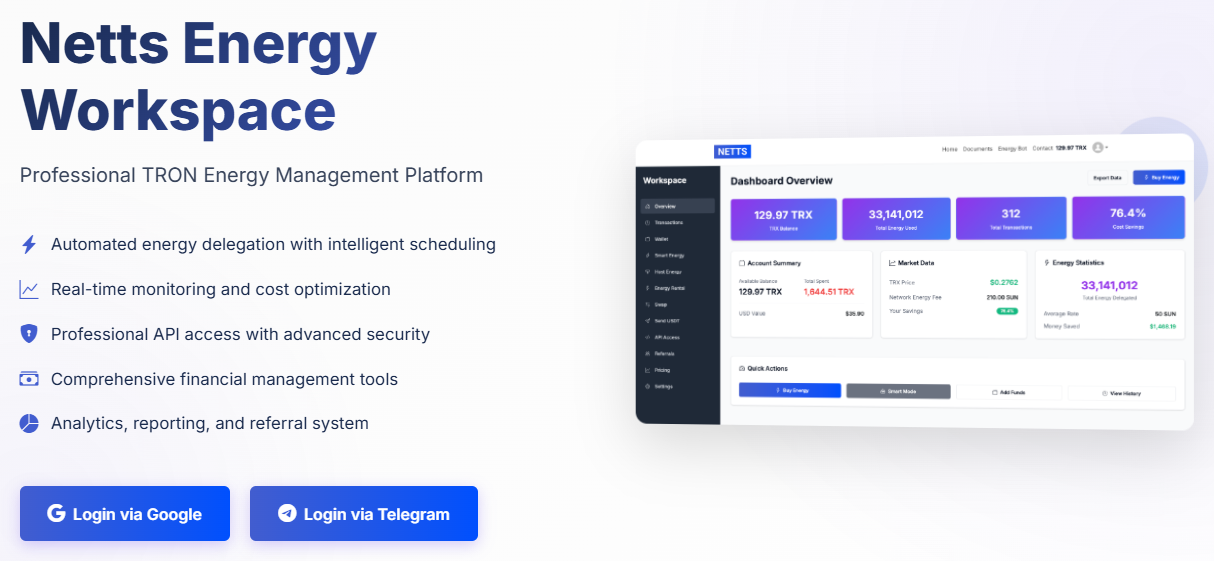
For members of the TRON ecosystem, however, reaching this level of impersonal professionalism and sleekness is simplified through special tools. Netts Workspace is a total solution of professional TRON Energy management dashboard, which has automated energy delegation including smart scheduling and real time monitoring to save your costs. With support for anything from manual rentals, through to automated modes and financial monitoring that allows you to operate your mining business with focus on blockchain infrastructure management, Netts lets you refine your energy decision making process based on data and logic rather than FOMO.