Crypto Millionaires - Who Are They?
Forgotten wallets, meme-coin bets, early evangelists, and trapped Mt. Gox coins — the real archetypes behind crypto’s accidental rich list.

Your average young person nowadays rises with a very particular, if not exactly universal, dream. That may not be a dream of toil, of long hours in a library or years spent climbing the corporate ladder one painful rung at a time. It is a vision of freedom, direct and total. Ask them what they really desire, and the straight-up answer often comes down to just easy money, and with no particular skills; without hard work or sacrificing their youth. They hope for a big lotto win, a lucky bet or some kind of enchanted investment that will turn pocket change into a fortune overnight. In such a world, where wages tend to stagnate and the cost of living relentlessly rises, the pull of an 11-figure “moonshot” is stronger than ever.
The old path — go to school, get a job, save 10 percent of your paycheck forever and retire at 65 with a gold watch — is dead for some, and dying for the rest of us. They want a shortcut. For most of human history, such a dream was just that: a dream — a delusion to be outgrown as you matured into the realities of the working world. But during the twenty-first century, a new frontier opened in which this delusion became a tangible reality for some fortunate individuals. This frontier is cryptocurrency.
To understand this dream you must understand the world that gave rise to it. 2009 was not only the year Bitcoin was born, but also a time when trust in traditional banking had been shattered by a global financial crisis. Into this maelstrom of mistrust, a digital alternative emerged. It was initially written off as a plaything for geeks, a currency for the black market or a pyramid scheme. But as the years passed, it soared in value, this digital “magic internet money,” defying gravity. It opened up a whole new class of wealth and had nothing to do with family names or elite education or corporate politics. It was wealth created by chaos, code and chance.
Accidental Millionaires
Let’s start with those who are living the dream: the unexpected millionaires. One of the most relatable stories of accidental wealth is that of Kristoffer Koch. It was 2009, and Koch was a college student in Norway researching encryption as part of his master’s thesis. Then, Bitcoin wasn’t a financial asset; it was an obscure experiment known only to a tiny number of “cypherpunks” and cryptography aficionados. Out of curiosity, Koch also then decided to purchase 5,000 Bitcoins for “lolz”, pretty much nothing – it worked out between $20-$27. It was money he could afford to lose — the price of a takeout dinner. He bought it and then promptly forgot about it. He went on with his life, landed a job and for four years he never gave much thought to his digital coins.
The world of 2009 was totally different; with no exchanges, wallets on phones or masses of international infrastructure, just pure code and forum posts. That was until 2013, when Bitcoin made national headlines for breaking the $1,000 barrier that he remembered his old wallet. And when he finally found his password and entered his account, he discovered that the 27 dollars he had invested had metastasized into hundreds of thousands of dollars. Today, that first purchase would be worth hundreds of millions. Koch didn't analyze the market. He didn't trade. He had merely purchased a lotto ticket that didn’t expire … lost, forgot to change the numbers until the jackpot was hit. His is the archetypal crypto fable: a forgotten treasure chest buried in the digital backyard.
And then there is the tale of Erik Finman. When he was just twelve years old in 2011, Finman placed a bet with his parents. He wanted them all to know that if he could turn his grandmother’s thousand dollar gift into a million dollars by the time he was eighteen, he wouldn’t have to go to school. It was the sort of bet that a child would make, full of bravado and naivety. But Finman purchased Bitcoin when it was worth about 12 dollars. He believed in it when hardly anybody else did — not because he was a financial mastermind, but because as a digital native, he saw the potential of internet money. He stuck with his coins through crashes and spikes, facing scorn both from teachers and peers. He’d won the bet by the time he turned eighteen. Before he could legally drink, he was a millionaire — not through a career but because of one pigheaded belief. His story has an irresistible appeal because it confirms the perennial, youthful desire — or at least intuition — to assume that the kids might actually be all right and know something the adults don’t. He didn’t found a company; he simply took a belief.
Another interesting category of ‘accidental millionaires’ are referred to as the “Mt. Gox Victims.” The world’s largest Bitcoin exchange, Mt. Gox, fell apart in 2014 after it was hacked. Thousands of depositors saw money in their accounts evaporate. This money had been tied up in bankruptcy court for a decade. This may have been a tragedy at the time, but it also had an unintended consequence: It made these users “HODL” (hold on for dear life) through numerous bull markets. They can’t sell even if they want to. By the time repayments started to become an actual concern in the mid-2020s, their Bitcoin was worth tens of thousands more than it had been when they were handed out. They did not get rich by being sharp traders but rather because they were held in the financial equivalent of a decade-long lockup due to corporate failure.
One of the more astonishing examples of luck combined with contemporary internet culture is Glauber Contessoto, better known as the “Dogecoin Millionaire.” Contessoto invested his life savings in 2021 into Dogecoin, a cryptocurrency literally backed by nothing but the joke it was made as. He didn’t do it for the technology; Dogecoin had no smart contracts, no development team and a practically limitless supply. He didn’t do it on the fundamentals. He did it because he loved the memes, and he believed in the hype promoted by Elon Musk, of Twitter fame. It was a risky bet that every financial adviser in the world would counsel against. But as the meme coin frenzy took off, his holdings’ value surged to more than two million dollars. His tale is the pinnacle of the “easy money” dream, one of striking it rich not by being smart but instead by simply being a part of a viral moment. It demonstrated the change in the market where community focus and sentiment became more important than technical utility.
There is a larger context to these tales. They took place at a time when the crypto landscape was desolate and misunderstood. In the early era, mining Bitcoin required no more than a home computer — and perhaps not even that. The challenge was low, and the payoff large for the population of slackers who took time to turn the software on. Skill-deficiency of this character was characteristic of this period. There were no blockchain development classes because there was hardly such thing as blockchain development. The gate to entry was curiosity, not ability. That enabled the likes of Regular Joe, student or gamer to amass assets that would later become very valuable, simply because they were one of the first to arrive at the party.
Visionaries and Early Adopters
But as the industry matured, the “dumb luck” approach grew less dependable. A new class of crypto millionaires sprang up. They weren’t just the luckiest lottery winners; they were early adopters who saw a potential jackpot and did some (realistically, not all that much) work to cash in on it. They didn’t buy and forget; they evangelized, invested with conviction and participated in the ecosystem.
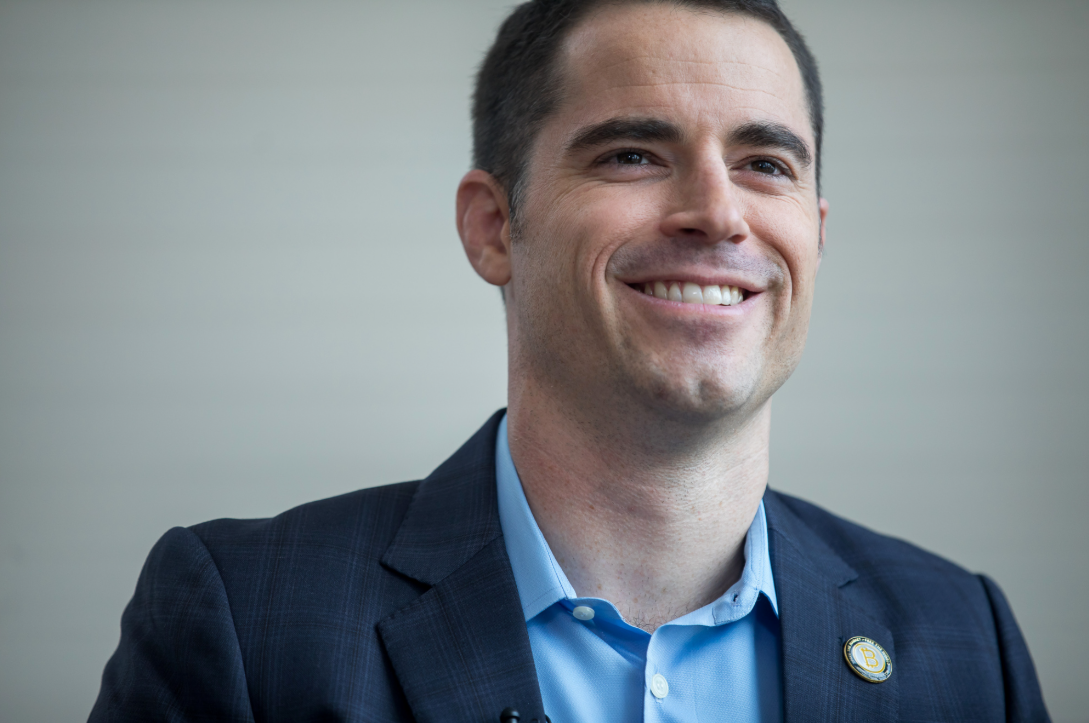
Consider Roger Ver, better known as “Bitcoin Jesus.” Before Bitcoin, Ver was already a successful entrepreneur — but it was his relentless advocacy that transformed him into a crypto-wealthy investor.
He didn’t just buy Bitcoin; he promoted it. He traveled the world speaking at conferences, persuading merchants to take it and funding the first crypto wave of startups. He put money in companies such as BitInstant, Ripple and Kraken when they were at the idea stage sketched out on a napkin. Early on, he understood that for his investment to succeed, the ecosystem had to flourish. It wasn’t necessarily work with code, but it was the sort of work of persuasion and capital allocation. He bet on the infrastructure before there was any, and that bet paid off hugely. His millions were a payoff for envisioning the future and aiding in pushing it into being.
Another case is that of the Winklevoss twins, Cameron and Tyler. Best known for their legal fight over the creation of Facebook, they used some of their settlement money to place a huge bet on Bitcoin in 2013, snapping up almost 1 percent of the entire supply. But they didn't stop there. They understood that for crypto to go mainstream, it needed a regulated, safe place. They worked on creating the Gemini exchange, through the thicket of New York state regulations. Their riches came not just from price appreciation, but from their effort to legitimize the asset class. They were the bridge between the wild-west days of Silk Road and its institutional acceptance now. Silicon Valley VCs spit in their face by rejecting them over and over for thinking crypto was a scam, but they refused to back down and showed that conviction can be as valuable as coding skills.
And there is the tale of Charlie Shrem, a pioneer of Bitcoin in New York. He co-founded BitInstant — a company that expanded the market for people who wanted to buy bitcoins at a time when it was notoriously difficult to do so. Shrem was more than an investor; he was a facilitator. He did that thing: solving the friction of the early market. Though his path was turbulent, involving legal problems and prison sentences, his early entree and equity in the space have cemented his place in crypto lore. His story is the great middle path: he didn’t just hold, he attempted to build a business, even if it was a rocky road. He is a stand-in for the chaotic, move-fast-and-break-things energy of the early 2010s.
Jihan Wu is another end of the moderate to hard work spectrum. When Wu saw that Bitcoin mining was moving away from hobbyist laptops to giant rigs at a much different scale, he teamed up with Micree Zhan to launch Bitmain — which manufactures ASIC (application-specific integrated circuit) mining chips. No, he didn’t create Bitcoin, but he found a better way to mine it than anyone else. He made his fortune selling the shovels during the gold rush. His novelty was recognizing what the bottleneck of the ecosystem — efficient hash rate — was, and filling it with a physical product.
One of the most legendary venture capitalists, Tim Draper is also in this vein. When the US Marshals Services sold the Bitcoins it had confiscated from the Silk Road marketplace, most institutional investors avoided bidding (according to some accounts out of fear of legal liabilities or simply because of concerns over being called "drug money"). But they were selling the asset at a bargain, Draper perceived. He purchased all nearly 30,000 Bitcoins. It was a contrarian bet that required the fortitude to go against the consensus of his peers. He didn’t write the code, but he added the liquidity and legitimacy that the market so desperately needed at a vulnerable time.
The Empire Builders
Finally, we have to consider the third category of crypto millionaires. These are guys who break the myth of “easy money.” They are a testament to the fact that lasting success in this business, every bit as any other, is more often than not borne of grueling labor, heady risk and many, many nights without sleep. It wasn’t that they stumbled into millions; it’s that they built empires.
This archetype is embodied in Changpeng Zhao, who has come to be internationally recognized as CZ. CZ was not a billionaire before Binance. He was a developer who had built trading systems for traditional stock exchanges.
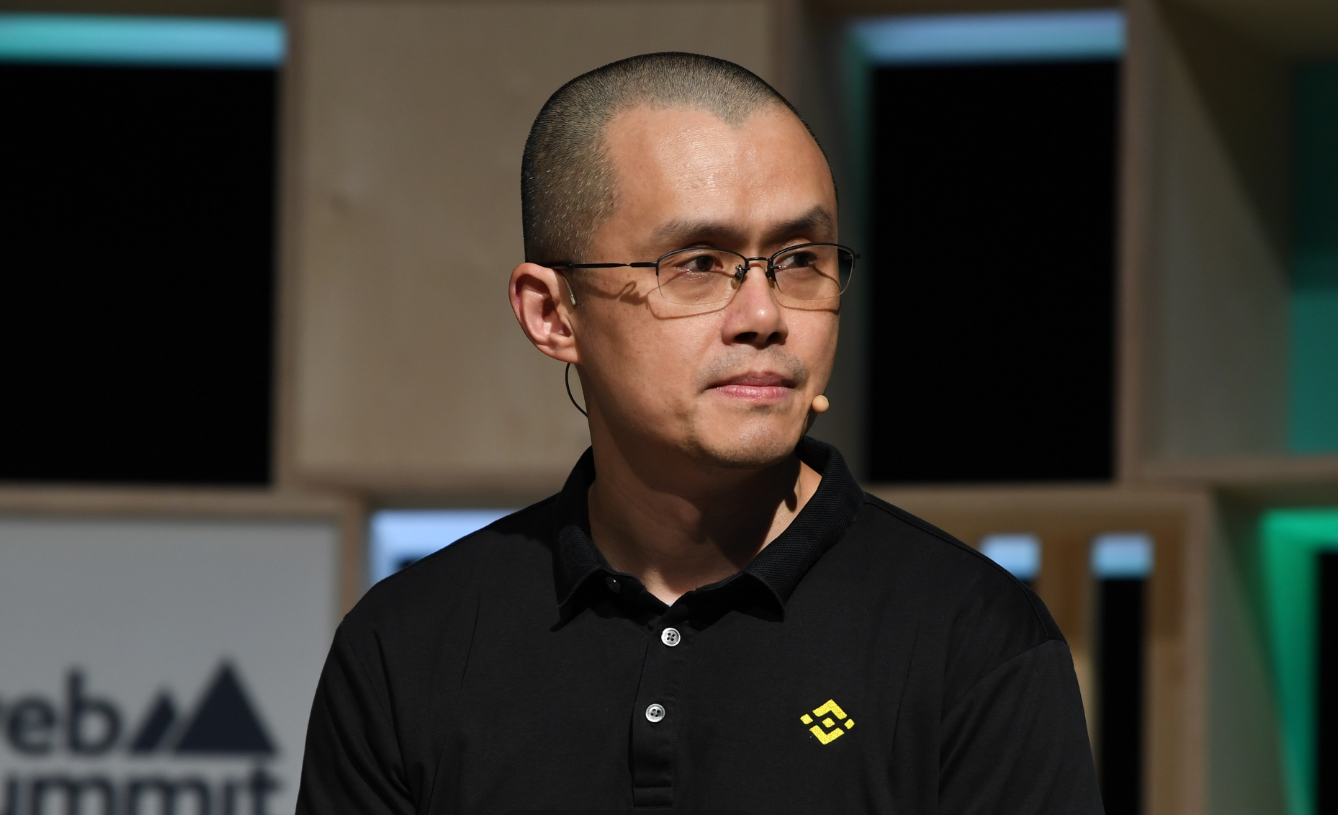
He sold his apartment and invested all of his savings in cryptocurrencies, a deeply dangerous move that left him without a home and with an extremely volatile asset. The market was already chock-full of established players when he started Binance in 2017. But through sheer speed of execution and a hyperfocus on the customer experience, he turned Binance into the world’s biggest cryptocurrency exchange in less than a year. CZ didn't just get lucky. He worked almost every waking minute. He ran a global team working in time zones around the world, traversed a minefield of changing regulations in dozens of jurisdictions, and constantly innovated with new products. His wealth is a testament to the alchemy of shipping code and solving problems at scale. He was sleeping in his office, taking meetings at 3 a.m. and had built a platform that could process millions of transactions per second.
At the head of this class is Vitalik Buterin who embodies the visionary of all visionaries. As a high schooler he co-founded Bitcoin Magazine, yet not long after that he was convinced the very design of Bitcoin was too limited for the applications in which he believed. He left university to be a co-founder for Ethereum, which was billed as a “world computer” that could run smart contracts. This was not a cut-and-paste job; it was a radical reimagining of what blockchain could do. He globe-trotted, sleeping on couches, coding furiously and rallying a community of developers. The launch of Ethereum in 2015 gave life to the entire decentralized finance (DeFi) and NFT ecosystems. His billions are not just a hoard of coins but a measure of the tremendous value his platform has created for people around the planet. He had steered the network through some of its most gnarled technical updates, addressing what was popularly known as the “scalability trilemma.”
Brian Armstrong, Coinbase’s CEO, has another view of hard work. Where CZ moved fast and broke things, Armstrong took the hard road of compliance. He dreamed of building a crypto company that operated within the US regulatory system, a task critics said was impossible. He forged relationships with banks and regulators over years, battling skepticism and bureaucratic obstacles. He created a simple interface that was as easy for grandmothers to purchase Bitcoin on it as books on Amazon. He made his billions by solving the hardest problem in crypto: trust. He elevated a hacker obsession into a publicly traded company on the Nasdaq. His work was less about code and more about corporate strategy and regulatory navigation, demonstrating that professionalism is possible in the wild crypto west.
Michael Saylor — who appears lower on this list than he might have before 2021, but whose story is one of incredible strategic pivots. The CEO of a boring enterprise software company called MicroStrategy, he read the writing on the wall for fiat currency inflation. He didn’t simply make a personal purchase but refashioned his entire public company into a so-called Bitcoin treasury. This involved persuading a skeptical board of directors, negotiating securities laws and selling his vision to thousands of suspicious shareholders. He transformed his company into a mechanism for institutional adoption of Bitcoin, borrowing billions to buy more coins. It was a high-stakes corporate maneuver that took nerves of steel and intellectual conviction. He put in thousands of hours studying monetary history and Austrian economics to make his case.
And then there are the builders of the decentralized finance (DeFi) universe, including Hayden Adams, who is responsible for Uniswap. Adams, a mechanical engineer who learned to code after losing a job. He had spent months coding in isolation to create a decentralized exchange protocol. He didn’t have a major team or big money. He had a laptop and an idea. He would write the code that ultimately processed trillions of dollars in volume. His success wasn’t just the result of buying a token and waiting; it was about building utility the world didn’t know it needed. He solved the liquidity problem in a decentralized manner by developing the Automated Market Maker model that powers much of DeFi today.
The likes of Gavin Wood, a co-founder of Ethereum and inventor of Polkadot, someone whose intellectual work is easily of the highest caliber.

He is the author of the “Yellow Paper” for Ethereum, its technical specification, which made the network and this currency possible. He created the Solidity programming language, which is used to write nearly all smart contracts today. His fortune is derived entirely from his success at doing some really hard computer science. He didn’t just invest in the future; he wrote the language it speaks.
The co-founders of Polygon and Sandeep Nailwal demonstrated another type of hard work — the work to scale up. But when Ethereum grew too expensive, and slow, because of its own popularity, they weren’t just making a fuss. They created a Layer 2 scaling solution. That meant solving some tough engineering problems, and building a huge ecosystem of developers and partners. Their work helped turn crypto from an obscure experiment into a platform that could potentially support millions.
The context for these toilers matters. They came of age not during the “easy” days when people were mining on their laptop but during the periods of intense competition and regulatory scrutiny. They did so because they solved hard problems. They supplied liquidity, they guaranteed security, they furnished education. Their art made the industry go from a niche curiosity to a global asset class. They demonstrated that luck can make you rich, but only hard work will leave a legacy.
That these fortunes were made in very particular technical niches is also worth mentioning. The early miners, in other words, had a sparse network to mine and secure easily. The 2017 I.C.O. boom was a way for the Winklevoss twins and others to use their capital. The DeFi summer of 2020 brought opportunities for builders like Hayden Adams. And the recent cycles have been marked by infrastructure plays, in which fortunes are made not just from the assets themselves but also from the rails they run on.
Era of Optimization
That is how we have evolved to this now time; the year 2026. Gone are the days when you could mine Bitcoin on your home computer. It’s efficient, packed and institutionally dominated. The “easy money” fantasy has never been more elusive. Nevertheless, the industry still leaves a career path open for anyone who knows how to build it while everyone else stares not in lottery tickets of meme coins but at the utility of what’s being engineered. We’ve moved from the land of speculation to that of optimization.
With growth of the ecosystem, new economies are forming in it. Rather we are witnessing the emergence of resource markets, in which digital commodities have parity with oil or gold. People are starting to realize the value of things like bandwidth and energy on a blockchain network. Strategies for renting Energy are now a topic, and strategic to some extent for users seeking to maximize their activities. The idea of Energy and Bandwidth as swappable commodities across a network like TRON is an excellent example of this maturing. It suggests a shift of industries from the phase of mere speculation to that of practical application. It’s no longer the case that users merely “hold tokens” — they are interacting with increasingly complex protocols, which require them to manage their resources.
The stories of the millionaires we have met, from the fortunate Norwegian student to the unstoppable exchange builder, form a complex image. They demonstrate that there is no one route to riches in crypto. For others, it was a bolt of lightning. For others, it was a slow, deliberate climb. But the common theme, especially for those who retained their wealth, proved to be in a sense an understanding of the technology and being willing to evolve. The lucky millionaires usually squandered their fortune almost as fast as they had gained it on scams or bad trades. The builders and strategic investors, however, tended to get rich over time.
Lessons for the Future
This takes us to the final lesson of the crypto millionaires. The idea of "instant riches with no skills or effort" is hard to resist and characters like Kristoffer Koch help to perpetuate that dream. But for all its large-scale appeal, that very dream is a plan to fail. The real winners in this space are the ones that understood crypto is not simply a casino, it is a technical revolution. They respected the underlying mechanics. They knew that value is use-value. Whether it was Roger Ver evangelizing the currency, CZ building the exchange, Hayden Adams writing the protocol, they all added some value to this ecosystem.
Even in the age of mature markets and institutional giants, there is still room for participation that doesn’t require billions of dollars or a team of developers. There are tools and services helping the everyday user get around in this complex world a little faster. After all, efficiency is one form of wealth. Saving a few dollars on transaction fees, reducing the friction when making transfers and unlocking new dimensions of network resources are in 2026 what building mining rigs once was — easy ways to get ahead.
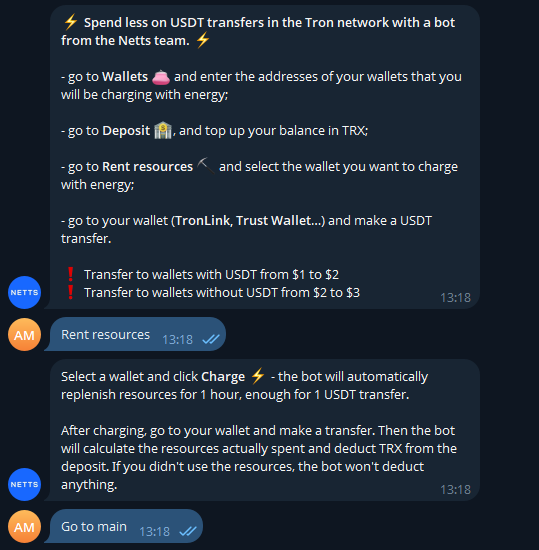
Especially for users of TRON’s ecosystem, dealing with gas fees is a fact of life. That’s where the Netts Energy Charge Bot comes in. This enables users to rent resources efficiently. All you need to do is choose a wallet then click "Charge" and the bot recharges your Energy and Bandwidth for 1 hour, this is enough for any transfer of USDT. Let the transaction complete and afterward the bot determines the actually spent resources and subtracts the corresponding TRX from your deposit accordingly if you didn’t use anything, nothing is taken. It’s a smart and efficient approach to renting energy without the waste, evidence that in 2026, the smartest money is often also the most efficient money.