Energy Whales: Largest Holders on TRON and their Effect on the Energy Market
Large holders — what have come to be known as “Energy whales” — are now taking up a huge proportion of the staked TRX and so the Energy on offer.
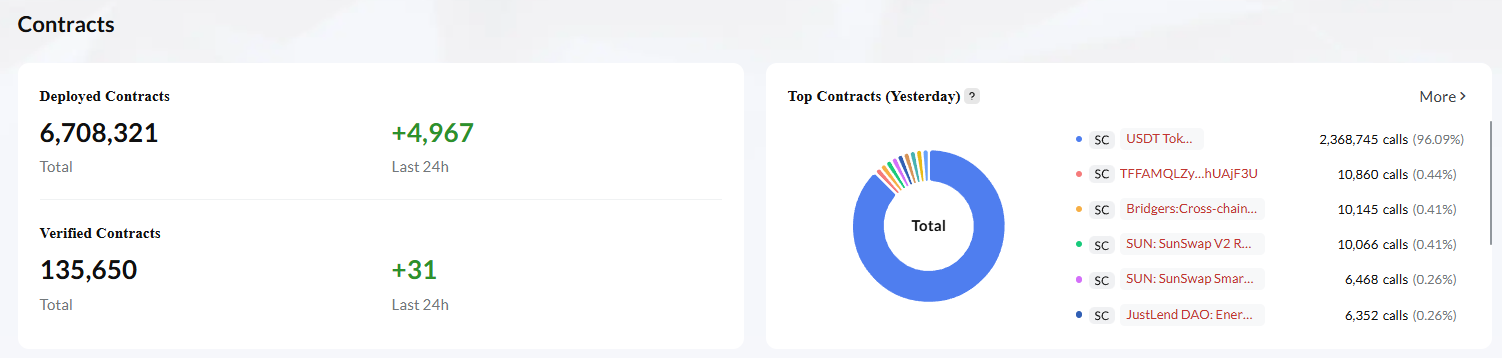
Launched in 2017, TRON is a decentralized platform that is capable of high throughput and has the potential to become a major player in the blockchain space by offering a platform for decentralized applications (dApps) and smart contracts. TRON is popular for its native resource management system, and Energy is one of its types; you need this resource for executing smart contracts and some transactions on the TRON network. TRX tokens allow users to get Energy by staking (freezing) them, and in return, they will receive a share of Energy and Bandwidth. With this system, as long as users possess enough resources, these transactions do not belong to the traditional fee system.
Nevertheless, freezing your TRX is not something every user wants to do, and some even want more Energy than they have. To solve this, TRON built a solid Energy rental market. Here, users can rent Energy from other accounts who have staked their TRX to be able to charge a fee for temporary use of the resource. It creates flexibility and lowers costs, particularly benefiting those in need of temporary transaction capacity increases, or any dApp which demands a steady Energy supply. It is simply a 3-step process: Users indicate how much Energy they want to have access to, select a provider, and pay for the rental time, which is typically hourly or daily. These platforms, including the TRON Energy Market, pool together offers from many suppliers so that consumers can always find the best available rates and terms.
TRON Energy Market in its Perfect State
If this were not the case, the TRON Energy rental market would be in a perfectly balanced supply-and-demand situation. Those energy providers — anyone who stakes TRX — provide Energy, which is sold to renters at a low, stable price, keeping transaction costs low and predictable. Balancing this process pushes more users to the network, resulting in a prosperous and innovative TRON ecosystem.
In a healthy Energy rental market we want to see:
1. Low costs — because having a variety of Energy providers means no monopoly to drive prices up, leading to cheaper prices for the users.
2. Accessibility — users can rent Energy as needed, without shortages or overpriced tariffs.
3. Transparency — which provides users with know-how on Energy availability and pricing, so they can act with knowledge.
4. Convenience — renting Energy with escrow is easy and can be completed quickly and efficiently.
This type of market dynamic encourages innovation and growth, further pulling in new users and developers to the platform. The predictability and manageability of resource costs are also essential for consumer and enterprise applications, as they back decentralized application development as well. In the perfect scenario, the energy market within TRON is completely decentralized; everyone can be a part of an open and equal ecosystem.
Today: Enter the Energy Whales
Although the TRON Energy Market was intended to be open and competitive, the fact is that large holders — what have come to be known as “Energy whales” — are now taking up a huge proportion of the staked TRX and so the Energy on offer. These whales are often large investors, institutions, or early adopters of TRX, who have accumulated tons of assets over the years. Their power relatively translates to a significant impact over the supply and price of Energy on the network.
Energy whales tend to disrupt the maximum efficiency of the marketplace in numerous ways. If a few whales control the supply, they can set rents higher and reduce the affordability of Energy access for median users. It can raise transaction costs and discourage smaller players from growing. Whales can also decide to not sell some Energy, creating an artificial shortage on the market and pushing prices even higher. And whale behavior also creates volatility because any little change in its Energy availability can create abrupt spikes and drops in rental prices.
While these things can make an adverse impact on the ecosystem, it is essential to understand whales are not a bad thing for the ecosystem. The massive scale at which they participate provides liquidity and stability, and their investments reflect a level of confidence in the TRON network. In fact, established whales have been known to bring in new users and investors alike; their presence serves as a beacon of safety and longevity. More users follow the “big boys” and think that TRON might be a good platform since somebody has invested in it heavily. Whales also tend to have the capital to think beyond their own narrow profit and loss and create new products and build out an ecosystem in ways smaller participants are unable to do.
Recent Changes in the Market
Over the past 12 months, the amount of energy consumed daily on the TRON network has more than doubled, increasing from 77 billion to 200 billion-plus energy used per day. Most of this growth is due to the great growth of smart contract activity — it now occupies about 60% of all network transactions. Meanwhile, the volume of new tokens has come to a head, amplifying the Energy need from platforms such as SunPump, which enabled thousands of meme coins to be created in months.
To accommodate this rising demand, the TRON community voted through a proposal at the end of 2024 to raise the overall energy supply to 150 billion units. This change was made to enable more positive scalability of the network during its growth and to facilitate the proper functioning of dApps. All of these ecosystem expansions have also resulted in new energy renting platforms such as PowerSun. We also have VIP, which helps higher average transaction volumes and gives users more flexibility in getting Energy without a large TRX stake.
With over 1.45 million delegations processed daily and total volume exceeding 310 billion Energy in the last 24 hours, the market is more competitive and more kinetic now. Unit rental from all providers is an average price of ~72 SUN of Energy (per unit), but good providers such as Netts.io, CatFee, SoHu, and Trongas always provide rates lower than 50 SUN. These platforms have established themselves as top producers in the TRON Energy Market, with large pools of frozen TRX and significant power over the direction of Energy resources along with JustLendDAO and ITRX.
Decentralization Efforts and Community Initiatives
Due to the prevalent behavior of Energy whales, the TRON community and network have taken a step to create a healthier and fairer market. To tackle the centralization issues and drive wider participation, there have been multiple approaches implemented or suggested:
1. Additional rewards or reduced fees to incentivize smaller providers so that more stakeholders will stake TRX and contribute to the Energy supply.
2. Setting limits or a framework that will stop an individual business from controlling the market.
3. Improved transparency via audits, live reports and open data on Energy availability and prices.
4. Enabling things through decentralized platforms and DAOs — both the TronNRG DAO and Safeheron DAO — to facilitate collective power in the renting of Energy and allow the community to select where the resources go.
5. Educational campaigns to show the benefits of the Energy market for users, expanding the renter and provider base even further.
Now, those efforts are starting to pay off, with more and more small- and mid-sized providers getting into the game. More recently, the emergence of community DAOs has enabled the user base to have a greater say in resource allocation, fee allocation, and greater transparency and inclusivity overall.
Notable Energy Providers and Whales
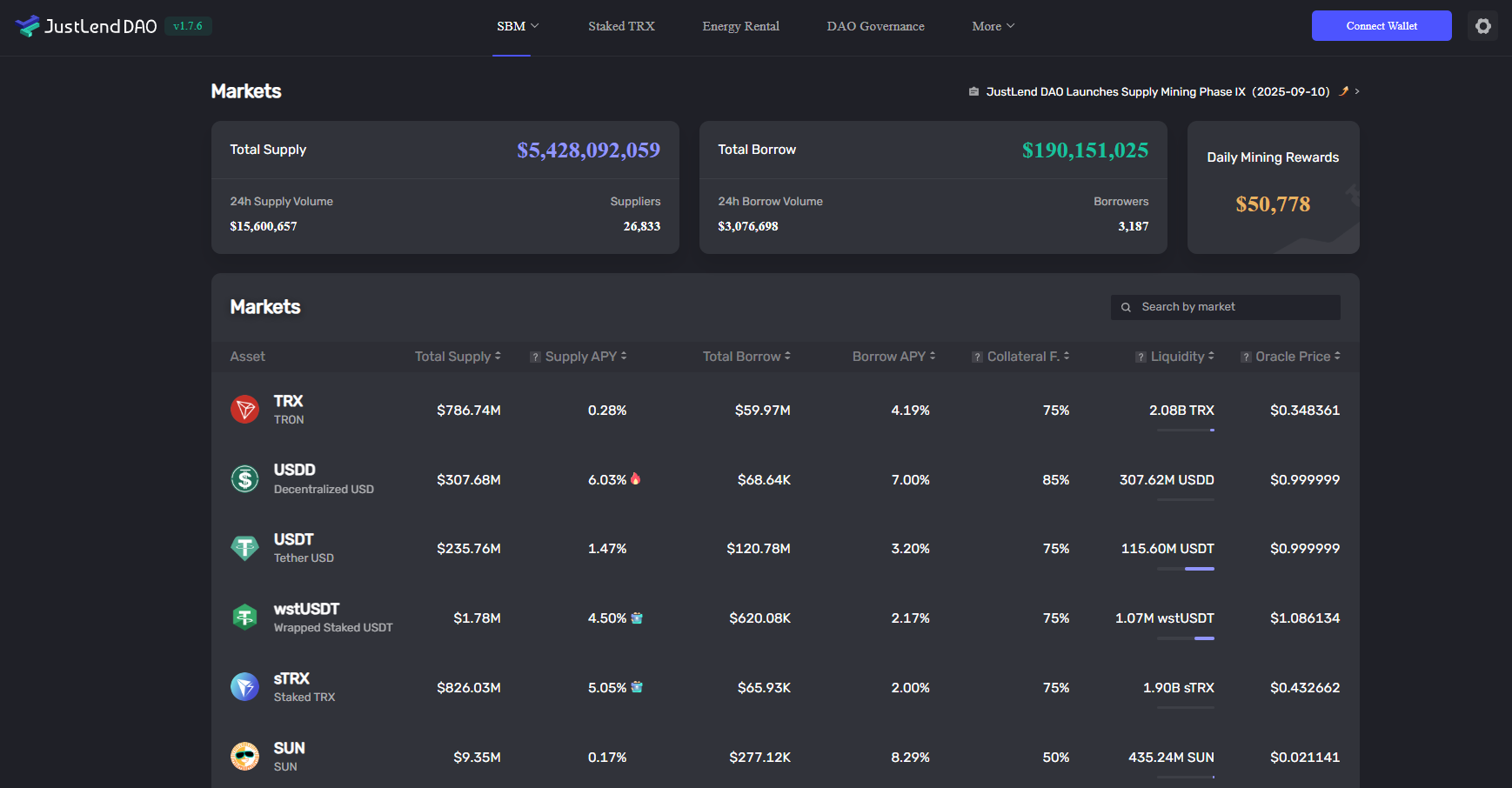
There are multiple platforms/individuals that have leveled up in the Energy rental space. Some of the biggest providers include, but are not limited to: Netts, CatFee, SoHu, Trongas, JustLendDAO, and ITRX, with large piles of TRX frozen up by each and a significant amount of the total Energy supply attributed to such actors. Other decentralized enablers such as TronNRG and Safeheron are getting popular, providing innovative service models of an open-source share of rental fees to the community or a pay-as-you-go model. While these providers are essential for liquidity and stability, they are also a reminder of the ongoing work to ensure a healthy market structure and participant balance.
While it is important not to totally take the view of Energy whales, their consolidation may drive up value and decrease competition, but they also bring liquidity and stability to the marketspace. The confidence in the network that their investments in TRON signal can lure new users and developers. Additionally, whales usually have the means and the know-how to innovate, create new solutions, and sustain the ecosystem in ways that smaller actors cannot. Whales can also help insulate the market from rapid shock, providing a measure of stability in times of excessive demand or periods of high volatility.
However, the concentration of power in one specific layer can act against the decentralized ethos behind blockchain technology. As a result, it can narrow the barrier of entry for new participants and inflate the potential for price manipulation. Maintaining a good balance between these large and small participants is a key aspect of the TRON ecosystem and must take place to foster continued growth and to attract new users to TRON. Community initiatives, regulatory tweaks, and new platforms are a positive start, but we need to stay vigilant against previous monopoly behaviors returning.
A Look Ahead: Continuing Expansion and Decentralization
Moving forwards, the TRON Energy Market is set to enter the next stage of evolution. As dApps keep growing, as new tokens keep being generated, and as smart contracts become more complex, the demand for Energy will remain high. The network will need to ensure that this demand is fulfilled equitably, efficiently, and sustainably. All signs point towards a more decentralized and resilient market, with the total energy supply expanding, new rental platforms emerging, and community DAOs gaining influence.
And yet, the contribution from whales will still be critical. We shall not underestimate their ability to provide large volumes of liquidity and support the stability of the network. Nevertheless, keep an eye on their influence so that it does not suffocate competition or subvert the essence of decentralization. This colorful and varied marketplace helps ensure TRON pulls in more users, developers, and investors, establishing itself as a predominant power in the blockchain realm.
Netts TRON Energy Market: A New, Smarter Way of Renting Energy
The Netts TRON Energy Market is a best-in-class solution for users that want to rent Energy on TRON. Netts aggregates the offers of more than 20 well-known partners such as CatFee, SoHu, Trongas, JustLendDAO, etc., ensuring that the lowest price on the market is constantly offered. Whether you are an occasional user or an organization requiring Energy in larger quantities, real-time price comparison ensures that you find the best rates for your needs.
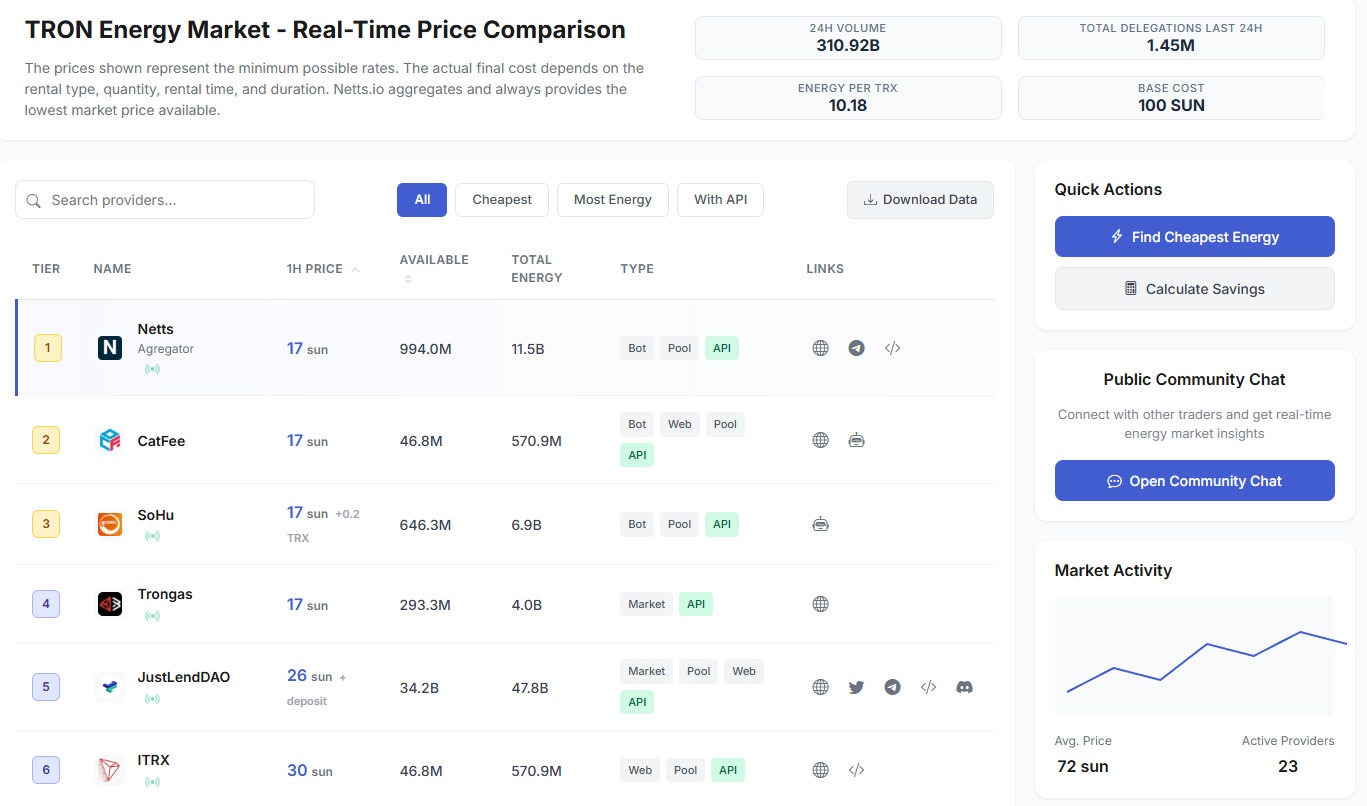
Other than that, there are even some advanced features like API integration, instant delivery, rental options with flexibility in time spans for rental, and volume discounts on the Netts platform. Netts is a strong player in the TRON Energy Market, running over 310 Billion Energy per day with over 1.45 Million delegations processed every 24 hours. It enables energy rentals to become more easily accessible, transparent, and cost-effective, ensuring the TRON ecosystem remains open and competitive to all participants, big and small.