Enemies of Crypto: In the Way of Progress
Banks, regulators, headlines, CBDC plans, and global bodies — the villain roster crypto culture loves to hate and the power plays behind it.
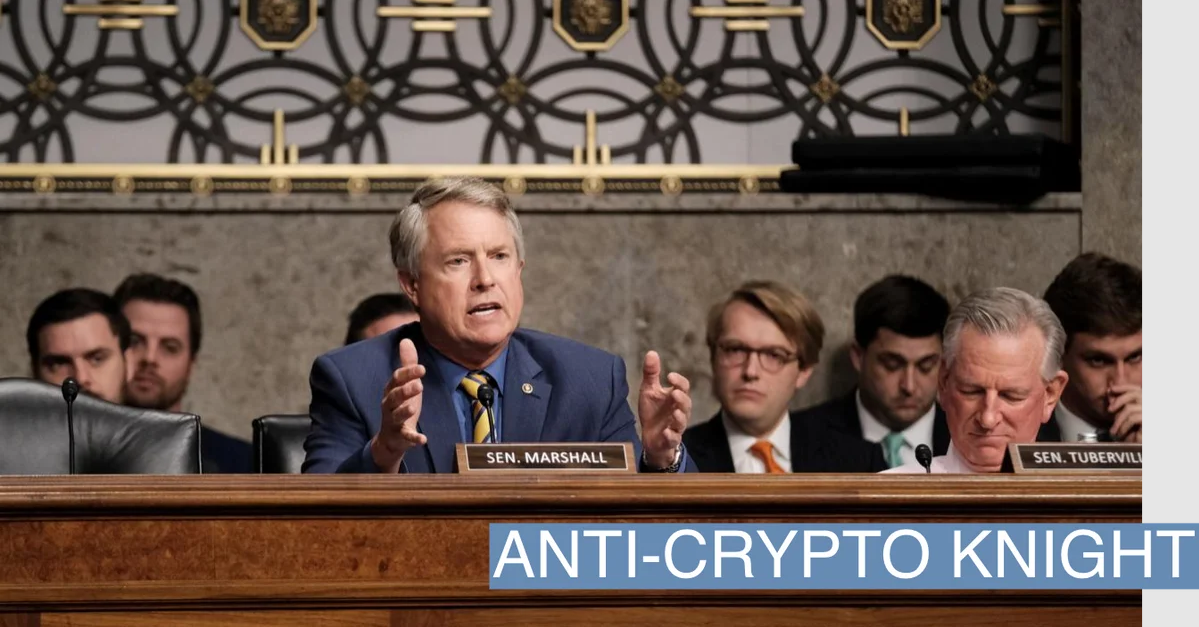
The cryptocurrency community is frequently guilty of a pernicious, intoxicating form of optimism. We go to glamourous conferences in Dubai, Singapore, Miami; we send each other memes about “going to the moon”; and every minor legal victory against the old financial system is celebrated as if the war were over. There is an all-present air of quasi-religious inevitability, that technology will outpace bureaucracies, that code is law and that the old guard — the bankers, the regulators, politicians — are too dumb, too slow and too archaic to put up a fight against the tidal wave of decentralized finance. This is a comforting lie we tell ourselves so we can sleep at night.
The truth is far more grim, far more complicated and far more dangerous. We are not fighting back against some pissy whiners in a handful of commercial banks or crotchety old incumbent payment network; we are challenging the single most power construct in human history – sovereign money monopoly. This system is a leviathan that has been honing the craft of control for centuries. It’s a monster of control, regulation, wealth and force, and it was not asleep while we commenced building our blockchains. It has been observing, learning and getting ready.
And now the world on which this power has been built is genuinely losing its dominance as the cockpit of global economic decision-making, and it’s belatedly awakening to start a war. The history of technology (and, one imagines, railway trains) is littered with the corpses of those which threatened the status quo before they themselves were able to defend themselves. The financial empire is spoiling for a fight, and it has the weapons to fight: millions of dollars. To comprehend the battlefield, we have to examine the generals of the enemy army — those opposed to progress for a free financial future.
The Regulatory Hammer
The No. 1, the most strident enemy of all, is what we'll call the regulatory hammer — best exemplified by organizations such as America’s SEC and its peers in Europe and Asia. For years, the pace of these bodies has been one of calculated ambiguity and “regulation by enforcement.” But rather than create clear rules of the road that would have allowed innovation to thrive, they took a path of chaotic retribution.
They claim to be doing so in order to “protect investors,” but the truth that they would rather hide is that this effort is nothing more than a harebrained attempt to stuff a new, liquid, global technology down the round hole of century old legislation designed for orange groves and railroads. The SEC and its counterparts are not just referees, they are gatekeepers for the incumbent financial system, and staffed largely by personnel who revolve in and out of the very mega-banks they are intended to oversee. Their resources are essentially unlimited — taxpayer-funded legal teams that can grapple with a startup in court for years, until the money runs out.
This plays out in the non-stop lawsuits against major exchanges and projects calling everything under the sun a security to subject it to their stifling regulation. By not doing so (clarifying how to legally do a USDT transfer, or launch the next token without getting sued) they create a chilling effect where only the biggest most compliant (and often compromised) players can play. They’ve already imposed billions of dollars in fines and chased good companies out of the country — now they’re likely to take it a step further and go after the very interfaces and developers that underpin decentralized protocols, suggesting that writing open-source code is akin to operating an unlicensed securities exchange. They seek to fashion a world in which you must ask permission to innovate, which they have no interest in granting.
The Banking Cartel
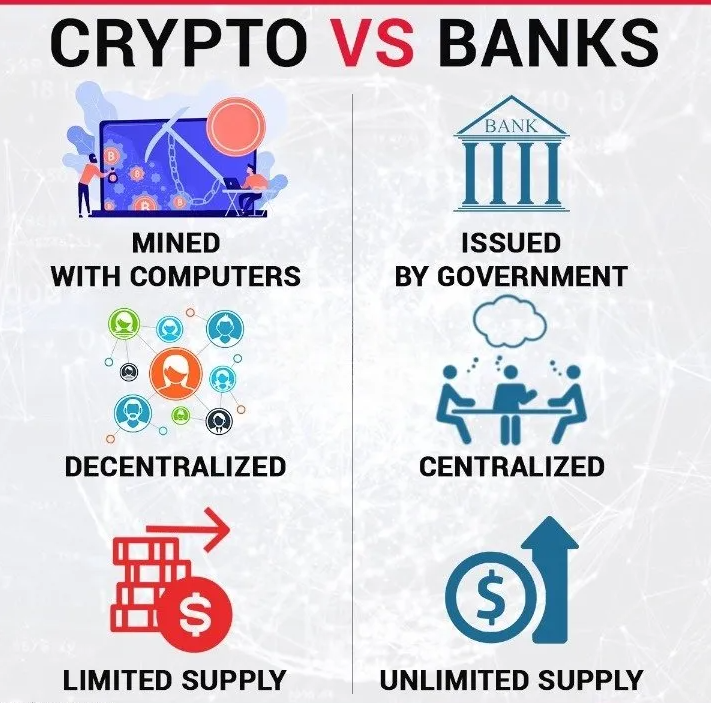
The banking cartel is the heavy artillery and the regulators are foot soldiers. The cryptoeconomy and the traditional banking sector have long had a strained relationship, but now we're seeing more coordinated push and pull being made around cutting off the lifeblood to digital assets from fiat realms. And this — whispered about as Operation Choke Point 2.0 — is the banking industry’s immune response to a foreign pathogen. Banks know better than anyone that if there is crypto adoption, their business model of extracting rent from every transaction ceases to exist. Why would anyone pay a wire fee and wait three days when they can send USDT around the world in seconds at a fraction of the cost?
Here, the motivation is nothing more than raw survival and a baseless greed. The banks have the trump door card: access to the payment rails. Without a bank account, this is the necessary implication that a crypto exchange can’t take customer funds. A Web3 start-up cannot pay its employees or rent servers without a gateway. We’ve watched big banks abruptly shut down the accounts of crypto founders and businesses with no explanation, only to cite “risk appetite” while laundering money for cartels and oligarchs. We have heard of credit card processors denying transactions to crypto platforms.
What they’re probably going to do next is even more insidious: try to co-opt the technology. We already see JP Morgan and others building “private blockchains” and tokenized deposits. They’re seeking to have the efficiency of the tech without losing any liberatory possibilities. They want to smash the open, permissionless networks and replace them with walled gardens where they still take the tolls and decide who gets to play. They are fighting to make sure the future of finance is just like the past, while using a faster database that they own.
The Political Architect
Then there is the political architect — their kith & kin consists of a few politicians who build their entire thesis on an anti-crypto campaign. Politicians in the US Senate and the European Parliament have rallied behind "anti-money laundering" (AML) and "national security" to push for draconian surveillance. Their perspective is one of power; they see an unregulated, private financial system as a menace to state sovereignty. Without the ability to freeze your assets, the government does not have power over you. The underlying rationale of the “Anti-Crypto Army” is that they are doing nothing more than upholding their panopticon; they want to be able to monitor and approve every single economic interaction a citizen makes.
Their tools are the legislative pen and the bully pulpit. They’ve already passed bills like the Corporate Transparency Act and its onerous reporting requirements that, in practice, will be almost impossible to meet for most decentralized entities. They've painted privacy developers as criminals, telling you that the right to financial privacy is a disguise for terrorists and drug dealers. Their next act is to promote laws that would effectively outlaw self-custody wallets, obliging everyone to keep their keys with a regulated (and surveilled) custodian. They will use any crisis, any scam and any shady deal as excuse to ratchet up the noose, never mind that cash is to this day still crime’s preferred instrument of choice by a wide wide margin. They are fighting for a world in which financial privacy has been consigned to the dust-heap of history, and they’re not going to rest until every last Satoshi is monitored and sold out.
The Media Machine
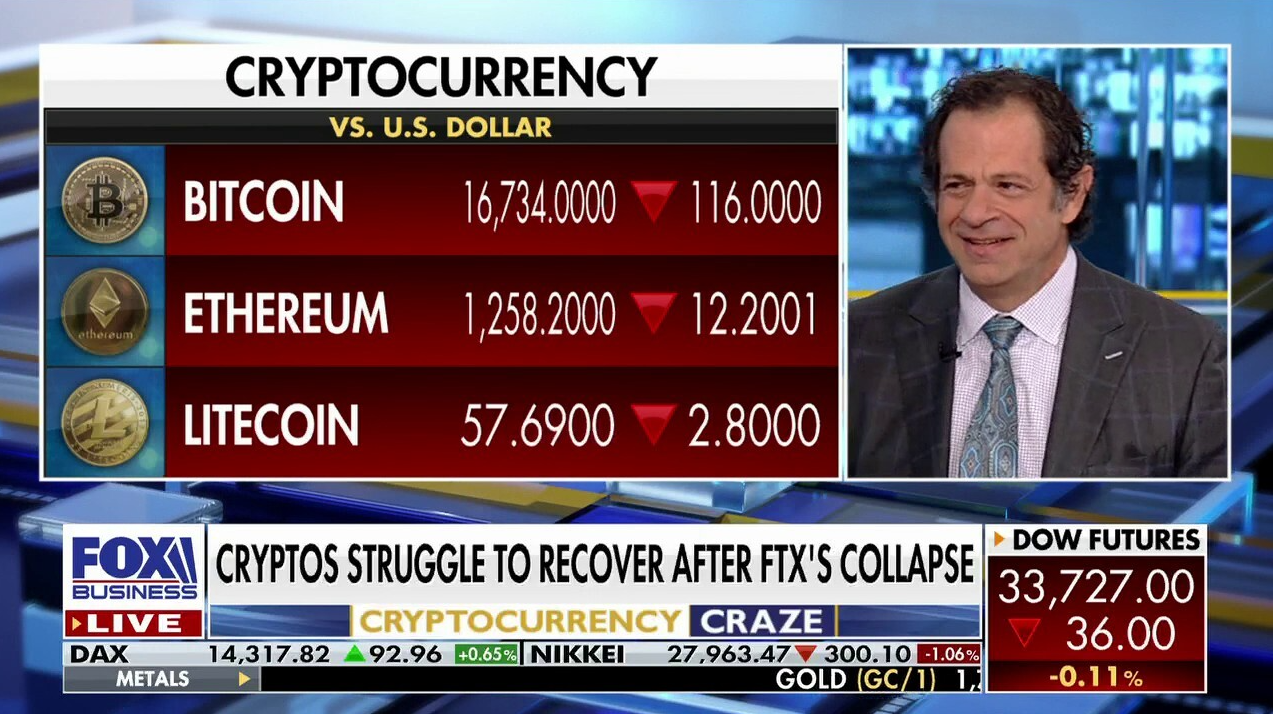
And, there’s a stealthier and no less hostile enemy out there too – the media machine. Mainstream media itself is not a regulator or bank but plays as the propaganda extension of the establishment. Hamstringing crypto in the court of public opinion is nonstop narrative warfare. The newspaper headlines every scam; and is silent on every techno breakthrough. There are two reasons behind this: Sensationalism makes a lot of money in terms of ads, and owners of these media corporations often have close ties to the traditional financial industry.
They define the public narrative, portraying crypto as a lawless wasteland of hackers and speculators. This is what generates the “political will” for heavy-handed regulation. When the average citizen equates "sending USDT" with supporting child pornography, they celebrate that government will be stepping in to "ban Bitcoin."
Media is quick to scream grapevine about “Energy” usage of Proof-of-Work chains, but steers clear of the very real carbon utilisation by the traditional banking system (think bank-headoffices, which mint more money on theme than any crypto-currencies by orders of magnitude). They structure the conversation so it is impossible to defend yourself. And we’re likely to see this information war escalate in the years ahead. Deepfakes and AI-generated content continue to saturate the internet, with media positioning itself as the "arbiter of truth," polarizing from the decentralized mantra — “verify, don’t trust.” They are the factory of consent regulators need to do something.
The Final Boss: CBDC
The most menacing “Final Boss” in this game perhaps is the Central Bank Digital Currency (CBDC). This is not an enemy, this is a state trying to steal fire from the gods. Central banks around the world, from the ECB to the Fed to PBoC are working toward their own digital currencies. Don’t let that fool you: Those are not cryptocurrencies. They are the exact opposite. A CBDC is a centralized, programmable, surveillance-founded currency in which the issuer has absolute power over the user. The motive is complete domination of monetary policy and consumer behavior.
With a CBDC, a central bank would in theory be able to program money on whether it expires if not spent (to encourage people to use the economy), whether you can’t use it to buy certain items (meat or fuel) and could instantly freeze the wallets of political dissidents with the push of a button. This is the system’s response to Bitcoin. They possess the ultimate resource: the monopoly of legal tender. They’ve already started their pilots, and thereby slowly conditioned the public to the term “digital dollar” or “digital euro.”
Their tactic is to asphyxiate the private stablecoin market — not being able to send USDT or USDC anymore, because it's either not legal or too complicated — and then introduce their CBDC as the only "safe" alternative. These they will probably introduce with bribes, say only distributing welfare or stimulus checks through a CBDC wallet to drive adoption. It is a trojan horse, dressed up as some sort of progress and pulling out the very last dregs of financial autonomy. A life-sapping master key, chains concealed behind a facade of ease.
The International Bureaucracy
The International Bureaucracy and its institutions like the IMF and the BIS acts as the de facto central command for this campaign. These are un-elected bodies that operate at the level above governments of nations, and determine what “standards” developing countries must meet to get loans and aid funds. What is at stake in their proximity to Trump is the retention of a dollar- (and euro-) based global order. They don’t see crypto adoption in the Global South as liberation; they perceive it as a threat to “macroeconomic stability” — code for their own capacity to manipulate smaller nations’ economies.
Their logic is they don’t want “cryptoization,” where people flee their debased national currencies into Bitcoin or stablecoins. Their leverage is resources; they can shut a country off from credit if it fails to toe the line. We observed this firsthand when the IMF rebuked El Salvador for making Bitcoin legal tender. They’ve released countless reports and frameworks that implore countries to ban or heavily restrict crypto assets. They will also probably keep the pressure on fragile economies by demanding anti-crypto policies as a condition for financial aid. They are constructing a global regulatory fence to make it impossible for there to be any jurisdiction left on Planet Earth where crypto can breathe free. They don’t want there to be any escape hatch from their controlled burn.
1. The Man with the Regulatory Stick (SEC etc.). Crushes innovation and sucks startups dry via lawsuits, ambiguity and infinite legal resources.
2. The Banking Cartel. Deprives access to fiat rails and debanks lawful businesses in order to shield their parasitic structure, payment monopoly.
3. The Political Architect. Writes bills to outlaw privacy and self-custody for national security and anti-money laundering reasons.
4. The Media Machine. Creates the appearance of consent for crackdown by depicting crypto as a scam and environmental disaster.
5. The CBDC Enforcers. Seek to trash open crypto with state-led, programmable surveillance money that strangles financial freedom.
6. The International Bureaucracy (IMF/BIS). Forcing 3rd world countries to outlaw crypto (to keep their power, control and dominance in global finance.)
A Glimmer of Hope
However, with this terror-inducing list of enemies there is a small glimmer of hope. The simple fact that such huge, established powers are putting so much time and energy, political capital and money into opposing crypto is the highest endorsement of the technology. You don't use a weapon against what is beside the point. You don’t wage war against a fad. They are fighting because they are scared. They know that blockchain delivers a better solution to the problems presented by the dusty, gatekept systems they buttress.
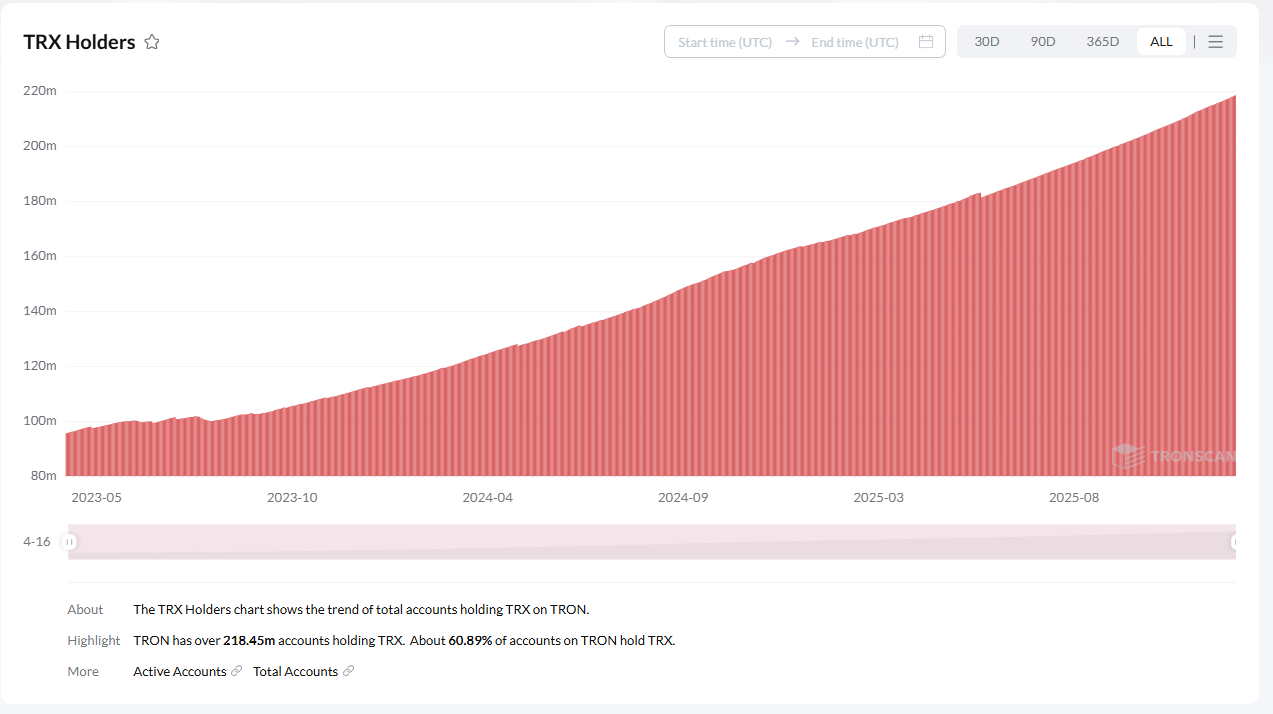
Progress is unstoppable. The printing press could not be unbuilt. The internet wasn’t something that could simply be shut down. And now that the idea has taken hold, there is no reversing money from state. But do not be naive; the transition won’t be given away to us. It will be a fight. It will be so messy, and it’ll take gumption. But ultimately, the walls they construct will fall down because people always want to be free when they have a choice. The “monster” is becoming enraged in its death throes.
Tools for Freedom
While on the topic of choosing freedom and efficiency over how things used to be done, tools that sidestep these friction areas are fast becoming a necessity. One of these is the Netts Transfer Tool, which is a solution that addresses the TRON network’s special “Energy” headache.
Netts enables transactions of USDT on the TRON blockchain without the need to possess any TRX for energy fees. In most cases, the “Energy Wall” effectively requires users to buy and hold volatile TRX just for moving one’s stablecoins, an cumbersome task that includes exchanges and a number of steps.
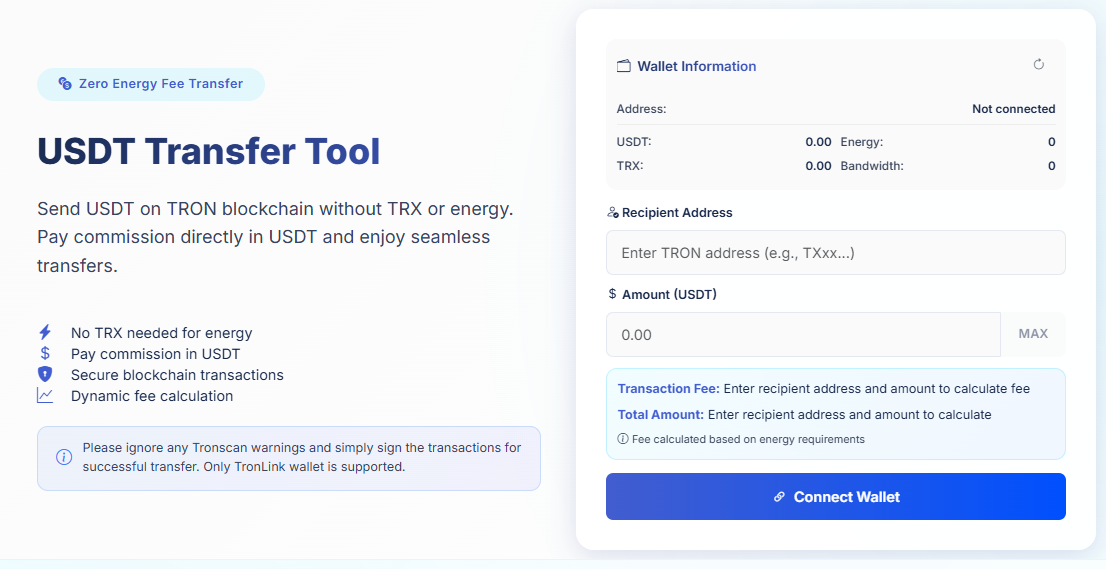
Netts eliminates this friction altogether as you pay the applicable commission in USDT. It is non-custodial and secure; all you need to do is connect your wallet (e.g., TronLink), input the recipient’s address, and sign two transactions: a fee transaction and a transfer transaction. The amount of Energy the service needs is delegated automatically, and the transaction is broadcasted without a hitch. It turns the annoying, multi-step nightmare into a quick and easy few-click action, removing one of the perennial sets of tech hurdles that plague mainstream adoption. For both individuals or companies who integrate their API, they are the sort of user-centered utility that the old financial system can never hope to replicate.