Crypto's Influence on Food Industry
Blockchain food logistics — traceability from farm to shelf, smart-contract settlement, and fewer opaque middlemen in global agriculture.
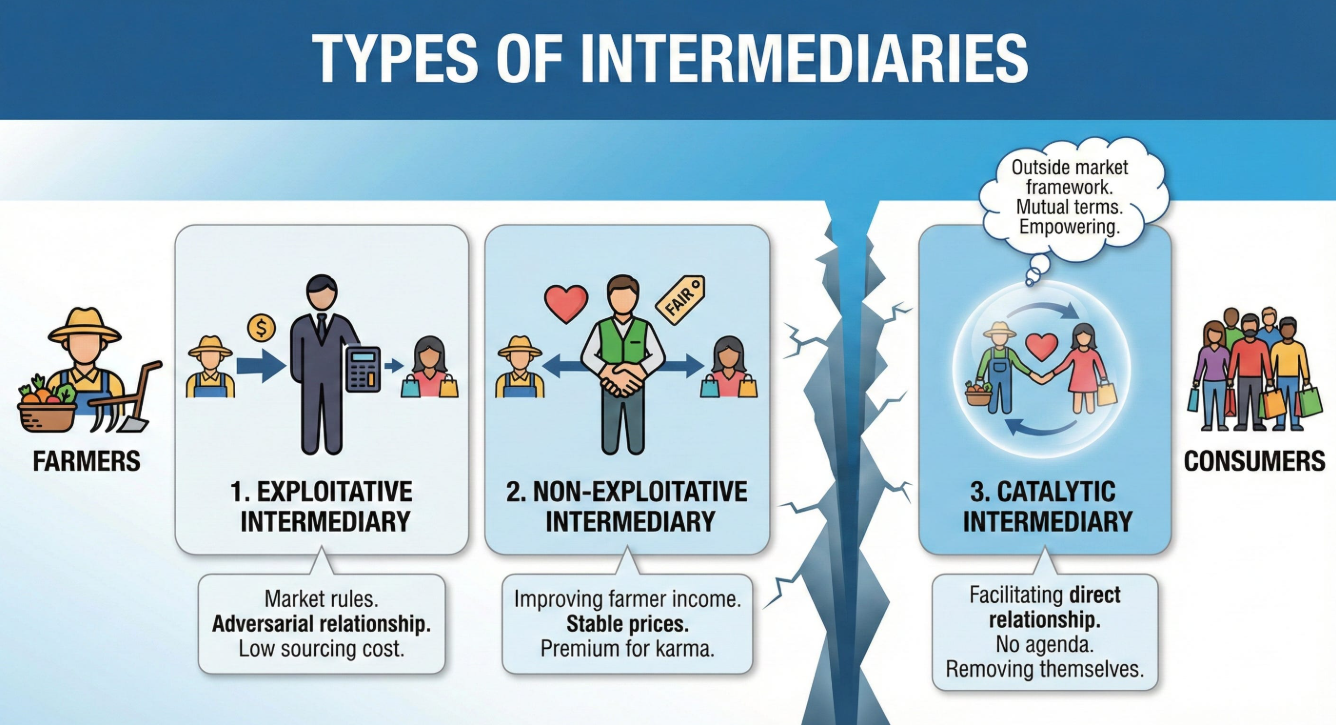
For years, the global network of food producers and distributors had been a hard-to-fathom web of connections in which inefficiency and murky business dealings were simply the cost of doing business. But there has been a silent revolution, upending the most fundamental ways that food moves from farm to table. Consider a load of avocados moving from a small, family-run farm in the highlands of Mexico to an enormous distribution center in Rotterdam. In the traditional method, this trajectory is a black box. The farmer relinquishes the crates and waits — sometimes several months — for payment, never certain that the fruit arrived in good shape or that a middleman won’t report spoilage as an excuse to pay less.
Today, that shipment is monitored by a smart sensor noting temperature and humidity, with data unchangeably recorded on a blockchain. Once the delivery is confirmed and a smart contract checked that the cold chain conditions are satisfied, payment is immediately remitted into the farmer’s wallet. This isn’t a future dream; it’s an industry transformation, underway today, that is making formerly-static logistics a dynamic flow of trustless value and information.
Intuitively, to grasp the proportions of this change, one should consider the ever present problem with middlemen. For decades, the roadway between a grower and an eater has been jammed with brokers, processors, wholesalers and distributors. Every layer is a cost and takes time but also masks from where the product came. Take the path of vanilla beans from Madagascar. Historically a farmer might sell to a local collector, who sells to a regional aggregator, who sells to an exporter. By the time those beans make it to a flavor house in Europe, the price has shot up, but the farmer is no longer getting that much.
This broken chain has created the opportunity for fraud, mixing lower-quality beans in with premium ones, and ensnaring farmers in cycles of poverty. Crypto (from cryptographic) and blockchain technology obliterates that model by generating a common, unchangeable ledger. Now, a farmer can digitize their harvest, making a digital twin of the crop. Buyers will have the opportunity to either buy directly, or via a transparent (decentralized) marketplace with full history of product. A trust-based intermediary isn’t necessary when the code is where it is: This direct transmission of value to those creating it — the recipients people choose, not some theoretical least common denominator — is the counter-economic pressure we need.
Invisible Burden
The suffering endured by the first links in the agro-food chain (farmers, meat-processing plant owners, and shopkeepers) is invisible to you — an end consumer — but not for that any less tragic for a sustainable food system. Farmers exist in a state of chronic financial unpredictability. They bear the risks of weather, pests and market volatility, yet they are often unable to access credit because they cannot demonstrate their income or yield history to traditional banks. They are often hit with “Net 90” or even “Net 120” payment terms, which means that these small farmers effectively lend money for months at a time to multibillion-dollar corporations just so they can try and buy seeds for the next season. The economic pressure pushes a lot of smallholders out of business, resulting in concentration and loss of crop diversity. With no digital trail of evidence, their labor is simply a presumptive asset but exposed to all manner of predatory lending or bankruptcy.
Meat packing plant owners are having a different sort of nightmare. The safety standards are very high and rightly so, but it's a system that can put great financial strains on the innocent party. Now imagine the logistics of a large meatpacking plant: It may receive cattle from dozens of different ranches and send product to hundreds of retailers. If a pathogen, such as E. coli, is found in one package of ground beef at a factory, the facility often does not have data that would enable it to determine which particular animal or lot was responsible for introducing the pathogen.
As a result, they could be left with no other option but to recall weeks of production because they cannot determine which batch containing the contaminated mixture is implicated. This "spray and pray" strategy of recalls costs the industry billions annually while undermining consumer confidence. Relying on paper records — clipboards hanging on walls, hand-scrawled logs that can be lost or covered in drips and stains — makes for gaps in traceability that cannot be filled during an emergency.
Store owners, however, grapple with how to verify authenticity. They have to pay a premium for organic or ethically raised meat to meet their customers’ demands but, with no foolproof method of verifying such claims, they use paper certificates that can easily be faked. This opacity promotes inefficiency and waste at every level, enabling a system where bad actors can obscure their activities and good actors will pay a price for this obscurity. A boutique grocery might pay an arm and a leg for “grass-fed” beef, only to find out down the line that it had been grain-finished — in which case their reputation was shot.
Digital Shield for Agriculture
Crypto and blockchain is the antifragile, anti-fragility counterweight to these systemic failures. For the farmer, the ledger is a combination of a résumé and a credit score. Each successful harvest and completed transaction creates a verified data set that can be employed to secure micro-loans or insurance, often delivered by decentralized finance protocols that function without the drag of brick-and-mortar banks. These smart contracts can automatically release insurance payouts if the local weather data confirms a drought or flood, creating protection that was previously unavailable.
For the meat industry, blockchain’s level of granularity is game-changers, if not lifesavers. Rather than recalling a million pounds of beef, a factory can track the contamination to an hour’s worth of its supply during production from one supplier and then recall only those products. This accuracy saves millions of dollars and keeps good food from being discarded.
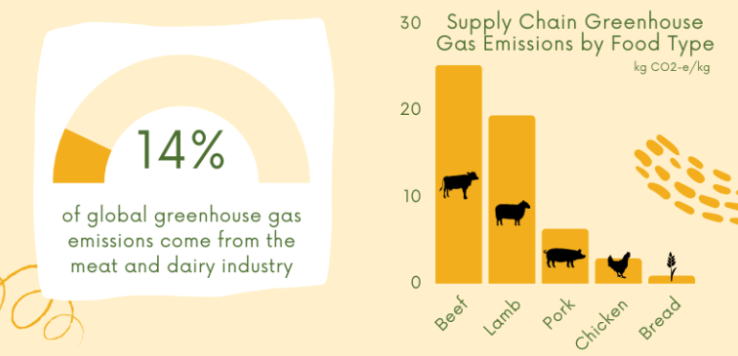
And this system also protects the environment. As the supply chain is more open, it’s hard to hide your dirty little secret. If a company says it’s carbon neutral, the blockchain can prove out the carbon credits they acquired and how much energy was used in their shipping to say that you have mathematically true claims on greenness rather than just marketing slogans around them. We can validate water use, soil rejuvenation practices and fertilizer application to make a digital passport for each bushel of wheat or head of lettuce. This is the kind of thing that makes farmers want to implement regenerative agriculture practices when they know they will be rewarded in the marketplace for being good stewards of their land.
The Standard of Trust
The IBM Food Trust is an excellent example of this technology at work. The network was one of the earliest and most ambitious attempts to standardize food traceability through blockchain tech. It united fierce competitors — retailers, wholesalers and suppliers — on one platform. The concept was straightforward, but revolutionary: if everyone has just one version of the truth, then the friction in their supply chain vanishes. With IBM Food Trust, a retailer could track the provenance of a package of mangoes in seconds rather than days. This ability was invaluable during food safety incidents, where retailers could remove items affected by the hazard from shelves without sacrificing safe product to consumers.
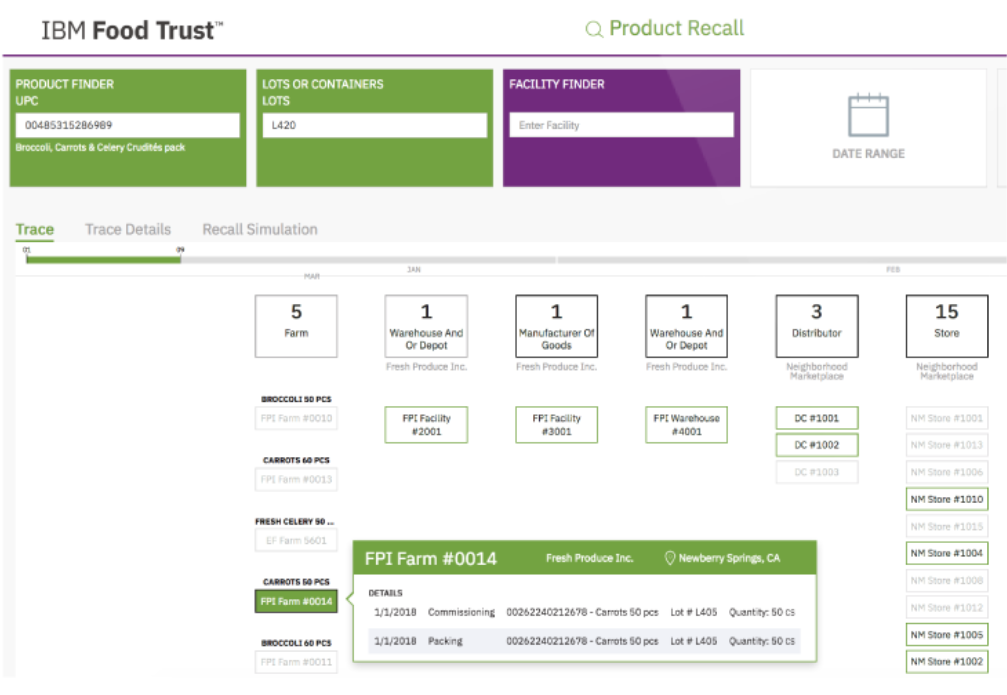
The gains from such platforms showed blockchain was not simply a vehicle for financial speculation but an infrastructure element of the physical world. It demonstrated that disparate parties could work together without relinquishing control of their proprietary data, and permissioned views would allow sharing only what was needed for verification. This consortium approach has established the consensus for how industrial blockchains should be run, demonstrating that transparency and privacy can cohabitate.
This technology’s advantage in consumer-facing markets such as coffee is most pronounced. Coffee drinkers today are more aware than ever of what the ethics behind their morning cup. They’re looking to see that the beans were grown sustainably, and that farmers received a fair wage. If a coffee company is using blockchain traceability they can put a QR code on every bag. Rather, when a customer scans that code, they’re not looking at “any” marketing page — but rather the very journey of these beans in their hands. They can see the date of harvest, the location of the farm, the price paid to the farmer and even the date on which it was roasted. It’s that kind of “radical transparency” that has a serious emotional impact. It is what turns a commodity into a story. The company that provides such proof immediately sets itself apart from competitors who make vague claims, such as “ethically sourced.” The customer no longer has to take the company’s word, it’s possible to check on blockchain if that is true. In addition, some platforms currently permit the consumer to tip farmer through this app sending cryptocurrency directly into the farmers’ wallet thereby tangibly linking source of product and appreciation by its producer.
From Bait to Plate
The seafood industry is no different and is well known for its prevalence of fraud. Labeling is bad, with inexpensive fish frequently marketed as more costly species. For a consumer purchasing fresh fish, having information on its provenance is a quality-of-life and safety issue. Blockchain tracking means a fish from the North Atlantic caught in a snare is tagged at the source. At every handover — from the fishing boat, to the processor, to the distributor and, finally, at the grocery store itself — identities are recorded. Sensors can also record the temperature of the shipping container as proof that the cold chain was never broken. You’d trust and pay more for that supermarket where they can prove the freshness and origins of its seafood by transparent data on the blockchain. It allows the consumer to make an educated decision and helps fisheries working within quotas and sustainable boundaries while penalizing those who participate in illegal fishing.
But processing these advanced digital supply chains needs computer power. Every time something is added to the ledger — whether it’s a temperature reading, a payment on a smart contract to a farmer or the minting of a digital token representing a batch of tuna — that act is one more transaction on an unchangeable history. These transactions cost Energy and Bandwidth on networks like TRON - which are preferred due to high throughput, low fees in high-frequency logistics operations - to be executed. Thousands of updates an hour are a pittance for a logistics company — but it can add up for cryptocurrency burn. In order to be efficient, and have stable operational costs, smart businesses don't simply burn tokens; they budget their resources. And they may also decide to rent Energy from holders of large volumes or specialized markets: instead of staking twelve billion dollars’ worth of capital to produce the power themselves.
Fueling the Digital Chain
Such resource management is essential to operation's strategy. In the same way that a trucking company has to deal with fuel prices, so too does a blockchain-enabled food distributor have to manage its digital fuel. Say you have a smart contract for shipping grain and the energy runs out half way through - the transaction goes stale, and there could be delays or blocking of payments. As a result, automatic systems are frequently used to check and maintain resources so that ample TRON Energy refill is available to handle the next block of data.
By creating the right way for firms to get TRON Energy, they ensure that the friction they took out of the physical supply chain doesn’t all of a sudden pop up in their digital one. This is an optimization decision that enables the technical layer to be invisible to the end user, who only experiences a more efficient, safe and transparent food system. Again, and again - simple acts that you're not making a big deal out of it. It's about the quality of the food - not that you are a "techie".
Crypto adoption in the food sector also provides new doors for financing and a community of support. Small farmers have opportunity to tokenize future harvest, in which they can sell the tokens to investors and receive upfront finance for seeds and equipment. In exchange, the investors get a percentage of the profit when the crop is sold. This model democratizes agricultural finance; it enables everyone to invest in sustainable farming. It establishes a direct connection from urban consumer to rural producer. The value stability offered by stablecoins, for payments, also contains volatility with local currencies in emerging markets. A cocoa farmer in West Africa could be paid with a stable digital dollar, preserving their purchasing power from inflation and allowing them to afford the essentials for themselves and their business.
As we envision (as much as one could predict) the future, the integration of AI, IoT and blockchain can only become more fluid. Imagine if fridges would automatically order more genuine organic groceries as they were consumed, it would all be a series of microscopic automatic transactions in the background. Here, the user becomes an active member of the verification network rather than a passive receiver. Each scan of a QR code not only gives information but is also a signal to the network that the goods have reached their final destination. This circular flow of information cuts food waste by bringing supply into closer alignment with demand. "The food industry, for the longest time a laggard in adopting digital change, is now leading the Web3 revolution of technologies that bring us closer to the source of our sustenance."
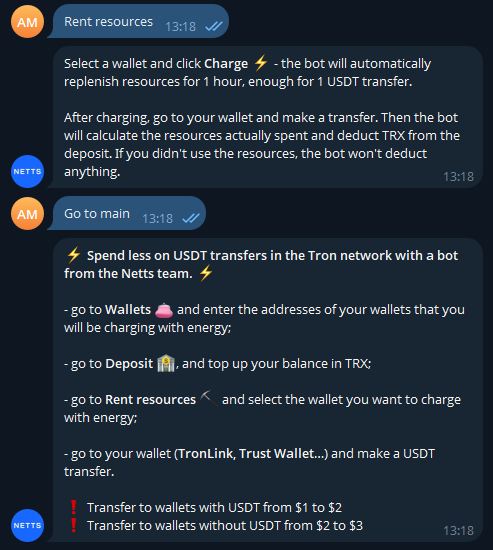
Such transactions and managing the underlying assets for such transactions are a critical element in the ever increasing fast paced world of digital media. Now, services like the Netts Energy Charge Bot aim to make this process more efficient by automating it. Users can also choose their wallet, then click on the charge button to automatically recharge for an hour. Netts has enough Energy for doing a USDT transfer and no need to freeze in large capital.