Crypto from the Bystander's Perspective
Outsiders see volatility, irreversible mistakes, and scary headlines — simpler tools and honest talk bridge the adoption gap.

The cryptocurrency space has been a wacky one to watch from the outside looking in. Yet as crypto believers get lost in the depths of blockchain, DeFi and whichever new altcoin is trending, that whole world can look pretty strange, confusing and at times dubious to your average Joe straight off the street. It’s key to understand this outside perspective if you want digital currencies to actually go mainstream.
The "Why Do I Need This?" Mentality
For most people, cryptocurrency is simply flying across a parallel universe, utterly unconnected to their everyday life. They wake up, go to work, pay their rent or mortgage with a standard banking product — and then they go to bed without ever contemplating Bitcoin, Ethereum or any other digital asset. Faced with crypto, their instinct is often to ask a simple question: “Why do I need this at all?”
It’s not always ignorance or stubbornness. It’s a reasonable reaction to something that seems to solve problems they do not have. Traditional banking works for them. There’s nothing wrong with their credit cards. They have savings accounts to protect them. In their opinion, crypto appears to be a convoluted answer to questions that don’t exist within their bubble.
Take your average working bee who keeps track of bank accounts, credit cards, a 401(k) or IRA and the rest. Their money exists in a very stable, predictable, understandable economy. They know precisely how many days it takes for a check to clear, what the fees are (or aren’t) for different transactions and whom to call if something goes wrong. Cryptocurrency injects randomness into this well-calibrated machine.
It’s this disconnect that fuels resentment toward crypto. When crypto enthusiasts discuss “revolutionizing finance” or “banking the unbanked,” it is marketing parlance to someone who already has access to banks. The revolution itself sounds abstract and irrelevant to somebody who’s most pressing interest is whether their paycheck will clear on Friday.
This gap grows even larger when crypto enthusiasts attempt to articulate the benefits. They come at “permissionless”, “trust-building”, and “censorship-resistant” from a position of not having lived under financial censorship or permission. Their bank account has never been frozen for political reasons, they’ve never been shut out of financial services and have no need to transact outside traditional bankers’ hours. They don’t see these problems from their end of the spectrum.
The disdain often emerges via dismissive comments such as “it’s just digital Monopoly money” or “it’s a solution in search of a problem.” These are not necessarily ignorant statements — they indicate a true lack of vision for the value proposition that crypto enthusiasts take as self-evident. This kind of suggestion, that people should ditch their current financial system, which works quite well for its purposes already, in favor of something much more complex and risky, feels not just gratuitous but almost criminally negligent.
Risk and Loss Aversion
Being averse to risk is one of the largest obstacles when it comes to adoption. The average person worked for their money and to throw it into something as volatile as crypto seems like playing with their financial future. New polling indicates that more than 60% of Americans have no faith in the security or safety of cryptocurrencies.
This fear isn't unfounded. The notorious flip-flopping price of cryptocurrencies means that an investor might lose a large chunk of their investment in the space of one night. Where crypto enthusiasts have seen opportunity, regular people have seen reason to steer clear. They have learned to invest in stable, predictable things — while cryptocurrency is the opposite of everything they’ve learned about financial prudence.
Consider what it does to your psyche to watch Bitcoin fall from $60,000 to $30,000 in a few weeks or to see entire portfolios disappear during market crashes. This is terrifying to someone who has spent years trying to build their savings the old fashioned way. They’ve been taught to think that good investments should grow steadily, rather than lurching wildly from day to day. The crypto market does the opposite of what they’ve been taught about responsible investing.
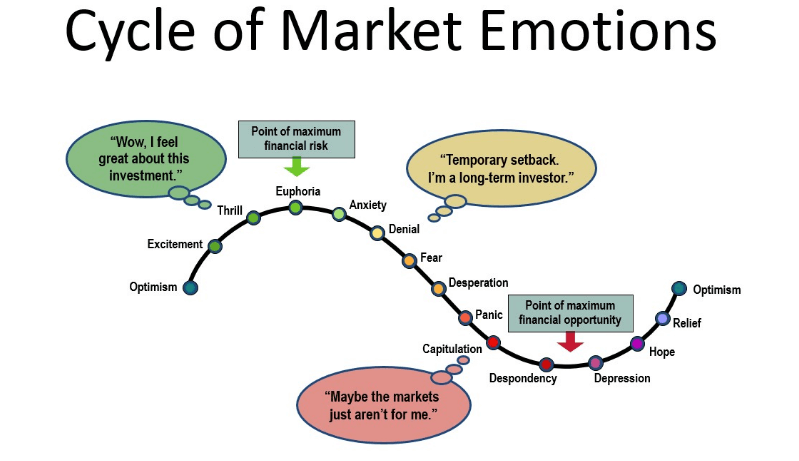
The fear is compounded by the technical complexity. Lots of people think they need to be technologically savvy in order to enter the world of crypto, and they’re not totally off base. Creating wallets, managing private keys, figuring out transaction fees and how to navigate dozens of exchanges as well as terms like energy renting on blockchain networks can seem daunting. There are those who work on Wall Street or have managed money as part of their jobs who'd like to play around with a small amount in cryptocurrency but not so much that if they make a mistake — like wiring coins to the wrong address or losing access to their wallet — it costs them dearly.
This technological hurdle is supplemented with the absence of customer support banks offer. When a person loses their credit card, they can call the bank and obtain a new card. When a person forgets their online banking password, they can reset it by using a secure process. But in the crypto domain, when you lose your private key or forget your wallet password, money you control is simply lost. This “be your own bank” ethos that thrills crypto enthusiasts is scary to those who want the safety net of traditional financial services.
The dread is not just of losing money, but also of making mistakes. In crypto, there is no shortage of stories of individuals who have sent Bitcoin to the wrong address, been phished or lost access to their wallets due to technical glitches. These made headlines in social media and the broader press, thereby further cementing the image of cryptocurrency as both highly risky and hard to use safely.
And of course, the fact that blockchain transactions are irreversible provides an extra layer of fear. In traditional banking, if you press the wrong key or become a victim of fraud there are usually avenues to get your money back or challenge fraudulent transactions. When it comes to cryptocurrency, once a transaction is verified and added to the blockchain, there’s no way of reversing it. This inability to do anything, while a feature for crypto purists who want immutability, is terrifying to the kind of people used to having safety nets with traditional financial systems.
Media Influence and Trust Issues
The coverage in the media is very important to sculpting how people think about cryptocurrency and, unfortunately, it is almost always negative. The top of the news cycle is overrun with stories of people getting scammed out of money in crypto frauds and market crashes and regulatory crackdowns — while good things that happen to Bitcoin users warrant less attention. The effect is an unbalanced perception of cryptocurrencies as a breeding ground for scams and financial insecurity.
Look at a typical news day about cryptocurrency. When Bitcoin hits a fresh peak, the usual reporting is about how the investment is speculative and there are bubble risks. When the market tanks, the coverage focuses on losses and presents crypto investors as reckless gamblers. The headlines scream about the risk of digital currencies when a major exchange is hacked, or a crypto project is revealed to be fraudulent. Yet when a project on the blockchain successfully handles tens of millions of transactions, or when a developing country like El Salvador makes Bitcoin legal tender, the coverage is often buried or reported with skepticism.
People place their trust in traditional media sources, often (but not always) rightly so. When the credible financial media provides warnings of risks inherent in cryptocurrency, or when mainstream media covers a two-bit piece about crime associated with crypto, it just further stigmatizes crypto. There are people in the world that just don't have the time or interest to dig deeper than these headlines and they end up forming opinions on such truncated, sometimes biased, information.
Such media bias doesn't stop with reporting the news itself. There are many negative portrayals of cryptocurrency in the media, with movies and TV shows portraying cryptocurrency as the payment method of choice for criminals and terrorists. There's certainly a case to be made that traditional banking systems are problematic and susceptible to money laundering and other dodgy doings as well, but they aren't nearly so scrutinized. The result is a cultural storyline that links cryptocurrency with illegal activity, which only further undermines its chances of achieving mainstream success.
Wild West Situation Brings Uneasiness
The lack of regulatory protection is also at fault. Established financial systems have clear rules, consumer protection, and regulatory instruments that people are accustomed to and comfortable with. While libertarian enthusiasm for the decentralized nature of the system is understandable, the average person still feels more secure knowing that if something goes wrong, there is some government agency or a big "serious" institution to stand up for them. This uncertainty about regulation creates a vicious circle: people want more regulation to feel safe; excessive regulation will destroy all the advantages that the same people love cryptocurrency for, but they don't understand it. As a result, they notice only that it is difficult for them to understand something they are accustomed to. As for the banks, it is not difficult for them to provoke the growth of negative sentiment in this regard in the media. Here, financial institutions of the old formation have a considerable impact. In addition to the fact that they have huge advertising budgets, banks and other financial giants are often sponsors of television or other news programs.
Without any conspiracy theory, it is clear that it is easier for ill-wishers of digital currency to spread destructive narratives, and other "long-standing" media win in this way too. Thus, people notice that something of a new conception is not quite "ours". However, even banks are not the most shrewd actors in this drama. There is another layer here. Cryptocurrencies for "ordinary" people are associated with "geeks and wizards". During all the years of its existence, the crypto-industry has not become very popular among them. However, ordinary people still react sharply to everything that surrounds them: politics, finance, war, and peace. Which means that they were actually open to dialogue. This dialogue was just started in the worst possible way. Cryptocurrency "specialists" often do not understand what the average person believes.
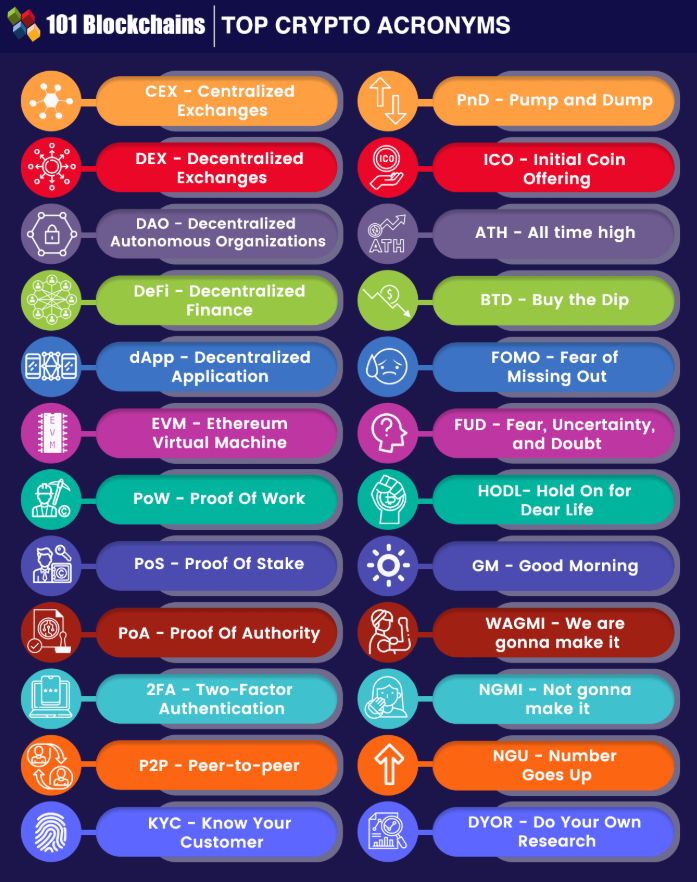
The issue plays out in a few different ways. First, there's the language barrier. Crypto evangelists talk in lingo that seems completely foreign to an outsider. And though these names can build a sense of community among the crypto faithful, they also "provide a bit of an exclusionary environment or make it look to newcomers that you're not welcome — and you also need to learn something in another foreign language just to be part of this."
Second, there is the dismissive attitude displayed toward perfectly honest concerns. When someone raises fears of volatility, security or regulation surrounding cryptocurrency, crypto fans typically lash out with phrases like “you just don’t understand” or “that’s just FUD”. This dismissive attitude doesn't take seriously the underlying concerns and instead makes them feel like their concerns are baseless or that they're not smart enough to figure out crypto.
Third, there's the propensity to oversimplify problems that are complex, or overdo it on crypto as a cure-all for any and everything financial. Statements like, "Bitcoin will cure inflation and end poverty and build a utopian financial system," which sound naïve if not cult-like to outsiders but are literal beliefs among crypto enthusiasts, can seem naive and even retrograde. This is the sort of hyperbolic rhetoric that doesn't leave the product with much credibility — and it makes it harder for many people to take cryptocurrency seriously.
It's not about ditching the technical nature of cryptocurrency or oversimplifying difficult concepts. Rather, it's about meeting people where they are and responding to their real concerns. That may mean accepting that volatility is a very real problem for a lot of people, that technical complexity is a legitimate barrier, and that regulatory uncertainty creates genuine anxiety.
It also means being forthright about the shortcomings and dangers of cryptocurrency. Rather than simply dismissing concerns around security, crypto enthusiasts ought to admit that the space has had its share of problems and discuss how the technology is maturing to try to handle those issues. Instead of reiterating the gospel that "crypto will fix all financial disparities" they should market specific use cases where crypto is not just better but exponentially so compared to all other alternatives.
The crypto crowd needs better communication, and more empathy for those who don't share their passion. This involves listening to the concerns and not dismissing them, explaining things in accessible vernacular, being patient with folks who are new to cryptocurrency. It also means acknowledging that not every person should become a crypto enthusiast — there may just be some who want to use cryptocurrency as a tool to solve particular "jobs" in their life.
Making Crypto More Accessible
If the world is to embrace cryptocurrency, we must instead concentrate on developing solutions to these real-world problems. Whether it’s through more intuitive user interfaces, better educational resources or services that automate complex tasks using intelligent delegation systems.
Netts USDT Transfer service is one such approach to tackle one of the most annoying challenges when dealing with cryptocurrency on the TRON blockchain. Traditionally users have to actually hold TRX in their wallet to pay for transaction fees, whereas such a barrier might not exist for those that simply want to send USDT. You can do just that through this service, which removes the friction users experience when paying fees in one coin while storing the majority of their funds in another.
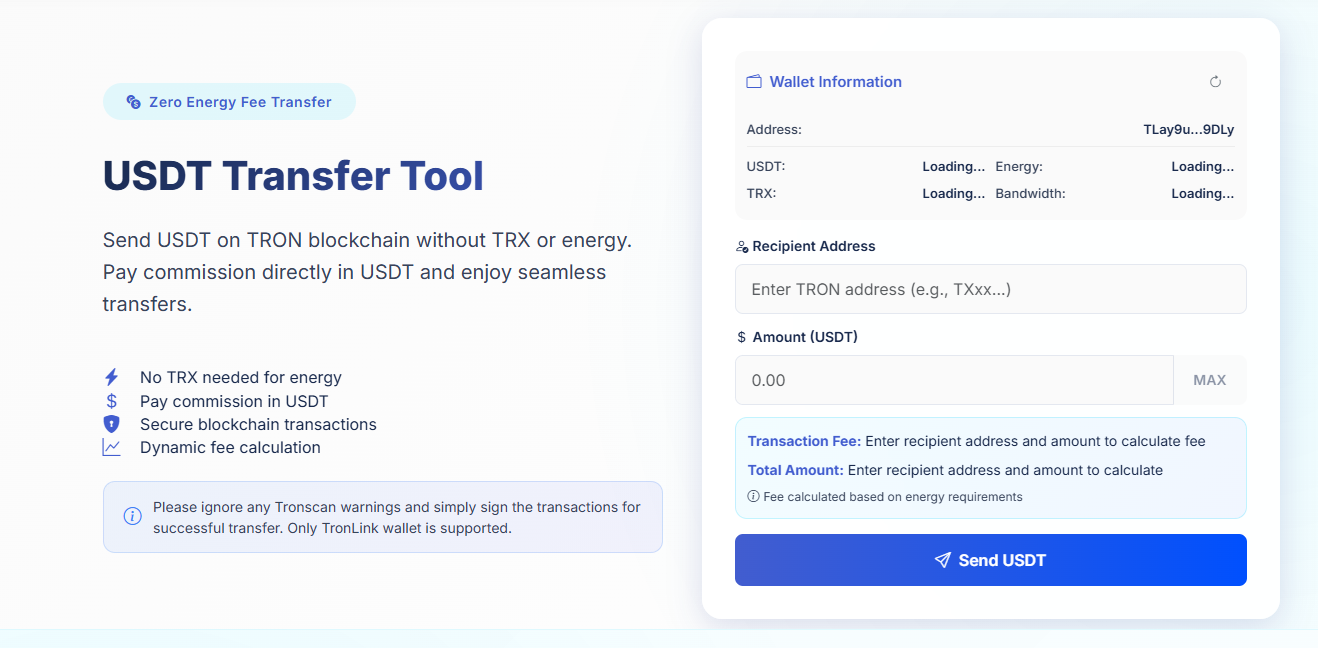
The service allows Energy delegation to occur with zero effort, and offers an easy transfer experience. Users may simply connect the TronLink wallet, fill out the recipient and amount fields and send USDT without having to know something about technical details or expensive transaction fees as opposed to the otherwise very complicated Energy market on TRON. Such a user-friendly solution could eliminate the barriers for people put off by the more technical aspects of cryptocurrency.
The Path Forward
The crypto community needs to come down from its ivory tower and get in touch with the general public on their own terms. This means engaging with their concerns, understanding what they are afraid of and figuring out how we can make everything work better for them in terms of automation and UX design that makes sense in their world. This isn't about convincing everyone in the world to become a crypto enthusiast — it's about empowering people who just want to solve their problems more efficiently, by making cryptocurrency useful and accessible for any relevant use case.
Whether or not crypto will be adopted at large depends on the community's ability to fill in this disconnect between what is technically possible and what a user needs to do day-to-day. Only when we understand and address the bystander's perspective will cryptocurrency be able to realize its potential for breaking ground with everyone, instead of just the initiated.