Crypto Exiles — Who Are They?
From Do Kwon to SBF to Su Zhu and Mashinsky — the founders, insiders, and operators crypto turned on, and why immunity expired.
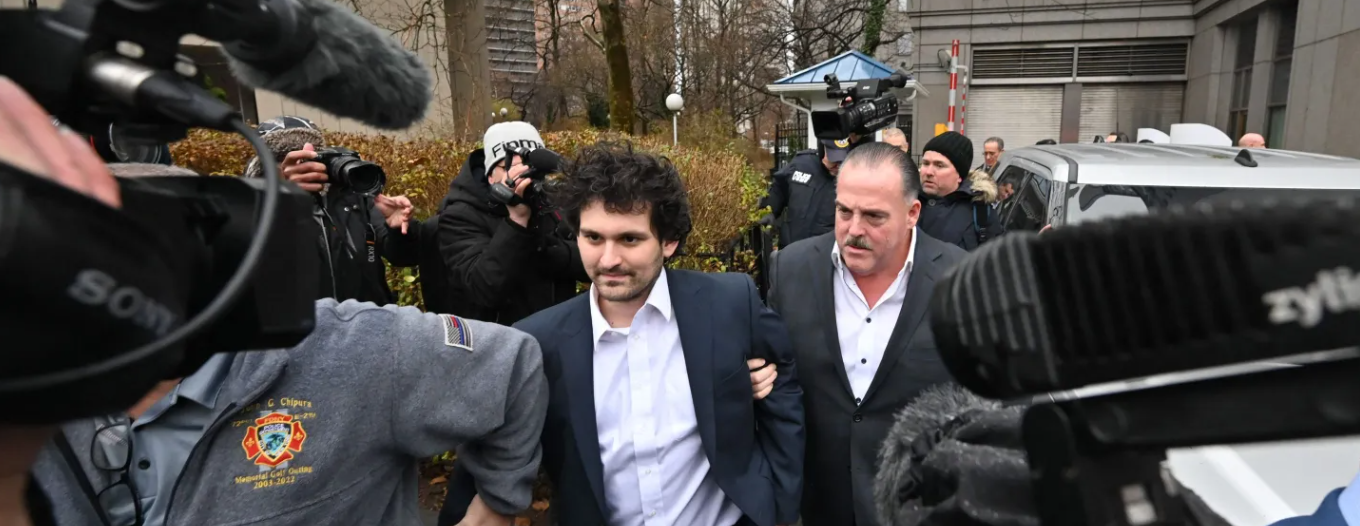
It is something about the way crypto communities go about turning on their own. Having failed to stand up to an external enemy — a regulator, banker or politician opposed to the industry — will breed relatively less contempt compared to betraying supporters. This asymmetry has been seen in every historically closed culture and crypto appears to be no exception. Inside betrayal cuts deeper than outside opposition ever could, for the trust extended was underpinned by an assumption of shared values and to break that is a grievous wound rather than a business dispute.
There is a large list of people who have earned this type of crypto exile. Some of them conducted blatant crimes. They did legal things, but things that the community found unforgivable for reasons they had not yet put into words. Others are still making their case in courts or in podcasts. Some have gone completely silent. It is a reliable enough pattern that it reveals something of the structural social logic of the industry — what gets you buzzed out, what acquitted and forgiven and why even the most hoary figures command ongoing community attention far beyond what they deserve.
Common Enemy That Hides the Internal Ones
Before the names, it is good to note what makes the exile dynamic possible in the first place. As a community, crypto spends huge amounts of emotional energy regarding the external enemies it identifies — central bank digital currencies; banks; regulators they perceive as hostile; threatening legislation from politicians. This common opposition to such forces creates a type of solidarity which transcends ideological and technical barriers. Bitcoin maximalists and Ethereum users can find something to disagree about in almost anything, but one thing they tend to agree on is that the CBDC stinks, and whoever the current chair of SEC is worse.
That narrative, helpful as it is to foster community solidarity against a common enemy, hides the fact that not everyone within crypto — or anywhere else for that matter — is on the same side. There are factions. Some operators' interests diverge from those of rank-and-file users. Some use the community's shared vocabulary while they go about private agendas. When it does arrive, the realization that someone from within has been acting against the interest of the community is thus especially brutal — because the premise under which they were enabled to be trusted in the first place hinged on a belief that a common enemy outside all around means everyone inside was, at some fundamental level, on-side.
In terms of the punishment of the individual, in such cases exile often also has a second function for the community. It's meant as a warning to the others that that can happen to anyone who acts like they did. The shame of the public disgrace, repeating the name in all subsequent conversations about topics in that vengeful constellation, and how that personage becomes a shorthand for abomination in general — it works like social immunisation against future repetitions. Whether the vaccine does work is another matter entirely. The pattern persists either way.
Founders That Rolled with the Dough
At the clearest fringes of crypto exile is the founder who made something real, found serious backing and serious user trust, and then self-destructed their institution through malign neglect or calamitous error but retained personal largesse. The names in this field are well-known points of reference.

Do Kwon, founder of the failed Terra-Luna ecosystem — a forty-billion-dollar implosion which brought down algorithmic stablecoin UST, LUNA token and an entire cluster of related DeFi protocols in May 2022. While the collapse itself was caused by a flaw in the algorithmic design, community response to that collapse was catalyzed by what came after: Kwon's confrontational public attitude, fraudulent stories revealed during lawsuits, evasion of responsibility and escape from South Korea where he ended up arrested in Montenegro in 2023. His extradition saga stretched on into 2024 and even past the start of 2025. Long before any form of court could render a verdict, the community had already reached one: he was so deeply entrusted with the rails of an entire ecosystem that his abuse of that trust had sucked ordinary users' savings down with him.
FTX founder Sam Bankman-Fried spent late 2023 on trial after being convicted over his role in the November 2022 implosion of one of the world's largest crypto exchanges. The investigation ultimately found that customer funds had been used to cover investment losses at his sister firm Alameda Research, the firms had cooked their books, and a small group of insiders were running a business pretending on the outside to be a regulated safe exchange. He was given a sentence of 25 years. The exile was total: his foundation work, his political donations, his public-intellectual persona — none of it could withstand the revelation about what had been going on in private. To the community that had welcomed him as a symbol of the mature future of crypto industry and possible institutional adoption, his collapse merely proved they were being fooled all along.

The founders of Three Arrows Capital, Su Zhu and Kyle Davies led the collapse of one of the largest crypto hedge funds in June 2022. The demise of their fund led to a cascade of contagion, and the founders' behavior after — fleeing jurisdiction, granting media interviews from an extravagant yacht, trying to start a new business when bankruptcy plans were in process — left the community with no doubt that this was not simply how it had felt: here was not innocent error resulting from hubris or inexperience but extreme carelessness magnified by greed. Zhu was arrested in Singapore as of 2023. Davies managed to stay on the run for a longer period of time, becoming an object of scorn throughout the community.
Insiders Who Hurt Their Own Communities
Perhaps an easier category, but in many ways more painful is the insider who chooses to build something that was meant for all of us, established good will with our community over years and then used that good will to drain value out at the expense of community. These exiles are not known as well outside of crypto, but they are harder to forget inside.
There was a string of these cases through the 2022-2024 period as several centralized lending platforms collapsed. Founders of products that had defined themselves as champions of self custody and trustless finance turned out to have been operating custodial backends with the risk profiles hidden from depositors. One of the best-known examples was Alex Mashinsky from Celsius Network.

While running a structure that in many ways was worse than the predatory banks he had publicly criticized — including, as multiple criminal charges allege, front-running price moves on his own token and lying to customers about how their deposits were being spent. For many supporters of his from the community, his transition to defendant in a federal courtroom felt like more than just a financial injury. His conviction in 2024 brought to a close one of the more painful moments of the cycle.
Similar patterns are repeated over and over again, just smaller scale. The DeFi founder who preached transparency and decentralization, while secretly still holding the keys to the kingdom. The NFT project head who mollycoddled on the kind-heartedness of his community to finance what was ultimately a dream life for himself. The wallet team that you donated to for years and then just vanished. Each of these situations yielded a different exile, a community turning point, and an array of lessons that the next group of users will digest and disregard to varying degrees.
You know the pain that is more acute in these situations; the betrayed users are not your average Joe who has been sold goods of an investment too good to be true. They had been faithful members of the community, defending the project to outsiders for years while consciously recruiting friends to use it, building reputations in the community as vocal supporters. Those community members had been left holding the bag for the financial loss, as well as personal humiliation from recommending this person in their midst, when it turned out that the founder was a fraud.
Operators That Became a Bit Too Complacent
Another distinct category is just the exchange operator or major service provider who, without necessarily intending to defraud anyone but being careless with trust received from users, led them into losses that more discipline would have avoided. These exiles are often some kind of partial: the community is never quite sure how much malicious action versus incompetence was at work — but the end result is always the same, these individuals lose access to trust.
The place in this category that occupies an unusual position is QuadrigaCX's Gerald Cotten, who died under circumstances that left approximately 190 million dollars in customer funds unrecoverable — partly due to the lingering doubts as to whether he even is dead at all and partly because a lack of proper key management allowed users to be exposed in ways no responsible exchange operator should have ever permitted.

The Canadian regulator's probe said in a report that the exchange was run as a Ponzi scheme instead of a solvent custodian, and that the money reportedly vanished long before Cotten died — not because of it. It is an exile, in Cotten's case, like no other — the man himself might still be alive or dead; it matters not a bit, for his reputation and the reputations of the structures he built have been demolished as thoroughly as if he had stood there to face it.
This list, with its 2020s chapter of crypto seeing various exchange operators hacked, drained or more quietly collapse, goes on much longer. There have even been some attempts at returning, typically with a fresh coat of paint and different branding. In nearly all these cases, the memory of the community is stronger than that of regulators and a name tied closely to a major loss will likely stay close to that loss for as long as people who lost money remember it.
Confidence That Collapsed in the Face of Reality
Common to all these cases is that the operators had an almost ignorant belief that they would not be detected. Some of them had good reason to think this — either that they thought their jurisdiction was impractical for regulators to reach, or that the technical complexity of what they did would shield them from a proper examination, or that crypto simply had regulatory capture so integrated into its system that quite literally nothing meaningful could happen to them. Some did a kind of vaguer optimism, the same optimism that allows white-collar criminals in any space to convince themselves the rules are about other people.
Much of that could present what appeared to be real reasons for a feeling of their own immunity on the part of many such operators as the geographic distribution and technical opacity of the crypto industry. Money was transferred across borders in a matter of minutes. Identities may be hidden by corporate structure. The typical tools of law enforcement — physical seizure, account freezes, subpoenas — often came too late. This was true enough for long enough that a generation of operators took the assumption as a given and acted accordingly.
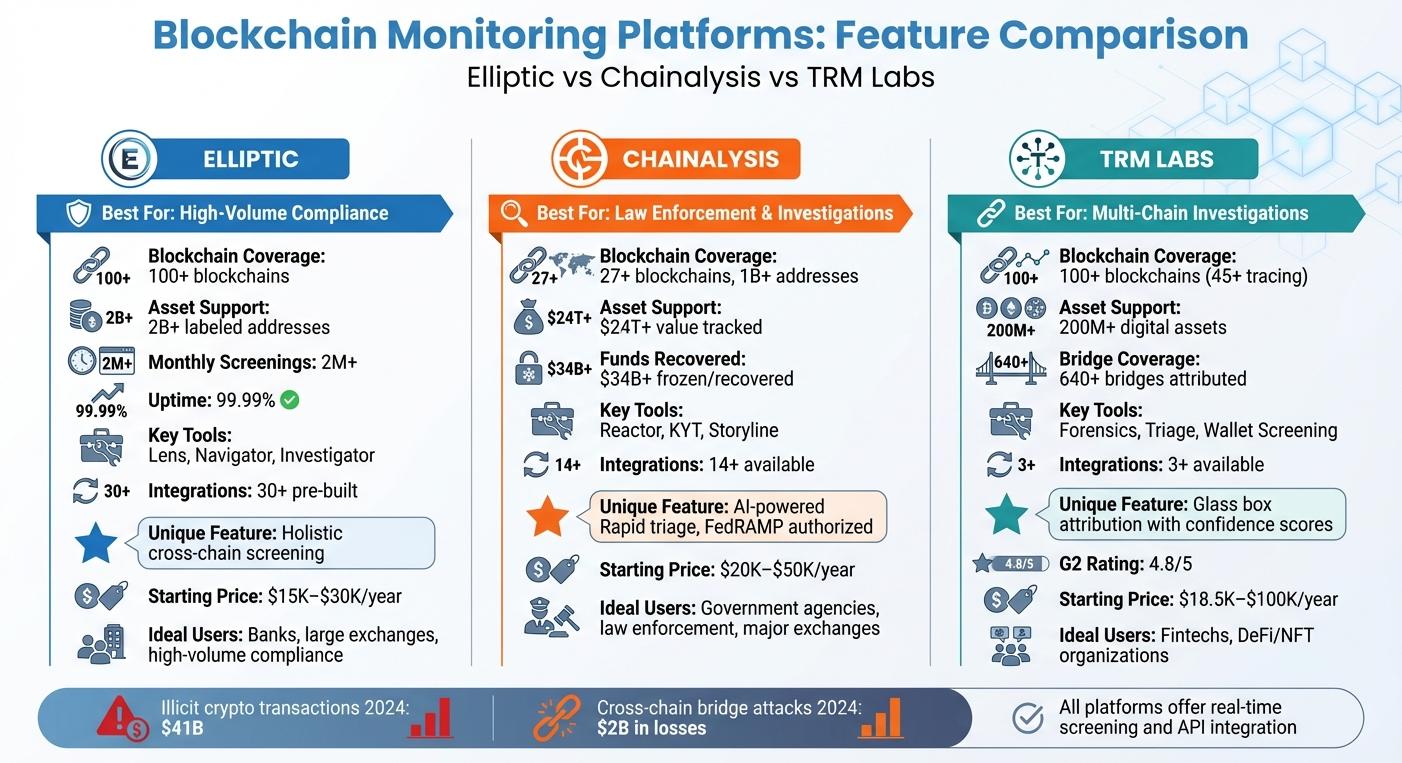
What changed was the maturity of the response. Chainalysis, Elliptic, TRM Labs and other blockchain analytics firms developed capabilities that enabled on-chain investigations. The level of international law enforcement cooperation increased. Some of the biggest exchanges started complying with subpoenas, freezing accounts and sharing customer information at a scale operators were not prepared for. So the operators who had planned on immunity learnt in 2023-2025 that it had silently lapsed. Many of them ended up in the same situations as those old-school perps whom they ousted — pursued, extradited, indicted, convicted. But the geography that had felt so insular was only briefly so.
The good news about all this is, overall the exiles barely got away with it. Do Kwon faces prosecution. SBF is in prison. Su Zhu was detained. Mashinsky has been convicted. The list continues. In rare instances, we can picture the story of the clever operator who eluded police in their exit with the loot — this is more an outlier than the norm. The investigative tools have improved, international cooperation has developed and those operators who once felt they were untouchable are realising that the touch touches them sooner or later. The following generation of operators will, as the previous one believed, be sure they are different. In most cases, the next wave will be wrong.
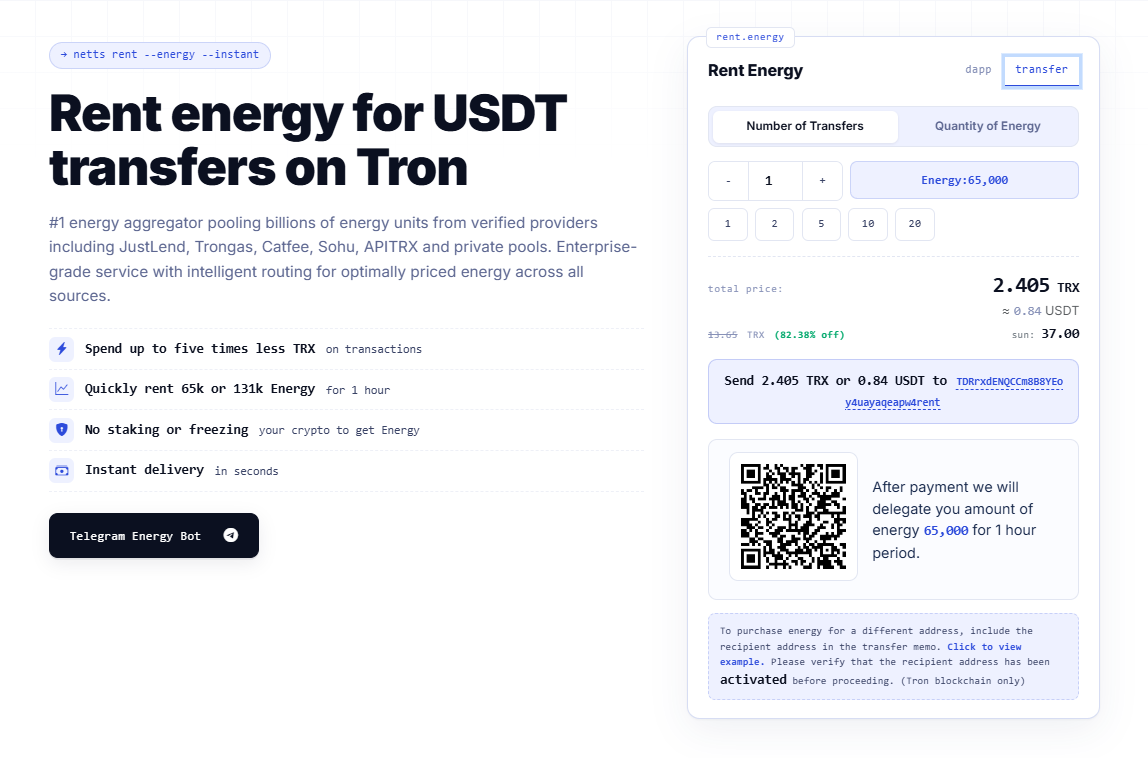
However, for those of us who want to work in the more open and accountable corners of crypto (and there are plenty), TRON Energy is one of them — prices on-chain, published, and stakes competing publicly with data available on performance without promises by operators. Anyone who needs to obtain TRON Energy without incurring large gas fees for regular USDT transfers can utilise Netts. It seamlessly aggregates from many different verified TRON Energy providers including JustLend, Trongas, Catfee, Sohu and APITRX, pooling billions of Energy units in real time and targeting the lowest available rate for each request. The difference between saving and burning TRX is a factor of five — stakes and freezes not required — all on mutually verifiable terms that are the type of accountability the rest of the industry is slowly but certainly learning how to create.