Fake Decentralization: Why Businesses Try to Deceive You
Real decentralization leaves on-chain evidence; fake decentralization leaves marketing slides — a guide to spotting the difference before paying for the ticket.

For crypto users, the first time someone tells them what decentralization is really supposed to mean always brings a special feeling. Not the dictionary definition, not the marketing copy, but that implied promise: that nobody and no company can turn a switch to take your possessions away, alter your environment without any notice, or freeze your assets as if you are a criminal simply because someone else in another building decided they can change their rules and their opinion of people at will. It is not a small idea. It literally restructures the way someone thinks about ownership and control and trust. That idea, to be the bank that was regularly forced on the other side of seemingly random banking decisions for a decade and getting stuck on even worse customer support queues than your current mess — well, for many of us who arrived in crypto after all that hoopla, it is exactly why we showed up.
That base feeling is doing a ton of psychological labor. It is what turned early Ethereum users into accepting nonsensical gas fees. It is what inspired those in countries practicing capital controls to find out what a seed phrase was. This is what created the audience that we see today and it maintains their reading of the whitepapers, joining Discord servers and arguing on forums far longer than anyone not in crypto would have lasted.
How the Promise Got the Sideline Spectators to Play
The ironic thing is that the definition itself seems quite technical and a little bit emotionless. Decentralization sounds like an HR set of policies at a multinational rather than a movement people would chase with their savings. However the notion that human authority is exorcised, that the protocol runs to rules no one can sneakily change, and that no out-of-the-room body exists for a wrench check — turned out to be surprisingly poignant. Those who had been hurt by the banks felt recognized. Those who had seen payment platforms ban people for political reasons secretly felt justified. Those who'd been raised watching their parents' savings be ravaged away by inflation or confiscated began to feel there was, finally, an alternative that merited the prospect of serious examination.
That emotional payload is how the early decentralized projects succeeded. But this tech was not always extraordinary. By any reasonable standard, the user experience was awful. Yet people didn't mind the jagged bits because the philosophy was deemed worth fighting for. There was the same dynamic that investors had seen from their side. Communities did not implode in a price level drop on projects that provided proven, real, verifiable by anyone with a block explorer or cheap API decentralization. Holders stayed. Developers stayed. The Discord stayed busy. It makes an incredible moat, financially speaking, of that kind of loyalty. You cannot pay someone to get it, or place ads in order to do it. It is built up with behaviour over a period of time.
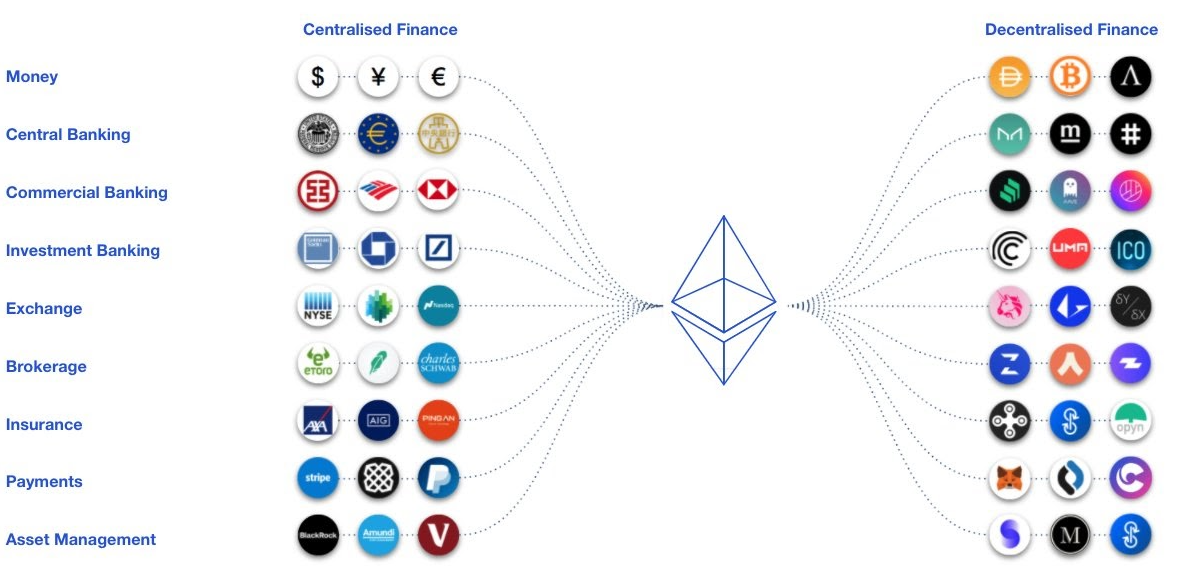
And that explains why a lot of the money flowed into anything that said it had one. And by the early 2020s, decentralized finance was a behemoth the legacy financial system could no longer pretend didn't exist. TPV figures pushed from nine to ten digits. The protocols that lived up to the name produced founders who became generational figures in their slice of internet history. It was the opportunity of a lifetime and entering early into a real decentralized protocol is a two-generation family wealth shift. People noticed. Including the wrong people.
Grifters Heard the Same Pitch
Where there is money, and where the money has been successfully lavished upon a cohesive narrative, there will be people who learn to practice that narrative without doing the work that lies behind it. It's not a crypto-specific dynamic. This is a normal evolution for any access technology with mass-market appeal, every nascent son of an emotional market thesis, anywhere consumers swallow both product and prose. Production of the story is less expensive to manufacture than the product. The story scales faster. And the story is what gets you retweeted.
It is completely comparable in fake decentralization pattern to seem like a template. A team creates a product that needs for most steps in its real-world operation centralized infrastructure: a website hosted on traditional cloud providers; database that contains sensitive state; elite of administrators with access to keys that control the protocol's capital; an upgrade mechanism permitting a multisig run by four or five individuals to change the rules whenever. A token accompanies the product launch. The marketing highlights the community self-governance through votes. The whitepaper uses the terminology of minimizing trust. There is a decentralized application as the frontend. And for the first few months, when nothing particularly dramatic happens, it essentially functions as though everything is really on-chain.
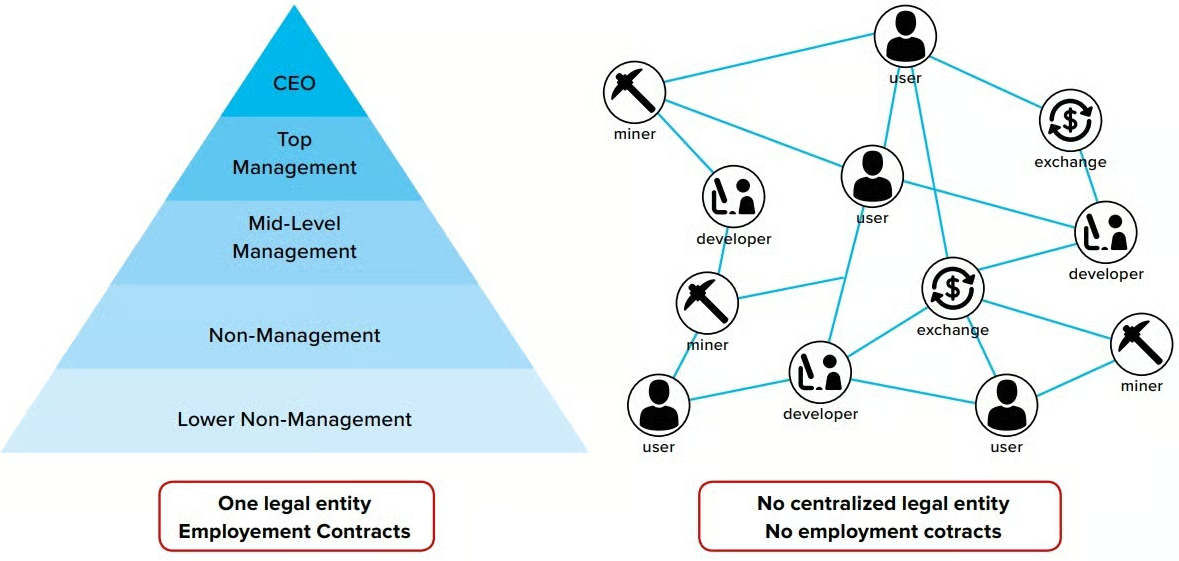
What is concealed — through artifice, sometimes, and more often through the banal inertia of a corporate system — is the disparity between presentation and reality. You vote, but you are simply voting a non-binding recommendation to a team that has all the power. The smart contracts do exist, however they are fully upgradeable at the discretion of a tiny multisig which has no multi-sig time delay before acting. While the treasury is defined as community-owned, operational control sits with two cofounders. While the protocol professes to be permissionless, everyday tasks are gated through KYC administered by a parent company. Not every one of those projects is a scam. Some of them were more honest businesses that just discovered that the decentralization aesthetic was more salable than the truth and learned to use its terminology while completely ignoring its essence.
The investors who bought that story were not, by and large, fools. They asked the right questions. They received plausible, if lacquer-like answers. The responses had been rigorously workshopped by communications teams that exist to make top-down arrangements sound bottom-up. Most people when they were in a position to even confirm the difference, this token had already pumped, and founders had already taken liquidity, protocol was onto their next narrative cycle. That works for the founders. It works for the marketing agency. In the end, when the music stops playing, it does not work for anybody still holding the token.
Seeing the Theater Before Paying for the Ticket
Any sane person could read this and say, I want a practical method of differentiation. And spoiler alert: there is one, and it's not really that subtle once you know what to look for. Balances of true decentralisation are recorded on a blockchain that only the protocol itself can change — and this is something which anyone can verify. Fake decentralization leaves marketing slides. From a distance, these two look very similar but when you go in for the close up they are incredibly different.
Although highly imperfect, the rough checklist below captures most common failure modes that will show up in projects that masquerade as more decentralized than they are:
Identify that these people control the upgrade mechanism. If those 3 or 4 people can change the contract at will, without a substantial delay (and thus breaking what would be otherwise complete immutability), then we might as well assume that those same three or four people are controlling the protocol. The token holders are spectators. Fundamentally, real decentralization will either remove upgradeability entirely or route upgrades through a timelock and on-chain governance process that even the founders cannot short-circuit.
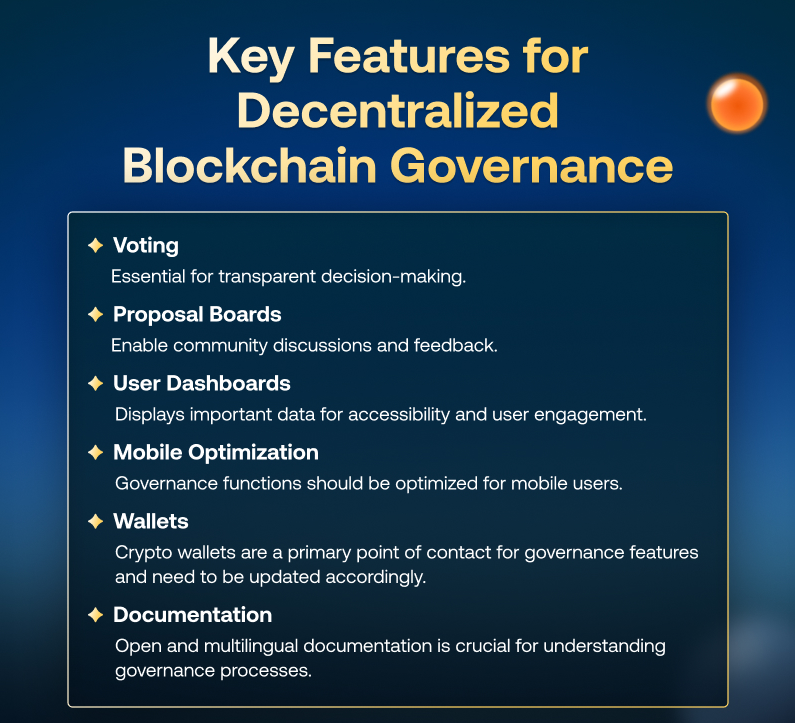
Do not read the governance whitepaper, read the actual results of governance. It is decoration in the governance if every proposal passes with pretty much the same small set of big addresses voting yes, and not a single proposal critical to the best interest of the team has ever been turned down. Real governance produces real conflicts. Scan through for the contentious votes, failed proposals, moments in which the community pushed back and reality called on the team to negotiate.
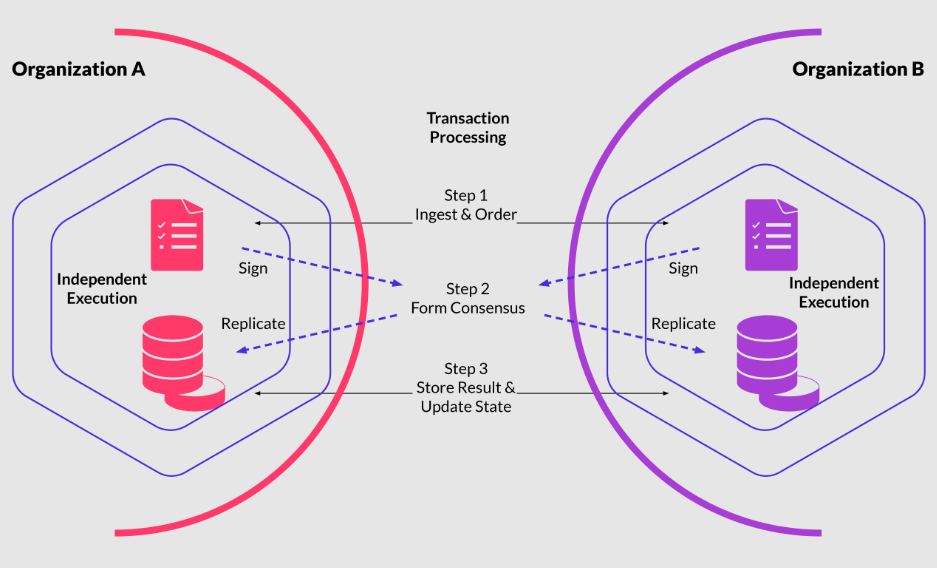
Discover where the UI is situated. If the site is hosted on traditional cloud infrastructure without any on-chain failover, then the company can be taken offline at will if a government has authority over the hosting provider. This doesn't automatically render the protocol itself as centralized — it may be that the smart contracts in question are still permissionless — but it does mean a real user loses access at the moment a site goes offline.
Identify who controls the keys to oracles, bridges and any off-chain dependencies. The majority of the so-called decentralized protocols need to rely on one or several off-chain components, and if so that component is really where the whole system security will live. They are also susceptible to attacks when a small team with majority control of the oracle feed is able to take over the protocol. The decentralisation language does not have its place outside a centralized chokepoint.
Examine the treasury makeup and history of transfers. If the treasury sits in a wallet that founders control, with withdrawals as often as feature development and never put to mandate by token holders, that wallet is just a corporate bank account sporting community colors.
The chasm between what is expected and what actually exists is not subtle once you begin to look for it. You want your work to be verified, the projects that have done the works. Those who are projects that have not done it want you just to take their word for it.
Who Got Caught Pretending
The list of exposed cases grows longer each year. With the benefit of hindsight, some were obvious. Some of these tricked people too smart to get caught out. There are examples where two or more capture different forms of the same basic failure.
Many of the decentralized exchange projects of the 2020s turned out to be run through a front-end interface that filtered transactions, blacklisted certain addresses and essentially served as gatekeepers for what they had been purporting to be a permissionless protocol. And when the underlying smart contracts were genuinely decentralized but what everyone actually used was this interface controlled by a corporate entity, it felt just like an exchange in practice — except that nobody had any liability when things broke.
Many stablecoin projects branded themselves as decentralized whilst still granting minting and burning powers to small operational teams. Many of the DAO treasuries were revealed to be an address with three signers and a solo signer holding the recovery key. And many lending platforms that advertised as non-custodial were actually holding deposits in hot wallets running on servers owned by a single party who could burn or freeze those funds at any time. Many of these arrangements have been revealed with diligent analysis by outside analysts. In some cases, it was simply that the founders applied their skills — the one skill limited to centralized operators: stopping the protocol, emptying out a founding treasury fund or just absconding with funds and in doing so were in practice exposing for posterity what could maybe only be called a sham after-the-fact decentralization since it had all been too late when communities found out.
What is, in retrospect, most striking is how little these exposures changed the general patterns of marketing. One project would get busted, the community would rage for a fortnight and then the next batch of projects would use the same lexicon but with slightly different words. Permissionless became trust-minimized, which became credibly neutral. The labels rotate. The underlying behaviors do not, unless the people building the protocol have genuinely ceded the operational control that makes their lives so much easier.
What You Are Actually Buying
The realistic conclusion is not that decentralization cannot happen. This is a reality, it exists and the protocols that have this tend to be the protocols that endure throughout multiple market cycles. Ethereum has it. Bitcoin has it. These DeFi primitives are a small set of it. In the end, the word on its own is no longer a definitive marker of those projects, since everyone who wanted access to that credibility has gone and borrowed it with little effort spent doing anything worthy at all.
The trick, for those of us who care about such differences, is figuring out how to read between the lines of marketing-speak into the technical reality. That takes time. Really, upfront it is not what most people want to do when they are looking at an investment. But the other option is listening to those with short-term financial incentives to deceive you, and historically that hasn't ended well for folks in the audience. Anything that is good drags in the rest and it seems to be the people best at sounding like they belong, generally do not.
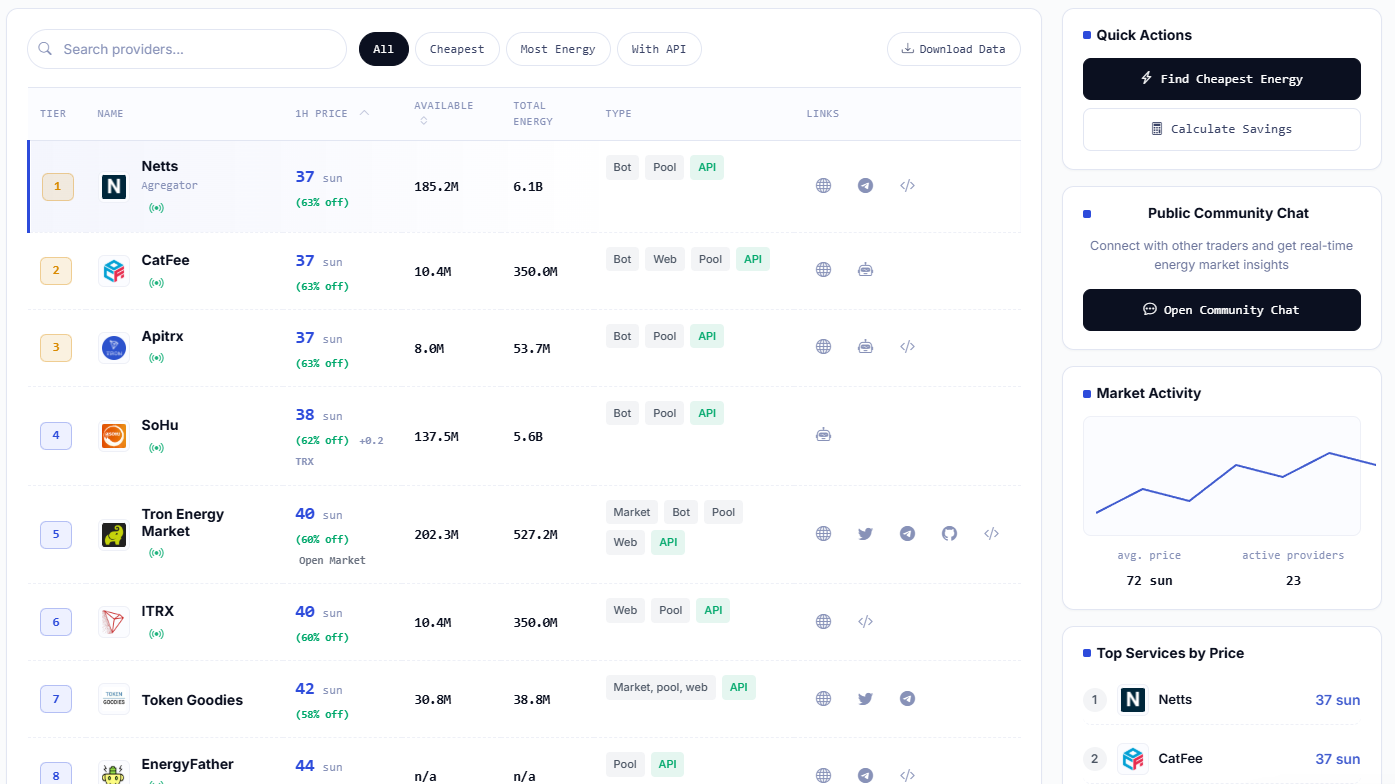
The TRON Energy market provides a real-world counterexample that is structurally the opposite of the marketing-versus-reality problem from above: Anyone interested in purchasing TRON Energy or comparing actual performance from several different providers without taking a provider's word as to what they deliver can check live TRON Energy prices on the public Energy market and monitor delegation activity (on-chain). The Netts service aggregates pricing from a comprehensive list of TRON Energy providers (Netts itself, SoHu, CatFee, Apitrx, JustLendDAO and many more), allowing users to view the lowest available rates in real-time while routing each transaction to the cheapest verified source. At such peak rates of roughly 25 sun per Energy unit, these savings versus burning TRX run as high as 75 percent — none of which require any staking whatsoever, including control over operations which no one single team can hold or be trusted with on faith: something that when inspected closely could well be seen as a truly decentralized principle in practice at all.