Crypto and Universities: Blockchain Education
How MIT, Stanford, Berkeley, the Ivies, European schools, and Asian hubs built credible blockchain curricula, research centers, and industry pipelines.
Twenty years ago, the very thought would have been inconceivable. Try suggesting to a tenured Harvard or Oxford professor that they should offer a serious, credit-bearing academic class on some form of made-up internet money. The premise would have probably been laughed off as so much hokum, an ephemeral electronic craze not deserving of any serious academic consideration. Yet, here we are.
Now, the world and our financial and technological perspectives have changed to such an extent that these same time honored institutions, along with their kind across the globe, sit at the forefront of blockchain education. What started as a fringe topic for coders and digital anarchists has blossomed into an academic field of the brightest minds in tech, finance, law and business.
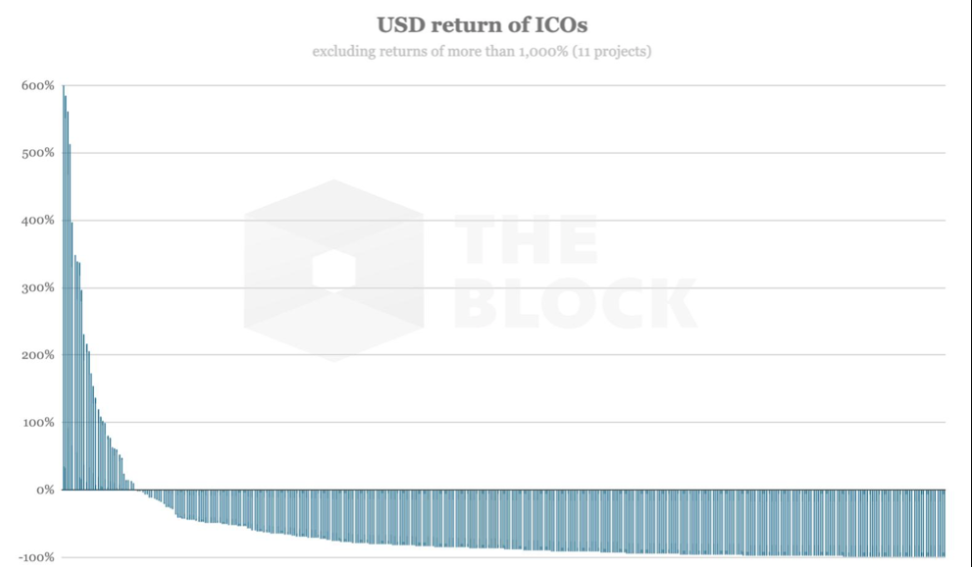
The academic progression has followed the industry’s own bumpy but ascendant course. At the start, when Bitcoin was just a curiosity being passed around in cryptography mailing lists, tech companies kicked in small donations. Interest surged among students during the 2017 ICO bubble, often motivated by dreams of “getting rich quick.” But thereafter the market cool-off and mature DeFi summer 2020 pivoted focus away from speculation into infrastructure.
Universities noticed that they weren’t simply teaching a trend; they were teaching the next layer of the internet. These days, “Introduction to Bitcoin” is far from the only course available. It has expanded to include advanced game theory, distributed systems engineering, and algorithmic monetary policy as well as legislative frameworks around digital assets. The doubt of yesteryear has been replaced by a scramble for supremacy, with leading universities competing to be the Web3 talent pipeline for the world.
This scholarly shuffle is motivated by more than the desire to know; rather, it reflects a deeper response to the global revolution now taking place in political economy. Students are clamoring for those skills, because the marketplace has been abundantly rewarding them. With the “great wealth transfer” of trillions in capital about to happen from Boomers to younger generations, there is clear interest that digital assets will be a linchpin of the future of managing portfolios. With large financial companies creating private ledgers and startups remaking supply chains, it’s no surprise that the need for people who understand blockchain has soared.
Universities, knowing they need to prepare students for jobs that did not exist a decade ago, have rushed to create curriculums that are as rigorous as they are timely. This is no longer about swapping tips; it’s computer science, game theory, macroeconomic policy and cryptographic security.
New Digital Academics: MIT’s Dominance in Engineering
Leading the way in this revolution in education is Massachusetts Institute of Technology — MIT. As one would expect from the cradle of technological innovation, MIT’s stance on blockchain is insufferably technical and research-focused. The university not just teaches blockchain, it is actively shaping its future through the Digital Currency Initiative (DCI).
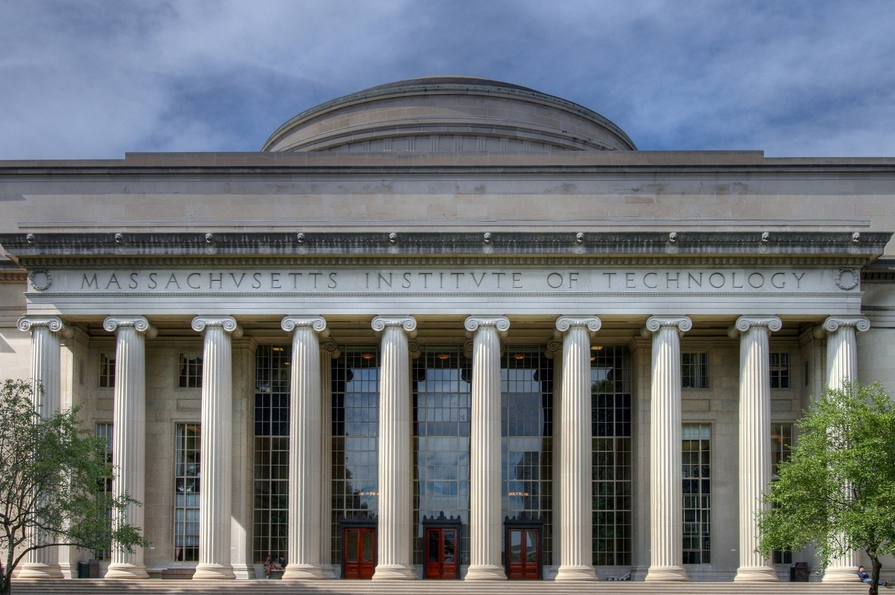
This cross-disciplinary effort is solely directed to cryptocurrency and its core technologies, assembling researchers across computer science, electrical engineering, applied math and economics in order to study the scalability, security and privacy of cryptocurrencies and their decentralized systems. They have undertaken the Project Hamilton, a partnership with the Federal Reserve Bank of Boston to explore the technological feasibility for a central bank digital currency (CBDC). This type of high-stakes, real-world influence is typical in the MIT experience.
MIT has a long history of legendary courses in the field. ‘Blockchain and Money,’ a course that reached worldwide fame when led by Gary Gensler prior to his appointment as the SEC head of policy, was meant to bridge the gap between the mechanics of blockchain protocols and the conceptual dimensions with applications in finance. It encourages students to question the financial sustainability of such systems. Another important offering, “Cryptocurrency Engineering and Design,” is not for the squeamish. It calls for a solid understanding of computer science and math, requiring students to make and break their own cryptocurrencies in order to grasp the subtleties of consensus. The payoff is huge: students develop the foundations for being able to contribute at a high level to development and research in such systems, shaping how we think about decentralized systems in the future. Less of an emphasis on market trends and more of a return to the fundamental science that made it all possible in the first place.
The Cradle of Silicon Valley: Stanford University
Of course, the university behind the digital revolution is also one of the world’s most prominent blockchain schools. Based in Silicon Valley, Stanford University takes advantage of their geography with the Center for Blockchain Research (CBR). The CBR, launched to solve the tough technical problems in the blockchain space, draws from across computer science, law and economics faculty and students. Headed by the esteemed cryptographer Dan Boneh, the center is churning out new ideas in such critical areas as zero-knowledge proofs and verifiable delay functions. And now we’re getting down to the brass tacks.

Stanford’s curriculum is incredibly diverse. Courses such as “CS 251: Cryptocurrencies and Blockchain Technologies” offer a deep technical foundation that spans from hash functions to zero-knowledge proofs. But Stanford has gone one step further and is specifically covering the legal frontiers of the field. “LAW 1043: Blockchain and Cryptocurrencies” charters the regulatory gray areas that shape this current crypto moment. The university also organizes the annual Stanford Blockchain Conference, a cutting-edge academic conference bringing together researchers and developers from around the world to discuss new information security research.
The university is also a hotspot for the academic-industry crossovers. Ideal for tech hopefuls who want a role in the world’s fifth largest economy. The proximity to venture capitals and trailblazing tech companies gives students an edge when it comes to making connections and knowing how their studies apply outside of the classroom. There are students here who aren’t just writing papers, but are frequently interning on the very protocols described in their textbooks.
The Groundbreaker: University of California, Berkeley
Just a short drive away, the University of California, Berkeley provides an alternative but equally influential model. The top computer science faculty at Berkeley aside, its blockchain brand is largely characterized by the student-led dynamism. One of the largest and most active student organisations in the crypto world is “Blockchain at Berkeley”. They not only host meetups but also teach official, credit-bearing courses as part of the university’s DeCal program. Not everyone thinks of self-teaching as a strength, but here, it is: This unusually structured curriculum can be stupendously agile — and update itself semester by semester to reflect the newest protocols and trends weeks or months before traditional faculty might have a chance.
This ground-up model has democratized learning and contributed to the formation of an interdisciplinary collaborative culture in which all students feel able to interact with the material. Their "Blockchain Fundamentals" class is the stuff of legend for its welcoming, approachable stance towards non-hackers and penchant for flattening the crypto learning curve.
But Berkeley is also a powerhouse of development. The student group functions almost as a consultancy, with projects for big industry players. Additionally, the Berkeley Blockchain Xcelerator serves as a springboard for promising startups and offers guidance and assistance to student founders. This is one of the things that makes Berkeley such a force for developing a new generation of diverse blockchain builders and thinkers, depending on whether world-class education has to always stem from a top-down, institutional model. Countless fancy articles about crypto have also covered the groundbreaking projects that machine has produced, positioning Berkeley as a place where future industry founders are currently being groomed.
View of Life in the Ivy League: Harvard and Cornell
On the East Coast, Harvard University treats the subject in a wider and interdisciplinary way. While continuing to offer technical course content, such as their School of Engineering and Applied Sciences’ “Introduction to Blockchain and Bitcoin,” Harvard tends to lean towards the economic, legal, and social impacts accompanying blockchain. The school also hopes to inspire rising leaders in business, law and government with strategic foresight to steer blockchain’s disruptive potential. The Berkman Klein Center for Internet & Society adds to Harvard’s crown jewels, studying the intersection of law, digital resources and governance.

Harvard Business School takes the lead with courses dedicated to the “internet of value.” The questions that this sort of presents are not just "how do you increment the code?" but “how does this recast trust within society?”. Making Harvard’s courses available to more people will be good for students (many of whom aren’t coders but who, in a decentralized world, are sure to become decision-makers themselves). The Harvard Law School is also a critical actor by organizing roundtables, research projects and events that engage in dialogues about which are the legal frameworks necessary for a decentralized future. The student body is no less active, with Harvard Blockchain Club holding massive conferences that bring in industry titans.
And Cornell University does have a special place in blockchain history, possibly boasting the most rigorous academic computer science focus of the Ivies. It houses the Initiative for Cryptocurrencies & Contracts (IC3), an impressive collaboration that includes Cornell, trustees Cornell Tech and UC Berkeley and others. IC3 has authored some of the most referenced academic works in this space, and it has led ground-breaking research on smart contract security and consensus protocols. At Cornell, the courses (largely taught by trailblazers in the field like Ari Juels) offer a profound and subtle understanding of the science behind cryptocurrencies and smart contracts. The curriculum is rigorous and well-suited for a research-oriented university. Here, the students are frequently working at the sharpest tip of what is possible mathematically in distributed consensus.
The Princeton Standard
Princeton University warrants mention for its overall influence on the classical literature of the discipline. Its course, “Bitcoin and Cryptocurrency Technologies,” is perhaps the best known MOOC on cryptocurrency, available through Coursera. This tutorial, along with the corresponding book that has the same title, has been translated into multiple languages and is used around the world as an introduction to cryptocurrency for beginners.
Princeton is focused on the first-principles of the technology, making sure that students understand why and how Bitcoin works before getting into more complicated Ethereum-style smart contracts. This back-to-basics emphasis helps provide some grounding of understanding which is often lacking in bootcamps that dive directly into coding.
European elite or not! Oxford, Cambridge, Zurich and Nicosia
The blockchain education wave is decentralized. Oxford University in the UK has developed courses for an immediate professional context. The “Oxford Blockchain Strategy Programme” is offered by the prestigious university's Saïd Business School in conjunction with online education provider GetSmarter. It avoids going into technical details and concentrates on a strategic view on how blockchain can create value and drive innovation in existing business models. The aim of the program is to let leaders know whether or not they should consider using blockchain technology, equipping them with tools to assess how it might impact their industries even if they’re not coding experts.
And just a few hours away is another titan, the University of Cambridge. The Cambridge Centre for Alternative Finance is of course highly respected globally for its data driven research. It produces the Cambridge Bitcoin Electricity Consumption Index (CBECI), one of the most critical resources for assessing the environmental impact related to mining. The academic style of Cambridge is very data centric. We give industry the facts, so we can then have grown up conversations about regulation and sustainability.

Then throw the UK into the mix and with it, University College of London (UCL) makes things even more interesting. Its Centre for Blockchain Technologies (CBT) is the world's biggest of its type with hundreds of research associates. UCL has quite a strong emphasis on DLT and P2P systems and is perhaps more experimental than some of the other institutions.
Switzerland, better known as “Crypto Valley,” is where both ETH Zurich and the University of Zurich — also one of the space’s behemoths — are located. ETH Zurich in particular is a world renowned engineering institution, and of course has played a significant role in the development and design concepts of many blockchains. Their research units are concentrating on security, scalability and network analysis – returning directly to feeding the thriving startup ecosystem in Zug. The combination of the university and local crypto economy makes this sync unlikely anywhere else in Europe.
An honorable mention goes out to the University of Nicosia in Cyprus. Not with the centuries-old gloss of Oxford, perhaps, but universally lauded as a true first mover; it became home to the world’s first Master of Science in Digital Currency in 2014. While the rest of the world’s universities were ignoring Bitcoin, Nicosia was teaching it. They even famously let students pay tuition in Bitcoin, showing a connection between abstract theory and concrete results long before its exchange in an economy was obvious. Their free "Introduction to Digital Currencies" MOOC (Massive Open Online Course) program has taught tens of thousands of students one of the most momentous educational programs in the history of the industry. Additionally, the University of Malta will establish an extraordinary formative center - bachelor’s degrees associated with the “Blockchain Island” normative environment.
Asian Hubs: Singapore and Hong Kong
In Asia, the National University of Singapore (NUS) has been a pioneer, leveraging the country’s position as a global fintech capital. NUS is about the marrying of blockchain and finance, certainly with a heavy concentration on entrepreneurship and commercial applications of tech. At the university, students can take a Master’s degree in Digital Financial Technology, so blockchain is an essential part of that. Our NUS students learn in an environment where decentralized technology is making its way into banking and supply chain orders, alongside the digital asset markets, here in one of the world’s most vibrant economies. The university is in close contact with the Monetary Authority of Singapore so that the program provides a sound regulatory-focused knowledge base for Asia.
The University of Hong Kong (HKU) has also stepped up with courses as the city revives its status as a crypto hub. HKU provides courses that combine finance, law and technology to train graduates for the specific regulatory context of the region. They are refocusing their research labs on the interoperability of blockchain systems and whether digital assets can be used to update traditional finance.
The Pioneer: Duke University and N.Y.U
Props to Duke University for breaking ground among American campuses. Developed by Professor Campbell Harvey’s course, was one of the nation’s first reputable university teaching on the topic and it began in 2014. Harvey’s idea was to not just treat the blockchain as a computer science problem, but as a financial innovation that could disrupt banking. His class quickly became one of the most sought-after electives at Duke’s Fuqua School of Business, serving as the proof that there was a vast, unmet student demand for this knowledge.
There's also a little school called New York University (NYU) that has carved out a large niche, especially with business (Stern School of Business). The first courses on digital currency were offered in the same year and have been taught by David Yermack at New York University Stern School of Business as part of the MBA programme; to date, more than 1,000 students have taken the courses. NYU’s location in the financial capital of the world provides it with access to guest speakers from Wall Street who are currently struggling to incorporate blockchain into traditional finance. This real-life view is essential for students looking to break into the institutional part of the crypto universe.
The Ever-Evolving Curriculum of Tomorrow
The pace with which the blockchain sector is moving makes this an interesting challenge for academia. Unlike history or calculus, in which the core textbooks are swapped out infrequently if ever, blockchain curriculums need a complete overhaul nearly every semester. From developments in consensus mechanisms to the intricate financial instruments being constructed on-chain, innovation is at breakneck speed. This demands a greater degree of agility from schools.
Themes that made sense two years ago may not make any sense today. Understanding resource management on networks, such as what TRON Energy and Bandwidth are and how to make efficient use of them, is becoming an essential part of a full-fledged blockchain education. An appreciation of these particular network resources is important as they are responsible for the viability and economics of decentralized applications. A student who knows Solidity but doesn’t know the economic cost of execution on various chains is half-educated.
When graduating students complete their university education, the necessity to engage in life-long learning becomes only greater. The notion that graduating means your education is done is long gone, especially in a field as ever-changing as this one.
If you're already established in your profession, keeping up to date is as important for you as it is for students. The more forward-looking services in the crypto space understand this and base their platforms on transparency and continuous improvement. A good proof is the in depth documentation style of recent platforms. For example, Netts constantly updates its extensive technical changelog, which is very useful for its customers. It details everything from API improvements and new endpoints to manage resources such as TRON Energy, to major performance enhancements and stability upgrades.
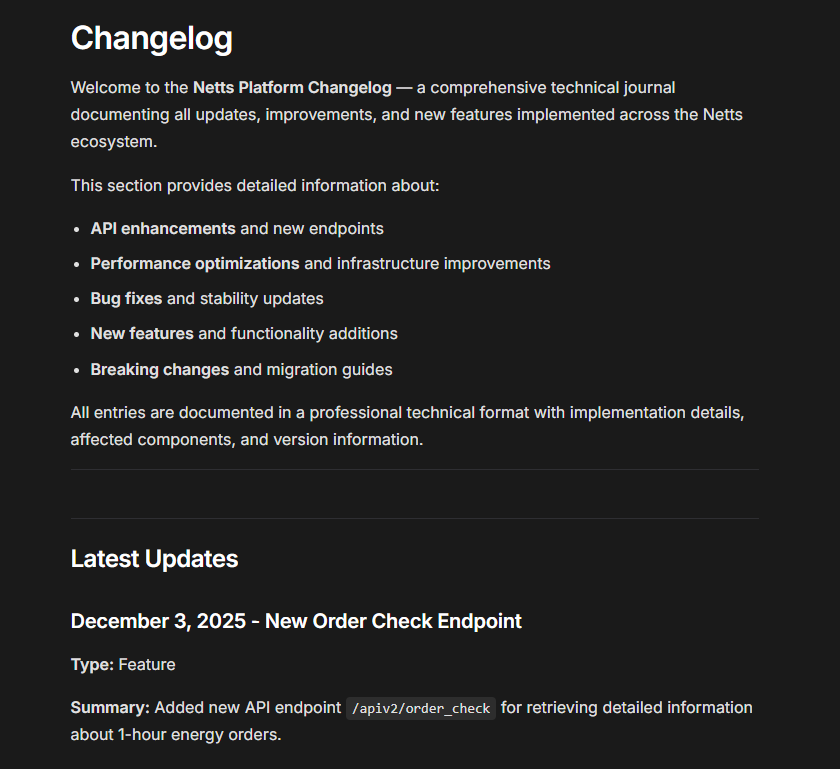
An investment in clear, detailed and robust documentation means those developers and partners can keep up with the pace of change regardless of their current release cycle: they’re guaranteed to be building on the most stable and advanced platform available. It’s a testament to the fact that in the world of blockchain, education — be it in a university hall or on a developer portal — never really concludes.