Crypto and Poverty: At the Very Bottom
Stablecoins in collapsing economies, P2P trades outside banks — how the very poor use crypto for survival rails regulators rarely imagine.
In the sealed climate-controlled space of a high-rise luxury apartment in an expansive city, the day starts silently, interrupted only by the whir of high-performance air purifiers. Alex, a classic “cryptobro,” peels himself off his memory foam mattress. The blackout curtains are hardly open, denying him the natural light of a sun he probably won’t even see until well after noon. His first act of volition, one so conditioned by the muscle memory of an addict, is to grab his flagship smartphone. The screen lights his face in the dark, bathing him in the cool blue haze of market data.
Before he has brushed his teeth, before speaking a word to another human being, Alex is tapped into the pulse of the world’s global economy. He refreshes the price of Bitcoin, the gas fees on Ethereum and the floor prices of his NFT collection. How many? And these numbers literally determine his mood for the day. If the lines are green, he is filled with a surge of invincibility, a validation of his genius. If they are red, he is overwhelmed by a type of hollow unease, a dread that the dream may be over.
Alex exists in the realm of abstraction. For him money isn’t a thing, it’s a score, a measure of how well he has played the game against invisible adversaries. All day long, he rotates between such ergonomic chairs in front of a happily glowing bank of curved monitors that flash with an incomprehensible array of charts, discord servers and Telegram groups. He speaks a language that makes no sense to the vast majority of people on earth: “yield farming,” “liquidity pools,” “impermanent loss,” “WAGMI.” He ponders what decentralized governance could mean philosophically as he sips an oat milk latte that costs more than the average member of the working class in the developing world makes in a day.
To Alex, the blockchain is a sort of intellectual playground, a space of frontier innovation where he can test his theories and increase his net worth. The risks he runs are financial, not existential. A bad trade may mean putting off buying a Tesla or canceling a trip to Bali, but it will never mean missing a meal. He’s literally buffered from the brutal contingencies of the physical world by deep layers of technology and privilege.
And compare that life with the one led by Kaelo, a boy who lives in a dusty village far from the urban centers of a third world country. Here, the day starts before sunrise, and not with glancing at a phone but to the crowing of roosters sounding in the village and distant banjo-like thunking — grain being pounded by a mortar. The air is filled with the scent of woodsmoke and wet earth. Kaelo sleeps on a thin mat, on a concrete floor in a room that also houses his two younger brothers. His first job is survival: drawing water from the communal pump, which usually runs dry, and examining the small solar panel perched precariously on the rusted corrugated iron roof of his family’s shack. This panel is his most priceless possession, his lifeline to the outside.
Kaelo also has a smartphone, but in one sense it is entirely different from Alex’s: It is a cracked, third-hand Android with a battery that hardly holds a charge. The screen is shattered, a webwork of breaks making it difficult to see the text, but Kaelo treats it with all the delicacy and reverence of a holy relic. For him, this is not a toy or an all access path to social media vanity; it is a tool of financial warfare. He lives in a nation whose currency is a joke, worthless paper that declines in value with incalculable speed. The government creates money to pay off its debts and inflation is generated that swallows up the savings of the poor.
In Kaelo’s world, the cost of rice, cooking oil and medicine increases daily — always up. He doesn’t give a shit about decentralization as a philosophy, or “the future of finance.” He’s concerned that there is a digital wallet on his phone containing a currency that does not decay. When Kaelo checks his bank balance, it is not to ascertain how much he’s gotten out of the system; it is merely to determine whether or not he can afford to survive for another week. The distance between Alex and Kaelo is not only physical but a reality apart. One is playing a game; the other is fighting for his life.
When the Game Gold Is Worth National Money
The economic misery in these towns generates situations that appear quite comical from the outside. In the absence of a national currency they can no longer rely on, people do not turn to the stock market or gold bars that are beyond their access. Instead, what they appear to appraise are virtual economies of gargantuan multiplayer online games. There are countries where the in-game coin of a game about slaying dragons to take their treasure is more trustworthy and has more purchasing power than the paper or metal coins issued by the central bank. It’s a surreal, dystopian world where a digital sword or pile of pixelated coins is somehow considered more solid as an investment than the currency issued by hats-of-state.
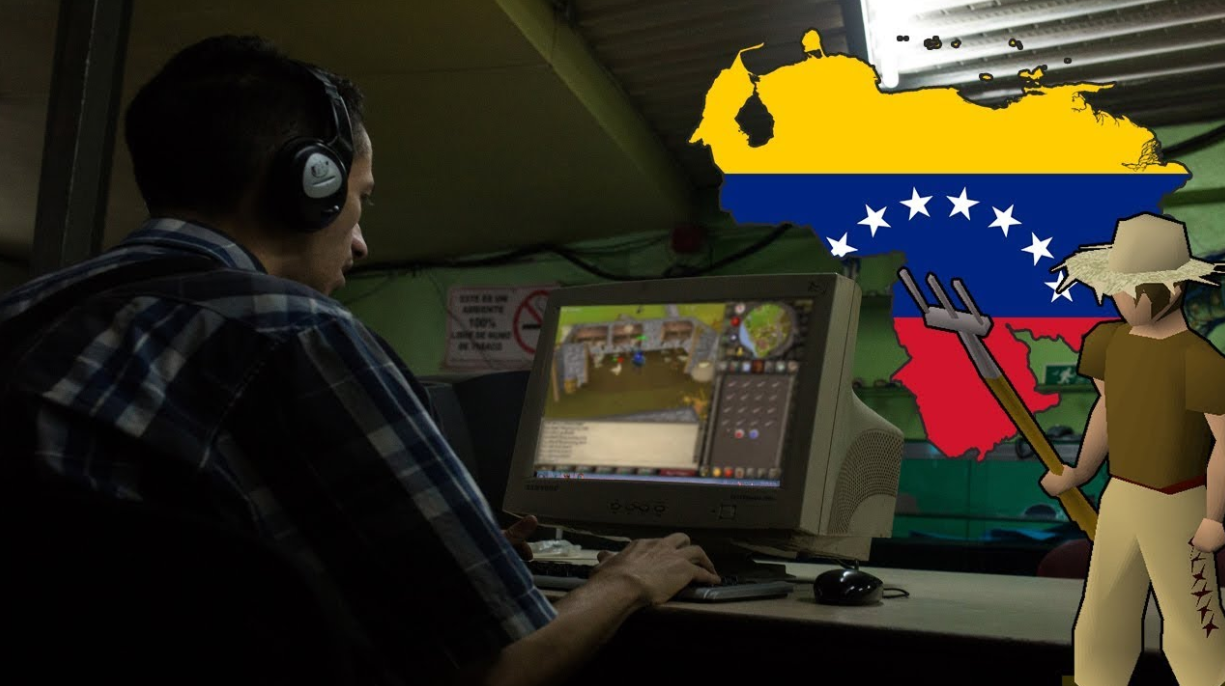
It has created a new class of worker: the digital grinder. In sweat-blown internet cafes, where the air is thick with sweat and ozone, armies of young people sit twelve, fourteen, sixteen hours a day. They are not playing for fun. The pleasure in the game is sucked out, replaced by a crushing routine of work. They are “gold farmers,” doing repetitive work — killing the same monsters, harvesting the same resources — over and over in exchange for virtual riches.
This digital gold is then sold on gray markets to players in rich countries who have more money than time. The player in the West gets to avoid the boring parts of the game; the worker in the South gets to eat. The economics of this exchange are brutal. A teenager working in a gold mine in Venezuela or in the Philippines might earn four or five dollars a day farming gold, many times greater than minimum wage (of the same country) on a monthly basis. This money is not subject to the hyperinflation that consumes the local economy. It’s a direct infusion of value from the socalled Developed World to the so-called Developing World, bypassing entirely those broken banking systems and corrupt governments.
It is a fragile life, however. These laborers are at the mercy of game developers, who hold the power to ban their accounts with a single keystroke and leave them without any reward for weeks’ worth of effort. They have no rights as laborers, no security on the job and no protection. But in relation to starving or begging, it is a risk they readily accept. They have been taught to trust the code of a video game more than the words of their politicians. The game has rules, they’re harsh but they’re the same for everyone. The national economy has rules of its own, and they change every time the wind shifts.
The Black Market and Budget Tech
As the world’s rural poor gain access to the internet, they are inadvertently contributing tools of a new economy — one that is enabling lower-skilled workers around the world to compete and earn wages. The budget smartphone is the weapon of choice in this battle. These devices, typically Chinese brands not sold in the West or refurbished models with cracked screens, are filling the markets of Africa, South America and Southeast Asia. They are cheap, hardy and most importantly of all, they are internet-enabled.
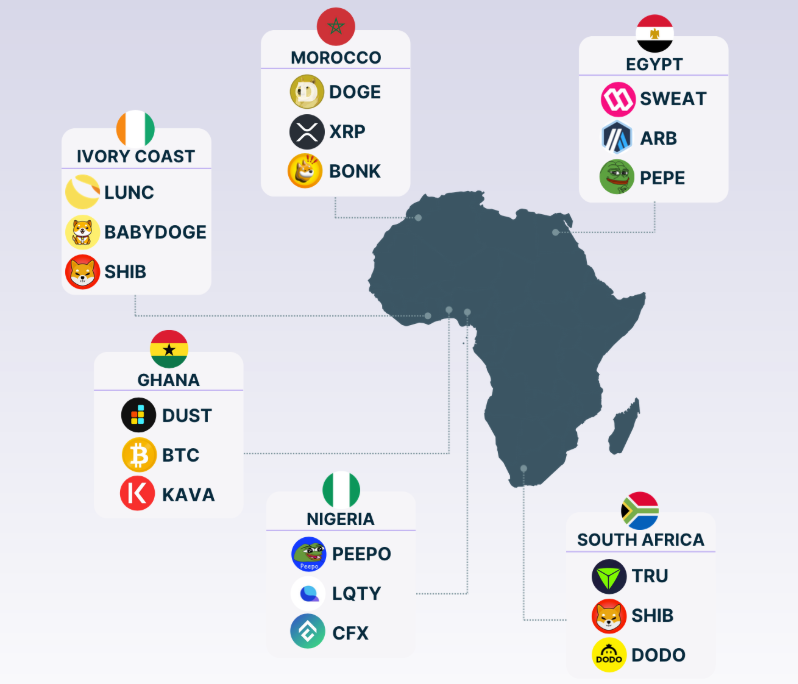
Today, for the first time ever, a peasant farmer or street vendor can have access to the same global information network as that available to a bank on Wall Street. This interconnectivity has given rise to a huge shadow economy. In Kaelo’s village, and thousands more like it, people have begun to flout the law simply to survive. And while the government can impose heavy capital controls — even limit places where people are allowed to spend their money — they cannot bottle up the flow of data. People rely on their phones to connect to peer-to-peer marketplaces where they trade goods and services for digital currencies that have value because the state has no say in them.
A mechanic repairs a motorcycle and is paid in a stable digital token. A weaver sells her baskets to a city buyer and gets a transfer that is there in seconds, with fees that are a fraction of what a bank would cost. This is all very “shady” by the government’s own legal standards of secrecy, and works only in the eyes of officialdom which wants its share. Yet for those who participate, it’s the only way to do honest business in a dishonest system.
They work in the gray spaces, meeting each other in alleyways to trade digital tokens for physical cash if they need it (or if they just prefer), or keeping their wealth strictly digital — using it to buy phone credit, pay for electricity or purchase goods from other merchants who have begun accepting the tokens. They are creating an alternative economy, one that flouts the taxman and his rules. It’s a system based on trust and reputation, maintained by the cold, hard logic of cryptography. That “shady” business where crypto is king is frequently the business of buying milk and bread without having half your money dematerialize into inflation.
The Logistics of Trust
In an unregulated environment, trust is the most valuable currency there is. With no courts or police to enforce contracts, the community is forced to police itself. Reputation systems on peer-to-peer networks are matters of life and death. A harsh review does not merely imply a diminished sale; it means exclusion from the economy. This has caused the phenomenon of what some have dubbed "human ATMs," or those with liquidity on hand used to make transfers between digital currencies and physical money. These agents work out of small kiosks, corner stores or from the back of a motorbike. They are the nodes between the digital ether and the bricks-and-mortar reality of the village.
Agents assume enormous risk. They have bull’s-eyes on their backs, with cash in their pockets in places where robberies can be rampant. Yet, they are essential. They enable a farmer to turn his digital earnings into the physical coins required to pay for a bus fare or a market tax. It is frequently a silent transaction — a brisk scanning of a QR code, a brief nod in recognition and the exchange of crumpled notes. It’s a dance of stealth and efficiency. Access to this network is freedom for the user. That means they can hoard money for a future harvest without worry that the bank may shut its doors or the currency will suddenly devalue. It enables them to think, to dream and to construct.
This trust network goes far beyond financial transactions. It becomes a social safety net.” When a family member gets sick, the community can quickly draw resources together, dispatching digital aid from relatives working in the city or overseas. There are no applications to complete, no waiting periods and no red tape. The money’s there in seconds, available for uses. And the difference in that speed can be life and death in a medical emergency. It is a cold, calculating system that has grown out of necessity; divested of all the friction and pageantry of traditional finance.
Survival in the Shadows
The necessity to live makes them very fit and so are the survivors, You have to be such. They are the invisible, ghost citizens of the global economy. They don’t own bank accounts, credit scores or passports. They are the “unbanked,” a category that bureaucrats use to call them an issue solved. “But they are working out the problem on their own. They are ambitious, inspired by the hope to raise their families up from mud. They do not view the digital economy as a speculative bubble, but as a ladder.
In the shadows, they learn how to negotiate a complex and unforgiving terrain. They understand security, not because they are paranoid but because they have to be. A hacked wallet means death — literally. They figure out how to communicate through encrypted messaging apps about setting up trades, so they don’t come under the eye of the police, who might demand a bribe or confiscate their phones. They organize networks of trust, vouching for each other in P2P circles and thus create a sort of social credit system that is much superior to any credit bureau.
It is an environment that breeds a particular kind of innovation. It’s not the innovation of Silicon Valley, pitch decks and venture capital. It is the invention of the favela, the slum, the barrio. It is “jugaad,” the art of improvising with whatever is at hand. They have a knack of optimizing every transaction. They have to understand the subtler ways of network fees because many westerners are hopeless at it. They know they have to rent Energy to make a transfer on the Tron network cheaper or they know exactly which part of the day has the lower gas fees. They are optimizing for survival. Here is where the concept of Energy leasing becomes much more than a technicality, but rather an important economic consideration. And every penny saved on a fee is another penny that can be used for food.
Rural Renaissance Through Digital Means
Technology in these rural areas is advancing so quickly that it’s leapfrogging generations of infrastructure. Places that lacked electrical power 10 years ago now have 4G coverage. They never had land lines; they went straight to mobile. They never had bank branches; they went straight to digital wallets. Kaelo’s roof solar panel is a token of this leapfrog development. It fuels the phone that powers the network that runs the wallet that holds the money that feeds the family.
And there is a social revolution taking place in the village as well. And it’s bringing a new kind of hope. For decades, the village’s narrative was one of decline — with young people moving to the city to find work and frequently landing in slums there while those who remained hindered improvement. “Now, there’s a chance to bring the work into the village.” A young graphic designer can land clients in Europe, do work for them, and be paid in crypto without ever leaving her living room. A translator may be employed by a worldwide agency.
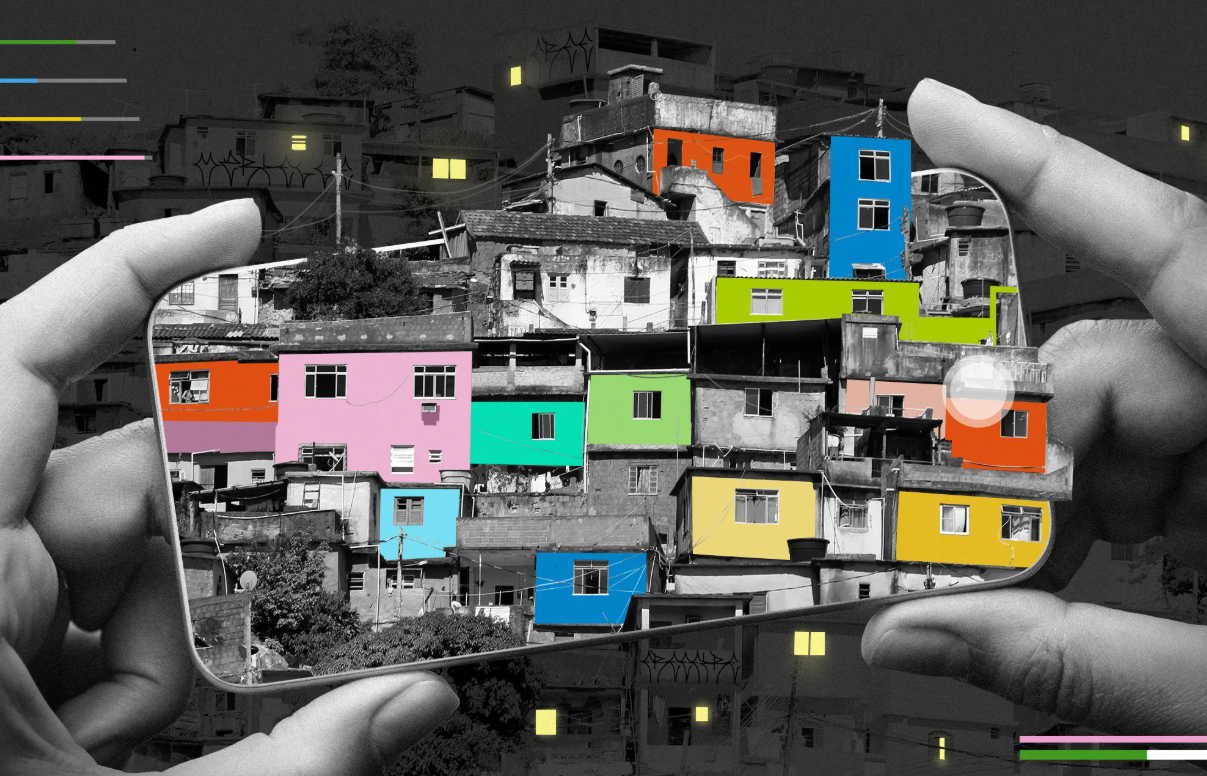
The world has been flattened by the internet, and though the playing field isn’t yet (if it ever will be) level, at least the gate is ajar. The notion that money can come from a “different source” — not the local landlord, not the corrupt politician, not the exploitative middleman — is revolutionary. It shifts the power dynamic. It gives people options. If the shopkeeper down the street rips them off, they can buy what they need from someone on the internet. If the local lender is charging usurious rates of interest, they can borrow from a decentralized protocol (if they are sophisticated enough) or from a peer in another city. This is technology’s promise not just bountiful but agency. It lets the poor be captains of their own economic fate — however small their ship may be.
The speed at which this knowledge has been shared is a triumph of human innovation. Parents learn to scan QR codes from their kids. Residents congregate around a hotspot to compare the latest rates. Trading floor is village square. They are learning about finance, about security, about global capital markets. They are growing into global citizens plugged into the world through the glowing rectangles that fit in their pockets. They are showing that you don’t need a suit and tie to comprehend money; you just need a reason to care.
This is not the kind of education taught in textbooks; it’s spread by word of mouth, via WhatsApp voice notes emanating out of a community that won’t submit to being left behind. They’re learning the tools of the future to solve the problems of the past.”
Conclusion
As this shadow economy grows up, the tools of its trade are getting more sophisticated. The survivalists are always looking for ways to make their digital lives more efficient and to squeeze all the value out of each transaction. In economies like Tron’s, which you need Energy or Bandwidth to process any transactions with, that can be impossible for the very poor. Here is where specialized services can serve as the bridge between techno-complexity and user need.
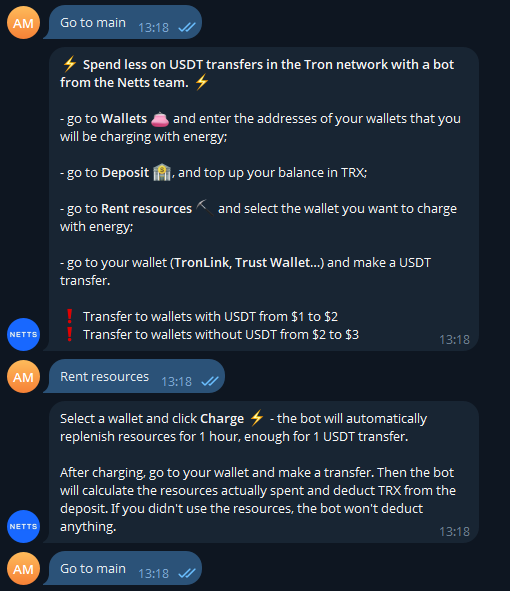
An example of such a service is the Netts Energy Charge Bot. With this instrument, one chooses a wallet and hits the charge button, which will automatically fill up the resources for an hour — exactly as much as needed to make a USDT transfer. When a transfer is sent, the bot confirms exactly how many resources were actually used then subtracts that amount from the user account balance. Importantly, you are not charged unless the resources are consumed. This sort of efficiency — paying for only what you use, right down to the unit — is precisely what’s demanded from an economy where every last penny counts.