Why Crypto Became Popular Without Any Marketing
Bitcoin grew without ad budgets — open code, forums, real utility, and word-of-mouth beat traditional marketing.
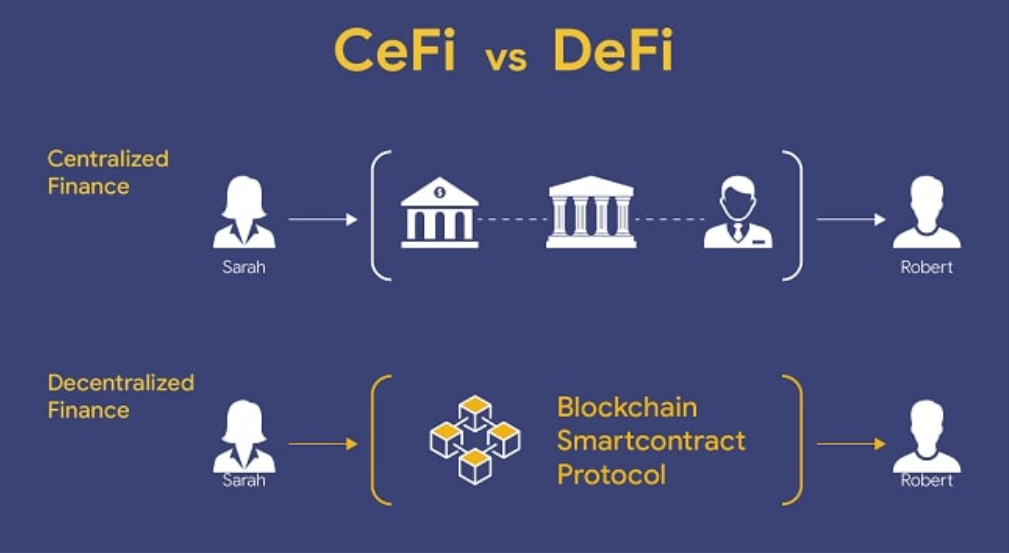
The ascent of digital currency is one of the most intriguing developments in recent financial history. Cryptocurrencies, unlike nearly every other product or service that's been widely adopted, have arrived on the global stage without advertising campaigns, celebrity endorsements, political backing and without a company behind it with sufficient resources to advertise. This natural development also flies in the face of much conventional business thinking — and teaches us quite a bit about how real innovation does diffuse within communities and social networks.
It all starts in 2009 with the birth of Bitcoin by creator Satoshi Nakamoto. There was no press release or marketing team or promotional campaign. Instead, Bitcoin was created by publishing a whitepaper to a cryptography mailing list and releasing its open-source code that could be reviewed, altered and utilized by anyone. The result of this 'bottom-up' approach was something never before seen: a financial system that has grown based solely on voluntary participation and local development.
Bitcoin’s introduction was modest, attracting only a few cryptography hobbyists and libertarian philosophers. The very first Bitcoin transaction was made from Satoshi to Hal Finney, a cryptographer and computer scientist who downloaded the software for the currency on its release date. This 10-bitcoin deal was the inaugural transaction in a monetary revolution that would soon spread to millions of people around the world — not a penny of which has been spent on traditional marketing.

The most notable thing about the launch of Bitcoin, though, was its timing. The cryptocurrency was created during the 2008 financial crisis, when confidence in traditional banks and other financial institutions was at an all-time low. At a time when banks were being bailed out by governments and making decisions that contributed to the economic crisis, Bitcoin presented an alternative that was decentralized from any authority. This environment was conducive to adoption, after all, since people were naturally looking for alternatives to financial systems of old.
Power of Decentralized Communities
What did make the adoption of cryptocurrency unique was that it used decentralized communities instead of centralized marketing. Early Bitcoin supporters organized into close-knit communities on forums like Bitcointalk, Reddit and eventually Twitter, where they discussed developments in the evolving technology and educated newcomers. These became self-sustaining ecosystems where information was communicated in the most natural structure of all: word of mouth rather than paid placement.
The Bitcointalk forum is where most of the early cryptocurrency talk occurred. In this forum, developers, miners and users worked together to develop technology that would make the Bitcoin protocol stronger while sharing tips on mining with others or teaching newbies how to enter into the confusing sphere of digital money. Unlike the typical company-moderated product forums, these conversations were completely user-driven — a space where truth and experience were resonating louder than any brand-heavy marketing messages.
Transparency in blockchain was key to establishing trust without a marketing budget. Unlike financial products which took a lot of ads to create skepticism, cryptocurrencies could give concrete evidence of how they worked. Anybody could peer into the code, check transactions on the public ledger and see precisely how the system functioned. This transparency rendered marketing claims superfluous because end users could check the capabilities of the technology on their own.
This degree of transparency was unprecedented in finance. The inner workings of traditional banks and financial institutions are conducted in private — opaque processes that culminate in secret decision making. By contrast, cryptocurrency networks are fully visible to anyone who wants to peer inside. All transactions occur on a public ledger, all logic is transparent for review, and protocol changes are openly debated in community forums. And this radical transparency won trust through verification, not marketing promises.
Publicity naturally resulted, as the market was new and when money is involved so is press attention. The wild price swings of Bitcoin, from a few dollars to over $1,000 in 2013 and even higher to nearly $20,000 in 2017, made international headlines each time. Cryptocurrencies didn’t pay their way to fame, unlike companies that buy stories and advertisements in the media. This grassroots PR has brought digital currencies to millions without a single dollar spent on marketing.
The attention the cryptocurrency sector received was especially successful, in that it was based on real news rather than manufactured publicity. And when Bitcoin hit parity with the US dollar in 2011 it was in the news as being the world’s first ever cryptocurrency! When the first Bitcoin exchange, Mt. Gox, opened for business, it was an actual innovation in digital currency trading. These real moments created true stories the media wanted to tell which generated an awareness cycle that money couldn’t buy through advertising.
Role of Real-World Utility
The organic growth of the crypto space owed a whole lot to the fact that it had real utility for solving problems on the planet. For nations with volatile currencies or non-existent access to banks, cryptocurrencies proved to be a stable store of value and the perfect means of transferring them. Digital currency enabled faster, cheaper remittances through digital currencies like stablecoins (e.g., USDT) - providing the stability of traditional fiat adapted by politics with blockchain technology's efficiency.
And the idea of these ultra-cheap cross-border payments changed the lives of millions. Users could create a USDT address and do fee-less USDT transfers, opening up international money movement to those who previously encountered expensive banking fees. This utility caused greater adoption than any amount of marketing that would have been done.

Think of Venezuela, where hyperinflation made the local currency nearly worthless. The people have increasingly adopted Bitcoin and other cryptocurrencies as a hedge against the depreciation of their wealth, and to transact freely from government meddling. All of this adoption happened solely through word-of-mouth and community connections - we did no marketing or promotion. Users stumbled upon it as a useful answer to problems they immediately faced, an adoption that marketing could only have dreamt of.
In diaspora-heavy countries such as the Philippines and Mexico, meanwhile, cryptocurrencies are also serving as crucial forms of remittance. Conventional remittance companies charge 5-10% and can take days to transfer funds. By contrast, currency transfers in cryptocurrency may be completed in minutes at fees of less than 1%. It was this strong focus on quality of service that created adoption through practical uses, not marketing messages.
Contrasting with Traditional Marketing-Driven Products
The organic nature of cryptocurrencies contrasts strongly with products driven by aggressive sales tactics to consumers. Traditional financial services, on the other hand, spend billions a year on advertising campaigns, celebrity endorsements and political lobbying to sell those same products. In spite of these significant marketing investments, traditional financial services face a skeptical consumer base due to fees, complex terms and lack of transparency.
Look at how the top credit card companies market themselves, for example, with big-ticket TV ads, sports sponsorships and celebrity tie-ins. Many of these promotions stress rewards and discounts but downplay fees and interest rates. By comparison, cryptocurrency networks are transparent - all fees and transactions are visible on the public blockchain. Through that transparency, we have built trust of a level that I doubt decades of traditional advertising would accomplish.
Another paradigm of marketing-driven adoption is in the pharmaceutical industry. Pharmaceutical companies devote vast resources to direct-to-consumer advertising, much of it pitching drugs for conditions that could be treated with changes in behavior. This marketing has led not only to overprescribing but also to increased health care costs, making it clear that hyper-aggressive marketing doesn't always work in the consumer's favor.
The tech sector has plenty of examples of marketing-driven adoption to compare and contrast against cryptocurrency’s viral growth. Social media sites have, for example, heavily depended on ad campaigns, influencer collaborations and viral marketing as means to user adoption. These measures have brought some success in numbers of users, but they also raised concerns about privacy and data manipulation as well as being potential vehicles for spreading misinformation.
Rather, the adoption of cryptocurrencies has been based on fundamentally practical use cases and widespread agreement amongst users. People use crypto because it creates genuine value for them, not just because they have been marketed or spun into using by popular culture. It is this utility-based adoption that is building a stronger and more authentic user base, one that cannot be easily swayed and is more invested in the long-term success of a technology.
Technology-Driven Adoption Model
Technology adoption in the form of crypto brought a trend where innovation was the market. Every new phenomenon - from smart contracts to decentralized finance protocols - was not promoted, but called attention through technical virtue. Applications were made by developers and entrepreneurs that solved real problems, which users used not based on how much the creators had marketed it to them.
This strategy established a feedback loop in which successful projects brought in more developers, which resulted in more innovation, and even more users. The whole space grew through technical par excellence with absolutely no marketing being done, only community building.
Ethereum, in 2015, is a classic example of this tech-first adoption path. Rather than starting with a full blown marketing campaign, Ethereum started with an innovative whitepaper and then raised money in a crowdsale which appealed to developers and early adopters by promising them smart contracts and dapps. The road to success for the platform was based on technology, not hype — because of the applications that developers built on top of Ethereum it became clear how much can be done with this new chain.
DeFi protocols are another example of tech-led adoption. These protocols were created to address core issues in legacy finance, like high fees for lending and borrowing, opaque financial products, and restricted access to financial services. Users used these protocols because they were offering superior services over traditional competitors, not because of some fancy marketing campaign or celebrity endorsement.
Network Effect in Action
The network effect of early cryptocurrency users was key to its adoption with no mainstream marketing efforts. As more people participated in Bitcoin and other cryptocurrency networks, participation became more valuable for all participants. This naturally provided an incentive to the early adopters to make others join the network - and influence was spread organically as word-of-mouth kicked in, turning users into voluntary marketers through enthusiasm, rather than compulsion.
This "viral word of mouth" was much more powerful than marketing ever could be, because it came from people that you trust - friends, family members and colleagues who have used cryptocurrency themselves. The word-of-mouth referral was more effective than any ad campaign.
The crypto network effect has several layers in cryptocurrency adoption. The more businesses accepted Bitcoin as a payment, the more point there was for people to have any. The value of those platforms also increased for users as more developers built applications on blockchain systems. The acceptance and reputable names of this asset class grew among retail investors when institutional investors started investing funds in cryptocurrency. With every new player in the ecosystem, all the existing ones gained more value, forming a self-reinforcing loop of adoption.
Also critical was the voluntary nature of this promotion. In contrast with regular marketing where companies have to pay for endorsements and testimonials, the promotion of cryptocurrency was 100% voluntary and based on actual personal experiences. This authenticity was more believable and influential than any ad an advertiser could have paid for.
Innovation in TRON Energy Renting
The past few years in blockchain have not been different with the trend of utility-driven adoption. On the TRON network, there is an Energy renting feature in place so that individuals do not have to hold large quantities of TRX in order to complete transactions. This is a genuine improvement - the high transaction fees of current "coffee transactions" combined with this new tech to make it usable, and they didn't need any marketing fluff or recruitment to make you adopt something that actually works!
With the introduction of TRON Energy renting, cryptocurrency transactions have become easier for normal people to use. This kind of innovation-driven adoption follows a trend set by early cryptocurrencies, where practical solutions to problems will grow much faster than any marketing effort could ever achieve.

The TRON Energy renting mechanism is another good example why crypto products are quite in line with the organic growth model. This feature took off not because of advertising, but rather it solved a useful problem. Users figured out that they could rent Energy from other nodes to save on transaction costs and this got around the community quickly via word-of-mouth. The innovation worked because of what problem it solved that was real for people to whom the solution mattered, not based on whether you could market it.
Future of Organic Growth
The organic emerging approach of cryptocurrencies by community and technical innovation has lessons for other industries. It shows that you can - with real utility and open operation - take a product to mass level without traditional marketing spends. This is a more effective way to foster deeper trust and long-term user bases than marketing-driven adoption models.
With the evolution of cryptocurrency, new services and use-cases are popping up that follow this same organic growth. If some of these take off, it will be in response to real users with real needs and not billboards' worth of advertising spend, representing a continuation of the utility-driven history that has attended the cryptocurrency space since day one.
What cryptocurrency's organic growth can teach other industries: the lessons of crypto aren't confined to the financial industry. Open source very often did so through the same mechanism - community engagement, technical skill, and real value. Linux, Apache and open source in general have acquired their prolific status within internet infrastructure without being promoted using traditional marketing tactics, thus proving that this type of organic growth process can work in a variety of sectors.
The success of crypto's organic growth this time also serves to underscore the ineffectiveness of typical marketing tactics. And though marketing can help seed the process and drive initial awareness, there is no way it can create the depth of trust and community involvement required to achieve true long-term adoption. Products based on marketing usually struggle to keep user interest once the advertising initiative is over, whereas products that grow their user base organically through utility and community have a more loyal base.
Netts Energy Charge Bot
In continuation with the organic growth through practical implementation, Netts' team has developed the Netts Energy Charge Bot on Telegram. This is just one iteration of how the smartest and most promising developments in cryptocurrency are propagated more through human networks and word-of-mouth than traditional marketing.
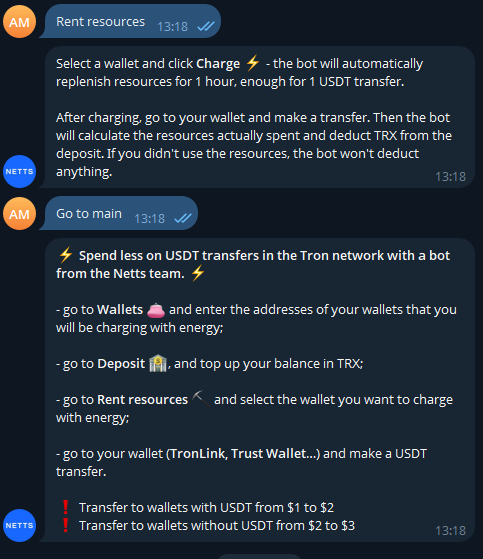
Netts Energy Charge Bot fills a specific demand among users of the TRON network — lower costs for transferring USDT via rented Energy.