What Is MEV — Justified Fee or Extortion?
MEV extracts billions from blockchain users but it also keeps DeFi markets efficient... right?

Anyone trading on decentralized exchanges has paid MEV, probably at some point totally unaware. The transaction confirmed. The token arrived. The gas fee looked reasonable. And at some point along the way, a bot siphoned value out of the transaction that wasn't its to take. Not a hack. Not a bug. The most likely part of the system that very few users have ever even heard of, and never get to see it on a confirmation screen.
MEV means Maximal Extractable Value (MEV). It is the profit that can be extracted from a blockchain block by addition of which transactions, in what order and which ones are excluded entirely? Whoever this entity is making these decisions — a miner in antiquated systems, a block builder or validator in modern ones — it has immense discretion over every transaction in every block. When that power gets monetized, that's MEV.
This does not mean that the more pricey is always unjustified. Real services incur real costs: network fees, gas costs, and priority payments. The issue with MEV is more granular: Is the value being extracted on purpose, or is mere extraction? The inconvenient answer to that, is yes — but it depends on the flavor of MEV you are looking at.
Where the Concept Came From
The first known explicit recognition of what we refer to today as MEV was in a reddit thread going by the pseudonym pmcgoohan who described a situation, published back in 2014 where Ethereum miners could see, via the public mempool (the waiting room for pending transactions before they are picked up and put into a block) when other transactions were waiting to be sent which would then allow them to front-run these transactions. At the time, that post didn't generate much interest. At scale the problem did not arise because the system was too new, and trading volumes too small.
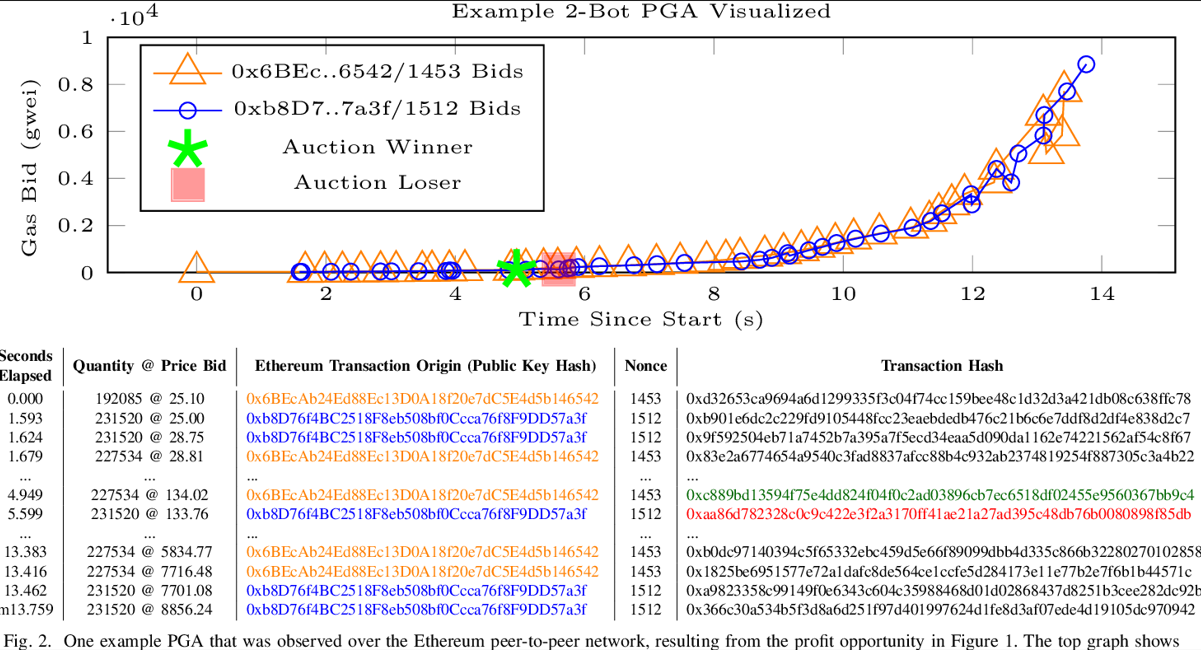
That changed as DeFi grew. In 2019, Phil Daian and others at Cornell University formalized this idea in a research paper titled "Flash Boys 2.0." The paper describes what it termed as Priority Gas Auctions — auction-like bidding wars between bots with the intention of getting their own transactions placed before or after a target transaction in line, but paying successively higher gas fees to gain priority. The research estimates that these methods were siphoning off millions of dollars each month. Because Ethereum was still on proof of work at the time, miners ordered transactions. Hence, the term miner extractable value. Ethereum switched over to proof of stake in September 2022, causing the name to change from Miner Extractable Value as it showed that validators held such power now — but the acronym stuck.
Flashbots is a research and development organization that was created back in late 2020 to try and bring this problem to light and provide more organized solutions. The argument was that unstructured MEV extraction — singling out bots sending whack-a-mole gas bids in the public mempool, getting stuck and increasing the fees for everyone else on the network — was even worse than organized extraction via public channels. MEV-Boost, developed by Flashbots, was open-source software that gave validators the option of receiving pre-configured blocks from dedicated block builders instead of building their own blocks and accepting the highest bid in every slot. When Ethereum switched to proof of stake, MEV-Boost launched in September 2022 and the rest of the ecosystem quickly adapted. Eventually, MEV-Boost came to mediate around 90% of all Ethereum blocks by the time patterns stabilized.
The numbers that gathered behind this infrastructure are not small. From the Merge (Sep 2022) until June 2024 MEV extraction was equal to 526,207 ETH — around $2.1b in prices at that time. This is not hypothetical value. It is real money that has changed hands from one group of people to another, varying in justification depending on how it was gathered.
The Bots That Never Sleep
The sandwich attack is the most blatant example of which mechanisms deserve the extortion label. To understand how this works, we need to know one structural fact about most public blockchains: the mempool is publicly visible. A pending transaction to swap tokens on a decentralised exchange is visible to anyone watching the network — until it's confirmed. It remains there, signalling your intention, the amount of swap and the acceptable slippage.
A sandwich bot reads this signal and places the order in the same block. The bot puts in a buy order just before you and buys the same token you buy, making the price go up a bit. This effectively executes your transaction at a fake and inflated price, meaning that you receive fewer tokens than you would have received without the intervention. It then sells what it purchased immediately after your transaction, pocketing the difference that it created in price. This entire process transpires quicker than any human being can react to — not in seconds, but in the ordering of a single block (12 seconds on Ethereum; < 1 second on Solana).
A specific example from March 2025 shows how high this can soar. A trader now tried to trade $220,764 in USDC for USDT on Uniswap v3 — a stablecoin swap that under normal circumstances would have been among the lowest-risk trades imaginable. An MEV bot front-ran the transaction and ended up draining the pools liquidity leaving this trader with only $5,271 of USDT — a over 98% loss in eight seconds. Across multiple Ethereum wallets, the same trader was reportedly attacked six times that day, losing approximately $480,000 in total.
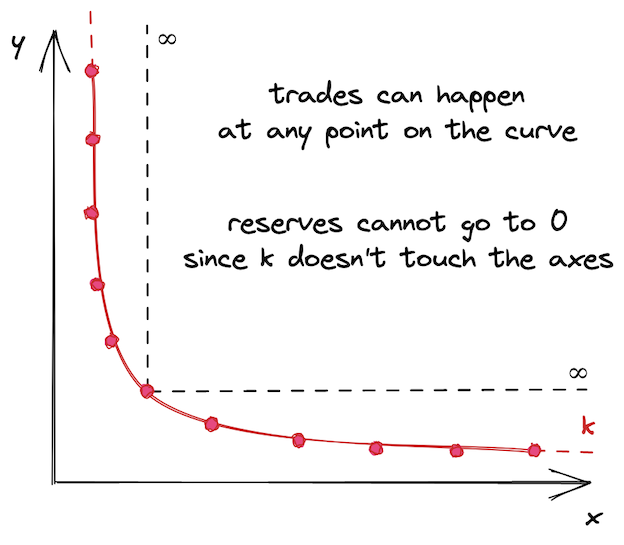
Across the entire ecosystem, these are significant figures. According to data from EigenPhi, between the months of November 2024 and October 2025, there were more than 95,000 successful sandwich attacks on Ethereum which caused around $60 million in losses for traders in those months. Monthly extraction reached just under $10 million by the end of 2024, before falling to roughly $2.5 million in October 2025 as margins were driven down due to competition among bots. For example, between March 2024 and May 2025, sandwich bots siphoned off $370 million-$500 million from users on Solana. The widening numbers between Ethereum and Solana show the contrasting nature of two networks, where fast and low-cost transactions affords many more profitable high-frequency sandwich attacks on Solana.
Measurement Problem — deserves its own mention. With that said, MEV is quite hard to measure accurately. While realized MEV — what bots and builders actually capture — is in principle visible on-chain, we need a ton of analytic infrastructure to understand which txs are keying planned extraction from the intended ordering. The mempool is also partially private — services like Flashbots allow users to submit transactions through private relays, avoiding the public mempool and thereby being invisible to sandwich bots but also partly invisible to MEV researchers.
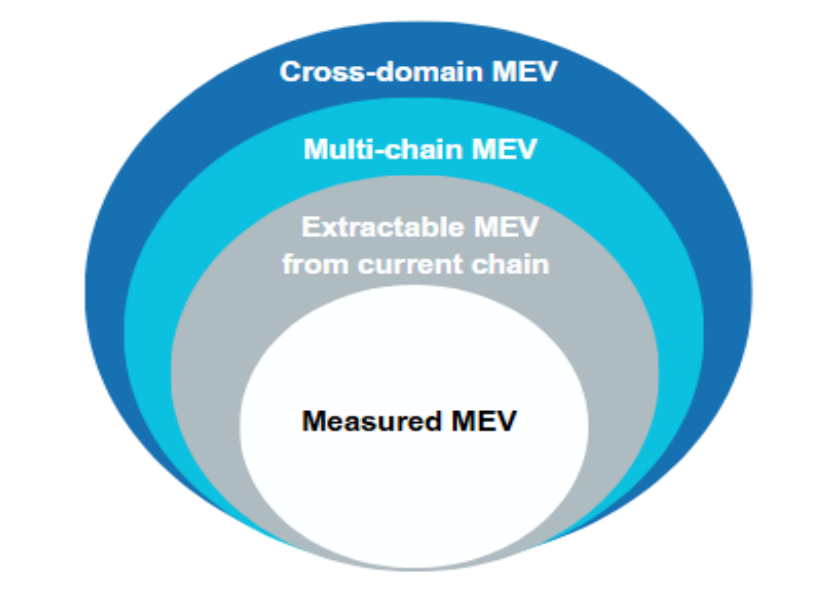
In July 2025, the European Securities and Markets Authority released a report on the MEV impact on crypto markets in which it acknowledged "data available relate to MEV is scarce and often accompanied by significant caveats" — an admission from one of the largest regulatory bodies attempting to regulate something currently not fully readable even if allocating huge resources studying it.
MEV: Contentious When the System Is Working
Not all MEV is predatory. The same ability to perform sandwich attacks also creates arbitrage opportunities, and the two are structurally different in their impact on other participants.
Arbitrage MEV works like this: Decentralized exchanges price assets by quoting the ratio in their liquidity pools algorithmically. Thus, if a huge trade changes that ratio on one exchange, this is where the price goes and not other exchanges. The arbitrage bot notices that difference, and executes an order to buy the token on an exchange where it has just dropped in price and sell it where it now costs more, pocketing the difference. The original trader is unaffected − the arbitrage occurs after them, not around them. And the market impact is truly stabilizing: the convergence of prices through exchanges accelerates, decreasing the probability that normal users will experience a bad execution by simply being unable to access stale data.
EigenPhi also tracked its arbitrage profits from September 2022 to September 2025, with a maximum of about $3.37 million over a single 30-day period on Ethereum in September 2025. Arbitrage bots usually pay validators in tips 50 percent to 60 percent after their profits. This is MEV that acts like a market efficiency tax, rather than an extraction. In its 2025 report, ESMA explicitly stated that "arbitrage MEV contributes to closing price gaps across trading venues, which in principle should reduce market fragmentation and improve market efficiency."
Liquidations represent a third category. Lending protocols like Aave and Compound are comparable to DeFi lending, as users must collateralize an amount greater than the value of what they acquire in order to stay solvent. When the price of collateral falls below a certain level, to avoid an accruing loss to the protocol, someone has to come and close this position. Since MEV bots compete to do this, they watch for collateral ratios at all times and send liquidation transactions while a position is being rightfully liquidated, earning a liquidation bonus in return. Just as with many if not all trading protocols, this is a market function that the protocol itself literally needs in order to make sound trades. In the absence of fast bots liquidating, lending protocols would be taking on bad debt. The MEV harvested from the process is a compensation to provide a service on which the ecosystem relies.
This distinction is important because classifying all MEV as extortion misses half the story. Exploitation of Sandwich attacks move value from users to a bot without providing any service in return. Arbitrage and liquidations are real market services that someone would have to do regardless of the presence or absence of MEV as currently conceived. They need to be replaced with different mechanisms, which either have greater cost, or less reliable work.
PBS, MEV Burn And The Architecture That Rules Them
The technical response to MEV has resulted in a collection of infrastructure that most users will never see up close, yet which forms the backbone of every transaction they conduct.
At the core, we have Proposer-Builder Separation or PBS as the main structural change. This design violates a fundamental equilibrium in its original form — where the same validator proposing a block was responsible also for building it as well, selecting transactions and ordering them, maximizing value. It incentivized and empowered validators to extract MEV in favor of themselves directly, but it also had the effect of applying pressure toward centralization: by creating a more sophisticated field of MEV extraction than what was manageable without significant software dev chops — and capital-intense market relationships have huge advantages — large, well-resourced operators would be able to capture economic rents from smaller ones that otherwise wouldn’t exist.
PBS separates the roles. Here specialized block builders compete to fill the most profitable block, and validators just select the highest bid and propose it. MEV is captured by the builder through transaction ordering and the bid payment is captured by the validator. This is what MEV-Boost accomplishes but externally to the Ethereum protocol, it is middleware and not a base feature. Though this structure works, it adds trust assumptions: Validators must commit to trusting the relay between builders and validators in a way that they will not act maliciously. An example of this risk was the malicious validator that stole about $25 million from five MEV bots by exploiting a bug in the MEV-Boost relay back in 2023.
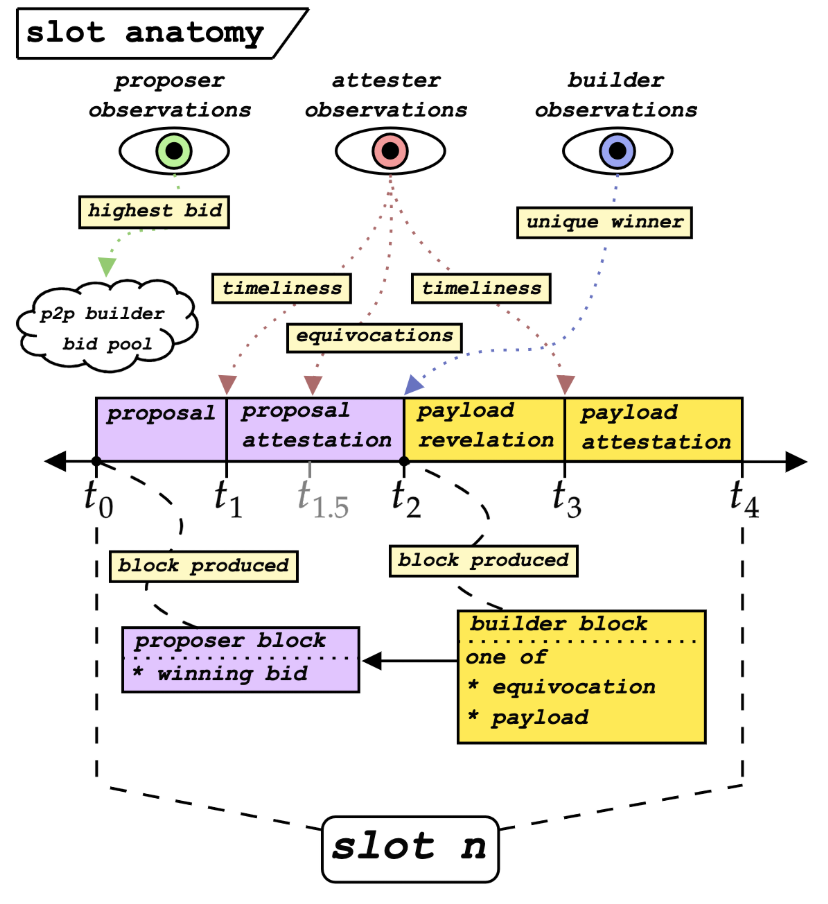
Meanwhile, the more long-term solution is known as Enshrined PBS, or ePBS and this would bake proposer-builder separation directly into Ethereum's core protocol allowing it to cut its dependence on third-party trusted relays. EIP-7732, the ePBS proposal was confirmed as a headliner for Ethereum's 2026 Glamsterdam upgrade. The trust assumptions based on the existing relay-based architecture would shift to protocol-level cryptographic guarantees under ePBS: builders not being able to cheat proposers and proposers not being able to steal builder blocks due to the enforced separation built into the protocol itself.
Although many solutions exist, MEV burn solves the distributional problem of MEV: if there cannot be any elimination of MEV, who should get it? At the moment, MEV revenue is going directly to builders and validators. MEV burn would send some of this to be burned — similar to the way EIP-1559 burns base fees and reduces the total supply of Ethereum — changing what is currently a private subsidy for skilled players into a public good owned by all ETH holders. You could call it not-you, except in this case the counterargument is that it dis-incentivizes you to build blocks well and therefore leading to degradation of execution quality.
Flashbots, together with Beaverbuild and Nethermind, created BuilderNet in November 2024. Instead of one leading builder producing the majority of blocks, it allows a federated system to cooperatively build blocks using Trusted Execution Environments — secure hardware enclaves that privately destratify transaction bundles. This will in turn aim to offset the edge that market makers get from exclusive private order flow contracts with dominant builders. Since its launch in early 2025, Titan Builder retained nearly 52% of the entire block builder market share.
The following outlines the problem each mechanism in this ecosystem is aiming to solve:
Move MEV extraction from individual validators to a competitive builder market, providing democratized reward access but introducing relay trust dependencies.
ePBS (EIP-7732): embed the builder-proposer auction into Ethereum's protocol layer, removing relay trust assumptions.
MEV burn: re-allocates value extracted from builders and validators by means of supply reduction back to all ETH holders.
Private mempools + Flashbots Protect: anybody can offer an own private mempool protecting its users from sandwiching, hiding transaction intent before inclusion in the block.
BuilderNet: like ProposerDraft, it attempts to decentralize the very act of block building by allowing multi-party TEE-based collaborations.
These mechanisms target different levels of the same issue. Individually, none of them solve it completely but collectively they provide an engineering answer to a hostile environment that to some degree exist because of the way public blockchains function.
What Does It All Mean For The Average Person?
Very few users need to act on it consistently; MEV is not knowledge that most users are able or interested to implement. There are only a handful of situations, though, where awareness of it has direct implications on how something is and those should be known.
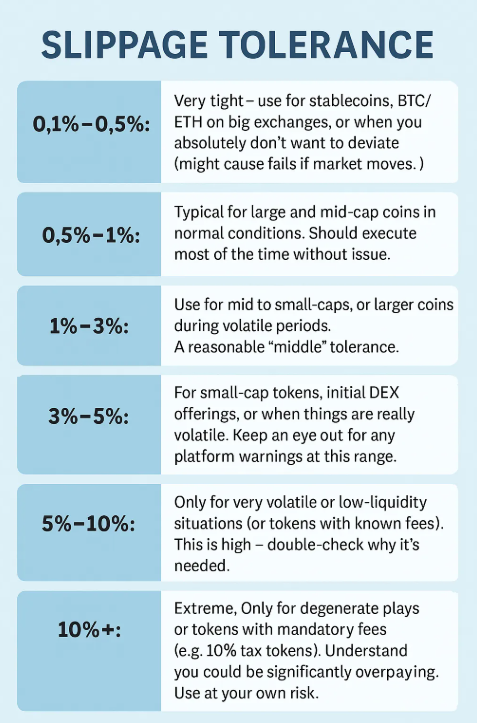
The first is slippage tolerance. Each DEX swap has a setting for how much worse than the quoted price you will tolerate. If you set this too high, it becomes trivially easy for sandwich attacks — the bot who recently front-ran your trade knows that you gave them the space to do so! If you set your too low, then in volatile conditions your transaction may revert. All of these settings require a good understanding of the token pair, the pool depth as well as the state of the network which is not explicitly visible from within the UI.
The second is routing. When you submit a transaction into the public mempool, your intent is visible to every single MEV bot watching the network. Flashbots Protect is a completely free private RPC endpoint for Ethereum, sending your transactions via private infrastructure hidden from the public mempool and sandwich bots. Based on the multisig mechanism, CoW Protocol has an MEV Blocker with similar protection for various chains. So private routing managed more than 50% of all Ethereum transactions by early 2025.
The third is trade sizing. Large trades on thin liquidity pools are the most sought after sandwich targets. Dividing a larger swap into smaller ones makes each transaction's price impact less and hence lowering the profit of an attack. To determine best execution DEX aggregators such as CoW Protocol and 1inch route trades across many pools, thus minimizing MEV exposure.
EigenPhi publishes ongoing information and analysis about MEV across chains, and the ESMA report referenced above presents the most thorough regulatory framing yet available for broader consideration in its July 2025 conclusion regarding proposed reports on, "MEV implications for crypto markets". The best part — if you're building on-chain, or at volume, then this infrastructure is not optional to understand: it is the difference between idly accepting invisible costs, and understanding where they come from.
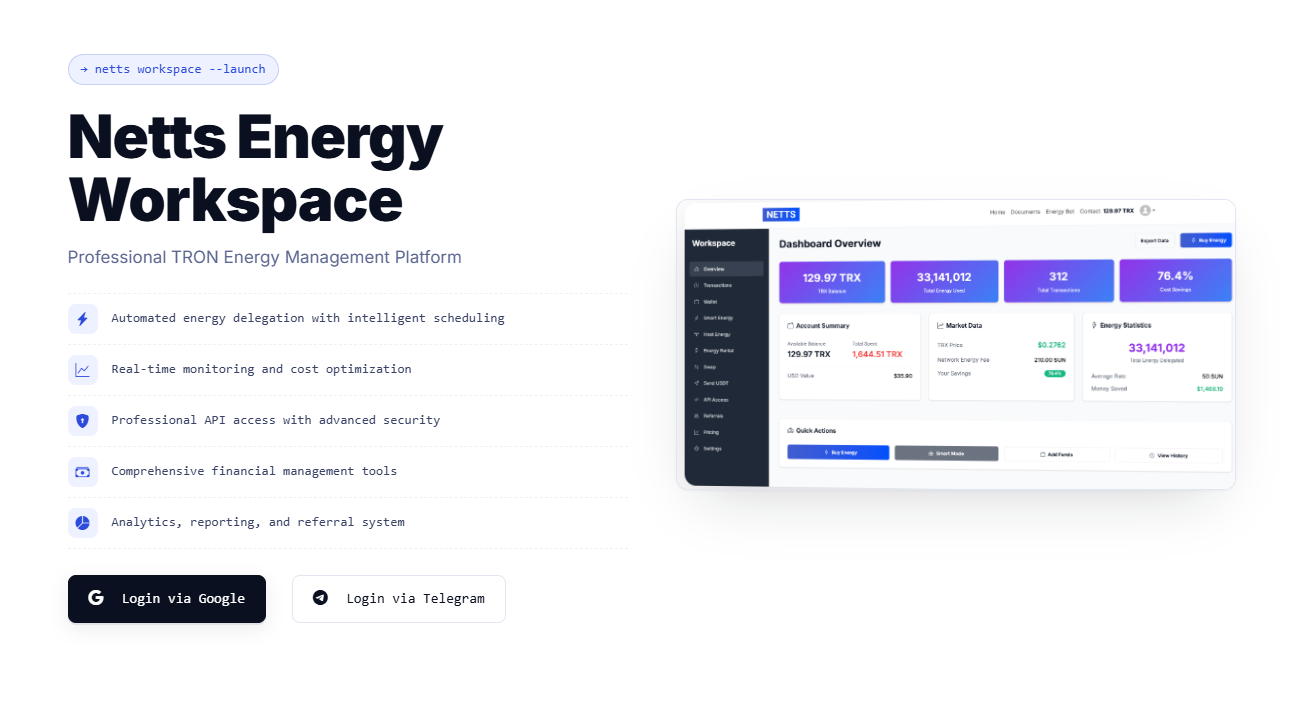
Netts Workspace is a professional platform organizing the Energy management of TRON generation that is configured in an automatic manner for TRON network users who want similar control over their infrastructure costs without the complexities of MEV-Boost and builder markets. The tools of this new platform, manual rental along with smart automation triggers, host mode for continuously used addresses and full API for integrating TRON Energy into custom workflows, all address the equivalent dilemma on the TRON: automatically ensuring that every transaction has the supplies it needs in terms of both Energy and Bandwidth — at an optimal price without constant manual requested intervention. The principles of the equivalents to MEV mitigation on Ethereum apply exactly here, and if you are a developer building on TRON and you require consistent Energy provisioning at scale, then the API for Tron Energy and multi-address management tools will be especially relevant as it removes the human latency that creates gap nbetween.