Proof of Stake and Proof of Work: Learn the Difference
PoW and PoS are not interchangeable acronyms — they represent fundamentally different philosophies about how a blockchain earns the right to be trusted.
PoW and PoS are two abbreviations that appear all the time in crypto coverage. Proof of Work & Proof of Stake. You see them appear in whitepapers, on exchange listings, amongst community threads on arguments against others, in the fineprint of projects trying to get your investment. Most people skim past them. Plenty of people who were involved with crypto for many years could not give you what differentiates one from the other in functional terms. This is for them — and anyone else who, even correctly, wonders a little more about the difference than it seems to matter.
First, the academic definition, since this is usually the one you'll come across most frequently. Proof of Work (PoW) is the consensus mechanism where participants on a network known as miners complete cryptographic puzzle calculations and compete for prohibitive amounts of computational power. The winner solves the puzzle and can add a new block of transactions to the blockchain, earning themselves a reward in the network's native coin. On the other hand, Proof of Stake is a consensus mechanism in which validators are selected to propose and attest to new blocks based on the amount of cryptocurrency that is "staked" as collateral. That stake can be destroyed, a process known as slashing, in the case of misbehaving validators.
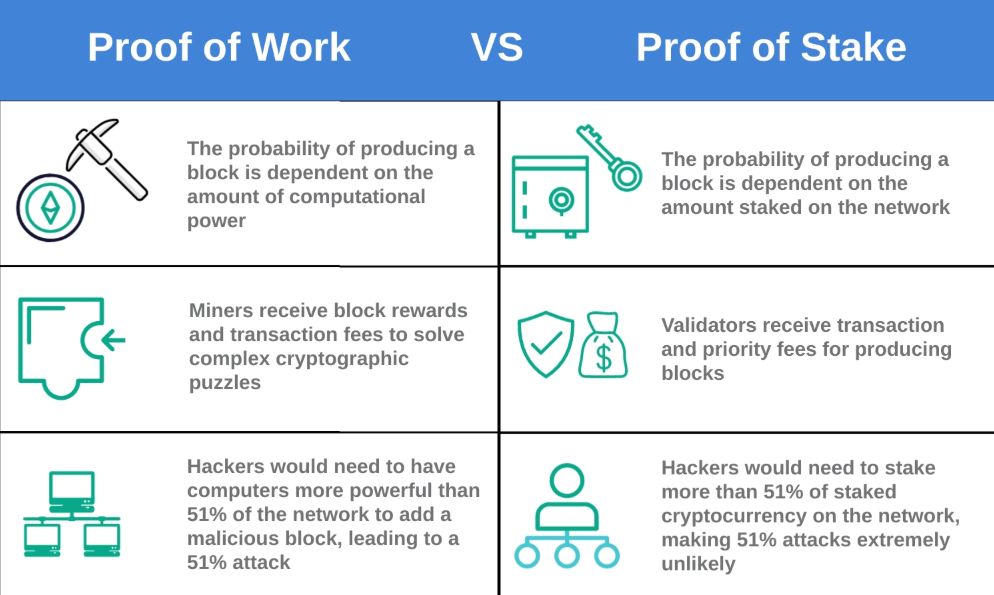
That is the textbook version. It is accurate but utterly worthless as an explanation of why anyone should care.
Here: a simpler one – in PoW, you literally expend real electricity to demonstrate that it is your turn to write to the blockchain. In PoS, you do it with skin in the game. So both mechanisms aim to solve the same problem — How can I get thousands of strangers, with no reason to trust each other, to come into consensus about a shared record of who owns what? — employing various wagers regarding what people might turn away losing.
Enter Bob
Bob is not a developer. Bob has heard from his friend that you could make money in crypto and opened his exchange account for the first time. He has no idea what a consensus mechanism is and he does not need to — and yet, this distinction is about to shape the very decisions he makes without him realizing it.
One of the first things Bob does is he buys at 90%+ staking yield project. PoS chains advertise annual percentage yield for validators and those game luring numbers will entice. What Bob doesn't know is the fact that those yields are denominated in the same asset that he is staking. Then that yield is paid out in a coin only worth 60c each because the market has punished it with a further devaluation of over 40% — not uncommon behaviour for small PoS chains. In the meantime his stake could be locked for specified period of time where he cant leave. The hallmark of a con — where there was meant to be some passive income, the mechanism becomes something with a timer on it.
Bob could also see investment offers for cloud mining services — PoW-adjacent schemes in which someone promises to mine Bitcoin using Bob's money (i.e., pre-sold hashpower) as a fee for the privilege. In fact, when considering fees and hardware depreciation, and electricity costs, legitimate cloud mining rarely turns out advantageous to the customer. The latter, which makes up most of the market, involves no mining at all: early investors get paid off from those coming in later until the whole edifice crumbles. It sounds credible, PoW branding and everything — the actual hardware costs are real for those who have spent time in places with photographs of server farms. The photographs provide no evidence of what is actually going on with Bob's money.
Having knowledge on whether a project is PoW or PoS does not protect Bob from all scams. However, it provides him with a baseline of the appropriate queries: where is the hash rate coming from and at what cost; what are the slashing conditions; what is the unlock period; who has control over the validator set. The questions you list are knowable answers a real project will answer quickly.
Neither mechanism appeared from nowhere. Both came from people really engaged in hard engineering problems, and both solutions are significantly more complex than their surface language might suggest.
By the time of Bitcoin's launch its basic principles had already been outlined in 1997 by Adam Back's Hashcash which proposed a solution to curbing email spam — sending an email necessitated performing a little bit of computational work, hence making it expensive and impractical to send more than a few emails with no possibility of mass-mailing. In 2008, Satoshi Nakamoto took this to a new level with the Bitcoin whitepaper, adapting proof-of-work computation as an integral part of a trustless distributed ledger. What I love about it is that, the "work" can be verified by anyone in milliseconds and nearly impossible to fake — You cannot fake solving the puzzle without doing so. This asymmetry between the cost of producing proof versus that of verifying it is what powers PoW.
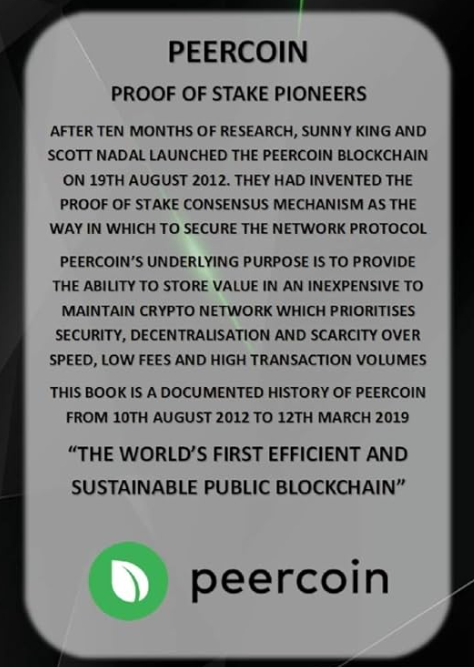
Proof of Stake first showed up on bitcoin forums around (at least) 2011, when engineers started to observe the obvious flaw in PoW: all that electricity use was financially wasteful — it exists only to make attacks expensive. It argued that locking up capital instead of burning electricity achieved the same deterrent effect at a fraction of the cost. The first real world application came on August 12, 2012 with the release of Peercoin by Sunny King and Scott Nadal, who introduced the concept of Proof-of-Stake in a paper: 'PPCoin: Peer-to-Peer Crypto-Currency with Proof-of-Stake'. At the time, Vitalik Buterin claimed that Peercoin was «the only functional PoS proposal » to date. It did not make the press like what Bitcoin made. Yet it laid out the concept that would ultimately change most of the industry.
The Ethereum proof of stake update, commonly referred to as the Merge, took place when Ethereum transitioned from its 2015 release up until September 2022 on proof of work. This one event cut Ethereum's yearly energy use by about 99.95%, from around 83 terawatt-hours to 0.03. PoS or a variant of it is now used by over 70% of the top 100 cryptocurrencies by market cap.
Technical Ground-Truth Behind Every Mechanism
The real differences that become apparent at a mechanical level, and all the trade-offs stop being abstract.
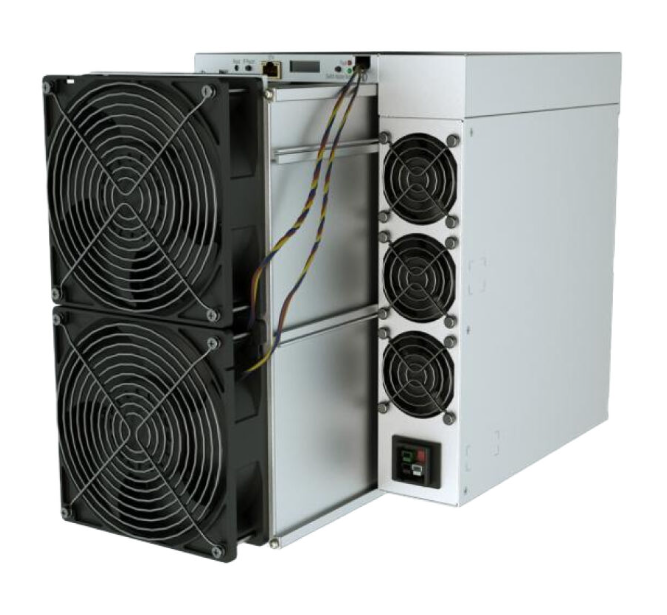
Within PoW, miners continuously process their hardware through a hash function (a math operation that takes any input and returns a static-size output). The problem, an input which will create a hash less than or equal to a specific number. There are no short cuts, you try random values as fast as your hardware will let you. Bitcoin's network adjusts the difficulty every 2,016 blocks so that the average time between blocks remains approximately ten minutes — regardless of increasing total hashing power. Today, the global hashrate is over 750 exahashes per second. The Bitmain Antminer S21 XP, one of the most efficient commercial miners in today takes 270 terahashes while using the direct power supply of 3645 watts — owning competitive hardware from this tier is a necessity, not an option.
Holders are rewarded simply for participating or staking their coin on the network (as opposed to PoW where users are bidded for blocks and rewards). This means deposit their stake — 32 ETH in the case of Ethereum — into a smart contract on the network. It then pseudo-randomly assigns validation responsibilities, weighted by stake size, over a range of time slots. For any given slot, a single validator is chosen to propose a new block and another committee of validators is selected to attest to that block — cryptographically verifying it adheres with the rules. The cost of computation is not what secures you, but simply that any validator proposing a fraudulent or inconsistent block has their staked collateral destroyed by the protocol. If you stake 32 ETH, and try to be dishonest, the network can kill all of it. It is this third step, the threat of financial punishment — losing everything — that prevents normal conditions making dishonesty economically unfeasible.
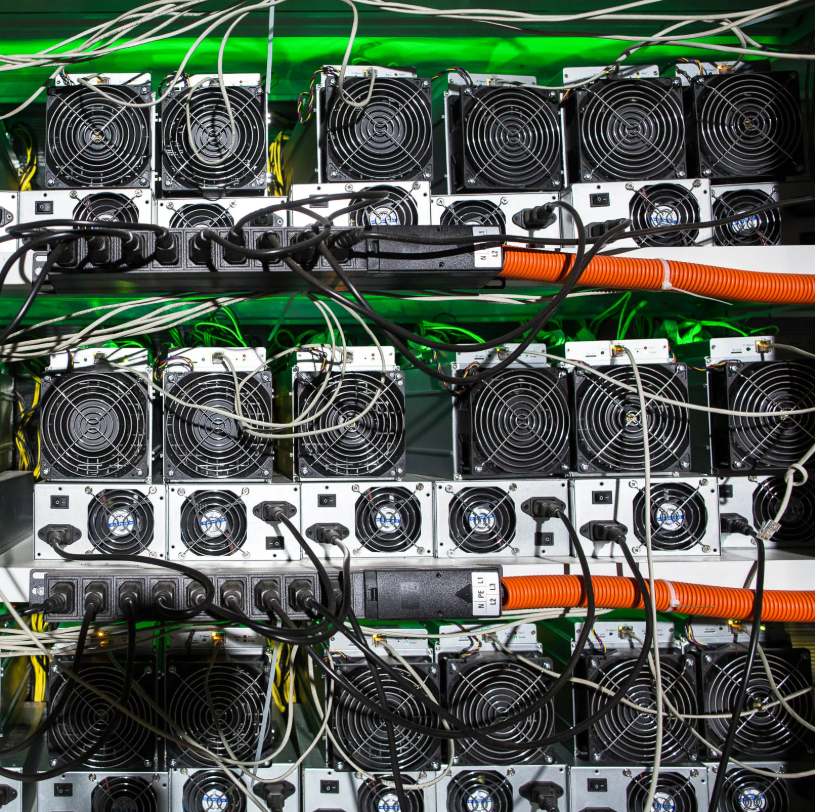
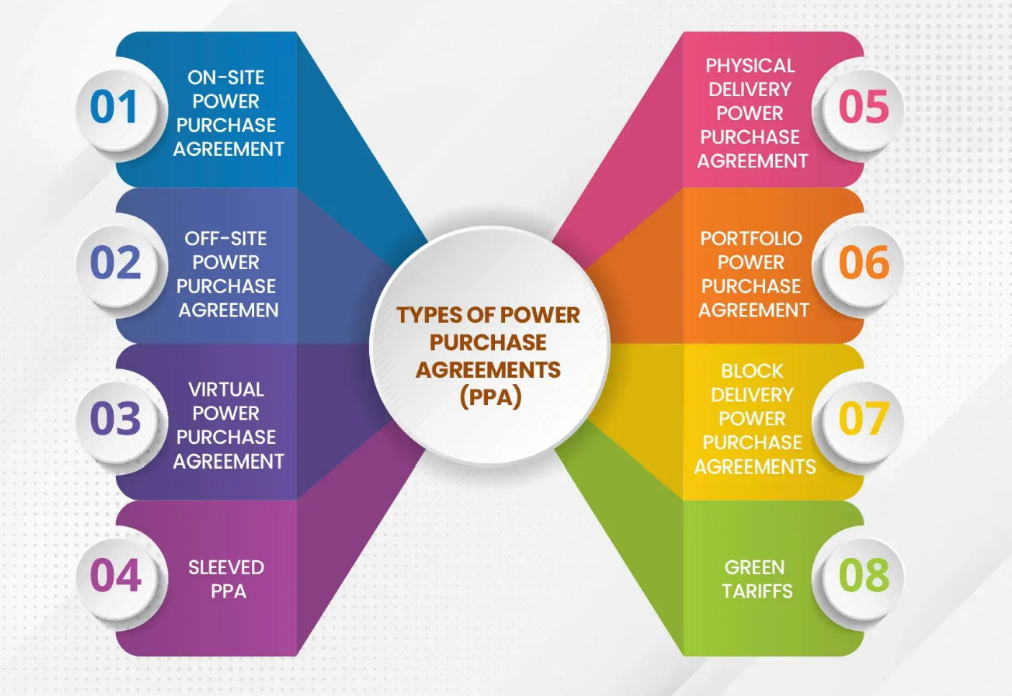
The hardware differences are stark, so let us state them outright. To run an Ethereum validator all you need is somewhere between mediocre and so-called "server-grade" specs, a machine with 16 gigabytes of RAM, a 2-terabyte NVMe solid-state drive, internet that doesn't go down every five minutes (or more), the ability to follow one of two software clients without downtime. For a dedicated machine, that hardware cost runs to a few hundred dollars, on par with the price of high-end gaming desktop. Each competitive Bitcoin ASIC runs for thousands of dollars and an amount of electricity that rivals a small household appliance — and they represent only the slimmest, fractional portion of the network hash power. Massive PoW mining facilities are literally industrial infrastructure projects consisting of warehouse-size buildings, customized electrical installations, complete industrial cooling systems and Power Purchase Agreements (PPA) for wholesale electricity. A whole PoS validator operation can figure in a closet.
Finality — the time at which a transaction is irreversible — functions differently, as well. Bitcoin achieves probabilistic finality: while each additional block renders reversal exponentially more expensive, it is never absolutely certain. The usual limit of 6 confirmations takes about an hour. Unlike Bitcoin, Ethereum provides not just consensus finality but economic finality through its PoS mechanism: checkpoint blocks finalized when a validator has attested to them cannot be undone except at the cost of more than one-third of all staked ETH being destroyed — which presently amounts to well over thirty billion dollars. It reaches that finality in roughly 12.8 minutes.
When the Difference Becomes Critical
Both mechanisms have been stress tested against adversarial conditions, and the failures are educational.
The classic attack on a PoW network is a 51% attack: an attacker with more than half of the hash rate of a network can secretly mine their own competing version of the blockchain, exclude payment they previously made to an exchange and when that chain is longer than the public one, progress it. The network will take the longer chain as canonical, and they can delete a payment while retaining what they have received in return. This is a double-spend.
This attack is, in effect, impossible for Bitcoin. Purchasing 51% of Bitcoin's hash rate would take billions in hardware on top of electrical costs — with estimates of over $10 billion for persistent capability. Two years later, the deterrent holds because the economics are prohibitive.
The disincentive does not exist for smaller PoW networks. Bitcoin Gold is a fork of Bitcoin that was created in 2017 and was attacked in May, 2018. The attackers rented hash rate from commercial hash marketplaces, directed it towards Bitcoin Gold, and double spent an estimated $18 million worth of BTG on exchanges before the attack was detected. Those exchanges that got hit removed Bitcoin Gold from their listings. It is still traded, but at a small fraction of what it used to. Ethereum Classic also fell victim to similar attacks in 2019, as well as another on Aug. 1, where a single attack led to $5.6 million in double-spent ETC and a more than 7,000-block blockchain reorganization that effectively erased days of network history. Via rented hash rate, it now costs about $3,283 to attack Ethereum Classic for one hour (as per the latest data). That figure is the entire economic security of a single blockchain.
The attack surface of Proof of Stake. An attacker who builds enough stake to dominate more than 1/3+ of the validator set has similar capabilities — reorganization rights, transaction censorship, MEV. It costs more than $36 billion to chain break Ethereum by acquiring over one-third of all staked ETH and we record its cost as this. The slashing mech actually creates an even stronger disincentive: a successful attack also destroys the attacker's stake as punishment, so PoS majority attacks can be economically negative overall (even if technically successful).
Some blockchains have intentionally selected points along this trade-off curve. The Bitcoin ecosystem stays on PoW because its community sees that energy expense as a feature: the thermodynamic cost rather than just an economic one, of rewriting history, is seen to be an absolute system commitment. Ethereum selected PoS to be scalable and eco-friendly.
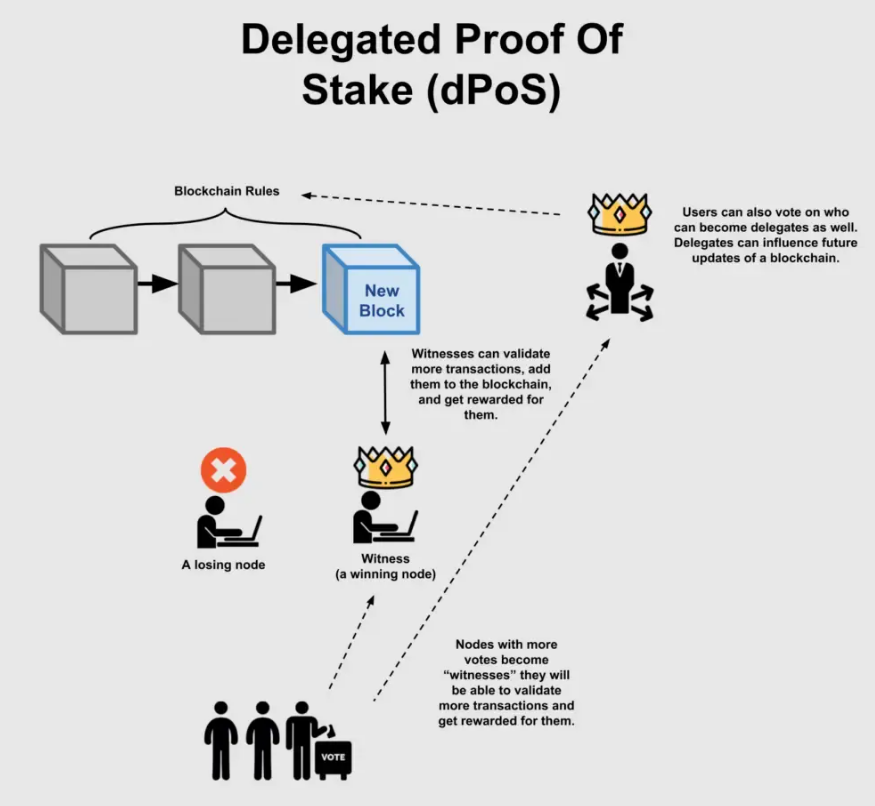
TRON is based on a Delegated Proof of Stake system, where token holders vote to elect 27 super representatives that take turns producing blocks; a design that sacrifices some decentralization in exchange for high throughput and minimal transaction fees. Ouroboros, the PoS variant that Cardano employs, is based on peer-reviewed cryptographic proofs. Solana's timestamping mechanism on top of a hybrid Proof of History solution allows high throughput minutes before even entering the validator set, albeit at the cost of more resource-hungry hardware requirements and historically frequent network outages.
The consensus mechanism choice is not a branding decision. It defines transaction costs, finality speed, what infrastructure is needed to participate on the network, how big an attack surface is open at any moment in time and what regulatory footprint then network will have. Bob just wants to be paid his stablecoin, and he doesn't want to pay more in network fees than that payment is worth; those choices have already affected him — in the USDT gas fee structure on whichever network his counterparty uses; in the block confirmation time he waits; and whether a compliant block builder can censor his transaction.
What Could Possibly Go Wrong
The fact that this hardware difference is highlighted merits a brief pause, because it points to a larger reason for the difference in commitment between these two mechanisms.
A PoW Miner is not just exchangeable equipment. An Antminer S21 XP ASIC is designed to mine Bitcoin but cannot be altered for Ethereum validation, mines Litecoin very inefficiently (Litecoin uses Scrypt), and will sell for little more than scrap value if the price of Bitcoin collapses. This represents tangible and illiquid investment in the network, but one that continues endlessly from electricity costs. This is some of what makes PoW security strong; the miners can go nowhere.
Capital commitment from a PoS validator is something else entirely. The staked ETH is locked but eth is a liquid asset — when the validator exits, after a number of waiting days, eth gets returned. The commitment is tangible but reversible in a way that silicon chips are not. This is one reason for PoS security relying on high market prices of the staked asset; a plummeting token price reduces both the cost of acquiring a majority stake, and the deterrent value of slashing.
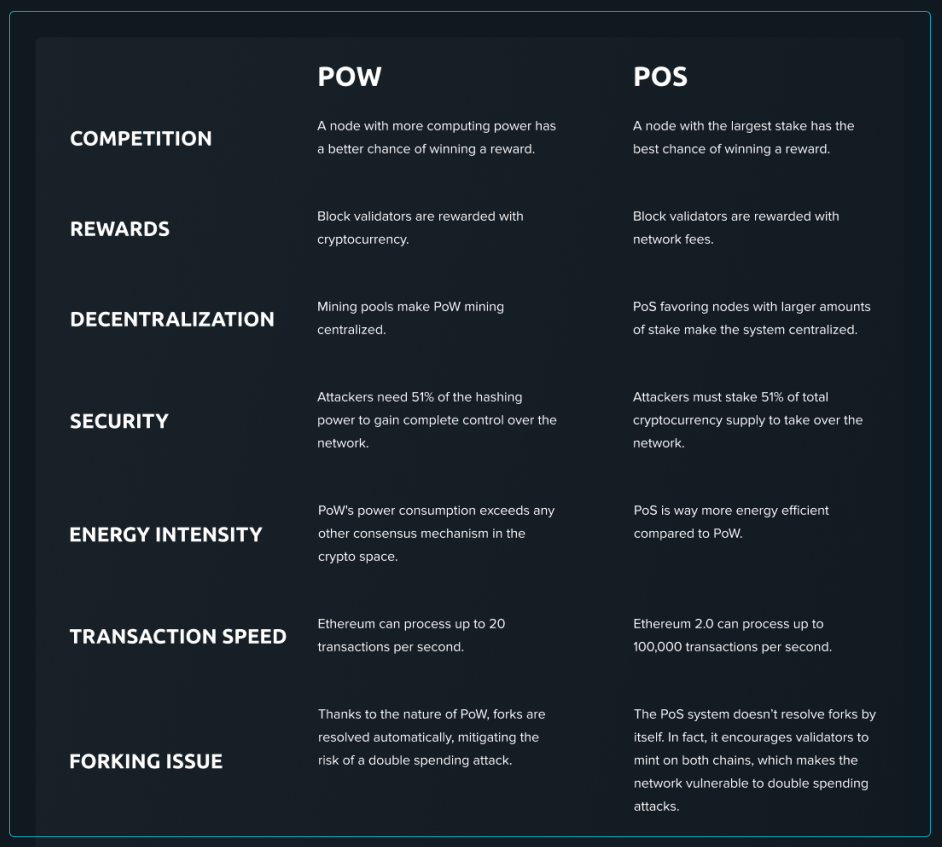
These differences come out in the validation processes. The miner takes care of the problem automatically because, in PoW, its job is computational and basically runs itself — hardware works, calculations are verified by miners and others collect their prize. Validation is a software job in PoS: the validator node should be always on, stay synced, attestation within narrow time windows, never double-sign and keep their software up to date. Penalties leak gradually when you go offline. If you submit contradictory attestations, you get slashed — which is the loss of a large quantity of your investment. Being a PoS validator in reasonable health is much more like maintaining a production server and less like running industrial machinery.
In addition, the two systems have different main security risks:
PoW: 51% attack with small rented hash rate, small networks; hardware concentration among a handful of manufacturers (Bitmain, MicroBT); mining pool centralization creates governance capture vectors.
PoS: validator centralization; slashing via operational errors like running duplicate private keys; long-range attacks whereby the adversary obtains aged private keys and forks history of the chain; governance capture through large holders accumulating voting stake.
Neither mechanism eliminates risk. Both move it, but understanding exactly where the risk lives makes participants more able to honestly assess it.
Know Your Infrastructure
Understanding how electricity works in your house sounds like pure academics — until you brush the wrong wire with your tools when doing a play-by-play. Nobody plans to get zapped. They get blasted because they imputed a simpler system than exists and acted on it. The crypto analogue is pretending that all blockchains work nearly identically, that consensus mechanisms are just an implementation detail, and that the choice of PoW vs. PoS matters more as a technical footnote than it does as a structural fact about the system you are entrusting with your money.
Nothing is compartmentalized in crypto. The consensus mechanism governs the fee structure, finality time, who has access to validation and who owns the miner or validator market. None of these things are separate from another. They are all the same decision, simply implemented differently.
Bob deserves to know this. Not to turn him into a developer, but so that when someone pitches him on a PoW cloud mining operation or high-yield PoS staking scheme he has enough context to see from 1000 miles away the structure of what is being offered and ask the right questions that separate opportunity from trap. The only difference is that the answers the community received (on questions such as, where do block explorers get their data? Who decides what is valid?) are publicly available for every legitimate blockchain. Those are the projects that do not offer them, and they are giving their answer.
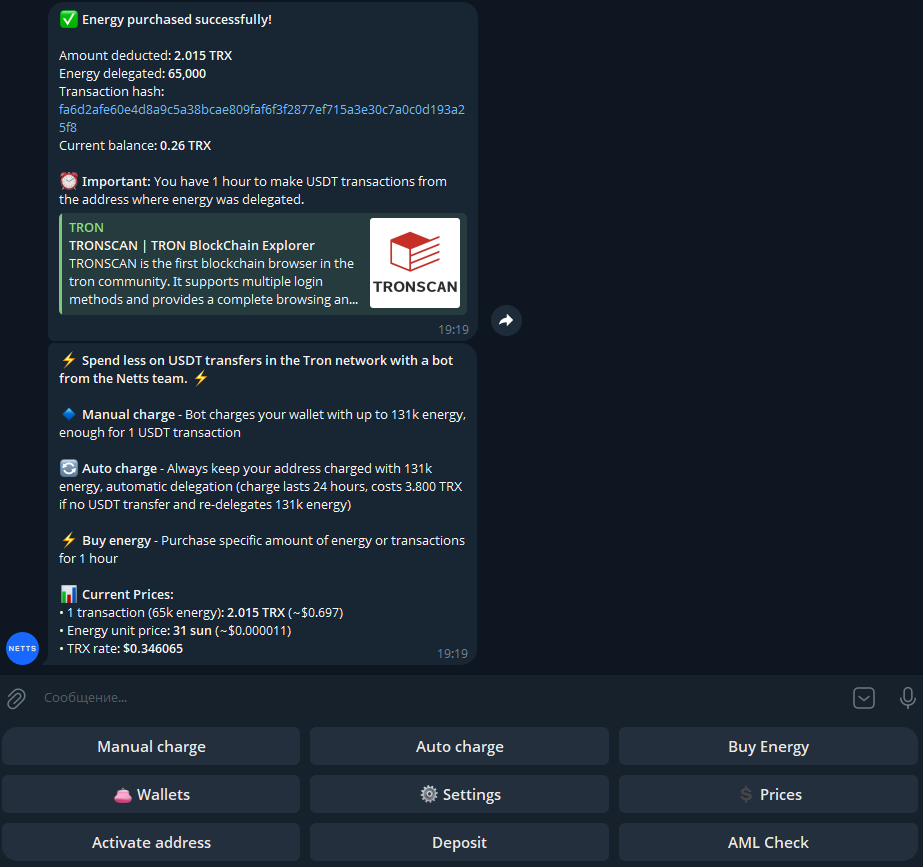
Especially for TRON users, where every USDT transfer lowers Energy and Bandwidth while DPoS keeps fees low, the Netts Energy Charge Bot provides a useful shortcut. Instead of having to burn TRX every time you send tokens, the bot enables you to get Energy delegated onto your wallet when you want it — either on manual top-ups for single transfers or 24-hour automatic delegation for active wallets. In terms of cost, the TRON Energy you purchase via the bot only requires a 1.625 TRX for sending one USDT transaction during off-peak periods — a stark comparison to the standard burn cost of either 13.84 TRX or more, depending on the implementation method; these savings add up quickly for anyone who send tokens on a regular basis.