Volume Farms: When Liquidity Is Counterfeit
Volume farms rent fake trading so quiet tokens look crowded — buyers think they see a market and step onto painted floorboards.
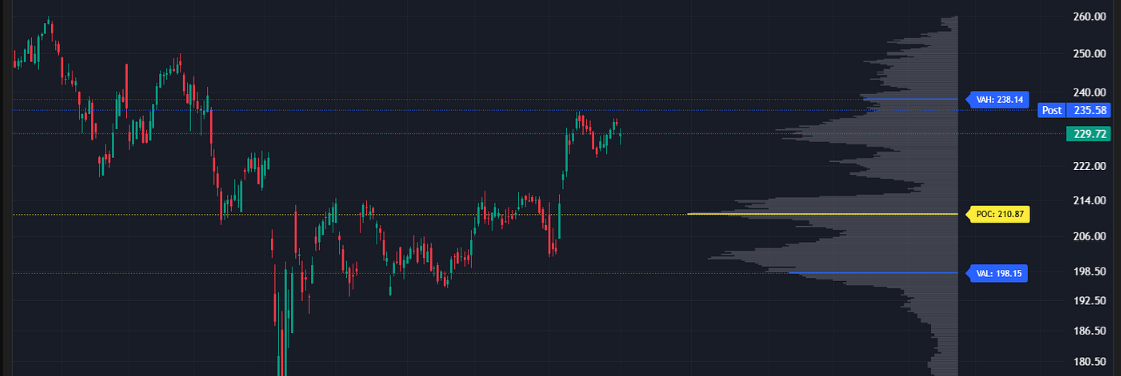
Liquidity is the way in which markets describe their own situation. When the charts are busy, this appears to mean the market is in good health. An increase in trading volume seems to indicate that new participants have shown up with wallets full of money. Investors feel at ease when the trading activity is high since activity of this kind gives the impression of having company. No one wants to be the only person at a party which was meant to have a crowd. This psychological desire is in fact the whole basis of the volume farm's business model. Because of this hunger, ordinary people are willing to offer trust but unwilling to carry out verification. The farms always charge for this generosity.
A volume farm has no connection with real agriculture and is merely a device designed for creating the illusion of trading. It works by having bots buy from one another and sell to one another, routing the transactions through related wallets, and then flooding the dashboard with activity so that a token which is dead seems to have a social life. Although the money usually doesn't change hands among different economic owners, it is the screenshots that do. It is the screenshots that listings, KOLs, and anxious retail customers actually purchase.
You can refer to it as wash trading if you'd like to use the old finance term, or call it volume support if you're going for the sales brochure style, or simply term it market making if you want to don a costume. The incentive is straightforward: in the world of crypto, attention serves as collateral. Volume is the most inexpensive costume that attention can don. So long as people regard movement as evidence of activity, someone will sell movement by the hour. The buyer believes they are buying safety in numbers. What they are actually buying is a mirrored room in which every dancer is the same person wearing different masks.
How the Theater Gets Built
The operation generally starts off with a sense of embarrassment. The project goes quietly unnoticed. The chart levels off. Telegram seems like something out of a museum. Someone on the team recalls that exchanges and aggregators sort items by volume, that influencers ask for 'traction', and that investors see movement as equivalent to legitimacy. The silence then becomes a threat to one's career. That career threat in turn becomes a budget item.
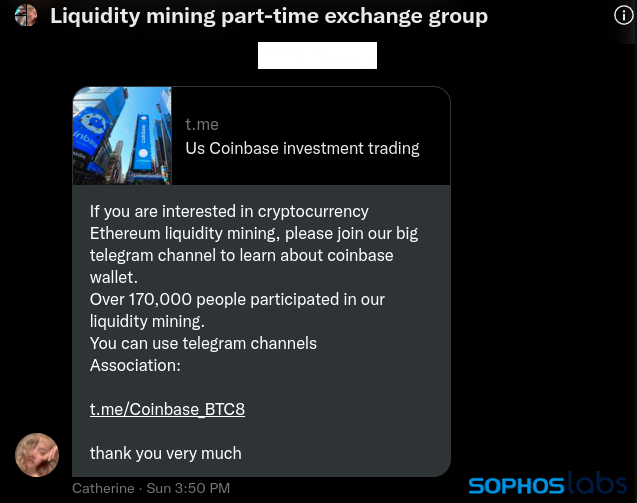
Go to the farm; in some cases it involves an internal script and in other cases a Telegram vendor who sells "volume packages" together with a dashboard on which you enter the number of fake trades you want each day. Over the past few seasons, investigators and prosecutors have worked to show that this market in illusions is not just a myth. Companies promoted self-trading as a service. Undercover tokens went into the showroom and were given the full range of options. The point was not that evil is clever. The point was that the product was being sold like printer ink.
When it comes to a centralised platform, the farm appears as if a number of accounts are simultaneously painting the book. In the case of a DEX, it looks as though hundreds of funded wallets are going back and forth through the pool, resulting in almost no net exposure while the volume candle grows thicker. A single funder can cause a swarm to be formed in less than a minute. The swarm then carries out its activities during the night shift. By morning, a token that no one wanted has acquired a leaderboard appearance. This appearance is sufficient to obtain screenshots and put them into group chats, and it is in group chats that tired people make irreversible decisions.
If you take the time to examine it, you can detect the telltale signs. The round-trip ratios are very close to perfect. The number of traders reduces down to just a few controllers. The average size of each trade is repeated in a precise, metronome-like fashion. Depth disappears as soon as a real order is placed. Volume farms sell the 'music' of the market, not the floorboards. Anyone who mistakes the music for the floorboards eventually learns the difference from their account balance. The lesson comes late but stays with you in a lasting way. After having received a number of such lessons, even honest noise begins to sound like a setup. Thus a local scam becomes a sectoral accent.
Why Buyers Keep Paying for the Costume
Retail doesn't purchase fake volume since it's not intelligent. Instead, retail acquires narratives while under time pressure. When someone is scrolling at midnight, they see a coin moving, suppose that someone more knowledgeable has already inspected the room, and take activity to mean that it is safe. That isn't stupidity; it's social proof carrying out the thing it always does in uncertain markets. The fear of making a trade alone is older than blockchains; volume farms just industrialise that fear and then sell it as comfort.
The founders purchase the costume since silence seems equivalent to death. It's more difficult to justify a quiet chart in a group chat than an dishonest one. Dishonesty can be excused as "bootstrapping", "temporary optics", "just until organic flow comes about". Temporary is the most expensive term in crypto. When organic flow doesn't materialise, temporary theatre turns into a permanent dependency and the only thing keeping the lights on is the bot budget. At that point the team isn't any longer launching a product but is instead maintaining a hallucination on a subscription.
Exchange and ranking sites are not constantly involved in conspiracies, but they are by no means harmless either. When your product ranks things according to raw volume, you generate a demand for that raw volume. Metrics amount to moral directives. If you tell the market to revere candles, it will produce candles. Businesses that offer 'top pairs by volume' without making adjustments for wash are providing samples of a crowd that might not actually exist. The customer believes they have obtained a map. What they have really obtained is a brochure.
Market makers are in the most obscure corner. Genuine market making works by narrowing spreads and taking on trade flow. Fake volume support mimics flow with the intention that the actual flow comes later and then becomes exit liquidity. The second service enjoys borrowing the terminology used by the first. Language laundering makes up half the deception. If you can refer to a wash bot as "liquidity provisioning", then you can bill it without feeling ashamed. The embarrassment comes later, typically on someone else's face. By that time the spreadsheet has already carried out its function: it has shifted focus from emptiness to appetite, and it is appetite that brings real money from strangers.
Who Wins, Who Pays, and Why Trust Starts Rotting
It's easy to identify the short-term winners: the one who ends up being listed, the insider who sells off shares while the crowd trusts the chart, the vendor who bills for "support", and the influencer who fails to mention that the party was rented. All of them make use of the same basic resource — a stranger's hope that movement implies a sense of belonging. In the world of markets, feeling a sense of belonging is a costly emotion, and volume farms reduce its value until the reduction itself becomes a trap.
Losers are at first obvious and then become less so. The retail buyer who finds himself having to eat glass realizes that it had never been about depth but rather about volume. The honest project located next door picks up the smell of the industry — all actual charts come to be suspected since so many charts had been merely theatrical. Analysts spend years arguing with ghosts. Those builders who refuse to take on the farm are punished by algorithms which regard purity as a sign of failure. Trust is a shared resource; the volume farms take for themselves the potential gains and make the distrust a social burden.
There is a more serious damage to its reputation. Since crypto already requires the public to trust in invisible money, when the tangible evidence of activity — volume — frequently turns out to be fake, the public ends up thinking the entire system is made of cardboard. That judgment is unjust towards honest venues yet remains emotionally sensible. People don't analyze wash-adjusted volume during their lunch break; they react to betrayal. Betrayal has a greater impact than education does. Education demands patience, while betrayal only needs a screenshot and a group chat. The farm is built for the second economy.
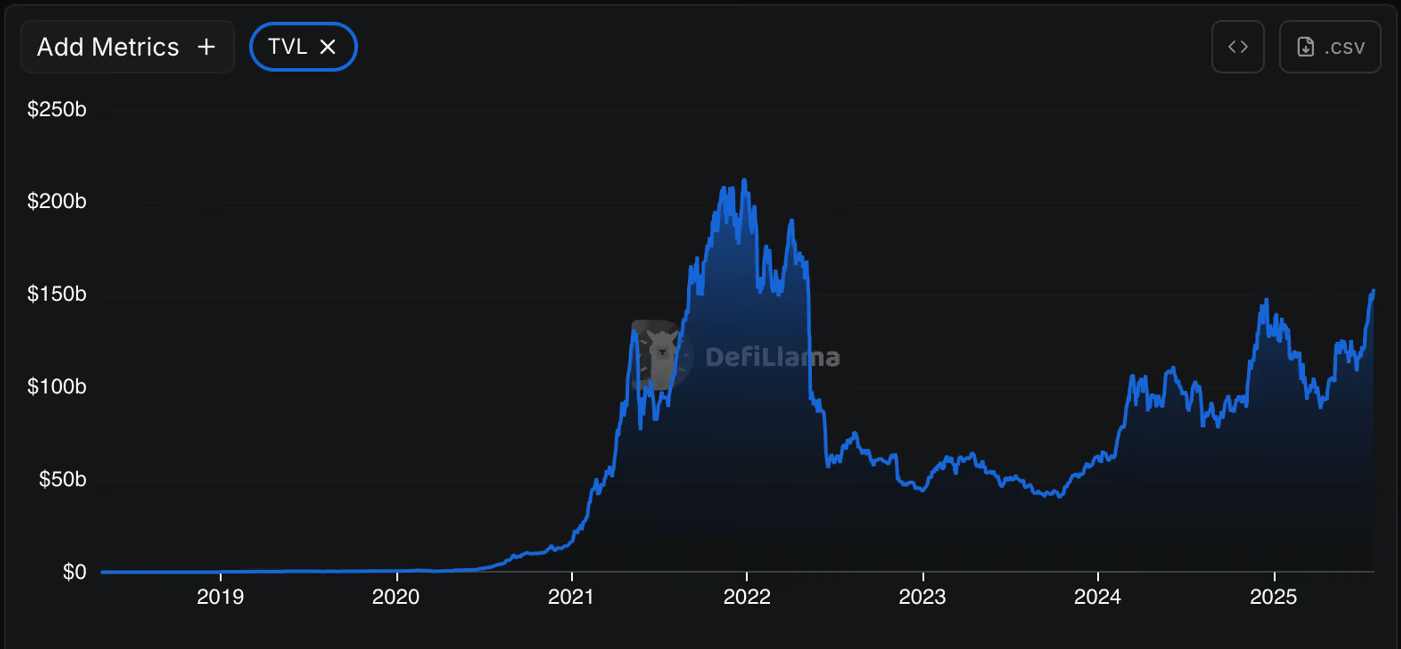
When you realise that volume can be rented, you begin to question all the other figures on the dashboard. TVL might be circular, users might be sybils, fees might be self-paid and growth might just be money allocated for a costume. The epistemological crisis is actually the result of the volume farm. It causes market participants to regard every green candle as possibly being adversarial. In a market where adversarial interpretation becomes the default approach, it will eventually end up populated by people who only know how to extract. Extraction-based cultures do not develop slow infrastructure; they instead build faster costumes.
There are costs associated with that kind of teaching. Capital grows slower and due diligence takes on a paranoid tone. Those who are new to the scene either leave or end up becoming cynical extractors themselves. A market that has been trained by fake liquidity begins to favour games in which someone else is the one who has to exit. The culture changes from one of building to one of timing the performance. Volume farms don't just distort prices; they also distort character, and character is more difficult to restore than a token contract.
Investigators have their own kind of suffering. A great deal of the coordination takes place off-chain — through private chats, closed dashboards, invoices described as consulting, and the use of intermediaries to provide seed funding to bot wallets. On the blockchain you can see the swarm, but off-chain you have to rely on knowing the motives and having a list of clients. The difference becomes greater when projects use closed-source stacks, have private market-maker contracts, and operate in a state of legal ambiguity. Although public ledgers were supposed to offer transparency, they only provided transparency regarding the symptoms, not always regarding who had ordered the fever. Symptoms are of some use, but it is the motives that lead to legal fees.
Yet the symptoms are becoming more difficult to conceal. Heuristics pick out round trips. Clustering picks up funders. Stings pick off sales pitches. The measures taken to combat wash-trading-as-a-service have made the practice less popular in cases where action can be taken. Being out of fashion doesn't mean it's extinct. So long as the rankings reward noise, noise will always have a seller. The seller will just use better adjectives. Better adjectives don't mean the markets are better; they merely constitute better camouflage for the same old desire: to appear busy enough so that someone else provides the actual money.
Laws, Stories, and What Remains When the Music Stops
Wash trading is no philosophical problem in traditional markets; it is regarded as manipulation since it falsifies demand. The novelty of crypto never amounted to a moral exemption; it was merely a temporary break in enforcement disguised as ideology. That temporary break is now coming to an end in fragments: through prosecutions, settlements, the development of surveillance tools, and pressure from exchanges to stop looking like a carnival. Fragments do not constitute a complete cathedral; they are sufficient to alter the weather.
If good law does exist, then it should aim at tackling the fraud involved in creating the false impression of a market that isn't actually there, without making it a crime to carry out ordinary market activities, arbitrage, or to provide early liquidity in an awkward situation. Poor law, on the other hand, treats every robot as a villain and every thinly traded market as a crime scene. Thin markets are frequently honest and honesty can appear quiet. It is precisely this quietness that volume farming exists to eliminate. A rulebook that is unable to distinguish between quiet honesty and noisy fraud will end up punishing the wrong kind of actor and will leave the farming activity undisturbed.
The reason for having rules is not purity but information hygiene. When the volume of trading remains a public good that is used by strangers to make irreversible decisions, then faking that volume is equivalent to faking a public signal. Societies generally tend to dislike counterfeit signals when the harm increases. In this case, the harm grows through a collapse of trust, the misallocation of capital, and the constant repetition of the morality regarding exit liquidity. This morality causes every new participant to become potential prey and turns every chart into a challenge.
The main criticism of simple rules is that they result in capture and give rise to theatrical performances. A jurisdiction might ban 'fake volume' while still permitting the ranking of products in order to encourage it. An exchange could publish a compliance blog without in any way giving up on taking advantage of the illusion. Laws which do not involve reform of the metrics are similar to delivering sermons in a casino; the house still benefits from the noise and the noise still leads to conversions.
Picture a young trader who regards ranking sites as though they were absolute truth because the coin is “active”. He goes into the market and ends up with nothing. The lesson he draws from this experience is not just that one should look at the wash ratios. To the contrary, the lesson he takes from it is that crypto is a trap. This lesson is both unfair and infectious. Volume farms do not merely collect wallets; they also encourage future skepticism and spread it among those who could have become builders. Each fake candle acts as a quiet appeal to become cynical.
Imagine the vendor; he is not some exaggerated villain, but a man who has decided that it is more profitable to make a profit by selling narrative gasoline than by selling tools. If customers ask for a particular amount, then he gives them that amount. Each time the authorities come, everybody realises that putting 'market making' on the invoice does not turn self-trading into a sacred act. The vendor's basis is always demand. That demand is genuine. So is the decision to industrialise deception. There are in fact many real demands in the market for which a refusal is still justified. Refusals are rare since silence costs the customer but benefits the seller. Between these two prices, the farm establishes its margin.
Picture a real market maker who earns a living by widening spreads and who is now constantly having to justify the fact that their inventory risk is not equivalent to that of a wash bot. The worst kind of damage caused by the farm is linguistic, since it has so degraded the meaning of the term "liquidity" that experienced professionals end up appearing suspicious. Once the language has deteriorated, due diligence has to be carried out. As a result, people begin to ask for vibes rather than for substance, for screenshots instead of for survivable exits, and for a spot on the leaderboard rather than for counterparty diversity. It's easy to create vibes but hard to keep the appearance of depth over a long period, so the farm chooses the easier option and hopes that you never request the more difficult thing. In this industry, hope functions as a sales tool.
Volume farms thrive in situations in which verification is expensive and hope is readily available; they vanish in areas where users demand depth, slippage, a distinct trading flow, and wash-adjusted statistics — and where the platforms stop rewarding raw noise. They don't disappear simply because a thread is overwhelmed by a swarm of bots; rather, they disappear when the incentive for appearing active falls below the cost of appearing active. So long as that incentive remains greater, the farms will still make use of night shifts. Night shifts have no need for any ideology; all they require is a ranking algorithm and a client who is afraid of silence.
Up to that stage, the dramatic truth is simple. Liquidity was intended to be an indication of activity, but too often it is no more than stage lighting. Even if the stage lighting is attractive, it can't support your weight if you jump. People keep on jumping because the lighting looks like a floor. This isn't simply due to greed; it's rooted in the human fear of missing out on a room that appears to be full. Volume farms exploit that fear and sell it to you in the shape of a candle. The candle may seem warm, but the floor is gone. It is this sense of warmth without a floor that causes people to fall, even though they still feel as though they have been personally invited to the dance.
There are a number of practical indications that distinguish a room from a set.
1. Perfect round trips and swarm wallets that are funded all at once are not regarded as 'community'; they are in fact payroll.
2. Once the story requires the chart to appear lively more than the product needs its users to remain, you have stopped investing and are instead being considered as a candidate for someone else's exit.
The industry can continue to pretend that this is a minor wrongdoing. It isn't; it is in fact a tax imposed on all genuine signals. If you pay it for a long time, even real markets begin to appear as if they are lying. That is the true apocalypse that volume farms are responsible for: not a single crash, but a cultural environment in which belief itself comes across as naive. It was naive belief that created the first cycles, and weaponised disbelief could well shape the next ones if the business of wearing costumes remains more profitable than the business of telling the truth. Markets can cope with sharks; it is much harder for them to survive when the public assumes that every movement is staged. A staged movement can still cause your downfall. That is the joke which the farm never puts on the invoice.
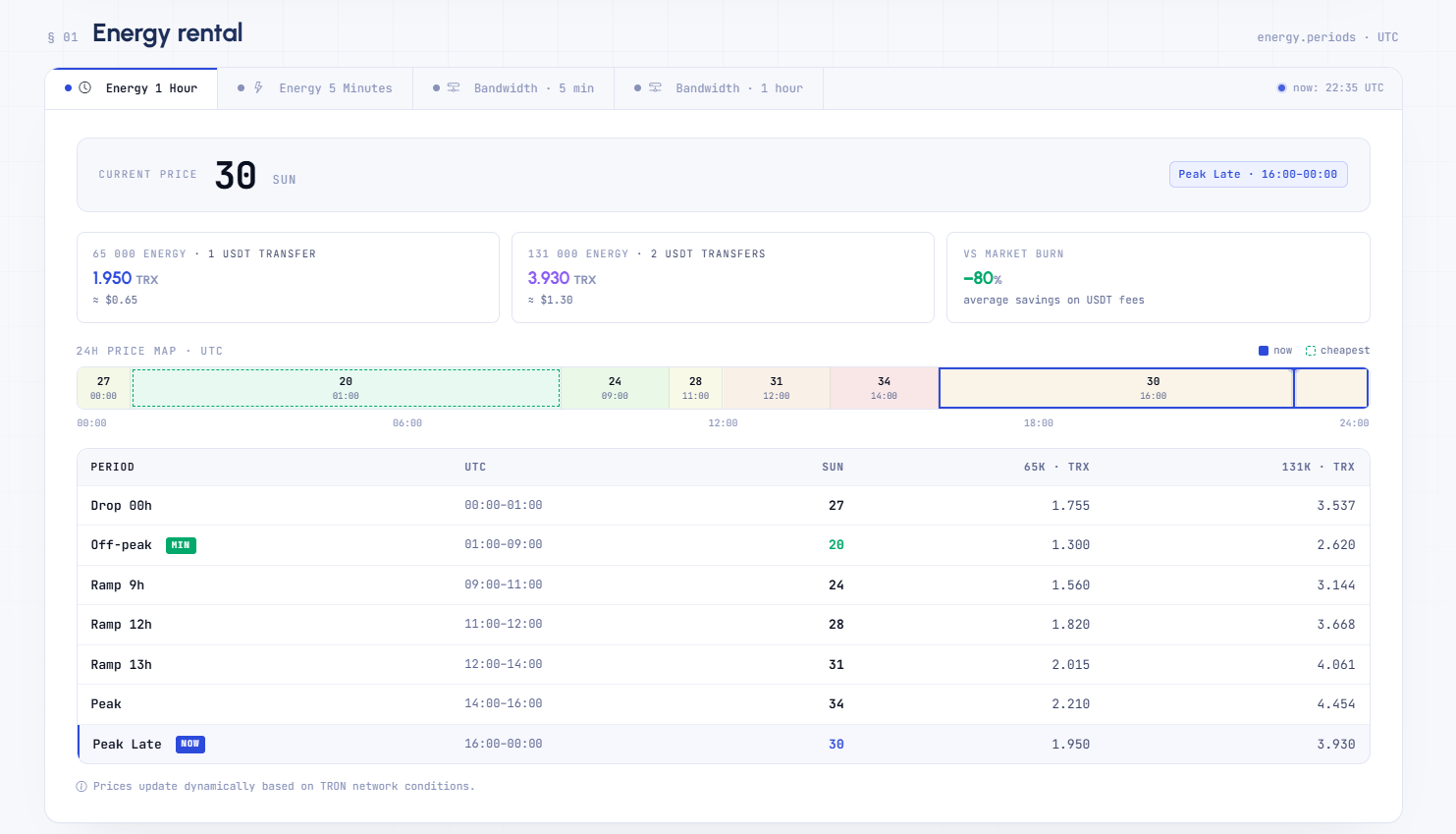
Once the chart noise has gone and you're once again engaged in normal settlement activities — such as moving USDT, dealing with network costs, and refusing to waste value just to appear busy — the useful habits once again seem unattractive: it's necessary to top up your TRON Energy before making a transfer, regard a TRON Energy top-up as a matter of hygiene rather than something dramatic, check out the TRON Energy marketplace rather than relying on the prominent dashboard, and consider leasing TRON Energy when burning TRX would actually be the true self-trade against yourself. Netts Pricing operates within that more subdued realm by showing the actual Energy and Bandwidth rates over different periods so that the fee you pay is a choice, not another illusion presented as activity.