Airdrop Farming Burnout: Is It Even Worth It?
Airdrop farming sells “free money,” then bills you in nights, gas, and dust across tokens you never meant to collect.
When airdrops first appeared in crypto culture they were seen as a wonder thanks to their good branding. The tokens just dropped down from the sky. The early users awoke to find themselves richer. Screenshots were treated as if they were holy. For a time the story was clear enough to make an entire generation of wallet users addicted: you only had to show up, click about, wait for the snapshot, and then collect the gratitude shown by a protocol that needed a crowd.
Gratitude soon turned into a job. Since jobs have hours, and hours have opportunity costs, the miracle evolved into farming — an industrial-scale effort aimed at qualifying through dozens of chains, points dashboards, testnets, bridges, and Discord quests which amount to unpaid internships with poorer management. People still refer to it as free money, but free money that requires your evenings, your fuel, your attention, and your readiness to distinguish genuine campaigns from phishing copies is not actually free. It is speculative labour paid for in lottery tickets valued in obscure tickers.
The burnout isn't mysterious; it occurs when a gift economy comes into contact with piecework. Piecework always starts off as an opportunity but eventually turns into a second shift which, in the end, doesn't reliably generate rent. The farmer continues on because the next season might be the one that covers all the costs of the previous ones. That's the way casinos address their regular customers. Airdrop culture has picked up that language effortlessly. The difference is that casinos at least acknowledge that they are casinos, whereas farming still maintains the image of contributing, of being part of the community, and of "being early", even though that early arrival is faked out across fifty wallets at 3 a.m.
The reason why the costume has a convincing effect is because of memory. People remember one occasion when a friend had a good meal. Memory is selective in that it retains the times when they were fed and forgets the months when they were not. It is in this way that industries are able to recruit unpaid labour without terming it as unpaid labour. The person recruited feels as though they have been chosen, and those who feel chosen work harder even though they are being paid less.
Why Airdrops Existed Before They Became a Grind
The protocols didn't introduce airdrops as a charitable act; they did so because of a fear about how to distribute the tokens. A token requires holders and a network needs activity as well. A launch also needs a narrative that doesn't sound as if it's for 'insiders' only. Airdrops offered a seemingly fair way of distributing ownership to people who had used the product early on. In the more romantic view, this distribution leads to the creation of citizens; in the more practical view, it sets up a marketing channel that appears to be decentralised.
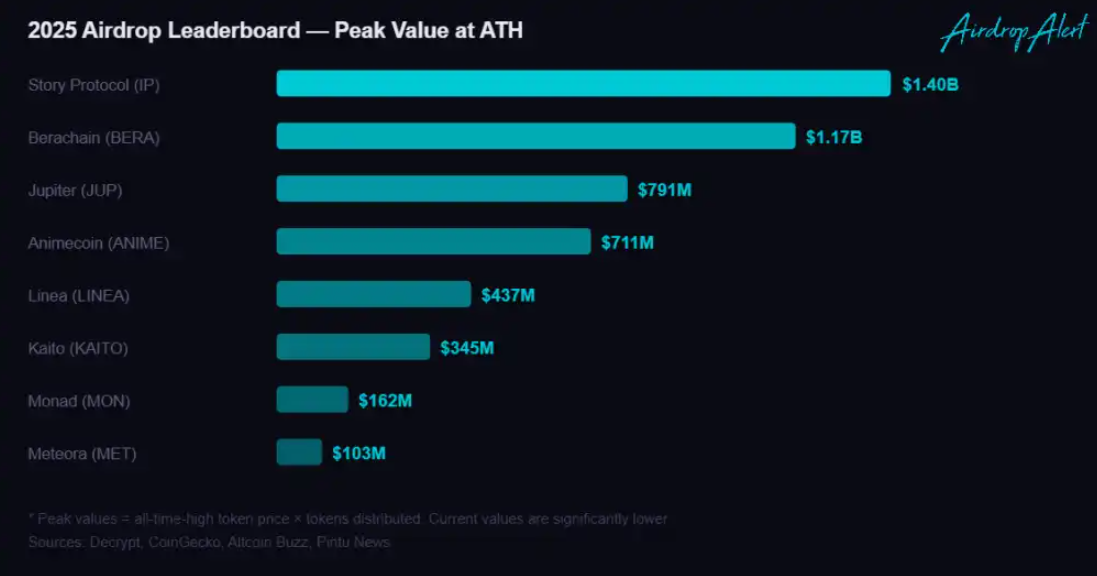
The appeal to the teams was tempting. Instead of paying users with invoices, pay them with upside. Convert explorers into evangelists and fill in the metrics that investors can take screenshots of. Because it worked so well for a season, the industry taught itself a dangerous lesson — that growth can be rented by means of future token supply. The growth that is rented draws in tenants who never intended to stay. These tenants who never intended to stay then become farmers. And the farmers end up forming the community that a team did not want and which it cannot easily dismiss without appearing either cruel or incompetent.
Airdrops exist since attention is expensive and tokens seem cheap until the day they are unlocked. That imbalance is the original sin, and all that comes after it — point seasons, Sybil wars, vesting surprises, claim-day riots — is the market negotiating that sin. The teams would like to secure loyalty at a discount, while the users want to gain upside without having to work. Both sides overestimate what the other is owed, and burnout is the interest payment resulting from that mutual misjudgment.
There was also a status engine working underneath the surface. Becoming known for having caught a legendary drop meant gaining a sense of identity, while missing one brought about a feeling of shame. Shame is a more effective recruiter than any banner advertisement. Once people had this sense of identity, they gave up on calculating hourly rates and began to guard their image as someone who 'got it'. Maintaining such a self-image is costly. The farming studios realised this and therefore sold infrastructure to those who were insecure. Insecurity increases in extent and the studios expanded along with it.
The teams themselves acquired the ability to speak two languages. In public, they placed the community first; in private, they asked how we can keep the farmers engaged without making promises that we can't uphold? It is in the gap between these two languages that rage develops. Rage isn't always fair. Rage is often correct in capturing the feeling of being controlled.
Real Price of “Free”
The costs associated with the alternative begin subtly and eventually turn into a way of life. The time spent reading about eligibility is time that could have been used for building, for learning a trade, or for sleeping. Money that is kept in thinly spread protocols just to appear to be active is money which might have earned returns somewhere else or could simply have been left unrisked. Gas fees are a tax on hope. As for mental load, it's even worse: it involves maintaining a spreadsheet of wallets, seed phrases, claim calendars, and the constant fear that you've been farming the wrong thing while the correct one was snapshotted the day before.
Next comes fragmentation. When success does come it seldom comes all at once in a single, clear bundle. Instead it appears as twelve separate heaps scattered across a number of chains of which you hardly remember having visited. A few of the tokens are liquid while others are not. Some of them are worth keeping. Others require claims that expire. Some lead on to markets which are already full of farmers dumping in unison. The portfolio may appear to be diversified in the same way that confetti seems to be festive — impressive until you actually attempt to collect it in order to generate rental income. Confetti does not pay rent to landlords.
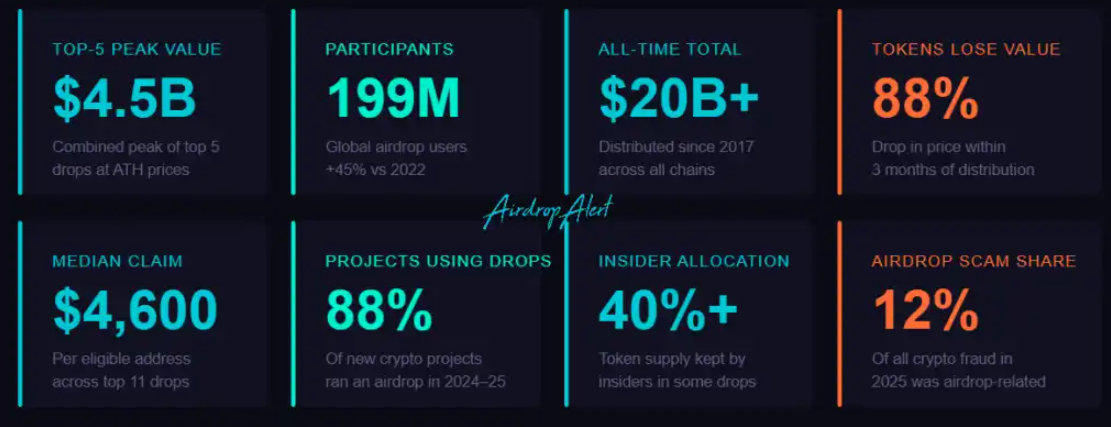
Discernment is also an unpaid responsibility. Fake airdrops spring up next to the genuine ones. The connect-wallet pages require you to give approvals. There are support bots that ask for your seed. There are 'official' claim websites that differ by just one letter. As a result, the farmer has to act like a part-time fraud analyst. When people get tired they become careless. It is due to this carelessness that free money ends up being a negative amount accompanied by a trauma story. This trauma story then persuades the next farmer that danger is evidence the prize is real. But danger isn't proof; danger is merely danger dressing up as a jackpot.
There is, in addition, a social cost which goes unaccounted for. Relationships reduce to alpha chats and conversations turn into checklists. The mind begins to rate every new product as 'farmable' before even considering whether the product is good. This rating system is efficient but spiritually unpleasant. Burnout usually occurs at the moment when a person realizes that they have become a machine which only responds to quests. Friends pick up on this sooner and cease asking what you are building and begin to ask what you are farming. The question is painful because it is correct.
Opportunity cost also builds up in more subtle ways. Skills fade away. A year spent improving the way one manages their wallet is a year that could have been spent learning about markets, code, design, or sales. Some farmers end up being very good at eligibility theatre and only moderately skilled in all the other areas. When the overall market cools down, the specialised skill loses its customers. That is a career risk dressed up as a side activity. Side activities which take up the main aspect of one's identity ceases to be a side activity.
There is also a physical cost, one that is both humiliating and genuine. People have to adjust their sleeping hours to accommodate these sudden snapshots. The eyes suffer from looking at the dashboards. Anxiety rises when a chain becomes congested and a transaction fails to meet a window which might not actually be important. The nervous system doesn't mind that the reward is speculative; it treats the sense of urgency as if it were a matter of survival. Farming turns urgency theatre into an industrial process. Burnout is the body making a complaint that the spreadsheet had ignored.
Success, Failure, and the Reputation Hangover
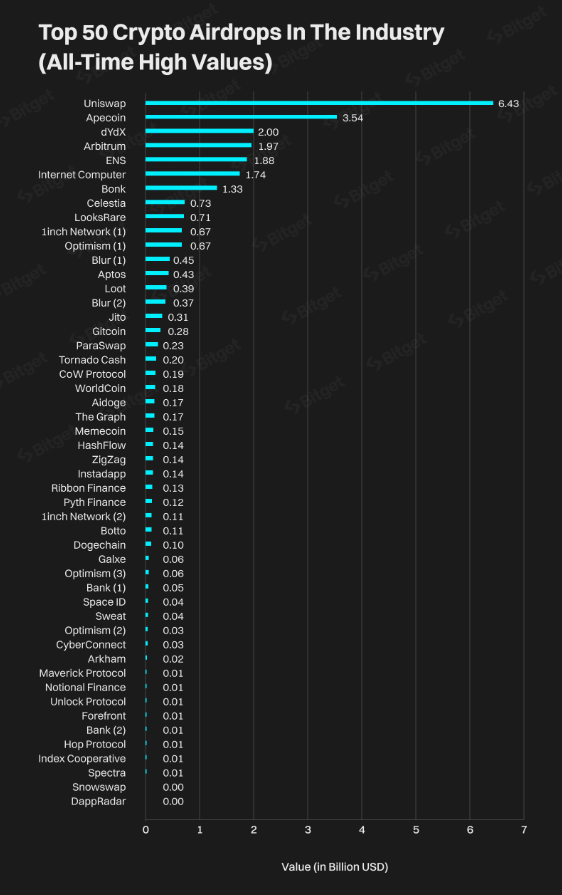
The success stories are genuine and that is what keeps the religion going. There's an example of someone who used the product early on in a casual way, without having a farming studio, and ended up with a life-changing allocation. This is part of the Uniswap lore, the ENS lore, and the early L2 drops which seemed fair. These stories are important since they show that the system can reward simple participation. At the same time they distort expectations, because participation does not mean industrial-scale simulation of participation. Casual miracles cannot be scaled up to become employment programs. It is only when you try to turn a miracle into an industrial process that burnout is mass-produced.
The number of failures then increases rapidly. It involves spending months bridging and swapping in order to obtain a return less than the cost of the gas. Large networks of wallets are destroyed by clustering filters which analyse funding patterns as a detective would examine footprints. Season after season, people were taught to work hard only for the weightings to be revealed without any possibility of verification. The vesting process turned so-called 'liquid free money' into a calendar of postponed disappointment. Those farmers who had bought points on the secondary markets found that the points were merely a story, not a contract. Anger can be considered rational when the labour had actually been carried out and the rules had been unclear.
Illegal usage is situated in the middle, resembling a prosperous grey city. Sybil farms are carried out. Wallets that have been funded from a single mother address are used. There is engagement which exists only in order to appear as if there is engagement. Marketplaces for accounts exist. There are guides which teach people how to fake "organic" behaviour so effectively that organic ends up being a kind of costume. In response, projects make use of AI clustering, passport scores, KYC gates, and reputation experiments. The farmers then come up with better costumes. Now the arms race is the main issue. The token has become almost secondary. Even so, secondary tokens still experience dumps on the first day.
The situation is not just a technical one; it's also moral theater. Farmers tell themselves that they are overcoming unfair systems, while teams tell themselves that they are creating communities. Even if both of these accounts have some truth in them, they still result in a market in which the most dominant ability is pretense. On a large scale, this pretense becomes part of the culture, and it is this culture that causes genuine newcomers to join, have themselves exploited by the system of pretense, and then leave convinced that the entire industry is nothing but a kind of work cosplay.
Expectation inflation acts as an emotional boost. People don't farm in order to earn coffee money; they farm so that they can get the screenshot which concludes their employment. Since the average result is just dust while the public story says it's a jackpot, feelings of disappointment become part of one's identity. This identity-based disappointment then leads to conspiracy theories regarding insider allocations and "reverse rugs". At times these theories are just a way of coping. At other times the process was actually opaque enough to warrant the insult. Opacity is a decision that teams take when they want flexibility, and flexibility seems like a betrayal to those who have spent months of evenings paying for it.
Airdrops used to be a sign of generosity but are now more and more an indication of a trap set for mercenaries — or of a team that is willing to feed mercenaries to boost their metrics. People have picked up on this pattern: the points, the seasons, the unclear rules, the pressure to sell on claim day, and the resulting civil war within the community. It is still possible for a well-organized airdrop campaign to succeed, but it can also brand a product as "farmer bait" before the product has had a chance to be appreciated. Marketing that teaches users how to extract will end up damaging the marketer's own reputation.
Harm spreads in both directions. Farmers get burnt out and then give up on ecosystems. Real users are squeezed out by dashboards that are made for extractors. Groups which had intended to have ordinary people end up with a temporary army. After the TGE the army departs and the Discord becomes quiet in a manner that seems like a hangover. Investors become aware of it. Builders also take notice. The next honest user therefore delays because the previous "community" had been a farming tournament with more attractive logos.
Which is why a number of investors and some users are turning to alternative choices: those involving token sales with more clear terms, products which generate fees without requiring cosplay ownership, jobs in the crypto space that pay out invoices, or just using the chains for transferring and trading without having to apply for every snapshot. When mystique has already tricked you twice, clarity is superior to mystique. Although mystique still attracts newcomers, experienced participants are now favouring simple cashflow and choosing to sleep through claim day. It turns out that sleeping is an overlooked form of return.
People move towards smaller circles: just one ecosystem, actual usage, no multi-account farce. That kind of retreat appears to be giving in to those who are still deeply engaged in the hard work. It often seems mature from an outside point of view. Maturation is simply the point at which expected value ceases to be a bedtime story told by strangers through affiliate links.
Who Might Still Find It Worth It
Airdrop farming isn't dead in all cases; it only survives for those whose costs have already been covered by their actual behaviour. If you're going to use a protocol anyway — by trading, supplying liquidity, building things, or taking part in governance — then the extra benefit that might come from an airdrop is just gravy. It's entirely rational to accept gravy, but gravy isn't a career since careers require predictable wages whereas gravy depends on a roast that is already in place.
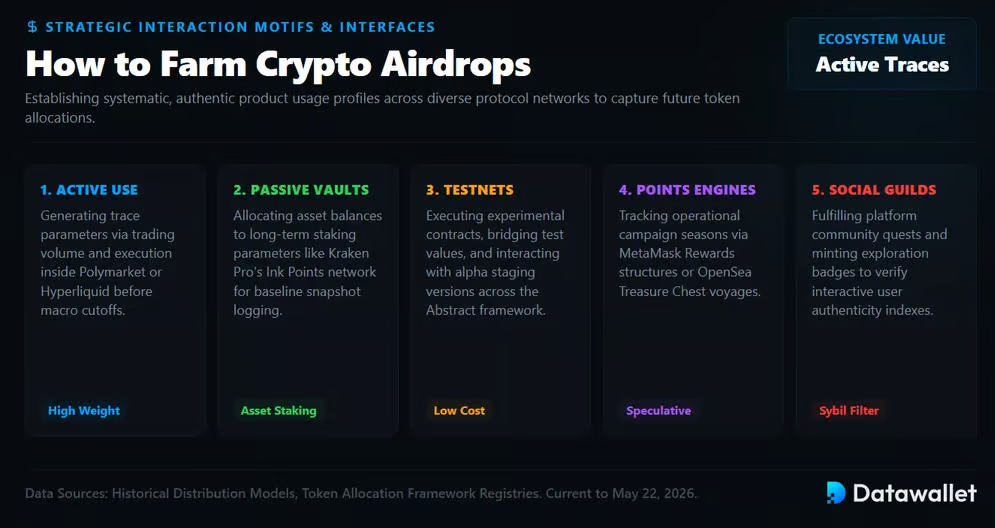
It is still possible to justify a small number of high-conviction bets when capital, time, and patience all come into alignment and the farmer is willing to accept average outcomes rather than being influenced by myth. However, it does not make much sense as a broad-scale employment scheme for individuals who are funding fifty wallets on the basis of borrowed hope. The Sybil filters have improved, the allocations have become more conservative, and the vesting mechanisms have become more sophisticated. At the same time the expected value of casual industrial farming has dropped while the emotional cost has remained high. It is precisely this kind of compression without any corresponding adjustment in emotions that leads people to break.
There are some cases in which the math can still manage to smile.
1. You have already made extensive use of several ecosystems and regard any additional amount as optional surplus rather than as rent.
2. You have the means to pay for the gas and to allow for the time without having to borrow anxiety from next month's bills.
3. You would still respect the product even if the airdrop never takes place — otherwise you'd be signing up for bitterness.
If those conditions are not met, burnout should not be regarded as a personal weakness but rather as a reasonable reaction to a labour market which rewards people with rumours. It may be profitable to spread rumours, but rumours are still just rumours. It is by building a life on them that free money turns into an expensive identity.
The blunt assessment is very narrow. It makes sense for individuals who never made farming a central part of their lives. It is only occasionally worthwhile for those who have built their lives around eligibility calendars. Almost never is it worthwhile if 'worth it' means getting free money with no other costs involved. The costs always existed; the industry simply presented them as adventure. Adventure without a exit strategy is merely a long corridor equipped with claim buttons and providing no daylight.
Let us compare two similar lives. In one case, a person uses only a small number of products that they enjoy, disregards ninety per cent of the seasons, and from time to time has a nice surprise. In the other case, every rumor is treated as though it were compulsory homework and self-worth is measured in points. Although both people can interact with the same protocols, only one of them is built in such a way as to be prone to burnout. It is the design that matters more than luck. Luck may bring the screenshots, but it is design that brings the years. If you aim for screenshots, it should come as no surprise when the years end up feeling empty and oddly thin.
Airdrops will continue to be carried out since teams still have a need for distribution stories and users still want asymmetric gains. The more positive development is in having smaller expectations and being more honest: this is a speculative rebate for usage and not a salvation scenario. If people see it as a rebate then burnout decreases; but if they view it as destiny the points dashboard becomes a second job with a nasty HR department and no severance package.
You don't need to hate airdrops; all you have to do is price them correctly in your mind. A rebate can be appealing, but a destiny will punish you if you love it too much. The industry promoted the idea of destiny since it tends to spread, and afterwards burnout spreads as well, in quieter private chats where people finally admit that the grind had stopped being fun long before the last claim button showed up.
The quiet conclusion is obviously the result of free money having conditioned a whole generation to work without pay. Burnout is simply the invoice that comes late. A few will continue farming but with colder eyes and thinner pockets. Others will move towards better markets and accept normal wages. Both groups are attempting to escape the same sensation: the feeling that their time has been harvested more efficiently than any token ever was. Time doesn't become available at a vesting cliff; it only goes away. Those who learn this lesson early end up paying less for education, while those who learn it later call it burnout and really mean it.
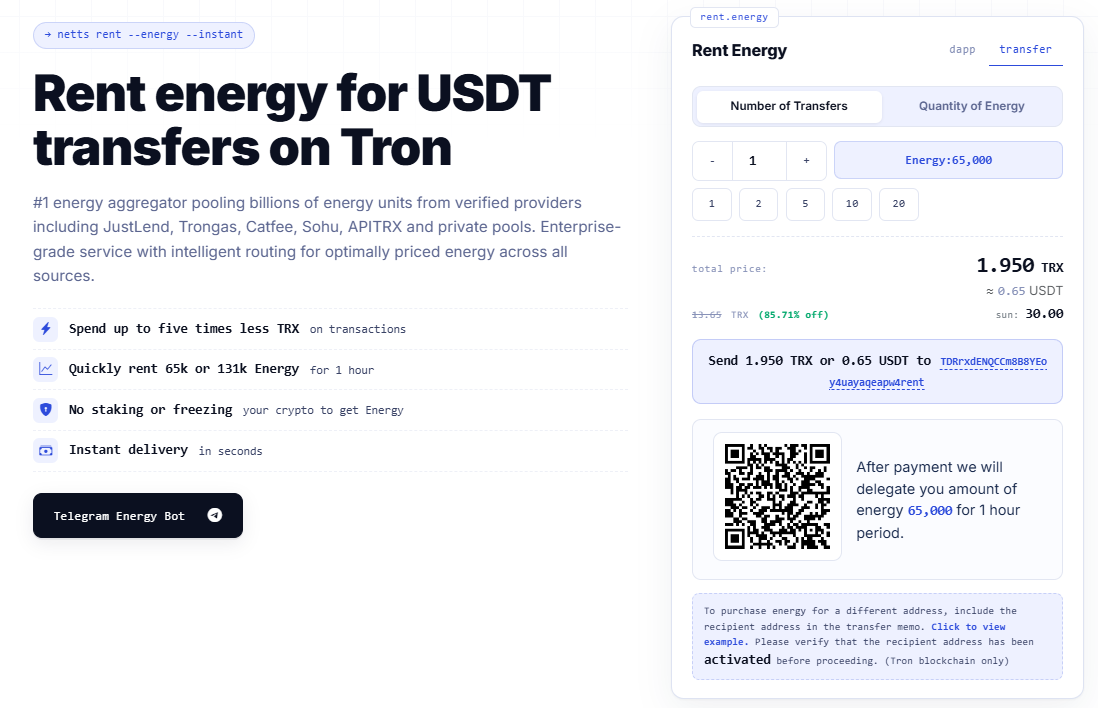
Once the searching is over and money needs to be moved around as ordinary USDT with transaction fees applied and without the points season being in effect, the available options seem rather straightforward: purchase TRON Energy if a transfer cannot be delayed, look for cheap TRON Energy rather than wasting value on the theater, and rent TRON resources just as a business would rent capacity. That is exactly what Netts.io was designed for — it serves this plain, unglamorous level by pooling together Energy so that settlement can remain affordable after the airdrop schedule has finally stopped.