Reorg Nightmares — When Project You Trust Changes Hands
Crypto projects change hands without warning, leaving investors trapped. Learn the red flags of reorganization before your portfolio disappears.
You carried out your research, asked the right people, and placed the right bet on the promising project. Then all of a sudden the owner gets an offer he cannot refuse and the project is transferred hand over hand. It is satisfactory if you can sell it at once and get out; even better if you actually know that the project has changed hands. Nevertheless, it is not always that simple.
In crypto, a change of ownership isn't made public. Generally speaking, crypto stays out of the public eye behind the scenes—unless someone deliberately makes a show of it, for example Saylor or Justin Sun. The transaction takes place behind closed doors and the announcement comes only later, if at all. By the time you realize that the project you trusted has come under new management, your position may already be at a loss and the exit liquidity you had been relying on could have disappeared.
In 2026 more than a hundred crypto projects ceased operations, went bankrupt, or disappeared. There were four major announcements in one week at the end of July: BitMEX, BitMart, Movement Labs and Storj Labs. They were no ordinary scams. They were projects into which people had invested money, projects that had user bases, projects which appeared to be stable before they weren't. The issue isn't whether such projects fail. The issue is whether you can tell that is going to happen before your capital has been tied up in something that no longer exists.
When Optimization Means Destruction
Reorganization, or as executives prefer to put it, optimization, is merely a way of tearing the company apart. It is a process intended to remain unnoticed until the damage has become irreversible. When the effects of these radical changes reach the investors or partners, the executive who took those decisions will have long since left the company, enjoying the profits and bonuses, while the consequences of his actions are borne by everybody else.
It isn't only the hired CEOs who do this. A new owner who is enthusiastic about the project might have a totally incorrect vision and attempt to make changes without anyone noticing, like removing the bricks from a Jenga tower in the hope that nothing collapses. In some cases the changes are well meant. The new management truly thinks they are making things better and so they reorganise the team, alter the roadmap, and change the product. Yet six months later the project is completely unrecognisable, the community has gone, and the token has lost eighty per cent of its value.
The fact that Circle acquired Interop Labs in December 2025 is just one clear illustration of how changes in ownership lead to a rewriting of the rules. Circle had an interest in the team and in the technology of the Axelar Network, but they did not want the token. If the people who have acquired a project no longer wish for the token, what then becomes of those who currently hold it? The token, which had previously stood as a representation of the project's value, then becomes a burden. A study of token launches in 2025 revealed that 84.7 per cent traded below their starting price, half of them losing more than seventy per cent of their value. The effect of the acquisitions was to speed up this decline since the new owner had no motivation to back something that they did not want initially.
The psychological impact of this situation cannot be overstated. You didn't put your money into a scam; you invested in a genuine project with real developers, real partnerships, and real technology. However, as soon as someone else takes control, your original investment belief is gone. The roadmap that you had trusted is abandoned. The community which had given the project its value breaks up. The token utility that had been the reason for the price disappears too. And since the new owner bought the equity or the technology rather than the tokens, they have no duty to keep what you cared about. They took what they wanted and now the consequences are entirely your own.
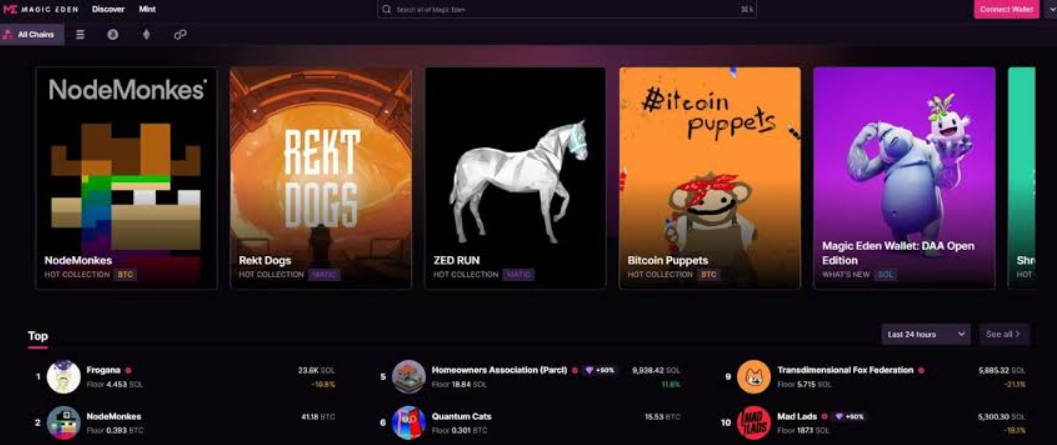
In February 2026 Magic Eden announced its decision to leave Bitcoin Ordinals, Runes, and all of the EVM NFT markets. To focus instead on Solana and a new crypto gambling product, it closed down its multi-chain wallet. If you had assets linked to Magic Eden's infrastructure on those other chains, then your platform is now gone. The project didn't fail; it changed direction. But from the point of view of the users, the outcome was the same—they had invested in something that no longer exists.
The amount of damage that can be inflicted on anything is limited once it has become structurally impossible to keep it going. A blockchain project is not an abstract, self-running decentralized organization. It is a business, with things like payroll, legal responsibilities, infrastructure expenses, and the expectations of its stakeholders. If the new owners decide to reduce costs, delay development, or change their focus, the structure begins to fail. And by the time these flaws are noticeable to people outside the project, the foundation has already been lost.
Consensys Split and What It Signals
In September 2026 Consensys divided itself into two separate companies. MetaMask then became an independent business aimed at consumers, Joseph Lubin serving as both chairman and CEO. The institutional blockchain infrastructure services, on the other hand, were placed under a different Consensys company. In theory this can be seen as a strategic action; Lubin referred to it as a way of securing sustainable, long-term value for MetaMask. However, for anyone who held tokens or equity that were linked to the original Consensys structure, the issue arises of what has now happened to my position?
It is not necessarily a bad thing to split a company, but such a move does introduce uncertainty. Who is responsible for the liabilities? Which entity will benefit from the growth? Suppose you invested in Consensys because of MetaMask's user base, but MetaMask has since become its own company with its own cap table—where does that leave you? The answers are often not clear, and by the time they are, the market has already adjusted all the prices.
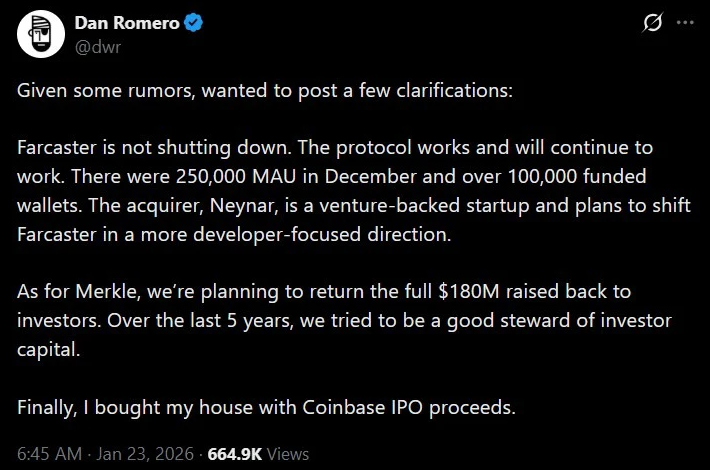
In late January 2026 Farcaster handed over responsibility for its protocol and its main client to Neynar. The official reason given was that this would enable Farcaster to concentrate on the protocol while Neynar looked after the infrastructure. However, since stewardship changes amount to changes in ownership even if they are presented as partnerships, the incentives change, the priorities change, and if you hold tokens or are developing applications on that protocol you are now working under a different set of assumptions than you were six months before.
The merger and acquisition activity in 2025 and 2026 was harsh. The amount of M&A consideration that was made public in 2025 amounted to thirty-seven billion dollars, which is a 7.6 times increase on the figures from 2024. The number of transactions rose by seventy-four per cent. In 2026, the figure for the second quarter was $7.23 billion, compared with $2.14 billion in the first quarter. This is not an example of growth. It is an instance of consolidation. The major companies are purchasing all sorts of businesses at rock-bottom prices, and it is the companies that could not have survived on their own that are the ones being acquired.
When a company such as Coinbase or Kraken takes over a smaller project, it is not aiming at preserving what that smaller project has achieved. Instead, it extracts the technology, absorbs the team, and closes down any component that does not conform to its own roadmap. For those people who had believed in the smaller project, who held its token and who had developed integrations with it, the acquisition does not represent a success. It is an exit for the founders and a slow death for everybody else.
This pattern holds true in all cases. When announcing the acquisition it is presented as a partnership, described as a merger of equals or as a strategic alignment. In fact, one side had the advantage while the other had debts to settle. The token of the project being acquired is forgotten about. Development gradually slows down and then comes to a halt. The community raises questions which are never replied to. Six months later the project is quietly deprecated and the only people who ended up making money were those who had sold their shares on the day the acquisition was announced.
Why Crypto is Still Just Business
Crypto always tends to act as if it is different—described as decentralized, trustless, and immune to the problems that affect traditional companies. However, whenever a project changes hands, the same situations occur. The new owner will have different incentives and the new executive will have a different vision; and if that vision doesn't match what you've invested in, then your position becomes a liability.
The point is that in traditional business ownership changes are subject to regulation, made public, and usually need the approval of shareholders. In the case of crypto, a project can restructure suddenly, completely change its business model, or be acquired all without going through any formal procedure. If the governance token you own carries no real voting power then you have no influence. If the team holds a majority of the tokens then your votes are of no importance. And if the acquisition takes place at the company level rather than at the protocol level then the token holders are not included in the discussion.
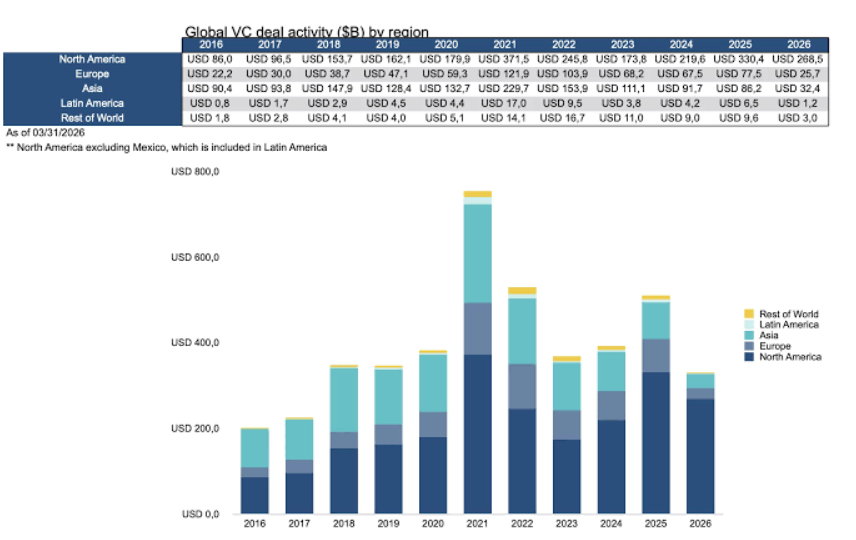
In 2026 venture capital funding fell considerably. In the first quarter four billion dollars were deployed in 355 deals, which was about half the amount invested in the fourth quarter of 2025. The projects which managed to survive were those that were charging real fees in stablecoins or in cash, not those that depended on speculative token distributions. This change in funding models implies that the projects which are still standing are the ones that can produce revenue without their token. It also means that the token is no longer necessary for the business. And if the token is not necessary, then what will happen when the project is acquired? It will be left behind.
In the first half of 2026 alone more than $1.1 billion was lost as a result of various exploits. A number of these exploits were technical in nature and others were governance attacks. At least seven protocols on three chains had a total loss of twenty-two million dollars due to governance takeovers. A governance takeover occurs when someone gains enough tokens to be able to control the vote and then uses that control to empty the treasury or divert the funds. It is an acquisition carried out in a hostile manner by means of the protocol's own rules.
The projects which were drained were not badly designed; they had governance mechanisms and multi-sig protections as well. However, these mechanisms were based on the assumption of good faith from participants. When someone treats governance as a means of carrying out a financial attack rather than as a community process, the protections cease to work. And after the treasury has been emptied, the project is over, no matter how strong the technology was.
What makes governance attacks so dangerous is that they are entirely within the rules of the protocol itself. The attacker is not breaking in anywhere; rather, they are taking part in the governance process precisely as the system was meant to work, even though the designers had never foreseen such motivations. They buy up tokens, cast their votes, and implement the proposals. The only difference is that their aim is not to improve the protocol; it is to extract value and then vanish. By the time the community realizes what is going on, the vote will have taken place, the money has been transferred, and there will be no way to reverse the action. The protocol has functioned exactly as it was intended to, even though it has been used by someone who intended to destroy it.
Red Flags You Should Be Watching
If you want to prevent yourself from ending up in a reorganization nightmare you should look out for the signs that management is changing, that priorities are shifting, or that the project is preparing to make a pivot which will leave the token holders behind.
1. The absence of or a sudden lack of leadership. If the founder who used to post on Twitter every day suddenly becomes silent, that is not merely a vacation. If the CTO who had been committing code every week suddenly stops doing so, it means that something has changed. The lack of leadership is the first indication that the internal situation is worsening.
2. Unclear or late updates to the roadmap. Healthy projects communicate clearly by either reaching their milestones or giving a reason for not doing so. If the updates become vague, if the deadlines start to be missed without an explanation, and if the roadmap is rewritten every quarter, then this means that management has either lost control or has lost interest.
3. After a pivot the purpose of the token is unclear. If the project announces a new direction but does not make it immediately clear what role the token will play in that new direction, then it should be assumed that the token is being deprioritized. For example, if they change their focus from DeFi to gaming and the token was originally intended for staking in DeFi, so what is it for now? If the answer is not clear, this is because they haven't worked out what it should be or because they don't care.
4. There's a sudden shift in the way communication is toned. If the official channels begin to sound more businesslike, more legal, and more detached, this is a sign that the people who are now writing the updates are no longer the same individuals who had been involved in setting up the project. A company brings in consultants to handle its communication because the original team has either left or has been put aside.
5. Unexplained departures by team members. It is normal for one person to leave. But when three people have left in a month it amounts to an exodus. If several key contributors leave without any explanation, or if their resignations are presented as mutual decisions even though they clearly weren't, then the internal environment has become unworkable. People don't leave good projects during bull markets.
6. A depletion of the treasury without any increase in revenue. Look at the on-chain wallets. Should the project be exhausting its treasury faster than it is earning revenue and there be no clear plan to alter this situation, it is heading towards insolvency. When projects run out of runway they carry out acquisitions and changes in direction. If you notice the runway being shortened, begin planning your exit before the announcement is made.
When Everything You Trusted Turns Out to Be Temporary
The 2026 shakeout turned out to be a severe blow to all those who thought that long-term survival could be guaranteed by having funding, a lot of hype, and a strong initial launch. It wasn't. While not all the projects that collapsed were scams, many of them had been genuine attempts that simply ran out of time, money, or leadership. Likewise, not all the projects that were acquired were failures, since many of them had developed real technology that somebody else wanted. But for the token holders, for the users, and for the people who had built businesses based on those platforms, the result was the same: the thing they had trusted was gone.
The point isn't to shun crypto; rather, it is to view it as a business situation in which changes to ownership, failures in management, and shifts in incentives can happen suddenly. The projects you rely on now could be completely different in six months' time. The tokens you currently hold might lose all their value following an acquisition. The roadmap for which you invested might be altered by someone who doesn't care what you thought you were purchasing.
You can't get rid of that risk, but you can look out for the signs. You can spread your investments around, leave when a number of red flags appear, and stop pretending that decentralization means a project is immune to the same forces which destroy traditional companies. Crypto isn't existing in some separate world; it's still just business. And in the world of business, whenever a project changes hands, one person comes out ahead and another one loses. Ensure that you are not the one left with a token that has lost all value.
It isn't the case that all aspects of crypto involve a reorganization that is waiting to take place; some of the infrastructure remains stable since it has become operationally mature, because it meets a need which doesn't disappear when sentiment changes, and because it is not aiming to be anything other than what it currently is.
On TRON there is always the need to swap TRON Energy or pay for TRON gas in order to carry out transactions in USDT. The reason you buy TRON Energy is not that you are speculating about the project's future roadmap; rather, you are paying for a resource that you currently need. The USDT gas market on TRON is functional, liquid and predictable since it is not linked to a token that can be deprioritised if the project changes direction.
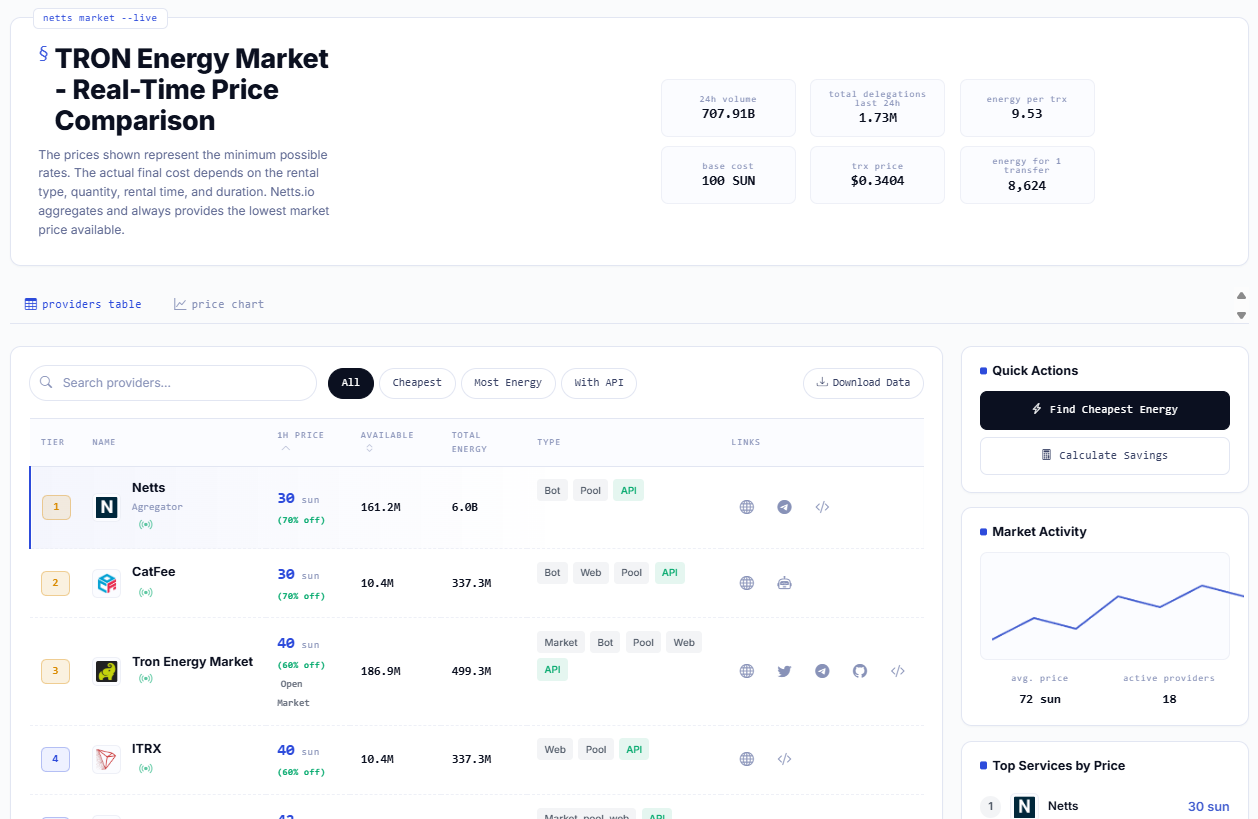
Services such as Netts, which gather together energy rentals from verified providers, achieve reliability by means of their simple operations. They need not concern themselves with a governance token. They are not obliged to have a roadmap that could change. They offer energy, charge a fee, and ensure that the infrastructure continues to function. This is the sort of plain, practical service which is able to survive consolidation phases since it is not aiming to do anything beyond what is necessary.