The Altcoin Graveyard: Projects That Died and Why
Over 50% of post-2021 altcoins are dead. Bitcoin still leads. Here's why technical merit alone never saved any altcoin.

Bitcoin is meant to be the rough draft. The first attempt — technologically constrained, also slow, highly energy-hungry and built before the industry had figured out how any of this was to work. Altcoins were the iteration. Faster and less infantry-you rode in with tunable block times, clever consensus models, highly extensible programming languages, armies of credentialed developers-actual degrees from an actual university. The narrative was always the same: bitcoin made it work. We built something better. Get in early.
And yet here we are. Bitcoin is the number-one cryptocurrency by market cap, has held that title continuously since the day it was created, and has survived every bear market, competing narrative and technical criticism the altcoin ecosystem has created over fifteen years. Over on the alternatives side, is mainly a graveyard. Over half of all the cryptocurrencies in existence that were launched this side of 2021 are already lifeless in any serious sense. For just the year 2024, nearly 1.4 million projects failed. That number rose to 1.8 million in 2025. These are not rounding errors. These are the true contours of the altcoin market.
No refunds for the people who paid for these projects. And that is the part of this story most swept under the rug by an unrelenting bull market — the compounding effect of wallet upon wallet wiped out; family lifesavings and retirement funds spent, borrowed funds gone to zero, team silenced.
Bitcoin's Unkillable Advantage
A little understanding of the reason bitcoin has not failed can help you to understand why altcoins fail at the rate they do. And furthermore, the explanation is not that technical — Bitcoin was born a primitive technology compared to everything else built on top of it. It processes approximately seven transactions per second. It uses an energy-intensive proof-of-work system. The three have no native smart contract functionality. According to the metrics that altcoin whitepapers used to justify their existence, Bitcoin should have been disrupted 10 years ago.
What Bitcoin has, that none of the altcoins have ever been able to sell, is an organically manufactured foundational myth. Bitcoin was conceived, published and vanished by Satoshi Nakamoto — it became a thing with no chief executive officer, no foundation with a marketing slush fund, no venture capital firm who is going to lock up their allocation then as they will threaten the system at large dump on the open market, and there are also no people behind some project that could be threatened or bored relative to other pursuits. From the start, it was not aspirational decentralization; it was real.
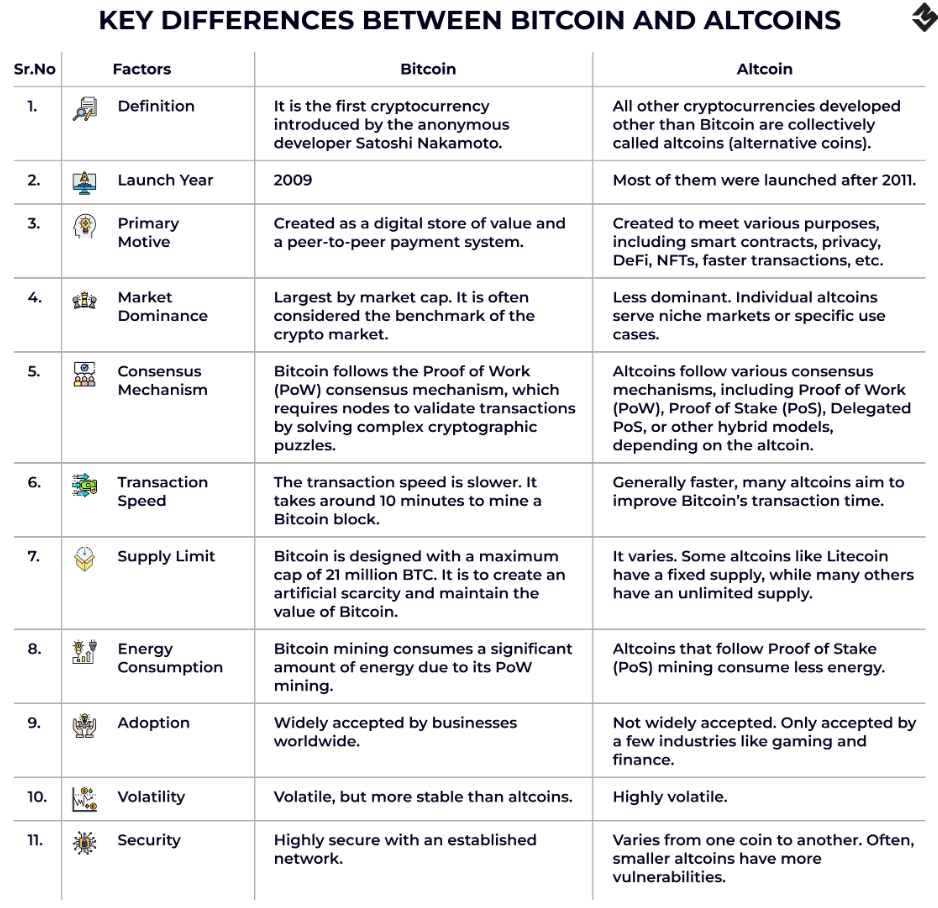
Every single step towards decentralization of any altcoin in the history of crypto, from the decentralized foundation, to the token allocation for a team or lead developer with their face boldly emblazoned across the website — not because Bitcoin had some grand plan but rather because every venture round gives early backers price priority over everyone else today — has launched as such. This means that the economic model of any altcoin launch is, at its core, an insiders will have their coins cheaper than everyone else and they are incentivised in finding higher priced buyers." This is no conspiracy theory. This is how token sales are supposed to work — these are the disclosed mechanics of it. The creators of the project have every financial motive to generate excitement, bring in capital, and know when it is time to immediately cash out.
This was not the case for Bitcoin. Satoshi mined the first coins, kept some and disappeared. The network achieved an existence of its own, separate from its creator. That is an original state that cannot be imitated, no matter how many art-genesis deals you make on open-air-bbq and Barns & Noble pitches, but as soon as you start to replicate it, the jig is up — you are showing your planning ass in public.
Greatest Collapses — Stories That Should Have Been Warnings
Terra/LUNA is the most instructive altcoin failure of the modern era — not because it was the most fraudulent, but because it was built by people who genuinely believed in what they were doing, and still produced one of the worst investor catastrophes in financial history.
Terra was a beautifully designed ideal — an overcollateralized stablecoin, UST, will always stay pegged to the dollar not through collateral but through an algorithmic relationship with its companion token and due to market forces; When UST is above a dollar, arbitrageurs make money by minting UST and selling it, which brings the price back down. If UST was trading below the dollar, users could burn their UST to mint LUNA profitably — which would reduce the supply of UST and push it back up. The mechanism depended on the continuing tolerance of markets and, crucially, on faith that it would never stop working. Belief was the reserve asset.
The mechanism that drew billions of capital into the ecosystem was the Anchor Protocol, which promised 19.5 percent annual yield on UST deposits. UST peaked at a market cap of some 18 billion dollars. Anchor has been absorbing the bulk of that. The yield was not the result of economic activity. It had been subsidised by the reserve treasury of the Terra foundation — a funding mechanism that was always only ever temporary, and always going to be unsustainable at scale.
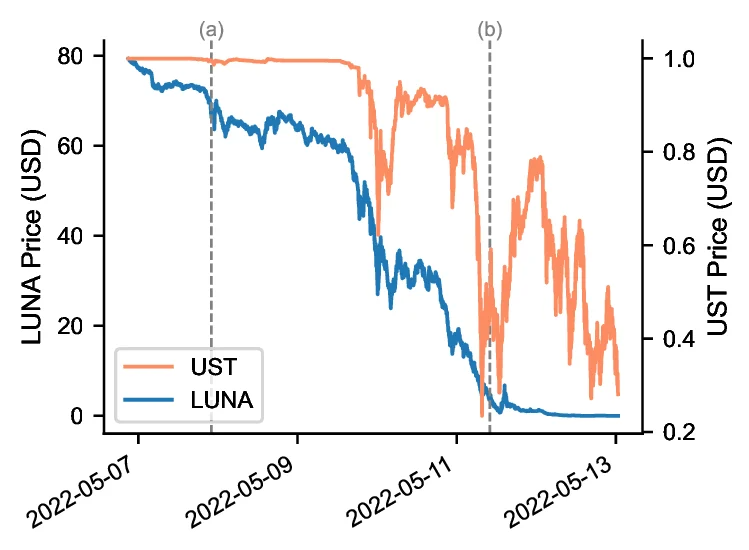
This is absolutely the reason why when an extreme pressure was coordinated at the UST/LUNA system in May of 2022 -- large selling in Curve liquidity pool first followed by accelerated withdrawals from Anchor - the algorithmic mechanism designed to bring back peg only accelerated it all through collapse. When UST depegged, users fled to burn it for LUNA. In retaliation, billions of LUNA were minted and the price subsequently crashed. The LUNA price crashed, the mechanism meant to protect UST was rendered useless. The system had no floor. In about three days, $60 billion of their combined market values had evaporated. Individual investors who had sunk their life savings into what appeared to be a riskless deposit account yielding hundreds of dollars in interest per hour saw that dollar value reduced to effectively nothing.
Up until now, Terraform Labs co-founder Do Kwon had openly scoffed at critics warning of the systemic risks inherent in such a design. He had referred to those expressing doubts about mechanism as contemptible. Now, though, he's been charged in several places.
BitConnect had a different model yet achieved the same outcome. Introduced in the year 2016, this provided a "lending platform" that guaranteed daily profits of up to one percent which compounded to annualised results inconceivable by way of any authentic investment for more than a several months. The platform's own token, BCC, was traded on its own exchange at valuations that had to be maintained by fresh investments. Just to be clear: This is the definition of a Ponzi scheme. After the SEC issued cease-and-desist letters in late 2017, BitConnect collapsed in January 2018 and the token was down ninety-two percent in price twenty-four hours after announcement. Its promoters had spent years bringing in members through YouTube videos and social media. A lot of those who participated went bankrupt.
EOS deserves a tier of its own, as it wasn't technically a scam — it had legitimate technology, an actual team, and a year-long ICO that raised ~$4.2 billion dollars and was the largest crowdfunding event in history at the time. Block.one, the company behind EOS, had a real team of engineers and a real vision for the product: millions of transactions per second without fees; applications operating at a scale that Ethereum couldn't handle. It was a cohesive technical vision which had ambitious execution attached to it.
What EOS evolved into was a warning about how far apart technical aspiration is to market application. In 2018 the network launched but was put under duress with problems of governance — a small group of elected block producers amassed super-majority powers to dictate decisions, creating precisely the centralisation that blockchain had promised to eliminate. Developer activity subsequently failed to live up to the fundraising. User adoption stagnated. By 2022, Block.one had mostly moved on to their other projects. EOS had raised more money than nearly any project in history, and built less adoption than free-to-use platforms constructed by teams with a fraction of those resources.
Titan Finance — which is part of the Iron Finance ecosystem, — showed that even technically sophisticated DeFi mechanisms can be catastrophically unraveled and in broad daylight. Back in June 2021, TITAN — an under-collateralized stablecoin protocol on Polygon went through a bank run. The algorithmic stability mechanism was unable to keep the peg as large holders started exiting. This was in the wake of TITAN's collapse from about $60 to zero in only a few hours which blockchain analytics decribed as the world's first examples of large scale crypto bank runs. Mark Cuban found a way to process the wreck with some early stages of the venture on public record by seeing that he lost money before leading his charge to regulate stablecoin protocols.
Quieter Deaths — Projects That Faded Without Ceremony
Not every altcoin death comes with a bang of $60 billion wiped off the map. The majority die in slow motion, the startup death — four mildly used words: github repository grows dark → telegram group quiet → token still technically tradeable for less than a cent on some third tier exchange → founding team now comfortably listing their blockchain experience on LinkedIn while they set about building their next product.
In 2016 Steemit came out - such an innovative idea, as a social media based on blockchain where users get to earn both crypto for creating and curating content. It got actual users, actual content creators and for a time it seemed like an alternative to ad-funded social media. Governance claimed control, the reward system cut economics incentivized spam and manipulators over quality content, and in 2020 a hostile takeover by Justin Sun — who bought Steemit platform and set about using his purchased stake to subvert community governance — fast-tracked the departure of anyone with the legitimacy the platform had. The fork was called Hive and not only did it pick up the user base but never managed to regain the previous energy.

The problem is, with the technical story that Nano has, it deserved more than what it got. Its block-lattice structure did solve the fee and speed issues that continue to beat Bitcoin and Ethereum, allowing feeless instant transactions. It was not a scam. The group, however, was not enriching themselves. Nano just could not crack the adoption riddle. For a fast, zero-fee payments network, the merchant and user layers need to adopt in lockstep and there lacked no mechanism (no mining reward, no staking yield — no DeFi ecosystem creating demand), to bootstrap that adoption. It lived on buzz and died on apathy.
Decred was similarly earnest. Launched in 2016 with a hybrid proof-of-work/proof-of-stake consensus mechanism and a real on-chain governance system, it aimed to address Bitcoin's political problem — the challenge of effecting protocol upgrades without the drama of hard forks — in an engineering-forward manner. It could never draw in enough developers or users to grow into anything more than a long running footnote. It is not enough to be technically correct. For many holders of Bitcoin, governance dysfunction is a feature not a bug.
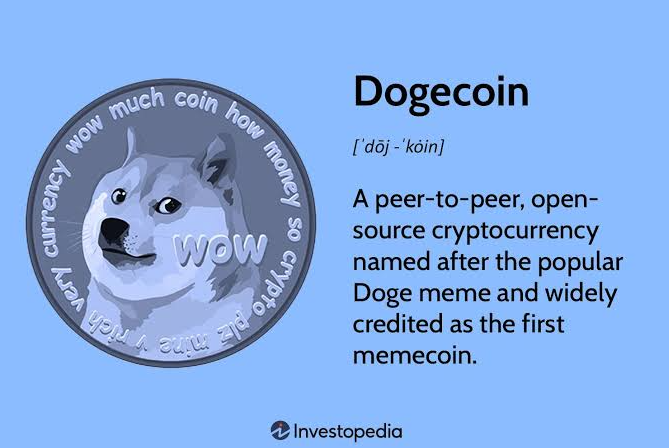
A special mention must be made regarding the category of meme coins, as the dynamic is different. Launched in 2013 as a parody of Bitcoin, the creators here were explicit that there was no serious purpose. It built a community, weathered the rounds of cycles and as of the mid-2020s it is still trading and still has a multi-billion market capitalization. This is an effect its creators never intended. In a way, the very existence of Dogecoin is the reductio ad absurdum of at least part of the altcoin thesis: if a joke coin with no serious aspirations can last long past thousands (or ten thousand) more serious projects with real teams and real technology, then it really proves that there is something very wrong about the idea that technical merit is what decides which coins are long-term survivors.
The newer meme coin factory was Solana's ecosystem that produced on-average thousands of tokens a day in 2024 and 2025 — it taught an even more direct version of the same lesson. Most of those tokens had lifespans in days. Generated by scripts, amplified by social media celebrities and falling apart as soon as the wind went away. Those who got in early made a profit. Most of the later arrivals in this trend bought these first arrivers tokens at a high price, only to watch their price plummet to zero shortly after. And the entire ecosystem became a mechanism to pass wealth from late-arriving retail participants to early-arriving insiders: the same structure (in miniature) that invariably defines almost every altcoin life cycle.
Successful Survivors — What Actually Worked
Not all cemeteries in the altcoin dance. Some projects created real utility, built real user bases and lived long enough to become infrastructure versus experiments.
Ethereum is a more obvious success but its improved massively by the same reason Bitcoin was successful: it solved a real problem with what people really really needed to solve. Bitcoin showed that you can have money without trust. Ethereum showed you can build trust less programs — smart contracts that execute like clockwork when certain conditions have been met and without any need for a third party to enforce them. It is now the platform that defined the rest of DeFi, NFTs, and token issuance. Ethereum had a public founding figure in Vitalik Buterin, creating the centralization risk these days Bitcoin has largely avoided — but so long as Buterin continues to provide intellectual leadership and the developer community around Ethereum remains deep enough, that seems a manageable rather than fatal risk.
Binance Coin, now known as BNB – the ultimate success story of its own kind. It was successful, in part, because of its association with the world's biggest exchange and having something real to gain for using it; a lower trading fee on Binance. That utility was real. The demand for it was real. BNB has survived not just the ICO era, the bear market of 2022 but also multiple regulatory migraines at its parent company because the fundamental demand (people wanting to trade on Binance paying with a discount) is still there.
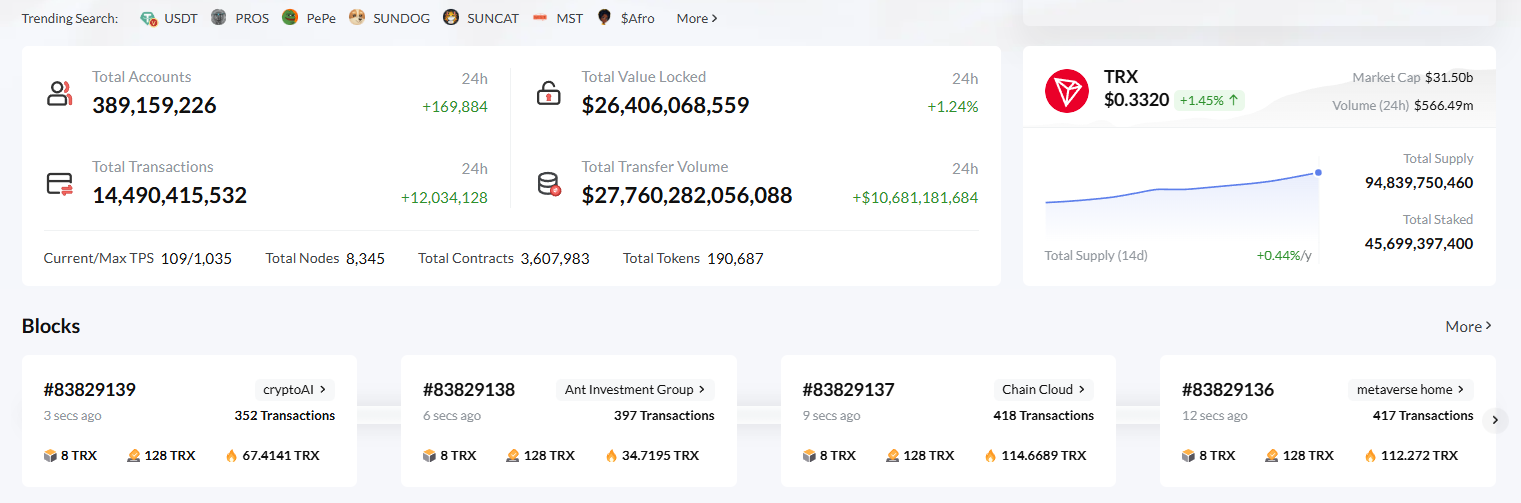
TRON and USDT, on TRON, maybe the most pragmatic success story (near reality) in all of altcoin. TRON created a token whose blockchain was designed to maximize low-cost, speedy transaction throughput and that network became the dominant global rail for USDT transfers. This was not glamorous. No one was penning thinkpieces on the wonder of TRON. However, the reality is that the network processed billions of dollars in stablecoin volume per day, and that volume actually represented real economic activity — remittances, exchange settlements, merchant payments — not speculative trading. People who regularly transfer USDT found TRON to be the cheapest method and began looking at timing their transfers and utilising a TRON Energy service recharging TRON Energy before busy times instead of paying the default burn rate on TRX. The insight that TRON's Energy mechanics would ultimately allow you to send a USDT with the lowest fee — by literally renting Energy rather than burning TRX, which is burn and not rent — allowed it to not only be workable as an everyday stablecoin but more appealing too.
That survivors and graveyard dwellers pattern is brutal in simplicity. Survivors discovered a thing to do; they discovered something tangible. Ethereum found smart contracts. BNB found exchange fee utility. TRON found stablecoin throughput. By contrast, everything else — every blockchain touting itself as faster or cheaper or more decentralized without solving an actual adoption problem — has either been put to rest for good or is in the midst of a slow death.
Solana is the unresolved query of this cycle. It has real developer adoption, genuine transaction throughput, and true technical performance advantages over Ethereum for some applications. It also has a history of network outages that severely undermined its reliability narrative, a token distribution which raised serious concerns about centralization and a price history more correlated with sentiment than any notable underlying usage metrics. The huge question I guess, is whether Solana will land in the survivors part or graveyard part?
Aggregate the lessons of the graveyard, and what it teaches is that technological innovation in crypto basically has a zero marginal cost. You could build a blockchain with engineering talent. It is not a technical constraint — it is the years of sincere utility, network effects and community trust that can be obliterated in mere days. It took Bitcoin over a decade of building that exact combination before anyone would take it seriously. Altcoins regularly attempt to skip that step with advertising, tokenomics, and fabricated exhilaration. The shortcut does not work.
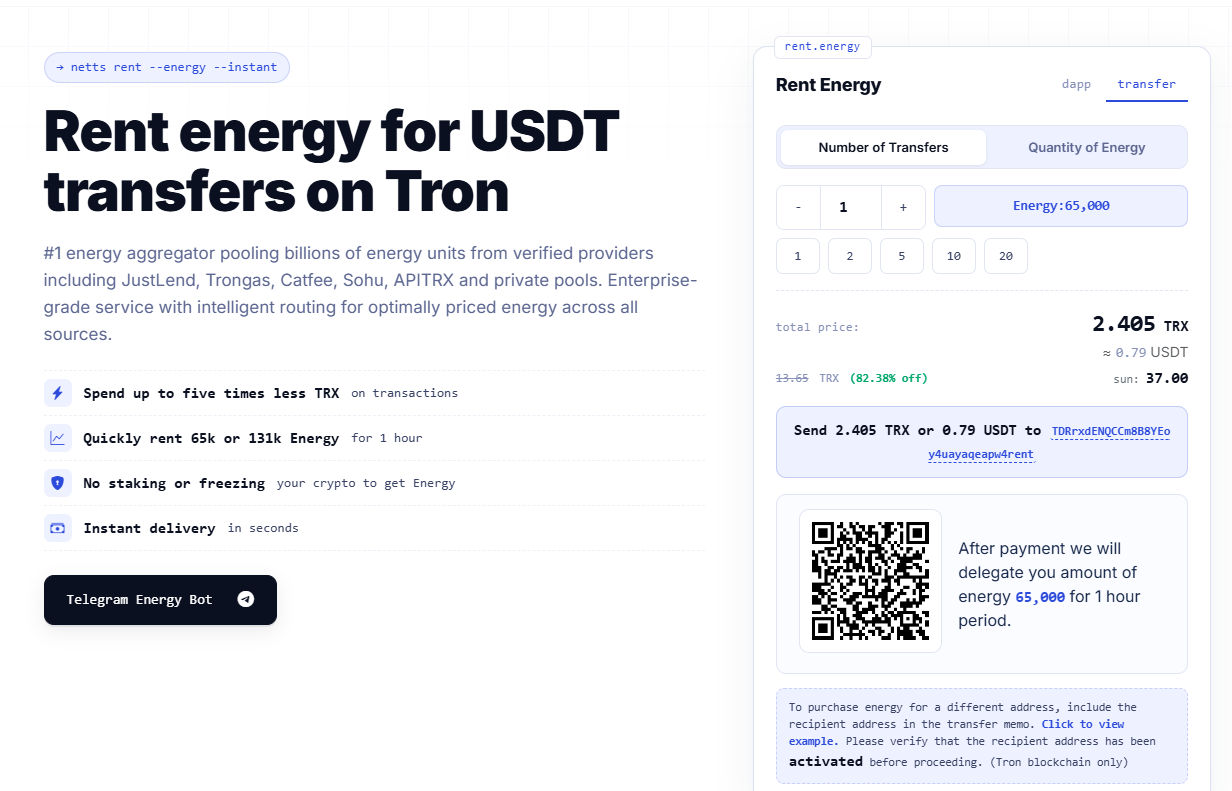
For the users relying on the surviving infrastructure — TRON for USDT transfers and stablecoin settlements — that is immediately practical in terms of cost optimization. The difference between well-managed optimized transaction management and poorly managed unoptimized transaction management be measurable real money, whether you re-charge TRON Energy manually every time back to the target before making a batch of transfers or automatically charge energy as soon as possible from delegation all the time to keep using always enough amounts of available energy. Netts.io is the number one TRON Energy aggregator that collects billions of Energy from reputable providers like JustLend, Trongas, Catfee, Sohu, and APITRX — instantaneous delivery of Energy for a rental period of an hour or five minutes at up to 5x savings compared to burning TRX without any subscription or minimum volume and using a Telegram bot for total automation in Energy management.