Precious Metals and Crypto: Old Meets New
Gold and crypto used to look like enemies. Now tokenized bullion, stablecoin reserves, and trust questions are forcing them together.
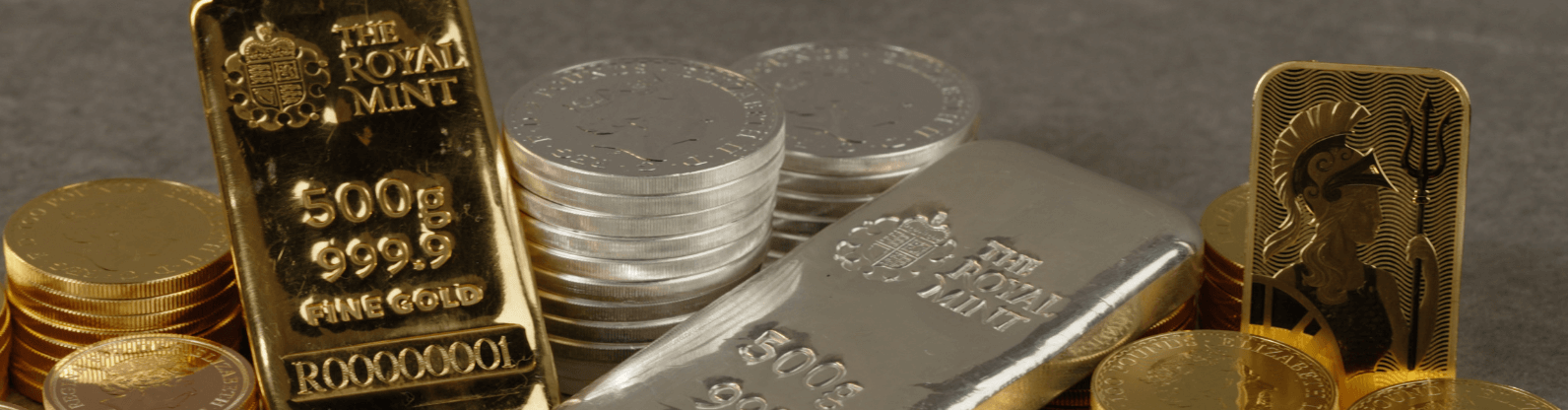
At the dawn of the crypto age, the idea that crypto and gold would intersect had the feel of something absurd. Bitcoin was a hacker-y joke, a fringe asset, a way for libertarians, programmers, and conspiracy theorists to engage in an ideological exercise at 3 a.m. Gold was a different kind of fringe asset, one rooted in a different set of ideological commitments. It was the province of sentimentalists, central banks, coin shops, and families with a certain kind of stubbornness about the value of tradition.
The two assets had little use for each other. Gold investors dismissed Bitcoin as another digital fad, one that had no industrial value, no heft, no history, and no institutional backing (not that institutions were necessarily a bad thing, but gold had them in abundance). Crypto natives dismissed gold as a cumbersome liability, a baroque artifact that served primarily as a hedge against the failures of the modern financial system. One group kept bars in vaults. The other kept private keys in their heads. One trusted central banks. The other distrusted them. One believed in scarcity and industrial utility. The other believed in distributed consensus.
The phrase “digital gold” made for a convenient shorthand, one that smoothed over the differences between the two universes. In early years, Bitcoin was not seen by mainstream observers as an alternative to gold so much as a curiosity, a novelty, a black-market medium of exchange, a speculative instrument. It was not that gold investors couldn’t see the value in a decentralized, cryptographic alternative to the banking system. It’s that they had little patience for the volatility, and even less patience for the acolytes who insisted that crypto represented the future. Bitcoin was not a serious store of value to someone who bought gold in order to sleep better at night. It was an asset that could spike at any moment, only to collapse back down to half its value by morning. The comparison was nevertheless compelling in its own way. Bitcoin was scarce in the same way that gold was scarce. It had a supply schedule that was algorithmic rather than geological but no less difficult to manipulate. It was decentralized, which gave it a kind of contrarian credibility. Gold had a similar credibility in its own right, one earned by centuries of association with sound money. Gold’s association with stability was not foolproof, but it was durable enough that central banks continued to buy it during times of stress. The same could be said for Bitcoin, although not for nearly as long. The parallels were enough to make crypto bulls believe that gold and crypto could be married in some kind of ideological alliance. What happened next was that crypto bulls grew up.
Old Metal Came Back
Markets are not always kind to binary narratives. The long-standing narrative about gold and crypto was that the two assets were fundamentally at odds with one another. It was a useful narrative while crypto was small, while gold was old, while both were mostly theoretical. It became less useful once crypto companies started acting like capital providers and not just contrarians. It became even less useful once those companies started buying gold. The marriage of gold and crypto was not exactly love at first sight, but it nevertheless had a certain kind of logic to it. That logic was on full display this week, as Tether - the largest stablecoin by volume - bought gold in earnest. The company did not exactly buy gold in the abstract. It bought physical gold in bulk, adding to its holdings of the metal during the second quarter of this year.
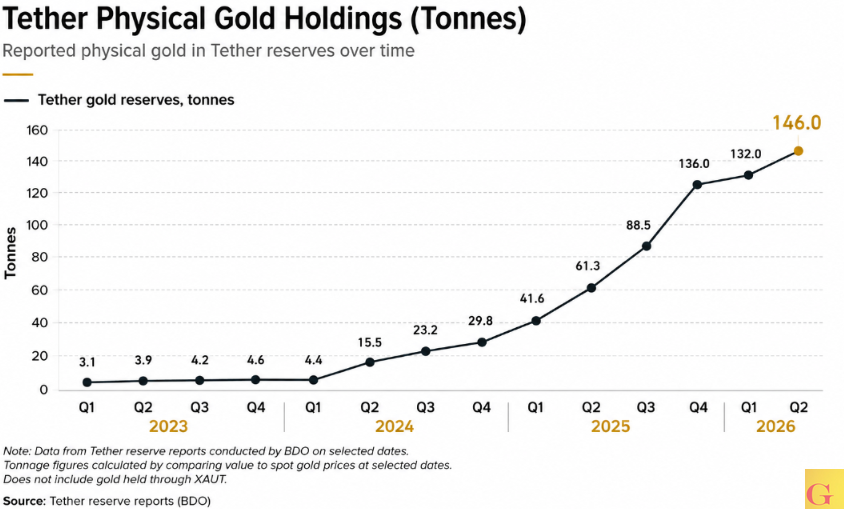
As of mid-2026, its physical gold reserves weighed more than 146 tonnes, after adding 14 additional tonnes as of June. At the same time, the company’s total reserves - physical gold included - were said to be in the hundreds of billions of dollars, with gold accounting for roughly one-tenth of that amount.
This does not necessarily mean that Tether has converted into a central bank, despite how tempting the narrative is. Central banks were also net buyers of gold, with the demand surging sharply in the same quarter. The real problem is that central banks were not wrong in their love for gold; they were just wrong in their assumptions of being able to exist above the fray. The real reason why stablecoin issuance is a big deal is that Tether, as a private actor, is now one of those capable of moving the conversation about private digital assets.
The incentives are hardly mysterious, either; a stablecoin issuer, by definition, has to earn the confidence of the market. Users do not buy Tether’s USDT because they want a lecture on reserves; they want the security and flexibility of a token whose value is reliably pegged to the dollar. The moment that proof disappears, the whole edifice turns into a bank run.
Meanwhile, gold provides narrative credibility. It is an asset with distribution power that has been vetted by decades of experience. It does not pay yields like Treasuries, it does not act as cash does, and it is not the most liquid instrument going into a funding program. But it has a kind of gravitas that short-term paper does not. Gold represents a portfolio diversification that extends beyond the reach of the dollar, the banking system, and the prevailing political winds in Washington. And given stablecoins’ precarious position within the regulatory framework, their issuers’ appetites for gold may serve a different kind of diversification.
In any case, gold provides cover and credibility, and pretending otherwise would be intellectually dishonest. Crypto-native assets have a reputation for being highly speculative, which means any addition of real-world assets to their qualities as a store of value is immediately seen as a detraction. Gold satisfies the demand for stability among conservative investors, reassures those who would have otherwise dismissed crypto assets, serves as a much-needed counterweight to crypto’s scale-driven risk-taking, and, in general, makes gold more attractive to those who have never considered allocating to crypto before.
Gold With a Private Key
Tokenization is the buzzword of late, and for good reason; in its simplest form, it represents a bridge between crypto assets and traditional finance. As such, it is a tremendously exciting prospect for the bullion market. One company has gold, and it wants to give you exposure to it without forcing you to call a broker, wait for clearance, move a bar, or anything else. The tokenization of an asset as traditionally known and understood is a neat proposition because it is a permissioned on-ramp to an otherwise permissionless market.
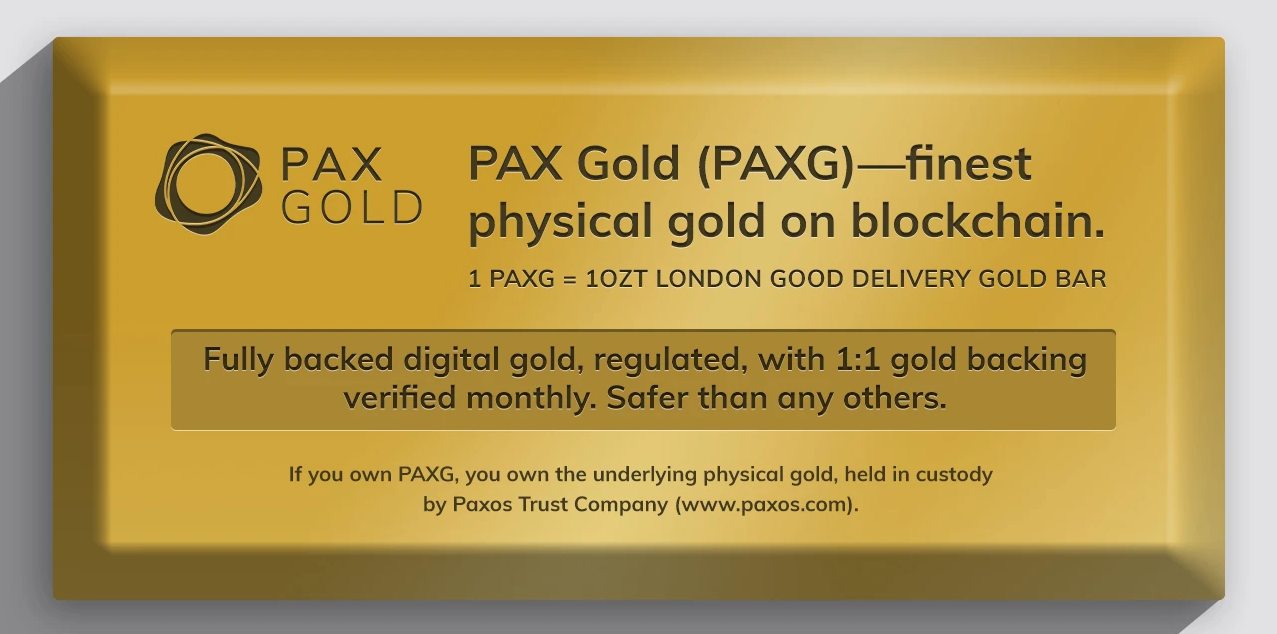
That is the theory behind Tether Gold, Pax Gold, and similar products, all of which are intended to offer exposure to gold, typically measured in troy ounces, via a token on a blockchain. The value is roughly comparable to gold in traditional markets, held by credible custodians with proof of allocation or some form of third-party attestation. The appeal is obvious, as gold, while a reliable currency, is not a liquid one. Tokenization makes it programmable and opens up a host of new possibilities for investors. It grants broader access to gold, including fractional ownership, DeFi integration, lending, and settlement. It facilitates faster, round-the-clock trading that is not available in traditional markets, particularly in emerging markets where custodianship and clear titles are hard to come by.
Meanwhile, for the traditional gold market, the appeal is more conservative but no less real. Tokenization offers exposure to crypto without having to accept crypto’s volatility. It is a hedge with familiar characteristics that can be transferred, settled, and redeemed easily. It is not another experiment in community governance or meaningless memecoins that promises to disrupt capital markets. It is a way to own gold, but faster and with smaller minimums, using tools that appeal to digital-native investors.
The problems are not insurmountable, either. The token, while it lacks the security of direct custodianship, offers the security of the blockchain; that is, the token’s movements can be tracked, which is a useful guarantee for investors. The trust that would have gone into the custodian is now spread out among the network’s nodes. But it is also easy to overrate the contribution of the technology. A company putting out a gold token is no more trustworthy than any other firm, and the guarantees, legal or otherwise, that make a token investment legitimate are no different from those that apply to traditional custodians. Just as a bank does not actually hold the reserves in an ETF account, a custodian holding physical gold does not necessarily hold the gold allocated to each token investor. The differences are largely in presentation, and the ability to move value around faster is undeniably useful.
But here is the thing; the problems with gold are the same problems with any investment in isolation: presentation aside, a token on a blockchain is not a bank vault, and the trust is still there, only distributed. In other words, the trust problem never went away.
Trust Problem Never Left
The traditional bullion market is built on the same set of trust assumptions as cryptocurrencies. Counterfeiting, rehypothecation, opaque custodianship, and even outright fraud have plagued gold, and investors in gold know the importance of titles, custodians, insurance, serial numbers, audits, and redemption policies. At the most basic level, gold is a physical asset, and the same principles apply to investing in it as any other physical asset. In that regard, crypto investors are not in a unique position; a gold investor does not trust their bank to keep their gold safe, but they do the same with cash.
At the same time, the principles of proof are what crypto investors have brought to the table, and the sector is rightly skeptical of any claims of custody over assets, whether physical or digital. The phrase “not your keys, not your coins” was coined by people who have seen too many opportunities to steal from irresponsible custodians. Where tokens are concerned, the same principles apply, with the caveat being that while a private key secures a digital asset, it does not necessarily secure a physical one. In other words, when it comes to gold tokens, your keys do not control the vault.
It is not a deal-breaker, because as mentioned, gold investors do not have exclusive insight into the vault either. Most gold investors hold ETFs and mutual funds; even the most enthusiastic among them do not keep their gold in a vault because it would be impractical and unwise. Gold tokens are no different from any other financial instrument in this regard in that they are useful and reliable up to the point of redemption.
That said, the entire point of tokenization is to make redemption easier and faster, and that brings us to the next problem: the question of proof of allocation. In isolation, a gold token is no different from a banknote or paper certificate of deposit, except it has the ability to move faster, which is a benefit. But gold-backed tokens are no different from their centralized counterparts in that the allocation problem is one that gold investors have long dealt with. How much gold is actually there? How much of it is unallocated? What are the redemption terms like? What happens when the custodian goes bankrupt or gets sued? How much of it can actually be redeemed in any given circumstance, and how much is window-dressing?
This is where gold’s reputation for stability and trust is a double-edged sword. Gold may be a reliable store of value, but it is no more reliable than any other asset when it comes to legal risk, counterparty risk, or even outright fraud. In other words, gold is a liability, no different from any other asset; it is only the presentation that makes it desirable. For gold tokens, this means that the risks are no different from those that apply to traditional custodianship, only wrapped in a fancier contract.
The solution, once again, is found in crypto’s approach to proof of allocation. The industry is not exactly known for its realism or practicality, but when it comes to proof, crypto has few equals. The sector has the right questions, even if the delivery on them is often lacking. Where are the assets? Who holds them? Can they be audited or inspected? Can a third party do the same? What happens if the custodian goes bankrupt? Are you holding a direct claim or an indirect one? What are the redemption terms like, and how do they affect your ability to liquidate?
None of this is unique to gold-backed tokens, but the combination of both presents a unique challenge. Gold-backed crypto tokens are complicated, and their value proposition is only as good as their ability to satisfy these trust and proof requirements. Their introduction to the market is no doubt a historic event, but there are plenty of practical concerns and unresolved issues.
Investors are not wrong to be skeptical. Some conservative gold investors see tokenization as an unnecessary risk, a needless complication to an investment that has been around for centuries. Some crypto investors see gold tokens as an admission of defeat, an unnecessary concession to legacy finance that threatens to derail crypto’s disruptive potential. In reality, neither group is wrong; both are expressing valid concerns. Which is why the market is watching closely.
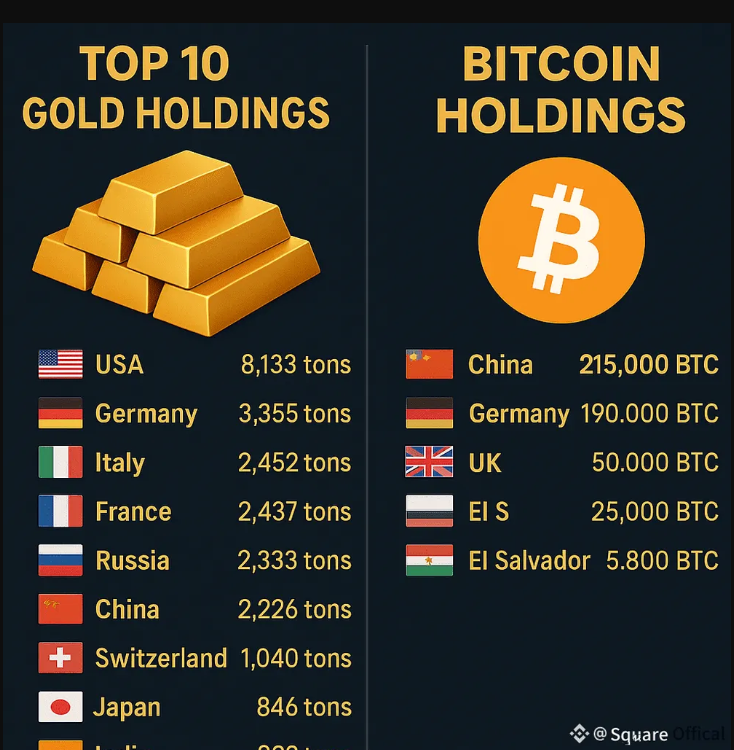
There is also the fear of missing out, because there always is. Conservative investors who have ignored crypto for the past decade are not inclined to ignore tokenized gold if it turns out to be critical. Meanwhile, gold investors who have mocked crypto’s volatility are not eager to see their assets turn into a token that loses value every time a bear market arrives. Everyone wants to avoid being the last one to the party when tokenized gold makes its breakthrough.
As with any innovation, there are dangers and opportunities. Custodians might turn out to be single points of failure, and investors in low-capitalization tokens might find themselves unable to redeem their assets for physical gold or liquidate their positions quickly in the case of a crash. Meanwhile, differences in regulatory environments and liquidity have the potential to create unpredictable arbitrage opportunities. Smart contracts can fail; market infrastructures can malfunction; management can cheat; and, most concerning, the industry has a habit of treating similar-sounding assets as fungible when they are demonstrably not. Gold-backed stablecoins, wrapped gold, and tokens of other precious metals are all being introduced to the market at the same time, and the potential for confusion is understandably concerning.
When Two Worlds Collide
For conservative gold investors, the mere fact that crypto firms are interested in gold is a major concern. Gold has always been a safe-haven asset, but the involvement of crypto firms has raised fears that their interest in gold is driven by speculation rather than genuine appreciation. Stablecoins have increased the supply of dollars in the financial system, but a stablecoin issuer buying gold is not the same thing as an individual investor doing so. The former represents an entirely different class of capital, one that is not bound by the same risk considerations as private investors.
For crypto, the introduction of tokenized gold represents an existential threat. Precious metals have long been viewed as the antithesis of crypto: an obstacle to the industry’s growth and disruption potential. Gold-backed stablecoins have undermined crypto’s credibility as an independent asset class and served as a recruiting tool for gold investors who would have otherwise remained uninterested in crypto. Worse still, gold tokens present an alternative to many of crypto’s most promising innovations, particularly yield-generating protocols. Gold, with its limited supply and stable value, has the potential to disrupt DeFi.
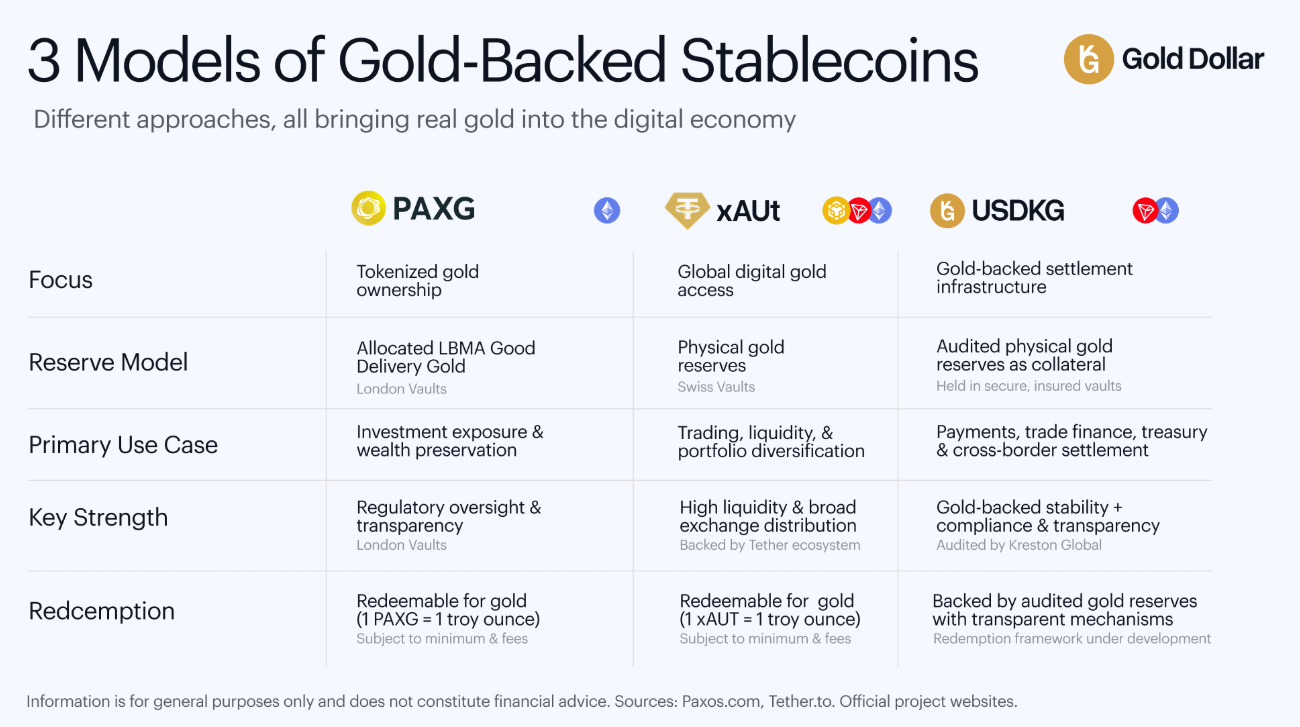
The reality is that the intersection between gold and crypto is a fraught one for both sides. For crypto, the danger lies in gold eroding confidence in its long-term prospects as an innovation-driven industry. Gold’s entry into the blockchain sphere runs the risk of undermining crypto’s disruptive potential. At the same time, gold investors are aware that a crypto-native asset has the potential to disrupt traditional bullion markets. As such, both sides have been forced to rethink their approaches to the other.
This development has forced investors to reevaluate their perspectives. Conservative gold investors are having to acknowledge that a tokenized version of gold is a reasonable innovation with real-world applications. Meanwhile, crypto investors are having to accept that gold-backed tokens are an annoyance but nothing more. Neither side is thrilled with the prospect of coexisting with the other, but both realize that it is the cost of doing business.
At the same time, tokenization has forced gold investors to adopt a number of crypto-native risk mitigation techniques. At the most basic level, gold token investors must accept that the same kinds of risks apply to their investment as they do to any other crypto-native asset. The principles of proof of allocation and proof of reserves that have long been utilized in the crypto space carry over to gold tokens, meaning their introduction to the bullion market serves as a risk management education for traditional gold investors. This serves as a much-needed corrective for gold investors, many of whom tend to assume that gold is inherently safer than any other asset.
When it comes to the intersection between gold and crypto, it is important to remember that both sides have their demands. Gold investors want stability, reassurance, flexibility, and accessibility. Crypto investors want disruption, innovation, efficiency, and reach. Neither side is likely to find complete satisfaction in the opportunity afforded by the convergence of the two markets, but both can benefit significantly from what the other has to offer.
Some bets have to be made as the world turns, and the world has turned toward gold-backed stablecoins. The market will ultimately decide what future this corner of the economy has, but it is hard to deny that both sides needed this disruption to happen. Gold has needed the credibility of a transparent system to bolster its reputation, just as crypto has needed an asset with wide appeal to bolster its own.
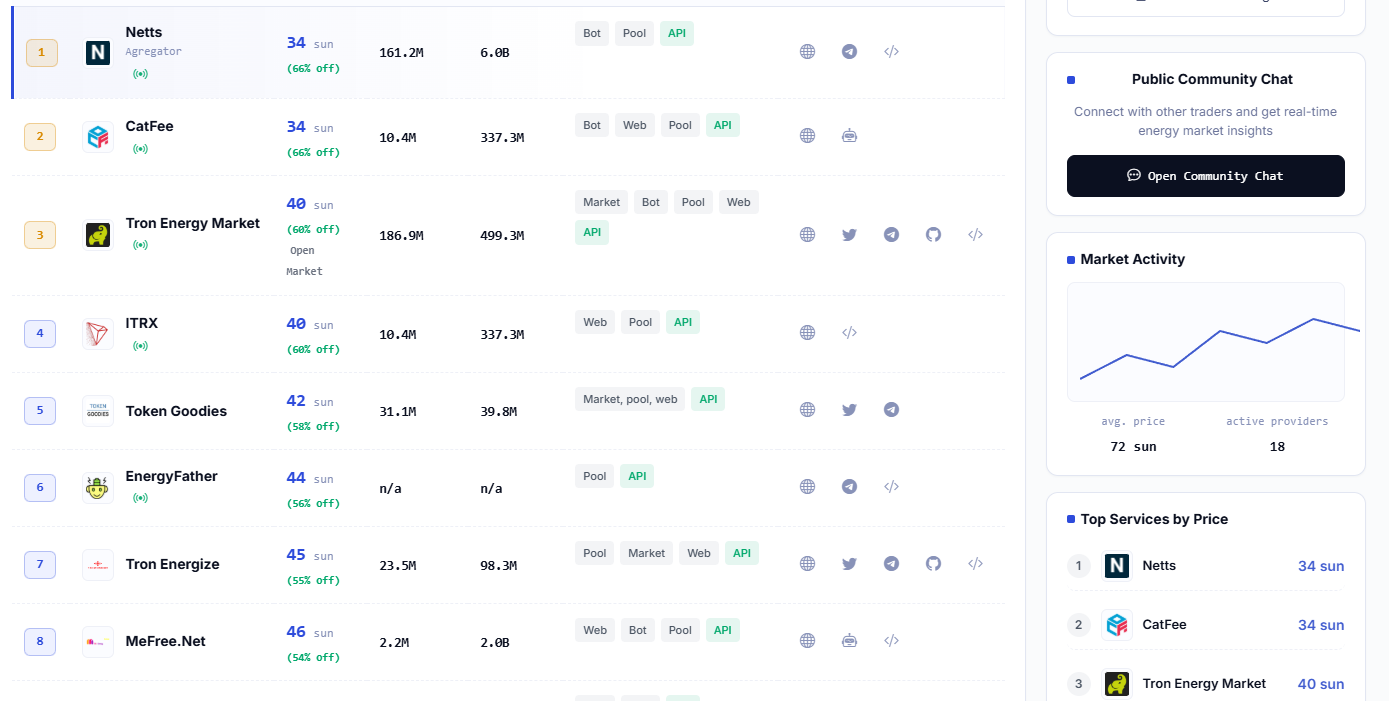
And in the same vein of pragmatism, any user interacting with stablecoins on the TRON platform will inevitably come to terms with a less glamorous but nevertheless crucial reality of transaction costs in the form of Energy. Netts.io’s TRON Energy Market makes it easy to compare energy providers in real-time, discover where to buy TRON Energy, and complete a TRON Energy buy order in a manner that avoids unnecessary expenditures of TRX. With a competitive energy market where providers battle it out for your business, live market statistics, API access, and Energy for USDT transfers, it’s the kind of energy-efficient infrastructure that doesn’t make history but ensures that every part of the blockchain process is as energy-efficient and low-cost as possible.