Cyberpunk and Crypto: Prophecy Fulfilled?
Cyberpunk fiction versus living crypto infrastructure — surveillance, cashless rails, cypher resistance, and aesthetics catching up with reality.

Picture a vast city — one where the rain never stops, where megacorporation neon is reflected in every puddle, where the streets themselves choke on the smog. Under the hovering shadows of these gigantic structures it is a transaction. The two people stand in a shady alley with their collars pulled tight and augmentations glimmering in the night; you give up a portion of actual data, a seemingly insignificant sliver of silicon that could net you a fortune and go dark on you, your entire existence erased.
The latter sends a sequence of obfuscated letters and digits, a digital bill form that is uncoupled from any nation state or central bank. It's the cheesy-as-hell cyberpunk framework; the one you see in all the great cyberpunk works like Cyberpunk 2077, Neuromancer and Blade Runner. It is a world where high tech meets low life, where both the dispossessed and the elite depend on decentralized, encrypted networks to facilitate their commerce out of the reach of the all-seeing eyes of the surveillance state.
The tension is palpable, with each shadow a possible threat, each blinking light on a server, a vulnerability. That currency of our dreams is never fiat, of course; it is always something else, something cryptographic, a thing that centralized entities cannot freeze, that corporate enforcers cannot seize. It was a necessity, it is a medium of exchange, preventing wealth, provoking desperation, and creating strife, it is a survival tool in the age where trust is a liability and anonymity is a foolproof armor against the eyes of real-time intercession.
This fiction has today bled so elegantly into our reality. The hardware wallet has taken the place of the data shard, and the encrypted string of numbers and letters is a cryptocurrency transaction transmitted over a massive, decentralized ledger around the planet. The dubious reasons that call for such under-the-table scares in fiction — escaping corporate capture, avoiding dictatorial financial regulations, or trading in illegal goods — they’re arguably the same reasons that underpin a large chunk of proxy use in the actual world of crypto adoption.
A dissident in a totalitarian regime funding their escape using Bitcoin is living a cyberpunk story; a whistleblower receiving donations, protected by privacy coins from ever being identified is living a cyberpunk story. The similarities are not only thematic, they are literal. What was once a speculative idea for future science fiction writers has not only become the backbone infrastructure for the modern digital underground, but increasingly, the mainstream financial system.
The real-time construction of the networks killer novels and cartoons predicted — networks that have both empowered the individual and have provided never before possible capabilities to those who flout the law. As these lines between the physical and the digital have faded to the point of irrelevance, an entirely new paradigm has been born: where code is law, and cryptography is the ultimate judge of truth.
The Fulfillment of Cyberpunk Prophecies
The predictions of the founding texts of the cyberpunk genre are being fulfilled to an alarming degree. The world we live in is, in many respects, one dominated by the very forces against which classic authors warned us. Megacorps, although they might not possess the private armies that made them a constant menace in fiction, are able to wield almost hegemonic control over global politics, economies, and the dissemination of information.
The digital public square is owned by tech titans who tell us what we can and cannot express, and the financial conglomerates treat the economy to algorithmic precision gaming of the markets. The breaks of social stratification have never been wider, as the few elite hoard wealth and power, while millions of people learn to survive in an economic environment that is becoming more precarious with every passing day.
Correlatively physical symptoms of this divide manifest themselves across our cities; gleaming penthouses overlooking miles of encampment for the unhomed, a literal visual echo of the sky-high arcologies and millions-strong sprawls of the cyberpunk canon. The middle class is being starved, eliminated, and replaced with a gig economy — one where human labour is treated as a fungible input to be managed by anonymous code and optimised for extraction to the extreme dollar by corporations.
The Surveillance State and AI
And we reached the point where the merging of future technology with daily life has outpaced the most optimistic forecasts of early sci-fi. Supercomputers are in our pockets, the Internet of Things sensors in buildings are reading our minds, and AI algorithms are automating ever more cognitive labor. From curation of our news feeds to accessing creditworthiness to even predicting our chances of (maybe) committing a crime, AI algorithms are making their way into every segment of our lives.
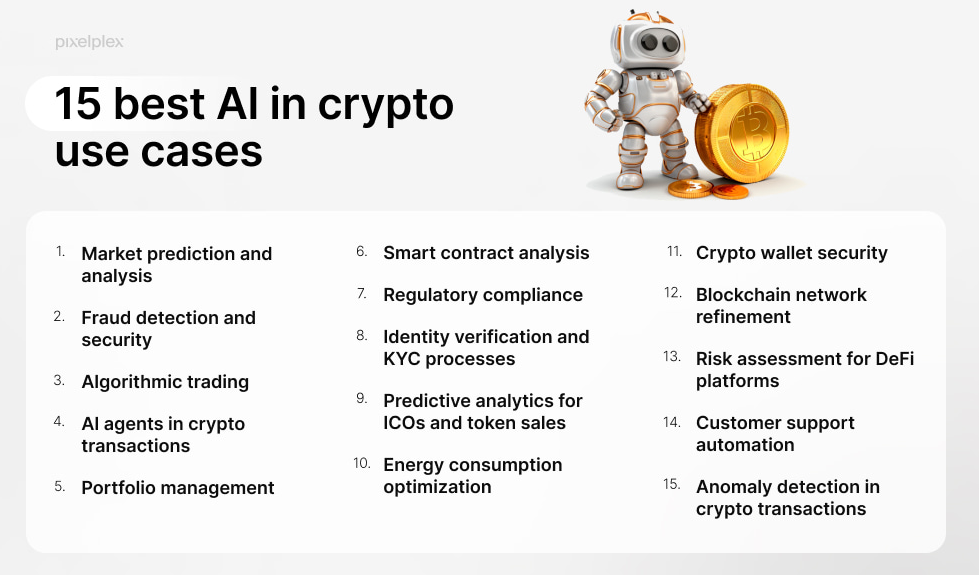
Such widespread surveillance, and algorithmic management are signatures of a dystopian society, one where convenience comes at the cost of agency, and privacy has become a commodity that only the wealthy can buy through technological countermeasures. The rise of cryptocurrency is not an unfortunate scenario but a pragmatic response to an eventual world which little by little is infringing finance privacy.
This is the antidote to the surveillance state, it's a means for the individual [the self sovereign] to take back ownership of their money where corporate and state powers have reached an unprecedented level of intrusion. The relationship between machine intelligence and crypto-economics will give rise to new economic paradigms, deepening the cyberpunk reality we already live in, as AI evolves beyond the machine algorithms we now know.
The Untraceable Paradox and Corporate Hypocrisy
Cryptocurrency is, in a number of ways, ahead of its time. It's the financial tech made for a dystopian future, getting here faster than we thought it would. It is working on the principle of trustlessness where central authorities are taken as either corrupted, incompetent, or both. This is a key part of the basic teeth of the cyberpunk ethos: an inherent skepticism of institutional power.
That said, the unstoppable nature of crypto which makes it such a powerful tool for liberation, also makes it a powerful weapon for exploitation. Some cryptocurrencies are also untraceable or offer pseudo-anonymity, allowing cybercriminals, ransomware perpetrators, and illegal trading to go on largely unpunished. While the blockchain may be transparent, the identities behind the wallet addresses often are cryptographically obscured.
Much of the cyberpunk literature has grappled with this problem; as the same networks that freedom fighters use to expose the corruption of foreign corporate executives are also used by organised crime syndicates and corrupt corporate executives themselves. The irony that cannot be detected is that the same technology used to off the innocent is also there for the guilty.
Now, in our current context, where every single digital step we take is recorded, maintaining financial anonymity is this exceptionally liberating concept of freedom — and deeply terrifying tool for harming others. In a world where the technology serves as a very capitalist 'neutrality', the shadows of the digital realm that the oppressed beasts can slip away into also offers the same for the oppressor; the moral of the story, turn on your camera of ethics, the digital is living in a twilight zone.
That leads us to the deep level of hypocrisy endemic in the overlap between the world of traditional finance and corporate power and the crypto ecosystem. Financial institutions and corporations are more enthusiastic to enter the lucrative digital asset industry. They are constructing trading desks, rolling out exchange traded products, and embedding the blockchain in their backend infrastructures.
Happily will they take the enormous profits this new asset class generates, and in many cases, do not shy away from the form of regulatory arbitrage, and quasi-corruption, that has characterized high finance for centuries. But when it comes to retail users, these same institutions are the loudest voices calling for draconian Anti-Money Laundering and Know Your Customer regulations.
They want to know whenever you spend a coin, where you are spending it and they want to ensure that you are complying with a regulatory framework that lines their pockets by keeping their monopoly on financial services intact. They require absolute transparency from the individual and exist in opaque, dark pools of institutional liquidity.
This is classic cyberpunk: the laws hold firm at the street level, while the corporate class moves freely above the law, using the same technologies for their own profit while keeping the scrubs that the technologies were meant to liberate from privacy and control. They're more than willing to take bribes, to operate the sort of graft that the system was supposedly set up to guard against, while deploying legions of compliance cops to make sure you, the average punter, can't do a damn thing with a cent less than with their express approval and oversight.
This double standard is what will come to define the financial dystopia we find ourselves in — where the powerful leverage decentralized networks to cloak their wealth while insisting on total transparency into the financial affairs of the peasantry. It is a control mechanism packaged as security and compliance, which is the crux of unprecedented financial surveillance.
We are living in a cyberpunk novel of our own design, with identity itself becoming more radical, fragmented, and fluid. In the old world, you are your identity documents, passport, your record in the government databases and whatever stagnant bureaucratic definition we can stick on you. Inside the digital overground, identity is cryptographic. It is nothing more than a series of letters and numbers, a public key that can be emitted and replaced at will.
What this means in practice is that people can effectively share parts of their lives with others — their financial life can be viewed as separate and different from their physical life. It is a strategy to resist the ubiquitous surveillance of the modern state, a way to recover some degree of privacy in a transparent world. At the same time, this separation of identity and action shows exploitable vulnerabilities to deceit.
It is the very cryptographic tools that enable the whistleblower to be free that also envelop the scammer with the same protections, turning the online space into a digital wild west with trust as a scarce good and reputation as a function of onchain footprints rather than offchain nouns. There is a strange overlap between the cyberpunk genre — the aesthetic of the fight for freedom against the elites; the neon lights, the clash of high-tech and low-life, the omnipresent urban decay — and the culture of crypto and especially of the crypto community.
The digital realms of these communities are animated by the same chaotic energy and constant drive for innovation. It is a culture that honors the hacker mentality, the capacity to bend systems to your will and create cracks in the architecture of domination. The crypto vernacular is filled with slang and techy terms that would sit comfortably in a 70s cyberpunk tale.
This cultural consistency is by design and illustrative of the common fundamental belief system. Cyberpunk, and crypto alike, are about the control of power in a technocratic world order, and their predicted future both involve the lone horse alive due only to the strength of one man's wits and technical know-how.
Blockchain as the Ultimate Rebellion
With cyberpunk comes rebellion. The genre is characterized by an individual that fights the chilling slide of systemic oppression. Blockchain technology is that rebellion in our world. It is an open-source, unfiltered movement against the monopolies of traditional finances, designed to help individuals reclaim their power. But this rebellion is not an organized, precisely orchestrated insurrection.
It is, as the title suggests, a mess, a patchwork of the desperate yearning for something different. In an era of stagnant economic mobility, where inflation is diminishing real purchasing power, and where tomorrow feels like a day to dread, no one can afford the luxury of planning anymore. The old paradigm of working hard, saving up and getting a nice retirement is as good as dead.

To many, the traditional financial system is a rigged game that exists to siphon wealth from the working class, redistributing it to the top. And of course meticulous long-term planning is a waste of time when the future is unknown and the present is hostile. Instead, surviving becomes the priority, as each day you wake up and endure whatever latest economic shock happens to hit, and your life becomes one where stability is a luxury you can never afford — a luxury whose price is always too damn high.
And in this world blockchain is not just a technology, it is a lighthouse. It provides a glimmer of hope, however faint, for a potential escape from the bondage of the legacy system. Just a little bit of hope is all you need — not any particular gameplan. Hope, by comparison, is already starting to look rather attractive on account of what it is not. Because cryptocurrency is decentralized, it cannot be shut down by a single government or corporation.
This is a resistant, knockdown-free network that offers flexibility for individuals to transact without fear of chastity. Such is the heart of the cyberpunk revolt: The oppressor arms upon which we rest in our reflections, a knight with no armor but a blade in hand, slashing for freedom. It is the street making use of advanced cryptography and distributed consensus mechanisms, redeploying them into a parallel economy that will operate on its terms.
This is neither a big strategy, nor a single charismatic leader; this is all about you joining the rebellion. Each peer-to-peer transaction, every deployed smart contract and each created wallet signifies an everyday resistance against the system that wants everything to be fully compliant. This is an insurgency of sorts but entirely decentralized mega-phenomenon, driven by the overwhelming desire for freedom, with nobody at the helm, all of them simply know that the game is afoot and that the old rules do not apply anymore.
Even the presence of an alternative is enough to spark a revolution, people are reclaiming their financial sovereignty, and they are starting to demand that those who have exploited them for so long come to heel.
Fueling the Resistance
To take part in this opposing economy, you need to know how the networks that drive it all work. Efficiency and management of resources are of great importance on networks such as TRON. Each transaction, every execution of a smart contract, all takes computational resources. These resources are called Energy and Bandwidth in the TRON ecosystem. Transactions either fail or cost an arm and a leg without them.
For the new digital miscreant, these resources are as important to procure as the data shard in a neon underbelly of an alleyway. Do not expect the network to feed you; you are on your own managing your digital footprint and your burn rates. This is where resource delegation and renting, a very cyberpunk solution to a profoundly technical issue, comes into play.
The rebel infrastructure must be sustained and this sustainability heavily relies on profound knowledge of the institutional protocols that lay beneath the surface and their economic design incentives. This is a world where technical literacy is not a simple asset — it is a matter of life or death.
Smart users do not burn their TRX in order to purchase TRON Energy to fuel your transactions — they know where to get TRON Energy through various decentralized marketplaces. They know the digital underground works in efficiency. Instead of paying direct to network, which is really high, they are choosing to buy TRON Energy from specialized providers.
It is a marketplace where resources in the form of unused & underused computation power are exchanged, leveraged and monetized best by being made available to those that need it. Whether you deploy technical smart contract, or just transfer crypto-assets, TRON Energy is required to do so. Renting TRON Energy on demand is yet another extension of possibilities that power and flexibility of decentralized networks provide.
Users can scale without massive amounts of their capital being unlocked while staying nimble and able to adapt for the fast-paced, ever-changing cryptocurrency ecosystem. It is the beating heart of decentralized prosperity — circulating, adapting, flowing, dissolving and reforming — keeping the chain flowing for those who are able to navigate and access it.
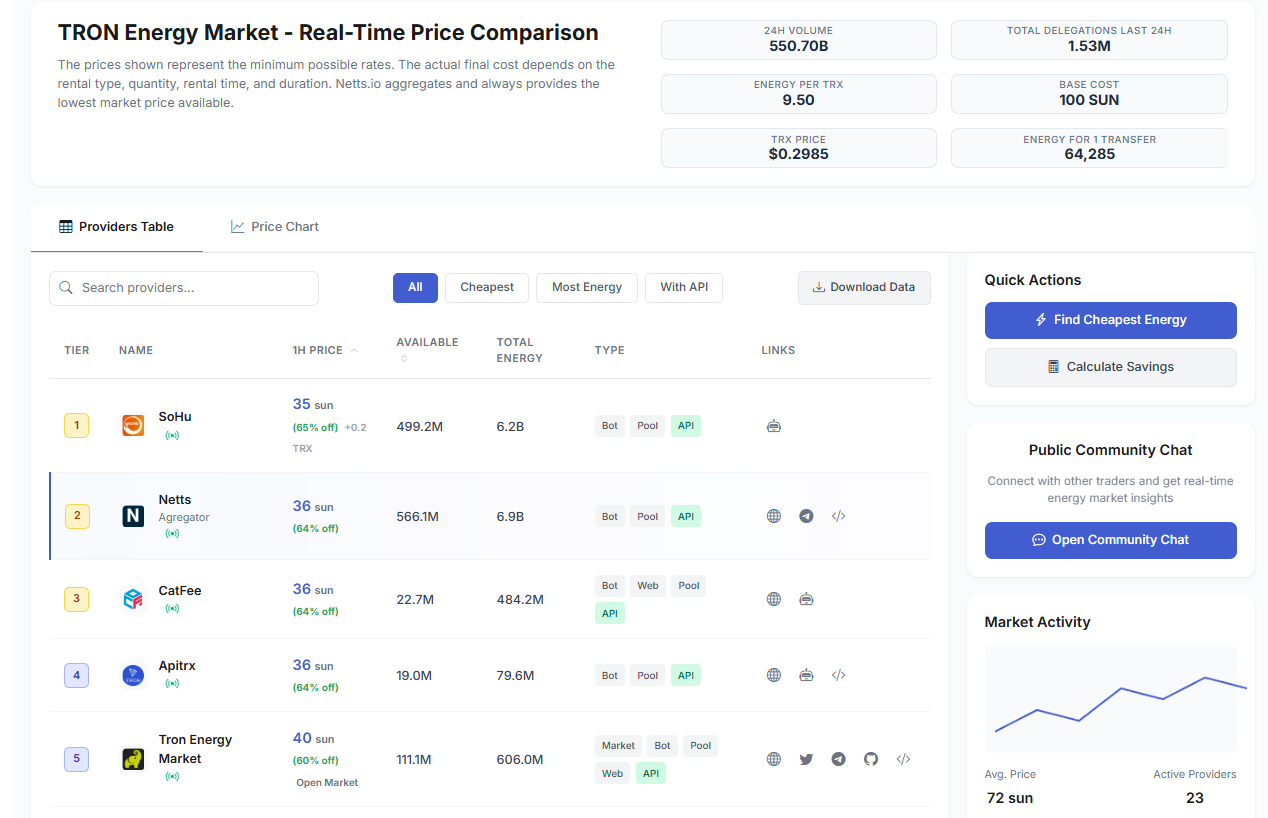
Within this sprawling landscape of data services and variable network dynamics, survival depends on the discovery of the optimal route. Similar to how a cyberpunk hacker uses the best software tools available to penetrate corporate firewalls, a modern crypto user uses aggregation services to optimize their transaction costs. Hence, here is where platforms like the Netts service: TRON Energy Market, shine at delivering a great range of over twenty providers compared against many variables ensuring that users are always connected to the best rates for their network operations, and effectively democratizing the access needed to the computational power to sustain the on-going financial revolt.