Crypto Flash Loans: Borrow and Return Before Lunch
Flash loans offer uncollateralized millions for seconds, enabling massive arbitrage or catastrophic exploits while redefining risk in decentralized finance.

Imagine an unfortunate crypto enthusiast, sitting in the darkness, lit by the blue phosphorescence of a falling chart on his monitor at 3 am. Empty cans of energy drinks and hastily abandoned plans litter the room as he prepares to make a fateful decision. His genius plan, which could potentially make him a billionaire, involves a recently discovered doge-meme coin with unparalleled growth potential. Alternatively, he could create a community token, as he has long felt the universe owed him generational wealth. More likely, he has been visiting decentralized casinos, convinced himself that this time his exquisite grasp of probability will allow him to overcome months of debilitating, ruinous losses.
He is, due to a particularly egregious confluence of circumstances involving some of the worst life choices of his youth, currently out of funds. The banks with heavy glass doors in his neighborhood have already learned to avoid him at a distance, as he is deeply in debt to high-interest credit cards and his personal rating hangs perilously low. All he needs is one final opportunity, one last loan, to return to the fold, to prove his detractors wrong. If he fails, his angry father may finally drag him to rehab, or, more likely, the sheer unpleasantness of his current circumstances will force him to abandon his crypto obsession and return to his daily routine and real life. But it is not to be! His salvation, the new flash loan, or rather retail equivalent to it, is screaming at him from his browser. Unlike his usual predatory creditors, it offers him no questions asked, no collateral, no credit rating checks. Due to said circumstances, the flashing 0.09 percent rate on the new flash loan barely registers with him. The new decentralized roulette he invented is foolproof, or the cloud-mining rig is guaranteed to pay off in a couple of days.
The thing about people and the present is that they often do not want to be here. They want to leave, preferably soon, from the place where they currently reside in a distant future where all their debts are unpaid, but at least they have left this specific, crippling moment in time. As they visualize this distant date when they jump into their private jet, the thing they see in their minds most vividly is the convenient, unfair opportunity to bet on the most favorable future right now. In its desire to occupy this future, the person often ignores the unfavorable risks tied to it, however, the flash loan industry is quick to take advantage of the perceived opportunity. Companies in this industry offer themselves as the helpful and kind face of a potentially devastating crypto bet, loudly proclaiming their virtues in their PR slides, throwing lavish parties in Dubai, and hosting major conferences in Miami. It is no secret whatsoever what these companies put in their official publicity materials for the industry, or rather other things they fail to put there. How helpful could such a loan actually be for our unfortunate crypto enthusiast, whose scheme predictably failed to deliver? As he contemplates defaulting on a predatory interest rate, he realizes there is a far less punishing alternative: he can just run away from this particular part of his life, and perhaps never return. Meanwhile, in his desperate need for another chance, the flash loan industry makes plans to exploit him.
Life is unfair, and it is not the first time humanity has had to grapple with it. The thing about loans is that they always come with a price, and if the terms become too punishing, the borrower has little choice but to skip town. This, of course, is not an option for the lending company, which is why these products often develop an elaborate set of punishments for people who fail to repay, often involving complex economic and social dynamics to leverage. With a proper understanding of the current industry and what it can offer, it becomes evident that flash loans are just one element in a much more extensive system. The companies involved are not always transparent about their inner workings, especially when people sign legally binding documents concerning sensitive personal information. To fully understand the opportunities and risks, it becomes necessary to look at the industry as a whole, at the companies involved, and what they actually do. Specifically, what services do they provide for residents of different countries, and are there any silver linings to consider?
Global Landscape of Instant Liquidity
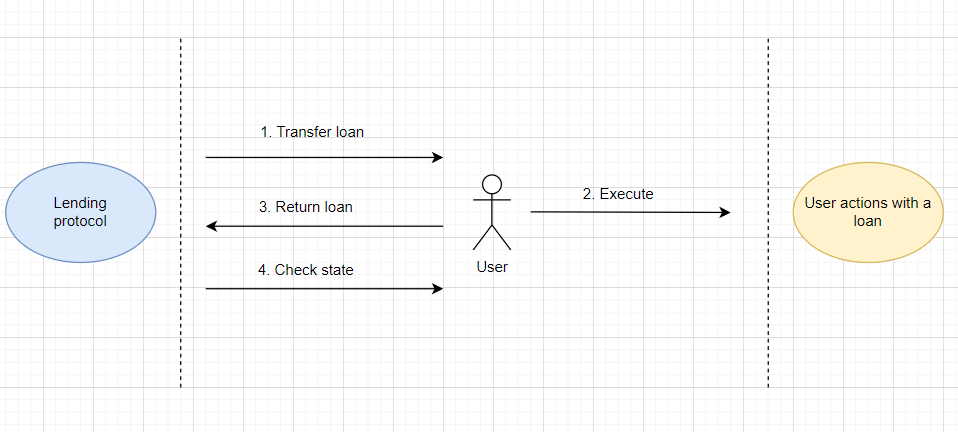
To get right to the point, it is essential to distinguish between actual technical flash loans utilized by developers and the retail space. In the institutional sphere, flash loans are complex financial instruments issued by protocols with no collateral on-chain, where the borrower is obligated to repay the loan, plus a small fee, inside the same block. At the moment of withdrawal, the entire amount is locked, with no tokens transferred to the borrower’s account. In the retail space, the term flash loan is often utilized for uncollateralized crypto loans designed for the general population. Looking at the most popular companies offering such services, it is instructive to look at their conditions, required collateral, and default consequences for people who failed to meet their obligations.
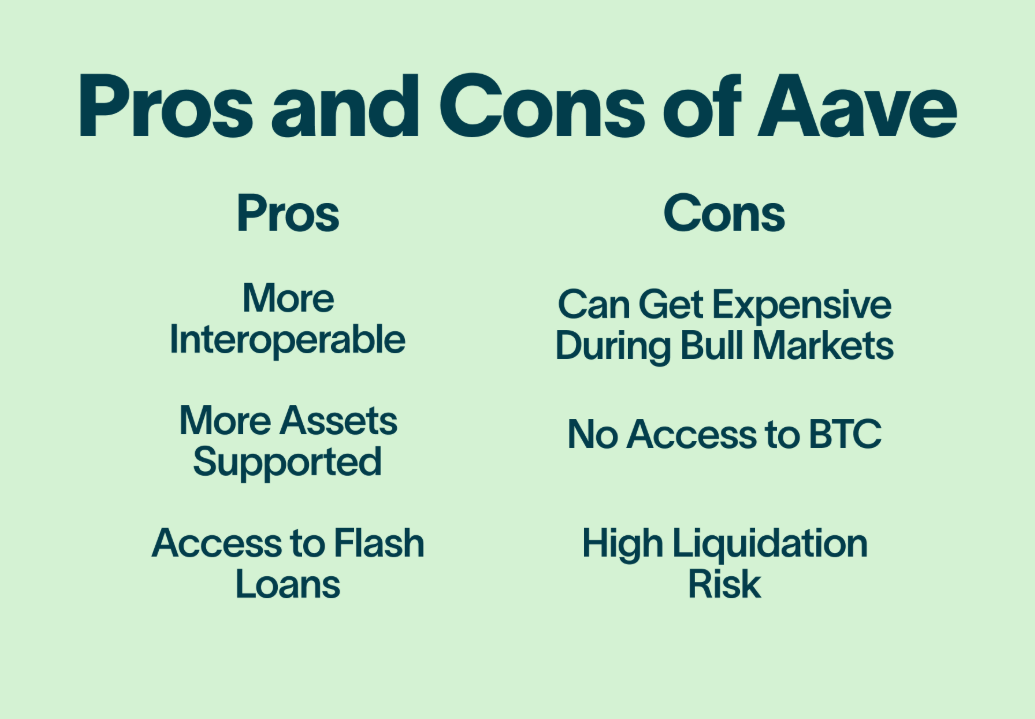
1. Aave and the True Decentralized Flash Loan. If there is a company that embodies the spirit of pure decentralization and the bleeding edge of crypto-innovation, it is Aave. With a strong technical foundation, a vibrant community, and a comprehensive set of on-chain tools, it allows every technically competent developer to create a loan with virtually limitless floating rates, with no credit checks and no collateralization whatsoever. The fee, however, is a flat “usage reward” of approximately 0.09 percent. To obtain a loan, no personal information is necessary. How do they ensure no defaulting, then? They do not, and they probably do not care to. Anyone technically competent enough to create a flash loan will most likely not default on a mere 0.09 percent fee. If, however, the developer proves to be fraudulent and disappears with the deposits, smart contract code reclaims all funds with mathematical precision, as no transaction ever occurred on-chain. On a more serious note, the flash loan product is a tool for institutional arbitrage opportunists, meant to exploit price discrepancies between exchanges.
2. Divine Research and the Biometric Payday Loan. This company operates mainly in emerging markets, offering uncollateralized loans to the desperate and the hopeful in Latin America, Africa, and Southeast Asia. Loans are typically issued in crypto but are often comparatively small, rarely topping below $1000. The terms are also punishing, ranging from 20 to 30 percent for short terms. Additionally, no traditional collateral is necessary. As Divine Research is a relatively new player, it utilizes decentralized identity checks, such as World ID’s biometric scan, that map the unique pattern of a person’s eye to a hash utilized to verify their identity on-chain. When a borrower skips on payments, Divine Research is unable to pursue traditional avenues, such as tapping into their fiat accounts. Instead, they permanently blacklist the borrower’s World ID hash from all affiliated blockchains, ensuring that the delinquent person will be unable to participate in the broader DeFi space.
3. 3Jane and the Algorithmic Credit Line. 3Jane, a US-based company, specializes in providing uncollateralized crypto loans to decentralized finance “whales.” All loan issuance is automated, with the security of the loan being based on an algorithm’s assessment of one’s on-chain reputation. They require no personal collateral, but users must provide a cryptographic proof-of-ownership of external assets, undergo identity checks, and have their on-chain activity analyzed in-depth to determine creditworthiness. The rates vary between loan issuance, depending on the probability of default assessment conducted by the algorithm. If a borrower skips on payments, 3Jane does not utilize typical industry defaults, such as blacklisting. Instead, they analyze on-chain activity, tracing the movement of stolen assets to liquidate them on centralized exchanges via traditional legal channels.
4. Nexo and the Traditional Overcollateralized Credit. Nexo is one of the largest names in the business, operating as a centralized crypto-lending service providing fast cash loans with high rates for crypto holdings as collateral.
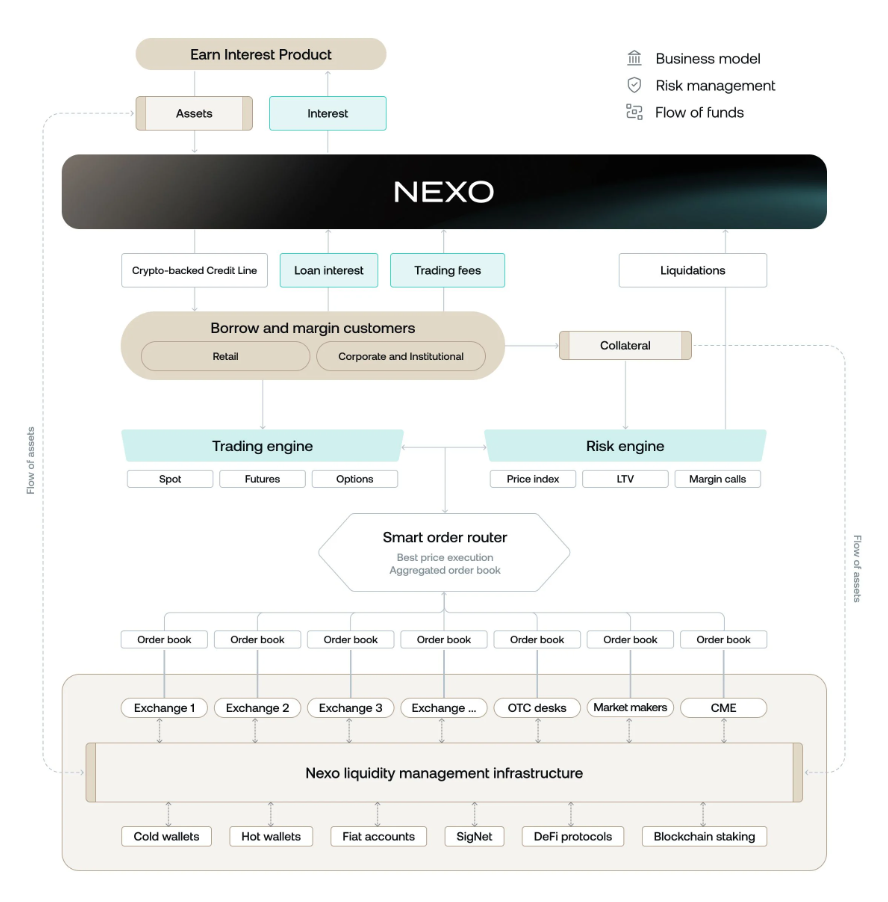
Their Know-Your-Customer procedures are quite involved, requiring government identification, recent utility bills, and a selfie to a live camera to verify one’s personal information. They do not publish detailed information about their personal rates, but loans typically start at an attractive single-digit percentage. In practice, however, spread fees, loyalty program deposits, and additional considerations dramatically increase the actual rates. Defaulting on Nexo payments is a non-issue for the company, as they have the borrower’s deposit of crypto assets, liquidated on the open market if payment terms are not met. The loan servicer profits handsomely either way, with the delinquent borrower losing assets.
Technical Side of Things – Predatory Liquidity and Unsecured Enforcement
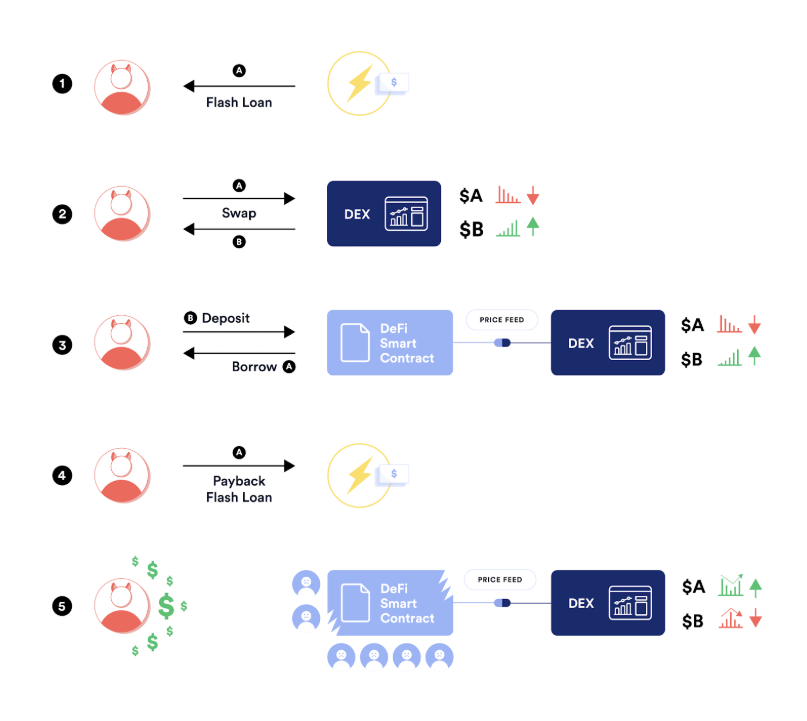
Having identified key players and the broad strokes of the flash loan industry, it becomes possible to take a closer look at the technical specifics of the operation. Specifically, it becomes possible to examine how these companies deal with defaulters and what their options are in the broader financial environment. In the case of the true flash loan utilization by institutional arbitrageurs, the default threat is nonexistent, as the loan principle never officially changes hands. The loan is a neat little transaction on-chain, self-contained within a block. If the borrower fails to repay, the entire transaction is reverted with mathematical precision, as no assets ever entered private possession. Defaulting is a non-issue for institutional flash loan providers.
For all the other companies, those providing retail services to regular borrowers, the situation is more complicated. Most of these entities have extensive data about their defaulting customers, allowing them to build predictive models that score potential borrowers based on their likelihood to default. The companies that provide these services are partly crowdsourced, extracting risk from the general population while taking a sizable cut of the interest payments for facilitating the loan arrangement. With a small minority of defaults, high interest rates, and extensive default penalties, these companies can operate quite successfully on the predatory finance frontier. In their reports, the companies can quite openly discuss their general policy concerning delinquencies, default rates, and collection procedures. They operate between extremely high default rates, as high as 40 percent for first-time uncollateralized loans for desperate borrowers. The rates for first-time borrowers are frequently well above 30 percent, and the company only profits from people like our crypto enthusiast who faithfully pay back their loan. For these companies, predatory liquidity is the lifeblood, and the defaulters are just an annoyance, a nuisance to their operations.
Greed, FOMO, and the Business of Selling Hope
Looking at the flash loan industry through the lens of human desires is instructive, as it often helps separate the hype from the reality. People who work in the space are not particularly concerned with making the world a better place; they care about one thing and one thing only – making money. The companies are all predicated on the same principle, which is using the decentralized and often anonymous nature of crypto to exploit as many people as possible. Their websites will loudly proclaim their commitment to financial inclusion, but in practice, they focus on a small subset of the population, the desperate and the greedy. The lenders are people, and so they feel the same urges and thoughts as everybody else, albeit frequently on a much larger scale. They are often consumed by a sense of FOMO, as an unfulfilled longing for the chance to make money by leveraging someone else’s desperation.
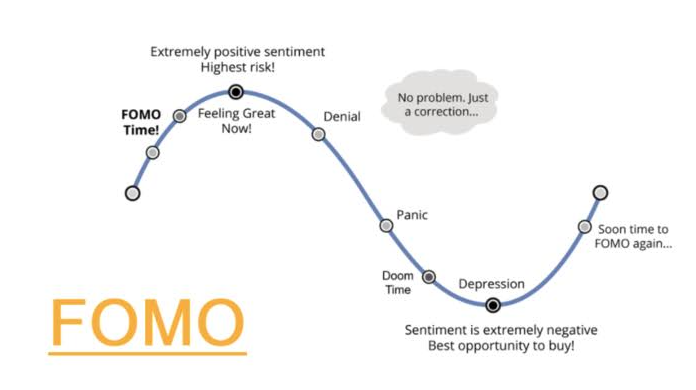
The lenders feel the same urges and thoughts as everybody else, albeit frequently on a much larger scale. In their desire to participate in the biggest liquidity movements, they feel the need to utilize every opportunity, every angle, to extract value and make a profit. They will take any opportunity to make a loan, to facilitate a movement of value from one on-chain address to another, to help someone invest in the newest memecoin. There is no doubt that the FOMO effect is frequently artificially induced, as the lending platforms know their borrowers are highly likely to engage in such behavior. The algorithms are often designed to encourage the desperate to seek liquidity, to take the loan, to invest in the opportunity. The company has other options to make money, but they choose predatory lending, where they can take a small bite from as many people as possible. In their desperation to make a profit, the lenders often ignore the long tail of defaulting borrowers who will never pay. They want to facilitate the movement of value, to help the hopeful and the desperate realize their dreams, but with their FOMO-induced greed, the lenders often contribute to the very delinquencies they are so eager to avoid.
Regulatory Paranoia and the Echoes of Traditional Finance
The central question surrounding flash loans and predatory crypto-lending is whether the government should get involved. The issue is complicated, as the flash loan industry exists in a grey area between unlicensed banking operations and outright criminal activity. In practice, regulators in the US, Europe, and Asia are now starting to take a closer look at the industry, attempting to fit decentralized code into traditional legal structures. At the same time, aggressive intervention often leads to pushing the entire industry into unregulated dark markets, with little to no consumer protection.
It can be easy to become nostalgic about the early days of traditional finance. The industry has a long and storied history, with many lending practices pioneered in the 17th century. Similar issues plagued the unregulated markets, as loan sharks were prevalent throughout the economy. In some ways, the Flash loan industry and its predatory practices are reminiscent of the 18th-century London, where unsecured daily interest loans were common among sailors.

It echoes the 2008 mortgage default crisis, as Wall Street banks knew beforehand that the subprime borrowers would not be capable of paying but continued the lending anyway. Lending practices are similar to modern-day predatory payday loans, where the desperate take out short-term installment loans with exorbitant single-digit interest rates. It is similar to traditional company towns, where factory workers did not have access to financial instruments outside of the company, locking them in perpetual debt. Crypto was supposed to be a revolution, a disruptive innovation that would upend traditional finance, but in many ways, it has been following the same patterns. The industry continues the traditions of predatory lending, usury, and debt peonage, only in a digital, global, and more scalable format.
Looking at the flash loan industry through this historical lens, it becomes evident that the industry is unlikely to change its ways simply because it runs on crypto. There are plenty of similarities between modern flash loan companies and loan sharks of the past, but the flash loan industry has the technological capacity to scale these practices to an unbelievable degree. The desperation fueling these activities is easy to exploit, and the technology is perfect for facilitating the movement of large sums of money with little oversight. In this respect, the industry is a natural extension of traditional finance, taking its inspiration from the past to innovate and disrupt the future.
The profitability of flash loans can be a difficult topic to discuss, as the subject is fraught with technical and political nuances. To examine it objectively, it becomes necessary to take an empirical approach, focusing on facts, not speculation. The institutional players, those facilitating actual flash loans on behalf of developers, are incredibly profitable. Their entire existence depends on facilitating large institutional arbitrage opportunities, and they make small fees on every transaction that involves billions of dollars in volume per day on the blockchain. It becomes hard to deny that the profitability of facilitating such transactions is enormous, but what about the other companies? The ones that facilitate predatory lending practices by providing uncollateralized loans to desperate crypto enthusiasts? Their profitability is a contested subject, depending on who you ask. On the one hand, the companies do take a significant cut of the interest rates, and with default rates as high as 40 percent on first-time loans, the profitability of such operations becomes extremely dubious. With delinquencies and defaults, the company’s expected returns barely exceed inflation. On the other hand, the investors who fund the operations only seek a reliable income, and the company executives, who fund their lavish lifestyles with a significant cut of the profits, believe they have mastered the art of predatory lending. In the end, it comes down to the perception of whether facilitating such transactions makes these companies profitable.
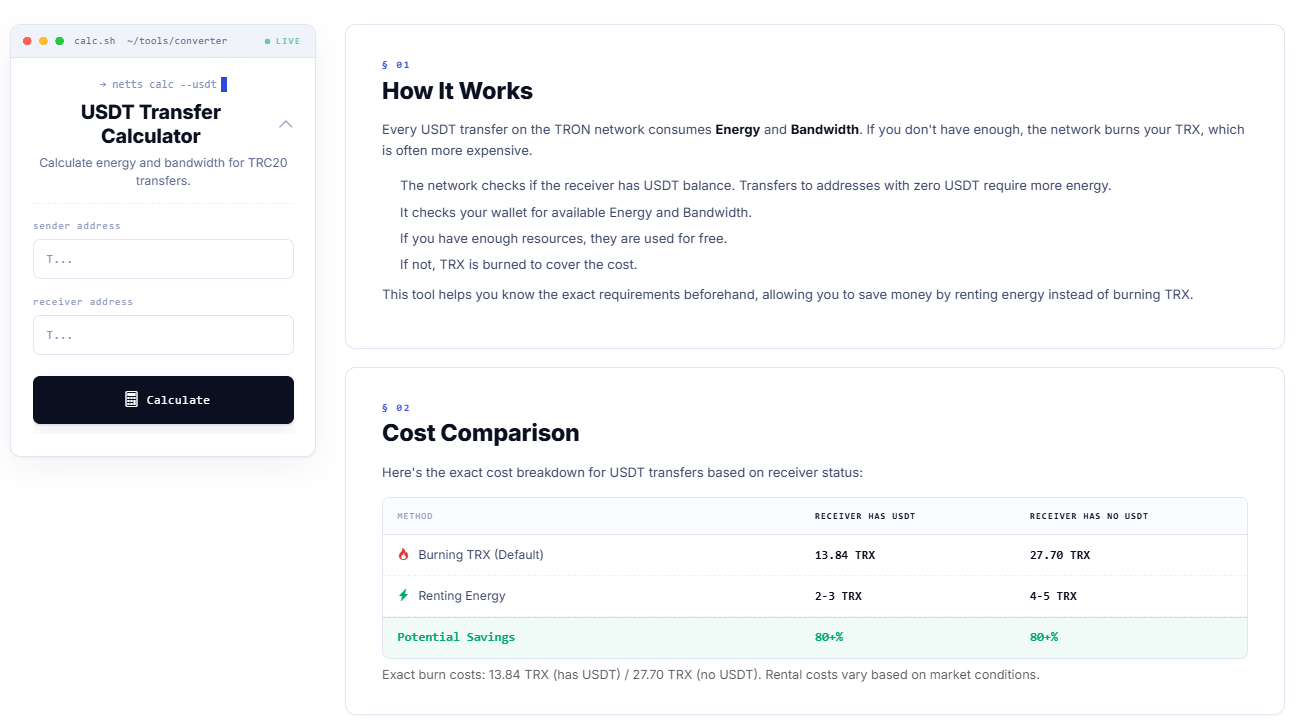
The same lesson applies at the mundane end of crypto finance: before chasing leverage, arbitrage, or a miracle trade, know what a simple transfer will actually cost. Netts’ USDT Transfer Calculator is built for that unsexy but useful calculation. It checks a TRON sender and receiver address, estimates the Energy and Bandwidth needed for a TRC20 USDT transfer, and shows why sending to an address with no USDT balance can cost more than sending to one that already holds USDT. In the example data, burning TRX could cost around 13.84 TRX when the receiver has USDT and 27.70 TRX when the receiver has none, while renting Energy may bring the cost down to roughly 2-3 TRX or 4-5 TRX. If you are trying to calculate USDT fee, find the lowest USDT fee, or compare USDT fees before moving funds, this is the kind of calculator that belongs before the trade, not after the regret.