Play-to-Earn Hangover: After the Crypto Gold Rush Ended
Play-to-earn promised gaming income, but Axie, guilds, and token emissions left players with collapsing wages and a brutal market hangover.
The California gold rush made some prospectors rich, but it created greater riches for shovel sellers, saloon keepers, transporters, and land speculators. Favorable geometries were simple: the poorer the river-walker, the deeper the pockets of those selling spades. The crypto-native equivalent was pioneered by play-to-earn designers: guild owners, VCs, token insiders, exchanges, and market makers gathered at the bar. Players with sore backs, cheap androids, and empty pans received the lion’s share of the gold.
This is where the play-to-earn narrative needs to begin: not with the lie about the kid playing Axie until dawn, but with the con that underpinned it. Unemployment, pandemic-related monotony, cheap phones, and token rewards made “gaming” cool for the first time for hundreds of millions. For desperate Filipinos, Venezuelans, and would-be entrepreneurs, Axie Infinity’s “play-to-earn” pitch was an invitation to join a revolution. The chance to battle cute little monsters to earn SLP tokens and turn them into dollars was irresistible poverty alleviation. The industry’s fatal weakness was in calling what amounted to a token issuance in game fuel a “play-to-earn” opportunity; the value capture mechanics were tilted to the advantage of those selling.
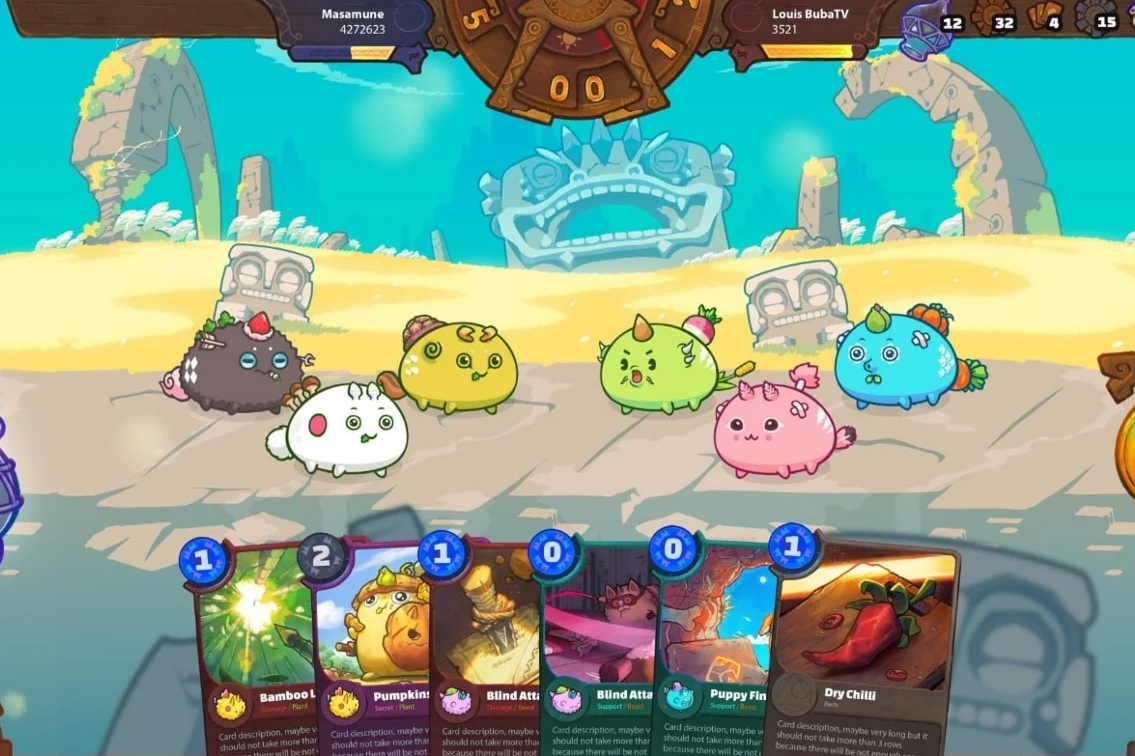
Gold rush narratives are forever about the future. You are not digging your own pan; you have staked your claim to the mother lode. You are not unemployed; you are unbanked. You are not playing a game; you are building a nation. Axie Infinity’s token sale talked about “residents of Lunacia.” Guild managers referred to their scholars as “players.” VCs hyped up multi-billion market caps for a proto-economy and sweat equity. It was all much easier to get away with because everyone was lying to themselves most of the time. If someone was selling something to someone else, there is always a bigger margin for self-delusion on the other side of the transaction.
In fairness to the token promoters, it was not entirely their fault that scarcity pressures and user growth made Axie’s economy all gas and no go. The math was brutal, but it was the sort of math that makes sense to anyone who has seen the long tail of an ICO euphoria. SLP tokens were distributed to players, and the more players there were, the more SLPs there had to be, and the less each one was worth. The game’s economy was designed to prioritize volume over value capture for the majority. And so, the wider world’s relentless march toward tokenization collided with crunch time in the Philippines and a pandemic freeze on everything else.
The problem with play-to-earn games is that they do not reward people for playing them. Not really. The best Axie Infinity could manage was to provide a wage for hundreds of thousands of people for a brief period. It was exhausting, demoralizing, and tokenized poverty alleviation. It is not that the math was wrong; it was that the macroeconomic conditions were permanently favorable for those selling at the top of the pyramid and permanently unfavorable for everyone else. The long tail for Axie’s “players” was always going to slope downward because their issuance schedule and virality mechanism made it so.
None of this is to deny the human cost of Axie’s collapse or the immensity of the financial wreckage it caused for hundreds of thousands who placed their trust in its SLP.
Axie Infinity’s “scholarship” system meant that many workers were effectively employed by their managers — and the latter’s compensation, at 50 percent in many cases, was far steeper than minimum wage. The most visible representative of this system was Samerson Orias, a line cook at a Takoyaki bar in the Philippines who sold his food to pay rent and sign up with an Australian manager for Axie.

He had to play five to six hours to earn 120 SLP, half of which went to his provider. Friends had told him that he could make hundreds of dollars a month, and he could afford to try. Stories like Samerson’s were the ones that fueled the industry’s “jobs platform” narrative, the ones that suggested that the P2E sector was doing something responsible by enabling these scholarships.
That perspective does not survive deeper inspection. A job, by its very nature, should not be dictated by supply-demand dynamics or the whims of a third party. If Samerson’s income depends on his SLP yield, which in turn depends on how many other scholars are earning SLP, then his job is not as stable as it is advertised. By Naavik’s research from late 2021, Axie scholars were seeing yields drop below the threshold of the Philippines’ minimum wage — for everyone but the top 1 percent. The problem was not that play-to-earn made players lazy; it was that the token economics made the labor market self-regulating.
Rappler’s investigation offered a peek into the industry’s other side – the managers’ experience. McGlay, looking to invest in a team of Axie scholars, saw his millions of pesos evaporate. Christopher Cruz, a Filipino businessman and manager of around 200 scholars, stated he made as much as 600,000 pesos per day by taking 60 percent of his scholars’ earnings. They were all students or residents of the region’s rural areas, eking out a living for about 450 pesos per day – just enough for a minimum wage. Then the SLP dropped, 150 SLP turned into 50, and his scholars’ earnings failed to meet the threshold.
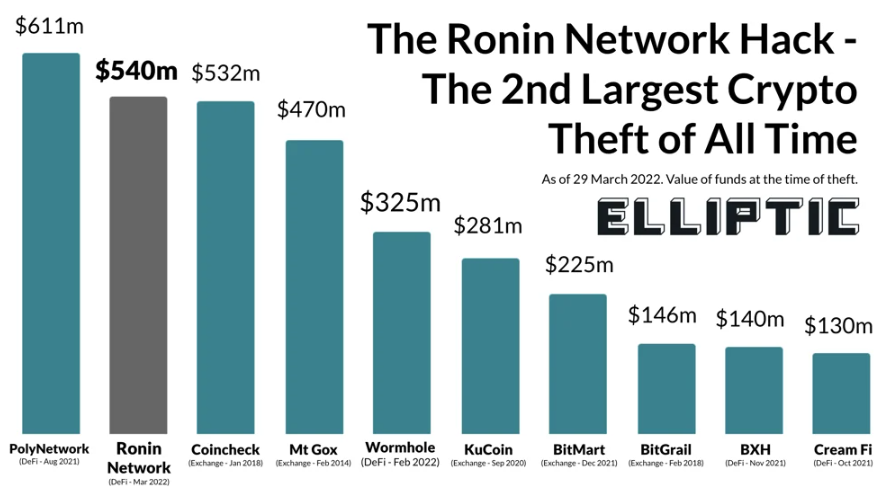
Meanwhile, the Ronin bridge heist represented a different kind of industry reckoning. The exploit, which had stolen 173,600 ETH and 25.5 million USDC from the Ronin Network smart contract, marked the equivalent of nearly 625 million USD in damages. Sky Mavis’ 150 million raise, led by Binance, has since reimbursed users, with the bridge being refilled to capacity using the proceeds and the company’s funds. The transaction, as well as the overall transparency, may have helped the firm retain much of its user base. Still, the Ronin heist demonstrated how much the industry had relied on the confidence of its users.
Trung Nguyen, CEO of Sky Mavis and co-founder of Axie Infinity, was no longer the star attraction. The play-to-earn ecosystem’s most visible representative was now talking about tokenomics, community management, and the rebirth of Axie as part of the broader Ronin network. The same went for Aleksander Larsen, the co-founder and long-time business lead, who stepped down from his executive roles to focus on the security space. His comments about the Ronin exploit were the most telling: a major play-to-earn studio had just suffered a state-sponsored attack, and one of its founders was now in the cybersecurity space.
Jeffrey Zirlin, also known as Jihoz, was among the few public figures in the space talking honestly about the challenges facing the P2E space. By announcing that he and his team would halt SLP emissions in Axie Origins from January 7, 2026, Zirlin seemed to understand the limitations of bot farms. The move was largely motivated by fears of rampant botting and wash trading, as stated in the developer’s public letter. In 2025, SLP has enjoyed a net burn of 250 million, and Zirlin believes that a healthier SLP supply will benefit the whole ecosystem.
The token that had propelled the P2E concept to prominence was set to become a “deflationary force,” and the company was preparing to enter the next phase of its development as a game chain and a metaverse infrastructure provider. This was not the end of Axie Infinity, but its transformation from a nation-state simulation to a more conventional game design with better tokenomics. If the play-to-earn market’s lesson was anything, it was that the token distribution model is frequently far more important than the game itself. The more users, the more supply, but the more supply, the more competition for value.
Guild Spread and Greater Fool
Yield Guild Games was one of the first P2E organizations to formalize the scholarship system, and it has since become the labor platform’s preferred form of worker exploitation. Gabby Dizon, a Filipino game developer, recognized the need to organize the scholarship during the pandemic and launched the blockchain-based game guild. YGG’s community managers trained the scholars while also collecting a cut of their earnings.
The venture capital firms and founders thought it was a fantastic idea. Yield Guild Games had more than 4,700 scholars and generated over 8.6 million in profits for its members, with disbursements reaching more than a million each week, according to Andreessen Horowitz. The a16z partners highlighted YGG’s capacity to provide much-needed jobs in emerging economies throughout their blog posting. The industry’s most successful “gaming” organization, therefore, did not simply promote itself as a traditional employer. While most guilds only rented NFTs to players and collected a sizeable royalty, YGG appeared to provide a more accessible entry point to the P2E world. Everyone could join and try their luck, but few would succeed beyond the initial scholarship.
Everything worked out for the first time, and everyone was eager to acquire more shares. As the YGG token rose, so did the number of guilds and the value of their NFT collections. People who purchased the token were greater fools for believing that YGG’s P2E ecosystem would generate reliable earnings for its growing number of scholars. The entire system was constructed on a solid consensus about the value of the underlying technology. VCs were correct to believe that P2E could disrupt the traditional gaming industry and offer a new source of income for emerging-market residents. Even if the scholars eventually graduated and moved on to other opportunities, a steady stream of young individuals eager to earn would always be available to fill depleted ranks. The agreement was, in many ways, ideal for all parties.
That is, till it wasn’t. The “greater fool” theory of value has a tendency to fail when the fool stops being greater. For the majority of the P2E industry’s players, the transition from a speculative asset to a yield-generating tool was anything but smooth. If we accept that game design is not the primary source of value capture for play-to-earn studios, we have to accept that the “earn” component of the proposition was the key. The more scholars, the more supply, and the less valuable each SLP token would become. It was a self-regulating system, but one that placed too much emphasis on scarcity and competition.
This is how STEPN’s token rush was revealed to be a bubble. The “move-to-earn” platform’s token, GMT, peaked well above $4 but failed to defend its spot and eventually dropped below $0.007 by mid-2026 — a nearly 99.8 percent decrease. Find Satoshi Lab’s co-founder and CEO continued to release new NFT-based products to his followers, such as the STEPN GO running app and the GMT Pay payment system, but the magic was already gone. When the company’s representatives admitted that they would have to cut earnings in half to combat inflation, the “move-to-earn” industry’s viability was questioned. As a “move-to-earn” token, GMT was no longer a viable option for advertising.
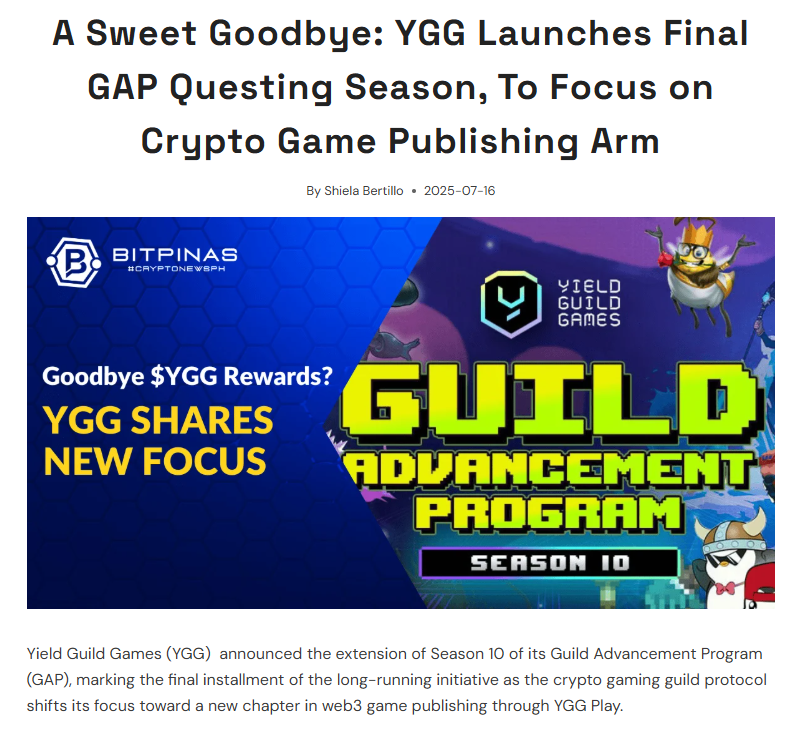
YGG’s story had a comparable conclusion. YGG’s token, which had seen a more than 99 percent drop from its peak, eventually failed to attract a large number of scholars. With the shift toward the metaverse, yield farming, and Web3’s broader creator economy, the YGG scholarship system had limited appeal to emerging-market workers. The token’s value proposition no longer made sense in the context of the company’s transformation. On the other hand, the shift from NFT lending to game publishing was relatively seamless. The YGG representatives continued to highlight the revenue from LOL Land, as well as the value of the organization’s treasury, which still contained tens of millions of dollars. The game studio’s survival was not in question, but its ability to draw in the same number of scholars was.
Ronin’s current condition is far more intriguing than the previous two examples. In addition to its network’s security issues, Pixels, a farming and social massively multiplayer online game transitioning to Ronin, became one of Web3’s most popular games by user counts, with particular traffic sources indicating that it regularly hits more than a million daily active users.
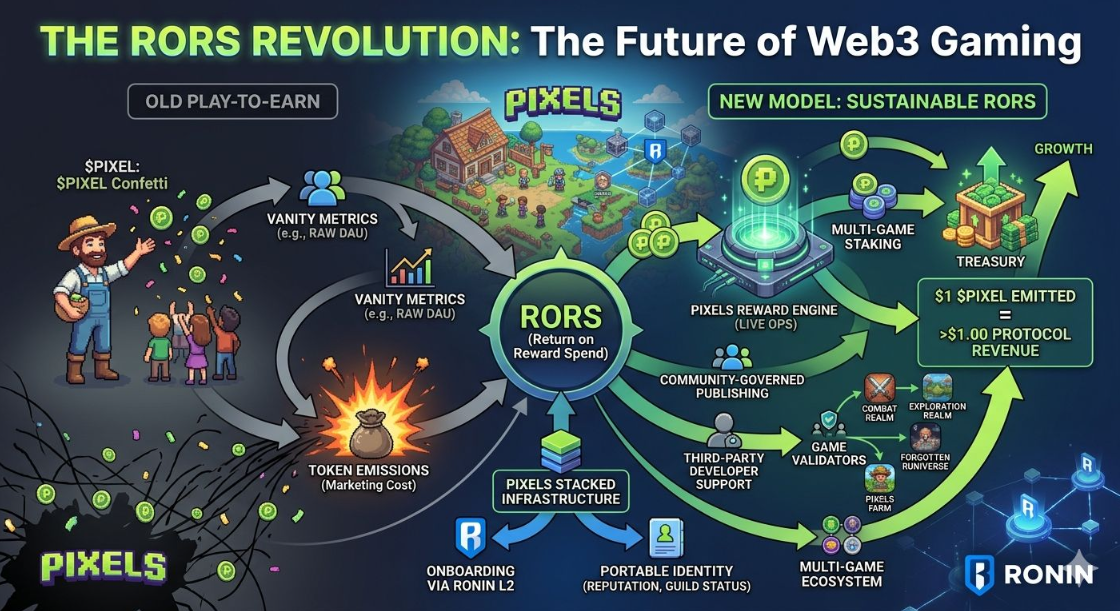
Ronin itself appears to be transitioning to a more Ethereum-friendly Layer 2 ecosystem, with the network’s design shifting away from its Axie Infinity roots. These shifts indicate a willingness to attract a broader audience of developers, not just the Play-to-Earn niche.
As the industry looks to the next wave of potential disruptors, it is essential to understand how to attract users. If more developers want to utilize Ronin’s blockchain for their games, they will have to modify their designs to account for the unique characteristics of the network. It is a platform for the next generation of online games, but first, it must overcome its reputation as the blockchain system that enables state-sponsored heists, exploits, and scams.
Work, Gambling, and Regulation
It isn’t just the players who suffer from a lack of regulatory clarity. Governments have struggled to classify the P2E system, which is a hybrid of a labor market and a game with a few tokens sprinkled in for good measure. Was it gambling or an employment agreement? Was it a securities market or a rewards program for players? The regulators didn’t help the situation either; they focused on a slew of unrelated concerns at the same time. If the users were speculating on NFTs, the securities regulators were monitoring them. If the players had to work for their earnings, the labor regulators took notice. If the tokens generated revenue streams for the firms, tax collectors took a second look. If children were lured into the system by promises of riches, the consumer protection agencies took action. When bots began to dominate the economy, everyone was concerned about online security. At the federal level, the most effective strategy was to impose strict requirements on disclosures, marketing, taxes, wages, and security.
There is no doubt that the industry needed sobering measures, but outright prohibitions would have resulted in entire segments of the P2E ecosystem migrating to ungoverned jurisdictions. The regulators might have been able to achieve their goals by banning dubious practices such as promoting tokens as income-generating instruments or establishing oppressive work quotas for scholars. The most vulnerable individuals, however, would suffer the consequences of such rules. The P2E system’s most talented players would continue to generate value for themselves and their managers; only the least skilled would be exploited.
It’s no surprise that the most profitable “P2E” businesses were those that operated as traditional gaming firms with a few tokens, NFTs, and a token-based economy grafted on top. Early adopters, guild managers, exchanges, listings desks, and NFT dealers all made a healthy profit from the scene’s rise. The majority of the “earnings” went to the people who were already well-off. On the other hand, there were also those who suffered from the P2E economy’s shortcomings. The most vulnerable to regulatory crackdowns were the ordinary players, especially those from emerging economies.
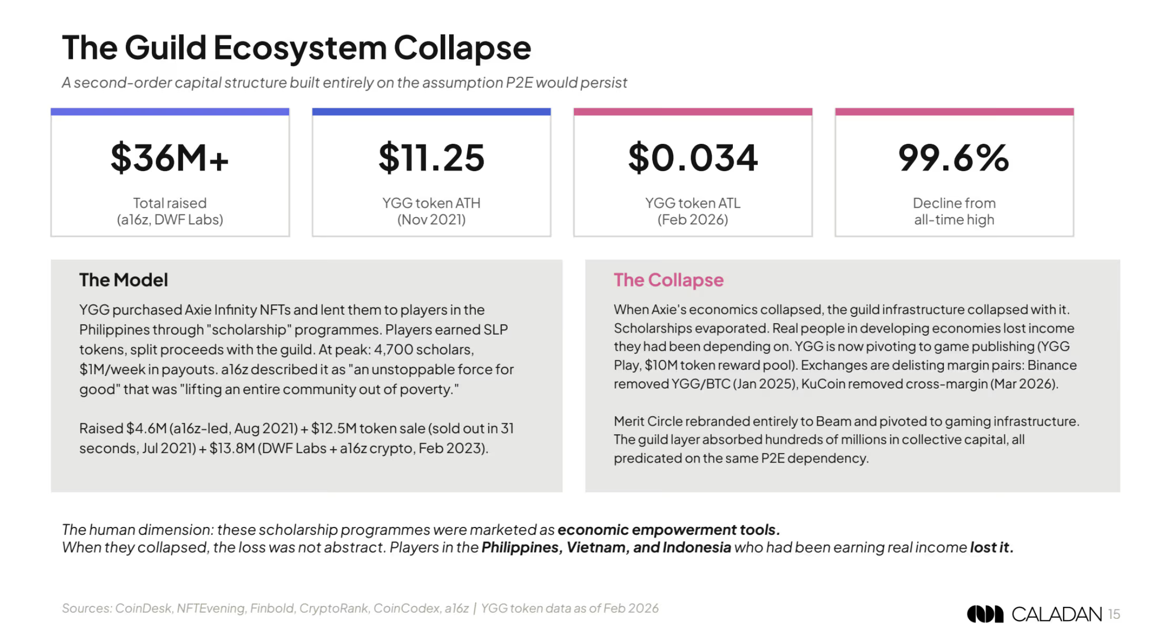
The industry’s collapse was both predictable and, for investors, unforgiving. Caladan’s research on the Web3 gaming sector’s graveyard is exceptionally comprehensive, citing a 93 percent death rate for GameFi initiatives, a 95 percent decline in token prices from peak, a more than 90 percent drop in funding from $4 billion to $360 million in just three years, and the closure of more than 300 blockchain games. The figures may not be entirely accurate, but they provide a general sense of the situation. The money has vanished, with only a fraction of it being reinvested in the industry’s future.
One of the most ironic aspects of the P2E sector’s history is that it is eerily similar to the evolution of other digital industries. Multi-level marketing firms convinced their employees that their compensation depended on their efforts, but the company’s vast organizational chart ensured that those at the top would always reap the most significant profits. Sweatshops motivated workers by linking their earnings to productivity levels while also ensuring that the workers would always receive the lowest possible wages. Free-to-play mobile-games firms were the first to identify paying users and spend the rest of their time milking them for cash. Gold farming companies turned thousands of regular players into unpaid labor sources for the elite few. The P2E industry had the most in common with the last industry in this series.
There was nothing particularly exceptional about the P2E companies’ ability to exploit their users. A well-run firm with a strong product at the center of a developing ecosystem could generate incredible wealth for its stakeholders. The very existence of the Play-to-Earn concept was evidence of this, as was the presence of exploitative guilds and the aggressive marketing tactics used by many P2E businesses. A game’s token program had little to do with whether it was a “Ponzi scheme.”
Instead, it had more to do with the ability of individual companies to survive within the system. This is why the P2E sector’s collapse was so devastating to the workers. There was no scam, no con artist that had tricked naïve investors into giving away their money. People got exactly what they were promised according to the system.
Can Anything Playable Survive?
Those companies that have managed to survive the P2E apocalypse seem to have understood the importance of a token-based economy and shifted their stance on the matter. Instead of positioning themselves as revolutionaries that have come to destroy the established gaming industry, the surviving studios are now using a more conservative rhetoric. They talk less about disruption and more about retention and aim to attract users by promising the value of virtual goods over the opportunity to quit their day job. This is also a sign of the times, and the next phase of the Web3 gaming revolution will be equally interesting. It will have fewer scammers, fewer promises of riches, and will focus less on ‘daily earnings,’ fewer speculators, and more on actual gameplay mechanics – but it will still be a revolution, only more adult and sophisticated.
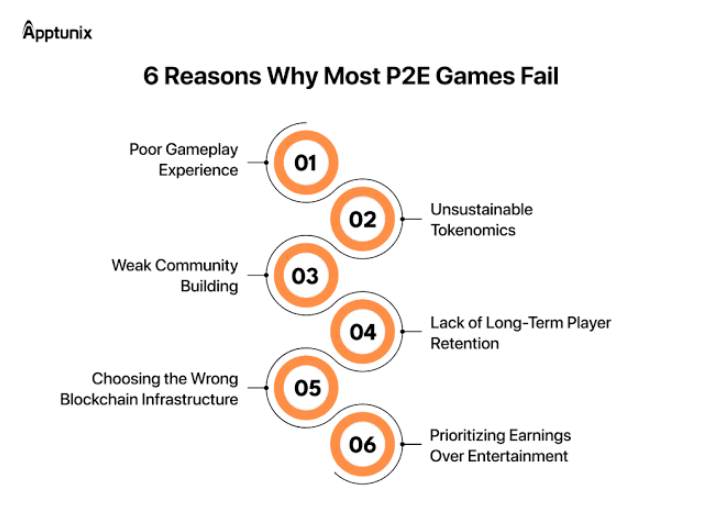
The token-based game economy is not disappearing, but it is changing. Some elements of it, such as interconnected items, on-chain tournaments, and a host of creator economy-compatible tools, will survive and, in fact, thrive. The chain-based game network, Ronin, will act as a bridge for indie developers, lowering the barriers to both entry and adoption. The everyday users can benefit from the same stablecoin innovation, which has the potential to bring them closer to the crypto economy. The P2E industry will survive because the companies will recognize the importance of tokens and the need to explore beyond them. The Web3 gaming industry will move beyond the current P2E paradigm and, hopefully, evolve into something bigger and more sustainable.
As the industry learns from its mistakes, the next iteration of the Web3 gaming will use a much less confrontational approach to engaging with regulators, users, and the media. The companies will be less transparent about their plans and actions, and their statements will contain significantly fewer assurances of ongoing efforts to provide a consistent stream of tokens for the users as an alternative to traditional game monetization mechanics. The industry will position itself as an enabler of human curiosity and the desire to participate in the metaverse and its expanding set of economic and social experiments. And in doing so, it will effect a significant change in its relationship with the general public. When it comes to regulation, the post-P2E crypto gaming industry will engage in good-faith negotiations with policymakers to find common ground on matters of concern. If the token-based game economy is to survive the P2E disaster, it must evolve and adapt to the changing times.
When it comes to value capture, the game industry has two broad options: it can either extract value from the users like a traditional mining company or build a garden that people want to nurture and care for. Tokens and blockchain-based systems have shown that a game economy can be constructed around a particular set of scarcity-based mechanics. User behavior will be shaped by the desire to compete with each other and with the system itself, and the value captured will be directly proportional to the amount of time and effort they invest in it. This has always been the case with gaming in general and applying blockchain technology and tokens to the game economy has merely highlighted it. There will always be value in building game economies that function on competition, but it should be recognized as a fundamentally exploitative characteristic that only exists because the companies want more users while, simultaneously, needing to ensure they do not lose them.
The next iteration of the web3 gaming economy will seek to evolve the paradigm, recognizing value capture in token-based game economies as primarily a zero-sum game. It will be much more careful not to hurt the user base in the race to increase revenues and focus on building a token-based economy in which everyone can benefit. The companies will promote their users’ ability to participate in the game design process and make them active contributors to the content that the studios create. Those companies that hope to survive the P2E apocalypse will shift their focus from building an economy around scarce, competitive, and therefore, exploitative core mechanics to building the game that people want to play, rather than a token-based application designed to keep users engaged for as long as possible.
In the end, it is difficult to say what comes next, but the old lessons should help the companies to navigate the challenges that lie ahead. The value of a token-based economy is in its ability to capture the value of scarce opportunities. The value of the game is in its ability to drive the desire in people to play it. In the aftermath of the P2E crisis, the companies learned that the best way to capture value is to create conditions in which the users are willing to invest time and money into the game economy.
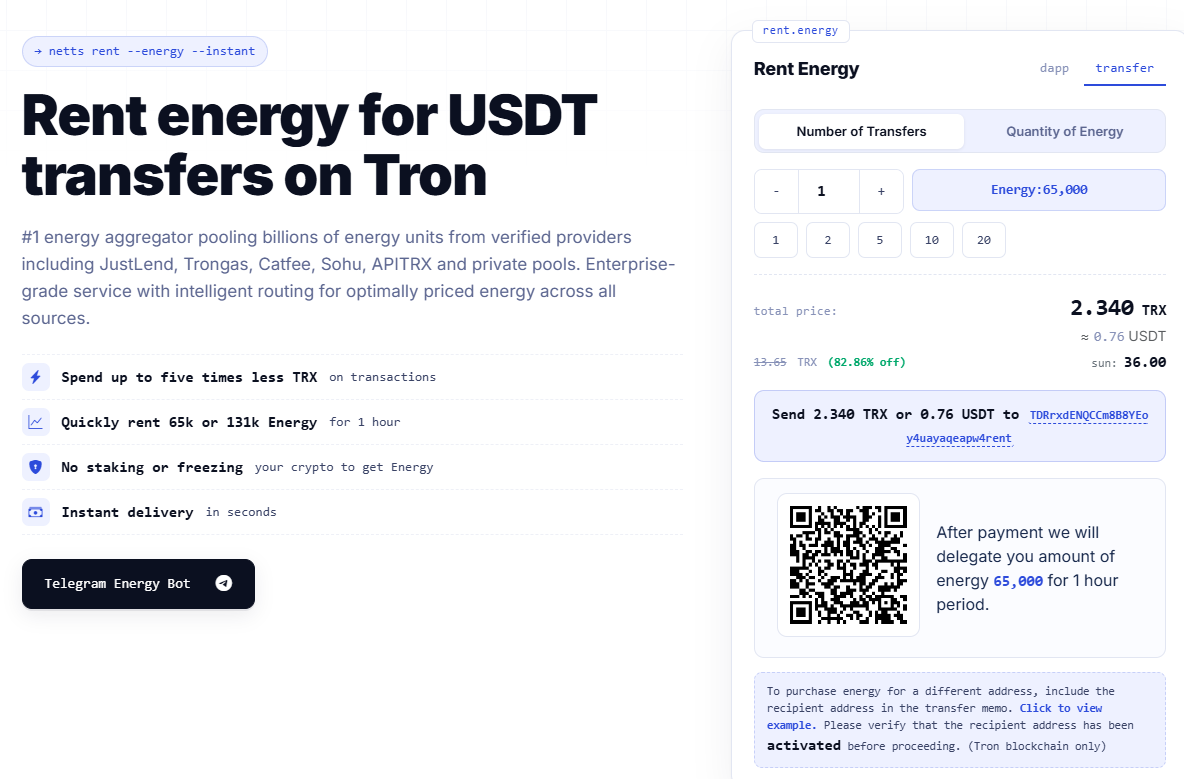
Finally, the more mundane but no less valuable use of crypto is realized in decreasing the cost and hassle of ordinary transactions. Netts.io is a marketplace aggregator of Energy for users of the TRON blockchain who wish to rent Energy for paying the fees for withdrawing or transferring USDT instead of burning their TRX. It offers its users to buy Energy in the pools of verified providers and private pools in volumes of 65k and 131k Energy with the ability to use it for a limited period of time with an option to renew. The service allows its users to check the market price for 65,000 Energy in TRON or fiat, 2.405 TRX or $0.78 in the example. Compared to a direct purchase of Energy, the users are able to avoid exorbitant fees for using the Energy in the market. The service appeared to address the TRON users’ demand for a quick and convenient way to get TRON Energy, buy TRON Energy refill, track the TRON Energy market price, and send USDT cheap without having to stake and lock their tokens.