Crypto and Pirates: Black Markets That Refuse to Die
From Bartholomew Roberts' gallows to Houthi-linked TRON wallets — a clear-eyed look at maritime piracy's longest-running trick: making money disappear.

Infamous Bartholomew Roberts never actually spent a penny of his trademark treasure. Born John Roberts (born in 1682), somewhere in a Welsh village, and having up to that point had far from the most auspicious career path imaginable culminating by 1719 — via a whole set of interesting circumstances after his capture by pirates off the West African coast — his reinvention as likely the single most fortunate successful maritime raider throughout all of the Golden Age of Piracy.

Driven by an obsessive compulsive streak, he took over 400 ships off the Americas and West Africa in three years, established his own rules for conduct for his men, and ran like a small military expedition. The Royal Navy warship HMS Swallow discovered his fleet moored off Cape Lopez on 10 February 1722, the majority of the crew still recovering from a night of drunkenness. The opening broadside killed Roberts, a single shot of grapeshot. His mates tossed his body over the side. The other 272 pirates were apprehended and tried at Cape Coast Castle, with all but 52 of them executed in one trial. He had been stealing for three years.
They gripped the headlines for just over two years until Edward Teach — Blackbeard — was hunted down and killed in November 1718. They took his head as a trophy, and they hung it from the bowsprit of the naval vessel. In 1701 Captain William Kidd was arrested, sent back to London and hung at Execution Dock in Wapping. His corpse was displayed in a gagged cage suspended over the Thames for three years as a warning to every passing sailor — an artistic decision, rather than a mishap, intended to ensure that the greatest number of working sailors would note the result at close range. 1740s AD Calico Jack Rackham hanged in Jamaica Charles Vane was captured, tried and hanged at Port Royal in 1721. With very few exceptions, the men history has decided to glorify died in combat or were hanged publicly within a few years of their first raid.
None of them were using anonymity for stylistic reasons. It was survival technology. Piracy was punishable by death under English maritime law — no plea bargains, no reductions for good behavior, no fines in lieu of death. Murdering, usually by hanging, in waterfront locations selected for the 100% sight and attention of sailors. False fronts, nom-de-guerre pseudonyms living behind friendly puppet governments and obedient port inspectors who questioned neither the cargo nor the captain — this was the ground zero for surviving in a career constructed on fear where exposure reads like death. Until then, there was no other defence. If you went invisible, or, did not stay long.
Ever since the first pirate stole a shipment and desperately needed to fence it, avoiding notoriety from having its value end up on the black market has been the central problem of maritime crime. The algorithms for solving it have matured. The problem has not. Nobody is hanging pirates anymore at Execution Dock. A Somali pirate convicted under American federal anti-piracy statutes, on the other hand: decades in prison. The existential pressure is lower. The financial logic is identical. And the technology that these criminals have inadvertently discovered to deal with it is the very one which much of the rest of world has achieved vast amounts of energy arguing about.
The Sea is Still the Same, Only the Ledger Has Changed
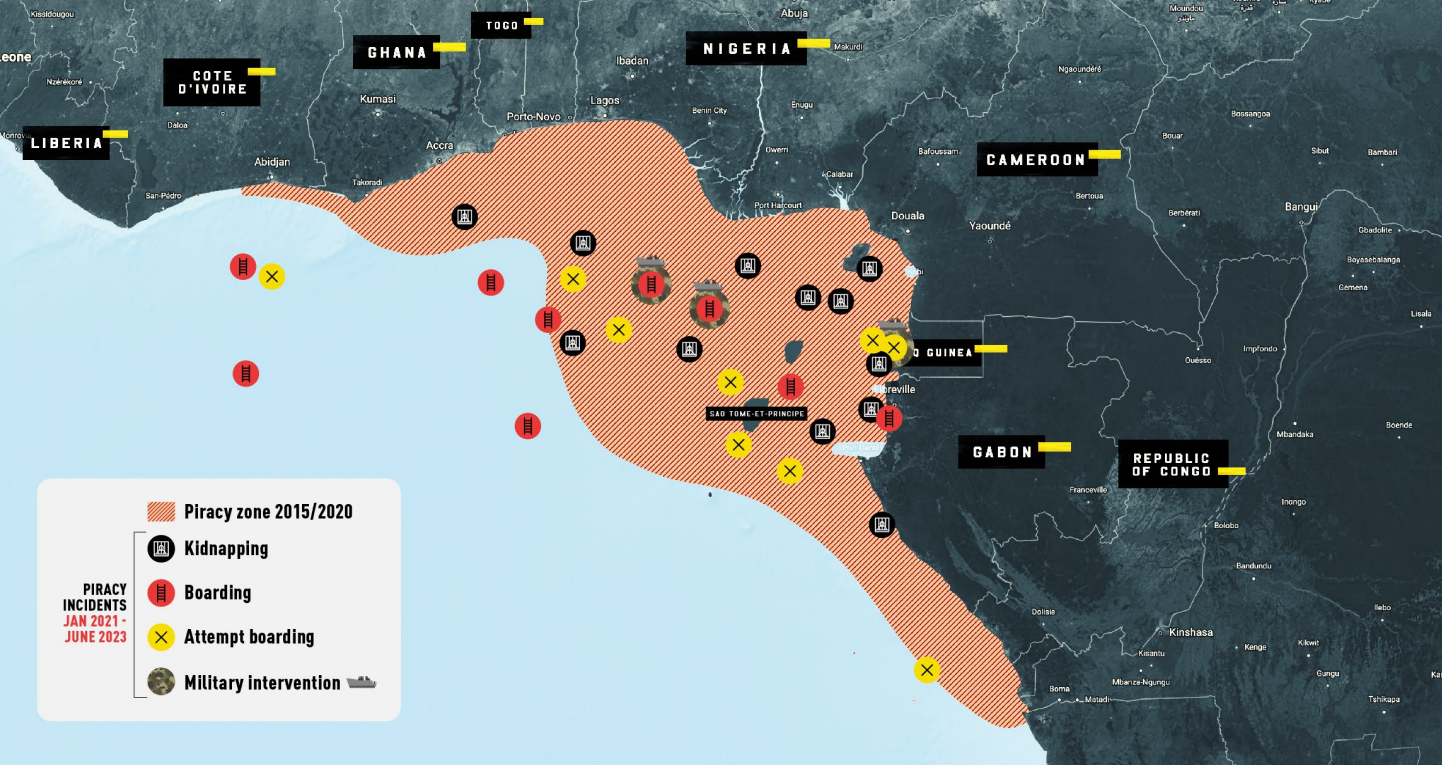
Maritime piracy never actually stopped. By the end of the 2000s Somali piracy had turned into an international emergency: at its peak in 2011, pirates with more than 30 ships and over 700 crew held hostage at any one moment drained on average $7bn a year from the world economy in ransom payments, re-routing costs and insurance premiums. But overall, that campaign of suppression only partially and for a limited time worked. In 2025, the ICC International Maritime Bureau registered 137 incidents of piracy and armed robbery against ships: an increase compared to the 116 in 2024 and 120 in 2023 — the highest since 2021. Among those 137 incidents, 121 vessels were boarded, four were seized outright, while 25 crew members were kidnapped and 46 taken hostage. West Africa's Gulf of Guinea recorded 21 incidents, including 23 crew kidnapped on four occasions. By early 2026 incidents off the Somali coast were going up again with naval resources redeployed to the Strait of Hormuz, a security vacuum which pirate groups quickly moved into.
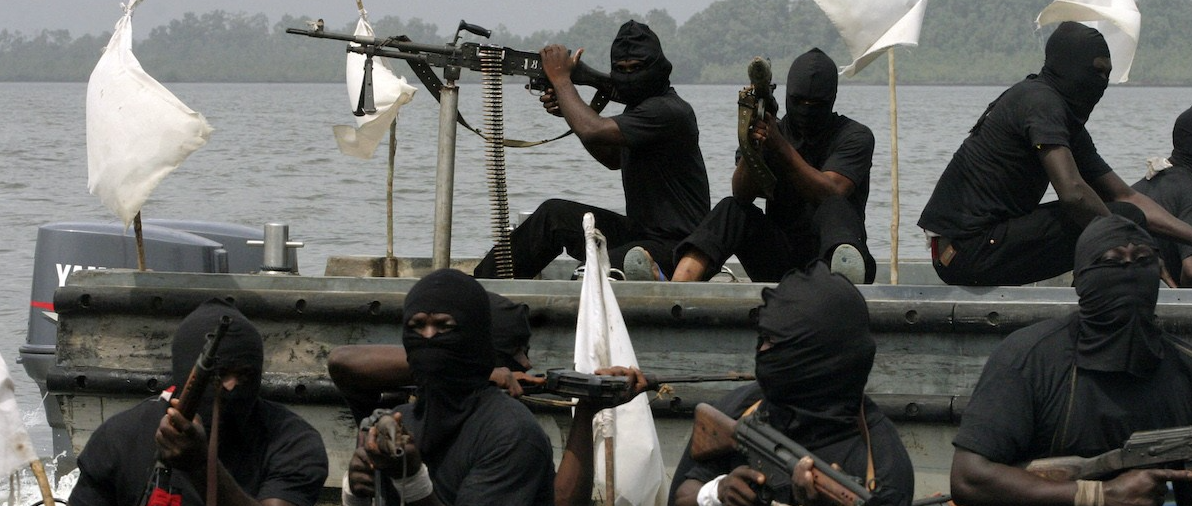
The financial infrastructure driving modern piracy has adapted as the threat itself has evolved. Revenge and ransom payments are unsettled through informal hawala networks still. What has changed is what sits atop them: the transformation of proceeds into digital assets, they cross jurisdictions in seconds, need no corresponding banking relationship and leave behind an immutable public record — if the investigators have the proper tools, and jurisdiction.
This was illustrated in stark terms during the MV Ruen case. On December 14th, Somali pirates hijacked the bulk carrier (under Maltese flag) in the Arabian Sea about 700 nautical miles east of Bosaso — their first successful hijack of a large commercial ship since 2017. The ship was used by 35 armed pirates to hold hostage 17 crew members, acting as a mother ship for attacks. In March 2024, the vessel was intercepted by Indian Navy. Following a barrage of fire from the pirates — who brought down a surveillance drone and engaged in warfare with the warship — MARCOS commandos began an operation lasting more than 40-hours that prompted all 35 pirates to surrender, without any crew casualties occurring. The ship was carrying about 37,800 tons of cargo worth approximately $1 million. The 35 pirates were brought to Mumbai for prosecution - the first such criminal cases in Indian courts in a decade. Maritime security analysts said the organizational sophistication of the group pointed to foreign support; financial flows from such backers, if conducted via crypto, would likely have gone through exchanges with limited anti-money laundering protocols.
The Houthi offensive in the Red Sea offered a sharper and better substantiated illustration. From the end of the year 2023 as many as 100 attacks on commercial shipping were performed in just six months (over a trillion dollars worth of maritime cargo from October 23 to May this year was affected by them). April 2025 – The U.S. Treasury's Office of Foreign Assets Control sanctioned eight crypto wallet addresses connected to a Houthi financial network. An analysis of those eight addresses — all found on the TRON network and most funded as well with USDT — by TRM Labs showed nearly $900 million worth of flows sent to high-risk, already sanctioned entities like a Russia broker selling UAVs through its Garantex exchange. Elliptic also discovered individual connections between Huione Pay, a Cambodian payments platform tied to large money laundering schemes, and wallets associated with the Houthis. Funding for the weapons that made those drone strikes against container ships possible was passing at least partially through the same rail as ordinary USDT users traverse every day of the week.
What the Agencies Have Actually Discovered
The ties between cryptocurrency and organised sea crime are written about in the official outputs of institutions that have entire budgets set aside to source and follow these flows.
At first glance, it may be tough to digest the literal headline number from Chainalysis's 2026 Crypto Crime Report: illicit crypto addresses received at least $154 billion in 2025 — an increase of 162 percent over the revision-to-date prior-year number of $57.2 billion. The main contributor is 694% rise in activity related to sanctioned entities: state actors and their financial proxies with using digital assets for evading international sanctions architecture. Loyalty to stablecoins — freshly available tools that had both given users exactly what they were looking for (price stability, cross-border mobility and independence from correspondent banking), and also now made up 84 percent of all gross illicit transaction volume through 2025. Still, the illegal proportion of overall on-chain transaction quantity nonetheless sits below 1%.
The Financial Action Task Force — FATF — in at least several assessment reports detailing how marauding crime proceeds make their way to the crypto ecosystem. Ransoms are paid, converted to digital assets within hours, cycled through wallets and off-ramped through peer-to-peer brokers in local jurisdictions where regulation barely reaches. The joint 2024 UN Office on Drugs and Crime (UNODC) report on transnational organized crime identified adoption of cryptocurrency used to settle ransoms by Gulf of Guinea piracy networks, including patterns across multiple incidents between 2021 and 2024 where payments were partly denominated in USDT transfers routed through intermediaries beyond the reach of the law enforcement authorities in requesting states.
There is a cabal of people who hijacked nothing, financed zero drone strikes, and were never within a thousand miles of a Somali pirate job. They are still covering part of the everyday cost, which comes after criminals have discovered cryptocurrency.
Someone wishing to send some hundreds of dollars worth of stablecoins to a family member is now subject to compliance infrastructure that would have seemed crazily disproportionate a decade prior. Regulatory pressure following on the documented harm of money laundering and illicit finance has forced exchanges servicing retail users to perform identity verification, transaction monitoring, source of funds inquiries, and screening against a growing number of sanctions lists with each entity added. Whether a withdrawal automatically caught by a bot can render an account inoperative for days. If you were to for example send a transaction to an address that received funds only a few hops back from something flagged as suspicious the inquiry could take days to clear.
It is easy to understand fundamentally why such behaviour creates frustration on the part of normal crypto users. The reaction to crimes they may commit is making them feel like they are being treated as suspects for favouring a money system that does not have need for institutional gatekeepers. All the things that make crypto attractive to criminals — pseudonymity, no unilateral freezing, cross-border mobility — are precisely the characteristics that many of those excluded from traditional finance rely on. This doesn't justify the piracy, and you know that. And thus it also explains why the collateral damage of regulatory responses is so broad.
The more useful point — and one that gets less airplay — is that AML infrastructure has improved tremendously in its primary function. It is also working, for all the friction this imposes on legitimate transactions. Not perfectly. Not fast enough. But working. For ordinary users, we also need to take apart the argument that crypto is worse than traditional finance: cross-border settlement speed, remittance costs and access for unbanked people do not go away due to what criminals will do with the same rails. The relevant question follows: does it become justified to tolerate the abuse while working to build better tools that fight it, due to the legitimate purposes of these kinds of actions? The evidence suggests yes.
The Ledger Remembers
The darker interpretation of the crypto and crime dynamic — that the blockchain empowers permanent immunity from consequences for all who know how to operate it — has proven not to be true. The money does not vanish on the blockchain. Money leaves a legacy, an easily accessible written record that will be the only trail which investigators may follow at their leisure, even many years after the event.
An unusually big case helped make this point in 2024 conviction of Ilya Lichtenstein. In the 2016 hack of Bitfinex, 119,754 Bitcoin were stolen. Lichtenstein and his wife Heather Morgan layered funds through numerous wallets, mixer services, and counterfeit exchange accounts for years. Blockchain analysis investigators tracked the money through six years of intentional obfuscation and secured a federal conviction. Lichtenstein received five years. The cash did not evaporate — it stood by in the accounting framework.
That same principle was demonstrated by the earlier takedown in 2022 of Hydra — a Russian-language darknet platform that had processed an estimated $5.2 billion worth of cryptocurrency over its lifetime. Investigators in Germany and the US tracked on-chain to construct the platform's financial infrastructure, arrested its owners, seized their servers and confiscated around 23 million euros in Bitcoin. For years, the platform had operated under the premise that its geographic distribution and technical complexity rendered it essentially untouchable. It was not. Similarly, the sanctions (April 2025) of Houthi wallet network proved this principle at scale — blockchain analytics firms traced complex multi-hop transaction patterns and overlaid connections to real-world entities — arms brokers, money launderers, exchange operators — at key nodes even across multiple uncooperative jurisdictions.
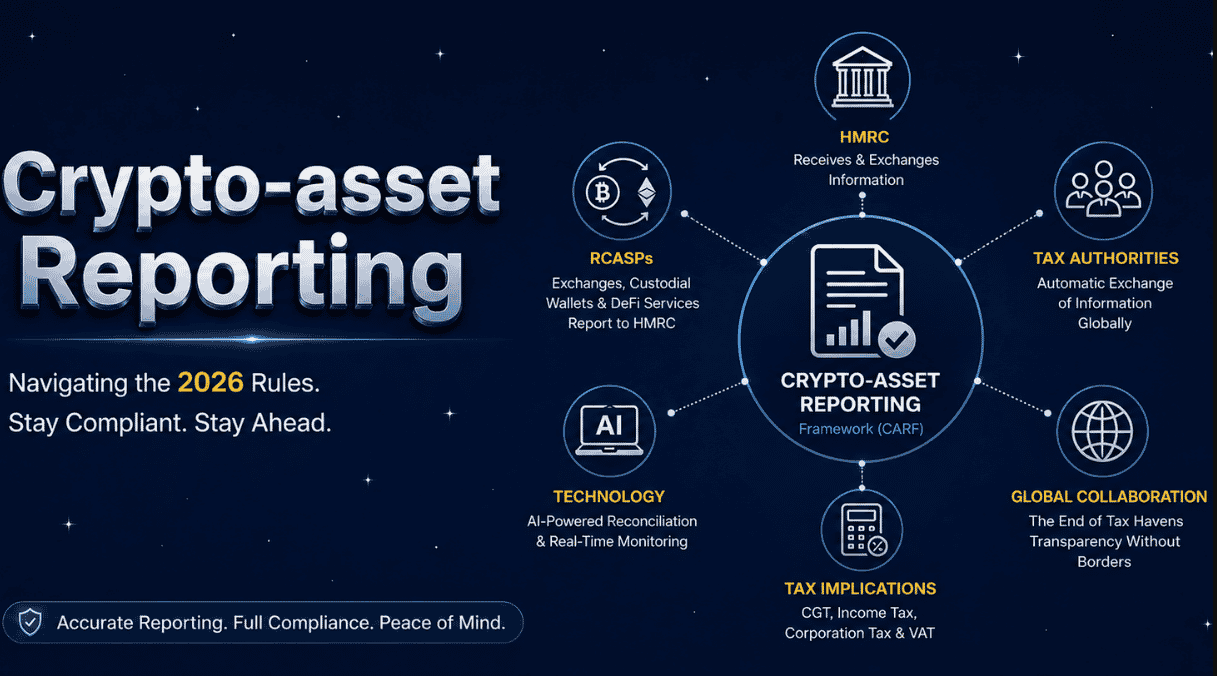
The loopholes criminals are heavily depended on, have been connected by the international frameworks. Launched in 2026, the Crypto Asset Reporting Framework enabled automatic exchanges of data between jurisdictions for the first time and greatly expanded the architecture enabling investigators to follow funds across borders. The FATF Travel Rule — which mandates exchanges transmit identifying information alongside transactions exceeding given thresholds — is embracing global adoption with increasing uniformity across major economics. None of this gets around the problem. If you cannot eliminate, enforcement always operates by raising the price of the crime.
No Horizon Wide Enough
The romantic legend of the pirate — free, outside of law, spending his or her bounty in cosmopolitan harbors, without accountability to anyone — was a myth at the time it was being experienced. Historians believe that at the peak of this activity — in the years 1716 to 1726 — more than 4,000 pirates roamed the Atlantic basin. The mean age was 27 — exactly that of the old merchant sailors, and thus young men engaging in a deadly job with statistically astoundingly low survival rates — their deaths coming fairly soon after they first picked up a sword or raised an anchor which left little time to savor anything.
Henry Every is a case that is most commonly interpreted as victorious. Every captured the Ganj-i-Sawai in 1695 — the personal flagship of the Mughal emperor — and stole a booty worth between £325,000 and £600,000. She effectively sparked one of the first ever coordinated maritime manhunts across international borders in history. Accounts that emerged eventually suggested Every returned to England as a changed man, living the life of a pauper as his misbegotten wealth was useless if every one knew it belonged to James Every. And that without any blockchain analytics; the gap between having nicked it and being able to use it was some insurmountable space.
Meanwhile, the contemporary cryptocurrency-fuelled maritime criminal has been finding out a quite similar dilemma. Eight non-TRON wallets held an aggregate outflow of approximately $900 million related to the Houthi regime, whereby that pseudonymous nature faded within a matter of months as a result of coordinated analysis efforts by TRM Labs, Elliptic, and OFAC. The pirates that hijacked the MV Ruen in Dec 2023 were under naval custody by Mar 2024 and tried in Mumbai. The Houthi financial network that financed a campaign against a trillion dollars of Red Sea cargo is under determining sanctions and real-time blockchain tracking
The pattern is consistent:
Though Bartholomew Roberts captured over 400 ships, he never got to enjoy the fruits of any one of them.
Fifty-two were hanged in a single trial of the 272 pirates captured at Cape Lopez following his death.
Almost all of the major pirate captains who were active from 1716 to 1726 dead or imprisoned within a decade.

Jack Sparrow is a movie character. The true history of pirates is a roll call of hangings, Many fittingly swift and public executions generally serving much shorter careers than a labour agreement. Gone was the most successful pirate, statistically speaking, Bartholomew Roberts in three years; his crew swinging within weeks of the Cape Coast Castle as soon as he died. Blackbeard lasted two. Kidd survived long enough to be returned to London for the execution. The exceptions to the rule, men like Henry Every who escaped capture, exchanged their stolen riches for a life of squalor and permanent anonymity — another fate entirely, yet not a better one. The technology changes. The math does not.
The hurdle the pirate faces remained true for Blackbeard and Black Bart: whether the ransom moves through a hawala broker or a TRON wallet, to have meaning it must be spent, and making stolen money usable means leaving tracks. That trail ran to Execution Dock in the seventeenth and eighteenth centuries. Well, the port has now moved dock addresses. But those that ignore the lesson end up the same.
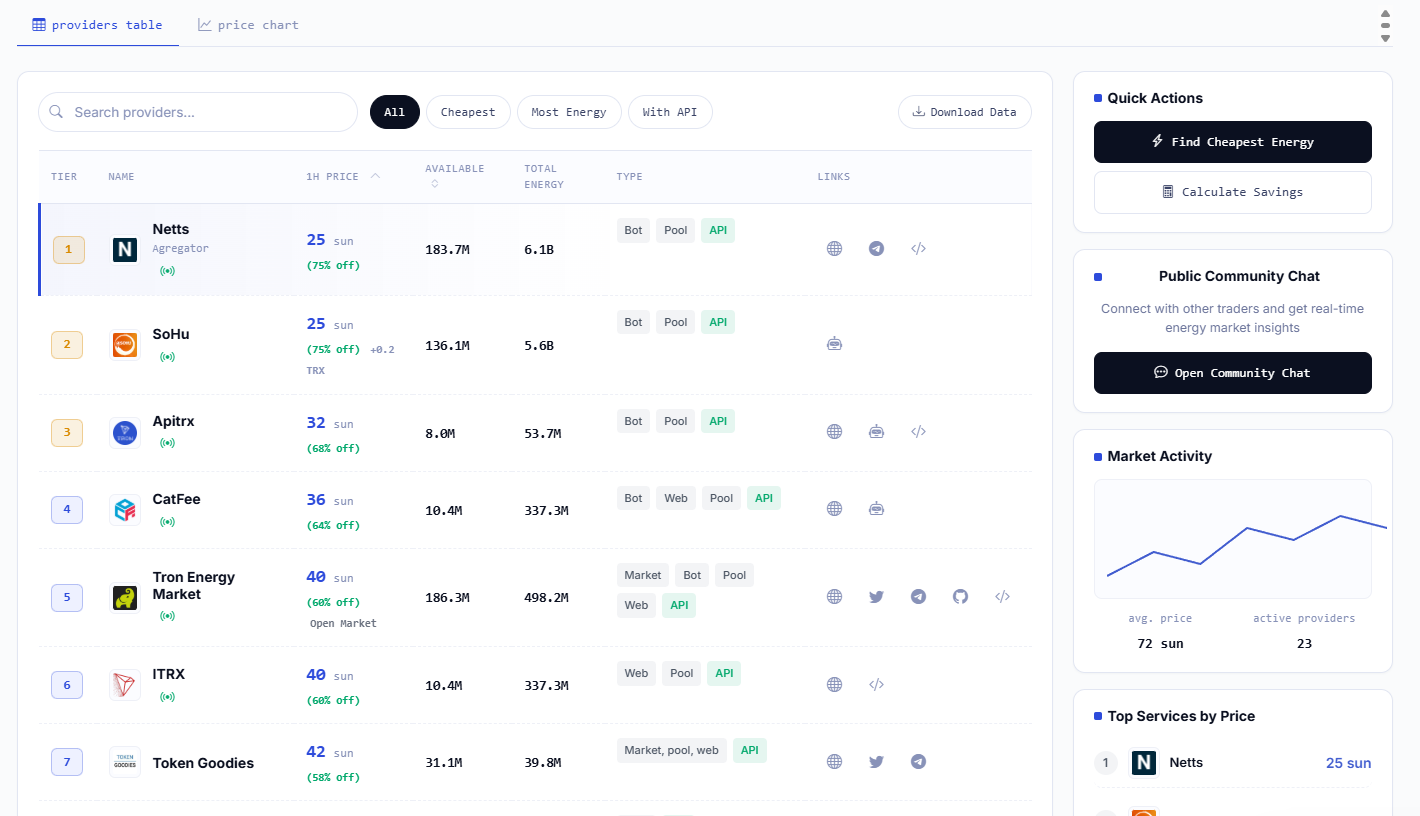
The practical take-home is simple for the general crypto user, who has no relationship to any of the aforementioned other than that they move USDT on TRON and would prefer not to overpay for it: Netts is a real-time Energy aggregator that interacts with and processes information from more than 20 TRON Energy providers — including Netts, SoHu, CatFee, JustLendDAO, Feee.io, and others showing live TRON Energy price comparisons to enable anyone to buy TRON Energy easily - comparing the entire market in one interface instead of going through each service individually. The platform also offers API for automated delegation to developers and high-volume users managing Energy at scale.