Crypto and Crowdfunding: Beyond the ICO Era
From ICO goldrush to launchpads and IDOs — what replaced the scam-riddled era, who actually wins, and what it costs investors.
Pretend its early 2018 and you've just entered the Telegram for an ICO. There are twelve hundred people in here. The group admin posts updates every few hours — progress on the smart contract, a new exchange partnership, a well-known name who has allegedly agreed to advise the project. Spanning forty-seven pages, the whitepaper deploys terms like revolutionary, disruption, and paradigm shift in precise-sounding but essentially empty ways. You read the first ten pages and embark upon a judgment that is likely sufficient. You lay down two thousand dollars; they wire the equivalent. You scour these, tell yourself that this could one day be ten thousand in six months.
The project attracts 11 million dollars. The token is listed on a small exchange at twenty percent over the ICO price. You look for it four times a day. Then the premium shrinks. Then it disappears. The token then starts trading at 60% of your buy price and the Telegram group is dead. The admin continues to post into it, but the posts are about building and a long term vision now, not so much listings or partnerships. You are eight months in when the group goes dark. Two thousand dollars of your money is now two hundred and thirty.
You were not an idiot. You were an experiment in one of the greatest mass psychological experiments in financial history.
Also the South Sea Company had White Paper
If not in crypto but from any financial history, the specific madness of the ICO era is easier to understand if you know what came before it. A British company, the South Sea Company, floated in 1720 with shares open to the public — threatened with colossal returns by way of monopolies on trade in south America which it owned and could never own. It was underpinned by bribes to MPs, creative accounting and an overall climate of a market that had given up on doubt. The shares soared. Then they collapsed. A modern advertisement for a rival scheme identified it as an enterprise of considerable benefit that nobody knew what it is. One morning it collected two thousand pounds.
That ad was the immediate ancestor of the ICO whitepaper. Both create urgency by making the opportunity seem irresistible, technically credible, and financially urgent at once. Create the impression of scarcity. Create the impression of expertise. Give them the sense that unless they get in now, they will have major buyer's remorse. The rest is then left to the market's animal spirits.
Starting around 2016, this became trivially easy to do on Ethereum. Prior to this, creating a token sold to the public necessitated building an entire blockchain from scratch. A laptop, a few hours and someone that could write a simple smart contract was all you needed after Ethereum. Even good projects were easily launched with little to no barrier. The cost of entry to launch a scam one fell near zero.
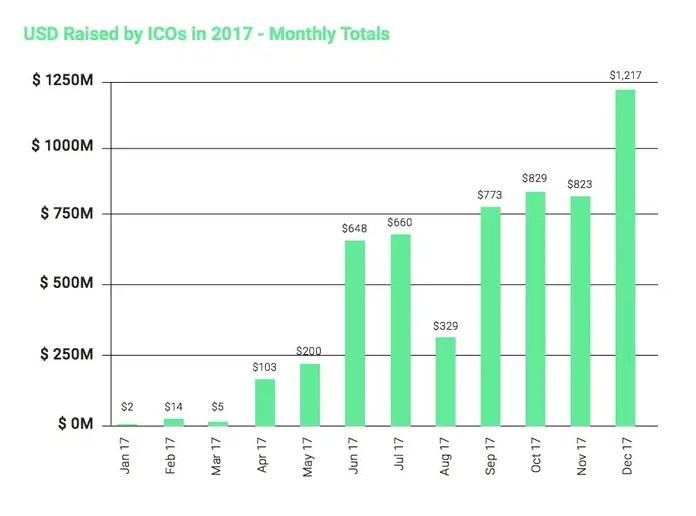
In 2017, ICOs were bringing in five billion dollars a year. EOS raised four billion over a year-long token sale that turned into a never-ending hype machine, all while promising millions of transactions per second at no cost. Even Telegram managed to get 1.7 billion from institutional investors for the Telegram Open Network — before it was stopped dead in its tracks by the SEC right before launch. They were the nobler end of the scale.
When Ruja Walked on Stage
The ignoble end had a different character. OneCoin was not technically an ICO in the normal way it encompassed neither a blockchain token nor smart contracts. It sold education packages about the cryptocurrency to buyers in 175 countries, which included the right to mine a coin called OneCoin that appreciated according to a private exchange exclusively controlled by OneCoin. There was no public blockchain. The coin existing in databases the founders held. The price was whatever they said the cost was.
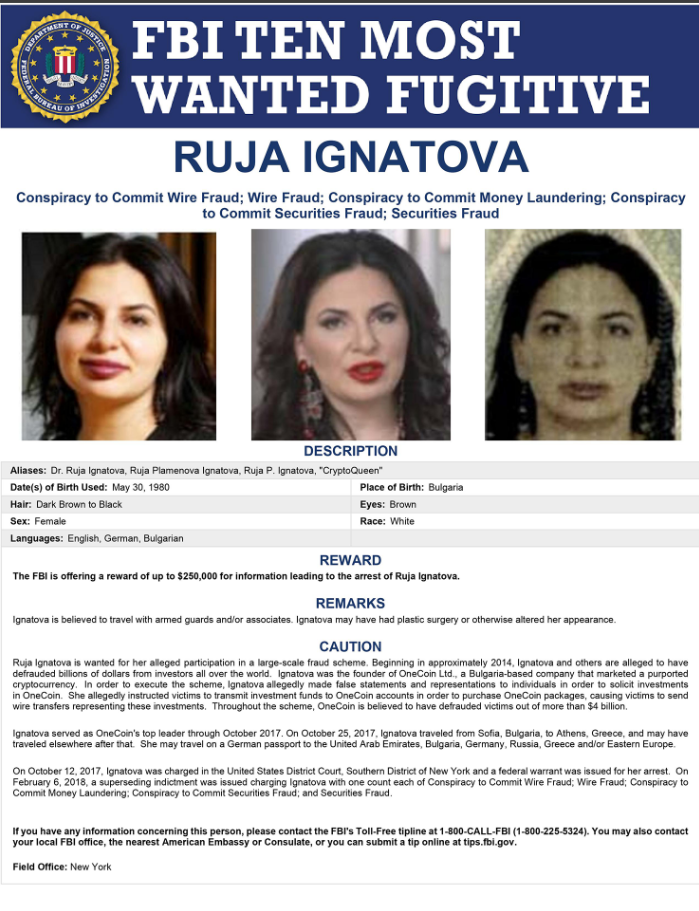
The founder, Ruja Ignatova, held a PhD in law from Oxford. Her presentations included keynote speeches at events with production values that would shame a real tech conference. Dressed like a designer and speaking about financial inclusion and the unbanked billions who needed something better. She accrued around $4 billion from individuals in those 175 countries and vanished in October 2017. The FBI has put her on their most wanted list. They are still looking.
Perhaps the most famously fraudulent of new cryptos — OneCoin — are worth lingering on: not because it is uncharacteristic; rather, it exemplifies what made crypto frauds so particularly pernicious at this time. It wasn't to invest in our coin. The pitch: know the future before it gets there, and act on it. It resonated with the notion of being a genius, of being early, of being that person who sees what others cannot see yet. The educational packaging turned the sale from merely a monetary transaction into an endeavor that felt like self improvement. If you were not speculating that an asset was valuable, You spent money on your own education.
The financial scheme of BitConnect was much cleaner but was pulling off the same exact kind of psychological architecture. It sported a lending program promising interest of daily returns as high as one percent (which would, compounded, make $1,000 into $3.7 million in a year) and allegedly backed by unvetted algorithmic trading bot to which it never provided the keys. They had their own token and a platform called BCC that traded on its own exchange that was maintained at certain prices by continual new investment from new entrants. The number two for it is actually the mechanical definition of a Ponzi scheme, and this ponzi ran for two years because those running it were aware — duh — and continued to run it knowing that so long as they paid dividends on current investments the financial incentives overrode any consideration of what would happen when it finally broke. Its collapse in January 2018 wiped out the life savings of people in thirty countries.
A retrospective analysis estimated that around eighty percent of all Initial Coin Offerings in the 2017-2018 boom were scams or failures so total that the difference was hardly meaningful. Not failed projects. Not the big, ambitious products that blew up. Intentional frauds with founders having zero intention to build anything. The SEC finally came out with enforcement actions which killed the original permissive ICO format in the US, but by that time it was too late and most of it hit people who could afford to wear it.
Infrastructure That Replaced the Chaos
With regulators arriving, that little bubble popped, and a replacement was needed to the original ICO model when public mood soured. This resulted in novel infrastructure with unique mechanisms — and new power structures, but no more to benefit the average investor.
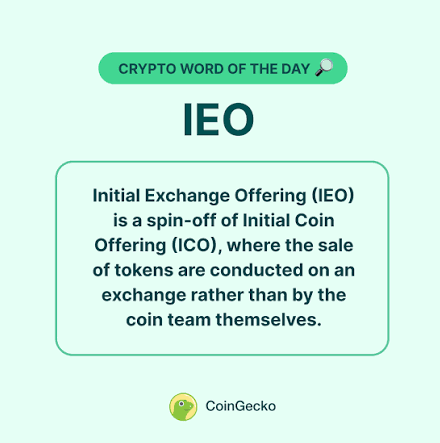
The first approach was the Initial Exchange Offering. Instead of going out to the general public with a whitepaper and a Telegram group, projects that had aligned themselves to exchanges were holding their token sale via the exchange itself. Binance Launchpad, which reintroduced this format at scale in early 2019 produced returns that looked spectacular from the outside. Then, projects like BitTorrent would provide their investors such multiples within days of trading commencing. Fetch.ai that was launched in what has become a relatively successful and authentic data point just two years later through a Binance Launchpad sale: one of the few cases where the project was sufficiently real to warrant such excitement.
Distinguishing what the IEO format really changed, and what it did not, is a matter of caution. That decreased the fraud rate meaningfully — the willingness of an exchange with reputational exposure to host a given coin is lower if obvious scams exist. It required KYC of participants, thus leaving a paper trail. However it didn't alter the basic financial arrangement. Projects continued to do private rounds with big investors at prices many multiples below the public sale price. The marketing affected the public launch price as well. The folks who received Binance Launchpad allocation in 2019 did all sorts of amazing returns because they were purchasing at set exchange prices where the demand from massive userbases outstripped very limited supply. The mechanism works brilliantly when it does and guarantees prompt losses to the project that is anything below amazing.
While the exchange model had been developed, decentralized alternatives emerged in parallel. Initial DEX Offerings shifted this mechanism to decentralized exchanges, allowing distribution via smart contracts with no centralized platform exercising important decisions. Polkastarter became a well renowned, selective IDO platform specialized in cross-chain projects and had run seventeen launches since 2025 with probably highest vetting process standards per launchpad arena. DAO Maker had a governance token model where being able to access an allocation of tokens to purchase was gated by holding DAO Maker's own token, incentivizing alignment with the financial motivating DAO Maker to be excited about its own tokens, whether there was any quality behind projects or not. At the institutional end, Coinlist was much more of an old-style placement agent; their projects were much earlier stage and employed due diligence standards at or near that of a regulated broker-dealer.
The data on how all this performed is sobering. Of the sixty-four launchpads tracked by Oren, only four generated positive returns for participants on average in 2025. The headline number hides extreme concentration, with the vast majority of top-line deals going to Binance Launchpad and Coinlist while hundreds of smaller platforms that sprung from nowhere in the bull cycle populate their calendars with project launches that exist merely to generate listing fees. To a select few contracts on select platforms this is exactly what the promise of early access to the next imaginative project has become. In the remainder, pretty much all public sale participants are serving as exit liquidity for better and earlier informed entities.
Icy Assets, Compliance Headaches and Who Really Wins
The AML challenge for crypto crowdfunding is one that the sector spent years attempting to work around and regulators are growing up with a view unwilling to be ignored.
In the case of, say, a project conducting a fundraising from several thousand pseudonymous wallet addresses (as most makers have done and moreover are right now contemplating doing) some of those addresses will come with transaction histories that compliance tools raise flags about. Connected to hacked exchange wallets. Touched by darknet market addresses. Subject to sanctions. The project getting those funds could be completely unaware. The platform where the raise is hosted might not have even heard of it. The project has announced its raise and started to plan on top of the capital it received but the money is on-chain, mixed in with other money.
That is when something gets flagged in a compliance review. Then a distribution gets paused. Then lawyers start making calls. This has actually been the case in real world projects, not hypothetically. Since the money was raised, concerns about the source of funds have led centralized launchpads operating under financial services licenses to freeze distributions. The FATF Travel Rule, now law in 85 jurisdictions, requires platforms to collect and transmit sender and receiver data on qualifying transactions. Under piloting through 2027, the EU's revised AML legs classifies crowdfunding platforms as regulated to conform with identity verification, transaction analysis and suspicious behaviour reports — alongside banks and financial institutions — while outright barring — in some jurisdictions — funds from addresses that do not pass screening. In 2025, the European Anti-Money Laundering Authority activated its powers with clear guidance on expectations for crypto platforms in Europe.
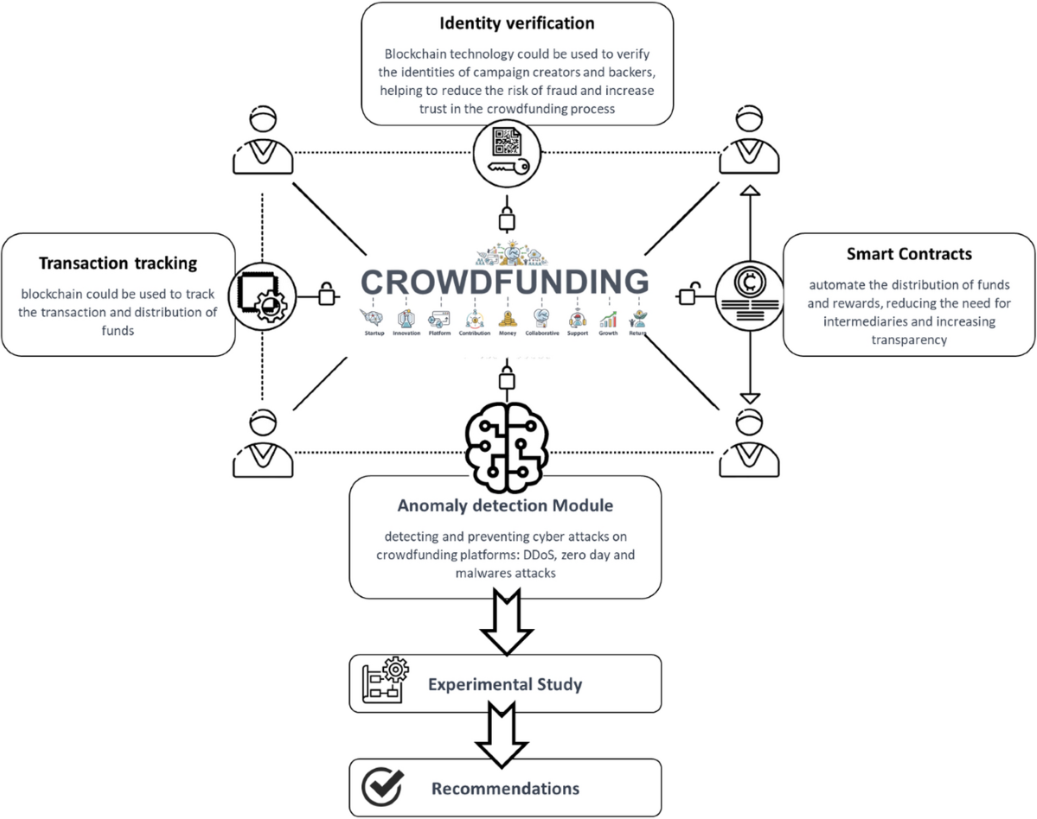
Most especially, privacy on both sides of the transaction has been effectively wiped by default. One of the contributors uses a regulated launchpad, have uploaded their documents verifying their identity, and now they are stored in the platform database which is not only hackable and has chances to be stolen but also the authorities may access this information. An entity using a decentralized mechanism retains anonymous identity, but has public on-chain activity that any person with a block explorer can permanently trace. Its not privacy or no privacy. It lies somewhere in between being identifiable, or not being traceable.
When the marketing is stripped away, a brutally true accounting of who wins fails to cast this activity in flattering light. Platform operators are little more than guaranteed winners: they take two to five percent of funds raised from every project that hits launch, success or not. The operators of the serious platforms have constructed vast businesses founded on that toll revenue only loosely attached to outcomes for investors. If a project fails post-launch, the platform has already taken its cut.
The early birds wins. Those who bought in the private round well below public launch price have already guaranteed a return, assuming that whatever IEO or IDO is so hyped it marks enough demand to clear above (or keep prices solvent with) launch. You will be purchasing the tokens these individuals currently hold, thinking you are buying in on the bottom floor.
Retail participants hearing about the IDO from social media, and finally obtaining some allocation: on best tier platforms, in good market conditions, if there a real project that you are interested in sometimes can profit. The entire rest of that category — literally the vast majority of public sale activities across the whole landscape — is making the liquidity payment to enable all those before them to exit. The structural asymmetry of information between insiders and public participants in these raises is not an accident. It is the structure.
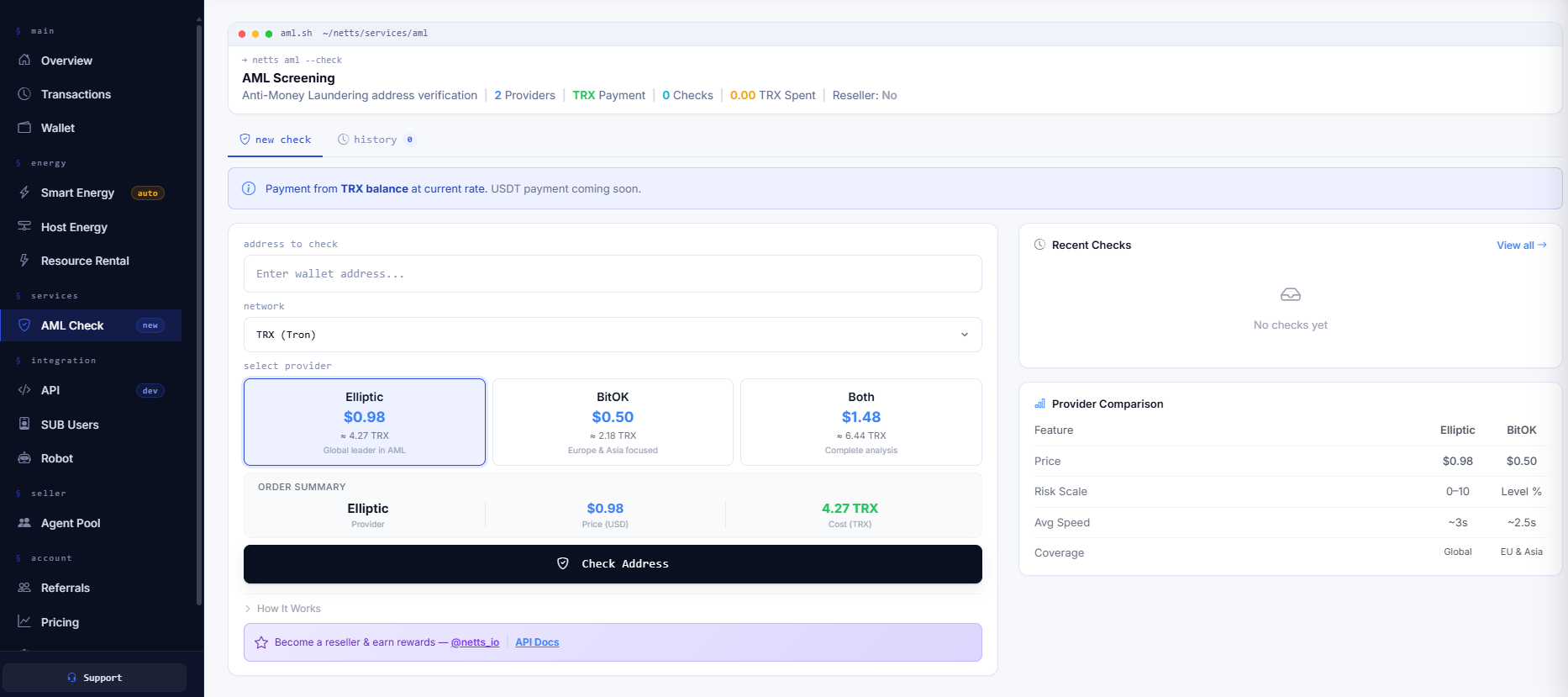
A full TRON Energy management platform for teams who are beyond the fundraising stage, and need to manage real transaction operations at scale — USDT transactions automation across thousands of wallets; TRON operations automation through settlement and refund processing; tracking of Energy costs via buying Energy API access for programmatic management. Netts Workspace is your answer to manual and automated Energy rental, smart scheduling, host mode for continuous high-usage addresses, API access for teams who need programmatic control over Energy purchasing, and a real-time dashboard showing exactly what the infrastructure is costing to run - with AML check functionality.