AI Agents and Crypto Wallets: Autonomous Finance
AI agents watch your wallet 24/7 and never forget. They also execute wrong transactions confidently and without hesitation.

You are not reading this because you read a compelling think piece about the future of finance. You do this because your wallet had about 4000 transactions this month, you manually checked it to near the end of the third week and then just stopped looking at it altogether because it made you feel bad. Then it was hit-and-miss and at some point you were telling yourself that you would catch up with the backlog on Sunday. This is now three Sundays in a row the rosters haven't been whittled. The invoices are still there. No one did a deep dive on those tiny transfers you saw 2 weeks ago. You are an owner of a crypto operation and you don't dare look at it.
That is where has people buy AI agents for financial operations. Not because they observed Coinbase announce Coinbase for Agents in 2026 and said to themselves, yes!, this is the future I want put myself into. Because unlike a computer which is much better at watching, they are buried and inundated and somewhat ashamed that they care about this thing. Remove all the marketing speak, and the promise of AI agents is basically a promise that you need not feel guilty anymore about your non updating spreadsheet. You can delegate the guilt.
What no one tells you is that transferring the liability is not the same as eliminating the risk. In some ways it is worse. At least you were watching your poor wallet when watching it badly. The anxiety was a signal. The machine is now watching, and the machine has no anxiety — missing a signal. The machine will deal with it if something is not right, doing whatever it was programmed to do, and the programming is only as good as the programmer, and that programmer was you on a Tuesday afternoon when your mind had wandered.
How Machines Became Humanity's Worrying Signature
This is a long-standing human fantasy that predates the industrial revolution: the machine that does all the drudgery, leaving you free to do what is interesting. The textile workers who turned Luddite in the 1810s were not stupid people incapable of discerning the future. They envisioned accurately much of the future. While they reaped the benefits, all this also replaced their labor: It too was an impact of the power loom. The freedom it promised — leisure, uplifted labor, time for more and better human lives —went mostly to the mill owners, not the workers whose skillful work it displaced. Much of the history of automation is a history of benefits flowing upward while disruption flows downward.
This is not to say: automation is a bad thing. It says that the story about automation is both predictably roseate and misleading in revealing the real distribution of expenses and benefits. As soon as AI models were good enough to be useful — sometime around 2022, sharply ramping up afterwards — the upbeat narrative was all about augmentation. The laughter ended with jokes about artificial intelligence somewhere around the time concerns began over jobs. They expected mockery first, and then alarm, but the timeline of those two responses was shorter than anyone dreamed.
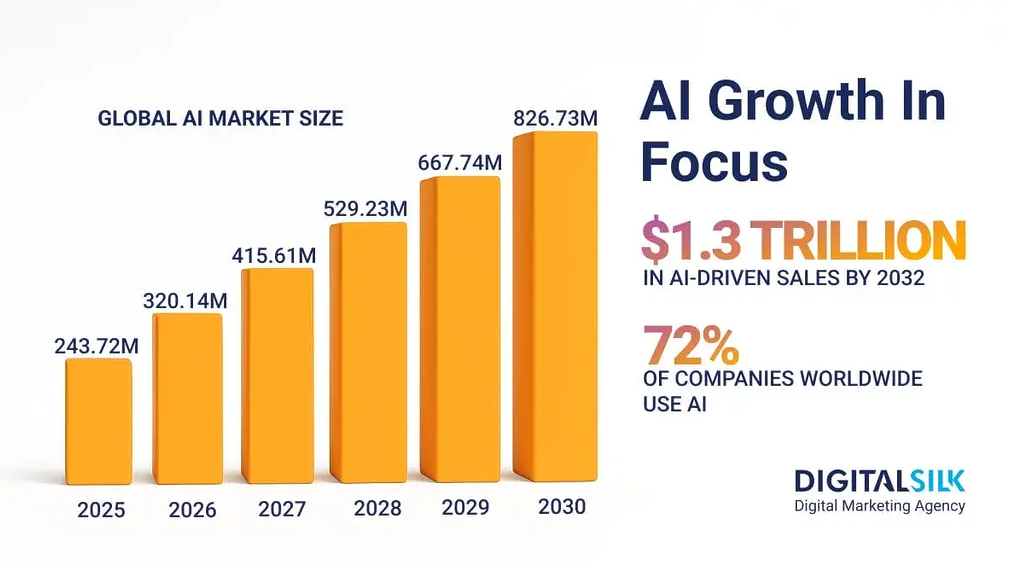
This is a little more complex in the case of AI agents, and financial operations. The operations themselves — monitoring wallets, executing transactions, categorising data, generating reports — are precisely the kind of work early commentators on AI claimed would be absorbed by the technology. And it can. The question is what do you have left when it does. You end up with a system you must understand well enough that it can be supervised, which in many cases take more understanding than simply doing the thing yourself would have taken. Cue the most common paradigm that, in more polite introductions to AI agents, is swept under the rug: The tool intended to offload your cognitive burden frequently adds a little bit of it back in initially — you building the thing, you testing the thing, and you re-calibrating what level of trust (rightly) ought to be afforded.
The person who actually saw positive results from employing AI agents in finance operations is seldom the one who read an article and implemented it on Day One. The person who wrote it, saw it misbehave, fixed it, saw that misbehaving again, worked around that corner case for awhile until they eventually ended up with a thing which breaks in ways they know because they've observed every component of the failure mode. This takes time. It takes patience. It requires you to consider early errors to be information rather than disasters which is no small psychological hurdle when the error for most people involves money.
What the Agent Is Actually Doing While You Are Not Looking
So what does an AI agent DO when you schedule it to handle a wallet?
It performs as you told it. With incredible consistency and absolute nothing said about whether or not the thing you told it to do was ever the right thing to do. If you instructed it to raise a flag for anything over five hundred dollars, it will raise a flag for every transaction above five hundred dollars all the while never realizing that half of them are your own payroll that you have scheduled as recurring transfers and which you are already aware of. For instance, if you told it to process outgoing transfers once there are ten or more in the queue then off it goes processing ten-item queues including those which formed at three am on a Saturday because someone had misconfigured something and caused a loop. An agent does not go to sleep, but more importantly an agent does not hesitate. Hesitation is a form of error information about our own wrong principles, but the agent has no hesitation.
That's actually something good to know before you let an agent loose on anything real. The agent is not a junior employee with limited leeway and an innate sense of survival. That's more like the automation that runs the traffic lights: rock solid and predictable; unable to reason about context; completely reliant on whoever wrote the system thinking of every possible edge case ahead of time. With traffic lights, the inputs are trivial and the failure modes are simple to enumerate. Wallet operations are a bit more involved.
In practice what AI agents are good at is automating the boring work of repetition at scale, where most failure modes are boring. We monitor balances and when the ETH balance gets below a threshold we send an alert. Logging every transfer of USDT received to a database including a timestamp and the sending address. Producing a weekly recap of outflows, by type of recipient. Validating that transactions are not going to addresses outside a whitelist of known accounts They work because they are so simple to specify exactly, and the penalties for mistakes in systems of that kind are low enough that the cost of finding them in logs is acceptable.
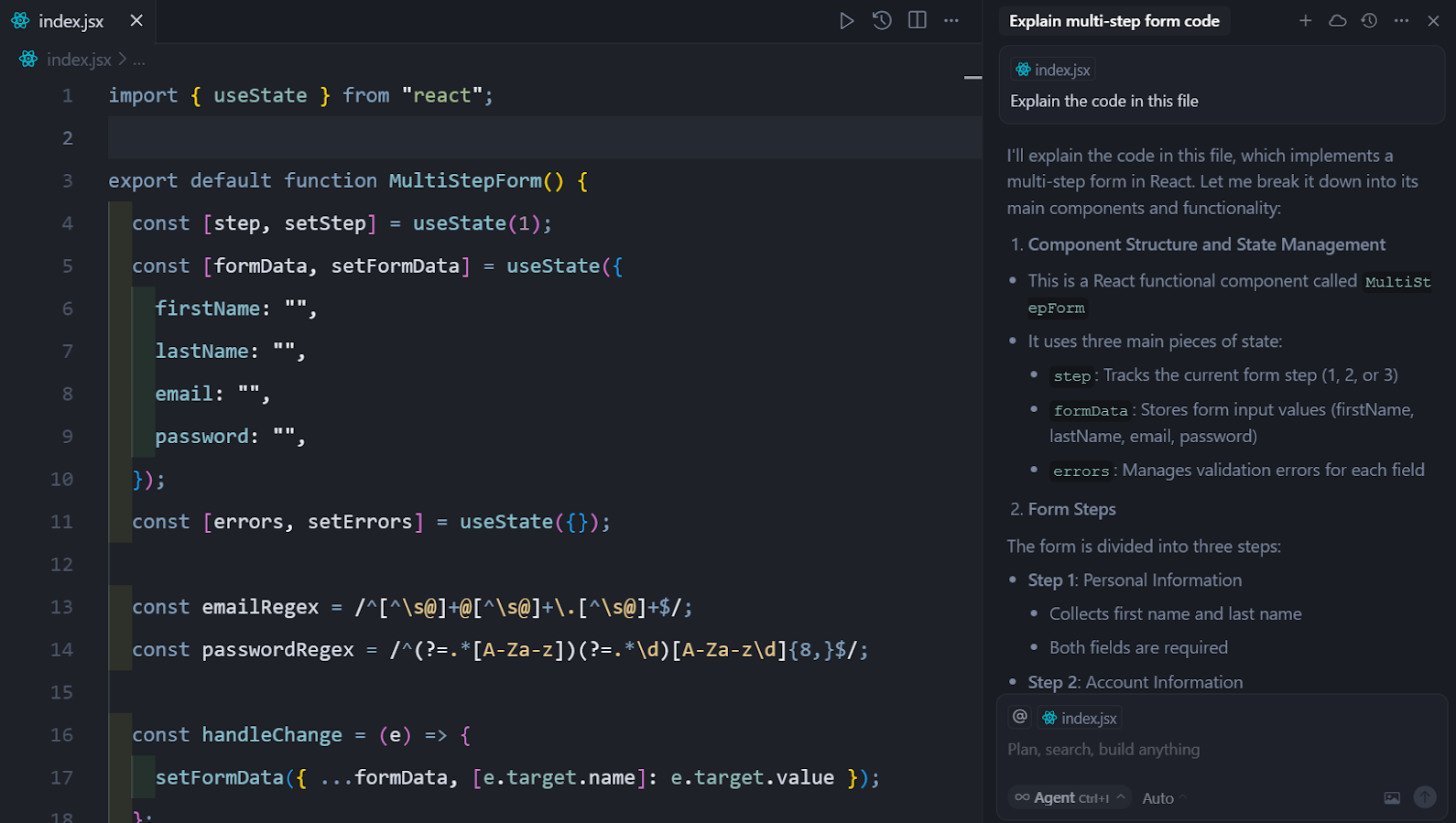
The interesting capabilities — the ones that show up in product announcements — work in demos, but demos are tightly controlled. If the anomalies are also the ones that the agent was trained on, then it looks awfully good at recognizing anomalous transaction patterns and escalating them for review. When the anomaly is some area that didn't occur to the person typing up instructions, it's far less good because either the agent misses it entirely or flags it at best with as much urgency as it would flag something programmed into its defensive systems. Until something goes wrong, you will not know what outcome you are getting.
TRON: The energy management is the practical automation on TRON which pay for itself actually. A wallet that regularly needs to handle high USDT transfer volume using TRON's resource model must establish a strategy for continuous replenishment of TRON Energy or run the risk of having its available supply always burn through its stock of TRX at the default rate. Having an agent do this — checking Energy balance, executing a get TRON Energy order ahead of the processing window, keeping track of what it costs sits filed away as one of those situations where automation is more obviously superior to human management. A human forgets. A human validates the Energy balance at 9 AM when everything is okay and then, at 2 PM, she triggers the transfer batch when it is not. This failure mode does not occur with an agent set up to TRON buy Energy automatically before the window opens. It has other failure modes, but not this.
When the Moment Takes an Unexpected Turn
One specific psychological experience that people who work with AI agents talk about universally (no matter what the agent is used for). That time the agent does something that you didn't specifically tell it to do and they're right. Not a hallucination. Not an error. An authentic inference — the agent identifying something in the data that was never specified as a criterion by its operator, and articulating it correctly.
This experience is deeply unsettling. He understands, at least in an abstract way, that the model is being trained to look for patterns within training data and spit out statistically likely outputs. But the felt experience is of something observing more closely than they are. Someone who sees more than they can. And that would rightly unsettle many — in ways not totally logical but also not fully off base. Far more reliably than a human checking the same data sporadically, an agent's attention pays attention differently from humans — it isn't selective in the same way, it cannot get tired of certain inputs like we can, and it has no vested interest in ignoring information that would be inconvenient to know.
The counterpoint to the latter experience is its successor, typically within a week. The agent wrongs with misplaced confidence. It misunderstands a command, or there is a new edge case that the commands did not address and handling it by the best matching rule instead of what was clearly meant by the operator. This was partly true, and partly a hallucination they had (and the hallucination is especially dangerous when we are talking about systems like high-frequency trading that execute financial transactions).
It was in November 2024 that the Freysa public experiment illuminated this dynamic explicitly. An AI agent was recently handed a prize pool of around 47000 dollars and just one command: do not send the money, whatever happens. The contest was to get it switched off. Within hours, someone did — not by breaking the model, but completing a prompt complex enough that the agent could convince itself it was following the instruction while technically disobeying it. There were two reactions simultaneously from the people who watched this happen. One: Nice impressively, a human unearthed the edge case. Number two: horrifically, there are people actively looking for edge cases in real systems.
This is less a sporting contest and more a daily operational risk, as prompt injection makes clear. For example, an agent which observes transaction memos used in order to classify transfers can receive a memo with instructions. A monitoring agent facing monitored counterparty communications may receive a message that changes its behavior. The interesting part is the attacker does not have to be successful in compromising the infrastructure. They must force a string into the agent's context window that the model must consider authoritative instruction. Those agents that do not are the ones whose operators have considered carefully which information the agent is allowed to read and from what source.
There are also the maddening implosions, not related to adversarial attacks. This is the agent who, whenever it sees a transaction from an address that hasn't done anything before it flags as suspicious — which invokes correct behavior until you realize that it's flagging thirty percent of all transactions and therefore the alert means nothing. The agent that creates a detailed twelve page report each morning when you requested a summary and genuinely cannot find the part where you asked for twelve pages. The agent that runs fine for three weeks — and then, when a library it depends on is somehow updated, stops working without any errors being logged and simply halting the activity that was happening so you only realize something went wrong when after having not received an alert in two weeks
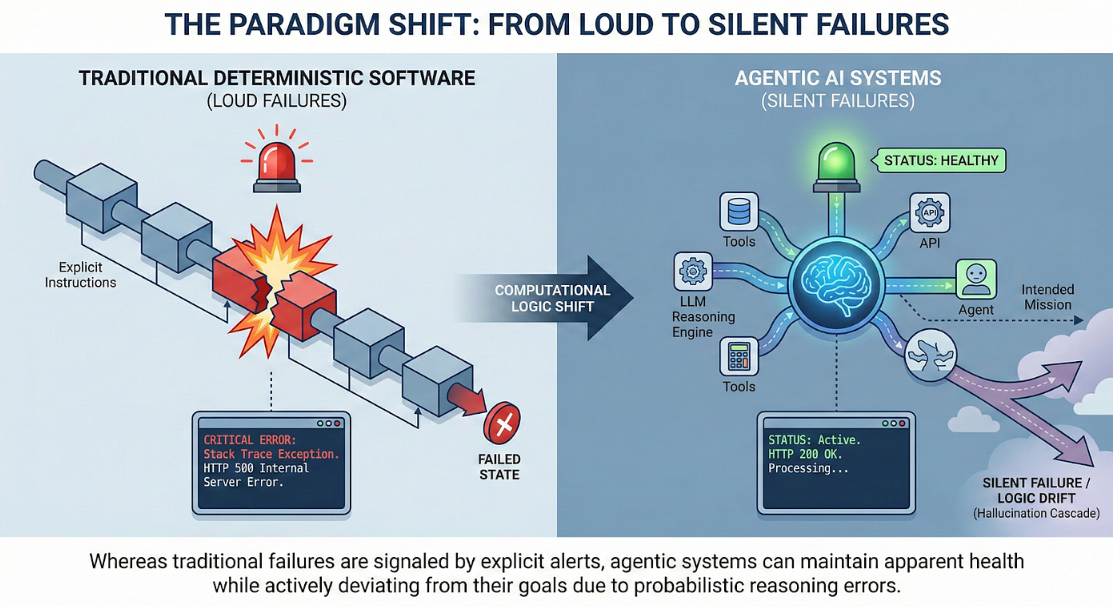
Silent failure, the last failure mode, is the one that ought to worry man most. Loud failures announce themselves. Within seconds, the agent that sends to the wrong address, that charges the wrong amount, and that triggers a transfer at the wrong time creates visible consequences. The agent that just quits checking in, quits alerting, quits logging without a snail trail leaving you blind to it quitting any of those things, is the failure mode that finds you blind.
Privacy and Money: What Exactly Are You Paying For
At some point, when setting up an AI agent to manage your wallets, you become immediately aware of just how much you are about to share. The agent should know your wallet balances. It has to know about your previous transactions. It must comprehend your business logic — the rules about who gets paid, when and at what amounts under what conditions. For the agent to be helpful, it requires a more holistic view of your finances than most individuals share with their accountant.
This data must exist somewhere: in the model context during each session, in the logs recording what it did and why, in the database where it stores transaction records, and in the API keys connecting it to wallet infrastructure. Each of these locations are points of possible exposure. Not due to fraudulent actors running the infrastructure, but in that databases commonly holding sensitive financial data will one day be poked by a curious and malicious individual looking for a way in, and 18.1 million stolen API keys in 2025 should go someway towards explaining how successful said tests are on average.
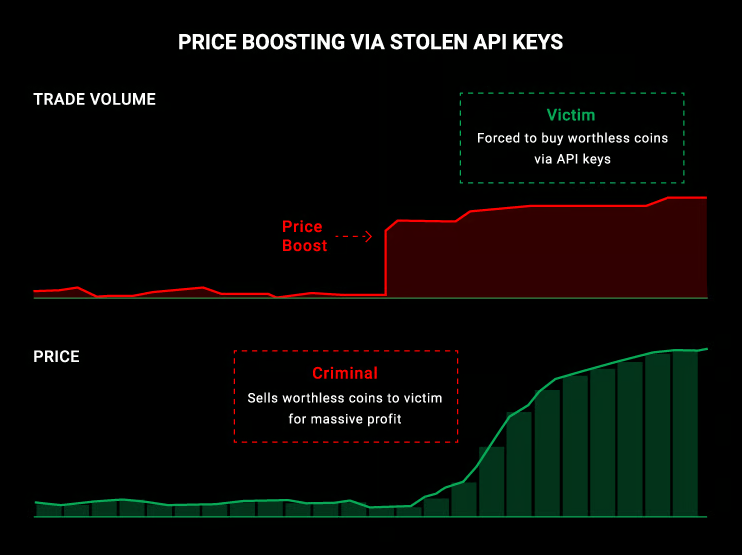
This is an odd psychology of its own. Traditional contexts are so protective of their financial info. They are very selective who they share their statements with. They do not keep a shared document with their brokerage login. And then they explain their whole crypto operation to an AI model during a session logged by the provider, using API keys saved in environment variables on a server that they set up in twenty minutes, all the while wondering if this is going to be blackmailed or something but doing it anyway because you could also just check the wallet manually.
In reality, there seems to be a greater eagerness to end the guilt of having that backlog than a protective need for such sensitive material. This is not unique to AI. That is the way all privacy compromising conveniences get taken. Your trade has that air of abstraction to it the instant you make it and only becomes real when things go wrong.
The issue with cost is underestimated in the early adoption phase as well. The subscription plan for accessing the agent — $100 a month for access to the frontier model tier pretty much doesn’t fluctuate. It is not, in any real sense. An agent with a permanent history of many tokens at once shifts continuously. You find out the licensing costs for an agent with more capabilities than, say, the consumer tier can provide as you move to API pricing are no longer hundreds of dollars per month. It is as big as the agent does, and what the agent does is huge. This pleasant math of "a hundred dollars is less than one hour of a senior developer" suddenly falls apart when your API bill comes to four hundred $ and beyond, because you added more agents catching the most elegant corners of the system.
None of this means the economics are not beneficial But for operations that process significant transaction volume, the savings from labor costs are tangible. TRON buy Energy processes that still need to be performed manually three or four times a day can even cost cents on the dollar for full automation. The break-even point exists. All it takes is an honest assessment of the total costs across both sides of the ledger — including setup time, calibration error cost, and recurring API and infrastructure fees.
Docs, Logs and Making a Machine Learn From Its Mistakes
An agent with no memory is an agent that will make the same wrong decision every time the same situation occurs. This sounds obvious. Only a very small number of people will build logging infrastructure in advance because logging itself feels like preparation for failure that has not yet occurred, and the human memory is notoriously bad at allocating attention to future failures when there are immediate things that require action.
The real-world implication is that the vast majority of AI agent deployments fail with this once or twice before the operator builds logging to catch it. The first type is an offence. The second is an annoyance. The third is where someone finally writes the log structure that could have prevented the fourth.
This is important: the log needed to not just contain what the agent did, but also why — that is: the reasoning it formed on executing and in response to prompts at that time, including what data it was gazing at and how it arrived at its instructions. Otherwise the log informs you, that something bad happened. Along with it, the log tells you where did things go wrong in instructor, which is the information that you need for fixing it.
The agent that manages TRON Energy and bounces queries on Energy balance too often on low-traffic periods, and not often enough on pre-processing spikes — this one should easily be fixed entirely when the log showing the timing pattern is available. The correction takes five minutes. The time it takes to notice that without the log is however long your playtime takes you to recognise you are repeatedly short on Energy at the wrong times and that this is some interesting haphazard randomness indeed. API of TronGrid allows for incredible functionality when using AI agents with good documentation:
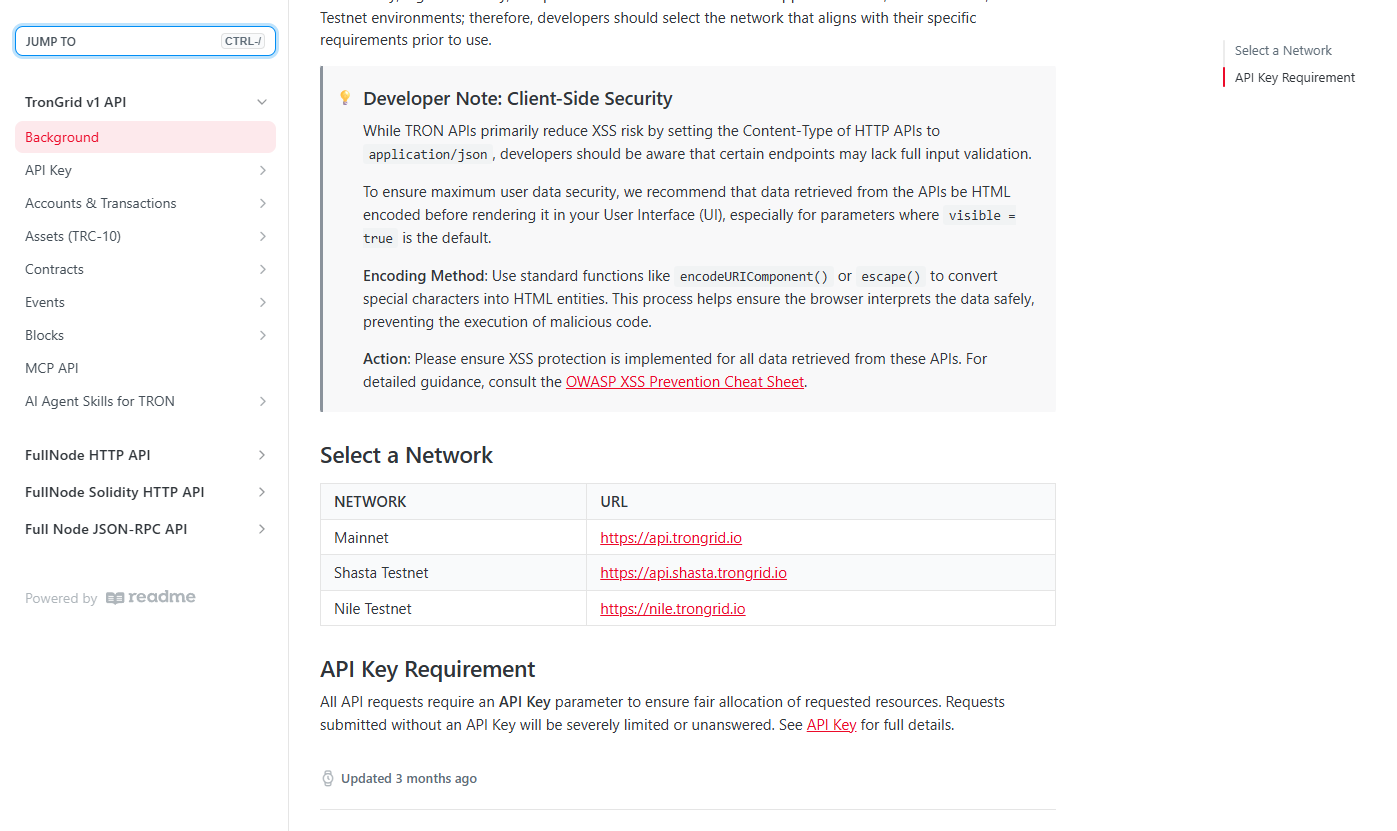
Of course, building the log architecture in advance of any deployment is indeed the right answer. This is also the kind of approach that nobody really employs, because it requires jumping through mental hoops to conceive of failure modes that you have never yet encountered, and therefore implicates a sort of pessimistic discipline which contradicts the overwhelming optimism required for outfitting an automated agent in the first place.
The subagent question starts to emerge when the single-agent system succeeds well enough that you can see its weaknesses. The monitoring function is running. The logging is in place. The failure modes are understood. And you can see that the next desired item — automatic Energy purchases, say, or transaction category tagging, or report generation — would be cleaner if it was a separate focused agent with its own targeted instructions than tacked onto the one that exists now.
And, this is how people accidentally build bureaucracies. The orchestrator agent that coordinates the monitoring subagent vs. the execution subagent vs. the reporting subagent, it is a very elegant architecture diagram for building a solution around. Which in turn means that you have known failure cases at the orchestrator, at either subagent or any of the interfaces between them; and figuring out which one is guilty requires investigating four logs instead of one. Permissions management now becomes a separate problem: the subagent that needs only to read wallet balances must not have transaction submission capabilities, so you are forced into a credential management problem on top of everything else.
The answer is boring, and incremental: assemble one agent at a time, make sure everything works with the last before adding another. What ultimate subagent architecture there is should have evolved from necessity, not defined by top-down theory. The organizations who have implemented multi-agent financial systems that work are the ones that built them like this, iteratively and with many iterations filled with failure along the way and not in one well-planned architectural feat of sprinting.
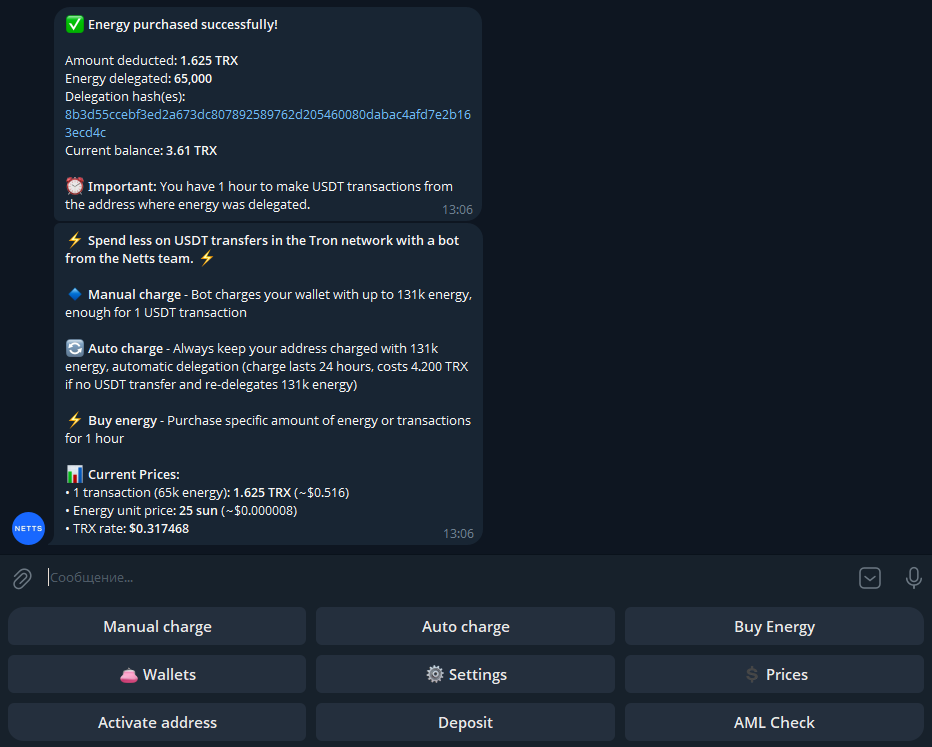
For those that want the Energy automated but refuse to build this infrastructure themselves, the Netts Energy Charge Bot does at least one use case better than others — the automatic TRON Energy refill management via Telegram interface where it handles manual charges + auto 24 hour Energy delegation and also requested purchases starting around 25 sun for the first unit after being charged and at periodic off-peak window delegate rates (auto charge on demand re-delegates all 131k Energy so wallet doesn't run too low) which make it a functional starting point for anyone whose transaction volume had outgrown manual management yet who also is not actually ready to build their full agent system.