BlackRock vs. Grayscale: The Lawsuit That Unlocked Wall Street’s Bitcoin Door
Grayscale opened the legal door for spot Bitcoin ETFs, but BlackRock’s IBIT showed who could win the commercial fight afterward.

When two large dirty hippos fight, the entire savanna knows about it. Water ripples, smaller creatures crawl away, and some particularly unfortunate creature that wandered up to see the educational spectacle gets trampled to death on a matter of territorial pride. This is the emotional space in which the Grayscale/BlackRock drama unfolds.
On one side stands Grayscale, crypto-native behemoth, not a bank or an ETF-native titan, and not yet a scrappy start-up. It has the advantage of having created the original institutional wrapper for Bitcoin exposure in America, the Grayscale Bitcoin Trust (GBTC). For years it had a virtual monopoly on the product, and it capitalized on that dominance, securing a strong if particular clientele. Grayscale’s losses were also defined, as GBTC’s structure – while offering a welcome institutional alternative to direct crypto custody – did not allow for instant redemptions and therefore routinely traded at a large premium or discount to NAV, depending on supply-demand dynamics and the overall outlook for Bitcoin. Grayscale thus walked out of the ring holding the belt but with a broken nose and a gruff jaw-line, the corner players shouting at the referees about the old days.
The other side belongs to BlackRock, Wall Street’s answer to the crypto challenge. BlackRock did not need crypto to be important – it already was. The firm’s iShares brand, institutional distribution capability, advisor relationships, model portfolios, money, risk management tools, and name recognition provided it with an unrivaled war chest to enter the fray. BlackRock’s winning position was defined by inevitability: it had the resources, reputation, and, most crucially, the timing to jump on the bandwagon once the asset class stopped being fringe. Its losses were measured in the long tail of the crypto-native ecosystem and the accusations of regulatory procrastination from the crypto community. Both hippos are dirty, and neither is noble. Grayscale wanted to change the rules because it did not want to lose assets and income, while BlackRock wanted to dominate the ETF space at the expense of institutional custody.
Somewhere on the savanna’s edge, there is Jeff. Jeff is not stupid. He knows what he is doing. He listens to podcasts, reads the 10-K, watches the discount to GBTC’s NAV, and pays attention to the lawsuit. He talks to his broker and thinks of himself as an early adopter, a visionary, someone who uses his brokerage account not as a tool but as a statement. Jeff knows that GBTC used to trade at a premium – he probably even thinks he profited from the long-dated options he bought at the height of the discount. He knows that a Bitcoin ETF approval will make crypto a proper asset, that the price will go up, and that he will make money. But he is not a trader – Jeff buys and holds. He buys options when he feels like a contrarian but mostly buys Bitcoin when he buys anything – and always pays attention to the fine print. Jeff buys GBTC when he buys Bitcoin because it feels safer – until the price drops, and he needs to hedge. Jeff is not wrong about any of it, and he will be very, very wrong about all of it.
Why the Hippos Have to Fight
The reason the two hippos have to fight can be understood if we rewind the clock to 2013, when Grayscale launched the GBTC. The product was innovative, at least from today’s perspective – accredited investors would buy shares directly from the company in exchange for a subscription fee, with shares becoming publicly tradable on the OTCQX several months after subscription. For years, GBTC shares traded at premiums of 30-40% against the value of Bitcoin underlying them. This created opportunities for arbitrage – investors buying shares directly from Grayscale at NAV, waiting for the lock-up period to expire, and selling the shares at a premium. The arbitrage was facilitated by institutional demand for crypto exposure, which could not be satisfied any other way.
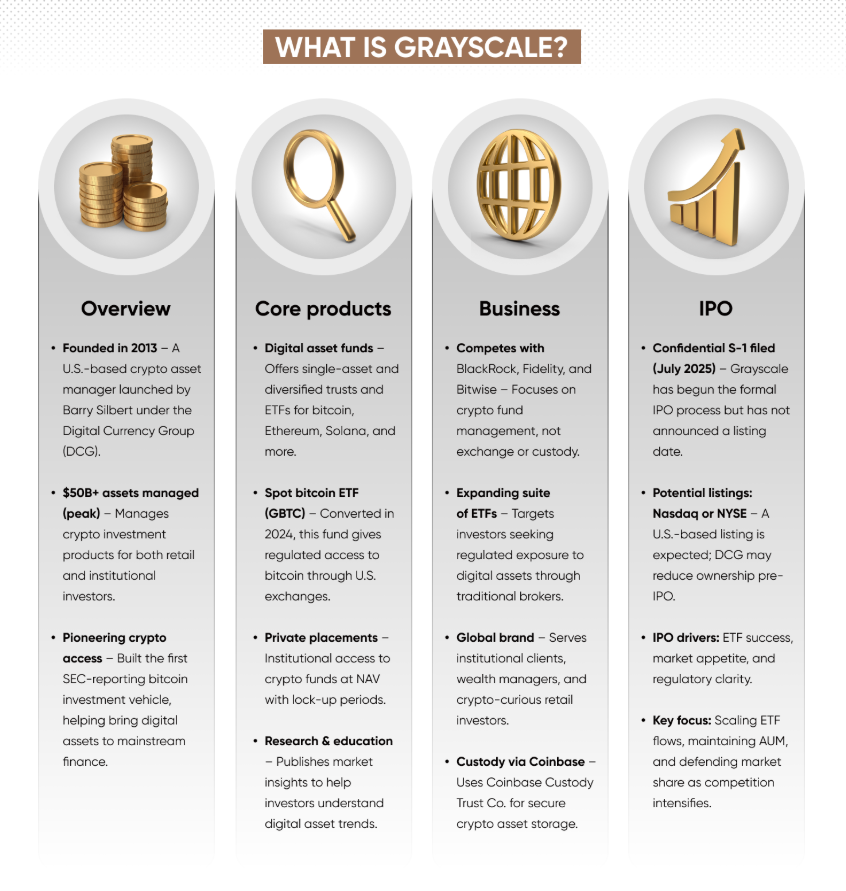
The trust was, at the time, the most convenient way to buy Bitcoin, as it was available on any brokerage that chose to list it. It could be held in certain retirement accounts, including 401ks, and served as an alternative to direct custody for large institutional players. The demand was there, and it drove the premium – the bigger the demand, the more shares the company had to issue beyond the supply locked in the initial subscriptions. The arbitrage was easy, and Grayscale had no problem facilitating a larger supply, as the company profited from the demand.
The situation was turned upside-down in early 2021, when the dynamics shifted, and the shares’ premium turned into an equally substantial discount. The demand evaporated, shares changed hands at significantly lower prices than the value of the underlying Bitcoin, and those buying shares now could not arbitrage their way to higher profits. The discount persisted, exacerbated by the difficulties in the crypto lending market, the mass insolvency of crypto creditors, and the inability to short Bitcoin to close the arbitrage. It took severe market stress, which hurt everyone to close the discount – first, as Grayscale Bitcoin Trust’s value dropped, but also as the crypto leverage industry went bankrupt.
The most obvious reason for Grayscale to sue the SEC and fight the spot ETF ban was Grayscale’s own survival. If the GBTC converted into a spot ETF, the creation/redemption mechanism would close the discount and allow all current shareholders to exit at roughly the value of Bitcoin. It would also help Grayscale retain its institutional market share while capturing a small percentage of every ETF trade in fees. It would secure its legacy as the original crypto custodian and continue its slow bleed of money and patience in hopes of regulatory change and market shift. The more abstract reason for the lawsuit is no different from any other reason in crypto – one side wins, and one loses. And at the moment when everyone is losing, the loudest one, Grayscale, has the determination and resources to win.
Why the fight was necessary can be understood by studying the SEC’s objections to the Grayscale Bitcoin Trust spot ETF conversion application. The reason for the SEC’s resistance to any Bitcoin ETF, including Grayscale’s, has always been the same – the agency has concerns about market manipulation and the ability of exchanges to regulate manipulators. The SEC’s stated reason for not approving any spot Bitcoin ETFs was their belief that “the Exchange’s proposed listing would not have an appropriate surveillance-sharing relationship with a regulated market of sufficient size and scope.” This was despite the fact that the SEC approved several Bitcoin futures ETFs, which track Bitcoin prices via futures contracts on the CME.
The simplest reason for Grayscale’s objection to the reasoning is that Bitcoin futures prices are effectively Bitcoin spot prices, and the regulators have no issues with Bitcoin futures products, which are much more complicated and volatile than spot ETFs. The more tangible reason for Grayscale’s objection is Grayscale’s ability to survive – as the company continues to lose money on the trust, the fewer the investors are willing to hold the company’s shares due to fears of dilution, redemption restrictions, and potential lock-up. Grayscale needed the approval to keep the trust from collapsing under the weight of its own liabilities.
The lawsuit was filed on June 29, 2022, in the D.C. Circuit Court by the company’s legal team, which has since then mustered a credible if not spectacular team of counsel, including former solicitor general Donald Verrilli. The litigation strategy was relatively straightforward – using the petition for review as an opportunity to pressure the SEC into approving a spot Bitcoin ETF, which the agency would have to do if the court found their reasoning in the June 2022 decision irrational.
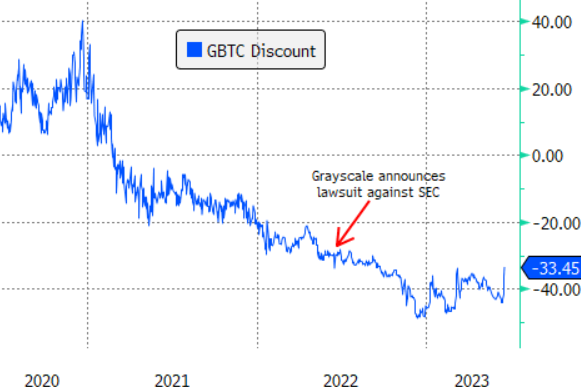
For Grayscale, the litigation had several advantages, which the company’s filing on July 8 made clear. First, it secured an opportunity to continue pressuring the regulators on a public forum, which helps both in building public opinion and in pressuring the agency directly. Second, the court’s finding of arbitrariness (should it come) would facilitate the closure of the discount, helping both the company and its shareholders. And, in the broader context, Grayscale wanted to assert its role as a crypto-native defender, which better positioned the company to continue its efforts in the court and the political arena. While Grayscale sued the SEC, its shareholders were still in the unenviable position of having to pay substantially higher prices to acquire Bitcoin exposure. In the best-case scenario for the company, the discount would disappear entirely, thus removing one of the primary sources of shareholder complaints.
For the SEC, the reasons for the June 2022 were similar to those motivating the Grayscale’s objection to it – the agency was in a position of having to choose between admitting that their past behavior was irrational or damaging to the markets by attempting to keep the Bitcoin spot ETF barred. The most obvious reason for the SEC’s decision was the agency’s concerns about the Bitcoin market’s vulnerability to market manipulation. By refusing to approve any spot Bitcoin ETF, the SEC hoped to keep the broader Bitcoin markets – including Bitcoin futures and leveraged products – inaccessible to Main Street investors. The agency wanted to avoid the appearance of having failed its duty of protecting the investing public by, essentially, allowing manipulators to manipulate it.
Then, one day, BlackRock entered the river.
That mattered, because it changed the dynamics in the room. Prior to that, applications for a spot Bitcoin ETF from the likes of BlackRock still sounded, to many outsiders, like crypto companies begging the SEC to change its mind. By bringing the request from BlackRock, one of the most well-established names in the asset management industry, it almost sounded as if the entire industry was on board with the idea that this weird asset deserved to be packaged up for the average investor. The filing didn’t fix everything, of course, but it did make it much harder for the SEC to say no.
Jeff takes this as a sign to start thinking bigger. With Grayscale in court, BlackRock at the door, the discount evaporating, and every podcast host in the land sounding smarter than ever, he buys the trust for the discount, buys Bitcoin for the propaganda, and buys some options because a man can only hear the phrase “asymmetric opportunity” so many times before he starts doing something irrational. And then, of course, the court ruling takes all the speculation and puts an official seal of approval on it.
The court’s approval of Grayscale’s motion to intervene, criticism of the SEC’s reliance on the alleged market manipulation concerns as the primary driver of its decision, and the overall wording of the opinion all suggest that the Court believed that the SEC was “arbitrary and capricious” in its decision to reject the Grayscale Bitcoin Trust’s registration. The Court’s opinion does not formally approve a spot Bitcoin ETF, as this responsibility still belongs to the SEC, but in the short term, it removed one of the roadblocks preventing these products from being launched, namely the SEC’s ability to reject them on the grounds of market manipulation concerns.
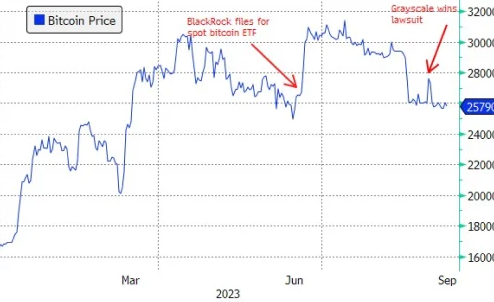
For Grayscale, it was yet another victory in its multi-year battle with the SEC, which the company wasted no time capitalizing on, filing a notice of appeal to the entire D.C. Circuit. In the same vein, the victory was also beneficial to BlackRock, which now has fewer obstacles to entering the fray. In effect, the Court’s opinion gave both companies the ability to move forward with their plans to launch spot Bitcoin ETFs without the SEC’s interference.
And so, on January 10, 2024, the SEC approved eleven spot Bitcoin exchange-traded products in an omnibus order – the order included the approvals of Grayscale’s GBTC conversion application, BlackRock’s IBIT, and Fidelity’s application, among others – including Ark’s ARKB, the shares of which have sharply declined in recent months. Chair Gensler noted that the Commission approved the applications but does not endorse Bitcoin.
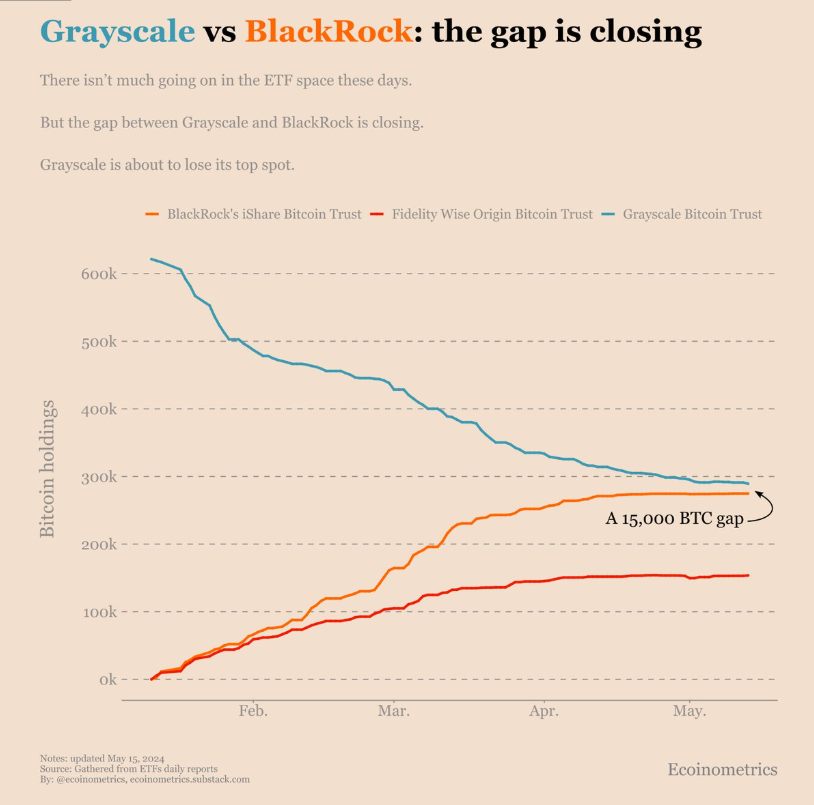
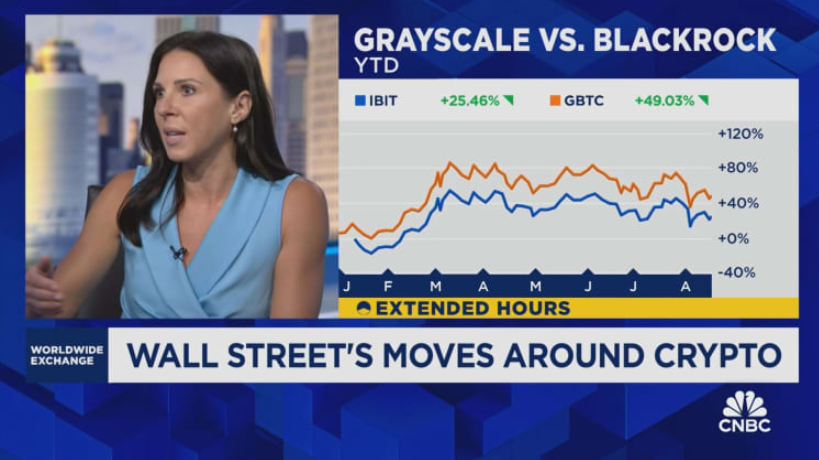
For Grayscale, the final ruling was a Pyrrhic victory, as the company now has to reckon with the fact that even though the SEC approved the Grayscale Bitcoin Trust’s conversion to a spot ETF, its conversion offering has little to differentiate it from BlackRock’s offering, save for the much higher fees – 1.5%, as compared to 0.25% in IBIT. In effect, Grayscale’s ability to retain its institutional Bitcoin custody duopoly is now in question, as the company’s shares will soon stop being the preferred vehicle for institutional exposure to Bitcoin. The final blow for the company was the long-dated options purchased by its shareholders, which will most likely expire worthless in the near future.
For BlackRock, the SEC’s final ruling is a confirmation that they picked the right side of the conflict and an opportunity to capitalize on it – the company’s institutional custody offering is significantly more competitive than Grayscale’s, and the SEC’s final approval of the spot Bitcoin ETFs will provide the company with significant tailwinds in its efforts to capture a meaningful share of the institutional Bitcoin custody market. For the SEC, the final ruling is a mixed bag – on the one hand, the approval of the eleven Bitcoin spot ETF applications ensures that the Commission continues to fulfill its duties to protect the investing public, even as it continued to oppose their introduction for most of the last year. The trading of the newly approved Bitcoin spot ETF shares began on January 11, 2024 – the Grayscale Bitcoin Trust’s shares began their reign as the institutional Bitcoin custody ETF, BlackRock’s IBIT debuted on the Nasdaq, and Fidelity’s FBTC – on the NYSE. The markets welcomed the news, and institutional investors were the first to take advantage of the opportunity, buying up the newly available shares.
Now the long-awaited reckoning begins – and it is not nearly as pleasant for Grayscale as the company expected it to be.
Specifically, Grayscale is now forced to reckon with the fact that the market has spoken, and institutional investors want BlackRock’s IBIT, not Grayscale’s GBTC. The company’s shares are now much more expensive than those of its competitor, and the large-volume sellers are much happier to sell their Bitcoin to BlackRock than to Grayscale. In effect, the company finds itself in a much worse position than it was before the Court proceedings began – as evidenced by the fact that the shares of GBTC, which used to trade at a premium to the price of Bitcoin, now trade roughly at the price of Bitcoin – several days after the SEC’s final approval of the conversion.
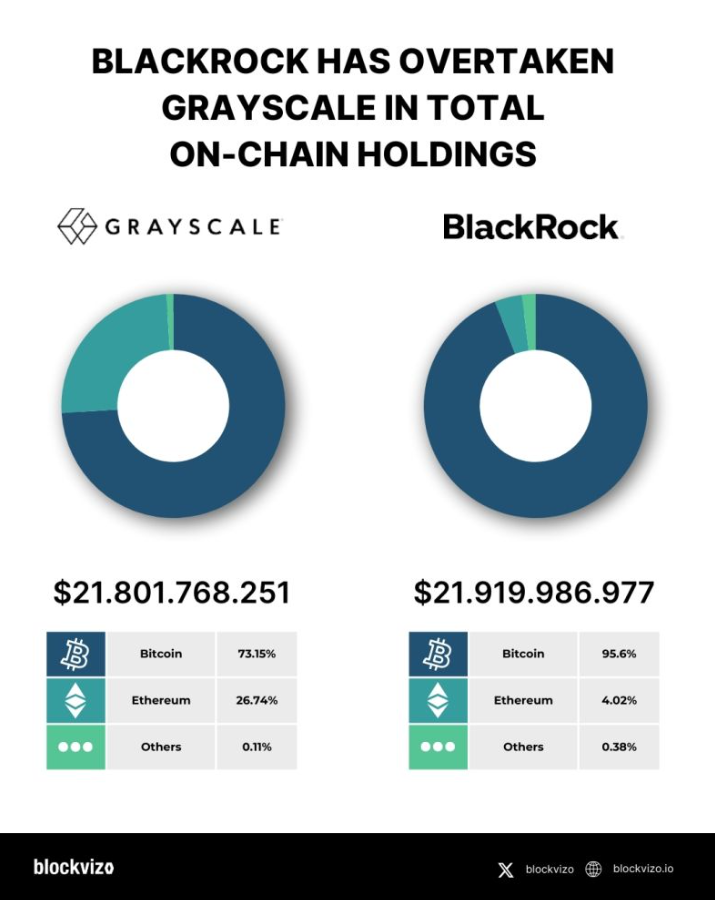
For institutional investors, the choice between Grayscale’s GBTC and BlackRock’s IBIT is now a no-brainer. With IBIT’s significantly lower fee, it would make sense for large investors to move their assets to BlackRock, which would put additional pressure on Grayscale. For the small but vocal group of arbitrageurs, the news of the ruling is also a blessing – they can now close the discount and profit from their efforts. Large institutional investors, including those who have been long the GBTC and suffered significant losses due to the discount, can also unwind their positions and recoup some of their losses. Cost-conscious investment advisors can recommend IBIT to their clients, as it is significantly cheaper than GBTC. Finally, the bankruptcy courts across the country will begin liquidating the assets of various crypto creditors, which adds another layer of pressure on Grayscale.
For the SEC, the aftermath consists of the realization that the Bitcoin spot ETF ban was effectively ended by the court. While the agency retains the ability to renew its opposition to spot Bitcoin ETF in the future, it now finds itself in the unenviable position of having to approve eleven Bitcoin spot ETF applications. The SEC will need to update its website to reflect the new reality of the Bitcoin market, which involves the Bitcoin spot ETFs. The agency will also have to ensure that its advisors understand that the Bitcoin spot ETF approvals do not constitute an endorsement of Bitcoin. In effect, the SEC finds itself in the uncomfortable position of having to update its messaging around Bitcoin in light of the recent developments.
Jeff Gets Stomped
Jeff is not stupid – he knows what he is doing. He listens to podcasts, reads the 10-K, watches the discount to GBTC’s NAV, and pays attention to the lawsuit. He talks to his broker and thinks of himself as an early adopter, a visionary, someone who uses his brokerage account not as a tool but as a statement. Jeff knows that Grayscale’s lawsuit against the SEC opened the door to a Bitcoin ETF approval, and he is glad to have bought GBTC at the height of the discount. He knows that a Bitcoin ETF approval will make crypto a proper asset, and he will make money. Unfortunately for Jeff, markets are not school exams, and there is no partial credit for knowing.
Jeff buys GBTC late – right when the easy money had already been made by everyone who followed the podcast he listens to. He tells himself that he is still early because the people on social media say so, but it is not true. He buys Bitcoin into the approval hype, assuming that it will drive the price higher and allow him to close his options trades early. When the ETFs launch, he hears about Grayscale’s shareholders voting to close the discount, and he sells some of his GBTC – but it turns out the tax implications and opportunity cost are not worth it. He buys some IBIT because everyone says it is obvious, but the timing is bad. He buys some Bitcoin spot at the higher price because BlackRock’s inflows look unstoppable, but he sells when a minor correction takes out his stop-loss. When the ETF complex has finally matured into a proper institutional product, Jeff turns out to be someone who thought he knew what was happening but turned out to be wrong.
This is the price to pay for being a small animal in the savanna, where only the biggest and loudest ones – like Jeff – survive. Grayscale and BlackRock are not interested in Jeff’s survival or prosperity – they want the market share and the institutional custody, and they are willing to fight for it. The SEC is not interested in Jeff’s opinions or financial future – it is focused on fulfilling its mandate of investor protection while avoiding liability for its actions. Market makers want the spread, arbitrageurs want the discount to close, investment advisors want cheap products, bankruptcy courts want their fees, and the general investing public wants the easiest way to buy Bitcoin. The only person who wants Jeff to survive is Jeff – but he turns out to be in the minority.
In conclusion, Grayscale wins the lawsuit that makes the Bitcoin ETF approval inevitable, but BlackRock wins the ensuing competition for the institutional custody. The SEC wins the war with the court but loses the battle for the public’s perception of Bitcoin. Institutional investors win the opportunity to buy cheaper Bitcoin exposure, while Grayscale’s GBTC shareholders win the opportunity to sell at roughly the value of Bitcoin – but the market share leaves Grayscale with little to cheer for. Jeff wins the opportunity to reevaluate his investing decisions but ends up losing money on the trades he thought were smart.
It is all very exciting if you are Jeff – seeing the SEC lose the court battle, watching the Bitcoin price climb after the ETF approval, feeling vindicated that your early purchases of GBTC were right. But it is much better if you are not Jeff – seeing the Bitcoin ETF competition as an opportunity to optimize your trading, not as a sign of your investing genius.
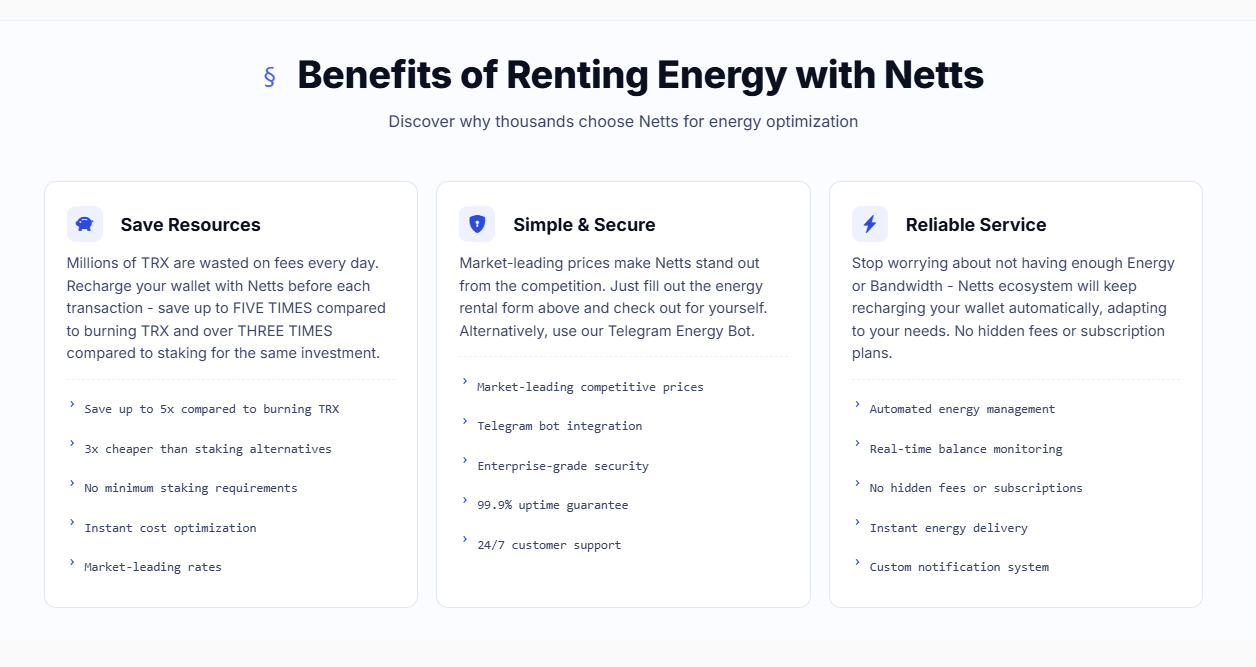
It is much better to focus on the tools that can help you, like Netts.io’s TRON Energy Market, where TRON users can rent Energy for USDT transfers and enjoy the convenience of a TRON Energy Market that provides a direct way to buy TRON Energy topup, find cheap TRON Energy, and send USDT cheap without having to stake or freeze funds – all of which is much more reliable than placing your personal capital in danger in a lawsuit between two Wall Street giants.