Are NFTs Still Alive?
NFTs lost the party, not the plumbing: tickets, passes, and game items still move while the old name stays radioactive.
Every few months someone claims that NFTs are dead with the certainty of a coroner who has never checked the patient's pulse. There's a satisfaction in making such a declaration. It appeals to those who never purchased a cartoon animal. It also suits people who did buy one and then needed a story explaining why having lost money was in fact a sign of wisdom. Death offers a simple and clear narrative. Markets dislike simple and clear narratives, which is why the dead body continues to twitch.
The technology itself did not disappear, rather the right to generate public excitement about it did. When the party was over, the influencers changed into different costumes and the term "NFT" then became radioactive waste in respectable circles. This is a case of a reputation event, not a technical funeral. Even amid the embarrassment, tokens which refer to unique records continued to be traded, newly minted, fail, and keep on quietly supporting things that no longer even advertise themselves as NFTs.
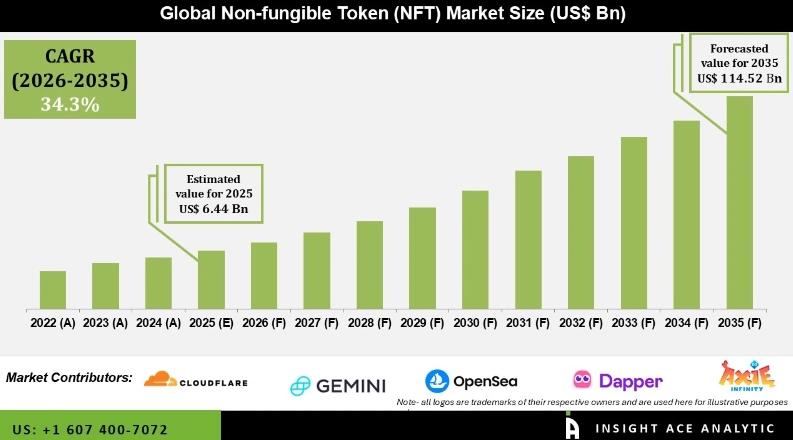
If you ask a casual viewer what the market's worth is, they'll say it's about zero, since that figure reflects the current atmosphere. The surprising thing is that the valuations for the NFT category still remain in the low billions, depending on how the tracking tools divide up the chains and collections — not the kind of money seen in the boom years, but not exactly a graveyard either. Having a value of a couple of billion dollars following a cultural rollout is a rather odd form of survival. It shows that somewhere, people still want the receipts, still pay for access, and still regard certain tokens as inventory rather than as jokes. On some mornings the category's value is closer to one and a half billion; on other occasions it rises to somewhere in the mid-single billions. What the exact figure is is of less importance than the overall pattern: it's small enough to be ridiculed but large enough to deny the label 'dead'.
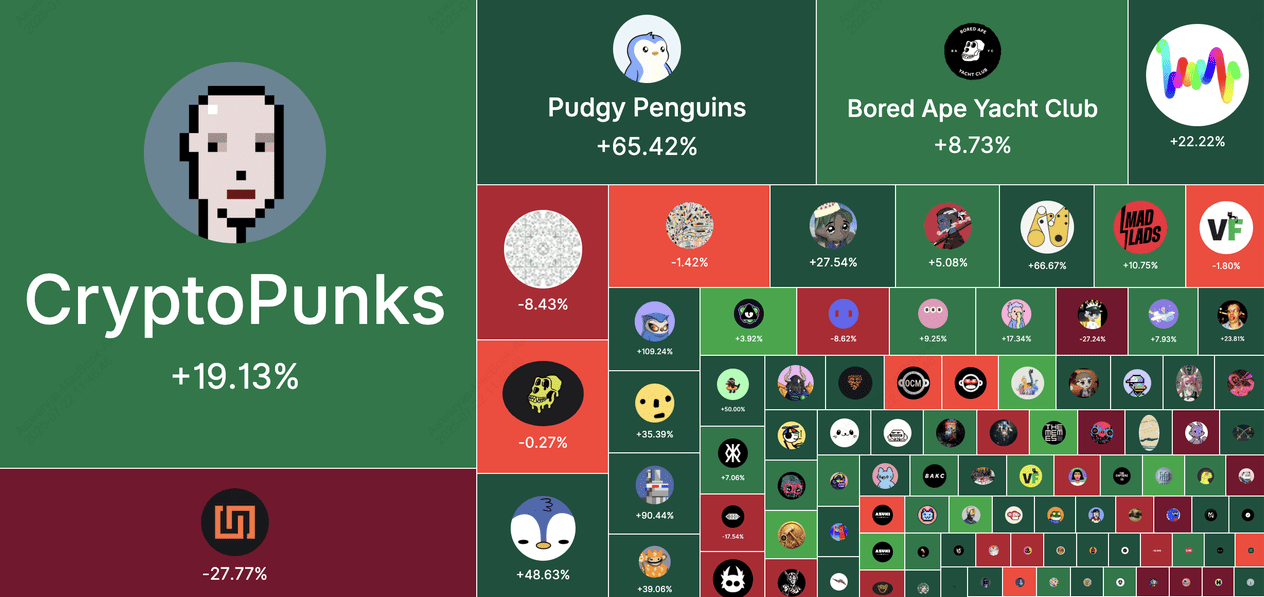
Annual sales are only a small part of what they were in the carnival years, a fact which is stated over and over again by those people who have never had any liking for the carnival. All right then; even a fraction of a historic mania can still be greater than whole honest industries. The more pertinent question is not whether the chart humiliates 2021. The more pertinent question is why money keeps appearing after the applause has changed into mockery.
Why the Crash Felt Like Moral Judgment
Booms don't simply vanish as a result of mathematical reasons; they fade away when their emotional supply is exhausted. NFTs provided a rare blend: status, chances of winning a lottery, a sense of belonging to a tribe, and the idea that taste itself could be turned into money. People were not merely purchasing images; they were buying a place in a room where screenshots counted as identity. Once the room was empty, the images stayed behind, and all of a sudden everyone could see how thin the story had been.
The accident occurred since too many incentives all pointed in the same direction. The creators wanted easy liquidity, the collectors wanted a return without admitting that they were gambling, the marketplaces wanted fees, the celebrities wanted relevance, and the funds wanted a story which would justify buying jpegs with other people's money. No one in that chain was responsible for considering whether demand would survive boredom. Boredom came as planned and then brought others with it: higher interest rates in other places, people with tighter wallets, and the sudden social stigma of being viewed as the person still struggling with the floor prices.
There too was a cruelty built into the early culture of the format. The early winners required late buyers, and late buyers in turn needed buyers who came even later on. When the music finally ceased, the last people dancing realised that the idea of a 'community' had merely been a temporary arrangement formed to cope with loneliness and FOMO. They then felt ashamed; and shame is a strong emotion. Because of this shame, people pretended that such an asset class had never existed, even though their wallets still contained the receipts. Families picked up on this at the dinner table, and friend groups picked it up in silence. The public discussion within the market turned into a contest to appear as little gullible as possible. In this atmosphere, even honest holders began to talk as if they were skeptics, since skepticism had become the only socially safe manner to present oneself.
The scandals sped up the moral narrative. Wash trading increased the volume until volume ceased to have any meaning. Rug pulls showed newcomers that mint buttons can be used as weapons. Celebrity mints, like milk, spoiled and caused the public to link NFTs with embarrassment. Right-click-save jokes caused more harm than any whitepaper could undo, since jokes spread more quickly than nuance. The public did not realize that unique tokens are difficult. The public instead decided that the entire concept was a hoax aimed at people who deserved to lose.
To present the moral aspect in that way was unfair to the more reserved builders and also served the purpose of having a villain for everyone who needed one. Unfair narratives continue to influence behaviour. When an object becomes a symbol of humiliation, only two types of people will openly continue to handle it: those who have nothing left to lose socially and those who never really cared about social approval at all.
How the Body Kept Moving Anyway
In the world of crypto, death generally results in liquidity exile. NFTs didn't suffer a complete exile; instead, they were downgraded. Speculative profile pictures lost their function as a form of social protection. Gaming inventories, membership passes, ticket-related items, loyalty badges, and other kinds of identity tokens continued to find buyers who were less concerned with the floor-price show and more interested in gaining access. Money still changed hands. It just stopped pretending to be photographed.
People still earn money from NFTs, but the nature of that money has changed. Instead of the flashy figure who required a timeline audience, we now have more reserved operators: professional market makers on dedicated platforms, collectors who regard particular blue-chip NFTs as illiquid works of art with bad behaviour, studios that offer cosmetics which people in fact use, and secondary traders who take advantage of thin markets just as traders always do. Profit has not vanished. Spectacle has.
That psychological aspect is important. For spectacle businesses people have to clap, while for utility businesses people have to need something. Since need is less intense than applause, the charts appear modest. Modest charts can still support households. The industry does not want to admit this because modesty is not as effective at triggering funding rounds as mania is. Venture narratives favour rockets. Businesses that are in operation prefer repeat purchases. After the crash NFTs look more like items in the second category donning the tattered jacket of the first.
There is also the invisible user — the key figure in this chapter. When someone attends a concert they get a ticket through an app and never come across the term blockchain. A game gives out an item which can be traded at a later date, describing it in terms of ownership rather than minting. A brand releases a membership pass that is similar in appearance to a coupon but uses better cryptography. These people are using NFT features just as drivers use engines without needing to know anything about thermodynamics. The format works best when it ceases to demand that people recognise it.
At the same time, public opinion is still like contaminated soil. For many people NFTs still mean bored apes, broken friendships, and that man at dinner who just wouldn't stop talking about gas. Although this negative view is incomplete from a technical point of view, it makes sense in a social context. People prioritise their dignity over their assets. The way to repair the situation isn't to tell the critics they're stupid. It's to offer products that don't require the customer to join a church. When a token hides behind terms such as "ticket", "pass", "skin", or "certificate", an emotional cost is incurred. Companies have learned this from conversion charts, not from philosophy seminars. Nowadays many regard "NFT" as merely backend terminology, just as serious fintech avoids using the phrase "distributed ledger" when talking to grandmothers.
The retreat in question is not simply a sign of cowardice; it is fear-driven market research. Because of their fear, the builders were led to believe that the brand had been tainted, which is why they retained the equipment and concealed the name. Critics regard this as deceptive, while practitioners see it as a sign of maturity. Both views may be correct. Technology which has to use a euphemism in order to exist is not dead; it is radioactive and useful.
Regulation Arrived Late to a Party Already Over
Regulators do not usually rush into new things when such things are in vogue; it is only when the aftermath has caused injuries and generated headlines that they take action. Since unique tokens remained in a state of legal uncertainty for years, this was because the idea of uniqueness is unlike that of a security and uniqueness can also be used as a disguise for a security. In the case of large collections which have interchangeable characteristics, fractional ownership interests, and promises of investment, the obvious question arises: if the market regards them as interchangeable wagers, then why should the law treat them any differently?
In Europe the major crypto guidelines mostly ignored genuine one-off tokens while cautioning that large series and fractional structures may lose the special protection they have. This is not really a endorsement of art but rather an acknowledgement that labels are inexpensive. The advice which examines whether the tokens in a collection act as substitutes can be put simply as an admission that cultural factors can override token IDs. In other areas, enforcement still relies on the traditional approaches relating to fraud and securities — that is to say, on who sold what promise to whom. The actual effect on regular users is therefore inconsistent: in some marketplaces things become more strict, some issuers take on more legal advice, and some projects just steer clear of regions where the cost of complying exceeds the amount they receive from minting.
Regulation cannot bring a culture back, though it can affect who is willing to stand by the dead body. Institutions have a preference for frameworks, and frameworks themselves favour boring use cases. It is in such boring situations that NFTs appear least like a joke and most like infrastructure. Banks and brands don't want to see another ape avatar cycle; what they want is transferable credentials, controlled secondary markets, and audit trails which cause lawyers to breathe more slowly. The irony is obvious. The thing that made NFTs famous is also what has made them radioactive. The very thing that gives NFTs their durability makes them boring.
Dullness also has its victims. Those artists who had once needed the carnival's attention now have to compete in a more subdued area. Speculators, who previously relied on a constant flow of new people, find that utility buyers do not switch with the same religious fervour. Marketplaces which had been running on mania fees now learn to get by with narrower spreads. Survival does not mean fairness. Survival simply amounts to refusing to disappear.
Tradeoffs, Niche, and the Technical Bargain
An NFT is a persistent pointer; it indicates that this token is different from all the others. This quality is valuable in cases where uniqueness is important — such as in the situation of a seat, a license, a collectible with a clear provenance, or an access right which should not be copied infinitely. But it becomes costly and cumbersome when what is unique is merely for show and the actual product is one of herd behavior.
The compromises involved in the format are by no means mysterious, even though people keep having to discover them the hard way.
1. As long as someone owns the website through the blockchain the website itself may still be there, but the media file could remain on a server that eventually dies, leaving you with a splendid link that leads to nothing.
2. At first, royalties seem to be an ethical arrangement, but when the marketplaces and traders treat them as optional obstacles, creators realize that 'programmable' doesn't mean 'enforceable everywhere'.
3. In a period of growth, liquidity is a gift; but during a recession it acts as a mirror, publicly and permanently highlighting your failure in markets that are narrow.
In fact, the scandals usually occurred one level above the token standard — for example, through metadata rug pulls, malicious approvals, phishing mints, tricks used in marketplace interfaces, and cross-chain bridges that caused people to confuse "owned" with "bridged and hoping". Smart contracts didn't create greed; instead, they provided greed with a quicker means of action and a permanent record of the consequences. The token behaved in the way that tokens are known to behave and humans reacted in the way that humans do when novelty comes into contact with a glowing button.
There is also the irony relating to custody which never receives sufficient attention. While people were celebrating their 'ownership' of a file they left the approvals open as if the windows were unlocked. Although they were praising decentralization they still relied on a small number of marketplaces in order to give the asset a sense of reality. Even though they were emphasizing permanence they were directing tokens at changing metadata. It was precisely these contradictions that meant the format did not collapse and that the hangover seemed personal. The product had promised to bring adulthood but instead provided a casino adorned with poetry.
The remaining niche is practically speaking almost shameful. It involves providing proof of access, proof of purchase, proof of participation, inventory that allows people to leave a walled garden, and identity-related badges for groups that wish to have exit rights. For these purposes it is not necessary to have a profile picture in order to become a personality; instead what is needed is a database that is difficult to alter quietly. This is a more limited ambition than the idea that 'everyone will collect digital art'. The smaller the dream, the more difficult it is to destroy.
There is also a psychological aspect. Certain people are interested in objects that have the ability to remember. For example, a ticket stub recalls a particular night, a skin recalls a season of playing, and a certificate recalls a claim. NFTs carry remembering further by using timestamps and records of transfers. As to whether or not this kind of remembering is worth the fees and the social stigma is a matter for the individual user. Many of those who survived the crash tend to seem less like prophets and more like ordinary people who just enjoy having receipts — people who have learned, at a high cost, which receipts were merely performance.
What “Alive” Actually Means Now
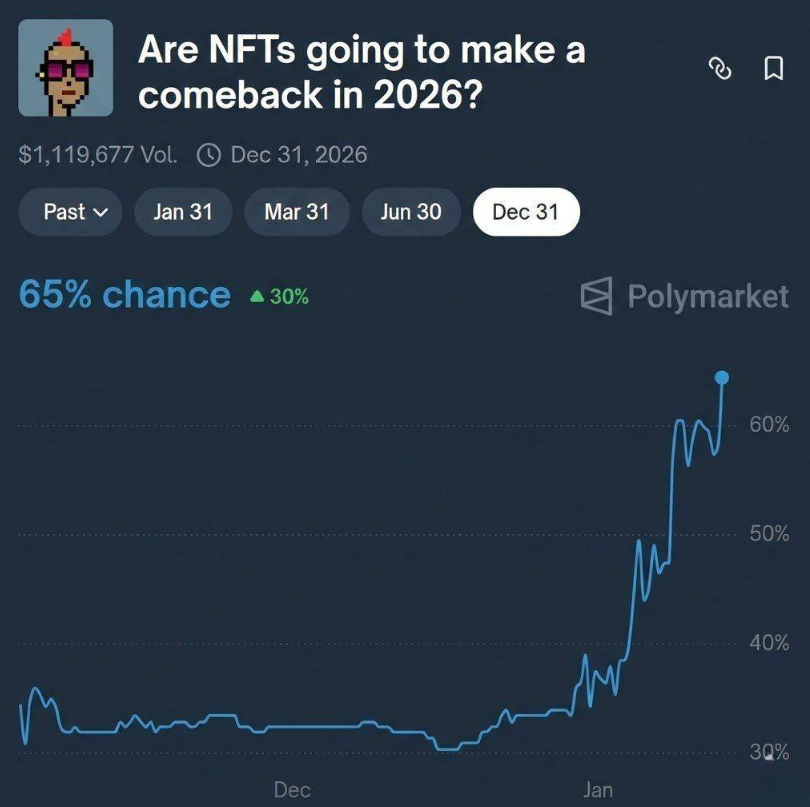
To be alive does not mean that one is fashionable; to be alive means that the system continues to redistribute money and attention even though it has changed its appearance. On this basis, NFTs are alive just as email is alive — unattractive, ridiculed during their less desirable periods, and integral to systems that would collapse if those systems suddenly had them removed. According to the standards of dinner-party prestige, they are dead enough that bringing them up still tends to earn a sigh. It is possible for both of these assessments to be true in the same week without the universe having to apologize for the inconsistency.
Crypto consists of two aspects: cashflow and status. Status has gone and cashflow has retreated. Those builders who are after status will continue to write obituaries since obituaries attract engagement. Those who are aiming at cashflow will on the other hand keep shipping passes and inventories under more friendly names since conversion is more concerned with people's feelings than with classification. Speculators who now need status will keep waiting for the next carnival. They might end up getting one. Carnivals do come back. However, they don't return for free and they don't return in the same clothes as before without some new excuse.
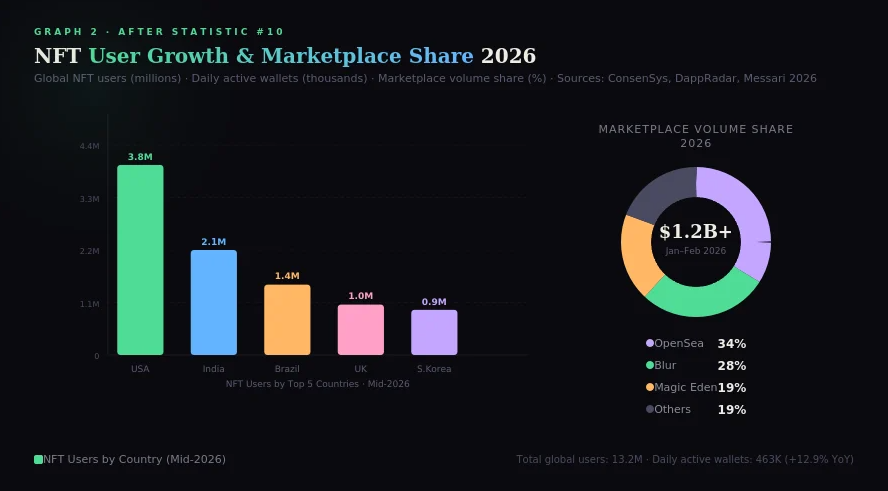
The long-term effect is educational. One generation discovered that liquidity could be merely a temporary show. A subsequent generation realised that unique tokens aren't magic; they are simply rails. Rails only become interesting when you have something to move that shouldn't be copied carelessly, and at that point they again become interesting, typically without making any apology to those who had lost money on jpeg speculation. The market that is left is now smaller, colder, and less showy, with valuations in the region of a few billion which still surprise anyone who only remembers the funeral memes. The general public still links the term with a hangover. The machines continue to produce new tokens. The smart product teams still conceal the underlying mechanics. And the traders who have never needed praise remain as before.
Are NFTs still around? Yes — in the same unimpressive way that useful infrastructure endures despite being embarrassed. The idea of their demise was something people wanted to believe. The fact that they persist, on the other hand, is something people dislike. Because of these two feelings, the tokens continue to be transferred, the strategy of staying invisible keeps spreading, and the old name keeps decaying just far enough to act as a source of nourishment for more subtle applications.
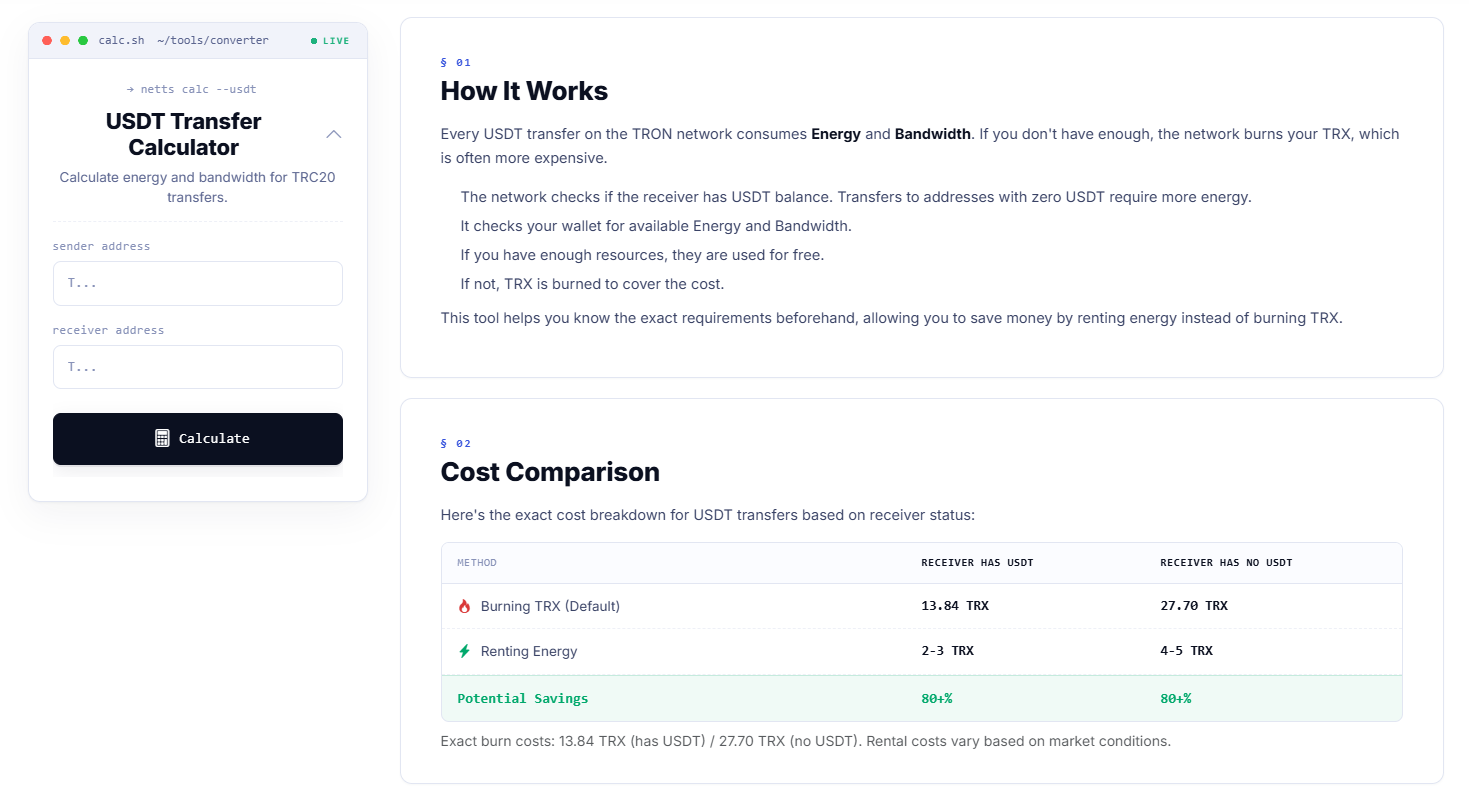
Once the collectible drama has ended and it's time for the money to be moved around as money, the unromantic habits come back: checking the best USDT gas fee before making a transfer, looking for cheap USDT fees rather than learning the hard way, and always trying to find the lowest possible USDT fee route on the rails that you actually use. The USDT Transfer Calculator on Netts.io is designed with that particular moment in mind by displaying the Energy and Bandwidth requirements for a TRC20 transfer so that you can rent the necessary resources rather than accidentally burning up your TRX.