Netts at SiGMA World 2026 and Why Go to Events At All
Netts will be at SiGMA World 2026 in Rome. See why crypto, gaming, and tech leaders meet at events.
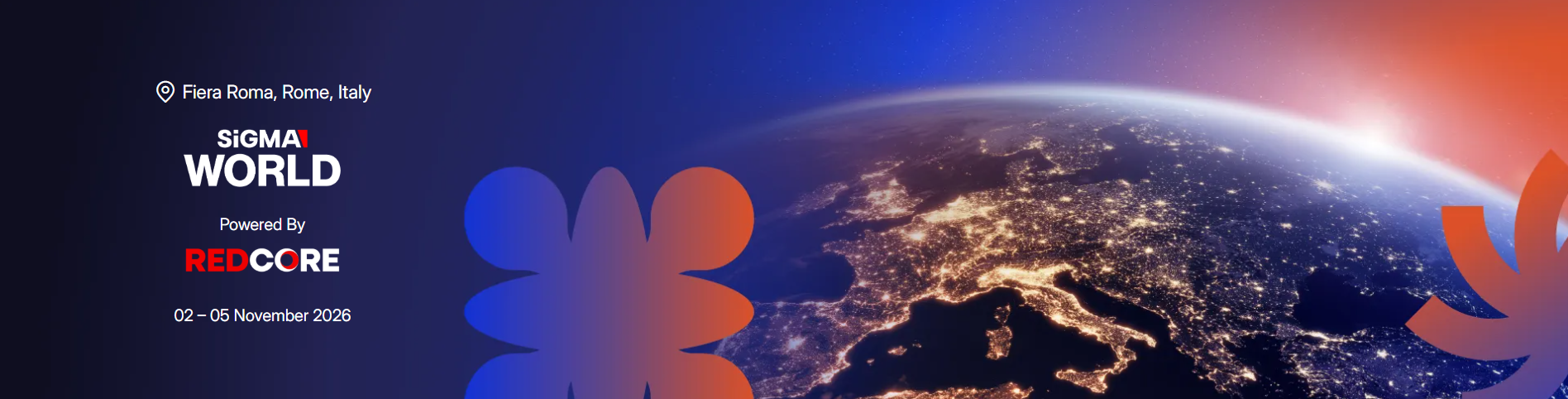
This isn't our typical article — strictly speaking, it's an announcement. Netts will be attending SiGMA World 2026 at Fiera Roma in Rome, Italy, from November 2nd to 5th — with a stand, a team on site, and setting aside a good deal of time for discussions. If you operate an exchange, a custodial service, a payment platform, or anything else that is involved in stablecoin volume and is interested in the source of its TRON resources, we would really like the opportunity to meet you there. Don't hesitate to bring tough questions. The kind of infrastructure we develop tends to draw them out, and that's something we prefer. The statistics we can boast by now is the result of such approach:

There's going to be a second, more concise reminder given nearer to the date. However, this article gives the complete details: who will be attending, the original reason for the event's existence, why conference activities are important at all, and exactly what we are offering. The straightforward answer to the question 'why attend events at all' is not the one given on the sponsorship pages; it relates to trust, to the unusual dynamics of an industry that operates online yet concludes its most significant agreements in hotel lobbies, and to the fact that certain things can only be settled in person.
So: announcement made. Now let's talk about what this whole thing is for.
Where the Industry Meets Itself
SiGMA was established in 2014 as an event focused on gaming, and as the company developed, Malta became closely linked with its history. Although that history is important, the World event this year will be held in Rome. The relationship between the original audience and the more recent areas of crypto, blockchain and AI is one that is structural, not superficial. Both online gaming and crypto have to deal with the same kinds of problems: how to move money across borders, how to prove to regulators that the flows are clean, and how to build industries which governments tend to be suspicious of. In both cases the basis is payments infrastructure and people in both fields learned their skills in grey areas before gradually taking their industries towards regulation. SiGMA's 2026 programme shows this overlap by bringing SiGMA together with AIBC, FX World and Affiliate Grand Slam, each with its own special area of focus, all under one roof.

SiGMA World takes place at Fiera Roma from November 2nd to 5th. The organisers say that the event features a four-day programme with more than 30,000 delegates, over 1,200 sponsors and exhibitors, five conference stages, and about 550 speakers. The audience includes gaming operators, their affiliates, payment processors, exchanges, custodians, and the various service companies that support them. For the duration of those four days, Rome becomes a concentrated meeting place for industries which normally only come across one another via email, licensing documents and payment channels. In a packed schedule, simply being in the same city at the same time is in itself a business advantage.
That word — density — is in fact the whole secret. An industry consisting of companies scattered throughout a hundred different jurisdictions has very little opportunity on its own to get synchronized. Conferences serve as the points at which synchronization takes place; they are the heartbeat: artificial, on a set schedule, costly, and yet completely necessary, since without them the relationships within the industry tend to deteriorate into cold DMs and slow email exchanges.
Economics of Showing Up
What is the point of paying for this? The expenses are obvious. The exhibitor packages published by SiGMA in 2026 begin in the five figures, and premium sponsorship positions cost a great deal more; further charges are added for flights, hotels, and preparation. An accountant looking at this coldly would regard the entire arrangement as inefficient and would consider the matter at an end.
When exhibitors purchase proximity, they also get the opportunity to show that their company is real, is currently there, and is ready to deal with difficult questions. It is easy to set up a website; it is more difficult to fake a team's replies in a live conversation, particularly when a potential partner is deciding whether to place trust in it with regard to infrastructure.
People go to the event in order to obtain information and access; likewise, the exhibitors take on the commitment to carry out their presentations. Each conversation at the booth serves as a real-time demonstration of the team's competence, and the questions asked by the visitors can highlight any shortcomings in the way the company describes its product. That kind of feedback can be just as valuable as the exposure gained.

For the people in charge, the idea is simple: offer access to a concentrated market. Exhibitors want to meet individuals who have both the budget and the authority to make decisions; Rome benefits from having more visitors to use its hotels, restaurants and transport services; and the fact that regulators take part shows that the industry is included in a public discussion. All the parties are there because each one has something the others need.
The format is intended to ensure that these groups remain in contact. Together with the five stages, the programme includes startup pitch competitions, awards, networking areas, dinners and other social events. The organizer is not simply leasing out floor space; it is creating a number of opportunities for people who would otherwise only meet each other online to spend time within the same network. This gives the attendees a reason to remain beyond one talk or appointment and provides exhibitors with more opportunities to meet the right people.
Rome provides an attraction of its own since Fiera Roma allows the four connected exhibitions to take place, and the city also offers a setting for discussions to go on after the exhibition has closed.
This leads us right to what we desire — and that is the reason why Netts will be standing on that floor in November.
What Netts Will Bring to Rome
Netts runs a TRON Energy rental and management service which enables companies to transfer USDT at a fraction of the cost that would be involved in burning TRX. In Rome we would love to speak to the Tier 1 exchanges and custodians regarding the compliance feature that we have incorporated into resource delegation. Netts is the only one that provides this kind of tech at this moment.
When an exchange gives us a portion of its TRX stake to manage and earn a return, the matter of the yield is straightforward. The difficult issue is the one a compliance officer will ask: precisely whom are our resources being entrusted to? Energy that ends up supplying a peel chain is not neutral; it might mean that the exchange's own stake is being used to finance another party's money laundering, and no one wants to have to explain that during an audit.

Therefore, we have incorporated the solution directly into the delegation infrastructure. The whole of the TRON blockchain is indexed in our own analytics system, which is based on ClickHouse — including transactions, addresses, the types of operations, risk labels, and AML screening results, all of which are synchronised in real time into a decision engine that is positioned between each request and each delegation. In addition to this, we keep a compliance boundary consisting of more than 28 million blocked TRON addresses: these include sanctioned entities, entries from Tether's blacklist, phishing and scam infrastructure, addresses associated with hacks and stolen funds, and our own internal abuse blocks. The sanctions screening makes use of official sources from the United States, the United Kingdom, the European Union, and Israel.

Each request for Energy or Bandwidth is checked via a single centralised deny list that is shared between the compliance layer and the resource handlers — the same policy is applied no matter what the execution path. The system is designed to be fail-safe in that if the current screening result is not available, the address is not considered safe. For public requests, blocking takes place at the Kong/Nginx edge in about five to ten milliseconds — a prohibited address is halted before the request reaches our product services. Behind our own monitoring there is an independent second opinion: Elliptic, which is integrated as an extra AML/KYT layer for large, suspicious, and randomly selected screenings.

It is important to clarify the boundaries. Netts is not suggesting that an exchange replace its own AML and KYT systems; rather, our compliance layer serves to protect both our infrastructure and the partner resources that go through it. For a custodian, it provides an additional screening stage in order to lower the risk that resources which have been delegated will end up at addresses that have already been identified as sanctioned, abusive, or linked to illicit activity.
Hallway Track
The agenda is only one aspect of what takes place at an event. During panels and keynotes, people present pre-prepared ideas, while discussions in the hallways, breakfasts, and spontaneous meetings allow people to put those ideas through their paces. It is for this kind of informal interaction that it is worthwhile to meet face to face.
The context needed cannot easily be obtained from months of remote communication, and a conversation over a cup of coffee can show, in a way that a pitch deck cannot, how a potential partner thinks. People who attend these meetings usually go home with:
1. Trust — the asset on which every serious business relationship in this industry is based and the only one that cannot endure being on a screen.
2. The kind of intelligence that competitors are actually developing, the way regulators are really thinking, and the various niche areas that are gradually becoming more popular — this is the kind of news that spreads among people rather than in posts.
3. Talent and partnerships — those random encounters which lead to hiring decisions, integrations, or the development of entire business lines — occur without anyone arranging them or planning them.
FOMO might get people to enter the room, but the valuable element is usually something that wasn't on the agenda — such as an honest objection, a spontaneous introduction, or a conversation that alters who they plan to meet next.
It doesn't follow that every conversation will result in a deal, and that alone doesn't define value. A brief meeting can show that a potential partner's needs are different from those indicated in the pitch deck before either party has had to spend months developing based on the wrong assumption.
A Calendar That Keeps the Pulse
Regarding events in general, SiGMA World in Rome is just one event on the world's events schedule. TOKEN2049 brings the crypto crowd to Singapore, ETHDenver gathers developers, and the Bitcoin Conference, Consensus, as well as the events held in Dubai and Abu Dhabi, draw their own variety of builders, investors, operators and policymakers. Each of these events has a different focus, and the various teams arrange their launches and meetings according to the audiences they wish to reach.

It is worth looking at those differences more closely since a "crypto conference" isn't simply the same event format being held in different cities. Some events aim to cover the entire industry at once, while others deliberately limit the scope to just one protocol, one technical community, or one type of business discussion. The choice makes a difference to the kind of things a visitor is likely to hear – and to the kinds of conversations they will need to prepare for.
TOKEN2049 is centred on the wider crypto market, and its attraction lies in the fact that founders, exchanges, investors, infrastructure providers, traders, and media all come together at the same event. A founder might be seeking funding or distribution; a market maker could be comparing liquidity and access to different venues; an infrastructure company might be attempting to turn a technical integration into a commercial agreement. Although the event's size brings about greater visibility, it also results in a filtering issue: if no meetings have been selected in advance, a visitor could spend the entire week picking up branded tote bags and still fail to meet the people they had come to see.
ETHDenver has a different focus. Since it is linked with Ethereum developers who are involved in actual development, the attraction lies not just in the main-stage schedule but also in the opportunity to meet people who are working on prototypes, tools, and applications. Such an event can facilitate early collaboration: a developer can locate a teammate, obtain feedback on a design, or realize that another group is addressing the same problem from a different perspective. The value is usually not about 'who has capital?' but rather about 'who can help make this work?'
Ethereum's various events also illustrate just how diverse a single ecosystem's calendar can be. Devcon, which is the global meeting place for the Ethereum community, has a more technical and community-focused nature. Devconnect has taken a different approach by gathering a wide range of people from the Ethereum community in a world-fair style, with dedicated districts and a large number of events independently organized. EthCC in Europe combines conference presentations with a big side-event programme and includes tracks covering DeFi, Layer 2, security, cryptography, regulation, and stablecoins. Although a protocol engineer, a privacy researcher, and a compliance officer may all be interested in Ethereum, they are unlikely to attend for the same reason. The specialised tracks therefore enable them to find one another without having to pretend that the entire ecosystem shares a single objective.

And for all of those and many others - the job of the organizer is to ensure that the variety of activities is useful rather than just extensive. Having a full floor on its own does not add value. It is the programs, the side events, the workshops, the pitch competitions, and the meeting spaces that give attendees a reason to move from one area to another or from one format to another. Sponsors pay so that they can gain access and visibility; speakers want an audience for their ideas; cities hope to attract visitors; and attendees want a quick way to meet people and get information. The event is a success when these different interests coincide to such an extent that each group leaves with something more tangible than a badge and a photograph.
That is the reason why it is not necessary for every event to be attended by every individual. For example, a founder who is raising capital, a protocol engineer seeking contributors, a compliance officer selecting a provider, and a payments company looking to enter a new market all have different schedules. The appropriate question to ask is not 'Which conference is the largest?' but 'Which conversations will influence the decision I really need to make?' In some cases the correct answer is the largest summit; in other cases it is a specialist workshop attended by a few dozen people who are facing the same issue.
Such events do not take the place of the ordinary work involved in building a business; rather, they serve as a means of maintaining the relationships which support the business — and, in some cases, of initiating new ones.
We take this matter seriously and should be pleased to have you attend. Should you be travelling to Rome from November 2nd to 5th, please go to the Netts booth at Fiera Roma. Take your compliance and infrastructure teams with you, as well as any questions you have regarding our address screening process and delegation of Energy. We will go over the details face to face. If you are unable to attend this time, we still hope to meet at a future event. Do come and say hello!