Political Memecoin Hangover: When the Campaign Ends
Political memecoins turn loyalty into a trade; when attention fades, buyers are left with losses and distrust.
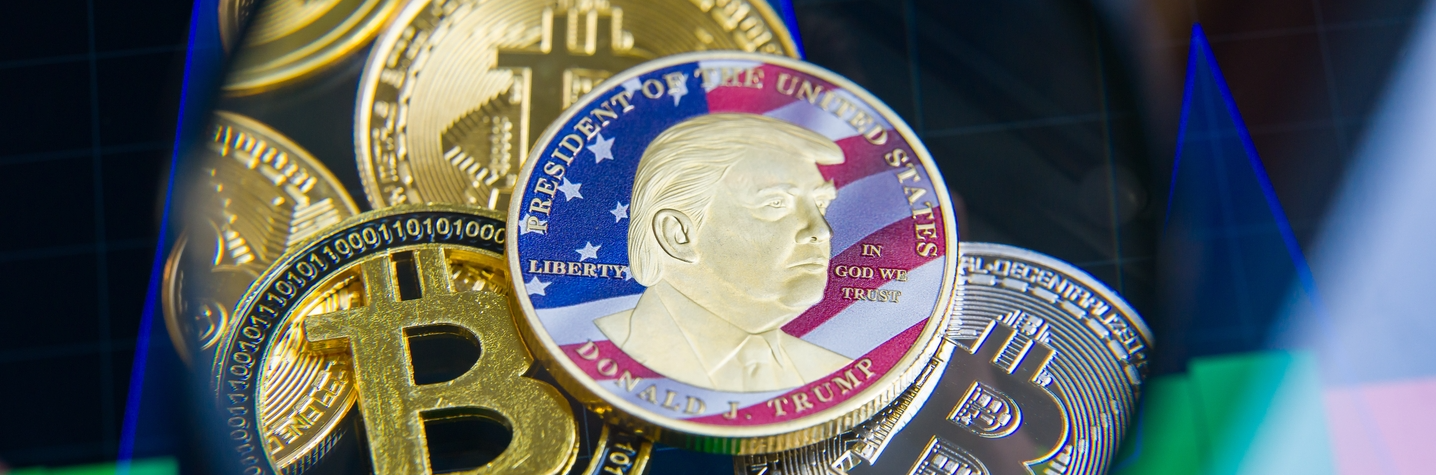
Picture Dan at his kitchen table with his laptop open next to a pile of mail that he has committed to sorting. He has bought speculative items in the past; for example, a cartoon ape earlier on because a colleague insisted that the project was different. He sold it later on and retained the screenshot as a private joke regarding his own judgment. Following that, he made the decision to only invest money in something that appeared serious.
Then the flag arrived. The coin showed a familiar face, had the national colours, included the campaign slogans, and the crowd sounded more like ordinary people at a rally than crypto traders. Since childhood Dan had been hearing that name connected with elections, debates, television, and history. It wasn't the kind of anonymous frog token that would have been launched at two in the morning; instead it looked as if an established institution had moved onto the blockchain. He was sure the coin's value would go up, and what he had also purchased was a sort of floor — the coin would surely drop less rapidly than the other toy coins which he had already seen vanish.
A political memecoin attracts a buyer who would never call himself a memecoin buyer by providing the feeling of having a share in the community through an asset that can be traded in a matter of seconds. The transaction itself is financial, although the reason for carrying it out might be loyalty, a sense of identity, hope, or a desire to stop feeling foolish about having missed the last chance. A flag gives those motivations a respectable appearance and a ticker turns them into something that can be sold.
Flag as a Balance Sheet
Dan isn't purchasing a dollar; rather, he is acquiring the sense that a dollar should have — namely, familiarity, wide reach, and durability. Although a nation is flawed and frequently exasperating, it still has schools, airports, courts, roads, and a holiday calendar. It endures the news. A token which adopts the symbols of a nation can also pick up some of that emotional value, even if the people dealing in it are fully aware that a picture of a flag is not a Treasury bill.
The contradiction is in fact easier to get used to than it appears. When people make financial decisions they aren't doing so in a clean environment; instead they do so while keeping in mind things such as a friend who became wealthy, a sibling who calls crypto a scam, a retirement account that grows too slowly, a rise in rent, or a political movement which gives them a position to take. Dan had felt embarrassed earlier when he lost money on his NFTs because it made him seem gullible; this present purchase allows him to tell himself that he has grown up — he is now supporting something bigger than a cartoon, something with an elected leader and a public history.

The official TRUMP token was launched on January 17, 2025, shortly before Donald Trump returned to the White House, and the MELANIA token came two days after that. This timing and the choice of names meant that the assets were presented as part of a political show before most buyers had a chance to distinguish the show from the actual products. The tokens included disclaimers relating to their purpose and the risks involved. Yet such disclaimers are unlikely to counteract the impact of well-known names, slogans, countdowns, and the subtle social pressure resulting from a rising chart position. A warning at the bottom of a page cannot easily overcome the impression created by a prominent name at the top.
The way ownership is structured is important since the costume might draw attention away from the cap table. Public disclosures linked a significant portion of the TRUMP token supply to organisations associated with its organisers. This does not mean that all the buyers were deceived or that any specific transaction was illegal. It does serve to show that a buyer's feeling of sharing a common political objective can still exist alongside a supply structure in which insiders and related entities have great influence over future distribution. A movement refers to itself as "we". A wallet distribution, on the other hand, may indicate something different.
The term "official" carries a great deal of weight in this context. It indicates that the project is linked to a public figure rather than being backed by a government, a campaign committee, or a public institution that guarantees its value. However, for an average buyer, the idea of something being official seems to imply a kind of closeness. A token appears to be a small part of the bigger story in digital form. Dan is not confused about the difference between a coin and a country; he understands this concept in an abstract way. The thing he fails to appreciate is just how fast that abstract distinction vanishes when he sees the number increase.
When the Chart Became the Story
The first step may appear to be proof. As soon as a token draws attention, customers begin to arrive, the number of posts goes up and the rising price transforms what had originally been a risky enterprise into a story about having identified historical trends early on. For a brief period, the chart seems to offer answers to questions which the project has not been in a position to answer itself. Is there real demand? Who controls the supply? What happens after the launch? A green candle provides a much simpler answer: other people are also buying.
Who is left to buy, and who is capable of selling? The price of the token depends on the amount of liquidity available, on how concentrated it is, on the timing of the unlocks, and on the constant influx of new attention. It does not inherit the United States' tax base, a president's term in office, or the enduring strength of a political institution. It inherits only a brand and a market that could change its mind before breakfast.
In 2026, an analysis carried out by the New York Times and based on blockchain data reported that nearly 989,000 wallets that had bought TRUMP had lost around $3.8 billion in total. This figure represents wallet-level losses, as determined by on-chain transactions and changes in price; it does not show exactly how many individuals suffered losses or how much any one person realized by selling tokens. One person might have used several wallets, while another could have bought and sold multiple times. Yet it was the scale of the losses that caused the term 'rugpull' to spread beyond crypto discussion forums. For many holders, the official-looking token had come to hold the same emotional status as projects they had been told were obvious jokes.
If taken literally, the expression is a legal accusation, not a court ruling. Traders also use it to describe the feeling of being left behind by a project that still exists even though its value and popularity have dropped. In most cases this more delicate sense of the term applies and is difficult to get rid of. The website is still available, the token is still being traded, and the political family remains well known. What vanishes, though, is the buyers' confidence that the project's reputation should have kept the price stable.
The timing of MELANIA's appearance, when TRUMP was still regarded as a new phenomenon, provided yet another push in this direction. It appeared to investors that a separate story was developing within the family; some saw it as a second chance, but others interpreted it as a warning — if one token could be so quickly followed by another, perhaps the first had never really been a rare political occurrence. Even though the chart needn't have declared a winner, it was enough to make buyers wonder if tomorrow's headline might undermine today's confidence.

The Argentina LIBRA affair clearly demonstrated how rapidly a simple public reference to a project can develop into a wide-scale examination of people's trust. In February 2025, President Javier Milei mentioned a cryptocurrency known as LIBRA in a social media message, after which the price rose before collapsing as a result of a rush to sell and increasing doubts concerning the manner in which the token had been distributed. He then deleted the post and stated that he had been talking about a private initiative and had in no way endorsed it on behalf of the government. As for the particular legal and political issues, these will be handled by the investigators and the courts. Nevertheless, the signal sent to the market occurred before any of these procedures had taken place: even if a leader does not actually provide buyers with any official guarantee, their posting can give the impression of endorsement.
Most people view risk as something that can be spotted in advance, for example through a warning label, a suspicious website, or an anonymous founder. Political tokens go against this tendency. A public figure can make a project appear familiar even if the actual workings of it are still unknown. This feeling of familiarity serves as a substitute for proper investigation, and it is exactly this proper investigation that an emotional attachment seeks to avoid.
Audience Moves On
Before the crash, the promotional material had already developed a set language: video thumbnails depicted the candidate next to a rocket; influencers called the launch historic; Threads posts referred to the token as part of the movement, a once-in-a-generation opportunity, or a response to those who had laughed at crypto. A careful disclaimer appeared in the caption, but the main emphasis stayed on certainty.
As the chart changes, so does people's certainty. The channels then release new videos concerning a new token, a new election, or a new macroeconomic issue. A number of the creators go back and say that they had warned buyers about the volatility. Other channels just cease discussing the old coin. For a channel with nothing new to say, silence might be a sensible course; but for the buyer who had watched the channel's enthusiasm help to give the trade its legitimacy, silence seems like abandonment.
That sensation is more evident after the event than at the time of the launch. People who hold the cryptocurrency debate among themselves as to whether they had actually bought a political symbol, a means of gaining access, or merely a speculative asset. There are those who support the project since departing would mean losing not only their money but also the narrative they had created for themselves. Others place the blame on competing groups, the media, market makers, insiders, or on the other side. Some turn the loss into a joke before anyone else gets the chance to do so. The fact that they find it funny does not mean that the pain has gone away; in fact, it is usually the way people make their shame shareable.
The group chat is the first thing to change. In January, one of his friends had sent him the coin just as a kind of secret signal. By spring, the same friend was instead passing on stories about the market that had nothing to do with the coin. No one asks if Dan has sold and Dan doesn't give the information himself. The political argument at the dinner table carries on as it always has, but the coin has left a thin layer of suspicion behind it. Now whenever he hears a confident pitch about crypto, he starts to wonder who is going to be the first to leave.
The financial loss is only one element of the overall problem. Dan had said to his brother that this time he was supporting something important. He now has to face the gap between being wrong about a price and being wrong about himself. The former can be regarded as a poor trade, while the latter threatens the identity of a man who thinks of himself as sensible. There is a tendency to conceal that kind of error and then to defend it by buying more. The market's most powerful argument might well be the buyer's unwillingness to acknowledge that the first purchase was based on emotional grounds.

People other than the creators and the buyers have incentives too. The people who created the token gain from increased attention and from trading activity. Exchanges gain when their customers carry out trades. Influencers benefit when their audience returns. The holders hope that the political connection will attract new buyers. These various interests may temporarily align in the same direction, which is why a boom seems like it's driven by a community. As soon as one participant decides that the attention has reached its peak, the interests split apart.
A rug pull doesn't need the website to disappear or be deleted at midnight. Instead, it can unfold through a series of new announcements, new tokens, new incentives, and finally a new narrative. Each of these individual steps might be justifiable. Yet together they can cause early holders to realise that their attention had been more valuable than their ongoing ownership. This is why people use a term linked with sudden theft when describing a more gradual breach of expectations. Although the chart disappears from the screen in fragments, the feeling arrives suddenly.
When Loyalty Becomes Collateral
The way in which people identify politically affects the way they see selling. When a token is presented as a vote of confidence, selling may come across as a form of betrayal. The idea of "diamond hands" turns a financial decision into one that tests a person's character. The longer a buyer keeps the asset, the more the act of buying serves as proof of their loyalty to the group and as a refutation of their own judgment. This is a strong position for someone who wants holders to wait out periods of falling prices.
The language functions since political identity already involves people having to accept disappointment. Supporters remain despite scandals, broken promises, and arguments with their relatives and they know how to justify a poor week. When the same kind of loyalty is applied to a coin, patience can be mistaken for financial caution. Just because people are proud of the token doesn't mean it becomes safer. In fact, it becomes more difficult for them to leave without feeling that doing so says something about who they are.
It is not a feature of any one party. Whether it is a leader, a movement, a national flag, or an insurgent slogan, it can become a tradable symbol. The ideological stance may change, but the underlying mechanisms remain the same. Those who buy see in the group something worthwhile for them to belong to, the people who are organizing view the attention as something that can be turned into money, and traders see it as a volatile asset whose demand is shaped by the community. A person can genuinely believe in the political cause and yet be wrong about the asset, and someone can earn money from the token and still have misjudged the source of that return.
It is important to bear this in mind when people are attempting to work out whether the entire affair was a scam. For fraud, disclosure, manipulation, and responsibility there are legal criteria, as well as the ordinary experience of having placed trust in a well-known name only to end up losing money. The fact that one has lost money in this way does not prove that fraud has taken place, but it doesn't vanish simply because there was a disclaimer. Responsibility is usually divided among the launchers, the platforms, the promoters and the buyers, while the loss is felt in individual accounts.

The incentive of the public figure need not be the same as that of the holder. The public figure might get attention, money, or simply greater exposure because of the token's existence, while the holder is not guaranteed any share of that influence. The fact that a well-known person can also end up losing money on the token or come under political criticism because of it does not remedy the imbalance. The one who has the microphone can simply move on to a different topic. The buyer then has to decide whether to sell at a loss in front of the same friends who had seen him make the purchase.
Regulators and courts can decide which disclosures were necessary and whether or not anyone has violated the law. However, they won't be able to ensure that every future buyer comes to the conclusion that a formally sounding name stands in place of the asset's underlying fundamentals. That kind of assessment is less impressive and more individualised: the buyer has to consider what specific benefits the token offers, who has control over its supply, how insiders can sell it, and whether they would still buy it if the well-known figure were to disappear tomorrow. If the answer to that is 'probably not', then the political connection is not a safety measure; it is the reason for the transaction.
What Dan Keeps
Dan continues to be interested in politics. He still keeps an exchange account and a wallet. He has not become someone who thinks that every digital asset is fraudulent or who never makes a speculative bet. The change is minor and not very dramatic: he no longer confuses the seriousness of the imagery with the seriousness of the structure. A flag may make him feel as though something real is going on without making the token into a reserve, a currency, or an institution.
He has also realised that the term "community" can be used to describe people who have common interests without this implying a shared balance sheet. The members of a forum might be kind and could help a stranger to understand a wallet or take pleasure in a successful trade, but once the attention has gone, they have no obligation to make a bid. It is natural for people to feel a sense of belonging; liquidity, on the other hand, is not the same as loyalty.
The fact that political memecoins lead to a hangover isn't just a sign that prices drop since everybody already knows that prices will fall; it is rather the realization that a buyer can be made to take on financial risk by means of feelings which have been developed over decades — such as national pride, trust in a leader, frustration with institutions, and the wish to be included among 'us'. These feelings might be genuine. The token remains an asset with a market price and a defined supply. It is only when these two aspects are combined that the loss occurs with a political significance attached.
Next time the flag might appear more official and the story more carefully arranged. The price could go up once more. Some of the early buyers might end up making a profit, and the next group of purchasers might point to them as evidence that the opportunity had actually existed. The lesson Dan draws is not that every person who buys is foolish. Rather, it is that any purchase should be able to stand the test of the question: if the campaign, the celebrity, or the movement stopped talking about this token tomorrow, what would still be left to support its value?

If the only thing one can say is that a balance has to be shifted, the following decision will be less exciting than the one before. Netts' TRON Energy Market allows users to compare the current offers from providers so that they can buy TRON Energy or obtain it when making a transfer and can check the rate available before selecting the cheaper TRON Energy instead of the network's default TRX burn. A market comparison cannot set a floor for a political token; it can only make it easier to see the cost of a normal transfer.