Monero: Epitome of Cryptocurrency
Monero as digital cash by default — privacy that gets delisted while public chains keep the polite ledger.

When one thinks about cryptocurrencies, the idea that immediately comes to mind is something secretive, untraceable, an envelope of cash closed tight with glue and licked shut for extra security. Hollywood has made a virtue out of the pursuit, and the romance has proven difficult to exorcise, even in the face of reality.
Yet Bitcoin is not what one imagines. Neither is Ethereum, TRON, or any other public blockchain. They all offer a pseudonymous database with optional social disclosure. Wallets may hold someone’s real name for a period of time, but the pattern of on-chain payments - the who, what, when, and how much - will always be available for anyone to scrutinize, link to real-world identities, and publish for all to see. It has all been demonstrated dozens of times by ZachXBT and his peers in the OSINT space, with increasingly accessible tools. Stablecoin issuers are already freezing deposits for regulatory reasons, with devastating consequences for the unsuspecting user.
Monero is the cryptocurrency that actually behaves like the cash one wishes it would have been. It is difficult to trace, designed to conceal by default rather than disclose by default. Most importantly, it has proven itself unwelcome in the mainstream.
That, ironically, is a compliment.
Promise and Practicality
Crypto’s original promise was one of freedom from surveillance by the establishment, but the reality has proven more complicated. The biggest winners in the space were not private by default, but instead embraced transparency, scalability, and composability for the benefit of all. Audits and analytics tools were built, entire ecosystems grew around the ability to understand and interpret on-chain data for regulatory, investigative, or simply entertainment purposes. This created a natural headspace for mainstream adoption and acceptance, as well as an entire industry around it. In the public eye, crypto became synonymous with permissionless programmable money, and a fair chunk of the industry’s popularity and value growth has been attributed to its capacity to disrupt the financial status quo. To the outside world, it was finance with a rebellious streak, a cool image, and a set of inconvenient truths that everyone from tax agencies to venture capitalists had to adjust their approach to.
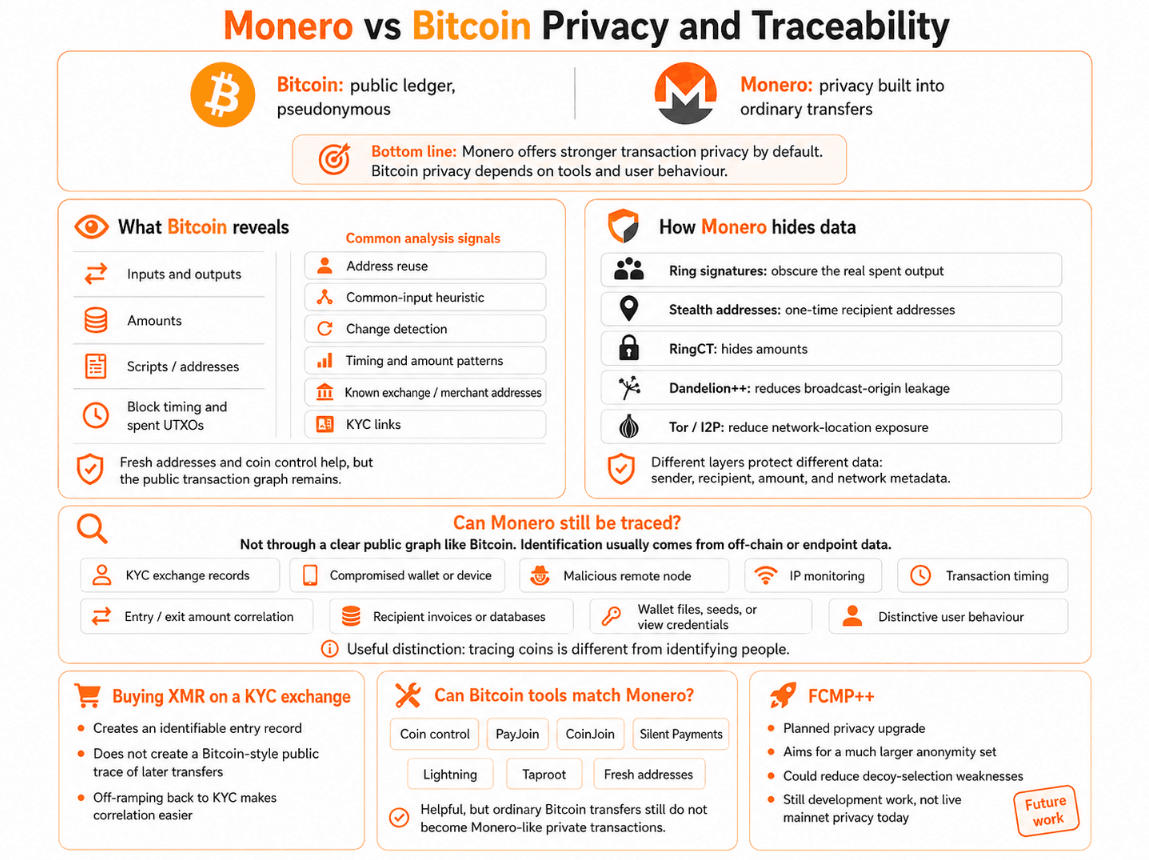
This adjustment rarely hurt the adoption figures. In fact, the industry’s growth has depended on it. Most users, for the majority of the time, have not spent much thinking about the nuances and trade-offs between different approaches to privacy. For many, the ability to make payments as conveniently and confidently as with traditional money has been a major selling point. Custodial exchanges and regulated custodians lowered the barrier to entry, promised institutional-grade security, and provided the reassuring presence of an entity to turn to in times of crisis. In many ways, their presence has decreased the perceived need for self-custody and complicated the understanding of what constitutes a private transaction. Even the investigative field has seen a shift towards the pro-active and the public: an entire segment of the industry is now dedicated to satisfying the thirst for knowledge about crypto addresses, transactions, and their real-world counterparts, with mixed results. In some cases, it has protected users, exposed scams, and held bad actors accountable. Yet when it comes to the long tail of regular transactions on a public blockchain, disclosure still mostly serves as a tool for judgment and reputation.
The industry did not fail to innovate on privacy, but it became much more difficult to justify it as a necessity. Privacy-focused protocols such as Monero found themselves in an awkward position as the rest of the industry grew louder and more established. The promise of censorship resistance and financial sovereignty slowly became diluted, overshadowed by the appeal of transparency and integration. It was no longer obvious to the public that crypto needed to be something different, and that its ideals did not naturally align with those of the traditional financial system. It helped, no doubt, that surveillance was mostly optional - one was free to choose between privacy and auditing, between censorship resistance and compliance. In practice, the choice was between two types of friction, and the users’ behavior has been guided by which one they were willing to accept.
The reality is that Monero has not declined in popularity; rather, it has become a niche product within the larger market. It has struggled to appeal to the masses, but it has persisted among those who understand the trade-offs and are willing to make them. It was not adopted by the establishment, which has opted for a different set of values, but the decentralization and privacy ideals still resonate with some. One must simply be willing to pay a price in terms of accessibility in order to obtain them. This is how the promise of early crypto has survived, but it was not without compromise, and the tension with the industry’s status quo has taken a toll.
Why Was It Rejected, Really?
There is no need to ascribe malicious intent to the authorities or the exchanges, however. In most cases, the impulse to delist privacy coins has been entirely practical. Regulators want traceability, visibility, and auditing capability at all levels, and have proven willing to take direct action to obtain them. Exchanges, for their part, are interested in licenses and legitimacy, which puts them in the awkward position of desiring a public, transparent monetary system while also having to deal with its natural complications. Privacy-by-default coins such as Monero are thus unwelcome everywhere they are not explicitly banned, because they pose a threat to the existing financial order at the infrastructural level. It is much easier to comply with a travel rule or know-your-customer request if one has full visibility of addresses and transactions, which is why crypto-native exchanges such as KuCoin or ByBit do not particularly favor Monero.
For the public at large, the delisting of privacy coins is less of a direct threat. They continue to be able to send and receive funds, but liquidity and visibility take a hit as soon as the listing is announced. It is difficult to discuss openly or recommend, and many would find themselves socially and economically pressured if they were to adopt it. The removal from exchanges, especially those perceived as mainstream, may well be a symbolic gesture, but it nonetheless shapes opinions in a particular way. Most will remember the name of the coin, and the act of removing it has served to brand it, however unfairly, as an illicit asset that should only be used in secret. This type of response has little effect on the determined user searching for alternatives, but it certainly keeps the uninterested ones away.
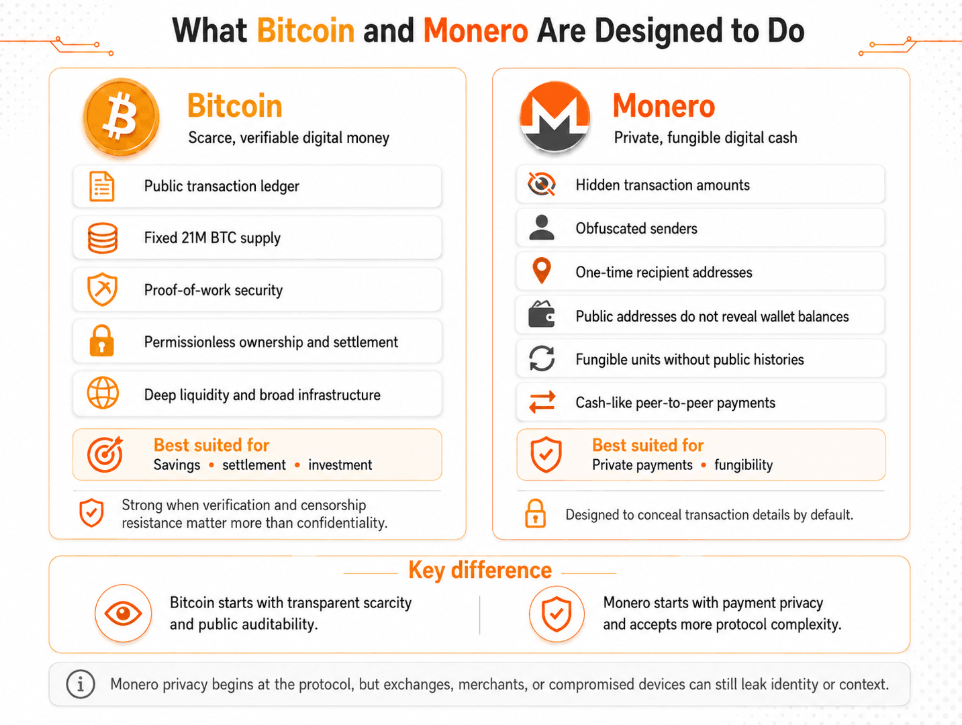
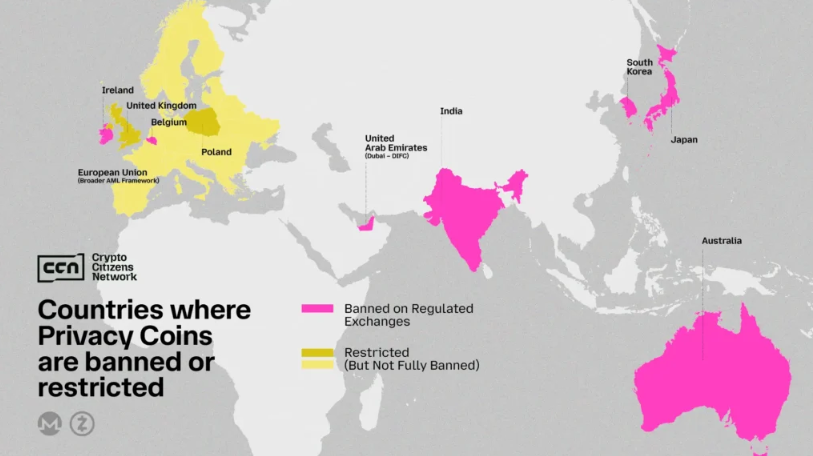
It is a strange way to encourage adoption, but it is an effective one. The delistings have occurred most frequently in the United States and Europe, where regulatory sandboxes are the strictest, but similar actions have taken place in other jurisdictions around the world. In each case, they served as a measure of deterrence and reputational damage, and in most cases, they were entirely successful in both areas. Monero, and privacy coins in general, have not exactly taken off anywhere in the wake of these actions.
Even more curiously, the phenomenon is not limited to the traditional financial sector. The crypto industry itself has grown quite comfortable with surveillance and visibility as the primary means of regulation and control. Many exchanges and other intermediaries have embraced the status quo, recognizing the benefits of having an auditorium-style view into one’s financial affairs. In some cases they have built entire businesses around it. This has created an inhospitable environment for privacy-focused users, but the latter have nonetheless persisted and innovated around the obstacles. In effect, a natural bifurcation has occurred: crypto now exists in two worlds, one public and one private, with each having its own set of needs, tools, and users.
It is an outcome that was not contemplated in the early days of the industry, and one that is largely undesirable from a philosophical standpoint, but it appears to be the cost of doing business. The delistings have created a sort of unofficial ban from mainstream crypto, but the practical difficulties of using a privacy coin remain minimal for the determined user. One must simply navigate a few extra hurdles: choose a specialized service to custody one’s assets, use a bridge to move funds off the public chain, and so on. It is inconvenient and time-consuming, but it is possible, and it has been done. The popularity of Monero, though diminished, remains steady among those who care about such things.
It should be noted, meanwhile, that the adoption of privacy coins has been a slow and difficult process for reasons that have little to do with regulations. One cannot ignore how inconvenient such a system can be to users. Monero may well be untraceable, but it is also more complex and difficult to use in day-to-day operations. It is a tool with a purpose, but that purpose is very specific. In a broader context, there are few reasons to use it beyond the stated ones, and that has limited its appeal to a small subset of hardcore enthusiasts. This is in large part why the narrative around such software has struggled to resonate with the wider public and why the delistings barely register in the first place.
It is also worth considering the matter from a purely philosophical standpoint. Some users may well be interested in adopting Monero not for any particular financial reason, but simply because of the cachet associated with it. Crypto, and especially privacy coins, has long been seen as cool but inaccessible, and one may choose the former in order pursue the latter. Many in the industry are willing to entertain this notion, even as they recognize its limitations. In truth, this is no different from mainstream finance: the banking system is a systematized way of doing business, but one nonetheless chooses to operate within it in order to gain social acceptance. In the long run, such attitudes have little effect on the fundamental value of either industry, but they can certainly influence adoption in the short term.
The popularity of privacy coins is thus limited by a combination of factors, ranging from regulatory obstacles to philosophical concerns about their status within the larger economy. Monero, as one of the most prominent examples of the category, has struggled to gain acceptance outside of a relatively small group of users. Some may view this as a sign of the coin’s irrelevance, but it has been the case since the beginning of the industry, and it may well endure for some time to come.
Why Governments and Exchanges Push Back
People seem surprised that Monero gets pushed out of polite society, but there is nothing surprising about it.
If you have to police money, you might as well make sure you can see where it goes. Regulators do not care to sound noble, they care to avoid having their entire staff laid off when something ugly happens and the committee asks who was asleep at the wheel. Traceability is the best way to ensure their tools remain useful, and a complete removal of it would render many people’s jobs as either unneeded or at least significantly deprioritized. Exchanges care about one thing and one thing only — the license. Anything that cannot be bent to the travel rule is not a useful asset, and one that actively promotes inability to bend is a liability with a price tag attached. Delisting is therefore the logical move in almost all cases, with the occasional exception being when the regulator actually comes out and forbids holding it at a certain time. The ability to hold is frequently curtailed in subtler ways while the ability to buy and sell is left as a scavenger hunt for the uninitiated. It is prohibition by association, and a relatively polite one at that. None of this requires a villain, really. A single effective scandal is enough to make even the sleepiest compliance officer reconsider their life choices, and shareholders have no love for the potential liability a privacy coin represents. Political capital is frequently wasted trying to appear in control, and Monero is an affront to control in the same way that cash is. There is nothing wrong with desiring to tax what is used for legitimate purposes, but the conflation of legitimate and illegitimate has been a recurring theme whenever visibility was mandated for either. Money that facilitates bribery is no less a tool of exploitation than the means of payment itself, and cash has long been the choice for people who wish to remain invisible to the state. By being digital cash that does not keep permanent records, Monero aggravates the position of people who believe themselves to have achieved a working détente with surveillance.
Delistings are also frequently smart moves in a social sense. Very rarely do they involve actual illegality, merely a removal of something that makes you look weird. Friends stop asking about it, merchants refuse to accept it, teachers block it on social media. It becomes a conversation piece and a source of urban legend, which in turn makes the coin more desirable to the people who want to feel like using it. It is a disincentive to all but the most hardcore proponents, which is probably the point. Shame is much more effective at keeping people in line than legal pressure, and most will avoid something that makes them uncomfortable if it is not explicitly forbidden. This is why the actual illegality is a poor motivator for most. Abstract policy is even worse, but the sheer presence of a helpdesk lecture is enough to convince many that they are in some way morally wrong to use it.
Inevitable Adoption, Narrow and Stubborn
Exchanges do not dictate what their users do when they want something the exchanges have decided to not provide. If the demand is there, the supply will find ways to meet it, even if those ways are not pretty. There will be informal channels, awkward relays, clumsy on-ramps, and entire local rituals that have nothing to do with the exchange proper. It will not be pretty, but it will be there. It will be boring, as all things that work are, and it will be a background hum in the background of people’s everyday lives. People need it to get things done, but rarely think of it as a part of a larger ecosystem. Someone will need to move something somewhere without leaving a paper trail for harassment, a donation wall or a salary in crypto becoming a threat vector. Or something more immediate — something like a source for investigative journalists, or a way to avoid the constant surveillance and pressure that comes with every DeFi wonderwallet. Better displays do not address the underlying issues.
There will also be those who want it for the spite, and portfolio managers everywhere will curse at the slow drip of allocations into it. It represents something many crypto people felt they were promised but increasingly realize they will have to settle for something lesser. Bitcoin is now an ETF prospect, Ethereum is the apps settlement layer, stablecoins are the payments channel with built in compliance. Monero is what it always was — a battleground. The long-dragging war of attrition between privacy advocates and regulators wears on everyone, and the desire to declare victory often outweighs the practical benefits of actually winning. Nobody wants to admit defeat, after all.
Meanwhile, the industry has wanted to become more like traditional finance with every passing day — custodianship, recovery options, kill switches and branded cards. All of these require something the old school privacy coins did not have — visibility and control. It is an ironic position to be in, but crypto companies find themselves in a situation where their desired upgrade path is to become something they used to actively oppose. Reputational risk is a factor — the more crypto people act like banks, the more banks act like crypto people. The third option, represented by Monero, is to loudly object to both sides of the equation. People do not like being reminded of their mistakes, and the mere act of such a reminder is usually enough to ensure it will not happen again.
If one wants to describe this situation as a duel between good and evil, they will be sorely disappointed by the reality. States seek visibility in order to protect their existing investment, analytics firms want public data sets in order to sell them, custodians want assets under management to grow by providing services. Privacy advocates are the ones who keep demanding more, but they are no less likely to adopt every innovation introduced by others as soon as it becomes available. The adult equivalent of purity tests is rarely an option, but saints and sinners alike keep using the same tools for different purposes. The entire space is defined by this particular tension, and the ability to survive it is what separates the enduring projects from those that only had a moment.
Crypto promised a world where money could be something other than a tool of oppression, but for the most part, it delivered on the promise to a select few and moved on to the next opportunity. The few are still there, but they had to carve out an existence for themselves within the industry that did not want them. Every headline about freezing, analytics or public records is a reminder that they were right to be suspicious, and the fact that nobody else remembers this the next day is what keeps them in their position. Epitome is a weird word to use for a small market cap, but in all other respects Monero is right where it needs to be — a weird and narrow persistence in its vision that paid off by staying visibly different. When it comes to the long march towards mainstream acceptance, boring utilities have a certain irreplaceable value.
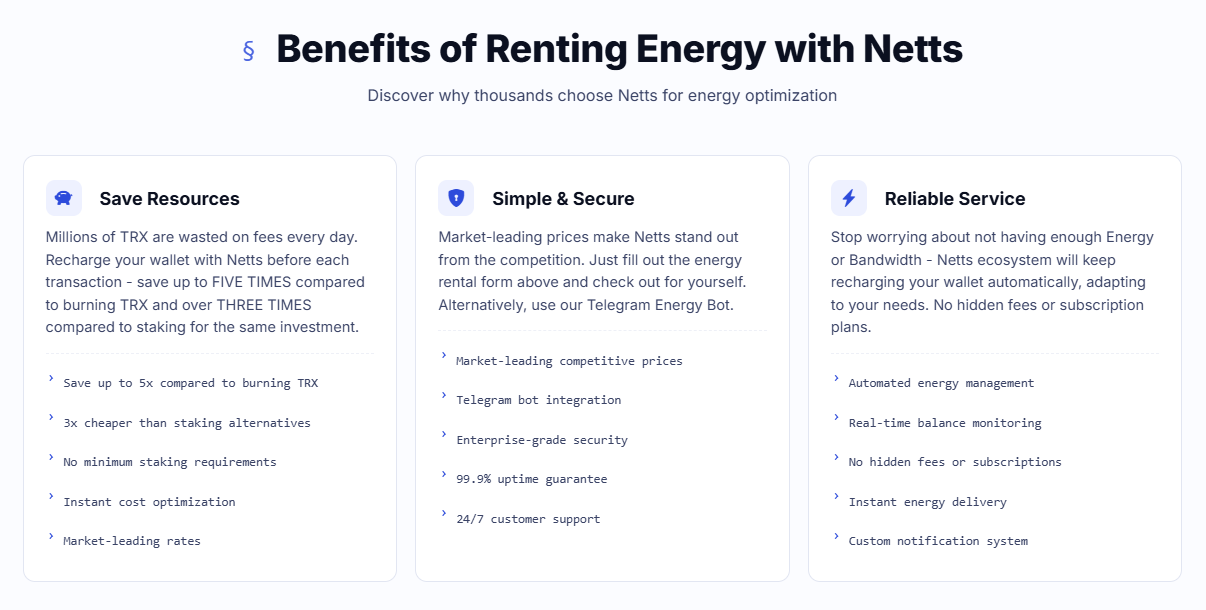
When the conversation leaves privacy ideals and returns to the transparent rails most people actually use day to day, practical tooling still matters on those rails: a TRON Energy aggregator to buy TRON Energy without theater, cheap TRON Energy when you need to transfer USDT, and the unromantic Netts.io stack that keeps ordinary TRON operations affordable while the industry keeps arguing about what crypto was supposed to be.