Mobile Wallet Wars: Crypto Battle Happening on Phones
Mobile crypto wallets fight for Android volume, iOS prestige, exchange power, seed phrases, and the default app on your phone.
To inhabitants of browser extensions, crypto wallet competition is a duel between MetaMask in the corner of Chrome, a Ledger in the drawer, a hardware wallet in the safe, maybe Rabby for nice transaction previews, and Phantom if Solana season is here. It is the view from the castle library. It is orderly and severely myopic.
The real competition is elsewhere: on phones. A browser extension is the tool of a crypto native; a phone wallet is the instrument of the population.
That is why it matters. Android rules volume kingdoms: India, much of Africa, Latin America, Southeast Asia, Pakistan, Bangladesh, and the countless other lands where cheap smartphones swallowed internet users whole, without the intermediate step of a PC. Android is where India is, and where Africa is not iPhone. The long tail of emerging markets has a bigger appetite for affordable phones: Samsung, and the Transsion brands (Tecno, Infinix, itel) that sell their wares across the Global South. iPhones are there too, but as aristocracy, not as the plebeian army.
Crypto app developers know this. They may polish an iOS wallet for the prestige market, but the real front is Android. The man in Lagos, Mumbai, Nairobi, Manila, Karachi, or São Paulo is not an afterthought in the wallet UI/UX strategy. He is the target audience. He is the reason why every self-respecting crypto wallet has to offer smooth onboarding, language localization, stablecoin settlement, in-app swapping, dApp browsers, fiat on/off ramps, biometric security, scam protection, and a UX that does not presuppose a desktop screen or an understanding of RPC.
All wallets claim to want to empower the user. Every single one secretly wants to be the default app on your phone. Default wallet, super app, unified interface, trusted gateway, total web3 experience, or consumer crypto hub - the phrasing varies, but the wallets’ aspirations are medieval in their simplicity. They all want the roads, ports, tolls, and markets. All want to be the gatekeeper of the new, decentralized digital frontier. Each crypto wallet believes, with unwavering conviction, that it alone knows what money or program or token the user should carry. That is why the competition is so fierce. That is why it is happening now. That is why it is not just about crypto.
Kingdom of Android
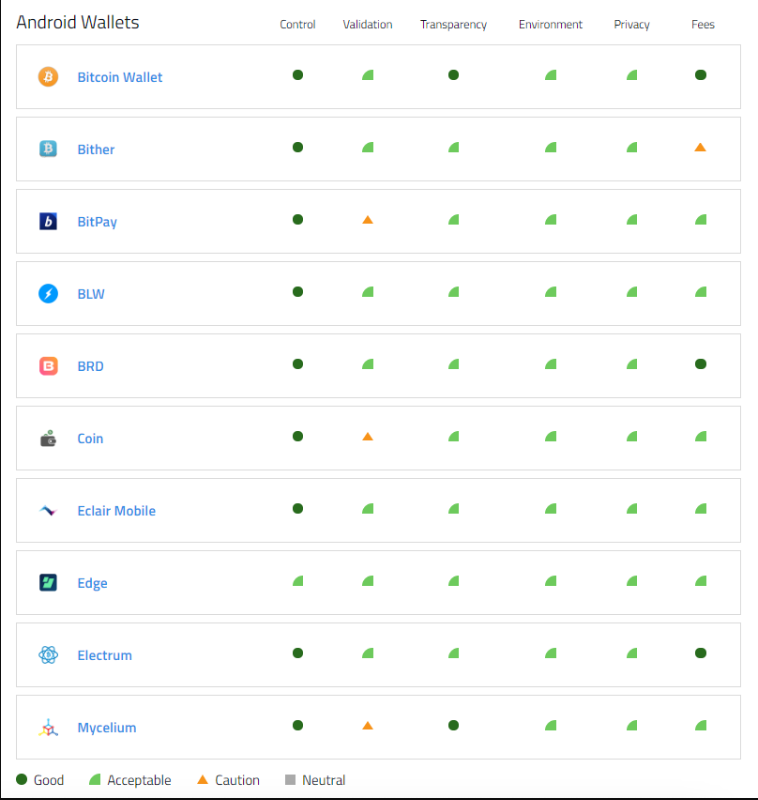
Let us talk of Android first: the great lowlands empire, broad, varied, prolific, and diffuse. Android is where battles are fought through cheap smartphones, heterogeneous in their power, with a bazaar-like app economy, where the users care more about something working on their device than about pretty animations.
Victory is achieved through reach, localization, fast iteration, and a willingness to meet the chaos of the front. Trust Wallet is the traditional crypto kingdom of these lands, and its advantage is breadth: supporting multiple chains, having millions of users, and being perceived as less scary for the phone-wielding masses. It has product-market fit and brand awareness in equal measure. It may not have the cool UX of newer wallets, but it has the virtue of ubiquity. It has millions of users, or hundreds of millions, depending on who is counting.
MetaMask is the great Ethereum duke who rules the browser extension fortress, but now has to fight the mobile battlegrounds with its cavalry. Its UX may be smooth, its DeFi reputation unquestioned, its dApp browser extensions used by millions of developers, but the mobile experience is underwhelming to the masses. The iPhone user in the Global North may have no problems cold-walleting their crypto savings, but the Android user in the Global South is likely to find a mobile wallet easier to use than a desktop one.
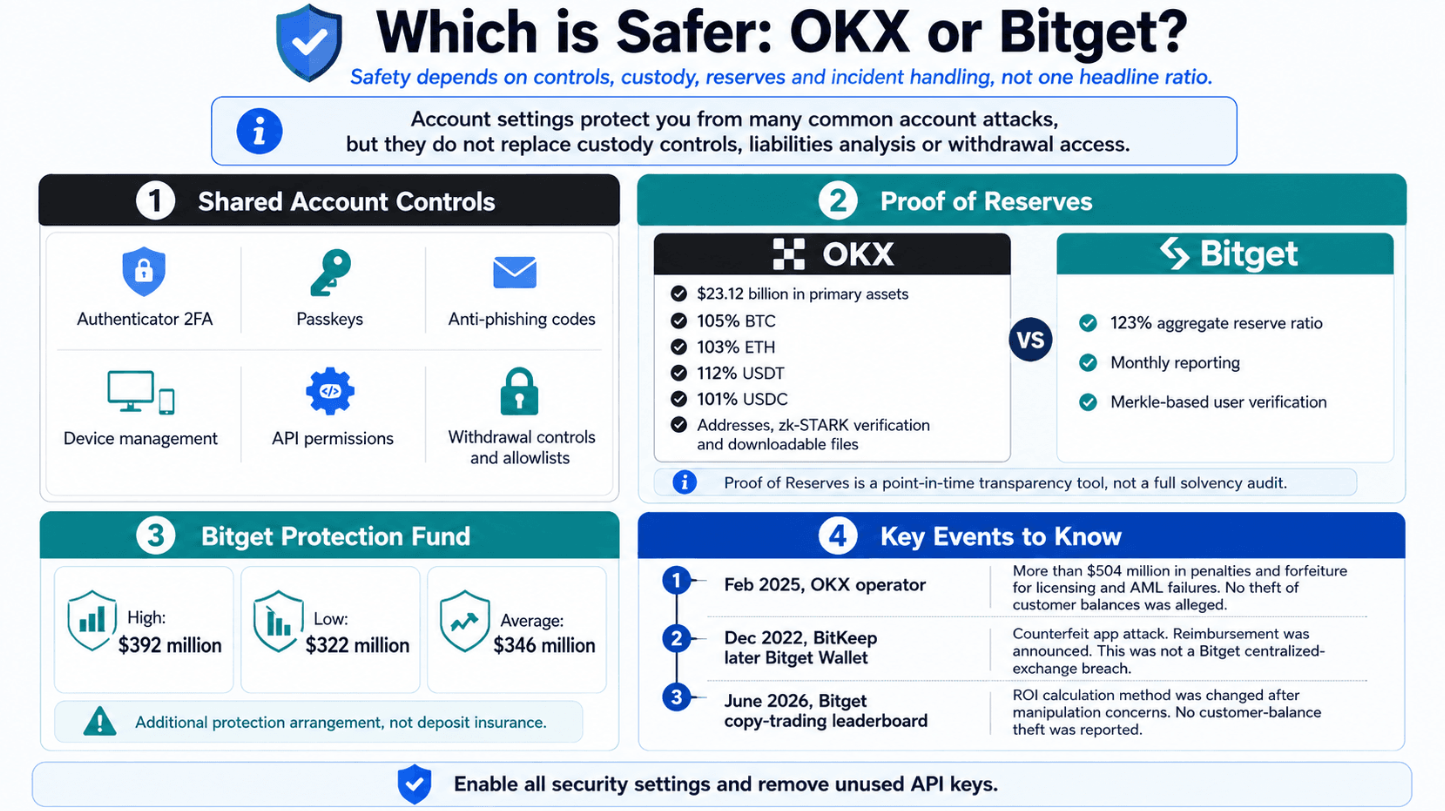
The crypto app developers of the exchange superpowers (OKX, Bitget, Binance) also enter the fray, with wallets that embed their trading software, offer native token settlement, custody bridging, NFT galleries, and exchange referral rewards. These are serious economic powers, and their war chests are not limited to product development. If the user trades on OKX, swaps on OKX, bridges on OKX, stakes on OKX, buys NFTs on OKX, and buys crypto with fiat on OKX, the company has captured the wallet as an interface to the blockchain. The exchange then wants the user to trade, stake, earn, yield farm, and engage in every activity in the crypto space that has a reward attached to it. This makes wallets distributed by exchanges uniquely powerful.
OKX Wallet and Bitget Wallet and Binance Web3 Wallet and Coinbase Wallet are particularly noteworthy in this regard, as they represent the intersection of exchange power and the mobile wallet front. They all have tremendous resources at their disposal and tremendous incentive to acquire users, as each new wallet owner represents a potential revenue center. Their armies fight in multiple battles across the cryptographic front, but the terrain of choice is cross-chain interoperability: building bridges between blockchains, building routers for swaps, building highways for stablecoin transfers. Native tokens, exchange referral rewards, and built-in NFT galleries serve as reinforcement. OKX and Bitget both offer their users tremendous transaction volume discounts with their tokens.
SafePal, TokenPocket, Coin98, imToken, Exodus, local wallets, and the other regional powers all fight in this same great hall, with swords of chain specialization, community loyalty, localization, and multi-chain UX. They are the minor barons and vassals of the great crypto realm. They may never become as powerful as Trust Wallet or MetaMask, but they have their lands and their people. They offer more tailored experiences to phone users: hardware security, community, or particular appeal to Southeast Asian or Chinese users. There is no one ‘best’ wallet for the phone-wielding masses. Not yet.
But every castle is surrounded by enemies, and every kingdom wants to expand its borders. It is useful to remember that a wallet with a tiny regional following may be as threatening as a global product with a weaker UX. Chain-specific tools (like Solflare for Solana) may appeal to hardcore users who care little for broader adoption. And while some wallets fight the front battle, others prepare the siege weaponry. The great crypto wars are not over defaults on phones, but over defaults everywhere: browsers, apps, marketplaces, social media, embedded finance.
iOS Citadel: Battle of the DApp Browser Gate
iOS is not as wide as Android, but it is deeper: it has more money, more vertical power, and its gatekeeper (App Store) has built its reputation on strict control and high standards. Crypto’s relationship with Apple is complicated: from the beginning, iOS wallet permissions have been a battleground. Crypto developers have fought to unlock the ‘external wallet’ permission so that users can buy NFTs in third-party apps, and Apple has fought to keep control of all commerce within the iOS ecosystem. Similar wars have been fought over in-app browser permissions and NFT galleries. The most notable campaign of this kind was the Battle of the DApp Browser Gate, which saw the crypto wallet developers, the NFT communities, and the App Store authorities clashing over whether the iOS ‘wallet’ should be a permissionless entry point to web3 or a tightly controlled product from Apple.
It was not only a technical disagreement; it was a fundamental one. The wallet developers believed that the iPhone user deserved the open blockchain experience. Apple argued that the App Store was the only way to ensure a high-quality experience. The App Store’s response to the rising popularity of crypto wallets was to begin reviewing every one of them, requiring their developers to declare which dApps or NFT platforms they were facilitating. This placed the wallet developers in the awkward position of choosing between becoming an extension of Apple’s control or limiting the dApps they offered. In practice, this meant that on iOS, a wallet could not be as ‘open’ or ‘permissionless’ as its Android counterpart. Particular care was necessary when it came to the NFT use cases. While Android users could easily browse third-party NFT marketplaces from their wallets, iOS users were often funneled into ‘galleries’.
Wallet developers could sidestep Apple’s scrutiny by either providing a ‘web’ view of the action or by not including controversial features. If the iOS user wanted to buy an NFT, there was not much the developers could do; they could, at best, hide it behind a ‘web’ icon. In the annals of crypto history, this may not be a battle but a siege, with both camps expending considerable effort to weaken the other’s defenses. Even the most ‘permissionless’ iOS wallets were forced to adopt a more cautious approach to NFTs, or to move their NFT-related traffic to the web. This does not mean that the iOS wallet developers were defeated or ineffective. It simply means they had to get creative within the constraints of the iOS ecosystem.
It does not mean they did not accomplish their goals, however. The iPhone user is often wealthier and more valuable to the crypto protocol than the Android user. He is willing to pay more for a ‘crypto’ experience and has greater trust in a well-known name. Coinbase Wallet has an innate advantage in the iOS sandbox because it has been designed to facilitate the smooth transition from a Coinbase exchange account to a self-custody wallet. It is the crypto equivalent of a luxury brand designed to appeal to the iPhone-savvy global elite. Phantom is the iPhone warrior that has successfully transformed itself from a cute little Solana-only wallet into a broader crypto ‘super app’. Its iOS-native app serves as the flagship for Phantom’s multi-chain UX design, which has since crossed over to Bitcoin, Ethereum, Base, Polygon, Sui, and other chains.
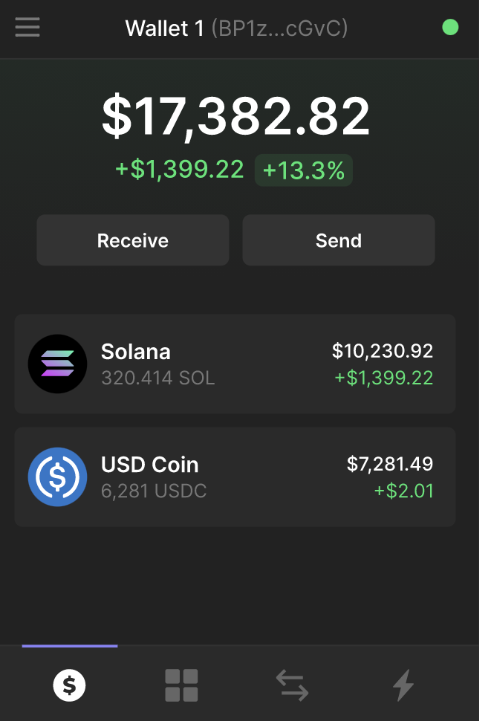
Phantom is a fine example of a wallet that has fought the crypto wars by employing a mix of traditional and modern tactics. By focusing on design and speed, it was able to attract users to its iOS app, then expand across platforms and chains. It is also worth remembering that Phantom was built on the reputation of being a ‘Solana wallet’ long before it started marketing itself as a more ‘general-purpose’ crypto app. Phantom represents a crypto-specific ‘Solana + EVM’ approach, as it has maintained its dedication to the Solana ecosystem while expanding its offerings to other chains.
Battle of the Seed Phrase Plains: Peasants Want Simpler UX Too
If the DApp Browser Gate was a battle between walled castles, the Battle of the Seed Phrase Plains was a conflict between the common folk and the nobility. The peasants wanted to use crypto but were put off by the complexity of self-custody wallets. The noblemen (wallet developers) had to find a way to get these users to accept the risks of crypto without scaring them away. In practice, the ‘battlefield’ was the onboarding experience. To encourage the peasants to use its app, every crypto wallet had to reassure the user that storing funds in a self-custody wallet was no different from storing them in a bank. The developer could not simply say this outright, due to the regulatory risks of implying any banking-grade safety. Instead, he had to employ a mix of UX ‘tokens’: scam protection, biometric login, multilingual customer support, or a ‘not your keys, not your crypto’ motto. He could use a combination of educational pamphlets and pop-up notices to explain the virtues of self-custody.
It was not enough. The users still had to type in a phrase for their keys, store it somewhere safe, and remember that phrase in case of disaster. The best the developer could do was to make it feel less like a scary mantra by wrapping it in a nice UX.
Different wallets chose different tactics to get users to accept the self-custody paradigm. Trust Wallet went the safe route, using scare tactics and phishing warnings to keep its users safe. Phantom leaned into friendliness and biometric security, 24/7 customer support, and multilingual options. Coinbase Wallet has made its smart account concepts appealing to the iOS user by emphasizing the account abstraction benefits and passkey possibilities. OKX Wallet, Bitget, and Binance have circumvented the difficulties of the phrase by experimenting with multi-party computation (MPC) and custodial or semi-custodial experiences, in which the user does not have to store anything. SafePal has attached its software to hardware, while Rabby has impressed the more technically minded users with its transaction preview functionality.
The motivations for these actions were not entirely noble. The wallet developers knew well that the average user was unlikely to store funds in a self-custody wallet if he had to type in a phrase. If the user failed the onboarding process, the developer would not get any of the promised revenues (gas fees, wallet swaps, staking yields, etc.) SafePal is a great example of a wallet that has fought with the tools at its disposal. Its users were never likely to abandon the app during onboarding, because the security ‘risk’ was balanced out by the hardware convenience. This is why Rabby is so valuable to developers fighting with the end users: it offers EVM developers a competitive alternative to centralized custodians.
The motivation may have been entirely selfish, but the result was a healthier competition between the crypto wallet developers. The same could be said for the entire industry. The user has plenty of options when it comes to self-custody, but it is important to remember that every choice comes with a price. The gas costs, the scam risks, the custodial and semi-custodial custodianship, and the difficulty of the onboarding procedure - all of it adds up. The wallet that makes the costs transparent and the rewards enticing is the one that is likely to attract the most users.
Factions and Their War Chests
War is not only fought with swords and shields; it is also fought with the financial resources of nations. Exchanges have their own armies; their products are their banners; their users are their vassals. Developers fight with product innovation, App Store optimization, and better dApp integration, but the resources of their parent companies are their best weapons. Trust Wallet may fight the competition on the front of ‘user-friendliness’ and ‘simplicity’, but its goal is to become the default wallet for everyone, everywhere. MetaMask uses its DeFi credibility to promote its on-device UX without appearing ‘dated’. Phantom has spent its resources on design and brand positioning, while also expanding to new chains to promote its multi-chain ‘super app’ narrative.
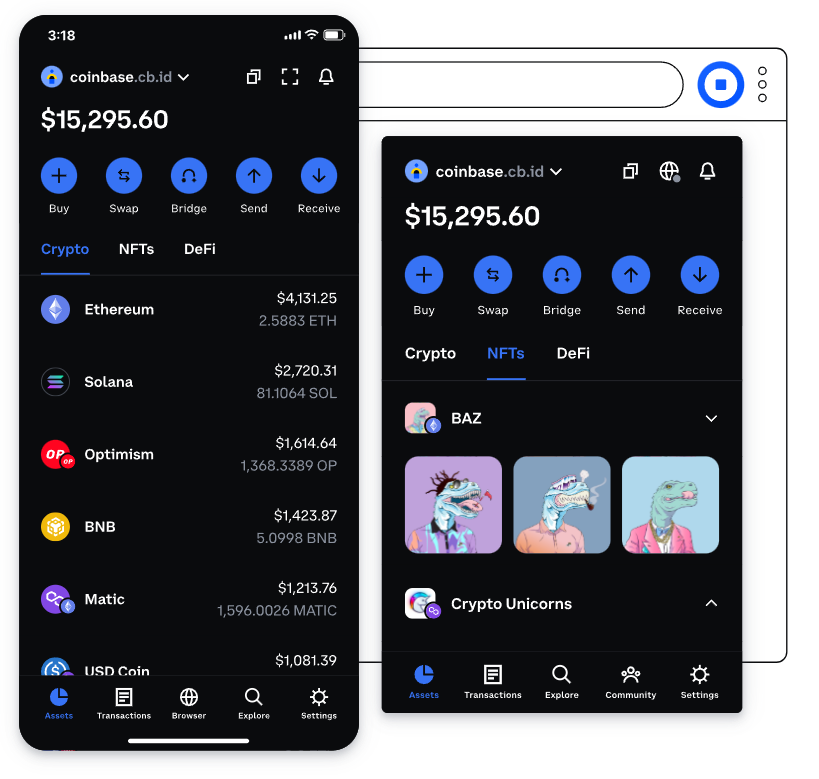
All of them may be distracted by the local markets (iPhone users) and the universal experience (Android users), but each wallet has its own concept of the ideal user. Coinbase Wallet has the reputation of a secure self-custody product with exchange support (Base), but in reality, it serves as a ‘stepping stone’ to Coinbase’s broader goals. OKX Wallet and Bitget Wallet are prime examples of the exchange-native fighting forces, with OKX having an additional reputation as a security-focused infrastructure provider. Binance Web3 Wallet has no need to fight anyone: Binance is the biggest exchange in the world. SafePal, TokenPocket, imToken, Coin98, Exodus, Rainbow, Rabby, Solflare, Backpack, Kraken Wallet, and others all have their own audiences and methods.
The smaller ecosystems are not doomed. Look at the history of medieval mountain kingdoms – they were able to withstand the pressure of the metastatic empires due to their natural protection. In crypto, the value of the natural defense may be represented by the unique security concept, a certain regional loyalty, a particular cultural layer, or even the preferred blockchain. Solflare has the chance to dominate the market of serious Solana users, Rabby – to rule the EVM power users, Rainbow – to enjoy the loyalty of Ethereum design lovers, TokenPocket and imToken – to retain the attention of regional partners and Asian users, who are not as vocal as their Western colleagues.
However, the middle ground is a risky place to position a wallet. Being number two in terms of simplicity, security, UI, multichain support, composability, reputation, and regional presence means being just another army in someone’s custody. Users do not strive to hold twenty wallets for the sake of political correctness. They rather optimize: twenty apps, ten dapps, six exchanges – the number of protocols in the portfolio depends on how much skin users have in the game of blockchain innovation.
Current Campaign
The current state of the art of the race is best described in simple English. Trust Wallet appears to be the most battle-tested solution around the globe, at least in terms of multi-chain mobile dominance. MetaMask retains its unrivaled awareness but has to keep delivering the mobile experience that can be compared to the desktop version in terms of UX depth. Phantom has been on a fast track since its recent rebranding: phantom as the mobile app that thinks big now has the chance to strike the balance between its native ecosystem building and the on-chain trading dapp ambitions. OKX Wallet and Bitget Wallet have the chance to turn their relative exchange dominance into a cross-chain wallet ubiquity by relying on their inherent advantages at the right time, when the “sovereign” apps will run out of fuel. Coinbase Wallet, in its turn, is positioned as the bridge between the regulated world of exchanges and DeFi so well that it can be of particular interest in the on-ramp space (Base) and the consumer-grade crypto domain in general.
Who among wallet developers does not pray for a miracle? Every single monolith project that bets on one blockchain or one feature (NFT, dapp browser, etc.) has critical weaknesses now, when the competition grows exponentially. Several independent wallets will remain relevant as the go-to decentralized platforms, but the ones that have chosen the path of least resistance are already on their way to the oblivion. The market does not need a hundred mobile wallet apps; it needs ten, maybe twenty. However, not a hundred founders believe that.
Android rules the roost when it comes to both volume and realism. The battle for the stablecoin-based future is being fought on the Android front lines: if the demand for crypto payments will grow as expected in India, Africa, South America, Southeast Asia, this will make Android wallets the true battlefield for the minds and capital of the developing world. iOS remains the castle of designers and regulators where the value is armored but hard to reach. A mobile wallet that conquers Android, betrays iOS, and dominates the dapp universe, will own the minds of the crypto-savvy users. A wallet that bets on iOS exclusivity has better chances to become a premium product in the minds of the users. A wallet that dominates on both sides of the equation will make every competitor rewrite its strategy: not to beat them, but to exist alongside them.
This endless competition will never have an end because there will always be something to fight for. First, it was the custody, then dapps, NFT, swaps – and now the wallets battle it out for the dominance in the cross-chain routing, stablecoin payments, cards, prediction markets, perp markets, smart accounts, AI agents, and whatever is going to be the next big thing. Most users will not even realize they are in a war. They will download an app, create a wallet, send some money somewhere and be amazed at the ease of the entire process. However, it was not “easy”: it was conquest.
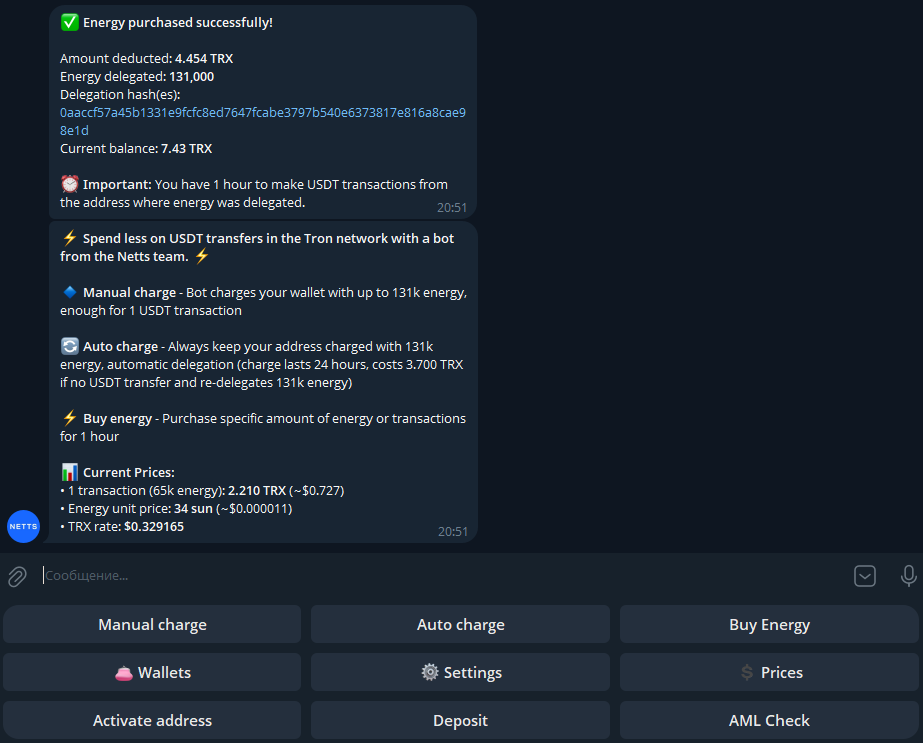
For the users that are about to pay TRON-based stablecoins from their Android phones, this competition is of particular interest. The TRON Energy Charge Bot introduces several practical ways to top up TRON Energy with manual, auto or hourly charges. The TRON Energy bot features various options for TRON Energy top ups including recharging TRON Energy before the USDT transfer instead of burning TRX, and offers several practical examples such as 65,000 for one transaction at 2.405 TRX and 37 sun for the price of the Energy. This way, the Netts Energy Charge Bot becomes a convenient assistant for reducing TRON fees, saving TRON energy and time, since transferring money from TRON phones via the Android energy wallet can be a TRON energy trap.