Defensive Use of AI in Crypto: Smart Shield Against Malware
Defensive AI in crypto fights phishing, scans contracts, and matches attacker speed — equal force as survival, not virtue.

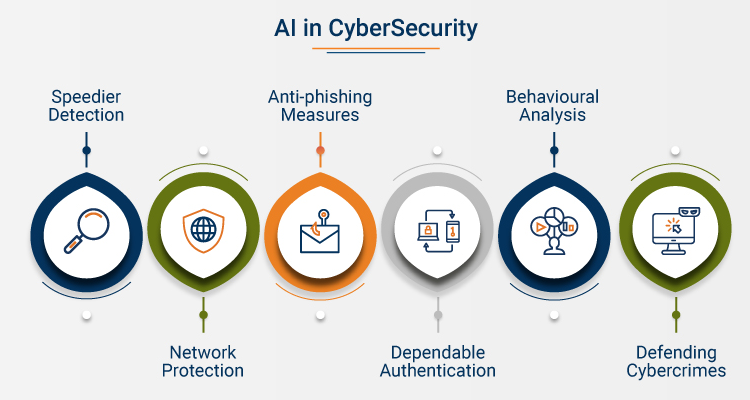
While last week’s column was about the knife, this one is about the shield. And not just any shield, but one made of the same stuff as the knife. The same language models that allow an attacker to write a phishing email can spot inconsistencies in the email’s text. The same agents that scan a contract for weaknesses can find them first. The same pattern-recognition instincts that contribute to deanonymizing wallets can identify wallets with suspicious withdrawals.
This is the inconvenient truth about defensive AI in crypto: it is not some morally pure force. It is the same force as the one pointed against the defender. People like to believe that the tools themselves are not biased, that it is always the humans who make judgements and take sides. That is wrong. Budgets and risk tolerances make judgements, and they are not wrong to believe that the companies that survive the next decade of crypto security will be the ones that acknowledge this reality in the first place.
There is a human reason for this asymmetry, one that explains defenders’ discomfort with tools that are objectively helpful. Malice is interesting - defense is paperwork. The public narrative likes villains and heroes. But people who lose money to a flash loan drain understand that the true battle in crypto security is not between good and evil. It is between the entity willing to invest in relentless, ruthless vigilance and those that are not.
Why Equal Force Became the Price of Survival
Crypto used to be all about rituals. You held an audit, posted the PDF for all to see, put a badge on your website, announced the happy fact that your smart contract has been reviewed by humans, and moved on to the next priority. You still held an audit - but the true believers know that attacks used to be expensive and rare, requiring a unique combination of skill, time, and determination to pull off. The attacker had to care. That gave defenders a sense of closure, of having done their part.
AI took that sense of closure and exposed it as a feeling manufactured by desperation.
By making attack code cheap and plentiful, defenders who continue to think in terms of exclusivity and human exceptionalism find themselves in the position of a medieval city with one watchman, surrounded by woods full of wolves that never sleep. The tactical and psychological advantage belongs to the wolves. A human auditor is a watchman who can be tired. An agent is tireless. A human red teamer schedules their engagements; an agent can engage at any time. This is why “equal force” is such a dirty word. It is not inherently virtuous or morally preferable. It simply acknowledges that human defenders are already in a losing position if they think their manual reviews and painstaking investigations are an adequate response to machine-driven constant vigilance.
There is also a more profound psychological conflict embedded in this shift, one that has to do with the romance of the lone expert. Crypto has always liked to make defenders into geniuses. Smart contracts promote the idea of the self-auditing, single mind. Vulnerabilities are presented as flags discovered by one person and then published for public consumption. White papers are written by teams, but their success frequently depends on one outsized ego. Defense used to be about the exceptional expert mind. That made heroes and villains; it made victims and defenders. But none of that matters to an attack model that relies on distributed, easily accessible tools. And that is why defensive AI is such a frightening prospect to many: because it takes some of the mystique away from the process.
Experts will always matter. What matters is perspective. The best human defenders are not those who can do the most by themselves but those who can marshal the best resources to accomplish the task. To put it less romantically, their job is not to be an investigator but to determine which investigations can meaningfully contribute to the objective. They will still have to do some of the lifting - but the more machine-driven their operations can be, the more time the human defenders will have to think strategically. It is a shift in power from individuals to systems, and it is happening whether defenders like it or not.
LLM Wars Are Not Science Fiction
This is why it makes sense to speak of “LLM wars” in the first place. Not at the level of geopolitical theory but at the tactical one. We are witnessing the dawn of the age of automated persuasion and automated suspicion, automated deception and detection, automated social engineering and pattern detection. It is a confrontation between attack code and defense code, but it is also something more intimate. It is an arms race that plays out in support tickets and customer emails, in the push and pull of every single interaction between user and developer.
One of the easiest ways to imagine LLM vs. LLM combat is to think about a support desk interaction. The user writes in with a polite, well-constructed complaint about being unable to access funds. The message itself is routine, but the phrasing and wallet address match known patterns used in North Korean phishing schemes. A human moderator would have a harder time spotting the scam than an AI trained to flag suspicious on-chain activity and analyze patterns in communication. But the most interesting part is the dynamic at work: the exploitation of social engineering.
Scams work because people are nice. We want to help whenever possible, even if it means putting ourselves at risk. Attackers know this, and they employ polite, persistent language to manipulate victims into giving away money. Some defensive AIs can be programmed to spot that dynamic, to recognize manipulation when it sees it, and to flag the interaction for further review. That may not sound exciting, but in the world of crypto security, it is a major accomplishment. It means you now have a system that can spot fake customer service emails attempting to steal user funds.
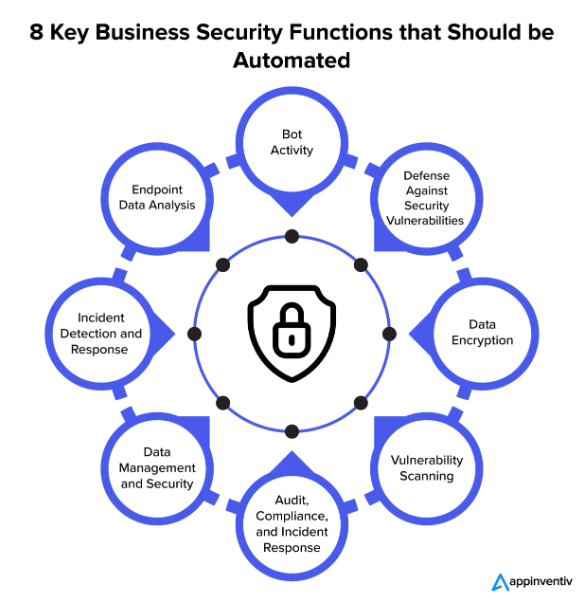
The same principles apply to other common crypto scams, from deepfake CEO extortion to fake “security” audits. The offensive LLM can generate a convincing voice note from the founder, but the defensive counterpart can spot inconsistencies in the audio file itself. It can ask the right questions about why the request is coming in through an unusual channel or why the security procedure is being bypassed entirely. People still make decisions in these interactions, but the machine component can play a critical role in breaking the attacker’s spell. That is essentially the definition of a successful security operation these days.
It might not be as glamorous as a single heroic investigator stopping a five-figure heist, but there is strength in persistence and volume. That brings us to the final frontier in the battle between LLMs, one that has to do with malicious input. Crypto systems and smart contracts have a long and inglorious history of being compromised through inputs: contract re-deployment, wallet addresses, emails, phone numbers, URLs, GitHub repos, support desk interactions, and transaction memos. Attackers love input vectors because it is often the weakest link in the security chain, and there are plenty of them to choose from. Defensive tools that monitor and analyze inputs for potential malicious content may not be exciting to most, but they are arguably the most important category of all.
The most interesting part of this arms race is that it is happening at the protocol level and that the combatants are frequently unseen. It is not easy to detect when a seemingly innocuous input vector has been weaponized. Even more challenging is the fact that both attackers and defenders frequently operate at this low level. In many ways, it is a battle of nuisance value. Every time attackers improve their ability to launch a phishing campaign, defenders update their tools to filter spam. Every time attackers develop a new wallet-draining signature, defenders write new detection code. The two sides are engaged in continuous competition, with neither able to achieve lasting success. People who want an uncomplicated narrative will be disappointed by this assessment. The defenders who employ AI to scan input vectors for evidence of attacks are not engaging in an ideological struggle with the attackers. They are simply trying to keep their users safe, and that frequently means doing whatever is necessary to interrupt an ongoing scam.
Scanning Before the Crowd Arrives
It may not be the most exciting way to think about it, but defensive AI’s most important application in crypto is arguably the most mundane: it helps keep an eye on the code before others do.
Smart contract teams used to believe that an audit was an endpoint, a final stage in the development process. But the reality is that every audit is a snapshot at a particular moment, one that becomes immediately outdated the second the code is deployed. New vulnerabilities are discovered as protocols grow more complex or as new tools become available. Attackers are constantly circling back, looking for weaknesses in older contracts that nobody thought to test. The market has seen an especially prolific period of attacks in the first half of 2026, largely because many of the exploit vectors had already existed in one form or another. The loss reports and post-mortems for these incidents serve as a sobering reminder: the past is always present in crypto.
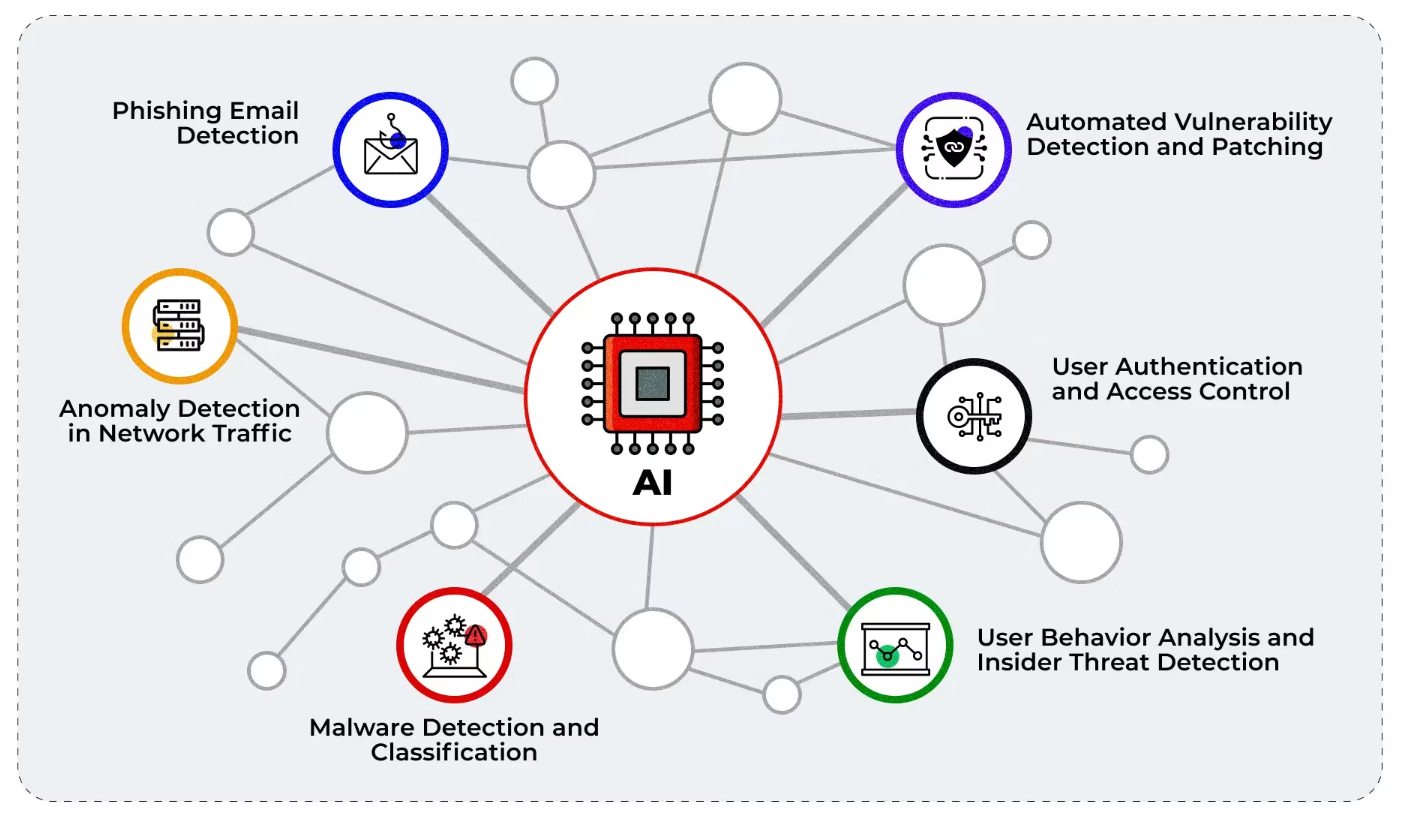
Defensive AIs can play a crucial role in this area by helping keep defenders focused on the task at hand. Smart contract development used to involve periodic, labor-intensive security reviews. Now, a project can rely on continuous, tireless vigilance to spot weaknesses in the code that few people would have seen before deployment. Auditors will still be necessary, but they will not have to work alone or feel as if they are fighting an impossible battle against time. Their words will not carry as much weight when the agents have already identified the most pressing concerns. Their work will be focused, their time and effort prioritized, and their findings amplified by the machine assistance. That is a significant shift for everyone involved, but it is a crucial step in the right direction.
The implications for regular users are even more significant, even if they are not always obvious. Traders or yield farmers will rarely engage with the technical minutiae of a smart contract, but they still deserve a reasonable degree of reassurance that the code has been audited and that the audit actually did anything to improve security. This is where projects that employ continuous defensive AI scanning can begin to differentiate themselves: they understand that most users think in terms of risk management and that a proactive approach to security is frequently the best way to build trust with the community. It is arguably unfair to judge an entire DeFi project on one audit, especially one that the defenders know to be an inadequate defense against a determined attacker. But the alternative is for users to accept that all smart contract interactions entail an unpredictable level of risk.
Pentesting fits into this broader discussion in much the same way. Traditional red teams operate the same way as traditional audits: they show up, do their thing, and leave once the engagement ends. Everything is made efficient and predictable so that defenders can dedicate their full attention to the task at hand. But when the pentesters are using AI assistance, they can engage in continuous, unannounced probing of the contract or infrastructure. This includes regular testing of APIs for signs of weakness, simulated phishing attempts against employees, and reviews of customer service practices to gauge the likelihood of a social engineering attack succeeding. Human defenders will still have to make many decisions, but they are likely to be aided in their efforts by tools that can operate around the clock. The most immediate benefit is the shift in priorities: instead of being thrilled when a red team engagement concludes, users and developers alike should take satisfaction in the knowledge that the project is safer for having survived the test.
There is only so much poetry one can apply to the situation where defensive AI transforms application security from an exception to an expectation. That is precisely why it is so fitting to this point to discuss one of the most straightforward ways to incorporate defensive tools into a smart contract project: continuous scanning of the code for weaknesses.
Cheap Labor, Expensive Trust
It is worth noting that many of the reasons for adopting defensive AI have very little to do with grand ideals or the noble pursuit of uncompromising security. Some of the most important arguments in favor of machine assistance are strictly financial.
Cybersecurity is an expensive industry for a simple reason: because scarce expertise drives up prices. It is not a natural market, where a competitive balance between supply and demand shapes nearly every transaction. Instead, it is a winner-takes-all space, where every expert knows their value, and defenders are willing to pay exorbitant fees to satisfy their paranoia. Founders, boards, and protocol treasuries alike are often unhappy with the economics of the situation, and that makes the prospect of cheaper alternatives understandably appealing. This is where machine-assisted solutions are frequently most attractive to crypto projects, at least from a financial standpoint. An AI assistant that can triage tickets, summarize alerts, generate notes for incident response playbooks, screen phishing attempts, pre-scan contracts, and keep an eye on the repository in general may very well be seen as an invaluable tool by the company’s CFO.
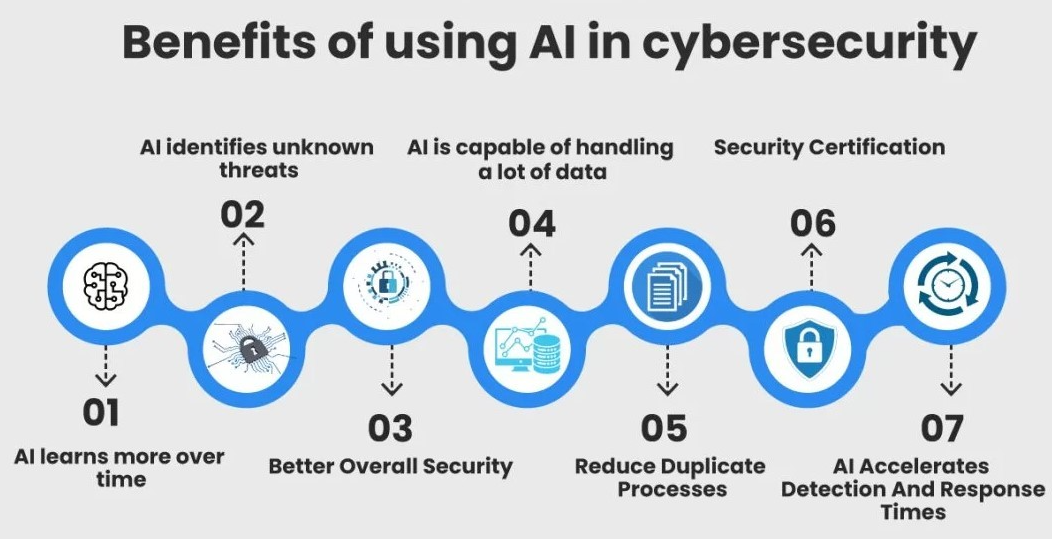
That view is not completely wrong, of course. It is easy to dismiss the entire point in favor of a more cynical one: that the defenders only care about reducing costs. They do, of course, but not exclusively. Like with many other aspects of this industry, it is necessary to think in probabilities and consider the risk management perspective. The best time for a company to adopt defensive AI is long before the CFO sees it as a necessity. It is a tool that allows less experienced staff to contribute meaningfully to the security effort, which benefits everyone who values long-term stability. It is a way to ensure that the company can keep up with the competition without breaking the bank in the process. It is an investment in the future that pays off in the form of increased confidence across the board.
The cost psychology will not change, even as the tools become much more sophisticated. The cheaper alternative always has an advantage over the expensive one, and it will continue to do so in the world of automated security. Small DeFi teams will always need the option to protect their infrastructure on a budget, and the continuous scanning tools mentioned earlier are frequently their best option in such situations. They allow everyone concerned to operate in good faith: the developers can provide a reasonable level of assurance to their users, and the traders can accept the limitations of the system without demanding unrealistic levels of performance. The overall cost of making smart contract audits relevant to regular users is much lower than it would be without automated scanning, which ultimately makes the industry safer.
Common User’s Shield Is Personal and Borrowed
Defensive AI tools are not only useful to protocol developers; they can also help common users protect themselves from attackers. In many ways, this is simply an extension of the previous point, since end-users are the ones most in need of someone to watch their back.
Products like wallet scanners and browser extensions that expose drainers are already doing this, but it is worth discussing the topic in greater detail, focusing on the most important aspects of the interaction. Users are frequently at their most vulnerable when interacting directly with a contract, and it can be reassuring to know that there is a tool that will double-check every transaction before it is sent. It is also comforting to know that there are other measures in place to reduce the risk of an exploit, including transaction simulators, phishing detection, and tools that protect against fake customer support emails.
The mental model that makes these tools most effective is simple: crypto has already asked ordinary people to be banks, and it has rewarded them for their willingness to take on responsibility. Defenders have responded by trying to give users the tools they need to be effective, trustworthy banks. That is the most useful way to think about products like wallet scanners and browser extensions that detect malicious activity in real-time. They are the skeptical friends that common users need but frequently fail to ask for, the ones that are always looking out for scams and willing to stop them.
The best security software will frequently be hated by the people it is supposed to protect, since they will always feel as if they are being monitored, harassed, warned against dangers they do not believe in, or generally obstructed at every step of the way. Attackers know this and frequently leverage the advantage to get past initial resistance. The best defensive products will therefore be those that manage to protect users without hurting their feelings, and that is a much more difficult task than it appears at first glance. Trust is earned, and it is not given to tools that operate like nagging parents or cruel overlords. Detection is an intellectual exercise, while trust is an emotional one. Both are vital, but they have to be obtained in different ways.
If one were to distill the entire discussion down to a few simple points, it would be possible to replace everything that came before with a list of the ways in which defensive AI helps regular crypto users:
- It lets them stop relying on their own judgement in favor of something more reliable.
- It helps them become more skeptical of interactions designed to gain their trust.
- It prevents single-point audits from becoming the foundation of a project’s security posture.
- It allows cheaper but equally competent alternatives to traditional human defenders.
- It keeps ordinary users from relying exclusively on their own understanding of the risks.
None of this eliminates risk, of course, but it does reduce the likelihood of catastrophic failure. Crypto will always involve smart contracts, and those contracts will always be vulnerable to attack in some capacity. Users will always be responsible for making sure they are interacting with trustworthy code, and they will frequently do a poor job at the task. Defensive AI is not a magic shield, but it does make the weak points much less obvious. And in the world of crypto security, that is frequently enough to make the difference between survival and ruin.
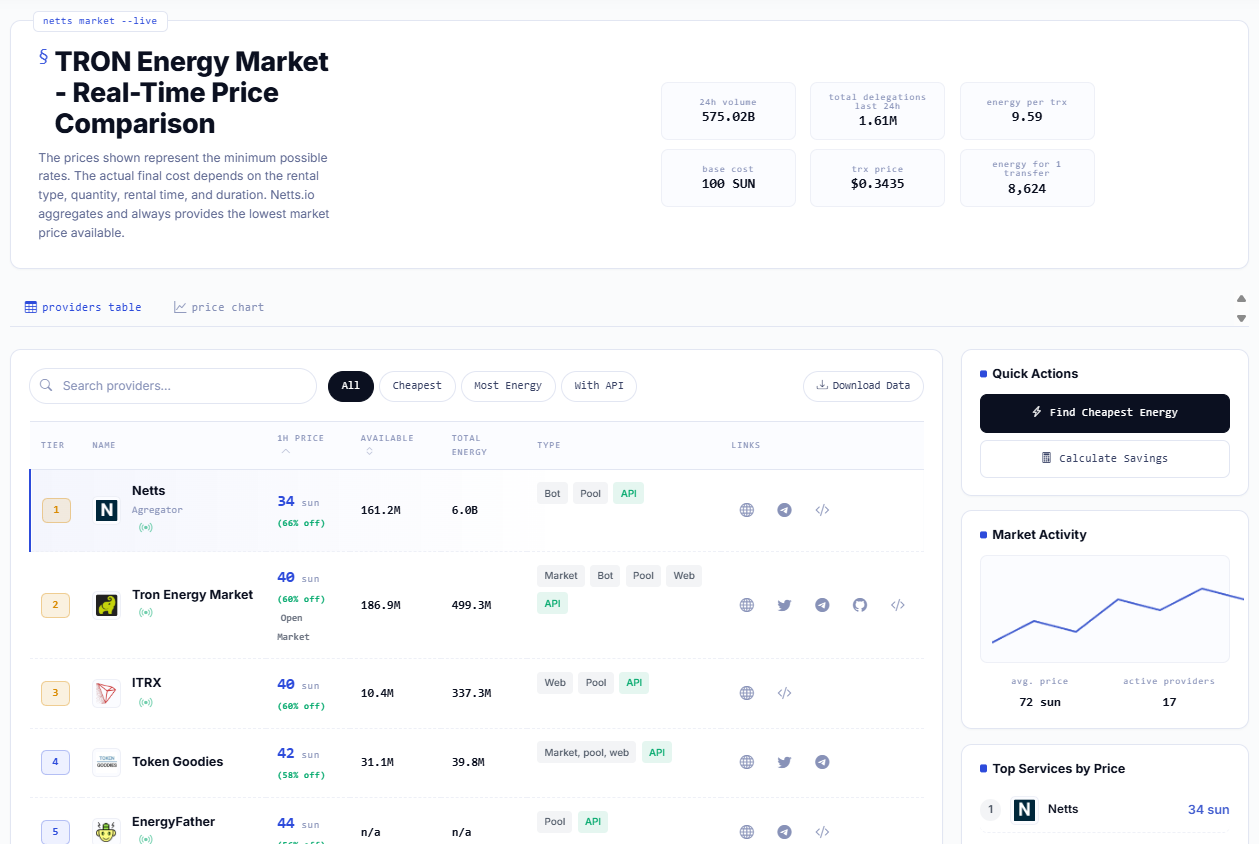
And when the conversation finally leaves malware, agents, and security theater and returns to ordinary on-chain life, the practical tools matter again: comparing rates on the TRON Energy market, finding the cheapest TRON Energy before a transfer, and knowing where to buy TRON Energy without burning needless TRX. Netts.io’s TRON Energy Market makes that comparison blunt and useful by aggregating live provider prices, volumes, and options so users can rent Energy and Bandwidth instead of overpaying for every USDT move.