Best Cryptowallets in 2026: Some Like It Hot
Hot wallets still win in 2026 when speed matters — Phantom, MetaMask, Trust, TronLink picked by habit, not virtue.

Cold wallets are enjoying a renaissance. After every major hardware scare, the crypto internet undergoes a collective cold wallet fetishism binge, waxing nostalgic about the romance of metal backups and the idea that one’s wealth is somehow safer when it’s not on one’s computer. And this is all understandable, fair, and warranted. Paranoia has its place, and the market will always reward it.
That said, cold wallets are a pain in the ass. Once the initial Coldcard entropy panic fades away, what remains is a set of inconveniences that make one miss the days when one had a hot wallet. You bought a fortress, but it turns out that you have to perform every transaction as if it were a pilgrimage. Every transfer becomes a production and every swap requires a small negotiation with yourself to convince your cold wallet-wielding past self to sign the damn thing.
It starts small, but eventually, this friction becomes unbearable. Especially for those who are not the type to buy Bitcoin, bury the seed phrase deep in the woods, and never look at a crypto chart for five years. Most people are not monks. Most people are not long-only Bitcoin investors. Most people want to be able to take profits when the market wants them to. Take the recent rise in SOL price, for example. The asset’s price jumped by roughly a quarter during the week, reasserting its dominance over the nineties and shorting the bejesus out of anyone who had thought the coin was going to stay there. The volume was enormous, the network utilization talk was louder, and the ETF speculation was even better. It was all the kind of market environment that rewarded aggressive traders and short sellers who could act on a moment’s notice while punishing those who had to first go home, take a hot wallet out of the safe, and sign a transaction with trembling hands.
This is why hot wallets exist. Desire outweighs devotion.
Why Hot Wallets Win
The industry loves to engage in virtue-signaling about cold and hot wallets. The former is seen as the proper crypto asset management technique, and the latter is frequently viewed with disdain. This is understandable from a certain perspective, but it’s also incredibly myopic and unfair to hot wallet users. After all, who among us has not had the experience of wanting to sell some Bitcoin but being unable to do so because we had to first take the cold wallet out of the safe, spend ten minutes fiddling with it, and then sign the transaction with shaking hands? Not only does this type of inconvenience create openings for malicious actors, but it also often causes one to miss out on opportunities because one’s tools are inconvenient. Markets do not pause for dramatic wallet rituals.
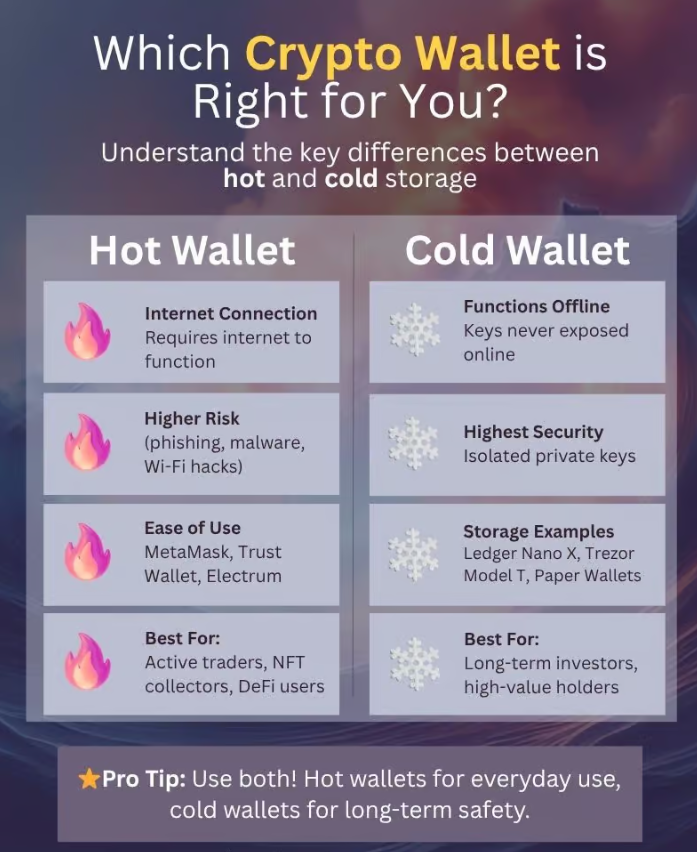
It is worth noting that the ability to act quickly and without fuss is not a trivial consideration for many crypto users. Some of them are traders, and they frequently need to move funds around the blockchain in order to take advantage of arbitrage opportunities or other market fluctuations. Others are small businesses that need to make payments but do not want to turn every invoice into a cold wallet access ceremony. And then there are the users who want to engage in DeFi but do not want to turn every transaction into a trip to the vault. Even the most hardcore crypto maximalists who want to put everything they own into crypto and never touch fiat again would be better served by a combination of cold and hot wallets rather than a single one. The inconvenient truth about cold storage is that it is not convenient, and convenience is a security risk in and of itself. Inconvenience causes people to adopt bad habits, like leaving money on hot wallets because it is inconvenient to move it, or using the same phrase across multiple devices because it is inconvenient to manage several. It is not that cold wallets are insecure; it is that they frequently cause people to behave insecurely.
Which Hot Wallet Fits Which Human
Phantom became the face of Solana for a reason unrelated to the whitepaper. It makes fast transactions feel like an accessible luxury, rather than an acquired taste. Its interface is intuitive enough that the user’s curiosity will not be punished by an uphill battle. NFTs, swaps, staking, mobile friendliness — the wallet’s appeal is in its ubiquity and the perception of wasted time as brief as possible. It is the preferred instrument for a twenty-eight-year-old who got into crypto via memecoins and has no emotional attachment to Ethereum apart from curiosity. He does not want to waste his morning on RPC setups. He wants to open Phantom, look at his position, and be ready to exit when the chart turns.
As with most hot wallets, convenience comes with a price. Fast and pretty tools encourage complacency. Beautiful interfaces can make users sign ugly transactions. Phantom has mitigated these risks on both fronts: warnings are more plentiful, and its multichain appeal has broadened beyond Solana’s ecosystem. However, the overall design still encourages the sense of immediacy that is vital to a momentum-day-trading Solana user during the latest squeeze. For someone who is supposed to hold but does not know how, it is a hazard disguised as a virtue.
Consider the alternatives, which position themselves as better fits for certain users. Phantom’s competitor Solflare targets a similar audience, but with a slightly different temperament. Where Phantom aspires to nightlife, Solflare is closer to a Solana bar. The tools are largely the same, but the endgame is slightly different: native staking, on-chain depth, simulation tools, and power-user conventions. It is still aimed at a general audience but suggests that one should operate in Solana without being a tourist. A validator-curious user, or a DeFi roamer who dislikes the Solana-specific theater, will be better served by using this wallet as their everyday browser. It does not pretend to be deeper than it is. It does not hide its tools under perfume. This removes some security benefits but also expectations: the user will not be surprised when a signature is the deciding factor.
Some people feel safer when the tool looks good. Some feel safer when it looks intimidating. Solflare often satisfies the latter.
MetaMask is the passport of Ethereum culture for people who have been around long enough to have one. It has survived years of phishing attempts, meme infusions, and reputation damage, but its dominance is indisputable. It is the default assumption in most conversations about Ethereum software. This wallet serves people who spend their time in the EVM space, who are not put off by L2s, bridges, tokens, or the occasional experimental contract. It is also useful to developers who want to interact with Ethereum without being a resident. It serves browsers and builders, explorers and settlers. It is the quiet promise of continuous expansion, the permissionless addition of districts to the city. MetaMask users are those who want to live in the metaverse and be able to walk around its perimeter.
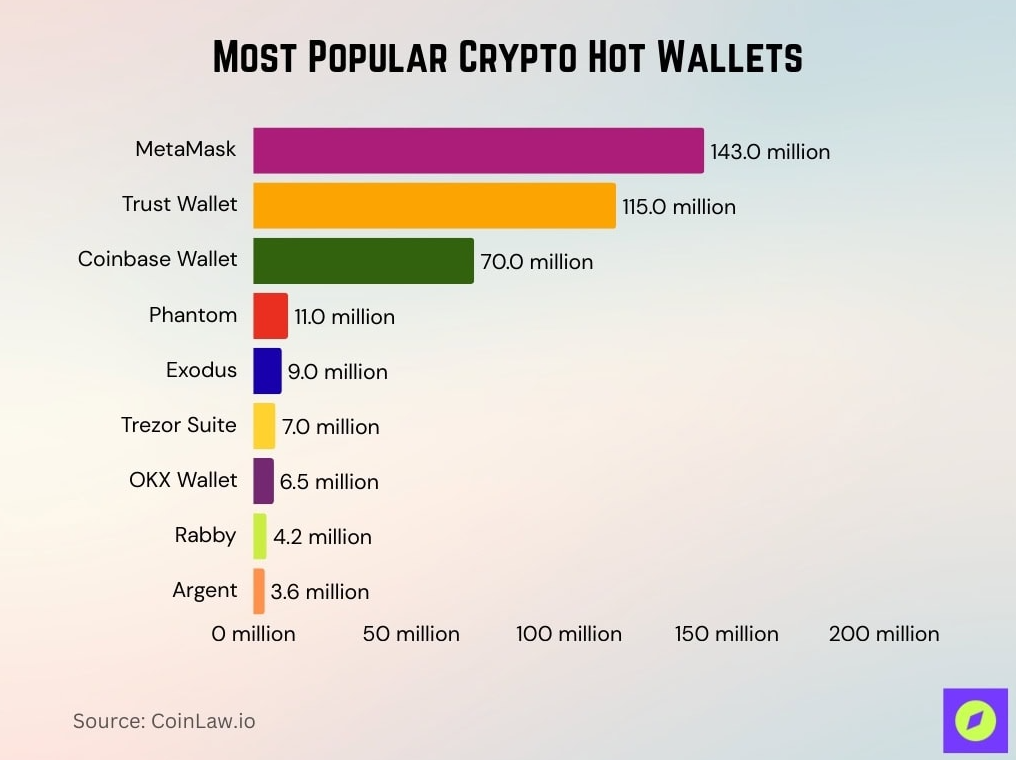
However, popularity is a double-edged sword, and the same ubiquity makes the wallet a target. Attackers only need to spend effort on one weak point, which negates many of the individual precautions. False extensions, customer support scams, airdrop fraud, and fake portfolio overviews proliferate simply because of the volume of users. In other words, there is no fundamental flaw in the design, but its users are constantly exposed to predation. This is the cost of convenience: MetaMask users are always on guard. They are right to be, but it comes at a psychological cost.
Who should use it? The people who are willing to pay this price, implicitly. The residents for whom downtown is the only option, and the merchants who must be vigilant at all times. In a world of decentralized cities, MetaMask is the badge of the adventurer willing to live in the capital.
Trust Wallet caters to a slightly different class of users, who favor the reduction of friction over all other considerations. It is mobile-first, multichain, multipurpose — in short, it is the wallet for the person who wants to engage in crypto without first choosing sides. This is the product for the curious holder who has a token in every wallet, and the liquidity in every smart contract. It is good for staking, swapping, and general adventuring — in other words, for people who do not want the hassle of specialization.
It is easy to underestimate this group’s appeal, however. The desire for ubiquity often comes at the expense of competence. Breadth often means superficiality: a wallet that has everything often has nothing in particular. The danger is especially acute for people who engage in DeFi without understanding how or why. Beyond the risk of fraud, Trust Wallet’s appeal often leads to the formation of bad habits by ordinary users.
However, for most, the friction reduction is the main benefit: its popularity is due to the fact that it makes sense to people who want to touch everything without specializing in anything. It is the token of convenience for those who do not want the burden of curiosity.
And then there is the tool that serves a purpose rather than chasing an image. TronLink’s appeal is not in its ability to attract users but in its ability to serve them. It does not cater to a broad audience, and it does not seek to inspire loyalty. If someone uses it, it is because they spend their time on the TRON blockchain and have no desire to engage elsewhere. They care about USDT contracts, stablecoin transfers, OTC desks, remittances, and payouts. They do not want to be bothered with other blockchains or their associated tokens.
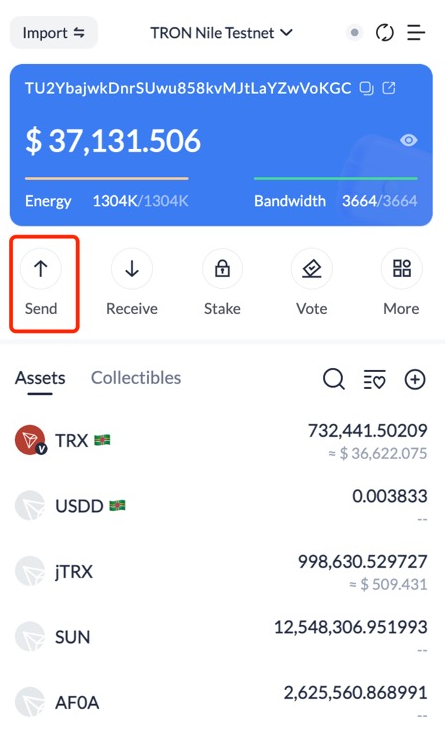
A cold-wallet sermon is irrelevant to their day-to-day affairs. The tools are designed for speed, and the user interface reinforces this: features related to Energy and Bandwidth are given due importance, and other elements are minimized. Everything works around the idea that a stablecoin wallet should prioritize velocity while still keeping costs in check. This approach is intuitively reasonable for people who operate in this environment: their survival depends on the precision of every transfer, and the ability to minimize expenses. It is this philosophy that makes USDT gas fees such a polarizing topic among wallet users.
There is an element of temperament to this approach as well, which is why the wallet has the audience it does. TronLink is useful to the average operator who is neither reckless nor sophisticated. He keeps his earnings in one place and his everyday spending in another, and he is aware of the risks but does not want to be bothered. He will be insulted by the suggestion that he is too conservative to be legitimate. He might even accuse cold-storage advocates of being irresponsible for making him waste time and money on the wrong front. What he does care about is the opportunity cost of every transfer: the potential for fees to eat into his profit is wasteful, which is why he tracks them with a calculator. He is a practical man who wants to get on with the next step, and a hot wallet is the only way to do it.
Hygiene Beats Hardware Theater
Return to the unpleasant but entirely true thesis: a careful hot-wallet user can safely ignore careless cold-wallet users. This is because the former group thinks about unknown transactions, compartmentalization, separation of concerns, device security, and “urgent security messages” in ways the latter group does not. A hot-wallet user can be safer simply by refusing to sign messages with unknown origins. He can reduce his attack surface by compartmentalizing his assets, using different browsing identities, and keeping his devices updated. He can protect himself from social engineering by assuming that “urgent security messages” are attempts at extortion, and so on. In short, there are behaviors that increase the resistance of a hot wallet to attacks, and people who engage in them are often safer than their cold-storage counterparts.
Security is a behavior, temporarily assisted by products.
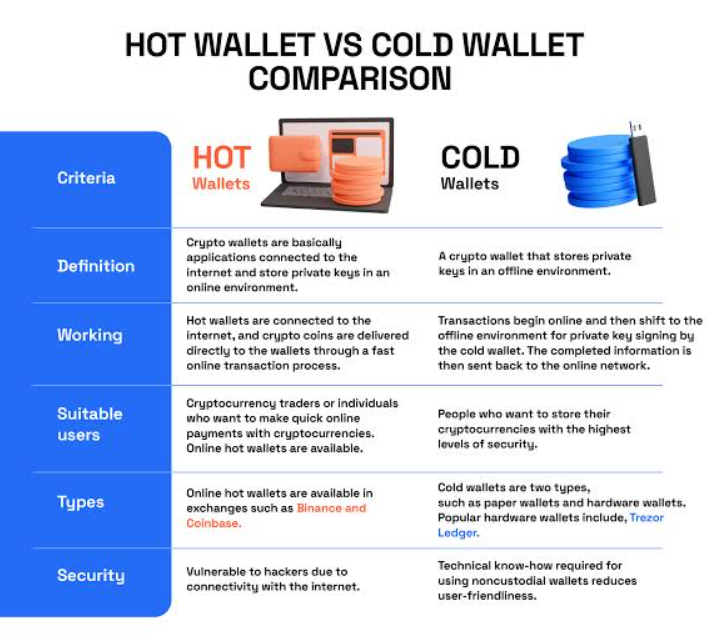
Security maximalism often involves a degree of theater, and the cold-wallet orthodoxy is no different. This approach to risk mitigation is frequently used by bad actors to signal virtue. In other words, people who engage in crypto fraud often position themselves as cold-storage proponents, which makes the practice suspect in the first place. Meanwhile, the people who quietly perform better are those who split their assets and automate their security procedures, without engaging in either extreme. The average status-driven cold-storage advocate fails to understand the behaviors that help hot-wallet users: he does not want to bother himself with the necessary preparations, and he believes that complexity equals safety.
The unpopular opinion is that the best hot wallet in 2026 depends on the person using it. Phantom is the preferred tool for Solana’s momentum traders. Solflare serves similar purposes for the more experienced users within the same circle. MetaMask is the default wallet for Ethereum’s EVM explorers, while Trust Wallet caters to the needs of the multichain generalist. And TronLink, finally, is the instrument of choice for the TRON USDT operators. The wallet rankings are contextual and based on the same principles: each hot wallet serves a given purpose better than others, and that purpose is rarely questioned.
When a user selects an unsuitable tool for their habits, they are likely to make mistakes, become frustrated, or both. This is the point where the individual risk assessment becomes personal: the best hot wallet is the one the person will interact with in a careful and methodical manner. Everything else is mere decoration.
If you want to reduce your exposure to attacks, focus on behaviors, not tools. Splitting stacks and using different devices for browsing and transactions will protect you better than any cold-storage dogma. The same goes for keeping your software updated and viewing suspicious messages with extreme skepticism. Even the busiest operators can dedicate a few minutes to these procedures, and they will dramatically reduce the chances of becoming a victim.
The next best thing is to recognize that cold wallets only protect the illusion of permanence, while hot ones facilitate motion. Markets punish people for confusing the two, and this trend is especially obvious in crypto: few things are as permanent as a security maxim, and even fewer last as long as a hot wallet. Some prefer the cold comfort of certainty; even the most skeptical among them secretly want it. The majority, however, have grown accustomed to the convenience of motion, and this dynamic rarely changes. Money that moves when the charts move up is theoretically someone’s, but practically it belongs to the person who keeps it within reach at all times.
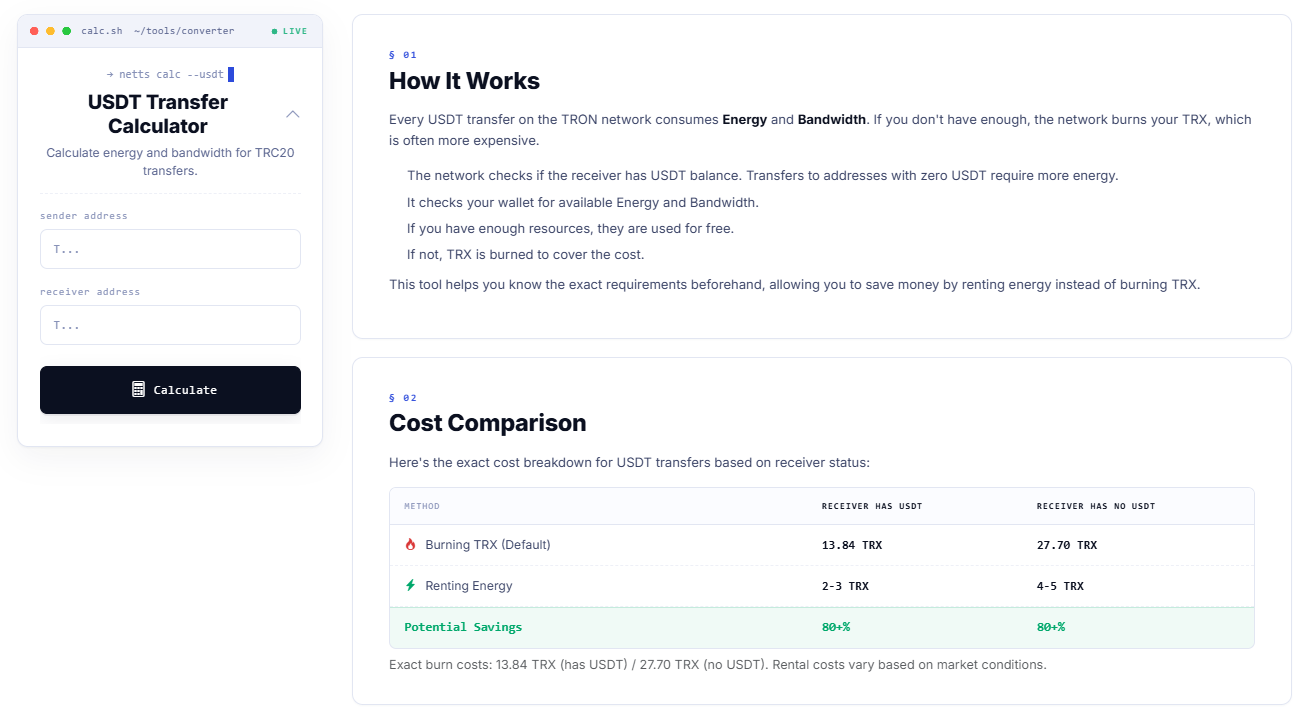
When that motion includes TRON USDT rails, the boring details decide whether speed stays profitable: use the USDT Transfer Calculator on Netts.io before you send, compare burn-versus-rent outcomes for Energy and Bandwidth, and treat it as a practical way to aim for the lowest USDT gas fee, keep cheap USDT fees in view, and save more on USDT fee costs instead of learning after TRX disappears.