Proof of Reserves: Audited Theater or Real Assurance?
Proof of Reserves can reassure crypto users, but snapshots, liabilities, auditors, and exchange incentives decide how much proof really means.
Meet Bob. Bob isn’t some radical. He doesn’t spend his evenings plotting against the bank, building alternate economic systems, or quoting cypherpunk mailing list archives at his dinner parties. He has a nice job, a mortgage, and a dying laptop. He checks his crypto exchange tab out of morbid curiosity a few times per week. There’s his Bitcoin, his ETH, his stablecoins - and the token he bought because it looked nice and he couldn’t sleep at 2am. It’s all there on that little screen, with all the reassuring weight of the claims behind it.
Which is the problem, from his perspective. Where exactly is it? The exchange says it’s there. It updates in real-time. It has logos and decimal points and graphs. But Bob is right to remember that a number on a website is not a coin in his wallet. He has to trust the exchange, a company with an impeccable track record of not being bankrupt, to hold his assets for him.
Legacy finance has had centuries to develop rituals and routines that extract this trust, for the benefit of both sides. Marble banks, legal charters, regulators, deposit insurance, central bank backing, quarterly reports - all help build an aura of permanence around old-school finance. It’s not an accident that Bob trusts his bank, even if he grumbles about it when the branch closes at 3pm. The digital alternatives to his crypto exchange don’t have this built-in credibility. At best, they have a website, a matching engine, a cold wallet, a charismatic founder claiming on Twitter that the assets are all safe, and that the company is, in no way, secretly diverting funds to another company’s black wallet at the moment of deposit.
Where Proof of Reserves Fits In
Proof of Reserves is the attempt to bring this same level of security and transparency to crypto assets. In other words, Bob is not the only one who wants to see a claim backed by actual reserves, audited and verified. Proof of Reserves is a specific set of procedures for doing exactly that, and ideally giving customers confidence through transparency and cryptographic guarantees.
Bob might not know any of this when he goes to check his account again, after a particularly volatile market downturn. Some of his colleagues have been asking around if the exchange is solvent, following yesterday’s rumors. He finds a page published by the exchange itself, announcing their latest Proof of Reserves, where they’ve published a page showing that all of his deposits are accounted for, along with the instructions for verifying any given deposit. He looks more closely, and sees that his account number has been incorporated into a Merkle tree with all the other customer wallets. The public can verify that the exchange has control over these on-chain deposits - with a few clicks, Bob can see that his particular balance is included in that tree. Meanwhile, an independent attestation company has been tasked with double-checking if the exchange’s reserves truly matched the figures in this tree. Somewhere down the line, someone has to actually count the crypto in those addresses, making sure that it matches the liabilities listed in the snapshot.
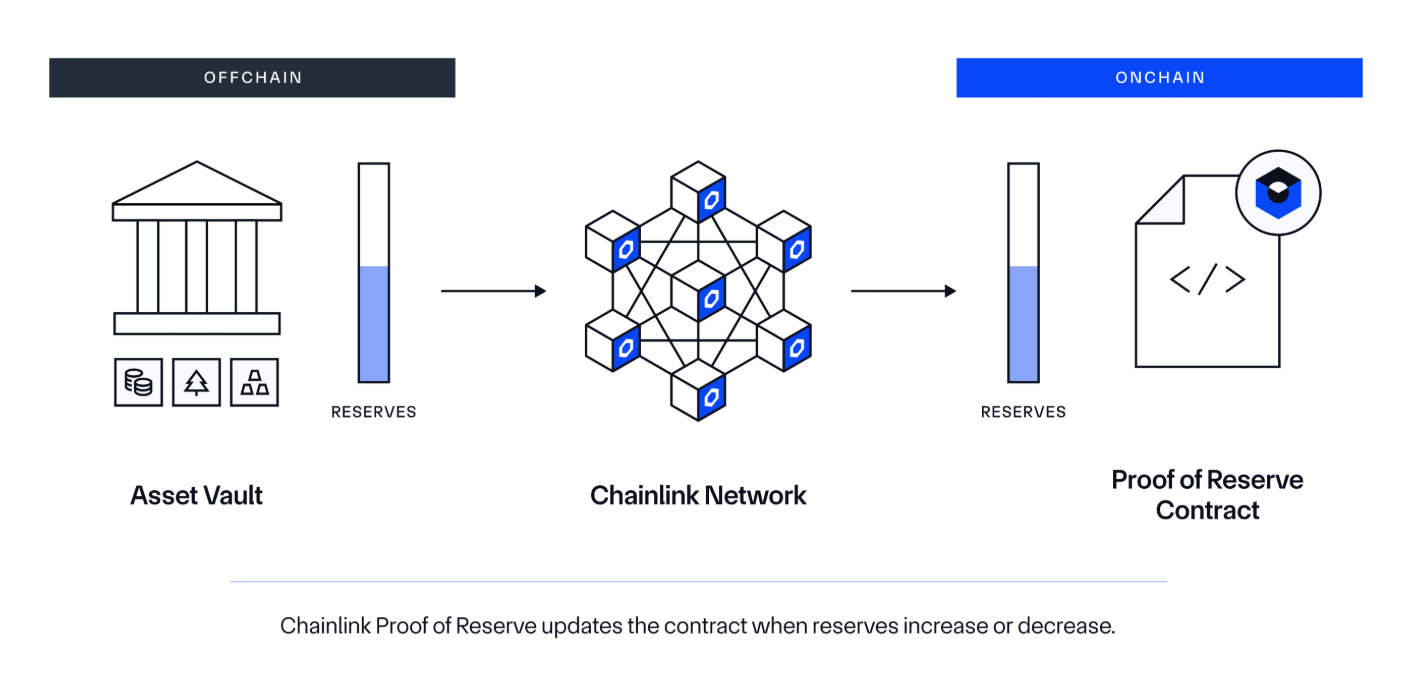
Bob is feeling reassured. Not only is he able to verify that his coins are accounted for, broadly speaking, but he can go through this process himself. Proof of Reserves makes him feel like he’s not blindly trusting the exchange, compared to trusting a bank or a financial institution. The very idea of PoR - that a business has to actually prove that its assets back its liabilities, on the customer’s terms, not the company’s - is an appealing one. That’s the value proposition for the end-users. It should be relatively straightforward for PoR to prove custody of the assets, because the assets are on-chain. The verification of inclusion can be automated with Merkle proofs. This is what makes crypto fundamentally different and arguably better in this use case.
Meanwhile, the technical details are largely invisible to him. He trusts the math to a degree, but he mostly trusts in the presence of this whole process itself. It’s one thing to say that the exchange’s liabilities are covered by its reserves. It’s another to actually be able to see this for yourself, or at least follow along as an independent auditor does it. It’s no surprise, then, that the most prominent crypto exchanges are vying to be seen as trustworthy by making PoR reports a regular occurrence for their users. Kraken, for example, has continued its practice of regularly publishing claims of reserves held by the exchange, including the number of assets covered such as BTC, ETH, SOL, USDC, USDT, XRP and ADA, with a Merkle tree root representing the customer balances and an independent audit confirming the on-chain holdings. Binance’s approach to PoR, on the other hand, covers a wide range of assets including BTC, ETH, BUSD, USDT, and more, but also utilizes zero-knowledge proofs to enable users to verify that their balances are part of the total liabilities without disclosing all the balances. OKX and other exchanges have made proof-of-reserves a regular pillar of their transparency practices, including having entire pages dedicated to the topic in the aftermath of the FTX collapse. All of this is helpful in that, when push comes to shove, the users know that they can ask specific questions about the assets they see on their balance sheets.
Shift in Crypto Exchange Culture
Many are coming to terms with transparency as a necessity. In the early days of the ecosystem, there was a tolerance for uncertainty due to the pace of innovation. Reserves seemed like a detail, a nuance to be ironed out later as the industry grew more mature. That thinking has since been challenged by the implosion of several major players who failed to establish adequate accountability measures. Today, a commitment to regular, detailed proofs of reserves is seen as an integral part of the service offering. It’s not just the users who are demanding this kind of information - the regulators are pushing for it too. The latest accounting guidance on crypto custody in the U.S., for instance, reflects a growing emphasis on reserve adequacy, attestations, and the use of high-quality liquid assets. Legislative proposals also contemplate the need for reserve attestations that go beyond general assurance and incorporate cryptographic proofs for both assets and liabilities.
The concept of reserves is far from new - it predates crypto and the internet as we know it. At the most basic level, it’s an acknowledgment that for every valuable asset a person deposits at an institution - a bank, a vault, a money market fund - that institution has to hold onto something of roughly equal value in order to remain solvent. It’s an intuitive concept that serves as the foundation of modern finance. In practice, however, it turns out to be incredibly challenging to get right. In large part because it involves a certain amount of circular logic. Why would someone decide to open an account with a bank or invest with a brokerage if that institution only holds reserves equal to the value of the assets the customer has deposited? Because, ironically, reserves are supposed to reassure the depositor that the institution will still be around when the customer comes to withdraw their assets - which is particularly important if the institution is promising greater liquidity than the depositor can provide.
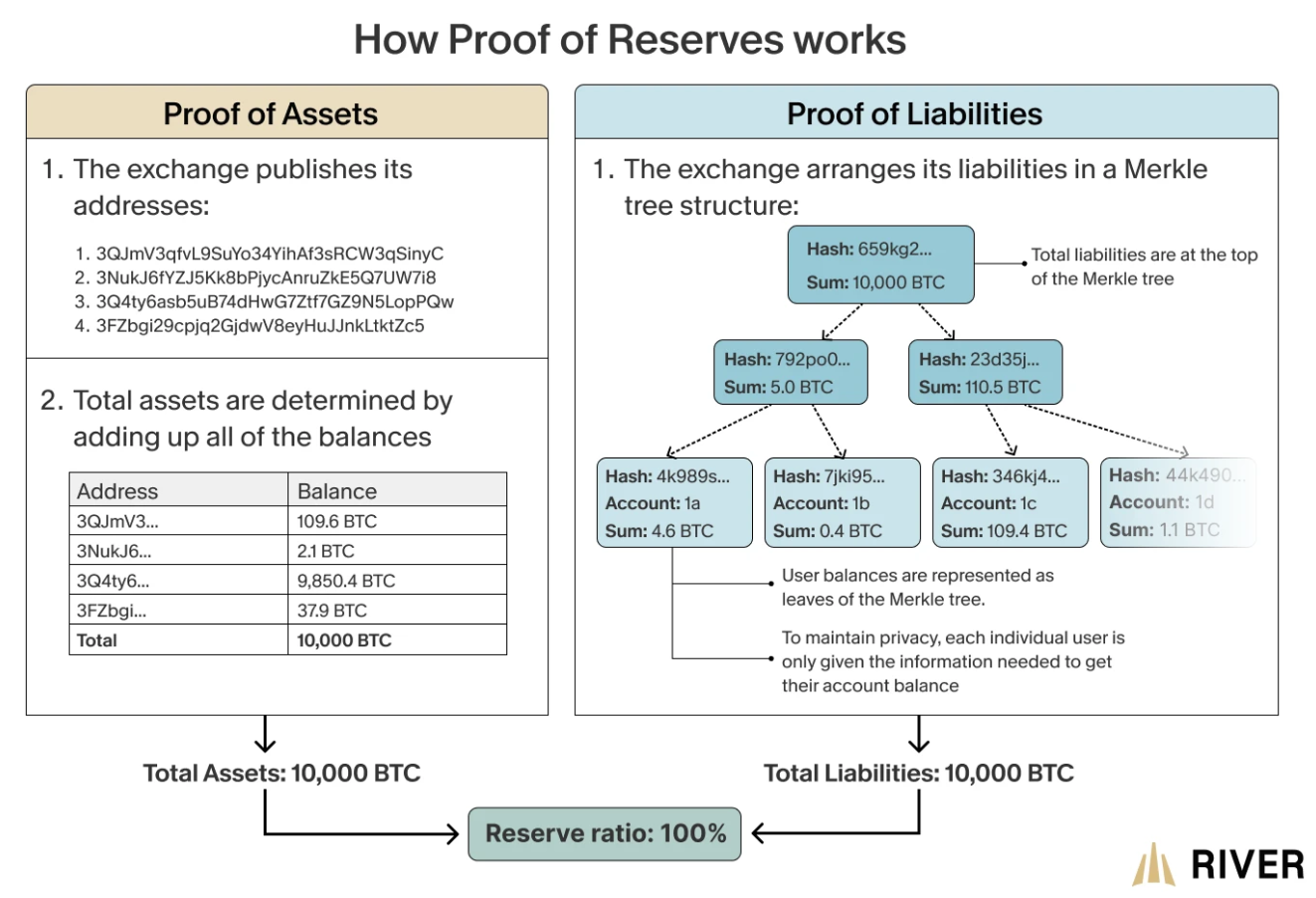
That’s why the banking system employs various measures to smooth the process - fractional reserve banking, in particular, allows banks to lend out a portion of the cash that has been deposited with them or utilize it for investments, thereby increasing profits. At the same time, it creates an environment wherein bank runs are much more likely to occur. Reserve requirements, central bank oversight, deposit insurance, auditing, capitalization rules - all of these are additional measures designed to help prevent the panic that can lead to financial freezes and the associated collateral damage.
The pattern is depressingly intuitive. Some entity that has attracted a following or customers claims to have assets. The customers accept this assertion, because it helps justify larger deposits, because the entity seemed credible, because the entity simply seemed too big to fail. Deposits are made. The bigger the institution grows, the safer it seems. And then the assets turn out to be something else entirely and the liabilities are larger or less liquid than claimed.
That is why people care so much about reserves, crypto or otherwise, even if they do not know the precise definition. People want to know that the exchange has their cryptocurrencies, that the stablecoin issuer has their dollars, that the lending protocol has their collateral, that the bridge has their assets – that the intangible promise to post transaction confirmations online actually has something real behind it. Unfortunately, this is a question that has an answer in crypto. The same incentives have manifested themselves, and in ways that the technology did not prevent. It should come as little surprise that the technology enables new ways for people to con each other, just as traditional finance enables new ways for people to con each other.
FTX is the obvious example. Prior to its bankruptcy and the associated criminal investigations, FTX was widely perceived as a reliable custodian of assets, with connections to both Wall Street and Capitol Hill, celebrities willing to endorse its products and venture capital firms willing to fund its expansion. This did not stop FTX’s collapse, but it meant that many customers and partners were surprised and uninformed when the reality was uncovered. The company spent years engaging in risky behavior, including commingling and misappropriation of customer funds, with liabilities substantially exceeding its assets on paper and a deeply dysfunctional balance sheet. Its trading affiliate was not as solvent as one might have expected based on the public information about FTX.
It was not the only L1-style crypto company to suffer from this issue. Celsius Network promised customers yields on their crypto deposits, which masked the reality of their liabilities and the risk associated with their business model. Voyager, BlockFi, and numerous other crypto lenders engaged in similar malfeasance, while failing to provide the transparency that their more established financial services counterparts did. In essence, when it comes to crypto, “your assets are safe with us” and “we have a viable business model to pay you back” are effectively indistinct phrases until people attempt to access their funds.
What Proof Says
Proof of Reserves seems like a straight question and a simple answer. What people often forget to ask, however, is what qualifies as proof, because simply publishing a list of wallet addresses and claiming that they contain assets is hardly sufficient in and of itself. For PoR to actually serve its function, the process must tie the assets to liabilities, which is why a company that promises to hold ten billion dollars in reserves while secretly holding only five is still engaged in fraudulent activity.
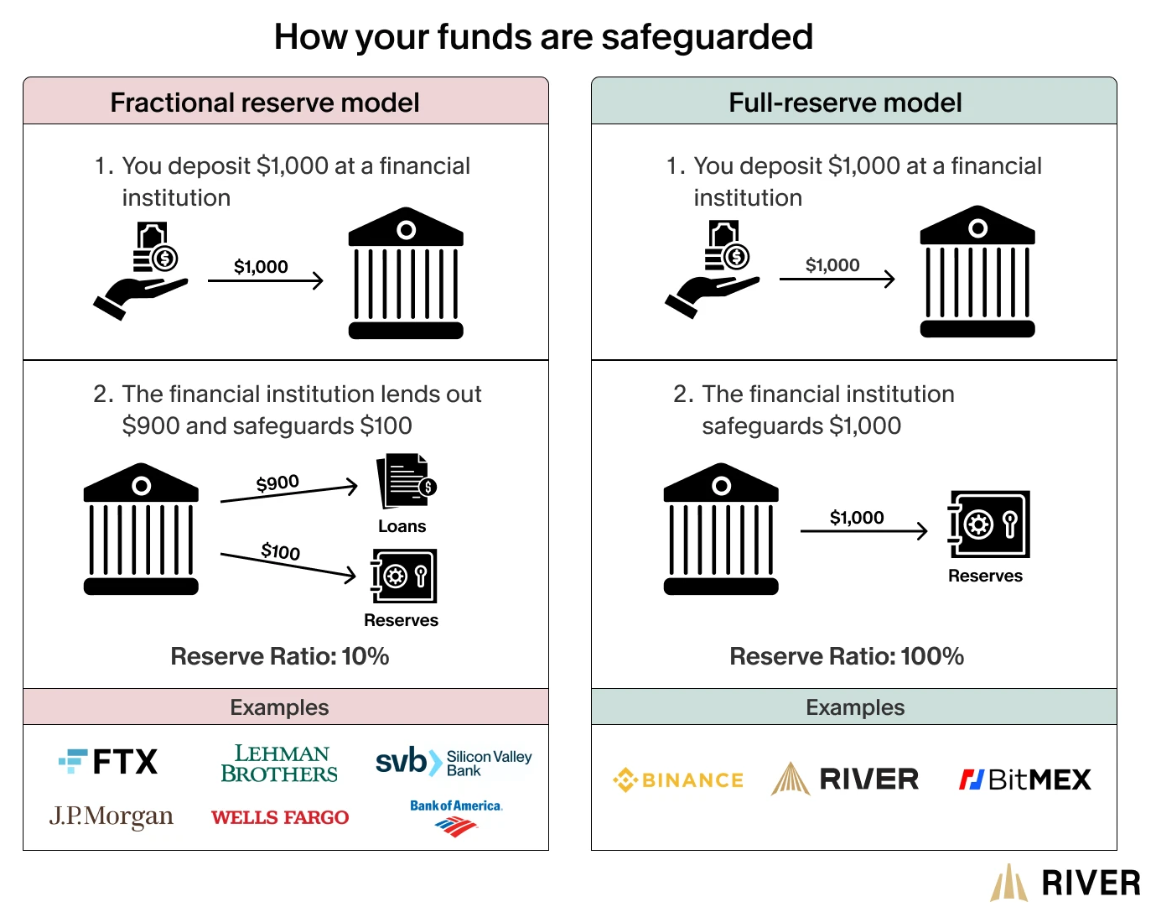
The simplest way for an honest crypto custodian to prove that it is not engaged in fraudulent activity is to conduct a proof of reserves in good faith. This usually involves the following steps: a reserve snapshot, which usually reflects the account balances of all customers as of a particular block height; the creation of a merkle tree or similar cryptographic scheme, which effectively obfuscates all balances bar one while proving that the balances are reflective of the broader snapshot; and additional cryptographic information proving that the company possesses the assets it claims to hold, usually by signing a message from each wallet address on the blockchain or using another proof of control mechanism. An auditor or another independent entity is then tasked with verifying that the assets contained within the wallets correspond to the liabilities represented by the snapshot, essentially confirming that the company does not possess more assets than it claims to hold and that it actually holds what it claims to hold.
By verifying the proof of reserves, Bob can be reasonably confident that his liabilities are accounted for and that the assets snapshot reflects them. He might know that the auditor only checked a subset of the assets due to their availability at the snapshot date or other limitations, but he should also be aware that a reputable auditor should not claim to cover anything beyond what they can actually see. At the same time, Bob should be able to confirm that his assets are indeed included in the snapshot, either by reviewing the merkle tree or, in some cases, receiving an individual note for his specific account that demonstrates this fact without disclosing information about other customers. More advanced implementations utilize zero-knowledge proving technology to demonstrate this fact with greater mathematical certainty.
The limitations associated with PoR deserve attention, as they are often the source of undue criticism. At a fundamental level, PoR is a point-in-time statement, which means that an auditor can only confirm the state of the art as of a particular moment, not before or after. It does not account for off-chain liabilities, which means that a company could borrow funds on the day of the snapshot, only to default on them shortly afterwards. It does not always account for nuances in the company’s liabilities, such as derivatives, margin positions, affiliated entities, or other risks. And finally, the snapshot represents a state of the liabilities as well, which is why a company could take advantage of daily snapshots by borrowing funds only for the day, depositing them with an exchange or a payments processor to receive rewards, and repaying the loan before the next snapshot.
This is why the controversy surrounding Mazars and their sudden decision to stop auditing crypto companies in late 2022 was so pertinent to the discussion. Following FTX’s collapse, Mazars published a version of their proof of reserves for Binance, Crypto.com, and KuCoin while ceasing its involvement with crypto companies in general. According to the firm’s letter to the public, this decision was made in light of misinformation surrounding their reports, which is demonstrably false. The reports only contained the information that any company is contractually entitled to include, namely their assets, liabilities, and the associated risk exposure. In short, the public wanted these companies to be safe, but they were no different from any other custodians, which is why the reports only contained the information available to all crypto users. By overstating the claims made by these reports, critics did a disservice to the public and created unrealistic expectations for crypto audits in general.
An auditor can be deceived and can deceive others, either intentionally or not. This can happen if the auditor is provided with limited information that does not reflect the true liabilities of the company, if they provide generalized conclusions without performing the work required to identify specific liabilities, or if they do not understand the risks that the company takes due to inadequate diligence. An auditor can also be incentivized to lie outright, whether due to a conflict of interest or explicit bribes, although the last situation is rare for independent auditing firms. In most cases, an auditor can be counted upon to provide reasonable but limited assurances, identify surface-level risks, and operate within the constraints of their engagement without attempting to provide broader, generalized assurances to the public or investors.
This does not eliminate those engagements or render them meaningless. They serve a vital function by separating dishonest actors from those that provide adequate, if limited, levels of scrutiny. A proper PoR audit conducted by an independent third party at regular intervals, with liabilities, wallet ownership, and asset control publicly verifiable on the blockchain is preferable to no audit at all, because it creates meaningful costs for dishonest actors that seek to misappropriate customer funds. The same audit, however, should be understood as a snapshot of one point in time, with broad but limited assurance, and must be evaluated in context.
The truth is, the most effective PoR processes currently on offer are designed to do exactly that. They incorporate both assets and liabilities in a verifiable manner, provide customers with an opportunity to verify that their assets are included in the snapshot, and operate regularly so that users can be confident that their funds are secured at all times and not just on a periodic basis. They utilize independent auditing firms, are transparent about their procedures, and can withstand reasonable third-party scrutiny. Most importantly, they set explicit expectations for what the audit covers and do not attempt to imply or state more than they can deliver. These processes operate in concert with a regulatory environment that recognizes their limitations, which is why accounting standards, custody rules, and reserve attestation guidelines are being developed at the local and international levels. PoR is not a magic pill, but it is a meaningful step towards greater transparency, with stablecoin issuers, exchanges, lending platforms, and other crypto custodians operating in a more responsible manner than ever before.
What Proof Cannot Say
Reserve fraud is a human weakness, as is the perception of solvency based on scale and reputation. The mechanisms of confidence-building outlined above are useful, but they are ultimately incomplete, and there are aspects of the audit that should always be approached with a healthy degree of skepticism. After all, the PoR snapshot is a carefully choreographed presentation of facts, one that seeks to convince the public that the assets match liabilities while obscuring any risks. The auditor should always be expected to highlight these limitations and be honest about the threats that are not addressed by the audit, such as third-party obligations, derivatives exposure, or the ability of the company to fulfill its daily obligations.
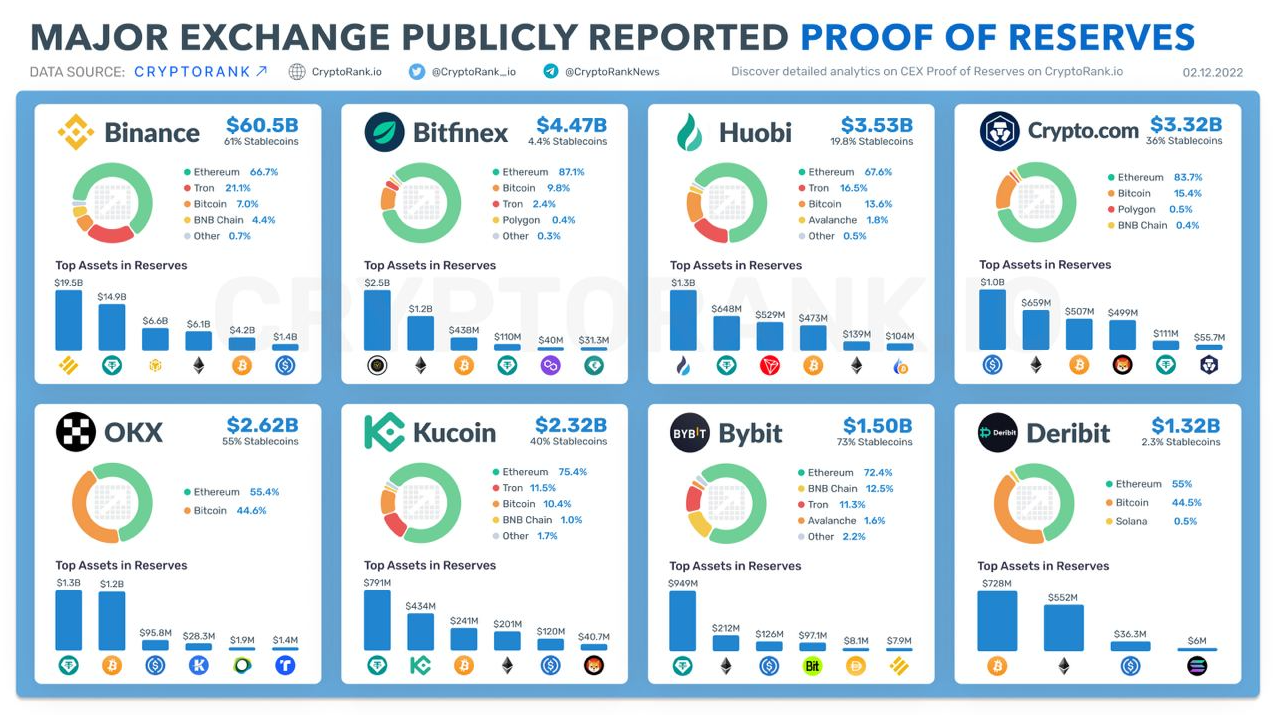
The same is true for the auditor’s own constraints. At best, an independent auditing firm can provide limited, time-phased assurance about the company’s claims. At worst, an auditor can be entirely complicit in the company’s fraud, either out of incompetence, negligence, or greed.
When it comes to Proof of Reserves, it is crucial to understand the difference between what it can and cannot say. In the simplest terms, the PoR auditor can confirm that the company’s assets correspond to its liabilities as described and can indicate the risks that it has identified. The auditor cannot, however, assess whether the liabilities accurately represent the company’s responsibilities and obligations to the public or its affiliated entities. Nor can the auditor assess the risks that arise from the company’s operations on a daily basis, or the risks that the company does not believe it needs to disclose.
This places a responsibility on Bob to understand the audit in the same way. If he is being misled about the terms of the custodial agreement, the auditor is unlikely to be able to help. If Bob’s funds are subject to a daily margin call that is never disclosed, he should treat those funds as if they were unsecured lending to the company. The same is true for liabilities that extend beyond the assets listed in the reserve proof. Proof of Reserves is not a complete solution, but it is an essential element in a broader risk management strategy, and it should be treated as such.
Proof of Reserves represents assurance, but also the illusion of assurance. This, in turn, should shape Bob’s expectations about the custodians that issue such proofs and his responsibilities as a crypto user. Simply put, if he places his assets with an entity that has issued a PoR, the custodian should be able to demonstrate more than popularity, credibility, or hype. It should be able to show that his funds are included in the liabilities snapshot and that he has the ability to confirm this himself, and that the assets section of the audit actually contains assets and not liabilities that the company does not disclose or other obligations. A competent auditor should be able to identify the risks associated with the custodian, and a responsible proof of reserves audit should highlight them in sufficient detail rather than attempt to disguise them as strengths.
The custodian itself should recognize the limitations of the auditor. Just as no auditor can be universally competent or truthful, proof of reserves snapshots cannot offer unlimited assurance. The company issuing the audit cannot conceal these limitations or hide them from the public, because doing so would damage their credibility if and when the shortcomings are eventually revealed. Transparency, then, should be the guiding principle for both the auditor and the PoR custodian. The auditor must recognize that limited liability snapshots do not offer unlimited assurance. The auditor, as well as the company issuing the report, must be explicit about the audit’s limitations and operate honestly if they wish to retain a degree of credibility.
As with everything else in crypto, the proof of reserves is a process. It is neither salvation nor snake oil, but a series of steps designed to raise the barriers of entry for dishonest actors and provide reasonable assurance to honest ones without overstating the evidence. It works best when it utilizes independent auditors, incorporates both sides of the balance sheet, highlights limitations of proof, includes recurring verification dates, and utilizes strong cryptographic assurances.
Ultimately, the question of “proof versus faith” and the associated concerns will be answered not by the proof itself, but by the people who rely on it. The truth is, Bob cannot be totally certain about anything. He can take reasonable steps to manage his risk, however, and that is what makes proof of reserves such an important tool. It is not a complete solution, but it is a vital risk management technique that allows him to make better choices and reduce the likelihood of being exploited.
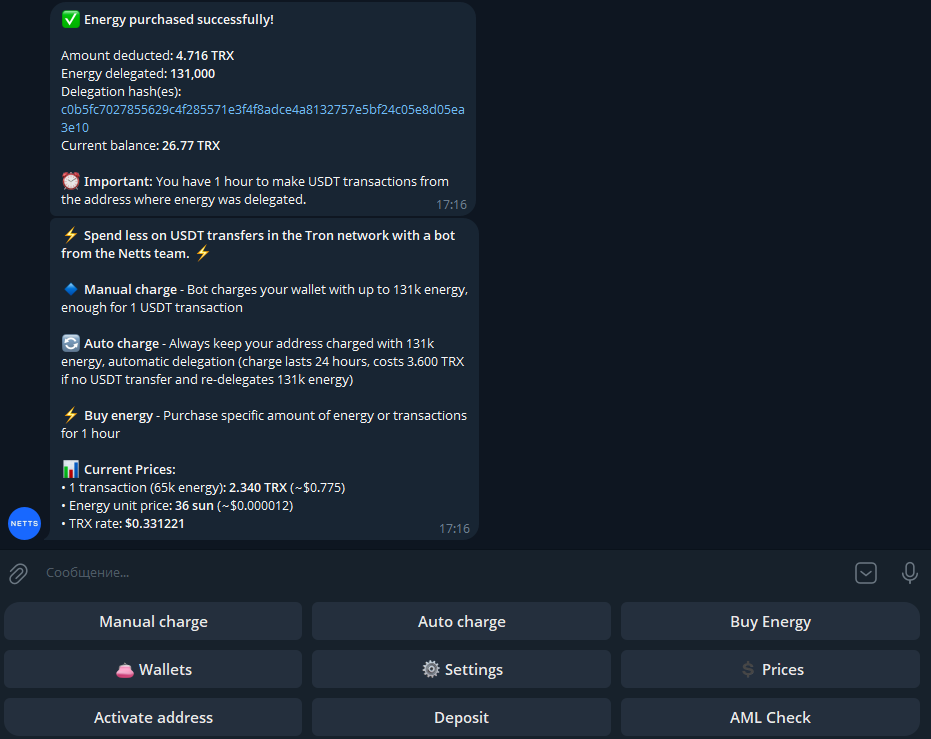
The practical application of this advice is especially important in regular crypto transactions, including the often-overlooked step of transferring stablecoins. Netts Energy Charge Bot enables TRON Energy recharging, and provides manual or automatic TRON Energy top-up options, as well as the option to make a specific amount of Energy available for a window of transactions, and pursue TRON fee reduction without having to burn large amounts of TRX; for instance, 65,000 Energy for one transaction, and a particular unit cost, turn inexpensive TRON transfers into a predictable and regular operation, as opposed to another gamble on faith.