Cycles of Bitcoin: Conspiracy Theory or Real Pattern?
Bitcoin’s four-year cycle: real pattern, choir rhetoric, or a risk tool people preach more than they trade.

Every time Bitcoin does something ‘interesting’, the choir jumps to its hymns. This always starts with cycles, whales, liquidity, distribution, accumulation. Someone ‘obviously’ distributed Bitcoin, someone ‘obviously’ accumulated. Larry Fink said something, therefore, the opposite trade is correct. Michael Saylor said something, therefore we tattoo conviction on our chests with red ink. The confidence with which people say all this always reminds me of having the script in advance.
If they have the script in advance, why is it mostly talk? You can afford to have opinions if your positions are small enough and your ego is big enough. The dissonance between preaching and hesitancy to ‘put skin on the table’ is the real discussion worth having any time Bitcoin’s cycles are beaten into sacred cow status.
The cycle theory is not wrong, but it also does not have unlimited predictive power. The market’s favorite parlor trick is to assume it has both at once.
Origins of the Cycle Narrative
It came from the observation that roughly every four years, the block reward cuts in half. The price-chart drama around these events seemed to follow a pattern: long bullish ramps, apocalyptic tops, apocalyptic bottoms, and bearish consolidations before the next ramp. Humans observed these patterns, and the primordial need to interpret them as something greater than random noise took over. This was not only due to the phenomena around the protocol’s monetary policy itself, but also because early Bitcoin maximalism needed an organizing principle. Time is not a friend to long-winded ideological campaigns, and being able to say “we are in year X of the four-year cycle” served as gentle motivation for ideologues whose Telegram channels were otherwise devoid of tangible content.
The concept gained ground because it was a convenient way to rationalize randomness. Influencers used it to describe their weekly market calls in a more ‘scientific’ manner. Regular people could get on board by believing themselves to be ‘newly educated’ about the crypto market ‘seasons’. Dismissing it as nonsense also had to happen inside the same framework; everyone had to speak the same ‘language’ of cycles in order to be taken seriously. A large part of this was also the reputation inflation. Being a ‘seasoned’ participant who correctly interpreted the ‘crypto market calendar’ was one thing, but being ‘cycle literate’ separated you from the unwashed masses who bought at the top solely on their friend’s TikTok videos. Status was a critical motivator for joining the choir.
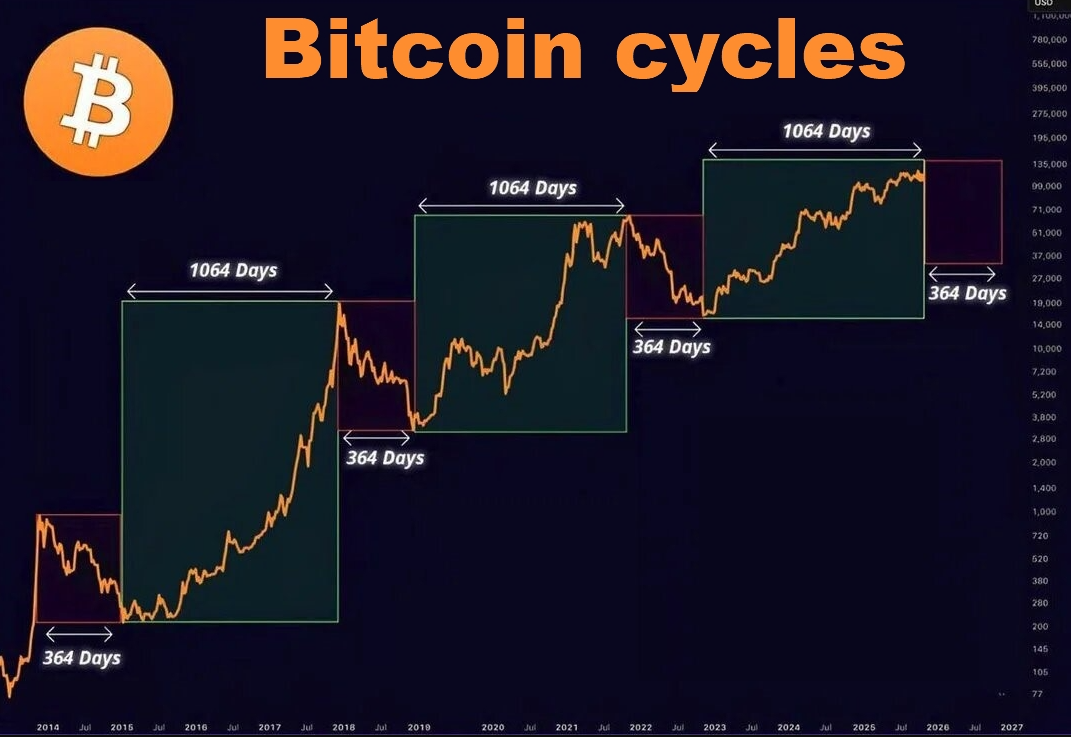
Once the framework was created, it was only natural to want to retrofit every insight about Bitcoin’s performance to fit the mold. Thus, every market fluctuation was a ‘cycle acceleration’, a ‘cycle delay’, ‘mid-cycle consolidation’, or ‘obvious in hindsight’. The more the model was abused, the more its proponents tried to twist the next development into yet another confirmation. From a casual observer’s perspective, any convenient excuse sufficed to dismiss evidence contradicting a firmly held belief. That is the definition of a useful pattern, if there ever was one; a faith-assisting tool that allows people to rationalize their past decisions while being comfortably deluded about their future ones.
The cycle theory deserves a fair hearing. The evidence for it as a recurring facilitator of Bitcoin’s price trends is difficult to dismiss, despite a large body of arguments against such designation. The proof-of-work design clearly baked in periodic supply reductions, and the resulting dynamics most certainly fed into the price movements. It is reasonable to file this under the category of ‘influences’, not ‘drivers’. The price ultimately reflects the supply-demand mechanics and macro-level expectations about the token’s prospects. Supply reductions are, admittedly, a very interesting type of scarcity theater that can greatly amplify the demand spike, especially when leveraged with the availability of credit.
It is this scarcity-plus-leverage combination that ultimately causes the distribution mania, and the subsequent concentration back among the ‘smart money’. This process inevitably repeats itself, and as it does, it creates patterns of behavior that feel ‘destiny-like’. The ‘smart money’ wins again and again, and it is only natural for the ‘regulars’ to believe in some kind of ‘crypto karma’. That is how dogma is born, and why the entire enterprise around ‘Bitcoin cycles’ is best understood as a combination of market psychology and self-fulfilling prophecy. It is all true enough insofar as it reflects the real-world behavior of actual market participants.
Another reason to take the Bitcoin cycle theory seriously is the simple observation that human behavior follows a pattern that roughly fits its narrative. Bubbles require fresh funding to appear, and fresh funding tends to come from the newcomers who are excited by the spectacle of the existing bubble. Those newcomers tend to believe they are late to the party, and therefore due for a bigger reward. Said reward is usually violently extracted via a bear market ‘education’. The calendar certainly does not dictate behavior, but the ability to predict roughly when the mania and the panic are likely to occur helps in developing a profitable framework around the asset’s market tempo.
A similar psychology drives the altcoins’ seasonality. Whenever BTC’s mood changes, it affects the funding flows to the other protocols. This can be observed in the perpetual on/off ramping of capital between the different chains, as well as the relative strength of the assets pegged to them. As long as Bitcoin is the ‘reserve asset’, it will dominate the ‘risk-on/risk-off’ narratives. The entire ecosystem’s capital rotations are predicated on its price performance. The most ‘obvious’ projects, the ones that should ‘always work’, still fail if launched at the wrong time, because the larger economy only allows funding to be allocated when the ‘risk’ Bitcoin embodies is at its lowest.
Treasury accumulation, ETF proclamations, and the billionaire net-worth displays all fuel the same fire. The entire alternate-economy complex only works when the central asset is acting as the ultimate barometer of value. It is why so many non-BTC projects are vaporized when the ‘risk asset’ goes down; their funding assumptions are made in good faith, but they do not account for the real-world risks of launching any sort of economy during a recession. Their entire window of relevance is dictated by Bitcoin’s rise and fall.
The same principles drive the behavior of individual developers and employees. Their funding assumptions are dictated by the same risk-on/risk-off paradigm, which is why their hiring and layoff schedules align with the BTC price action. The salary expectations at any given moment for an employee of a crypto protocol are set by the prevailing mood around the asset. The ‘regular’ ones still have to fund themselves somehow, and so they are also on the same merry-go-round as everyone else. The local Bitcoin price chart drives their ability to pay rent, and their general expectations about the future. That is why the Bitcoin cycle theory is simultaneously a market phenomenon and a labor phenomenon. It is a valuable truth for any non-BTC project to internalize that their funding window is ‘always open’, but their ability to actually fund anything is entirely dependent on the local BTC price trends.
It is worth noting the subtle difference in the role played by the ‘market calendar’ for the different participants. Institutional market makers may employ cyclical models in their daily work, but it is much less likely that they ‘believe in’ the theory. The same person may keep their risk off the table when the ‘general consensus’ dictates otherwise, in order to stay ‘uninvested’. The professional risk management rarely coincides with the amateurish conviction to ‘buy the dip’.
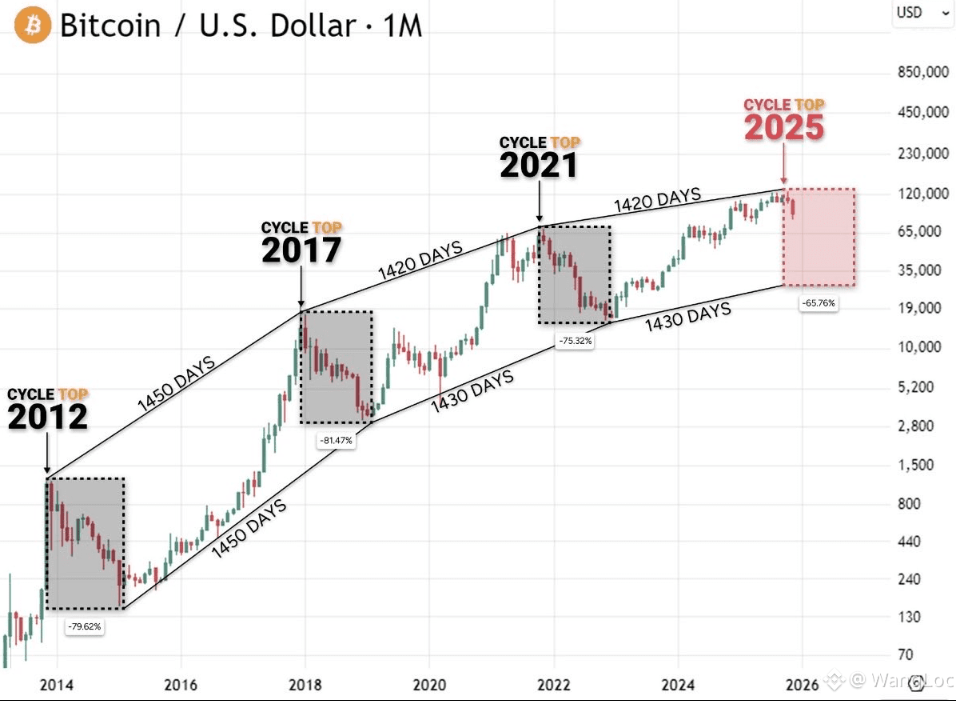
The most self-aware proponents of the ‘Bitcoin cycle theory’, the ones who understand how little they know about the system’s mechanics, will often use it as an excuse not to engage. They may participate in the prophecy-making of the ‘seasons’, but when it comes to actually allocating capital, their positions are small enough that they never have to ‘convince themselves’. They benefit from the doubt and the ambiguity, as it allows them to remain invested at all times while being insulated from the downside of their potential errors.
This is the practical application of the concept that separates the wheat from the chaff; the most ‘knowledgeable’ among us often have the least to gain from any particular outcome. That should serve as a healthy warning to everyone who is about to ‘apply their extensive research’ and consequently ‘rebalance their portfolio’. It is always wise to ask yourself if your primary motivation is the belief in a particular outcome or the desire to appear correct about it.
Cycles and Knowing Are Not Betting
The whole point of the Bitcoin cycle theory, as explained by its more prolific proponents, is to help in ascertaining the ‘correct trade’. They talk as if the ‘whales’ text them personally to alert about the shifts in the distribution psychology, as if Blackrock’s proclamations were reverse trades with a built-in stop-loss. They speak as if the ‘obvious opposite’ of the policymakers’ positioning was the ‘only possible trade’. This, as explained by the Bitcoin prophecy-makers, is because they ‘can see the machinery’, while the rest of us are only permitted to see the candle.
If this were not demonstrably untrue, this line of reasoning would not have appeared at all. A small minority of truly insightful individuals do ‘work the machinery’ and ‘see the print’. They do not need to explain their insights in terms of the Bitcoin cycles, because most such people would only ‘engage’ by asking for a trade. These individuals, if they are to be found among the ‘cycle theorists’, would have to keep their public pronouncements as vague as the private ones. They are professionals, and the public forum is not their primary medium.
The more plausible explanation is that the entire Bitcoin cycle ‘discourse’ was designed to generate content. It is a performative ritual that serves to boost the clout of the person holding it by convincing the audience that they are ‘in on something’. ‘The confidence is misplaced,’ is the more generous interpretation of this behavior. The most ‘obvious’ action to take when you observe the Bitcoin price patterns is to ‘trade against the narrative’, which is an operation with very limited reward-risk profile when done ‘at the inflection point’.
There is also a reputational risk/reward asymmetry baked into this framework. One single ‘correct prediction’ about a BTC bottom allows you to enjoy the status of the ‘person who knew’, while the incorrect one can ruin your credibility for an extended period. This dynamic explains the prevalence of the ‘bullish cycles’ among the market participants who ‘think long’. It also explains why they are so eager to declare a BTC top at the first ‘obvious opportunity’, and why they so rarely follow through on their words. The mouth speaks for the wallet, but the wallet is not as certain as the mouth pretends to be.
There is an obvious parallel with the regular Twitter activity of the regular crypto enthusiast. Their behavior across the Twitterverse is informed by the same desire for reputation risk management. They announce cycle-related bottoms in the group chats, only to promptly buy the smallest amount of Bitcoin just to ‘be invested’. They ritualistically anathematize their behavior as ‘derpy newb’ afterwards. The regular Twitter users are humans, first and foremost, and the Bitcoin cycles provide them with a convenient mechanism for the self-flagellation and consequent reputational score inflation.
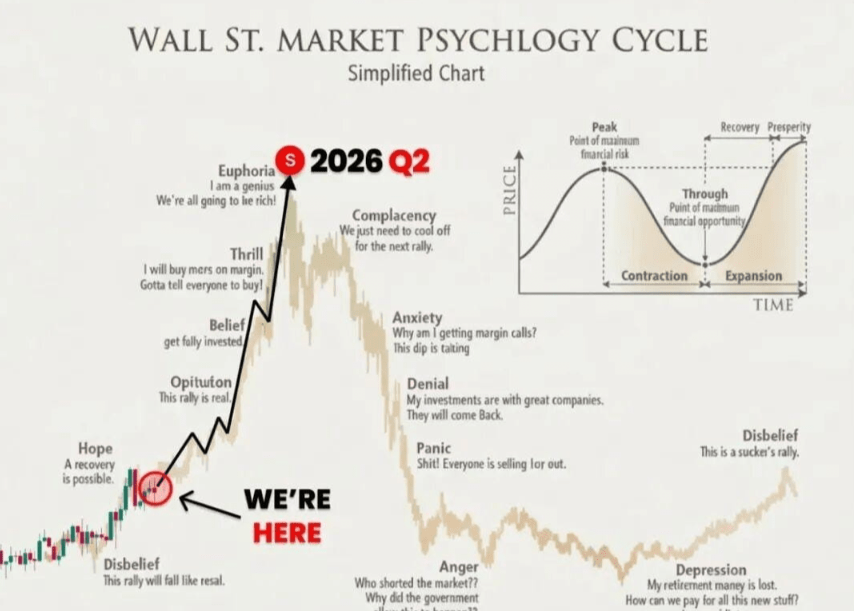
Knowing is not betting well. You can ‘know’ a lot of things, and they will rarely influence your betting behavior, due to the confluence of the risk and reward asymmetry. The Bitcoin cycle theory is most useful when it is used as a framing device to understand the asset’s risk profile at a given point in the BTC price chart. The Bitcoin cycles are best employed in combination with the other, equally situational tools to understand what the market is likely to do with you.
A lot of the discourse around the bitcoin cycle is best understood as an attempt to deny that it is merely one particular risk management approach. This approach, as discussed at length previously, is used to help navigate the market. It is a way to reduce the probability of being unexpectedly caught off guard when the price gaps violently against you. It is the most rudimentary form of tactical risk control, and it is necessary for any long exposure in the BTC space. It is always wise to think through the scenario in which you will actually be correct about the ‘obvious opposite trade’, because such a scenario always involves you owing a substantial sum of Bitcoin to someone else.
The professional desks understand this, which is why the institutional view on the bitcoin cycle often contradicts the public pronouncements. As the risk managers, they have to ensure that their books are always prepared for the worst-case scenario. This, combined with the liability of the ‘outsized exposure to the long BTC’, causes their public statements to appear ‘cyclical’ to anyone who has not worked in the space. It is not that the institutional players do not believe in the bitcoin cycle; rather, their risk control requirements prohibit them from taking on any risk that exceeds their reward expectations. They are ‘professionals’, and so they must keep their risk management practices in line with their professional obligations.
It is important to understand the difference between a correct market ‘view’ and the correct ‘behavioral outlook’. The former rarely informs the latter, due to the confluence of the reward/probability asymmetry and the individual risk profiles. This is why the most ‘knowledgeable’ proponents of the bitcoin cycle theory ‘underachieve’ relative to their ostensibly superior outlook. That is actually the natural state of affairs. The correct behavior in any given situation for a regular person always undercuts their ‘public view’ in the way described above. This is how the cycle theory serves as a useful tool when navigating the price action of Bitcoin.
Cycles of Bitcoin as Tool, Brains as Saboteur
Cycles are helpful for framing the discussion with Bitcoin, without presenting them as some kind of objective truth. If anything, the bitcoin cycle theory serves best as an aid to recognizing the asset’s market role. It is important to understand that the bitcoin cycle ‘prophets’ only contribute to our ability to perceive the price action in context. It always helps immensely to remember that market behavior only rarely follows a straight line, even ‘in bullish years’.
It helps to remember that the market’s linear perception is a function of the price ‘convergence’. It only becomes obvious with the benefit of hindsight, after the price conveniently falls within the ‘expectations’. The ‘obvious’ bitcoin cycle predictions are useful mainly as tools to facilitate the necessary risk management adjustments, as discussed.
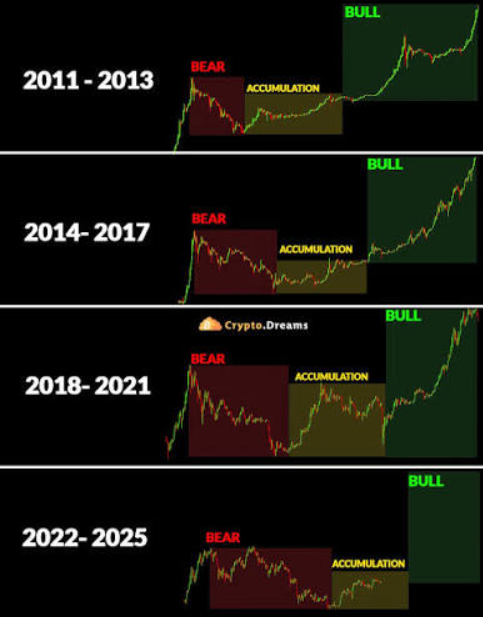
This is particularly important in case of the altcoin funding rotations. Just because the BTC is in a bear market does not mean the funding window for the ‘alternatives’ is open, or that it will even be relevant when it does open. This is mostly because the funding assumptions for the other protocols are made in good faith, but they do not account for the local economic realities. The altcoin projects, as discussed, only work when the BTC price chart allows for the funding to happen. Their entire business model, implicitly or explicitly, is to take advantage of the opportunities that arise when the ‘risk asset’ is in a heightened risk-seeking mode.
The bitcoin price chart will continue to behave ‘interestingly’, and each interesting development will be ‘explained’ by the choir of the bitcoin cycle prophets. The choir will always include the people who were ‘right’, some of whom will be particularly ‘loud’ about their correctness, and will also include the people who will subsequently ‘earn’ a lot of money. This is the bitcoin cycle theory, and it is best employed as a risk management tool in the context of the BTC price action.
The biggest irony of all is that the bitcoin cycle theory only works if the proponents of it are wrong about most things. They are, after all, mostly speaking for the ‘smart money’ who only take small positions and ‘manage the risk’, as they so enjoy saying. Anyone who truly understood the bitcoin cycle ‘prophecy’ would be ‘rich and famous’, according to the proponents. It is obvious, therefore, that the bitcoin cycle theory has more to do with ‘managing risk’ than anything else, which is why it has more to do with the risk management as discussed. This is the final irony of the bitcoin cycle theory; it allows everyone, except for the ‘smart money’, to feel ‘insightful’.
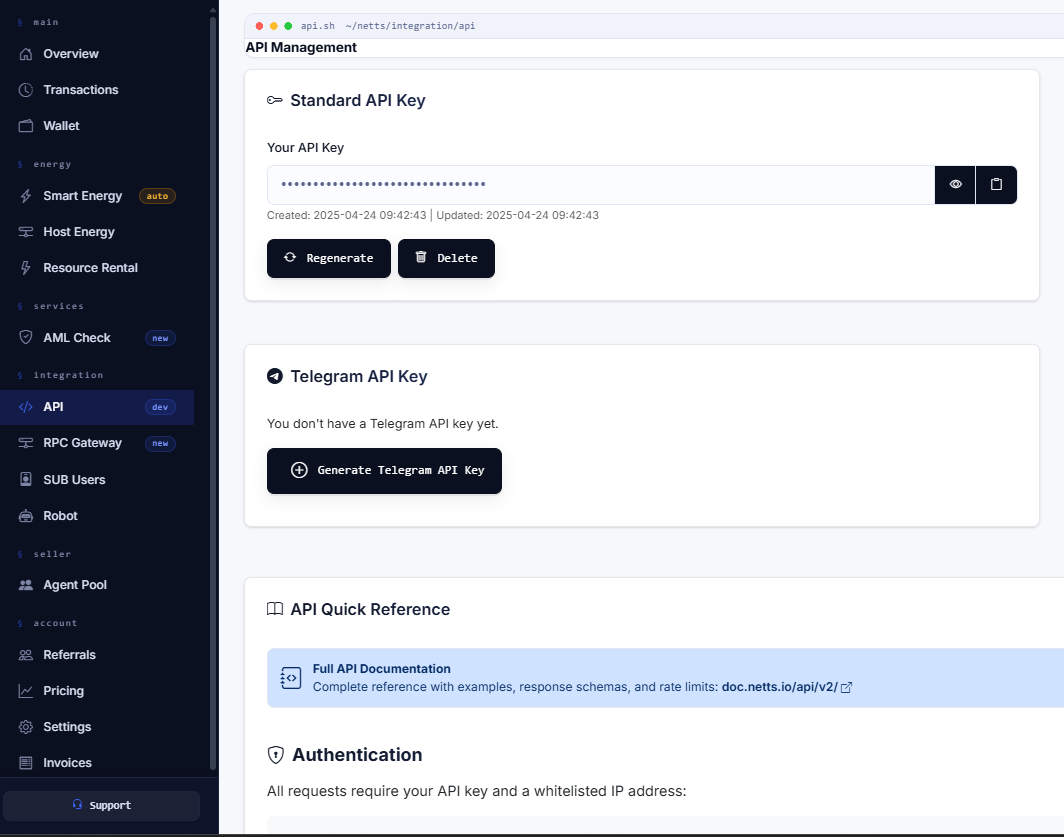
When the conversation finally leaves prophecy and returns to operations, the useful tools look less mystical than a cycle clock: dashboards, controls, and systems that keep working while narratives argue. Netts Workspace sits in that unromantic layer of crypto — TRON Energy API access, USDT automation, automating TRON Energy and Bandwidth flows, monitoring, reporting, and the kind of repeatable plumbing that still matters after the timeline has moved on from whales and four-year sermons.